Sports training
Squash strength and injury prevention
Squash injuries are mostly in the legs, with the ankle and heel the commonest site in professionals, and back pain is common in competitive players. No squash prevention programme has been tested, so this routine borrows: calf doses from our Achilles tendinopathy guide, the Copenhagen plank from our groin guide's football-based programme, and forearm lowering from our tennis and padel routine. Do it twice a week. You need dumbbells, a bench or step, and a light band.
Warm-up
- Skipping2 minBeginner · Calves, Hip flexors, Quads · 3D demoEasyEasier: Ankle bounces (mini pogo)Harder: Alternate-leg bounding
- Thoracic rotation6 each sideBeginner · 3D demoTurn from the ribsEasier: Side-lying open bookHarder: World's greatest stretch



Legs
Rest 90 s
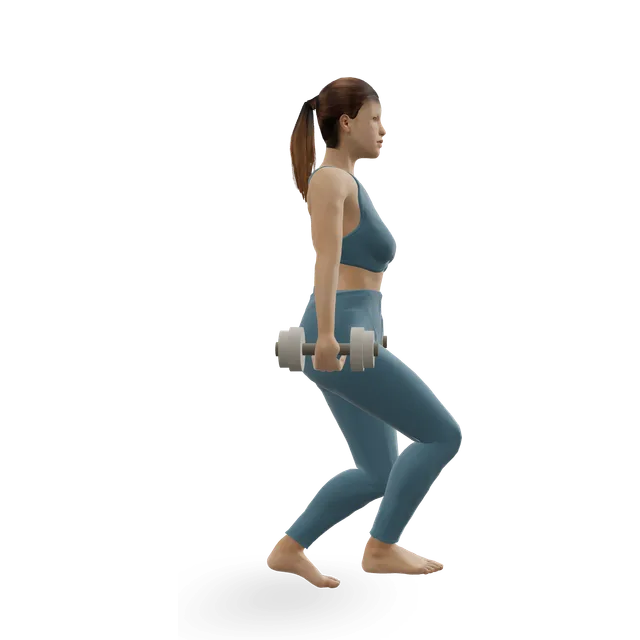
- Dumbbell lunge3 × 6 to 8 each legIntermediate · Quads, Glutes, Hamstrings · 3D demoLong step, front knee over the middle toesEasier: Reverse lungeHarder: Barbell walking lunge
- Rear-foot-elevated split squat (Bulgarian split squat)3 × 6 to 8 each legIntermediate · Quads, Glutes, Hamstrings · 3D demoUpright trunkEasier: Reverse lungeHarder: Split squat jump
- Single-leg Romanian deadlift2 × 8 each legAdvanced · Hamstrings, Glutes, Abs · 3D demoHips levelEasier: Dumbbell Romanian deadlift
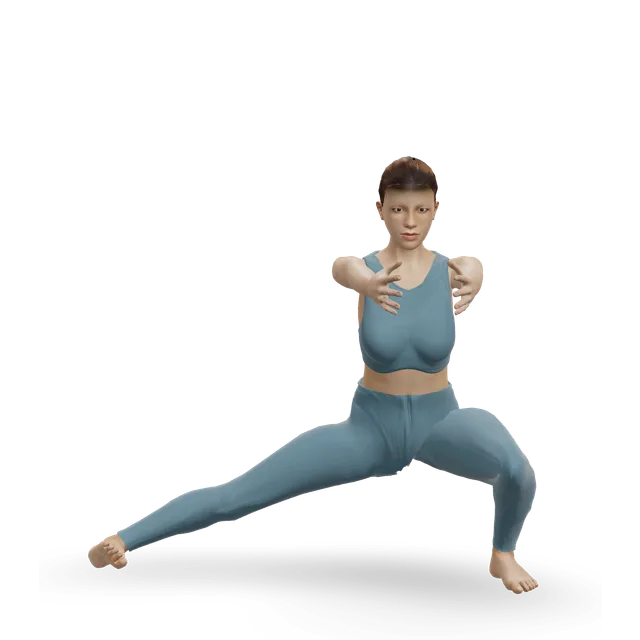
- Cossack squat2 × 5 each sideIntermediate · 3D demoSlowly, to a comfortable depthEasier: Sit squat (partial squat)Harder: Pistol squat


Calves and Achilles
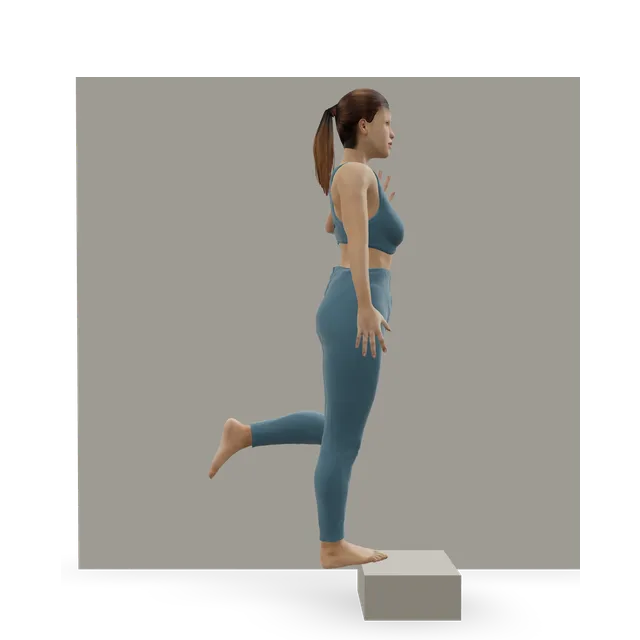
- Single-leg calf raise from a step3 × 10 to 15 each legIntermediate · Calves · 3D demoSlow loweringEasier: Slow calf raiseHarder: Single-leg pogo hops


Groin and trunk
- Copenhagen plank2 × 3 to 5 each side, short leverAdvanced · Adductors, Abs, Shoulders · 3D demoKnee on the bench; lower slowlyEasier: Hip adduction machine
- Side plank2 × 30 s each sideIntermediate · Abs, Hip abductors, Shoulders · 3D demoHips highEasier: Knee side plankHarder: Side plank with leg lift
- Bird dog2 × 6 each side, 5 s holdsBeginner · Back, Abs, Glutes · 3D demoHips levelEasier: Bird dog, one limb at a timeHarder: Bear crawl



Racket arm
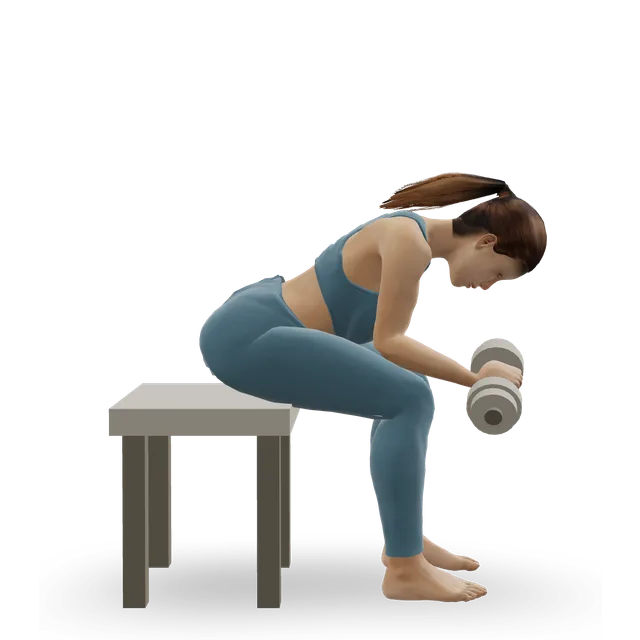
- Wrist-extensor eccentrics2 × 15, lowering over 3 to 4 sBeginner · Forearms · 3D demoPalm down; lift with the other hand, lower slowlyHarder: Wrist curls
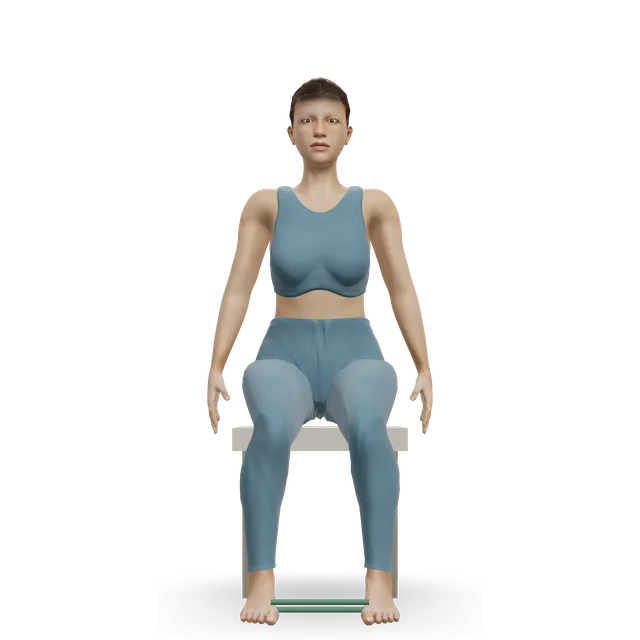
- Standing band external rotation2 × 10 to 12 each armBeginner · Shoulders, Back · 3D demoLight band, elbow by your sideHarder: Side-lying external rotation

Tips
- Twice a week, on days without hard matches; the NHS asks adults to do strength work on at least 2 days a week.
- Calf or Achilles pain: keep it to 5 out of 10 or less and settled by the next morning, as our Achilles tendinopathy guide says. A snap at the back of the heel needs checking the same day.
- Elbow: keep discomfort to about 3 to 4 out of 10, settling within an hour, as our elbow guides say. With tennis elbow now, follow our tennis elbow guide's stages instead.
- Expect sore inner thighs for the first fortnight of Copenhagen planks, as our groin guide says.
- With back pain, leave out the split squats and hinges until it settles and keep the bird dogs; our back pain guide has the warning signs.
- New to strength work, or over 50: start with bodyweight and one set of each.
The doses are suggested starting points, not a prescription. Choose a range you can control and stop for sharp or increasing pain, numbness or tingling. Get individual advice after an injury or surgery, or if you are pregnant or managing a health condition.
Guides that recommend it
Find more moves like these
More sports training

Injury prevention exercises for runners
Foot, calf, balance and hop exercises taken from the running trials with positive results, in a 25-minute home routine for 3 or 4 days a week.
25 minBeginner11 movesOther / check instructions, A bench or box


Plyometrics for runners
A 20-minute hop and bound session for runners: ankle bounces to pogo hops, one-leg hops and bounding, building foot contacts slowly over 10 weeks.
20 minIntermediate8 movesCardio machine



Strength workout for cyclists (gym)
A 50-minute gym session for cyclists: heavy squats, one-leg presses, hip flexion and calf raises as in the cycling trials, plus jumps for bone.
50 minIntermediate13 movesCardio machine, A barbellQuestions people ask
How long does the squash strength and injury prevention take?
About 35 minutes, including any warm-up and cool-down listed. Shorten it by doing fewer rounds; lengthen it by adding one.
What equipment do I need?
You need: A wall, A dumbbell, A bench or box, A step, A band, An anchor point. Each move links to its guide, where you can find an alternative if you are missing something.
Is it suitable for beginners?
It is written for beginners. 10 of its 14 moves have an easier option listed beside them if you need one.
How do I make it easier or harder?
Use the easier or harder option listed under each move, change the number of rounds, or adjust the rest. Progress one change at a time.