Training guide

How to do a dead bug: the set-up, the slow reach, easier and harder versions, and back pain

A dead bug is a core exercise you do lying on your back: with your arms pointing at the ceiling and your hips and knees bent to right angles, you slowly reach one arm back and the opposite leg away while your lower back stays still on the floor. It trains your abs to stop your back arching while your arms and legs move, and the slower you go, the harder it gets.

In muscle activity studies the abs worked at moderate levels, under about 40% of their maximum, so the dead bug is control and endurance work rather than a strength builder on its own. Core exercises like it help back pain about as much as other exercise, not more.

This guide shows you how to set it up and reach, whether to pull your belly button in, and the steps from knee folds and heel taps to harder versions. It covers what the dead bug works, how many to do and how often, how it compares with bird dogs, planks and the hollow hold, and back pain, pregnancy and the months after a birth, with a 3D demo of every step.

The short version

Reach slowly, with your back still

Lie on your back with your arms pointing at the ceiling and your hips and knees bent to right angles. Slowly lower one arm overhead as you straighten the opposite leg, only as far as your lower back stays still on the floor, then come back and swap sides.

Source 1

Control work for your abs

The six-pack and side abdominal muscles worked together, and harder as the reach got longer, but at under about 40% of their maximum in studies of 12 and 22 healthy adults. It builds control and endurance; harder ab moves build more strength.

Sources 2, 3

Pulling your belly button in is optional

Drawing in makes the deepest tummy muscle work more, but bracing your whole trunk made the spine stiffer in lab studies, and changes in that deep muscle don't explain recovery from back pain. Our editorial view: either is fine, as long as your lower back stays still and you keep breathing.

Sources 4, 5, 6, 7

Build up in steps

Knee folds, then heel taps, then the full dead bug, then a slower, longer reach. Keeping the heel hovering off the floor as the leg straightens, rather than tapping it down, was the biggest step up in muscle activity in one study.

Source 3

How many

2 to 3 sets of 6 to 10 slow reps each side, 2 or 3 days a week, as our back pain plans and 30-day ab challenge use (our editorial range). Training more often adds little when the weekly sets are the same.

Source 8

Back pain

Dead bugs sit in our back pain plans, but core exercises like this help chronic back pain about as much as other exercise, not more. If your lower back aches during a set, it's usually arching: shorten the reach.

Sources 9, 10

What a dead bug is, and what it works

An anti-extension exercise

Your abs don't curl you up here: they stop your back arching as an arm and a leg move away from your body and their weight pulls on your ribs and pelvis. It's the same job a plank or a hollow hold does, done lying down with your head resting. Research papers sometimes call it the dying bug.

Sources 1, 2

What it works

Mainly the six-pack muscle (rectus abdominis) and the obliques at your sides, with the deepest tummy muscle (transversus abdominis) working underneath and the hip flexors at the front of your hips holding your legs up. In the studies, activity was moderate: under about 40% of maximum.

Sources 2, 11, 12, 13

Versions on this page

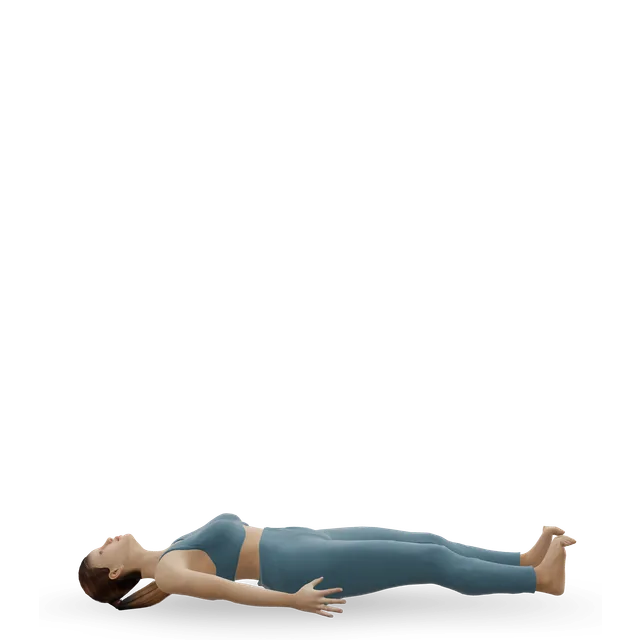
Knee folds and heel taps, where your arms stay down; the full dead bug; a slower or longer reach; and the leg pull-in, the hardest level of the Sahrmann core test, each with a 3D demo. Holding a light weight, a band or a ball in your hands has no demo of its own: it's the same reach with a little more load.

Source 3

Muscle activity isn't growth

Most studies on this page use EMG (electromyography: electrodes measuring how hard a muscle works over a few reps) or ultrasound. Neither is a validated predictor of which exercise grows a muscle more, so treat the numbers as clues, not verdicts.

Source 14

What the evidence says

The six-pack and obliques work together, at moderate effortEmerging evidence

In 12 healthy adults, the six-pack and the obliques were equally active in the dead bug and rose together as it got harder. No muscle passed 41% of its maximum, which the authors judged not enough to build strength in healthy people.

Source 2

Harder levels work the abs harderEmerging evidence

Across the five levels of the Sahrmann core test in 22 young men, median six-pack activity ran from about 13% to 36% of maximum. It was highest when the heel hovered about 12 cm off the floor as the leg straightened, and every level stayed under 40%. In 10 healthy men, activity rose with each of five graded levels of the dead bug.

Sources 3, 15

The deepest tummy muscle works tooEmerging evidence

In 44 women with at least 3 years of Pilates, holding the dead bug's tabletop while drawing in gave the thickest deep tummy muscle of five positions. In 44 young adults it ranked fourth of seven exercises for that muscle, with the bird dog first, and in 13 adults the deep muscle's thickness didn't differ between six core exercises. These are ultrasound studies of a few holds, not training trials.

Sources 11, 12, 13

Core exercise and back painStrong evidence

Motor control (core stability) exercise beat minimal treatment for chronic low back pain, by about 13 points on a 100-point scale in the long term, across 29 trials and 2,431 people, but it wasn't clinically better than other exercise. Exercise of any kind lowered pain by about 15 points against no treatment, usual care or placebo, across 249 trials, with moderate certainty.

Sources 9, 10

What hasn't been tested

No trial has tested the dead bug on its own, for strength or for back pain. What we know comes from muscle activity studies of healthy adults and from trials of core programmes that include it.

How to do a dead bug, step by step

From the supine dead bug of the American Council on Exercise (ACE) and our move page. The trunk cue and the breathing pattern are coaching practice, not tested in trials (our editorial choice): ACE breathes the other way round, and either works if you keep breathing.

  1. Lie on your back on a mat with your knees bent and feet flat. Lift one leg, then the other, into a tabletop: hips and knees at right angles, shins level. Reach both arms straight up over your shoulders.
  2. Let your lower back rest gently on the floor and your ribs drop. Tighten your trunk gently, as if someone were about to nudge you; a light draw-in of your lower tummy is fine too.
  3. Slowly lower one arm overhead as you straighten the opposite leg out, the heel hovering above the floor, only as far as your lower back stays still. Breathe out as you reach.
  4. Bring the arm and leg back to the start just as slowly, breathing in.
  5. Repeat with the other arm and leg. One reach on each side is one rep each side.

Loading the 3D figure…

Gets into position, then repeats the movement. Technical checks passed; qualified exercise review is pending.

The movement on the figure: Dead bug

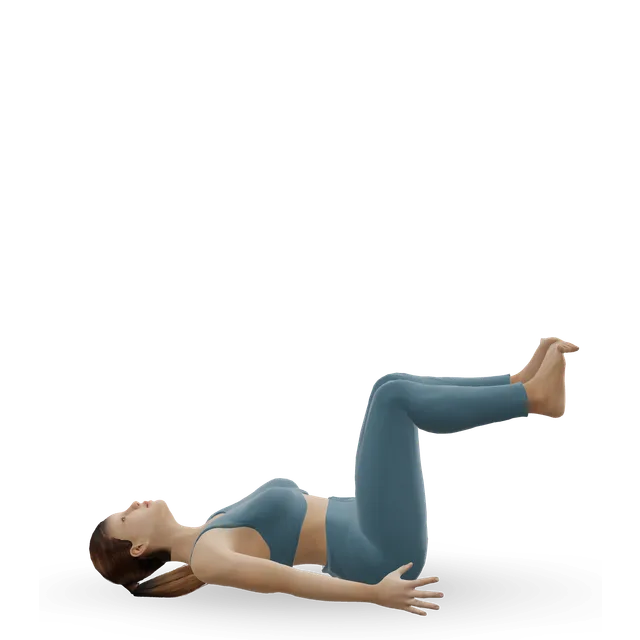
The easier version: heel taps

From our heel taps move page and its breathing cue. Lowering one heel to touch the floor is level 2 of the Sahrmann core test, one of its easier levels; the full dead bug keeps the heel hovering.

  1. Lie on your back with your hips and knees bent to right angles, your shins level and your hands flat on the floor by your hips.
  2. Keeping the bend in your knee, slowly lower one leg until the heel touches the floor, only as far as your lower back stays still.
  3. Bring it back up, then lower the other leg. Breathe out as each leg lowers.

Loading the 3D figure…

Gets into position, then repeats the movement. Technical checks passed; qualified exercise review is pending.

The movement on the figure: Dead bug heel taps

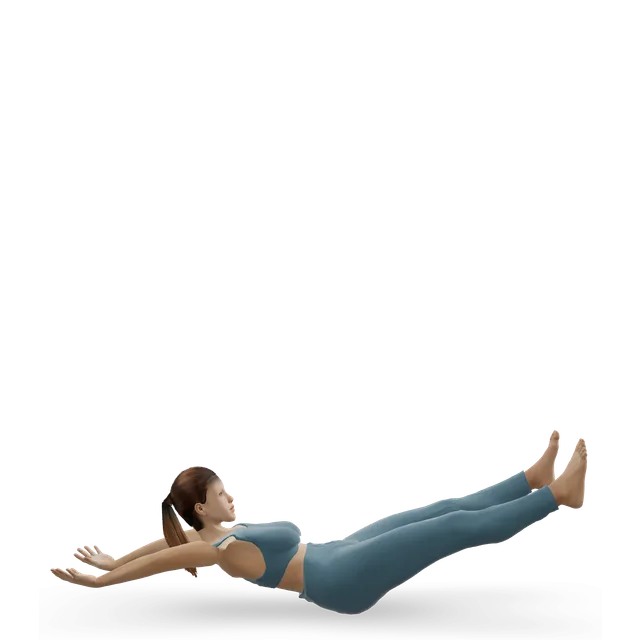
Easier and harder: from knee folds to the hollow hold

Move on when every set reaches the top of its range with your lower back still (our editorial rule). Knee folds and bent-knee fall-outs, 2 sets of 5 to 10 each side, every other day (their move pages' dose, from a UK pelvic health physiotherapy booklet); heel taps, 2 sets of 6 to 8 each side (our back pain guide), building to 2 to 3 sets of 6 to 10 (our 30-day ab challenge); dead bugs, 2 sets of 6 to 8 each side once heel taps are easy (our back pain guide), building to 2 to 3 sets of 6 to 10; a slower, longer reach, 2 to 3 sets of 6 to 8 each side (editorial); leg pull-ins, 2 sets of 6 to 8 (editorial); then hollow holds, 2 to 3 holds of 10 to 30 seconds with the knees bent at first (our 30-day ab challenge).

How many, and how often

Sets and reps

2 to 3 sets of 6 to 10 slow reps each side: our editorial range, spanning our back pain guide and full-body gym workout at 2 sets of 6 to 8, our 30-day ab challenge at 2 to 3 sets of 6 to 10, and our beginner core workout at 6 each side for 3 rounds. As a warm-up before harder ab work, 1 set of 6 each side, as our gym ab workout uses.

How hard

End each set while every rep is still slow and your back still, 2 or 3 reps short of failure, or 3 or 4 short in your first two weeks, as our plans advise. Going to failure added a trivial amount of growth at most across 15 studies, and people underestimate the reps they have left by about 1.

Sources 16, 17

Rest

30 to 45 seconds between sets, as our 30-day ab challenge uses, or 45 seconds between rounds of a circuit, as our beginner core workout does.

How often

2 or 3 days a week, as our back pain plans and get abs guide suggest. Matched for weekly sets, training a muscle more often made little difference to growth.

Source 8

How to progress

More reps within the range first, then a slower reach (about 3 seconds out and 3 back), then straighter legs with the heel lower, then the next step on the ladder (our editorial order, following our plans' advice for body-weight moves).

Should you pull your belly button in?

Drawing in works the deepest muscle more selectivelyEmerging evidence

Drawing in (hollowing) made the deepest tummy muscle work more selectively in 9 women measured with fine-wire electrodes and in 18 men doing curls. In 44 young adults it thickened the deep muscles more than bracing did, in all 7 exercises tested.

Sources 4, 18, 12

Bracing made the spine stifferEmerging evidence

In a model of 8 men, bracing the whole abdominal wall raised spine stability by 32%, with 15% more compression, and the authors found no mechanical reason to hollow. In 11 men, hollowing didn't steady the trunk against a sudden load; bracing did, at the cost of more compression.

Sources 5, 6

The deep muscle and back painMixed evidence

The deepest tummy muscle switched on later in 15 people with back pain than in 15 without, and after a first episode, specific deep-muscle training went with fewer recurrences in a trial of 39 people (30% against 84% at a year). But across 15 studies, changes in that muscle during treatment didn't track changes in back pain.

Sources 19, 20, 7

Drawing in or bracing: which is better?Mixed evidence

Neither has been shown to be better, for the dead bug or for back pain: drawing in works the deep muscle more selectively, bracing makes the spine stiffer, one small trial favoured deep-muscle training after a first episode, and changes in that muscle don't explain recovery. A 2025 review concludes that the broad benefits claimed for core training have likely been overstated. Our editorial view: either is fine, as long as your lower back stays still and you keep breathing.

Sources 4, 5, 6, 20, 7, 21

What coaching sources say

They differ. ACE teaches the dead bug with a draw-in and a pelvic floor squeeze; the National Academy of Sports Medicine (NASM) asks you both to draw your navel in and to keep a neutral spine with your back pressed into the floor, which is hard to do at once. Our 30-day ab challenge cues tightening your whole trunk, as if someone were about to nudge you.

Sources 1, 22

Press your back down, or keep it neutral?

No study has compared the two in the dead bug. Our beginner core workout cues a lower back "pressed gently down", and our move page asks you to reach only as far as your lower back stays still. Aim for a back that stays still and rests on the floor, not one jammed down with force (our editorial reading).

Breathing

Our workouts cue breathing out as your arm and leg reach; ACE breathes in as you lower and out as you come back. No study compares them, so either works, as long as you never hold your breath (our editorial view).

Source 1

Common mistakes and how to fix them

Your lower back arches off the floor

The main one, and as our move page puts it, it turns the exercise off. Shorten the reach or stop the leg higher.

Rushing

The slowness is the load. Take about 3 seconds out and 3 back.

Holding your breath

Keep breathing: out as you reach, in as you return.

Forcing the hand and heel to the floor

Reach only as far as your back stays still. NASM stops the arm and leg just short of the floor, and our move page says to move slowly rather than force them down.

Source 22

Knees drifting in

Keep the bent knee over your hip, as ACE does; pulling it towards your chest makes the exercise easier.

Source 1

Lifting your head

Keep your head down: this isn't a crunch (our editorial cue).

Dead bugs against bird dogs, planks and the hollow hold

Dead bug or bird dog?

They train different sides of the same job. The dead bug works the front of your trunk while you lie on your back; the bird dog works the muscles along your back and your glutes on all fours, with your trunk resisting a twist. Our beginner core workout pairs them.

Sources 2, 12

Dead bug or plank?

Both stop your back arching. The plank holds the position on your elbows and toes and works your shoulders too; the dead bug moves your arms and legs with your back supported, which makes it easier to learn and to control. Our plank guide covers the plank.

Dead bug or hollow hold?

The hollow hold is the harder, held version: your head, shoulders and legs lift and stay up. Keeping your lower back down through a dead bug is the hollow hold's starting point, as its move page says.

Dead bug or crunches?

Crunches bend your trunk; the dead bug keeps it still. Both have a place, and the dead bug suits a back that dislikes bending, as our sit-up guide says.

Dead bugs and back pain

Core exercise helps, but no more than other exerciseStrong evidence

Core stability exercise of this kind helped chronic low back pain against minimal treatment, but no more than other exercise, and exercise of any kind lowered pain by about 15 points out of 100. Choose what you'll keep doing.

Sources 9, 10

Which exercise is best?Mixed evidence

Three network meta-analyses ranked Pilates, core-based, strength and McKenzie programmes near the top, but they didn't agree on a winner, and some of the evidence was low quality. The authors advise choosing exercise you enjoy.

Sources 23, 24, 25

Our back pain plans

Our back pain guides use heel taps, then dead bugs "once heel taps are easy", at 2 sets of 6 to 8 each side, 2 or 3 days a week alongside walking. Their doses are editorial starting points.

Does a strong core prevent back pain?Mixed evidence

Back and abdominal strength and endurance didn't predict who got back pain across 12 cohorts of 5,459 people, and core stabilisation prevented no more back pain than ordinary exercise in 4,147 soldiers. Exercise with education did lower the risk of a new episode in pooled trials.

Sources 26, 27, 28

If it hurts

Discomfort up to about 5 out of 10 that settles within an hour or so and is no worse the next morning is acceptable, as our back pain guides say; pain, pins and needles or numbness spreading down a leg is not. The NHS advises stopping back exercises that make the pain worse and seeing a GP.

Source 29

Pregnancy, after a birth, and who should change it

Pregnancy

In later pregnancy the NHS advises avoiding lying flat on your back for more than a few minutes, because it can make you feel dizzy. Our rule starts after the first trimester: prop your upper body up, or swap to the bird dog, and roll onto your side if you feel dizzy, sick or unwell, as our move page says.

Source 30

After a birth

Start with the gentle tummy exercises the NHS describes and build up to heel taps. Stop any move that makes the middle of your tummy dome (bulge into a ridge), as our postnatal workout advises, and see a GP if the gap between your tummy muscles is still obvious 8 weeks after the birth.

Source 31

A stoma or tummy surgery

Follow our exercise with a stoma guide; our stoma core levels bring the dead bug in at level 3, once heel taps are easy.

Osteoporosis

Your spine doesn't bend, so the dead bug suits osteoporosis: the UK consensus advises modifying or avoiding repeated or end-range forward bending, and our sit-up and get abs guides suggest dead bugs, bird dogs and planks instead of curls.

Source 32

Getting down to the floor is hard

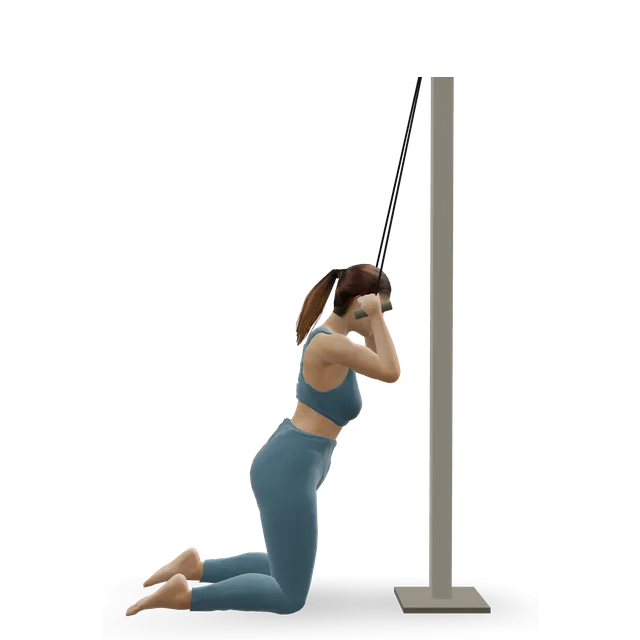
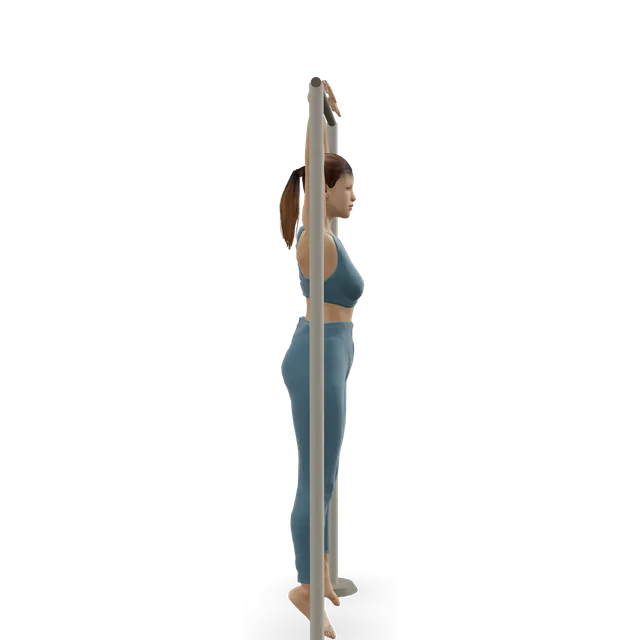
Heel taps on a firm bed, or a standing or half-kneeling Pallof press at a sturdy anchor, train the same control (our editorial suggestion).

Moves that go with it

Bird dogs, 6 each side, knee planks, 20 to 30 seconds, McGill curl-ups, 5 holds of 8 seconds, and glute bridges, 12 reps, in 3 rounds (our beginner core workout); forearm planks, 3 holds of 20 to 45 seconds (our plank guide); half-kneeling Pallof presses, 2 sets of 8 to 10 each side (our full-body gym workout B); heel slides, 10 slow reps each side, once or twice a day (its move page's dose, editorial), and side-lying tummy draw-ins, up to 10 holds of up to 10 seconds (its move page's dose, from the NHS's advice after a birth), as the gentlest starts.

Workouts to follow

The beginner core workout pairs dead bugs with bird dogs, planks and curl-ups; core session A of our 30-day ab challenge takes you from heel taps to dead bugs to hollow holds; the full-body gym workout has them in its main sets and our gym ab workout uses them as a warm-up; the Pilates routine for back pain and the no-equipment ab workout use heel taps.

Plans that use them

The 30-day ab challenge uses core session A; the full-body and beginner gym plans use the full-body gym workout, with dead bugs in its main sets.

Warning signs

Stop and get medical help

If you get chest pain or pressure, feel faint or dizzy, are unusually breathless, or your heart races or beats irregularly during exercise, as our plans advise. The American Heart Association says these need immediate medical evaluation.

Source 33

Call 999 (911 in the US)

For chest pain that feels tight, heavy or squeezing, or spreads to your arms, neck, jaw or back; a headache that starts suddenly and is extremely painful; someone who faints while exercising; palpitations that don't go away, or come with chest pain, breathlessness or feeling faint; severe difficulty breathing; or angina pain that doesn't stop after rest and your medicine. Don't drive yourself to A&E.

Sources 34, 35, 36, 37, 38, 39, 40, 41

Check before you start

If you haven't exercised for some time or have a medical condition, speak to your GP first, as the NHS advises. Breathe throughout the dead bug; never hold your breath.

Source 42

After a faint, or dizziness that keeps coming back

See a GP after any faint, and for dizziness that won't go away or keeps coming back.

Sources 38, 43

Call 999 or go to A&E: back pain with these signs

Loss of feeling or numbness around the genitals or bottom, new trouble peeing or controlling your bladder or bowels, changes in genital sensation during sex or problems with erections or orgasm, or pain, tingling, weakness or numbness in both legs. These are signs of cauda equina syndrome, which needs treating in hospital urgently. Don't drive yourself.

Sources 29, 44

Urgent GP appointment or NHS 111: back pain

With a high temperature, or if you feel hot, cold, shivery or generally unwell, or if severe pain starts suddenly or gets worse quickly. In the US, use urgent care.

Source 29

See a GP: back pain

Back pain that doesn't improve after a few weeks of treating it at home, stops your day-to-day activities, is worse at night or after resting, or comes with weight loss you can't explain or a lump or change in the shape of your back.

Source 29

A new lump or bulge

See a GP if you think you have a hernia: a bulge or lump in your groin, upper thigh or tummy that may get bigger when you cough, sneeze or cry and smaller when you lie down. Get help from NHS 111 if you have a hernia and pain in or around it, a bloated tummy, sickness, constipation, a high temperature or sudden confusion. Call 999 or go to A&E for a femoral hernia (a lump at the top of the thigh) with very bad tummy pain, sickness, being unable to fart or poo, a high temperature or sudden confusion.

Sources 45, 46

Myths

"Dead bugs fix back pain"Strong evidence

Core exercise of this kind helped chronic back pain more than minimal treatment but no more than other exercise, and no trial has tested the dead bug on its own. It's a sensible, gentle part of a back pain plan, as our back pain guides use it, not a fix; walking, Pilates, strength work and other exercise you enjoy help as much.

Sources 9, 10

"You must pull your belly button to your spine"Mixed evidence

Drawing in does make the deepest tummy muscle work more selectively, and one small trial found fewer recurrences after deep-muscle training for a first episode of back pain. But bracing the whole trunk made the spine stiffer in lab studies, and deep-muscle changes don't explain recovery. Use a gentle draw-in to learn the feel if you like; tightening your whole trunk is just as good (our editorial view), and you don't need to hold either all day, as our Pilates core guide says.

Sources 4, 5, 6, 7, 20

"Flatten your lower back into the floor as hard as you can"Mixed evidence

Coaching sources differ, and no study has compared the options. The aim is a lower back that stays still, resting gently on the floor, as our beginner core workout cues it.

Sources 1, 22

"Dead bugs are only for beginners"Emerging evidence

Keeping the heels off the floor and lengthening the levers raised ab activity from about 13% to 36% of maximum across the Sahrmann levels, and activity rose with each harder level in another study. Even the hardest levels stayed under about 40%, so for more strength, move on to the hollow hold and harder ab moves.

Sources 3, 15

"A strong core prevents injuries"Mixed evidence

Core strength and control were linked with later leg injuries in athletes, but the evidence is preliminary and core endurance gave conflicting results, and a critical review found core measures predict injury little better than chance. Back and ab strength didn't predict who got back pain either.

Sources 47, 21, 26

"Dead bugs are the best exercise for your deep core"Emerging evidence

In ultrasound studies, the dead bug thickened the deepest tummy muscle most of five Pilates positions in one study, ranked fourth of seven exercises in another (the bird dog first), and matched five other core exercises in a third. And changes in that muscle don't explain recovery from back pain.

Sources 11, 12, 13, 7

"Dead bugs give you a flat stomach"

Ab exercises build control and some muscle, but they don't burn the fat over them, as our plank and get abs guides explain. Fat comes off the whole body with your eating and activity.

Questions people ask

What muscles do dead bugs work?

Mainly your six-pack muscle and the obliques at your sides, which work together to stop your back arching, with the deepest tummy muscle working underneath and your hip flexors holding your legs up. In muscle activity studies they worked at under about 40% of their maximum, which makes the dead bug control and endurance work rather than a strength builder.

Are dead bugs good for back pain?

They're a sensible part of a back pain plan, and our back pain guides use them at 2 sets of 6 to 8 each side. But core exercises like this help chronic back pain about as much as other exercise, not more, so choose what you'll keep doing, and keep walking too. Discomfort up to about 5 out of 10 that settles within an hour and is no worse the next morning is acceptable.

Why does my lower back hurt during dead bugs?

Usually because it's arching as your arm and leg reach away. Shorten the reach, keep your heel higher, or go back to heel taps. If the pain lasts or spreads down a leg, stop and see our back pain guide.

How many dead bugs should I do?

2 to 3 sets of 6 to 10 slow reps on each side, resting 30 to 45 seconds, 2 or 3 days a week, as our back pain plans and 30-day ab challenge use. As a warm-up, 1 set of 6 each side is enough. Stop each set while every rep is still slow and your back still.

Should I press my lower back into the floor?

Keep it still and resting gently on the floor; you don't need to jam it down. Coaching sources differ on this and no study has compared them, so the useful test is simple: if your back starts to arch away from the floor, shorten the reach.

Do I need to pull my belly button in?

No. Drawing in makes the deepest tummy muscle work more selectively, but bracing your whole trunk made the spine stiffer in lab studies, and changes in that deep muscle don't explain recovery from back pain. Tighten your trunk gently, as if someone were about to nudge you; a light draw-in is fine if it helps you feel it.

When should I breathe in a dead bug?

Our workouts cue breathing out as your arm and leg reach and in as they return; ACE teaches it the other way round. Either works, as long as you keep breathing and never hold your breath.

How do I make dead bugs easier or harder?

Easier: knee folds or heel taps, with your hands by your sides. Harder: keep the heel hovering instead of tapping, reach your legs straighter and lower, slow the reach to about 3 seconds each way, or hold a light weight; then move on to the hollow hold. Ab activity rose with each harder level in two studies.

Dead bug, bird dog, plank or hollow hold: which is best?

They train different jobs: the dead bug and hollow hold stop your back arching while you lie on it, the plank does it on your elbows and toes, and the bird dog stops your trunk twisting on all fours. The dead bug is the easiest way to learn the first job. Most people do best with a mix, as our beginner core workout does.

Are dead bugs good for older adults?

Yes: they're gentle, your head stays down and your spine doesn't bend, which also suits osteoporosis. If getting down to the floor is the hard part, heel taps on a firm bed or a Pallof press train the same control.

Can I do dead bugs when pregnant or after having a baby?

After the first trimester, keep time flat on your back to a few minutes: prop yourself up, or swap to the bird dog. After a birth, start with the gentle tummy exercises the NHS describes and build up to heel taps, stopping any move that makes the middle of your tummy dome. See a GP if the gap between your tummy muscles is still obvious 8 weeks after the birth.

Will dead bugs give me a flat stomach?

They train control and some muscle, but ab exercises don't burn the fat over them, as our plank guide explains. Fat comes off the whole body with your eating and activity.


Sources

  1. ACE · Supine dead bug (exercise library, American Council on Exercise)
  2. Souza 2001 · Trunk muscle activity in the dead bug and the quadruped exercise, in 12 healthy adults (EMG study, Arch Phys Med Rehabil)
  3. Chan 2020 · Abdominal muscle activity in the five levels of the Sahrmann core test, in 22 young men (EMG study, Hong Kong Physiother J)
  4. Bjerkefors 2010 · Deep and outer abdominal muscle activity with and without hollowing, in 9 women (EMG study, Man Ther)
  5. Grenier 2007 · Abdominal bracing against hollowing and spine stability, in 8 men (modelling study, Arch Phys Med Rehabil)
  6. Vera-Garcia 2007 · Bracing and hollowing against sudden loads to the trunk, in 11 men (lab study, J Electromyogr Kinesiol)
  7. Wong 2014 · Do changes in the deep trunk muscles explain recovery from low back pain? 15 studies (systematic review, J Pain)
  8. Schoenfeld 2019 · How many times a week to train a muscle for growth: 25 studies (meta-analysis, J Sports Sci)
  9. Saragiotto 2016 · Motor control exercise for chronic low back pain: 29 trials, 2,431 people (Cochrane systematic review)
  10. Hayden 2021 · Exercise therapy for chronic low back pain: 249 trials (Cochrane systematic review)
  11. Tsartsapakis 2023 · Deep tummy muscle thickness in five Pilates positions, including the dead bug, in 44 experienced women (ultrasound study, J Funct Morphol Kinesiol)
  12. Tsartsapakis 2024 · Seven core exercises with hollowing or bracing, in 44 young adults (ultrasound study, J Funct Morphol Kinesiol)
  13. Bini 2021 · Deep tummy muscle and linea alba in six core and lower-back exercises, in 13 adults (ultrasound study, J Bodyw Mov Ther)
  14. Vigotsky 2022 · Muscle activity measured in one session isn't a validated predictor of muscle growth (review, Sports Med)
  15. Kim 2016 · Trunk muscle activity across five graded levels of the curl-up, dead bug, superman and bird dog, in 10 healthy men (EMG study, PM R)
  16. Refalo 2023 · Training to failure against stopping short, for muscle growth: 15 studies (meta-analysis, Sports Med)
  17. Halperin 2022 · How accurately people predict the reps they have left: 12 studies (scoping review and meta-analysis, Sports Med)
  18. Barnett 2005 · Hollowing and bracing before abdominal exercises, in 18 men (EMG study, J Sports Med Phys Fitness)
  19. Hodges 1996 · The deepest tummy muscle switches on late in low back pain: 15 people with and 15 without (lab study, Spine)
  20. Hides 2001 · Specific stabilising exercise after a first episode of low back pain, in 39 people followed for 3 years (randomised trial, Spine)
  21. Short 2025 · A critical review of trunk and hip exercise prescription (clinical commentary, IJSPT)
  22. NASM · Dead bug (exercise library, National Academy of Sports Medicine)
  23. Hayden 2021 · Which types of exercise help chronic low back pain most: 217 trials, 20,969 people (network meta-analysis, J Physiother)
  24. Owen 2020 · Which modes of exercise training help low back pain most: 89 studies, 5,578 people (network meta-analysis, Br J Sports Med)
  25. Fernández-Rodríguez 2022 · Pilates, strength, core-based and mind-body exercise for chronic low back pain: 118 trials (network meta-analysis, JOSPT)
  26. Sadler 2017 · Which physical measures predict new low back pain: 12 cohorts, 5,459 people (systematic review, BMC Musculoskelet Disord)
  27. George 2011 · Core stabilisation, traditional exercise and brief education to prevent back pain in 4,147 soldiers (cluster randomised trial, BMC Med)
  28. Steffens 2016 · Preventing low back pain: 21 trials, 30,850 people (systematic review and meta-analysis, JAMA Intern Med)
  29. NHS · Back pain
  30. NHS · Exercise in pregnancy
  31. NHS · Your post-pregnancy body
  32. Brooke-Wavell 2022 · Strong, steady and straight: UK consensus statement on exercise for osteoporosis (consensus statement, Br J Sports Med)
  33. Paluch 2024 · Resistance exercise training with and without cardiovascular disease: 2023 update (American Heart Association scientific statement, Circulation)
  34. NHS · Heart attack
  35. NHS · Chest pain (past its review date: reviewed August 2023, review due August 2026)
  36. NHS · Headaches
  37. NHS · Subarachnoid haemorrhage
  38. NHS · Fainting
  39. NHS · Heart palpitations
  40. NHS · Shortness of breath
  41. NHS · Angina
  42. NHS · Physical activity guidelines for adults aged 19 to 64
  43. NHS · Dizziness (past its review date: reviewed April 2023, review due April 2026)
  44. NHS · Sciatica
  45. NHS · Hernia
  46. NHS · Femoral hernia
  47. De Blaiser 2018 · Is core stability a risk factor for leg injuries in athletes? 9 studies (systematic review, Phys Ther Sport)

Exercise education, not a personal prescription, and clinical review of these guides is pending. Check with a GP before starting hard training if you have a heart condition, chest pain, dizziness or breathlessness when active, and stop for sharp or increasing pain. Health disclaimer.