Training guide

How to do a hollow body hold: the shape, the easier steps, against the plank, and your lower back

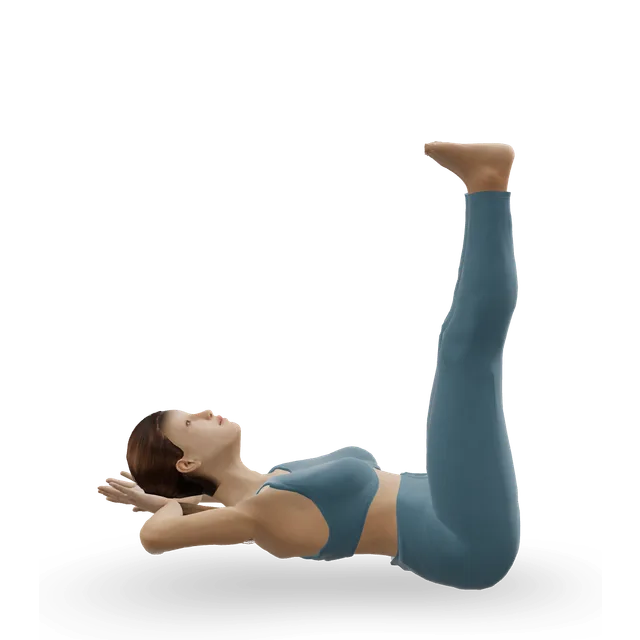
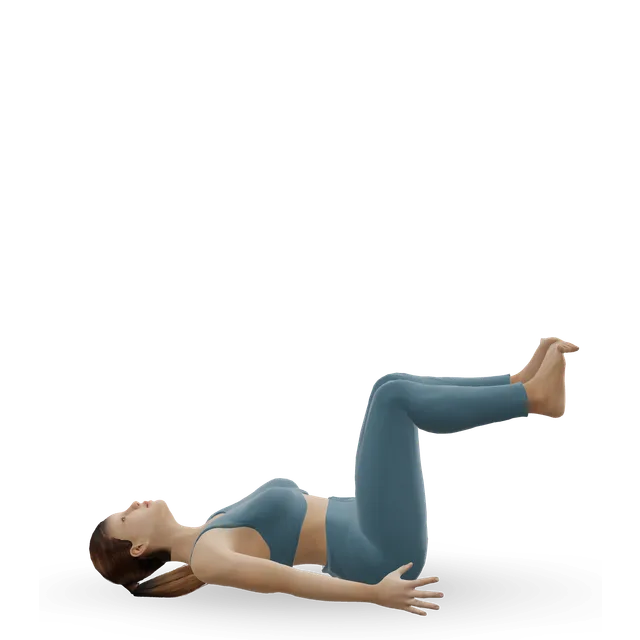
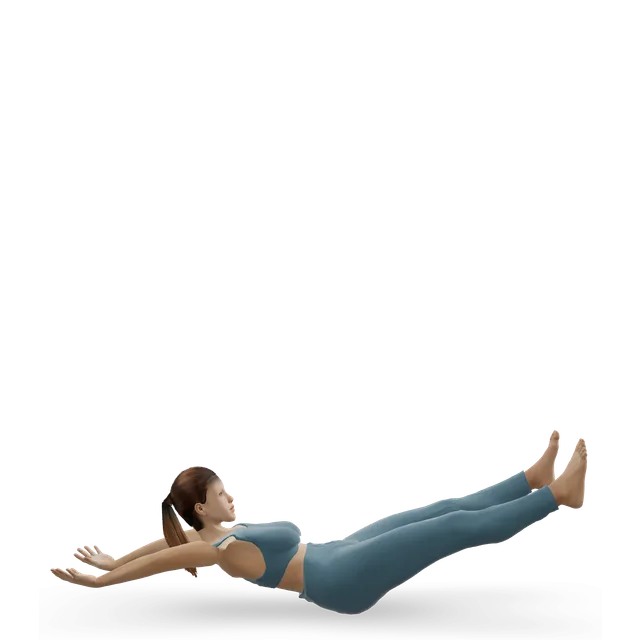
A hollow body hold is a gymnastics core hold: lying on your back with your lower back pressed into the floor, you lift your head, shoulders and legs a little way so your body makes a shallow curve, like a dish, and hold it. The straighter and lower your legs, the harder it gets.

No study has measured the hold itself. Studies of similar positions suggest your abs work hard when your lower back stays down and your levers are long; how it compares with the plank is borrowed from a study of a sitting V-sit hold, and what it does for gymnastics skills is coaching practice.

This guide shows you the shape and the easier steps that lead to it, from the dead bug and the tucked hollow to arms overhead and legs low, how long to hold and how often, and how it compares with the plank. It covers what the hold works, what it does for handstands and other skills, how to look after your lower back and neck, and who should leave it out, with a 3D demo.

The short version

Back down, then lift

Lie on your back and press your lower back into the floor. Lift your head, shoulders and legs a little way, arms by your sides or past your ears, and hold while breathing. Bend your knees or bring your arms in as soon as your lower back lifts.

Sources 1, 2

The gymnastics dish

Gymnastics teaching calls it the dish: the body line in handstands, swings and the dragon flag. Coaches treat it as a base for those skills, but no study has tested the carry-over.

Source 3

No study has measured the hold itself

In similar positions, a pelvis tucked under rather than tipped forward into an arch, and longer levers, made the abs work harder. That's the best guide we have to why the hold is hard.

Sources 4, 5, 6

Different from a plank, not better

No study has compared the two. Our comparison is borrowed from a study of a sitting V-sit hold against the plank: the abs worked about as hard, the plank worked the shoulders and upper back more, and people's times on the two barely matched.

Source 7

How long

Start with your knees bent. Hold 10 to 30 seconds, 2 to 4 times, 2 or 3 days a week, and once 30 seconds is steady, make the shape harder rather than holding longer (our editorial range, from our workouts and these coaching sources).

Sources 1, 2

Who should leave it out

People with osteoporosis (choose a dead bug, bird dog or plank), and anyone in pregnancy after the first trimester, in the first weeks after a birth, or after tummy surgery or with a stoma, as our move page says.

Sources 8, 9, 10

What a hollow body hold is, and what it works

The shape

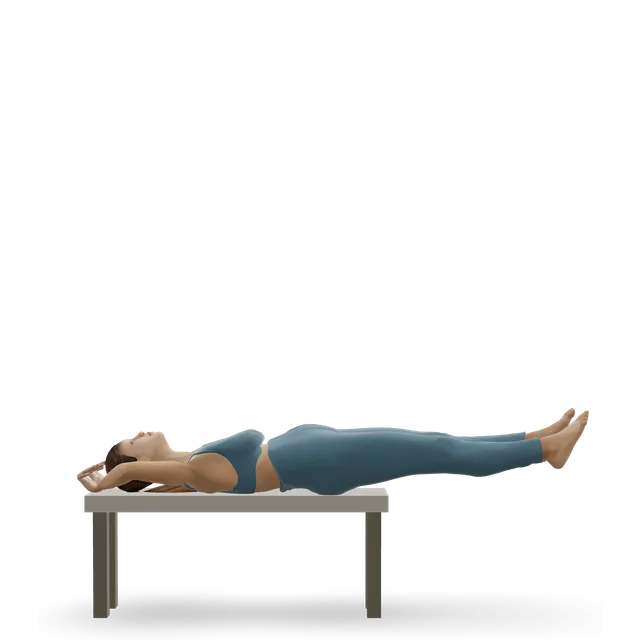
Your lower back presses into the floor and your head, shoulders and legs lift into a shallow curve. A university gymnastics teaching resource calls it the dish, with the teaching points "Arms and legs extended; Tight core; Lower legs is harder". Its opposite, lying face down, is the arch hold.

Sources 2, 3

What it works

Mainly the six-pack muscle (rectus abdominis) and the obliques at your sides, with the hip flexors at the front of your hips holding your legs up and the deep tummy muscles working. How hard it is depends on the levers: straight legs, low legs and arms overhead are harder.

Sources 4, 5

Versions on this page

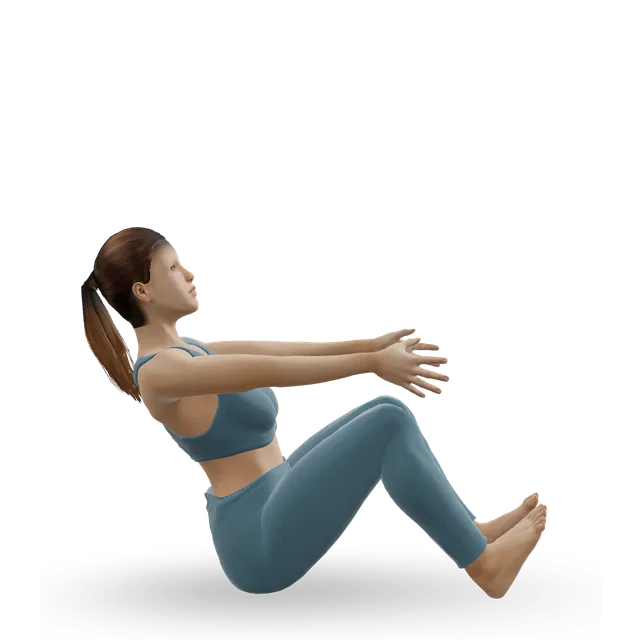
The tuck hollow, with your knees bent and arms by your sides, and the full hold, both on the hollow body hold demo; the dead bug and heel taps below it; the Pilates double straight-leg stretch and the Hundred as Pilates relatives; the boat pose as a sitting relative; and the dragon flag and L-sit above it. One leg straight, hollow rocks and a weighted hollow (a light plate held overhead) have no demo of their own.

Source 2

Who was studied

Nobody, for the hold itself. The related studies on this page are small groups of healthy adults, mostly young men.

What the evidence says

No study of the hold itself

No study has measured muscle activity, spine load or training effects in the hollow body hold. Everything below comes from similar positions.

A tucked pelvis turns the abs onEmerging evidence

In 16 men holding both straight legs about 5 cm off the floor, tilting the pelvis back (tucking it under) drew more upper and lower six-pack activity than tipping it forward into an arch, and a neutral pelvis did as well as the tuck. Activity in the rectus femoris, one of the hip flexors, didn't change with the pelvic position.

Source 4

Lowering straight legs against a curl-upEmerging evidence

In 15 men, lowering both straight legs with the pelvis tucked worked the abdominal muscles harder than a bent-knee curl-up with the pelvis in the same position.

Source 5

Longer levers are harderEmerging evidence

A plank with the elbows further forward, a longer lever, raised six-pack and oblique activity in 19 adults more than tucking the pelvis did. In the Pilates Hundred, straight legs worked the core harder than bent knees in 28 men.

Sources 6, 11

The V-sit and the obliquesEmerging evidence

The V-sit and reverse curl drew the most activity from the outer obliques of 5 common ab exercises in 25 adults.

Source 12

What it means for the hold

A lower back held down rather than arching, and long levers (legs straight and low, arms overhead), are what make the hold hard. Bending your knees and bringing your arms down make it easier, which is how our move page scales it (our editorial reading).

Muscle activity isn't growth

These studies use EMG (electromyography: electrodes measuring how hard a muscle works over a few reps), which isn't a validated predictor of which exercise grows a muscle more. Treat the numbers as clues, not verdicts.

Source 13

Hollow hold or plank?

Borrowed from a V-sit studyEmerging evidence

No study has compared the hollow hold with the plank. The nearest is a study of a curled, sitting V-sit hold against the front plank: the two needed the same effort from the trunk flexors and drew similar six-pack, oblique and lower-back activity, but the lower back was 28 degrees more rounded in the V-sit, the lats and upper-back muscles worked harder in the plank, and people's hold times on the two were only weakly related (posture measured in 20 adults, muscle activity in 30). The hollow hold is a different position, so read this as a clue, not an answer.

Source 7

So which is better?

Neither. Both stop your back arching, as our plank guide explains, but they're different tasks: the hollow hold trains the curled, long-lever shape gymnastics needs, while the plank also works your shoulders and is easier to learn. Do whichever suits your goal, or both (our editorial view).

Hollow hold, boat pose or V-sit?

The hollow hold lies on your back with your lower back pressed down; the boat pose and V-sit balance on your seat with your trunk leaning back. All three use the muscles at the front of your trunk, in different positions.

How to do a hollow body hold, step by step

From our move page, Experience Life's hollow-body hold and Physitrack's hollow hold, which starts from a tabletop. With your knees still bent at step 4, it's the tuck hollow, the usual starting point.

  1. Lie on your back with your knees bent, feet flat and arms by your sides.
  2. Tuck your pelvis slightly so your lower back presses into the floor, with no gap under it.
  3. Lift your head and shoulders a little, looking towards your knees, with your arms reaching along your sides towards your feet.
  4. Lift your knees to a tabletop, then straighten your legs only as far as your lower back stays down. For the full hold, take your arms past your ears and lower your legs a little more.
  5. Hold and keep breathing. The moment your lower back starts to lift, bend your knees or bring your arms in.

Loading the 3D figure…

Gets into position, then repeats the movement. Technical checks passed; qualified exercise review is pending.

The movement on the figure: Hollow body hold

The opposite shape: the arch hold

From our locust move page. Our gymnastics conditioning workout pairs 3 hollow holds of 20 seconds with 3 arch holds of 20 seconds. Lying face down gets uncomfortable as a pregnancy bump grows: use the bird dog instead.

  1. Lie face down with your arms alongside your body and your forehead on the floor.
  2. Lift your chest, arms and both legs off the floor at once, reaching long through your fingers and toes, with your neck long and your eyes on the floor.
  3. Hold for a few breaths, then lower slowly. Lower your chest and legs if your lower back pinches.

Loading the 3D figure…

Gets into position, then repeats the movement. Technical checks passed; qualified exercise review is pending.

The movement on the figure: Locust pose (Salabhasana)

The easier steps: from the dead bug to the dragon flag

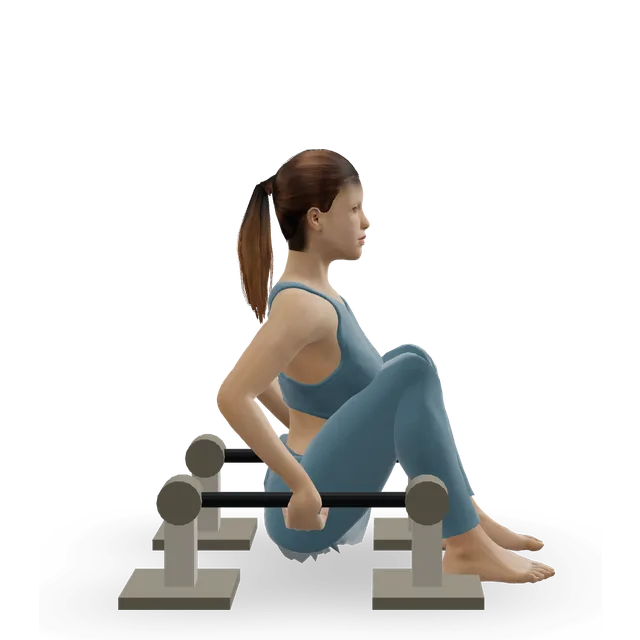
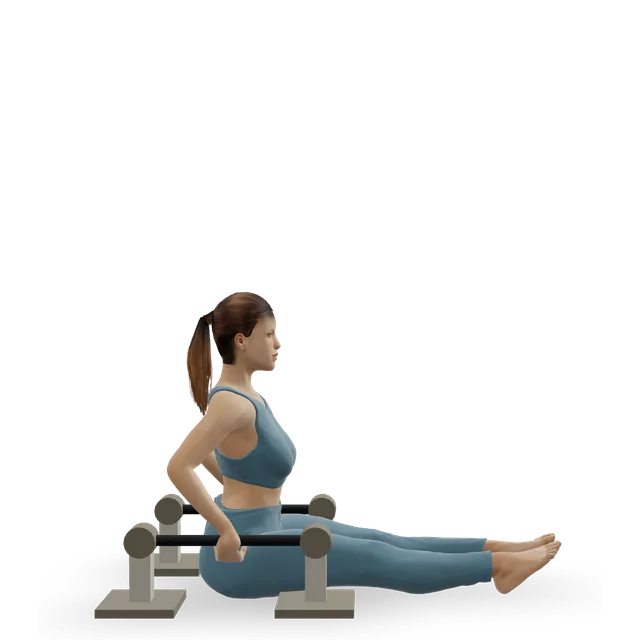
Move on at a steady top of each step's range with your lower back down (our editorial rule). Dead bugs, 2 to 3 sets of 6 to 10 each side (our 30-day ab challenge), the hold's prerequisite; the tuck hollow, knees bent and arms by your sides, then straight legs held high, 2 to 3 holds of 10 to 30 seconds (our 30-day ab challenge, knees bent at first); the full hold, arms past your ears and legs low, 3 or 4 holds of 15 to 30 seconds, moving on at a steady 30 seconds (our dragon flag guide, editorial); the Pilates double straight-leg stretch, 6 to 10 reps (its move page's dose); dragon flags, 3 or 4 sets of 3 to 5 slow lowers, knees tucked first (our dragon flag progression); the tuck L-sit and L-sit, whose guide sets the doses.

How long, and how often

Holds

2 to 4 holds of 10 to 30 seconds: our editorial range, spanning our 30-day ab challenge at 2 to 3 holds of 10 to 30 seconds, our dragon flag guide at 3 or 4 holds of 15 to 30 seconds, and our gymnastics conditioning workout at 3 holds of 20 seconds.

What coaching sources suggest

Physitrack suggests 10 to 15 seconds for beginners and 30 to 60 for advanced exercisers; Experience Life starts at 10 seconds and builds to 30. No study has compared hold times.

Sources 1, 2

Rest

30 to 45 seconds between holds, as our 30-day ab challenge uses.

How often

2 or 3 times a week, as our get abs guide suggests; our dragon flag progression says two or three times a week is plenty. Matched for weekly sets, training a muscle more often made little difference to growth.

Source 14

Harder, not longer

Add seconds up to about 30, then make the shape harder (straighter legs, lower legs, arms overhead) rather than holding longer. Our 30-day ab challenge keeps every hold under about 60 seconds.

When to end a hold

When your lower back starts to lift, as our move page says, not when the clock runs out.

Common mistakes and how to fix them

Your lower back lifts

The hold has gone past your control. Bend your knees or bring your arms in, and lower your legs only as far as your back stays down, as our move page cues it.

Legs too low, too soon

Start with your knees bent or your legs high, and lower them over the weeks.

Source 1

Your neck does the work

Keep the head lift small with your chin slightly tucked. Rest your head in your hands, or lower your legs, if your neck is doing the work, as our move page advises.

Holding your breath

Breathe throughout: holding your breath raises blood pressure, as our 30-day ab challenge says.

Floppy arms

Reach your fingertips long towards your feet, or long overhead.

Source 2

Chasing time

A long hold with your back off the floor trains the wrong shape. Make it harder, not longer.

Your lower back and neck

No study has measured the load on your spine

If your back arches, the weight of your legs pulls your lower back into the arch (our editorial reading), which is why our move page says to bend your knees or bring your arms in as soon as your lower back lifts.

It's not about switching off the hip flexorsEmerging evidence

In a straight-leg lift, activity in the rectus femoris, one of the hip flexors, didn't change with pelvic position, while the six-pack worked harder with the pelvis tucked than tipped forward. Keeping your lower back down is what turns the abs on.

Source 4

If your back hurts

Shorten the levers first. If it still aches, swap to dead bugs, bird dogs and the McGill curl-up, as our sit-up and dragon flag guides advise for harder ab moves during back pain. Discomfort up to about 5 out of 10 that settles within an hour or so is acceptable, as our back pain guides say; the NHS advises stopping back exercises that make the pain worse and seeing a GP.

Source 15

Your neck

Strain is common, because your neck holds your head up. Keep the head lift small, or rest your head in your hands and lower your legs. The NHS advises seeing a GP if neck pain doesn't go away after a few weeks, or comes with pins and needles or a cold arm.

Source 16

Handstands, levers and other skills

Gymnasts hold the same shape upside downEmerging evidence

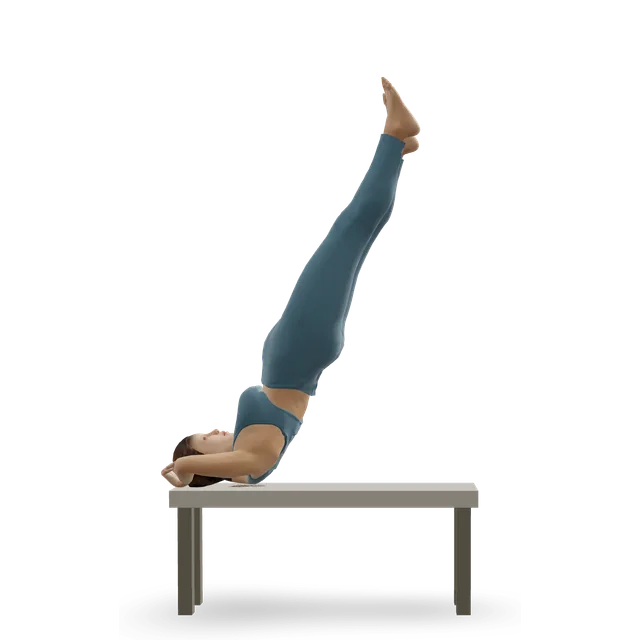
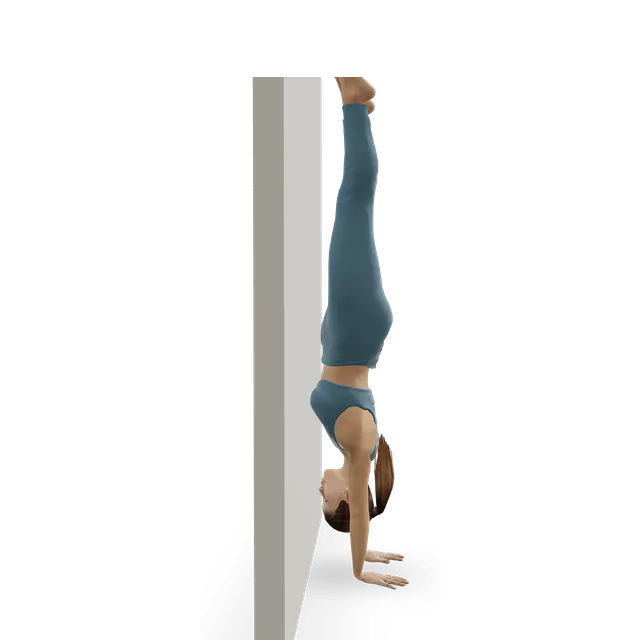
In an X-ray study of 19 national-level gymnasts, most tucked the pelvis under and flattened the curve of the lower back in a handstand: the hollow shape, in a skill.

Source 17

Does it carry over?

No study has tested whether hollow holds help handstands, levers, the L-sit or the dragon flag. Coaches treat a solid hold as the base for those skills, and our dragon flag progression asks for a solid 30-second hollow hold first; read it as coaching practice.

Source 1

Where it leads

Our dragon flag, L-sit, handstand and front lever guides each use the hollow shape, and our front lever progression warms up with hollow holds as the body line the lever holds.

Moves that go with it

Arch holds (locust pose), 3 of 20 seconds, as the opposite shape (our gymnastics conditioning workout); forearm planks, 3 holds of 20 to 45 seconds (our plank guide); reverse crunches, 2 sets of 10 to 12, slowly curling your pelvis (our dragon flag progression); boat pose, 3 holds of 15 to 20 seconds with your knees bent (our yoga and Pilates workout); the Pilates Hundred, 50 beats to start, building to 100 (its move page's dose); heel taps, 10 each side (our no-equipment ab workout); wall handstands, 3 holds of 20 to 30 seconds (our gymnastics conditioning workout), where the hollow shape goes upside down.

Workouts to follow

Core session A of our 30-day ab challenge brings in hollow holds with your knees bent, on its harder track from week 3; our dragon flag progression uses them as its warm-up; the no-equipment ab workout has them in its circuit; the gymnastics conditioning workout pairs them with arch holds; the front lever progression uses them as the body line the lever holds.

Plans that use them

The 30-day ab challenge's core session A brings in hollow holds on the harder track from week 3.

Who should leave it out, and warning signs

Leave it out

With osteoporosis or a past spinal fracture: choose a dead bug, bird dog or plank, because the UK consensus advises modifying or avoiding repeated or end-range forward bending. In pregnancy after the first trimester, when the NHS advises against lying flat on your back for more than a few minutes. In the first weeks after a birth, when the NHS advises avoiding sit-ups and planks to start with, and whenever the middle of your tummy domes (bulges into a ridge). After tummy or bowel surgery or with a stoma, while your tummy heals, as our move page says.

Sources 8, 9, 10

Ask first

With a hernia, uncontrolled high blood pressure, glaucoma or diabetic eye disease, choose gentler core work or get advice first, and never hold your breath in the hold, as our breathing guide advises.

Stop and get medical help

If you get chest pain or pressure, feel faint or dizzy, are unusually breathless, or your heart races or beats irregularly during exercise, as our plans advise. The American Heart Association says these need immediate medical evaluation.

Source 18

Call 999 (911 in the US)

For chest pain that feels tight, heavy or squeezing, or spreads to your arms, neck, jaw or back; a headache that starts suddenly and is extremely painful, especially while straining; someone who faints while exercising; palpitations that don't go away, or come with chest pain, breathlessness or feeling faint; severe difficulty breathing; or angina pain that doesn't stop after rest and your medicine. Don't drive yourself to A&E.

Sources 19, 20, 21, 22, 23, 24, 25, 26

A headache brought on by straining

A headache triggered or made worse by coughing, sneezing, bending down or exercising needs an urgent GP appointment or NHS 111 (in the US, your doctor or urgent care), as our dragon flag guide says.

Source 21

Check before hard straining work

If you haven't exercised for some time or have a medical condition, speak to your GP first, as the NHS advises. Get advice before hard straining work if your blood pressure is uncontrolled, or you have heart disease or chest pain when you're active, a pacemaker or defibrillator, diabetic eye disease, glaucoma, a hernia, recent eye or tummy surgery, or you're pregnant, as our breathing guide lists.

Source 27

After a faint, or dizziness that keeps coming back

See a GP after any faint, and for dizziness that won't go away or keeps coming back.

Sources 23, 28

Your neck

Get a same-day GP appointment or contact NHS 111 for severe neck pain that starts suddenly or gets worse quickly, heaviness or weakness in your arms or legs, or pins and needles in an arm with neck or arm pain, as our neck pain guide says.

Source 16

Call 999 or go to A&E: back pain with these signs

Loss of feeling or numbness around the genitals or bottom, new trouble peeing or controlling your bladder or bowels, changes in genital sensation during sex or problems with erections or orgasm, or pain, tingling, weakness or numbness in both legs. These are signs of cauda equina syndrome, which needs treating in hospital urgently. Don't drive yourself.

Sources 15, 29

Back pain that needs a GP or NHS 111

Ask for an urgent GP appointment or contact NHS 111 (in the US, urgent care) with a high temperature, if you feel hot, cold, shivery or generally unwell, or if severe pain starts suddenly or gets worse quickly. See a GP for back pain that doesn't improve after a few weeks of treating it at home, stops your day-to-day activities, is worse at night or after resting, or comes with weight loss you can't explain or a lump or change in the shape of your back.

Source 15

A new lump or bulge

See a GP if you think you have a hernia: a bulge or lump in your groin, upper thigh or tummy that may get bigger when you cough, sneeze or cry and smaller when you lie down. Get help from NHS 111 if you have a hernia and pain in or around it, a bloated tummy, sickness, constipation, a high temperature or sudden confusion. Call 999 or go to A&E for a femoral hernia (a lump at the top of the thigh) with very bad tummy pain, sickness, being unable to fart or poo, a high temperature or sudden confusion.

Sources 30, 31
Myths

"The hollow hold is just a gymnast's plank"Emerging evidence

Both stop your back arching, but they're different tasks. In the nearest study, of a sitting V-sit hold against the plank, the lower back was 28 degrees more rounded, the plank worked the shoulders and upper back harder, and people's times on the two were only weakly related. The hollow's tucked pelvis and long levers are what load the abs, and gymnasts hold the same pelvis-under shape in a handstand. It's worth learning as its own skill.

Sources 7, 4, 17

"Your hip flexors do all the work"Emerging evidence

In a straight-leg lift, activity in the rectus femoris, one of the hip flexors, didn't change with the pelvic position, while six-pack activity was higher with the pelvis tucked than tipped forward. Keeping your lower back pressed down is what turns the abs on.

Source 4

"Longer hollow holds are better"Emerging evidence

Coaching sources stop at 30 to 60 seconds; our dragon flag guide moves on at a steady 30 seconds, and our 30-day ab challenge keeps every hold under about 60 seconds. A long hold with your back lifting trains the wrong shape: make it harder, not longer.

Sources 1, 2

"The hollow hold is bad for your back"Emerging evidence

No study has measured spine load in the hold. Done with your lower back pressed down and the levers short enough to keep it there, it's a controlled hold. It does curl your upper spine, which is why it's left out with osteoporosis.

Sources 4, 8

"A strong core prevents injuries"Mixed evidence

Core strength and control were linked with later leg injuries in athletes, but the evidence is preliminary and core endurance gave conflicting results, and a critical review concludes that the broad benefits claimed for core training have likely been overstated.

Sources 32, 33

"Hollow holds burn belly fat"

Ab exercises build control and some muscle, but they don't burn the fat over them, as our plank and get abs guides explain. Fat comes off the whole body with your eating and activity.

Questions people ask

What is a hollow body hold?

A gymnastics hold, also called the dish: lying on your back with your lower back pressed down, you lift your head, shoulders and legs a little way so your body makes a shallow curve. It's the shape your body holds in handstands, swings and the dragon flag.

What muscles does the hollow hold work?

Mainly your six-pack muscle and obliques, with your hip flexors holding your legs and your deep tummy muscles working. No study has measured the hold itself, but in similar positions, keeping the pelvis from tipping forward and lengthening the levers made the abs work harder.

How long should I hold a hollow body hold?

Start with 10 to 15 seconds and build to a steady 30, in 2 to 4 holds with 30 to 45 seconds' rest. Coaching sources stop at about 30 to 60 seconds; after that, make the shape harder rather than holding longer.

Is the hollow hold better than a plank?

Neither is better: both stop your back arching, but they're different tasks. No study has compared them directly; in a study of a sitting V-sit hold against the plank, the abs worked about as hard, the plank worked the shoulders and upper back more, and people's times on the two barely matched. The hollow hold suits gymnastics and calisthenics goals, and the plank is easier to learn.

Why does my lower back lift or hurt?

Your levers are too long for your strength right now. Bend your knees, bring your arms down by your sides or raise your legs higher until your back stays pressed down, then lengthen them again over the weeks. If back pain lasts, use dead bugs instead and see our back pain guide.

Why does my neck hurt in a hollow hold?

Your neck may be holding your head up on its own. Keep the head lift small with your chin slightly tucked, or rest your head in your hands and shorten your legs instead. See a GP if neck pain hasn't gone after a few weeks, or comes with pins and needles or a cold arm.

How do I make the hollow hold easier?

Bend your knees and pull them in (the tuck hollow), keep your arms by your sides, and hold for shorter times. If that's still hard, practise dead bugs first: keeping your back down through a dead bug is the hold's starting point.

How do I make the hollow hold harder?

Straighten your legs and lower them, take your arms past your ears, then rock gently in the shape (hollow rocks) or hold a light weight overhead. Lowering the legs is the main step up.

Should I learn the dead bug or the hollow hold first?

The dead bug. It teaches the same back-down control with your arms and legs moving one at a time, and the hollow hold's move page lists it as the prerequisite.

Will the hollow hold help my handstand or other skills?

Coaches use it as the base for handstands, levers and the dragon flag, and gymnasts hold the same pelvis-under shape upside down. No study has tested whether practising it improves those skills, so treat it as coaching practice.

Hollow hold, boat pose or V-sit: what's the difference?

The hollow hold lies on your back with your lower back pressed down; the boat pose and V-sit balance on your seat with your trunk leaning back. A sitting V hold worked the abs about as hard as a plank in one study, with the lower back more rounded.

Who shouldn't do hollow holds?

Leave them out with osteoporosis (dead bugs, bird dogs or planks instead), in pregnancy after the first trimester, in the first weeks after a birth, and after tummy surgery or with a stoma. With a hernia, uncontrolled blood pressure or glaucoma, choose gentler core work or ask first.

Sources

  1. Physitrack · How to perform the hollow hold (exercise library)
  2. Fazeli Fard 2019 · How to do the hollow-body hold, with easier and harder versions (coaching article, Experience Life)
  3. Western Sydney University 2023 · Gymnastics teaching resource for PDHPE: the dish shape and its teaching points
  4. Workman 2008 · Pelvic position and ab and hip flexor activity in a straight-leg lift, in 16 men (EMG study, J Strength Cond Res)
  5. Shields 1997 · Lowering both straight legs with the pelvis tucked against a curl-up, in 15 men (EMG study, Spine)
  6. Schoenfeld 2014 · A long-lever plank with the pelvis tucked against the standard plank, in 19 adults (EMG study, Sports Biomech)
  7. Musalem 2015 · A sitting V-sit hold against the prone plank: spine position and muscle activity (lab study, J Appl Biomech)
  8. Brooke-Wavell 2022 · Strong, steady and straight: UK consensus statement on exercise for osteoporosis (consensus statement, Br J Sports Med)
  9. NHS · Exercise in pregnancy
  10. NHS · Your post-pregnancy body
  11. Kim 2021 · Knee angle and props in the Pilates Hundred, in 28 men (EMG study, J Bodyw Mov Ther)
  12. Willett 2001 · Abdominal muscle activity in five common ab exercises, including the V-sit, in 25 adults (EMG study, J Strength Cond Res)
  13. Vigotsky 2022 · Muscle activity measured in one session isn't a validated predictor of muscle growth (review, Sports Med)
  14. Schoenfeld 2019 · How many times a week to train a muscle for growth: 25 studies (meta-analysis, J Sports Sci)
  15. NHS · Back pain
  16. NHS · Neck pain and stiff neck (past its review date: reviewed April 2023, review due April 2026)
  17. Eyssartier 2024 · Spine position in the handstand, in 19 national-level gymnasts (radiographic study, J Funct Morphol Kinesiol)
  18. Paluch 2024 · Resistance exercise training with and without cardiovascular disease: 2023 update (American Heart Association scientific statement, Circulation)
  19. NHS · Heart attack
  20. NHS · Chest pain (past its review date: reviewed August 2023, review due August 2026)
  21. NHS · Headaches
  22. NHS · Subarachnoid haemorrhage
  23. NHS · Fainting
  24. NHS · Heart palpitations
  25. NHS · Shortness of breath
  26. NHS · Angina
  27. NHS · Physical activity guidelines for adults aged 19 to 64
  28. NHS · Dizziness (past its review date: reviewed April 2023, review due April 2026)
  29. NHS · Sciatica
  30. NHS · Hernia
  31. NHS · Femoral hernia
  32. De Blaiser 2018 · Is core stability a risk factor for leg injuries in athletes? 9 studies (systematic review, Phys Ther Sport)
  33. Short 2025 · A critical review of trunk and hip exercise prescription (clinical commentary, IJSPT)

Exercise education, not a personal prescription, and clinical review of these guides is pending. Check with a GP before starting hard training if you have a heart condition, chest pain, dizziness or breathlessness when active, and stop for sharp or increasing pain. Health disclaimer.