Press down and lift
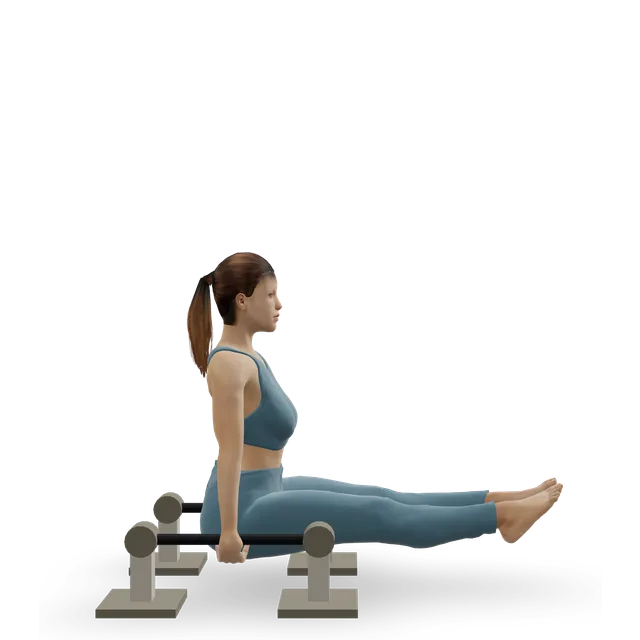
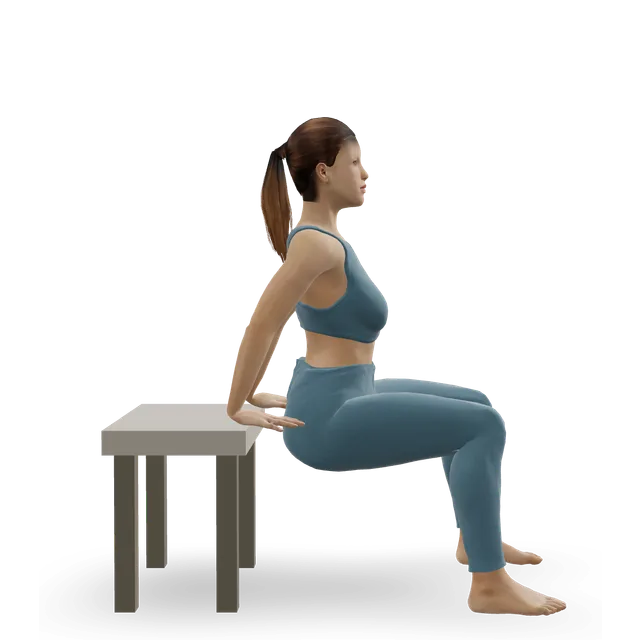
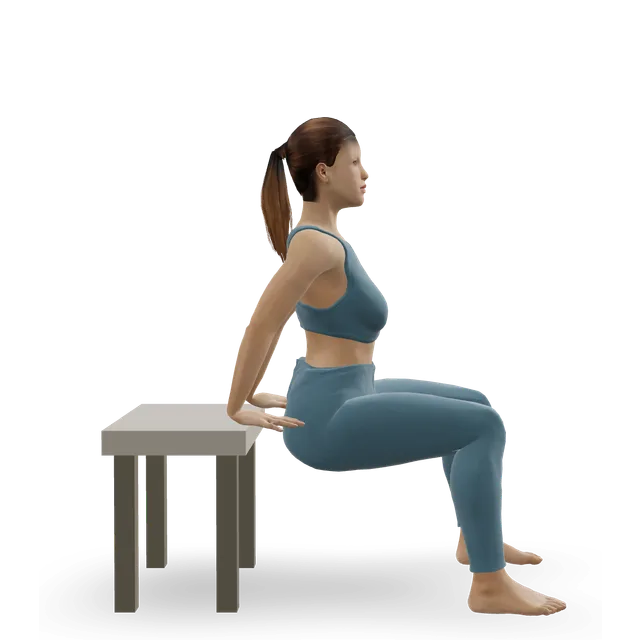
Straight arms, shoulders pushed down away from your ears, hips under your shoulders, legs straight and together. Your triceps, lats and lower trapezius do the pressing.
Source 1
Training guide
An L-sit means holding yourself up on straight arms with your hips off the floor and your legs straight out in front. For most people it isn't the abs that give out first but the hip flexors that hold the legs up, the "compression" strength coaches talk about, along with how hard you can press down through your hands.
There's very little research on the L-sit itself, so the steps and doses here come from coaching practice, a few small studies and our own judgement, and we say which is which. Tight hamstrings and short arms make it harder, not impossible.
This guide covers how to press down and lift off, how to do a tuck L-sit, the steps from feet on the floor to the full L-sit and when to move up, how to build compression strength, what to do about tight hamstrings, short arms and sore wrists, how long to hold and how often to practise, how long it might take, and the warning signs.
Straight arms, shoulders pushed down away from your ears, hips under your shoulders, legs straight and together. Your triceps, lats and lower trapezius do the pressing.
Source 1
Coaches find the hip flexors give out or cramp before the abs. In a review of 9 muscle activity studies, the main hip flexor worked harder the more the hip was bent and the longer the lever.
In a randomised trial of 33 adults, 6 weeks of band hip-flexion training raised hip flexion strength by 17%, significantly more than in the untrained group.
Source 3
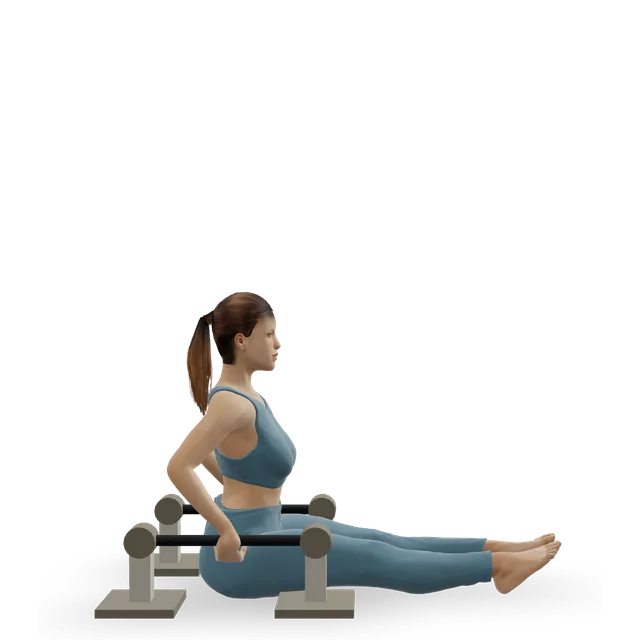
Press until your seat lifts with your feet still down, then lift one foot, tuck both knees, straighten one leg, then both. Parallettes, blocks or push-up handles help short arms and sore wrists.
Coaches use 3 to 5 holds of 5 to 30 seconds, depending on the step, 2 to 4 times a week. Our advanced workouts use 4 holds of 10 to 15 seconds in the full L-sit.
Source 1
Work the tuck while you stretch your hamstrings. The V-sit, the next skill, is where hamstring range really limits people.
You support yourself on straight arms with your hips lifted and your legs straight out in front, roughly level with the floor. It is done on the floor, parallettes, parallel bars or rings. On the floor your hands have the least room, so lifting off is hardest there.
Pressing down, your triceps lock your elbows and your lats and lower trapezius pull your shoulders down, away from your ears. Holding your legs up, your hip flexors (the iliopsoas and rectus femoris) work at a short length, which is why they cramp. Your abs brace your trunk and your quads keep your knees straight.
In fine-wire recordings in 8 people, psoas activity was highest in all-out hip flexion efforts, and in a review of 9 studies the iliopsoas worked harder the more the hip was bent and the longer the lever.
In 28 young aerobic gymnasts aged 9 to 11, those with short legs and long arms held the L-sit for about 24 seconds on average, against about 12 for those with long legs and short arms. It is one small study in children, reported in a review. Coaches answer the "my arms are too short" problem with parallettes or blocks.
We found no training trial of the L-sit. The two studies we found are small studies in aerobic gymnasts, reported in a review: body proportions and hold time in 28 children, and an attention study in 12 experienced gymnasts, in which focusing on an outside target rather than on the body cut execution faults in the L-support.
Source 7
Across 9 muscle activity studies in 109 healthy adults aged 20 to 40, iliopsoas activity rose with more hip bend and a longer lever. In 8 people with fine-wire electrodes, psoas activity was highest in all-out hip flexion efforts and reached 15 to 35% of maximum in sit-ups.
In 33 adults (45% women), band hip-flexion training 3 times a week for 6 weeks, about 10 minutes a session, raised isometric hip flexion strength by 17%, significantly more than in the control group. It is one trial, in people without hip problems.
Source 3
Short legs with long arms went with about twice the hold time of long legs with short arms (about 24 against 12 seconds), and children who were taller for their arm length held it for less time. One small study in children.
Source 7
In a self-selected online survey of 321 adult handstand practitioners, 57% reported chronic wrist pain, and warm-ups, braces and grip devices weren't linked to less pain. No study has looked at the L-sit itself.
Source 8
Across 137 systematic reviews of more than 30,000 people, strength rose more with at least 2 sessions a week and with exercises done early in a session, and training to failure didn't consistently add to it. Across 15 studies, going to failure added at most a trivial amount of muscle.
Our tuck L-sit page asks that you can support your body weight on straight arms for 20 seconds: lift your hips off the floor with straight arms and hold it, or hold steady at the top of parallel bars.
Bearing your weight on your hands without pain. If bending your wrists back hurts, start on fists, push-up handles or parallettes.
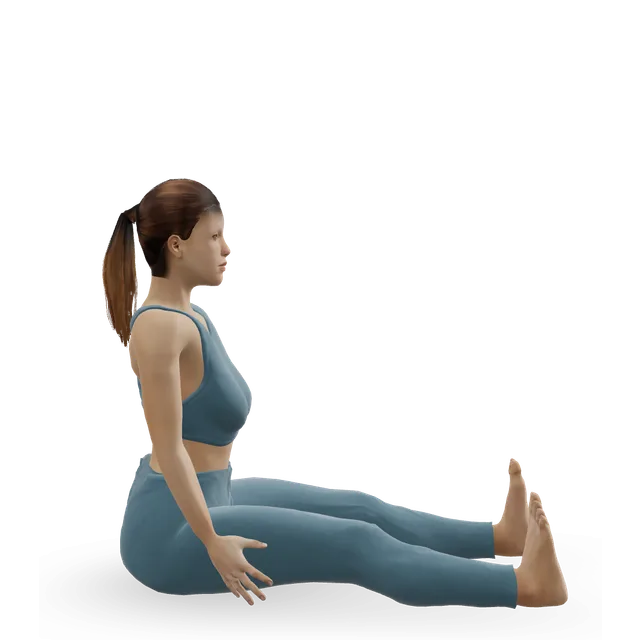
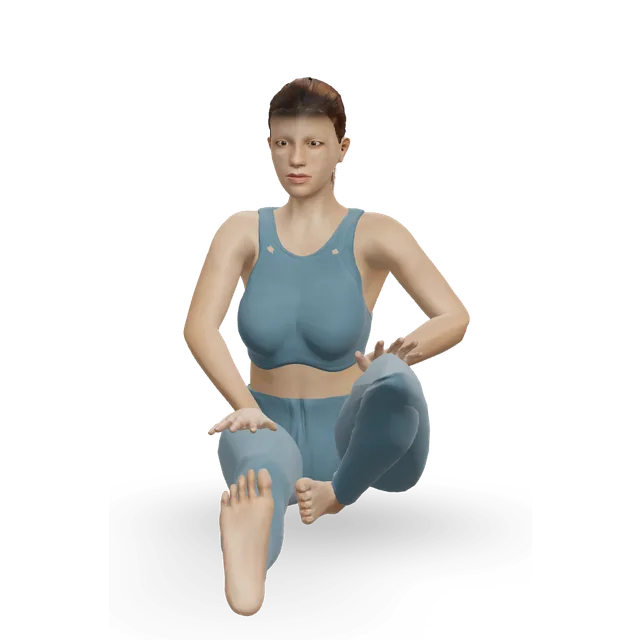
Sit on the floor with straight legs and a tall back (the staff pose). One coach notes that many people find this hard because of tight hamstrings: that's a reason to stretch alongside, not to wait.
Source 5
From our tuck L-sit page and coaching practice (GMB Fitness). The 20 to 30-second point for moving on is editorial.
Loading the 3D figure…
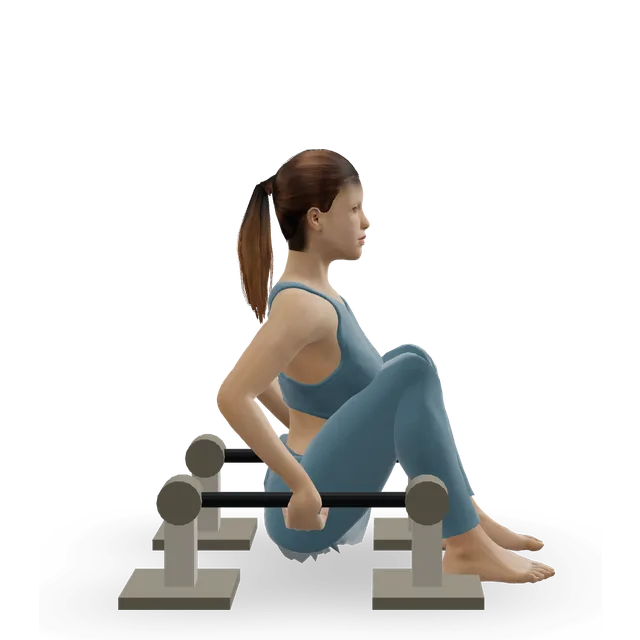
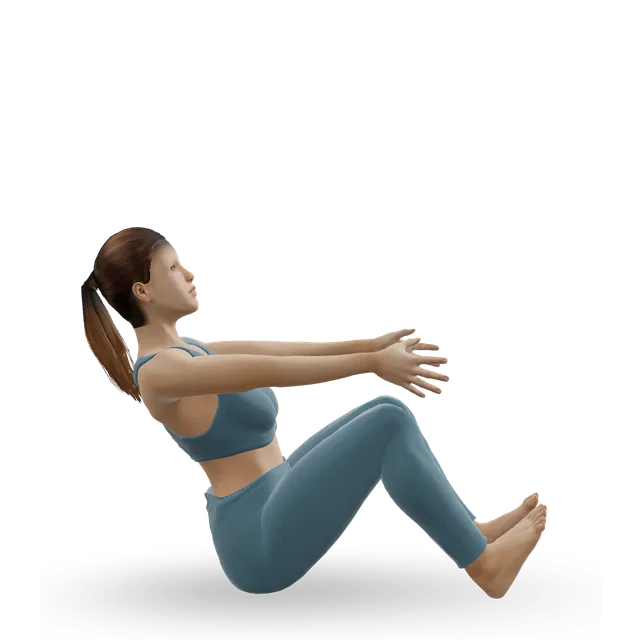
The movement on the figure: Tuck L-sit
Start with your feet on the floor and press down until your seat lifts. The one-leg L-sit is the L-sit with one knee still tucked; the V-sit comes after a steady L-sit.
The move-up points are our editorial choice. Coaching sources use different numbers, and no study has compared them.
A minute of wrist circles and palm turns, then about 10 rocks onto your hands, as in our handstand guide, and 2 holds of 30 seconds in the staff pose (editorial).
Press down until your seat lifts with both feet still down: 4 or 5 holds of 10 to 20 seconds (editorial). Move up at about 20 seconds with your shoulders pushed down.
Source 1
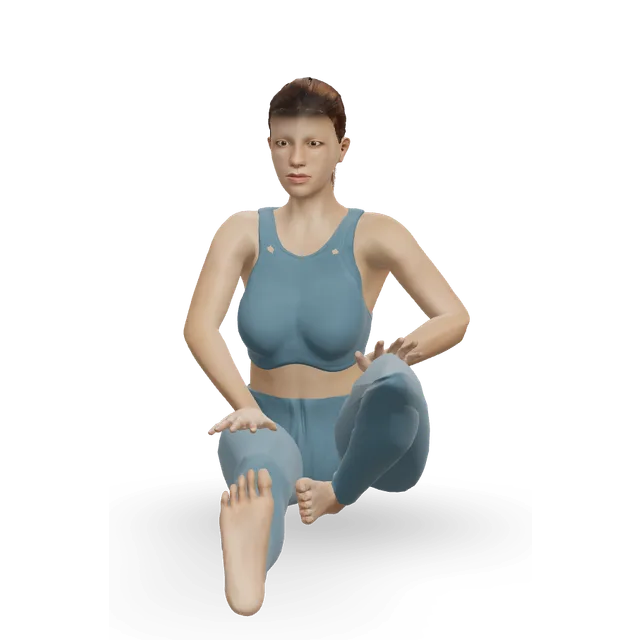
Lift one foot, then both, knees drawn in: 4 or 5 holds of 10 to 20 seconds, resting about a minute (editorial). Move up at 20 to 30 steady seconds.
Source 1
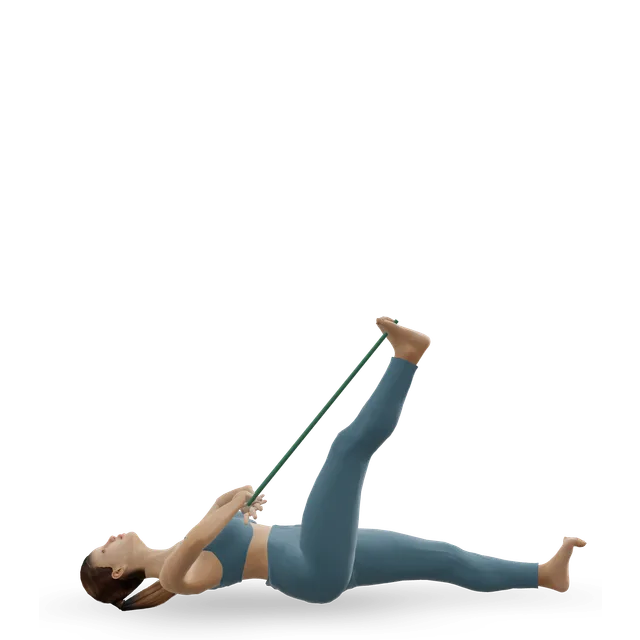
One leg straight, the other tucked, swapping sides: 4 or 5 holds of 5 to 10 seconds each side (editorial). One coach asks for at least 5 seconds a side before the full L-sit.
Source 1
4 or 5 holds of 5 to 15 seconds; our advanced workouts use 4 holds of 10 to 15 seconds. A steady 15 to 20 seconds is a good point to start on the V-sit (editorial).
One coach suggests holding just short of the hardest angle, or 3 to 5 shorter holds with a few breaths between, rather than one long hold.
Source 1
The strength to pull your legs up towards your trunk and hold them there, mostly from the hip flexors working at a short length. Coaches find it, not the abs, is usually what stops the L-sit.
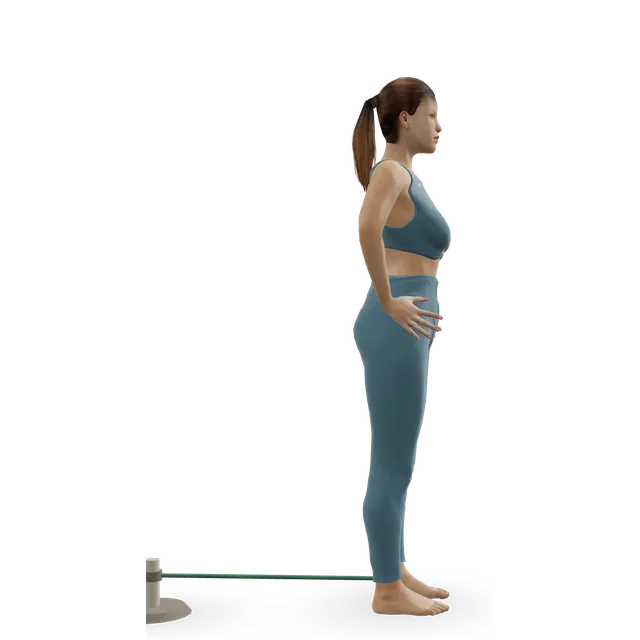
Standing band hip flexion, 2 or 3 sets of 8 to 15 each side, using a stronger band as it gets easy. That is our editorial starting point, after the trial, which moved from sets of 15 to sets of 8 over 6 weeks, 3 sessions a week.
Source 3
Sit tall with straight legs and your hands beside your knees, and lift both legs a few centimetres for 5 to 10 seconds, 3 to 5 times. It's a coaching drill, and the dose is editorial. Expect cramping at first.
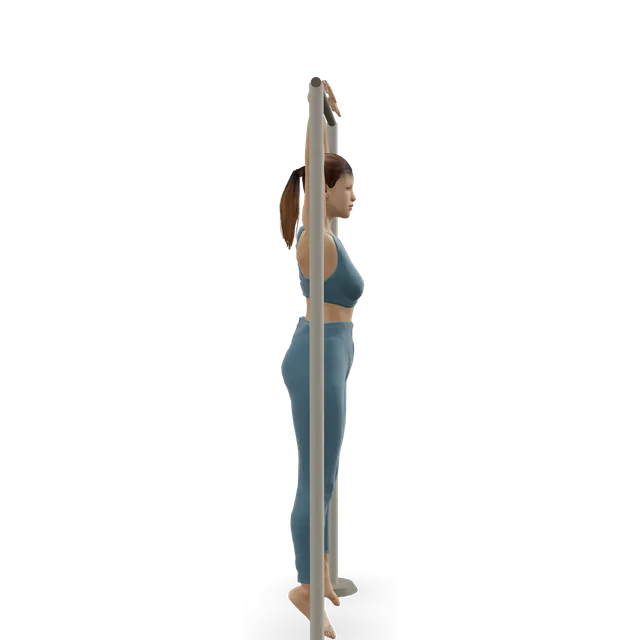
Boat pose, 2 or 3 holds of 20 to 30 seconds with your knees bent at first, and hanging knee raises with your shoulders pulled down, 3 sets of 8 to 10 (editorial doses). Coaches use the shoulders-down knee raise to train the same pressing action while hanging.
Source 1
Hip flexor cramp is common at first. Stop, shake it out and use shorter holds (editorial); one coach puts a shoulder bridge between compression sets to ease it.
Two or three of these, 2 or 3 times a week, after your L-sit practice (editorial).
They make the straight-leg version harder but don't stop tuck work, and coaches find that straightening your legs in the L-sit stretches the hamstrings as you progress. The V-sit needs much more hamstring range.
Our seated hamstring stretch page suggests holding 30 seconds, 1 to 3 times each leg, at least 5 days a week. Our toe-touch guide goes further.
If your hands barely clear the floor beside your hips, raising them on parallettes, blocks or push-up handles gives you room to press, coaches say. Body proportions changed hold times in a small study of young gymnasts.
A floor L-sit bends your wrists back under your whole weight. Fists, push-up handles or parallettes take some of the pressure off, coaches say, so build up gradually. Wrist pain up to about 5 out of 10 that settles within half an hour is acceptable, as our wrist guides say.
The seated hamstring stretch at its move page's dose; the wrist flow and rocks for a minute before every session.
2 to 4 times a week, at the start of a session or as part of your warm-up once the tuck is steady. Coaches find the L-sit less stressful on the joints than the levers and planche, so short practice on more days is reasonable if your wrists feel normal the next day (editorial).
3 to 5 holds of 5 to 30 seconds depending on your step, ending each before your shoulders creep up or your elbows bend.
Source 1
Training to failure isn't needed. A hold that collapses teaches the wrong shape, so stop while your shoulders are still down and your legs still up.
Use slow, controlled out-breaths, as coaches teach, and don't hold your breath.
Source 1
No study has timed these skills. A tuck L-sit often comes within days to a few weeks if you can already hold your weight on your hands. A 10-second L-sit often takes from one to several months: longer on the floor than on parallettes, and longer with tight hamstrings or short arms for your body.
The L-sit progression follows the ladder above; the advanced workouts use the full L-sit, and the wrist and hamstring routines build what it needs.
Build to an L-sit: wrist prep, hip-flexor and compression work, foot-supported and tuck L-sits, one-leg L-sits, then the full hold.
20 minIntermediate8 movesA band, An anchor pointHard core training: ab wheel rollouts, hanging leg raises, L-sits, Copenhagen planks, plank walk-ups and dragon flags.
30 minAdvanced6 movesAn ab wheel, Pull-up barAn advanced bodyweight strength session: pull-ups, dips, pistol squats, archer push-ups, L-sits and Nordic curls.
45 minAdvanced9 movesPull-up bar, An anchor pointWrist mobility and forearm strength for desk work, climbing, push-ups and handstands.
10 minBeginner7 movesA wall, A dumbbellA 12-minute routine to loosen tight hamstrings with strap stretches, PNF, folds and hinges.
12 minBeginner7 movesNo equipmentWork up to bar dips: bent-knee and straight-leg bench dips, a support hold, slow lowering and assisted dips, then full dips and ring dips.
20 minBeginner9 movesA band, A bench or boxStop exercising straight away if you feel any pain or become unwell. Call 999 (911 in the US) for chest pain that doesn't go away or spreads to your arm, neck, jaw, stomach or back, chest pain with sweating, feeling sick, light-headed or short of breath, fainting while exercising, or a pounding, fluttering or irregular heartbeat with chest pain, breathlessness or feeling faint.
A headache that starts suddenly and is extremely painful, especially while straining, can be a bleed on the brain. A headache brought on or made worse by exercise, coughing or bending down needs an urgent GP appointment or NHS 111 (in the US, your doctor or urgent care).
For severe wrist pain, feeling faint, dizzy or sick from the pain, a snap, grinding or popping noise at the time of an injury, a wrist you can't move or hold things with, a wrist that has changed shape or colour, a very painful, hot or red lump, or lost feeling in your hand (in the US, urgent care). See a GP if wrist pain hasn't improved after 2 weeks.
Source 19
Wrist pain is common in young gymnasts, and the growth plate at the end of the forearm bone is at risk from repeated weight-bearing. Wrist pain that is still there the day after training, or a swollen wrist, means stopping weight-bearing on the hands and seeing a GP or sports doctor, as our gymnast's wrist guide says.
The L-sit holds both legs up against gravity, like a double leg raise. After tummy surgery, leave it out until your surgical team says it's fine, and see a GP if you think you have a hernia, such as a new bulge in your tummy or groin.
Source 22
Tingling down your leg in a hamstring stretch comes from a nerve, not a tight muscle: bend your knee and ease off, as our hamstring stretch pages say.
Your hip flexors do most of the work of holding your legs up, and your shoulders and triceps do the lifting; your abs brace throughout. It's a whole-body hold.
Tuck work starts now, and coaches find that straightening your legs stretches the hamstrings as you progress. The V-sit is where hamstring range really limits people.
Body proportions do matter: in one small study of young gymnasts, short legs with long arms went with about twice the hold time of long legs with short arms. Parallettes, blocks or push-up handles give short arms room to press.
They help with short arms and sore wrists, but the floor works, coaches say. Unstable equipment such as rings didn't consistently add strength in a large overview of reviews.
Training to failure isn't needed for strength or muscle. End each hold while your shoulders are still down and your legs still up.
Usually one of three things: pressing down hard enough to lift your seat, hip flexor ("compression") strength to hold your legs up, or hamstrings too tight to straighten your legs. Start with your feet on the floor and press down until your seat lifts, then work up the ladder. Short arms for your body make the floor version harder, and parallettes or blocks fix that.
Your triceps lock your elbows and your lats and lower trapezius push your shoulders down. Your hip flexors hold your legs up, your abs brace and your quads keep your knees straight. In muscle activity studies, the main hip flexor worked harder the more the hip was bent and the longer the lever.
Practise 3 to 5 holds of 5 to 30 seconds depending on your step; our advanced workouts use 4 holds of 10 to 15 seconds in the full L-sit. There's no health standard to hit, and a steady 10 seconds is a fine first goal.
Our rough estimate, not a promise: a tuck L-sit often comes within days to a few weeks if you can already hold your weight on your hands, and a 10-second L-sit often takes from one to several months. It takes longer on the floor, with tight hamstrings or with short arms for your body.
Either works. Parallettes, blocks or push-up handles give short arms more room to press and keep your wrists straighter, while the floor is the hardest place to lift off because your hands have the least room.
Not to start. Tight hamstrings make the straight-leg version harder but don't stop tuck work, so stretch them alongside: our seated hamstring stretch page suggests 30-second holds on at least 5 days a week. The V-sit needs much more hamstring range.
They're working hard at a short length, and cramp is common at first. Stop, shake it out and use shorter holds, and build the strength with band hip flexion and seated leg lifts. In one trial, 6 weeks of band training raised hip flexion strength by 17%.
A floor L-sit bends your wrists back under your whole weight, and wrist pain is common in people who bear weight on their hands. Warm up your wrists and use fists, push-up handles or parallettes. In a child or teenager, wrist pain that is still there the day after, or a swollen wrist, means stopping weight-bearing on the hands and seeing a GP.
It works your abs as bracing muscles, but your hip flexors and shoulders do much of the work, so it's a whole-body hold rather than an ab exercise. How visible your abs are depends mostly on body fat, which our abs guide covers.
Coaches suggest 2 to 4 sessions a week, and they find the L-sit less stressful on the joints than the levers and planche. Short practice on more days is reasonable if your wrists feel normal the next day.
The V-sit, which lifts your legs higher and needs much more hamstring range and compression strength. After that come the straddle L, which needs a wide straddle, and the manna, both for advanced trainees.
No study has looked at L-sits and back pain. The hip flexors attach to the lower spine and work hard here, so if your lower back aches, use the tuck version, keep holds short, and see our back pain guide if it doesn't settle.
Exercise education, not a personal prescription, and clinical review of these guides is pending. Check with a GP before starting hard training if you have a heart condition, chest pain, dizziness or breathlessness when active, and stop for sharp or increasing pain. Health disclaimer.