Training guide

How to do a planche: the lean, tuck and straddle progressions, your wrists and elbows, and an honest timeline

A planche means holding your body level and face down, balanced on straight arms with your hands roughly beside your hips. It's one of the hardest bodyweight holds: in a study of 19 elite male gymnasts training more than 25 hours a week, only 7 could hold the ring version for 5 seconds with their own body weight. For most people it's a long-term goal, and the steps along the way, the planche lean, the frog stand and the tuck planche, are worth having in themselves.

There's no research on learning the floor planche. What exists comes from elite gymnasts on rings, injury surveys and coaching, so the steps and doses here are coaching practice and our own judgement, and we say which is which.

This guide covers the base to build first, how to hold a tuck planche, the ladder from the lean to the full planche and when to move up, what the gymnastics research shows, why body size changes the difficulty but not the possibility, how to look after your wrists, elbows and shoulders, how long it might take and the warning signs.

The short version

A lean you build up gradually

The usual ladder is the planche lean, the frog stand, the tuck planche, the advanced tuck (back flat), the straddle, then the full planche. Going from the tuck to the advanced tuck alone often takes months, coaches say. No trial has tested this ladder; it is coaching practice.

Sources 1, 2

Wrists first

The planche puts your whole weight through a bent-back wrist. Coaches start with wrist preparation and build the lean gradually, and wrist pain is common in people who balance on their hands.

Sources 1, 3

Elbows: build up slowly

In a study of 57 filmed biceps tendon tears at the elbow, 5 happened in a planche, nearly all with the elbow straight and the palm turned up. The videos show the arm's position when tears happened, not how likely they are.

Source 4

Short, good-quality holds

Coaches hold for about half to two-thirds of their best and stop before the elbows bend. Our editorial starting point: 4 to 6 tuck planche holds of 3 to 10 seconds, 2 or 3 times a week. Coaching sources disagree on the details.

Sources 5, 6

Body size changes the difficulty, not the possibility

Strength rises more slowly than body size, so a heavier or taller body needs more strength for its size to hold level. It takes more strength, and often more time; nothing here suggests changing your weight.

Sources 7, 8, 9

Even elite gymnasts gain slowly

Specific training raised elite gymnasts' ring planche strength by about 4% in 4 weeks and 8% in 3 weeks, in small studies with no comparison group.

Sources 10, 11

What a planche is, and what it works

The position

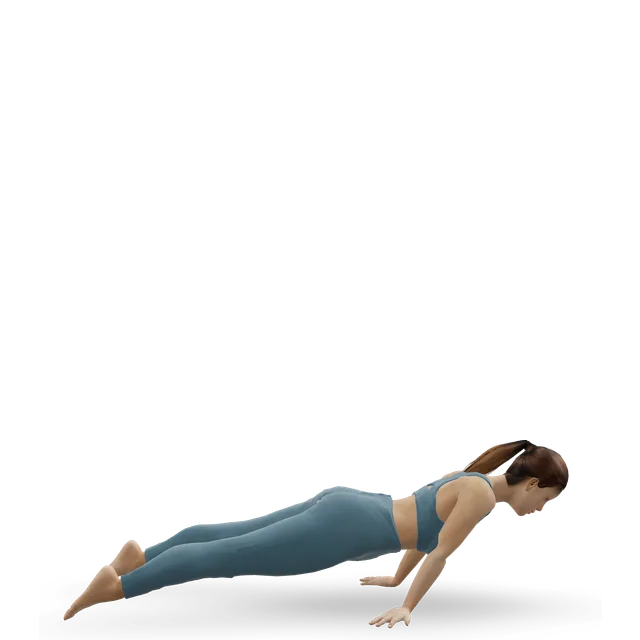
Your body is horizontal and straight, face down, on straight arms, with your shoulders well in front of your hands. In competition the shoulders lean forward until the hands are in line with the hips. On rings it's called the support scale; the swallow is a related straight-arm hold at ring height.

Sources 12, 13, 1

The muscles

Muscle activity has only been measured on rings, in 7 high-level gymnasts: the front of the shoulder and the biceps gave the highest readings of eight muscles, with the serratus anterior, which spreads the shoulder blades, next, and the triceps and lats low. The readings weren't scaled to each muscle's maximum, so comparisons between muscles are rough, and they don't come from the floor planche.

Coaches add that your trunk, glutes and legs hold the body straight, and that straight-arm holds load the biceps at its longest, which is why they build them over months.

Sources 12, 14, 15

Where people differ

Body size and proportions change the difficulty: strength rises more slowly than size, and in a computer model, body proportions changed how far the shoulders must lean to balance. Strength for your size and wrist comfort matter too. The elite gymnasts in the ring studies averaged about 65 kg and 169 cm, and most still couldn't hold the ring planche at body weight.

Sources 7, 8, 16, 17

What the evidence says

No study of the floor plancheEmerging evidence

We found no training trial or muscle activity study of the floor planche. Even on rings, a systematic review found 37 studies of 263 elite gymnasts, almost all observational. The ladder and doses on this page are coaching practice or our editorial choice.

Sources 18, 1

Muscle activity: 7 gymnasts on ringsEmerging evidence

In 7 high-level gymnasts holding the ring planche, the front of the shoulder and the biceps gave the highest muscle activity readings, then the serratus anterior. Exercises that imitate the planche mostly drew less activity, and the version with the feet supported came closest. In 6 top gymnasts, a barbell drill reduced the serratus anterior's share in the swallow. These are small ring studies, not floor planche data.

Sources 12, 13

Strength benchmarks in elite gymnastsEmerging evidence

Of 19 elite male gymnasts training more than 25 hours a week, only 7 could hold the ring planche for 5 seconds with their own body weight. A lying straight-arm press of about two-thirds of body weight went with being able to hold it, a benchmark from 10 elite gymnasts that we read second-hand, as a review reports it. Neither is floor planche data.

Sources 17, 18

Short training studiesEmerging evidence

Four weeks of slow-lowering training on a machine, twice a week, raised ring planche strength by 3.6% in 9 elite gymnasts, and a 3-week version raised it by about 8% in 10. Neither study had a comparison group.

Sources 10, 11

Body size and strengthEmerging evidence

Muscle strength rises roughly with body mass to the power two-thirds (0.66 in 86 lean young men), so a heavier body needs more strength for its size to hold the same shape. In a computer model of 80 body types, with no real people, body proportions changed how far the shoulders must lean for balance; strength wasn't modelled.

Sources 7, 8, 16

InjuriesEmerging evidence

In 93 street workout athletes, 12% of the injured were doing planches when hurt, and shoulders were the most injured area in two calisthenics surveys. In two video studies of biceps tendon tears (57 and 56 tears; the searches may have found some of the same videos), nearly all happened with the elbow almost straight and the palm turned up, including 5 in a planche. Surveys and videos show where problems happen, not how likely they are.

Sources 19, 20, 4, 21

WristsEmerging evidence

In a self-selected online survey, 57% of 321 adult handstand practitioners reported chronic wrist pain. In adolescent artistic gymnasts, pooled studies put wrist pain at 53%, though the certainty is low, and the growth plate at the end of the forearm bone is at risk from repeated weight-bearing.

Sources 3, 22, 23

Before you start

Wrists that take your weight

Coaches put wrist preparation first and like a stable handstand with locked arms, or a strong support on rings, before planche work. Our tuck planche page asks for strong straight-arm support, healthy wrists and months of leaning progressions.

Source 1

A steady plank and push-ups

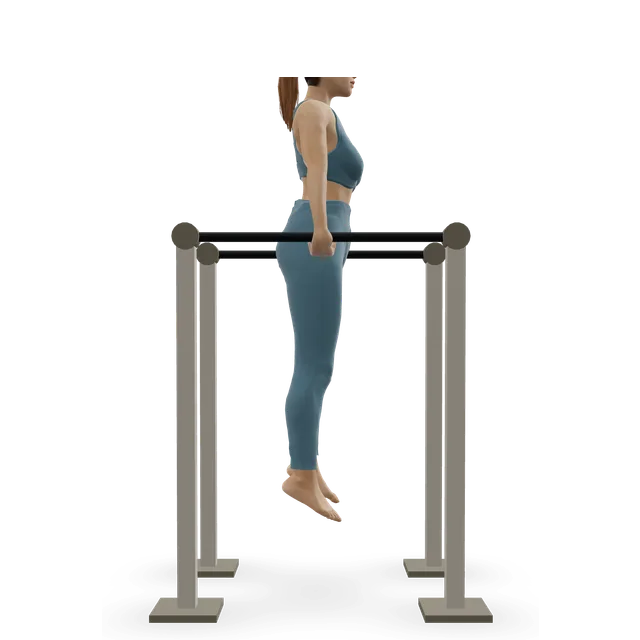
A straight-arm plank held for 30 seconds with your shoulder blades spread, and solid push-ups: our pseudo planche push-up page asks for about 15 clean ones. A few strict dips help too (editorial).

How to hold a tuck planche

From our tuck planche page and coaching practice (GMB Fitness, GymnasticBodies).

  1. Warm up your wrists. If bending them back hurts, use parallettes or push-up handles.
  2. Start in a straight-arm plank, fingers forward or turned slightly out, elbows locked.
  3. Lean forward until your shoulders are well in front of your wrists: the planche lean. Push the floor away so your shoulder blades spread, and keep your shoulders down, away from your ears.
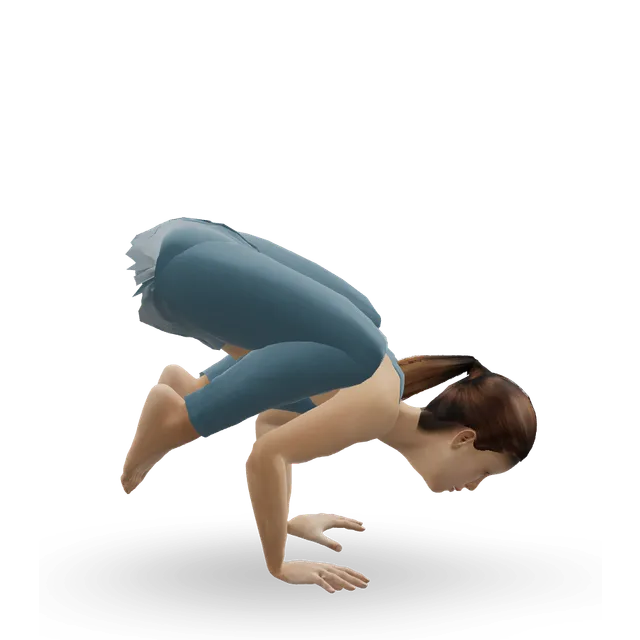
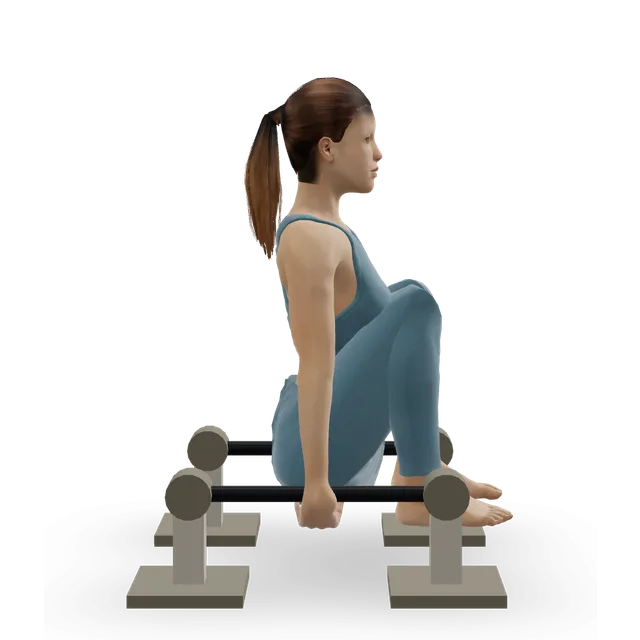
  4. Round your upper back slightly, tuck your knees towards your chest, and shift further forward until your feet float. Or start from a frog stand and straighten your arms.
  5. Hold with straight arms while breathing, hips about level with your shoulders.
  6. Lower your feet with control. End the hold if your elbows bend or the front of your elbow aches.

Loading the 3D figure…

Gets into position, then repeats the movement. Technical checks passed; qualified exercise review is pending.

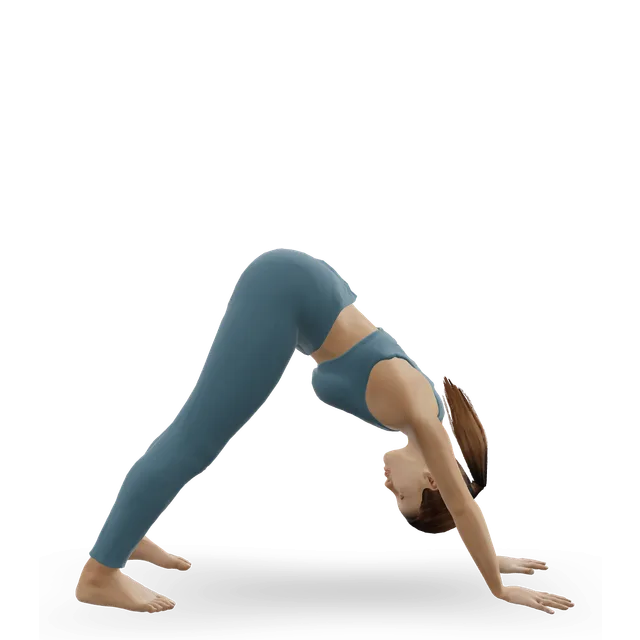
The movement on the figure: Tuck planche

The ladder

The pseudo planche push-up's top position is the planche lean. The straight-arm frog stand, advanced tuck, straddle and full planche have no 3D demo: they are the frog stand with straight arms, then the tuck with a flat back and longer legs.

The steps, with doses and when to move up

The move-up points are our editorial choice. Coaching sources disagree, and no study has compared them.

Prep: wrists and shoulder blades

A minute of the wrist flow and 10 rocks in each hand position, as in our gymnastics conditioning workout, then 2 sets of 10 scapular push-ups (editorial).

Base: the straight-arm plank

Our move page's dose: 3 holds of 15 to 30 seconds. Move on when 30 seconds feels steady with your shoulder blades spread.

1. Planche lean and lean push-ups

Hold the top of a push-up with your shoulders past your wrists and your arms locked: 4 or 5 holds of 10 to 20 seconds, leaning a little further each week (editorial). For lean push-ups, our move page's dose is 3 to 5 sets of 3 to 8, setting the lean so the last rep is hard but clean. Move up at about 30 seconds with your shoulders well in front of your wrists (editorial).

Sources 1, 14

2. Frog stand

Knees on the backs of your arms: 4 to 6 holds of 5 to 15 seconds (editorial), then the same with straight arms. Move up at 15 to 20 seconds with your arms straight.

Source 1

3. Tuck planche

4 to 6 holds of 3 to 10 seconds, resting 2 to 3 minutes (editorial). If your best hold is under about 12 seconds, one coach advises going back to leans for 6 to 8 weeks first.

Source 5

4. Advanced tuck, straddle and full

Flatten your back and move your knees away from your chest: 4 to 6 holds of 3 to 8 seconds (editorial). Coaches find this step alone often takes months. For the straddle, one coach picks two variations and sticks with them for at least 3 weeks before changing.

Sources 2, 1

Where coaching sources differ

One coach moves on at 5 holds of 20 seconds and tries the next step in short holds every session. Coach Sommer's method, as another coach describes it, keeps the same plan for 8 to 12 weeks. Our rule sits between them, and none has been tested.

Sources 1, 5

Body size and the planche

Physics, not a targetEmerging evidence

A heavier or taller body needs more strength for its size to hold level, because strength rises more slowly than size, and your proportions change how far you must lean. It makes the planche harder, not out of reach: coaches who stand 6 feet 3 to 6 feet 5 do advanced bodyweight skills. Nothing here suggests changing your weight to learn a skill; it takes more strength, and often more time.

Sources 7, 8, 16, 9

Hard for everyoneEmerging evidence

Even the elite gymnasts in the ring studies, averaging about 65 kg and 169 cm and training more than 25 hours a week, mostly couldn't hold the ring planche at body weight. If it's slow for you, that's normal.

Source 17

How long to hold, how often, and how hard

How often

2 or 3 sessions a week, not on consecutive days, with the planche first after your warm-up (our editorial starting point). One coach suggests at most 3 days a week for the first 2 months. Strength rose more with at least 2 sessions a week, and in one survey, several sessions a day went with more injuries.

Sources 1, 24, 20

How long to hold

Practise holds of about half to two-thirds of your best clean hold, adding up to about 30 to 60 seconds a session, and retest your best every 2 to 4 weeks. That is our editorial version; coaching sources differ, from 50 to 80% of your best for about 60 seconds in all, to 60 to 70% for about 36 to 65 seconds.

Sources 5, 6

How hard

End each hold before your elbows bend or your shoulders sink. Training to failure isn't needed.

Sources 25, 24

Hand position

Coaches use fingers forward or turned out a little, with the heels of the hands raised on parallettes if needed. Our reasoning from anatomy, which hasn't been tested: turning the fingers out may ease the bend in the wrist, but it also turns the forearm towards palm-up, which may add strain at the biceps tendon. So turn them only as far as the front of your elbow stays comfortable.

Sources 1, 14

Rest, lighter weeks and breathing

About 2 to 3 minutes between hard holds, a lighter week every 6 to 8 weeks with half the holding, as our plans do, and steady breathing through every hold, as our breathing guide explains.

Strength around it

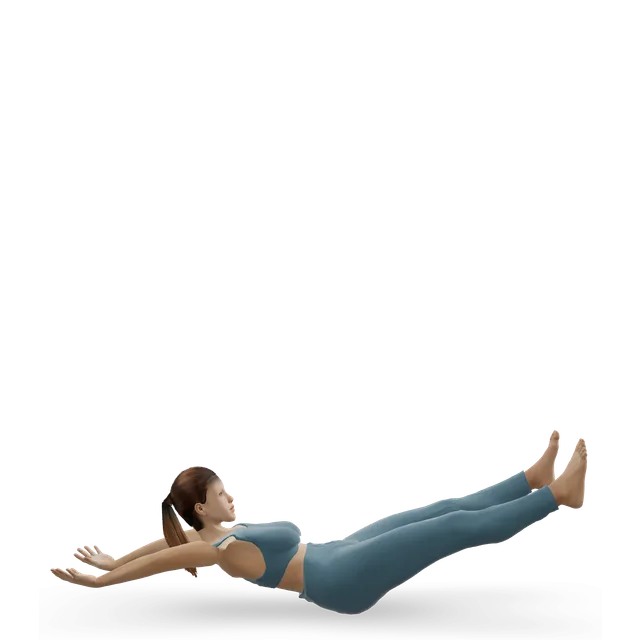
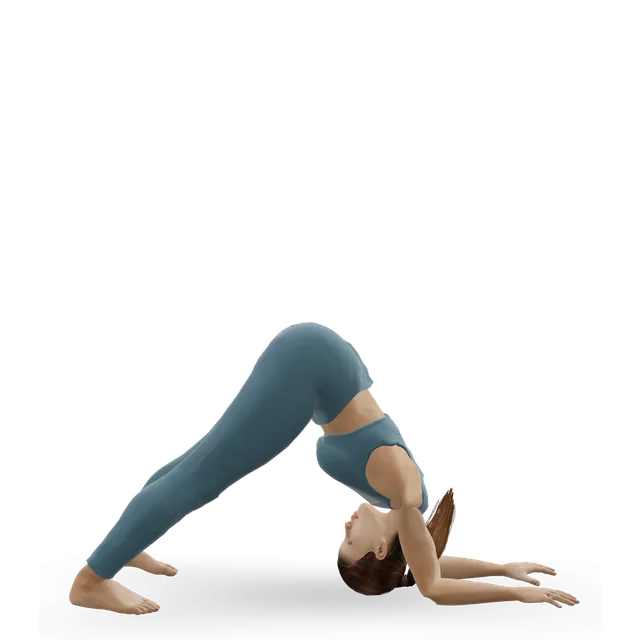
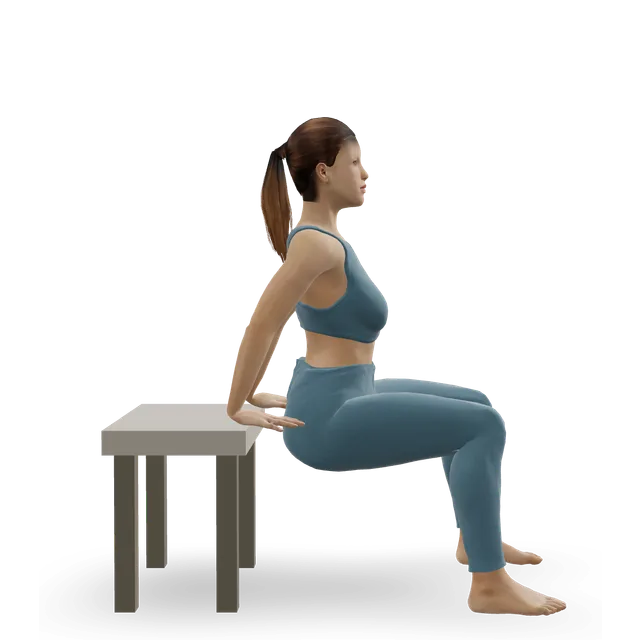
Pike push-ups, 3 sets of 6 to 8, as in our handstand guide; dips, 3 sets of 3 to 8 stopping 1 to 3 reps short, as in our dips guide; hollow holds, 2 or 3 holds of 20 to 30 seconds (editorial).

Your wrists, elbows and shoulders

WristsEmerging evidence

Wrist pain is common in people who balance on their hands, and coaches say skipping wrist preparation is one of the main reasons people get sidelined. Build the lean gradually, and if your wrists ache after a session, hold the lean where it is for a week. Wrist pain up to about 5 out of 10 that settles within half an hour is acceptable, as our wrist guides say.

Sources 3, 1

Children and teenagersEmerging evidence

In growing gymnasts, wrist pain is common and the growth plate at the end of the forearm bone is at risk from repeated weight-bearing. Wrist pain that is still there the day after training, or a swollen wrist, means stopping weight-bearing on the hands and seeing a GP or sports doctor.

Sources 23, 22

ElbowsEmerging evidence

Straight-arm pushing pulls on the biceps tendon at the front of the elbow. The tear videos show the arm's position when tears happened, not how likely they are, and tendons adapt to load over months rather than weeks. Use our elbow guides' rule: an ache of about 3 to 4 out of 10 that settles within an hour and is no worse the next morning is acceptable; otherwise go back a step for a week.

Sources 4, 21, 26

Shoulders and chestEmerging evidence

Shoulders were the most often injured area in calisthenics surveys. In a single case report, a 32-year-old calisthenics athlete fully tore his pectoral tendon in a one-arm static hold; after surgery he returned to calisthenics within 12 to 16 weeks.

Sources 19, 27

Wrists

A minute of the flow and the rocks before every session; the curls, 2 sets of 12 to 15, a few times a week (editorial).

How long it takes

Our rough estimate, not a promise

No study has timed these skills. From a solid base of push-ups and a few dips, a 30-second planche lean often comes within weeks to a few months, and a steady tuck planche often takes many months, commonly up to a year or more. A straddle planche usually takes years, and the coaching company GMB Fitness says most people will never hold a full planche: the earlier steps are worth having on their own.

Sources 1, 2, 17

Workouts

The planche progression follows the ladder above; the handstand, push-up and dip workouts build the pressing base, and the wrist and shoulder routines look after the joints that take the load.

Plans

Warning signs

Stop and get help: chest pain, faintness, breathlessness or a racing heart

Stop exercising straight away if you feel any pain or become unwell. Call 999 (911 in the US) for chest pain that doesn't go away or spreads to your arm, neck, jaw, stomach or back, chest pain with sweating, feeling sick, light-headed or short of breath, fainting while exercising, or a pounding, fluttering or irregular heartbeat with chest pain, breathlessness or feeling faint.

Sources 28, 29, 30, 31

Call 999: a sudden, severe headache

A headache that starts suddenly and is extremely painful, especially while straining, can be a bleed on the brain. A headache brought on or made worse by exercise, coughing or bending down needs an urgent GP appointment or NHS 111 (in the US, your doctor or urgent care).

Sources 32, 33

Same day: a pop at the elbow, armpit or chest

A pop or snap with sudden pain during a hold, especially with bruising or a bulge in the upper arm, can be a torn biceps tendon. A pop or tearing at the front of the armpit or chest, then bruising, a change in its shape or weakness pushing, can be a torn pec tendon. Get seen the same day, at an urgent treatment centre, A&E or through NHS 111 (in the US, urgent care), and don't wait for it to settle, as our biceps and pec strain guides say.

Source 27

NHS 111: your wrist

For severe wrist pain, feeling faint, dizzy or sick from the pain, a snap, grinding or popping noise at the time of an injury, a wrist you can't move or hold things with, a wrist that has changed shape or colour, a very painful, hot or red lump, or lost feeling in your hand (in the US, urgent care). See a GP if wrist pain hasn't improved after 2 weeks.

Source 34

Urgent GP appointment or NHS 111: your shoulder

For sudden or very bad shoulder pain, an arm you can't move, a shoulder that has changed shape or is badly swollen, pins and needles that don't go away, no feeling in your arm, an arm that is hot or cold to touch, or pain that started after a fall or injury. See a GP if shoulder pain gets worse or hasn't improved after 2 weeks.

Source 35

Check with your GP first

If you have high blood pressure that isn't controlled, heart disease, glaucoma or diabetic eye disease, a hernia or recent surgery, or you're pregnant or have recently given birth. Pregnancy isn't the time to start learning the planche: the NHS advises against starting new vigorous activity and against activities with a risk of falling.

Sources 28, 36

Myths

"You need to be light to learn a planche"Emerging evidence

Body size changes the difficulty, not the possibility. Strength rises roughly with body mass to the power two-thirds, so a heavier body needs more strength for its size, and a computer model found proportions change the lean too. No study has tested weight loss as a way to learn the planche, and we never suggest changing your weight for a skill: it takes more strength, and often more time.

Sources 7, 8, 16, 9, 17

"Planche leans alone will get you there"Emerging evidence

Leans build the wrist tolerance and forward shoulder strength the planche needs, but coaches add frog stands, tuck holds and straddle work at each stage. On rings, exercises that imitate the planche mostly drew less muscle activity than the planche itself.

Sources 1, 12

"Fingers pointing back is the safest hand position"Mixed evidence

Pointing the fingers back may ease the bend in the wrist as you lean, but it turns the forearm fully palm-up, the position nearly all filmed biceps tears happened in. Both points are our reasoning from anatomy, untested, and no study has compared hand positions in the planche. Coaches teach fingers forward or turned out a little.

Sources 4, 21, 1

"The planche wrecks your joints"Mixed evidence

No study gives an injury rate per hour of planche training. The surveys and videos show where problems happen, wrists, elbows and shoulders, and coaches say most setbacks come from moving up too fast. Built gradually, it's a demanding but reasonable goal; with joint pain, the earlier steps are the place to be.

Sources 19, 4, 1

"Straight-arm work is safe from day one"Emerging evidence

Straight-arm holds load the biceps tendon, the wrists and the front of the shoulder, and tendons adapt over months. That's why every step starts short and moves up slowly.

Sources 4, 21, 26, 19

"You need rings or a gymnastics background"Emerging evidence

Coaches teach the planche on the floor and parallettes, and unstable equipment didn't consistently add strength in a large overview of reviews. Gymnasts start young and train for years, which is a reason for patience, not a requirement.

Sources 24, 1

Questions people ask

How long does it take to learn a planche?

Our rough estimate, not a promise: from solid push-ups and a few dips, a 30-second planche lean often comes within weeks to a few months, and a steady tuck planche often takes many months, commonly up to a year or more. A straddle planche usually takes years, and most people who train for fun never hold a full planche. The earlier steps are worth having on their own.

Do I need to be light or short to do a planche?

No. A heavier or taller body needs more strength for its size, because strength rises more slowly than body size, so it may take longer; it doesn't rule you out. We never suggest changing your weight to learn a skill.

What muscles does the planche work?

Mainly the front of the shoulders and the muscles that spread your shoulder blades, with your biceps, chest, trunk, glutes and legs holding the line. In the one muscle activity study, 7 gymnasts on rings, the front of the shoulder and the biceps gave the highest readings and the serratus anterior came next. No study has measured the floor planche.

How far should I lean in a planche lean?

Start with your shoulders just in front of your wrists, arms locked, shoulder blades spread and shoulders down, and lean a little further each week rather than each session. Build to about 30 seconds with your shoulders well in front of your wrists before you train the tuck planche.

Why do my wrists hurt in the planche?

The planche puts your whole weight through a bent-back wrist, more so the further you lean. Warm up your wrists every session, use parallettes or push-up handles to keep them straighter, and if they ache after a session, hold your lean where it is for a week. See a GP if wrist pain hasn't improved after 2 weeks.

Why does the front of my elbow hurt?

Straight-arm pushing pulls on the biceps tendon at the elbow, and a few filmed biceps tears happened in a planche. An ache that settles within an hour and is no worse the next morning is acceptable; otherwise go back a step for a week. A pop with sudden pain, bruising or a bulge in the upper arm needs an urgent treatment centre or A&E the same day.

Is the planche bad for your joints or shoulders?

No study gives an injury rate for planche training. It does load the wrists, elbows and shoulders heavily, and coaches say most setbacks come from moving up too fast. Built gradually it's a reasonable goal; with joint pain, stay with the earlier steps.

Can I train the planche every day?

We'd suggest 2 or 3 times a week, not on consecutive days. One coach suggests at most 3 days a week for the first 2 months, adding a day only once your joints have adapted, and in one survey several sessions a day went with more injuries.

Should my fingers point forward or out in the planche?

Forward or turned out a little, as coaches teach. Turning them out may ease your wrists but turns your forearm towards palm-up, which may add strain at the biceps tendon; that's our reasoning from anatomy, not a tested finding. Turn them only as far as the front of your elbow stays comfortable.

Do I need parallettes or rings for the planche?

No. Parallettes keep your wrists straighter and give your feet room to lift, but the floor works. Most of the research is on the ring version in elite gymnasts.

What are the planche requirements?

Wrists that are comfortable bearing your weight, a steady straight-arm plank and solid push-ups: our pseudo planche push-up page asks for about 15 clean ones, and a few strict dips help. Coaches also like a stable handstand or a strong support on rings first.

What are pseudo planche push-ups good for?

They are push-ups in a planche lean, so they build the forward shoulder strength, wrist tolerance and shoulder blade control the planche needs. Our move page suggests 3 to 5 sets of 3 to 8, setting the lean so the last rep is hard but clean.

Sources

  1. GMB Fitness 2026 · How to train for the planche: tuck to straddle progression (coaching article)
  2. Kizirian (Antranik.org) · Progression exercises for static holds (coaching article)
  3. Martonovich 2025 · Chronic wrist pain in 321 adult handstand practitioners (cross-sectional survey, J Funct Morphol Kinesiol)
  4. Jukes 2022 · How distal biceps tendons tear: 57 videos and 22 patients (video analysis, Bone Jt Open)
  5. Kizirian (Antranik.org) · How to implement a steady state training cycle: Coach Sommer's method for static holds (coaching article)
  6. Low 2017 · How long to hold: tables for bodyweight isometric and eccentric exercises (coaching article)
  7. Jaric 2002 · Muscle strength testing and allowing for body size (review, Sports Med)
  8. Folland 2008 · Scaling strength to body size in 86 young men (cross-sectional study, Eur J Appl Physiol)
  9. GMB Fitness 2025 · Bodyweight exercise for tall people (coaching article)
  10. Schärer 2019 · Slow-lowering machine training and ring strength elements in 9 elite gymnasts (uncontrolled trial, Int J Environ Res Public Health)
  11. Schärer 2022 · Combined slow-lowering and loaded training and ring strength in 10 elite gymnasts (uncontrolled trial, Sports)
  12. Rosaci 2025 · Muscle activity in the ring planche (support scale) and its preparatory exercises in 7 gymnasts (EMG study, J Strength Cond Res)
  13. Bernasconi 2009 · Shoulder muscle coordination in the swallow on rings and in training exercises, 6 gymnasts (EMG study, J Strength Cond Res)
  14. GymnasticBodies · Pseudo planche push-up (exercise library)
  15. Low 2017 · The fundamentals of bodyweight strength training (coaching article by the author of Overcoming Gravity)
  16. Wang 2023 · How body proportions affect balance in the planche: 80 simulated body types (computer model, Bioengineering)
  17. Schärer 2021 · Maximum strength benchmarks for static ring elements in 19 elite male gymnasts (cross-sectional study, Sports)
  18. Malíř 2023 · Forces, movement and muscle activity in still rings elements: 37 studies (systematic review, Sports)
  19. Ngo 2021 · Injuries in 93 street workout practitioners (survey, Orthop J Sports Med)
  20. Mohammad 2025 · Injuries in 181 Dutch calisthenics athletes (cross-sectional survey, J Sports Med Phys Fitness)
  21. Lappen 2022 · How distal biceps tendons tear: 56 online videos (video analysis, BMC Musculoskelet Disord)
  22. DiLeo 2026 · Wrist pain and injury in adolescent artistic gymnasts (systematic review and meta-analysis, Orthop J Sports Med)
  23. DiFiori 2006 · Wrist pain, growth plate injury and ulnar variance in young gymnasts (review, Am J Sports Med)
  24. Currier 2026 · Resistance training for strength, muscle and performance: 137 reviews (ACSM position stand, Med Sci Sports Exerc)
  25. Refalo 2023 · Training close to failure and muscle growth: 15 studies (meta-analysis, Sports Med)
  26. Bohm 2015 · How tendons adapt to loading: 27 studies (systematic review and meta-analysis, Sports Med Open)
  27. Choo 2021 · A complete pectoral tendon tear in a calisthenics athlete (case report, Malays Orthop J)
  28. NHS · How to warm up before exercising
  29. NHS · Chest pain (past its review date: reviewed August 2023, review due August 2026)
  30. NHS · Fainting
  31. NHS · Heart palpitations
  32. NHS · Subarachnoid haemorrhage
  33. NHS · Headaches
  34. NHS · Wrist pain
  35. NHS · Shoulder pain (past its review date: reviewed May 2023, review due May 2026)
  36. NHS · Exercise in pregnancy

Exercise education, not a personal prescription, and clinical review of these guides is pending. Check with a GP before starting hard training if you have a heart condition, chest pain, dizziness or breathlessness when active, and stop for sharp or increasing pain. Health disclaimer.