Pain guide · Shoulder pain

Front of shoulder pain: the biceps tendon, rotator cuff, AC joint, the joint and when to worry

Pain at the front of the shoulder most often comes from the rotator cuff, frequently with the long head of the biceps, which runs through a groove at the top of the arm. Pinpoint pain at the end of the collarbone points to the AC joint, deep clicking or catching in an overhead athlete to a labral tear, and weakness turning the arm in after it was forced backwards to a subscapularis tear. Most of it gets better with movement and exercise, though it can take months.

This guide starts with the signs that need help today, from a 999 call or accident and emergency (A&E) to the National Health Service's 111 line (NHS 111) or a general practitioner (GP): chest pain that spreads to the arm, a shoulder that looks out of place, and a sudden pop with a bulge in the upper arm. It then maps the causes by the exact spot, explains what the UK trials found about physiotherapy, injections and surgery, and gives a three-stage plan that ends with reaching, lifting, pressing and sport.

When to get help first

Exercise is for pain that has been checked or is clearly mild and settling.

Get urgent medical help if

  • Call 999: shoulder or arm pain with chest pain that feels tight or squeezing, or chest pain that spreads to your arms, neck or jaw, especially with shortness of breath, sweating or feeling sick. It could be a heart attack.
  • Call 999: sudden pain or discomfort in your chest that does not go away (it can feel like squeezing or pressure, burning or indigestion); pain that spreads to your left or right arm, or your neck, jaw, shoulder, stomach or back; or chest pain and you feel sweaty, sick, light-headed or short of breath. You could be having a heart attack.
  • Call 999 or go to A&E: after a fall or injury, your shoulder looks out of place or has changed shape, or you cannot move your arm. Do not drive yourself, and do not try to put it back in yourself.
  • Call 999: you suddenly can't fully lift both arms and keep them there, because of weakness or numbness in one arm, especially if one side of your face droops or you slur your words or sound confused. It could be a stroke. Call even if the signs have stopped.
  • Call 999 or go to A&E: if you are or could be pregnant, shoulder tip pain (where the shoulder ends and the arm begins) with sudden severe tummy pain, dizziness or fainting. It can mean bleeding from an ectopic pregnancy.
  • Go to A&E, or call 999 if you can't get there: after a hard blow to the shoulder or chest, pain where the collarbone meets the breastbone with difficulty breathing or swallowing, a choking feeling, or an arm that goes cold, pale or numb. The end of the collarbone can be pushed backwards there and press on the windpipe, the gullet and the main blood vessels.
  • Arm pain or swelling with breathlessness or chest pain: call 999 or go to A&E, and do not drive yourself. It can be a blood clot that has reached the lungs.
  • Same day (GP or NHS 111): a sudden pop or snap with pain at the shoulder or upper arm during a lift, with or without a bulge low in the upper arm. It's usually a torn long head of the biceps. Most need no operation, but the rotator cuff can tear at the same time.
  • Same day (NHS 111 or an urgent treatment centre): a pop or tearing at the front of the armpit or chest during a lift, a dip or a tackle, followed by bruising into the chest or upper arm, a change in the shape of the chest or armpit (a thinner or lost armpit fold, or a chest or nipple that looks uneven), or weakness pushing. Don't wait for it to settle: it can be a torn pec tendon, and repairs done within about 6 weeks did better than later ones.
  • Same day (GP or NHS 111): sudden weakness lifting the arm after an injury or fall. A rotator cuff tear caused by an injury needs urgent referral to a shoulder specialist. After a dislocation in anyone over 40, the rotator cuff should be checked: about 40% have a tear.
  • Same day (GP or NHS 111): sudden or very bad shoulder pain; you cannot move your arm; the arm or shoulder is badly swollen or has changed shape; pins and needles that do not go away; no feeling in the arm; the arm is hot or cold to the touch; pain that started after an injury such as a fall; or severe pain in both shoulders.
  • Same day (GP or NHS 111): the shoulder or arm is hot, swollen or red, or you have a high temperature or feel unwell. A joint infection needs same-day care.
  • Throbbing pain and swelling in the arm, with red, blue or darker skin and swollen veins: ask for an urgent GP appointment or get help from NHS 111. It could be a blood clot.
  • Get help from NHS 111: pain or tightness in your chest, neck, shoulders, jaw or arms that comes and goes, often brought on by exercise, stress, emotion or cold and easing after a few minutes' rest. It can be angina, a sign of a heart problem.
  • Same day (GP or NHS 111): you are over 50 and have new pain and stiffness in both shoulders (often the hips too), especially with morning stiffness lasting more than 45 minutes. This can be polymyalgia rheumatica. With a new headache, jaw pain when chewing or problems with your vision, contact a GP immediately. If you suddenly can't see from 1 or both eyes, call 999 or go to A&E.

See a doctor or physiotherapist if

  • Pain that is getting worse or has not improved after 2 weeks of looking after it yourself, or it is very hard to move your arm. In many areas you can refer yourself to physiotherapy.
  • Painful clicking or snapping at the front of the shoulder, or a feeling of something slipping there. The tendon can slip out of its groove, usually alongside a rotator cuff tear, so ask for an assessment.
  • Your shoulder has partly or fully come out of joint, or you worry it might.
  • Pins and needles or a cold arm alongside neck pain, or a new loss of strength or feeling in the arm that you cannot explain (a possible nerve problem).
  • Weakness or pain tucking your hand behind your back or pressing it into your tummy, especially after your arm was forced backwards or outwards: ask for an assessment soon, even if the pain is settling. A tear of the subscapularis, the rotator cuff tendon at the front, is easily missed, and a sudden tear is best found early.
  • A past history of cancer, an unexplained lump or swelling, weight loss, or pain that is constant and does not ease when you change position.
  • You smoke or used to, and have shoulder pain with a cough that will not go away, breathlessness or weight loss. See a GP if you've had a cough for longer than 3 weeks.
  • Pain, swelling or grinding where the collarbone meets the breastbone, with no injury: see a GP. Arthritis and, rarely, infection can affect that joint; redness with a fever, chills or night sweats needs checking the same day.

Where does it hurt?

Location narrows the likely causes; it does not diagnose.

Around the front and side of the shoulder, often sharp, spreading into the upper arm; worse lifting the arm out or overhead, reaching behind you or lying on it

Usually the rotator cuff (subacromial pain, often called impingement), the most common reason for shoulder pain.

Read: Shoulder impingement (rotator cuff pain) →
The same pain with weakness lifting or turning the arm, or pain at night, often in your 60s or after a fall or a jerk

A possible rotator cuff tear. Some tears cause weakness without pain; sudden weakness after an injury needs a same-day check.

Read: Rotator cuff tear →
Tender over the groove at the front at the top of the arm, worse with overhead lifting, sometimes with an ache down the upper arm or a snap

The long head of the biceps, which usually hurts alongside a rotator cuff problem.

Read: Biceps tendinitis (shoulder) →
A sudden pop at the shoulder or upper arm during a lift, then bruising and a bulge low in the upper arm

A torn long head of the biceps: get it checked the same day.

Read: Biceps tendinitis (shoulder) →
Pain and weakness tucking your hand behind your back or pressing it into your tummy, after the arm was forced backwards or outwards

A possible tear of the subscapularis, the rotator cuff tendon at the front, which is easily missed.

Read: Rotator cuff tear →
The top front of the shoulder at the end of the collarbone, one fingertip, worse reaching across your body, lying on it or pressing

The AC (acromioclavicular) joint: a sprain or separation after a fall onto the point of the shoulder, arthritis, or weightlifter's shoulder.

Read: AC joint injury and pain →
Where the collarbone meets the breastbone, with swelling, grinding or a bump

The SC (sternoclavicular) joint: see a GP, or A&E after a hard blow with any trouble breathing or swallowing.

Read: Collarbone pain →
Deep inside the shoulder with clicking, locking, catching or grinding, pain lifting overhead, or a dead arm

Possibly a SLAP tear at the top of the labrum, the rim around the socket. Fraying there is common with age.

Read: SLAP tear →
Slipping, clunking or a feeling the shoulder will pop out, after a dislocation or in a very flexible person

Shoulder instability.

Read: Shoulder dislocation and instability →
The front of the armpit or chest after a pop while pressing, with bruising

A possible torn pec: get it checked the same day.

Read: Pec strain or tear →
Pain at the front of the shoulder when bench pressing, doing dips or push-ups

Usually the rotator cuff, the AC joint or a pec. Our bench press guide covers grip, range and a plan.

Read: Shoulder pain when benching →
Pain at the front of the shoulder when lifting the arm or reaching up

Usually the rotator cuff. Our lifting-the-arm guide covers the painful arc and what helps.

Read: Shoulder pain lifting your arm →
A deep ache, stiff in every direction, hard to turn the arm outwards, bad at night

Possibly frozen shoulder, felt more over the outer shoulder and upper arm.

Read: Frozen shoulder →
A deep ache with grinding and stiffness, usually over 60

Possibly arthritis of the shoulder joint, felt more at the side and back.

Read: Shoulder arthritis →
Sudden, severe pain with no injury, and you can barely lift the arm

Often calcium in a rotator cuff tendon (calcific tendinitis).

Read: Calcific tendinitis →
Pain from the neck with pins and needles, or sharp, hot or burning pain, changing with neck movement or running past the elbow

A pinched nerve in the neck, which NHS inform says can be felt in the shoulder even when the neck doesn't hurt.

Read: Pinched nerve in the neck →
Shoulder or arm pain with chest pain, breathlessness, sweating or feeling sick, or brought on by exertion and easing with rest

The heart: see the warning signs.

Over 50, both shoulders (often the hips too), stiff for more than 45 minutes in the morning

Possibly polymyalgia rheumatica: see the warning signs.

A hot, red, swollen shoulder with a fever, or feeling unwell

A possible joint infection: get help the same day.

The shoulder tip with breathing or tummy symptoms

The lungs, the diaphragm or the gallbladder: see the warning signs.

Understand it

Where it hurts is a clue, not a diagnosisEmerging evidence

A study of 94 people at an English hospital mapped where shoulder pain was felt against the final diagnosis. Rotator cuff pain was mainly sharp, around the front of the shoulder, and ran down the arm, and rotator cuff tears followed the same pattern; AC joint pain was sharp and well localised to the front and top; and arthritis of the shoulder joint affected the whole arm.

But when the maps were tested in 194 new patients, reading the map alone named the right diagnosis only 45.4% to 49.5% of the time, although different testers agreed with each other fairly well. So this guide says a spot points to a cause rather than proving it, and an examination decides.

Sources 1, 2

The rotator cuff: the usual sourceStrong evidence

NHS inform calls subacromial pain syndrome, pain from the rotator cuff tendons and the fluid sac above them, the most common reason for shoulder pain. Its main symptom is pain in the upper arm with lifting the arm above shoulder level and reaching behind your back, for example putting a jacket on, and lying on that shoulder can be hard. In the pain-mapping study it was felt mainly around the front of the shoulder.

Rotator cuff tears are more likely over 40, often cause pain at rest and at night, and weakness lifting or turning the arm, the American Academy of Orthopaedic Surgeons (AAOS) says, and some cause no pain at all. The AAOS adds that bursitis of the sac above the cuff often comes with rotator cuff tendinitis, which overhead throwing or work can bring on.

Sources 3, 1, 4, 5, 6

The biceps tendon in its grooveStrong evidence

The long head of the biceps runs over the front of the shoulder through a groove in the arm bone. Biceps tendinitis causes pain or tenderness at the front of the shoulder, worse with overhead lifting, sometimes with an ache down the upper arm or a snapping feeling, and the AAOS says it usually comes along with other shoulder problems: rotator cuff wear or tears, arthritis, labral tears or a shoulder that keeps slipping.

A torn long head of the biceps causes sudden sharp pain in the upper arm, sometimes a pop, bruising, cramping and a bulge low in the upper arm (the Popeye sign). For most people the pain goes away over time, and the mild weakness or the bulge don't usually bother them, the AAOS says.

Sources 7, 8

The subscapularis: the cuff tendon at the frontEmerging evidence

The subscapularis is the rotator cuff muscle at the front of the shoulder, and it turns the arm inwards. In a series of 13 people with tears of it after an injury, the arm had usually been forced backwards or outwards; all had pain and weakness, with weak inward turning and tenderness over the groove at the front of the arm, and 7 of 14 shoulders also had a biceps tendon problem. Reviews say these tears are easily missed, that the lift-off, belly-press and bear-hug tests help find them, that many partial tears can be treated without surgery, and that a sudden tear diagnosed late has a different outlook from other cuff tears.

Sources 9, 10, 11

The AC joint and the SC jointStrong evidence

The AC (acromioclavicular) joint is where the collarbone meets the top of the shoulder. Its pain is sharp and well localised to the front and top of the shoulder; the NHS lists pain on top of the shoulder, where the collarbone and shoulder meet, as an AC joint problem, and the AAOS says arthritis there is felt on top of the shoulder. Most AC joint separations after a fall do well without surgery.

The SC (sternoclavicular) joint is where the collarbone meets the breastbone. It can be sprained, become arthritic or, after a hard blow, come out of place; the AAOS says a backward dislocation there can press on the windpipe, the gullet and the main blood vessels and needs urgent treatment.

Sources 1, 6, 12, 13, 14

Deep clicking and slipping: the labrum and instabilityStrong evidence

A SLAP tear is a tear at the top of the labrum, the rim of tissue around the socket, where the biceps tendon attaches. The AAOS lists locking, popping, catching or grinding, pain lifting overhead, a feeling the shoulder will pop out of joint and, in pitchers, slower throws or a dead arm. It can follow a fall onto an outstretched arm, a forceful pull, a dislocation or repeated overhead sport, and fraying of the upper labrum is part of normal ageing over 30 to 40.

The NHS lists a tingling, numb or weak arm and a shoulder that feels as if it is clicking or locking among the signs of instability. After a dislocation, the NHS says recovery usually takes 6 to 12 weeks, and up to 16 weeks to return to some sports.

Sources 15, 6, 16

Stiff in every direction: frozen shoulder and arthritisStrong evidence

Frozen shoulder most commonly affects people aged 40 to 60, more often women and people with diabetes, and its pain is usually over the outer shoulder and sometimes the upper arm, the AAOS says; the NHS says the pain can be worse at night. Arthritis of the shoulder joint is a deep ache centred at the side or back of the shoulder, with grinding and stiffness. So neither is a typical cause of pain mainly at the front, but both can sit alongside it; what marks them out is stiffness in every direction.

Sources 17, 18, 12

Causes that aren't the shoulderStrong evidence

NHS inform says shoulder problems can come from the neck even when you don't feel pain in your neck, described as pins and needles, or sharp, hot or burning pain. The NHS says call 999 for chest pain that feels tight or like squeezing, or chest pain that spreads to your arms, neck or jaw; angina can cause sudden pain in the chest, neck, shoulders, jaw or arms; and the British Heart Foundation says women's heart attack pain can spread to either arm, the neck, jaw, upper back or stomach.

Polymyalgia rheumatica causes pain and stiffness around the shoulders, neck and hips, with morning stiffness lasting more than 45 minutes, mostly in people over 65.

Sources 19, 20, 21, 22, 23

When a scan or test helpsStrong evidence

Most front-of-shoulder pain is diagnosed from the story and an examination; the NHS says a clinician might send you for tests such as an X-ray. X-rays show the bones, and an ultrasound or a magnetic resonance imaging (MRI) scan shows the tendons when a tear would change the plan, for example sudden weakness after an injury. The subscapularis has its own examination tests.

Scan findings need care: fraying of the upper labrum is part of normal ageing over 30 to 40, some rotator cuff tears are painless, and repairing or bypassing a type II SLAP lesion did no better than sham surgery. Frozen shoulder doesn't need an MRI or ultrasound to be diagnosed. After a dislocation, an X-ray confirms it. Suspected heart pain needs an electrocardiogram (ECG) and blood tests.

Sources 6, 4, 15, 24, 11, 17, 16, 20

How it usually goesEmerging evidence

The NHS says shoulder pain usually needs 2 weeks of looking after it yourself before it starts to ease, and can take 6 months or longer to recover. NHS inform expects new problems to begin to settle within 6 weeks, and says most subacromial pain improves on its own, though some takes time.

The AAOS says treatment without surgery relieves pain and improves function in about 80% to 85% of people with rotator cuff tears, and that most people with an AC joint separation, even professional athletes, return to normal function without surgery. Frozen shoulder goes through a painful freezing stage of 6 weeks to 9 months, a frozen stage of 4 to 6 months and a thawing stage of 6 months to 2 years, and full recovery can take up to 3 years. No one can promise a date.

Sources 6, 19, 3, 4, 13, 17
What helps, and how strong the evidence is

Keep it moving, without heavy kitStrong evidence

The NHS says stay active and gently move your shoulder, try shoulder exercises for 6 to 8 weeks to stop the pain returning, and use pain relief so you can keep moving; don't completely stop using your shoulder, don't do things that make it worse, and don't make up your own strenuous exercises or use heavy gym equipment. NHS inform asks you to reduce your activities but keep moving in the first 48 hours, then use the shoulder more and stay at or return to work, and for subacromial pain, to break activities into smaller amounts while it's painful and get back to normal as soon as you can.

Sources 6, 19, 3

One advice session can be as good as several physiotherapy sessionsStrong evidence

In 708 people with rotator cuff problems in 20 NHS trusts, up to six sessions of progressive exercise were no better over 12 months than a single session of best practice advice from a physiotherapist, and a steroid injection gave no long-term benefit. So a good start can be one session of advice and a home programme, with more help if you aren't improving.

Source 25

A specific rotator cuff and shoulder-blade programmeStrong evidence

In 102 people with impingement lasting more than 6 months, in whom earlier treatment hadn't worked, a specific programme of slow-lowering rotator cuff exercises and shoulder-blade exercises, with hands-on mobilisation, improved a shoulder function score by 24 points against 9 with general exercises, and 69% against 24% reported success; fewer chose surgery. People had 5 to 6 supervised sessions over 12 weeks and did their exercises once or twice a day at home.

NHS inform's shoulder exercises are pendulum swings, a lying arm raise with the hands clasped, a side-lying lift with a tin of beans and a wall slide, keeping pain within 0 to 5 out of 10.

Sources 26, 27

Steroid injections help for a while, but don't cure itStrong evidence

In the GRASP trial, a steroid injection under the top of the shoulder gave no long-term benefit for rotator cuff problems. NHS inform says injections help with the pain of subacromial pain syndrome but won't cure it or reduce stiffness.

Sources 25, 3

Surgery often adds less than expectedStrong evidence

In 313 people with long-lasting subacromial pain, decompression surgery did no better than a placebo operation (a look inside the joint without the decompression), and both operations' small advantage over no treatment wasn't big enough to matter. In 118 people with type II SLAP tears, a labral repair and a biceps tenodesis did no better than sham surgery at 6 months and 2 years. In 503 people with frozen shoulder, manipulation under anaesthesia and keyhole capsular release weren't clinically better than early physiotherapy with a steroid injection, and capsular release had more serious side effects (8 against 2).

A rotator cuff tear caused by a recent injury is different: the AAOS lists it among the reasons surgery may be a good option, and our shoulder guides advise urgent referral to a shoulder specialist. Otherwise, the AAOS says continued pain despite treatment without surgery is the main reason for an operation.

Sources 28, 24, 29, 4

The biceps, the subscapularis, the AC joint and frozen shoulderEmerging evidence

The AAOS says treatment without surgery is very effective for most people with biceps tendinitis, and most people with a torn long head of the biceps need only simple treatment. A review says many partial subscapularis tears can be treated without surgery. Most AC joint separations are managed well without surgery. For frozen shoulder, the NHS describes pain relief, gentle movement, a steroid injection if needed and physiotherapy for at least 6 weeks, and in UK FROST early physiotherapy with an injection did about as well as either operation.

Sources 7, 8, 10, 13, 18, 29

How much pain is OK while you exercise?

Up to about 5 out of 10, back to its starting level by the next session; mild only with frozen shoulder; stop if it feels like slippingEmerging evidence

This guide uses our shoulder pain guide's rule. During shoulder strengthening, pain up to about 5 out of 10 is acceptable, and a little is expected. By your next session it should be back to where it was before; if it isn't, use a lighter band or weight or a smaller range next time, not nothing. That is how the Holmgren trial set each person's load. NHS inform's shoulder exercises use the same limit: 0 to 3 is minimal, 4 to 5 acceptable and 6 to 10 too much, and pain should be no worse the morning after.

With tenderness over the biceps groove, the same rule applies; if the front of the shoulder is sorer the next morning, drop back a step, as our biceps guide says. With frozen shoulder, keep stretches to mild discomfort, especially in the painful early stage: the NHS says only move it gently and avoid movements that cause pain. After a dislocation, stop if you feel the shoulder is about to slip out.

Chest pain, breathlessness, sweating, a new weak arm or a drooping face are never pain-rule questions: see the warning signs. In trials of long-lasting muscle and joint pain, exercise that allowed some pain did no worse than pain-free exercise.

Sources 26, 27, 18, 30

The exercise plan: 3 stages

Start at the first stage. Each move opens a full guide with a 3D demo.

Stage 1

Settle: keep it moving and calm the front of the shoulder

About the first 2 weeks: stay active and gently move the shoulder, don't stop using it, don't do things that make it worse and don't use heavy gym equipment (the NHS); heat or cold for up to 20 minutes; break activities into smaller amounts (NHS inform). Frozen shoulder, a shoulder that slips and the AC joint have their own guides, whose plans can replace this one.

Pendulum exercise (Codman's pendulum) demonstrated on the 3D figure3D demoPendulum exercise (Codman's pendulum)Beginner · A bench or box

About 1 minute (10 small circles each way), 2 to 3 times a day · The move page's dose, which it labels an editorial starting point; NHS inform's pendulum swings

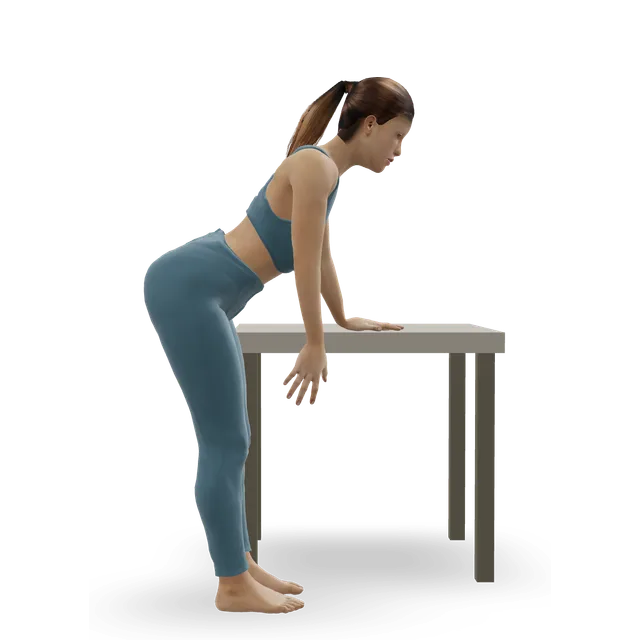
Harder: Table slide (seated forward reach)

Table slide (seated forward reach) demonstrated on the 3D figure3D demoTable slide (seated forward reach)Beginner · A bench or box

10 slow reps, 1 to 3 times a day · The move page's dose (an editorial starting point); as in our biceps guide, if lifting the arm is sore

Easier: Pendulum exercise (Codman's pendulum) · Harder: Overhead lat stretch at a bench (elbows on the bench)

Standing band external rotation demonstrated on the 3D figure3D demoStanding band external rotationBeginner · A band + An anchor point

2 to 3 sets of 15, light band, elbow at your side · As in our biceps guide; 3 sets of 15 is the Holmgren trial's dose

Easier: Stick-assisted external rotation (lying) · Harder: Side-lying external rotation

Band row demonstrated on the 3D figure3D demoBand rowBeginner · A band + An anchor point

3 sets of 10 to 15 · The move page's dose, which it labels an editorial starting point

Harder: Supported single-arm dumbbell row

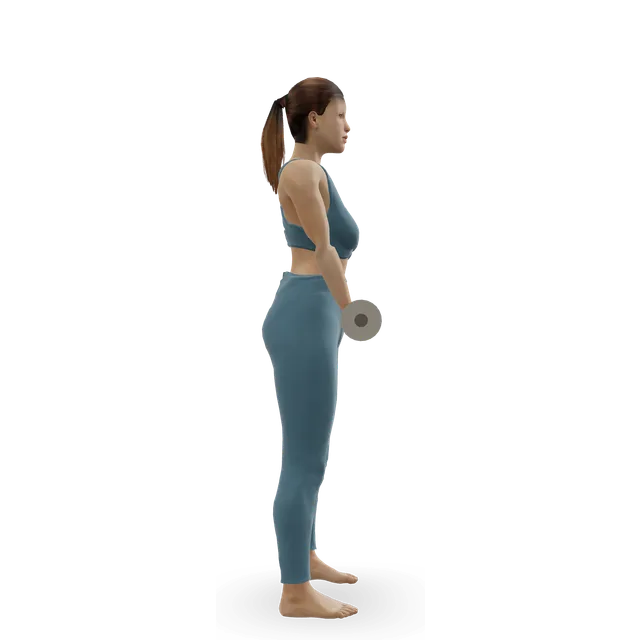
Dumbbell biceps curl demonstrated on the 3D figure3D demoDumbbell biceps curlBeginner · A dumbbell

Held still: elbow at a right angle, a light weight, 5 holds of 30 to 45 s, once a day · For tenderness over the biceps groove, as in our biceps guide (an editorial dose)

Easier: Seated dumbbell curl · Harder: Incline inner biceps curl

Move on when: Everyday reaching is getting easier, and the shoulder settles back to its starting level by the next session (our shoulder pain guide's rule).

Follow along: a timer, a cue and the next move, one step at a time.
Stage 2

Build: the rotator cuff and the shoulder blade

About weeks 2 to 8: slow lowering for the rotator cuff and control of the shoulder blade, the core of the Holmgren programme. One advice session can be enough for many people; these moves are the kind of home programme that advice usually gives (our reading).

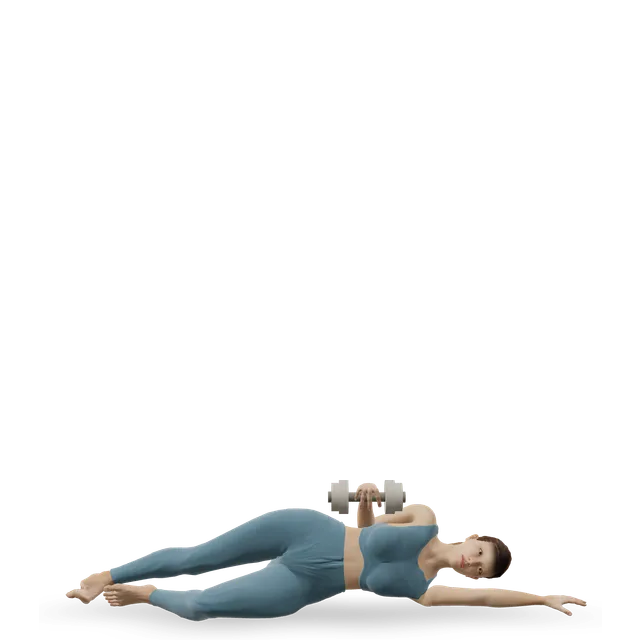
Side-lying external rotation demonstrated on the 3D figure3D demoSide-lying external rotationBeginner · A dumbbell

3 sets of 15, lowering over 3 s · The Holmgren trial's dose, as in our biceps guide; NHS inform's side-lying lift with a tin of beans

Easier: Standing band external rotation · Harder: Cuban rotation

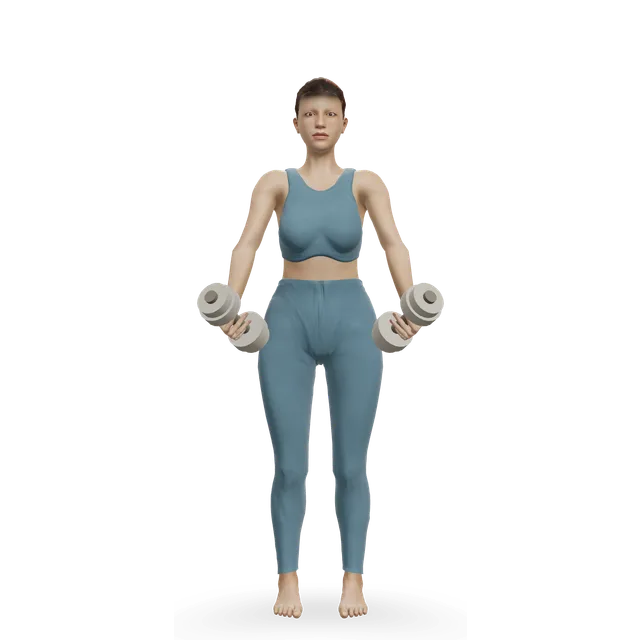
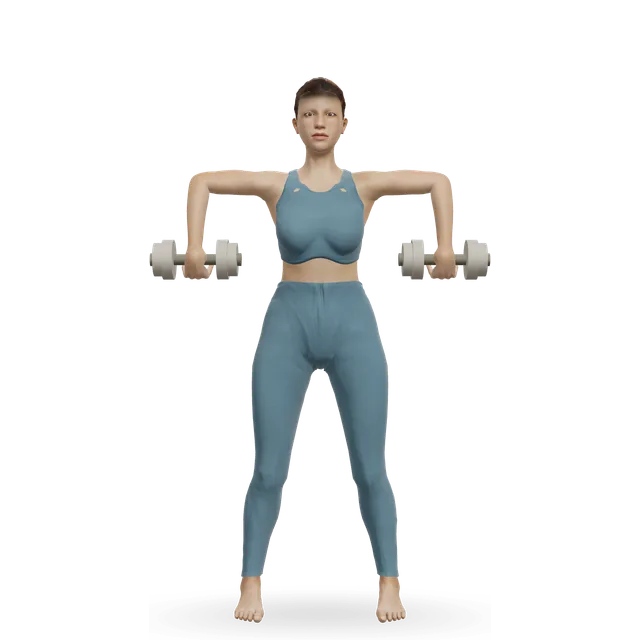
Scaption raise demonstrated on the 3D figure3D demoScaption raiseBeginner · A dumbbell

3 sets of 15, thumbs up, to shoulder height · As in our biceps guide, modelled on the Holmgren trial's lowering work

Easier: Band lateral raise · Harder: Smith machine upright row

Prone Y-T-W raises demonstrated on the 3D figure3D demoProne Y-T-W raisesBeginner · No equipment

2 to 3 rounds of 8 · As in our biceps guide

Easier: Wall angel · Harder: Bent-over reverse fly

Scapular push-up (push-up plus) demonstrated on the 3D figure3D demoScapular push-up (push-up plus)Beginner · No equipment

3 sets of 10, on a wall or bench first · As in our biceps guide

Easier: Dumbbell shoulder-blade punch · Harder: Push-up

Dumbbell biceps curl demonstrated on the 3D figure3D demoDumbbell biceps curlBeginner · A dumbbell

3 sets of 15, lifting in 1 s and lowering over 3 to 4 s · As in our biceps guide

Easier: Seated dumbbell curl · Harder: Incline inner biceps curl

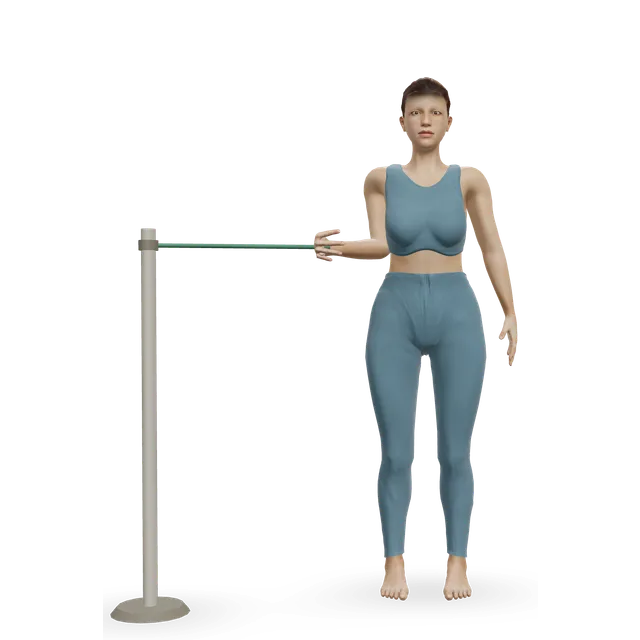
Band internal rotation demonstrated on the 3D figure3D demoBand internal rotationBeginner · A band + An anchor point

2 to 3 sets of 12 to 15, light · An editorial dose (the move page gives none): for the subscapularis at the front, once a tear has been ruled out or a clinician agrees

Harder: Side-lying external rotation

Move on when: 3 sets of 15 side-lying lifts stay within 5 out of 10 and settle by the next session, and reaching behind your back is easier.

Follow along: a timer, a cue and the next move, one step at a time.
Stage 3

Strengthen: pressing, pulling and lifting overhead come back

From about week 8: back to pressing, pulling and overhead work, one change at a time, while everyday reaching, work and sport come back by the written steps below. Shoulder pain can take months, so expect a gradual change.

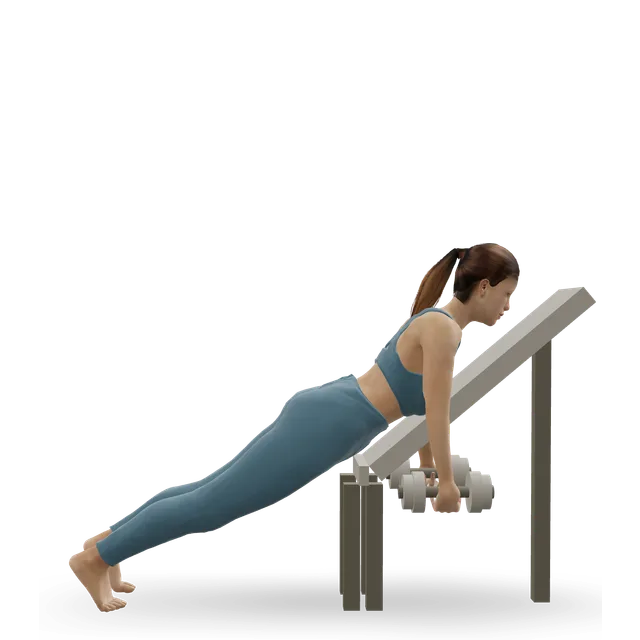
Incline push-up demonstrated on the 3D figure3D demoIncline push-upBeginner · A bench or box

3 sets of 8 to 12 · As in our biceps guide; then full push-ups

Easier: Wall push-up · Harder: Push-up

Lat pulldown demonstrated on the 3D figure3D demoLat pulldownBeginner · A cable machine

3 sets of 10, pulling to the front · As in our biceps guide; to the collarbone, not behind the neck, as the move page says

Harder: Pull-up

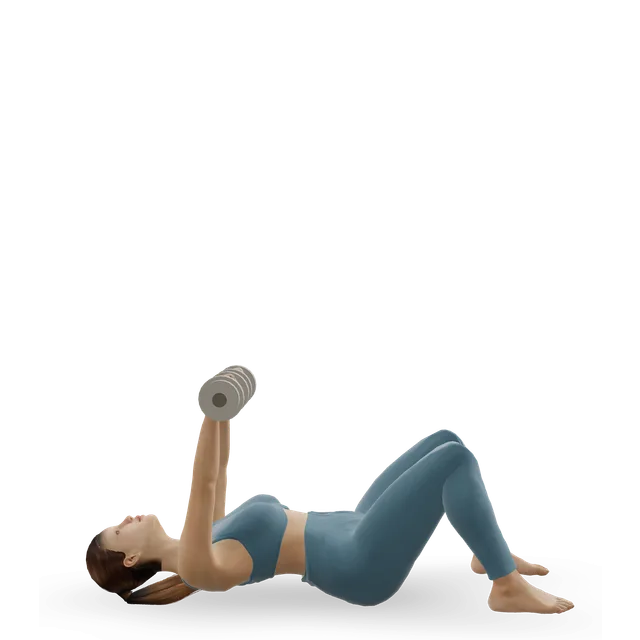
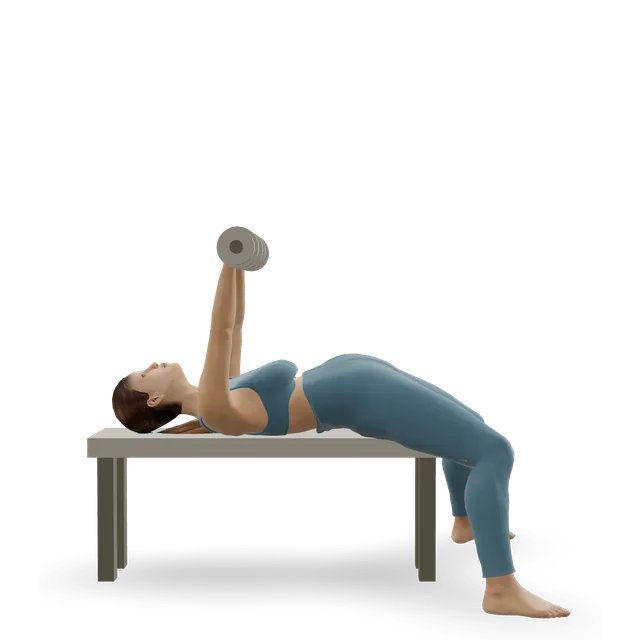
Dumbbell floor press demonstrated on the 3D figure3D demoDumbbell floor pressIntermediate · A dumbbell

2 to 3 sets of 8 to 12, stopping with 2 or 3 reps in reserve · The move page's dose, which it labels an editorial starting point; a shorter range than the bench press

Easier: Chest press machine · Harder: Bench press with chains

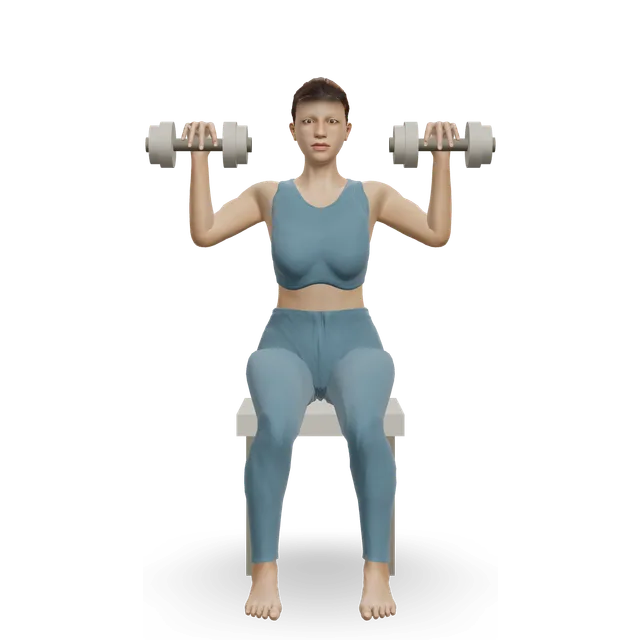
Shoulder press with a band demonstrated on the 3D figure3D demoShoulder press with a bandBeginner · A band

3 sets of 8 to 12, if overhead is comfortable · As in our biceps guide

Harder: Push press

Move on when: Our suggestion: your usual reaching, lifting, pressing and sport stay within the pain rule, with the shoulder back to its starting level by the next day. Keep the rotator cuff work going twice a week; if it flares, drop back a stage for a few days rather than stopping.

Follow along: a timer, a cue and the next move, one step at a time.

What to change for now

What to change for now (written steps)

Our 3D figure can't show these changes. They come from the NHS and NHS inform; where a step is our suggestion, it says so.

  • 1. Keep moving: stay active and move the shoulder gently, and don't completely stop using it (the NHS).
  • 2. In the gym: no made-up strenuous exercises or heavy equipment while it's sore (the NHS); cut the moves that hurt, such as wide-grip or deep bench pressing, dips, behind-the-neck pressing and heavy overhead work, and change one thing at a time (our bench press guide).
  • 3. Sitting: stand up straight with your shoulders down and gently back, sit with a cushion behind your lower back, and rest your arm on a cushion in your lap (the NHS).
  • 4. Sleeping: lying on the painful shoulder can be hard (NHS inform); lie on the other side hugging a pillow, or on your back with a pillow under the sore arm (our suggestion).
  • 5. Heat or cold: a pack of frozen peas wrapped in a tea towel for up to 20 minutes, 3 times a day, or a hot water bottle wrapped in a tea towel for up to 20 minutes, 2 to 3 times a day (the NHS).
  • 6. Work overhead: break it into smaller amounts while it's sore, then get back to normal as soon as you can (NHS inform).
  • 7. With a stiff, frozen shoulder: move it gently and avoid movements that hurt; the NHS warns that gym equipment can make the pain worse.

Sources 6, 19, 3, 18

Reaching, lifting, pressing and sport come back (written steps)

No trial has tested how to bring these back after front-of-shoulder pain as a whole. These steps are our suggestion unless a source is named.

  • 1. Dressing, the seatbelt and high shelves: use the other hand to help at first, keep loads close, and build overhead time like an exercise set.
  • 2. The gym: the floor press before the bench press, a narrower grip and a shorter range first, then the full lift (our bench press guide); dips and behind-the-neck pressing last; heavy curls once the biceps holds are comfortable (our biceps guide).
  • 3. Throwing, racquet and overhead sports: a SLAP tear usually gets 3 to 6 months of a non-surgical programme first (the AAOS); after a dislocation, recovery usually takes 6 to 12 weeks, and up to 16 weeks for some sports (the NHS). Our swimming guide covers the pool.
  • 4. Frozen shoulder follows its own guide's gentler plan; the AC joint guide leaves out the cross-body stretch while the top of the shoulder is sore; a shoulder that slips follows our dislocation guide.
  • 5. If it isn't improving: see a GP if it's getting worse or hasn't improved after 2 weeks (the NHS). NHS inform suggests talking to a professional after 6 weeks, and our biceps guide suggests asking about a specialist opinion if it isn't clearly better after about 3 months of a good exercise programme.

Sources 6, 19, 15, 16

Positions to swap, and why

Habit or positionWhy it mattersInstead
Stopping using the arm, or wearing a sling without an injuryThe NHS says don't completely stop using your shoulder, because this can stop it getting better.Gentle movement every day within the pain rule.Try: Pendulum exercise (Codman's pendulum)
Making up strenuous exercises or using heavy gym equipment while it's soreIt's on the NHS's list of things not to do, and with frozen shoulder, gym equipment can make the pain worse.The staged plan, one change at a time.Try: Standing band external rotation
Deep or wide-grip bench pressing, dips and behind-the-neck pressingThey load the front of the shoulder heavily (our bench press guide; our reasoning).The dumbbell floor press and incline push-ups for now.Try: Dumbbell floor press
Sleeper stretches with a painful or unstable shoulderThe move page says pressing through a pinch at the front can aggravate impingement, and to skip it with a painful or unstable shoulder.Side-lying external rotation.Try: Side-lying external rotation
The cross-body stretch with pain on top at the end of the collarbone, or a pinch at the frontIt presses on the AC joint, and a pinch at the front means the arm is too high, the move page says.Lower the arm towards chest height and pull less, or table slides instead.Try: Table slide (seated forward reach)
A deep chest stretch in a doorway after a dislocation, or with a shoulder that feels it may slipThe move page says after a dislocation, start with the elbow low and stop at any feeling of slipping.Band rows and shoulder-blade work.Try: Band row
Heavy, fast curls with pain over the biceps grooveLong-standing biceps tendon problems usually cope better with lighter weights and slower lowering, the curl's move page says.Still holds, then slow-lowering curls.Try: Dumbbell biceps curl
Long spells of overhead work without breaksLifting above shoulder level brings on subacromial pain, NHS inform says.Break the job into smaller amounts, with the work closer to chest height where you can.
Slouched sitting with the arm unsupportedThe NHS suggests sitting up with your shoulders down and gently back and the arm resting on a cushion; no trial shows posture alone fixes it.Those sitting tips, alongside the exercises.

Routines to follow

More moves for this area

Questions people ask

What causes pain at the front of the shoulder?

Most often the rotator cuff: in one study its pain was mainly around the front of the shoulder and ran down the arm. The long head of the biceps, the AC joint at the end of the collarbone, a labral (SLAP) tear and a subscapularis tear are other causes, and the neck and, rarely, the heart can cause pain there too.

Why does the front of my shoulder hurt when I lift my arm?

Pain lifting the arm out or overhead and reaching behind you is the pattern of subacromial pain from the rotator cuff, the most common reason for shoulder pain. Tenderness over the groove at the front, worse with overhead lifting, points to the biceps tendon. Sudden weakness lifting the arm after a fall needs checking the same day.

Why does the front of my shoulder hurt when I bench press?

Pressing loads the rotator cuff, the biceps tendon and the AC joint, all of which can hurt at the front. A narrower grip, a shorter range such as the floor press and lighter loads for a while usually let you keep training. A pop at the front of the armpit with bruising is a possible torn pec and needs a same-day check.

Why does the front of my shoulder hurt when I reach behind my back?

Reaching behind your back, for example putting on a jacket, brings on subacromial pain from the rotator cuff. Weakness tucking your hand behind your back or pressing it into your tummy after the arm was forced backwards or outwards can be a subscapularis tear, which needs assessing.

Why does pain go from the front of my shoulder down my arm?

Rotator cuff pain often spreads into the upper arm. Pain that runs past the elbow with pins and needles, or sharp, hot or burning pain, often comes from the neck, even without neck pain. Arm pain with chest pain, breathlessness or sweating is a 999 call.

Can pain at the front of my left shoulder be my heart?

It can be. The NHS says call 999 for chest pain that feels tight or like squeezing, or that spreads to your arms, neck or jaw, and angina can cause pain in the chest, neck, shoulders, jaw or arms, often brought on by exercise and easing with rest. In women, heart attack pain can spread to either arm, the neck, jaw, upper back or stomach. Pain that changes with arm movement and is tender to press is more likely the shoulder itself.

Is it my biceps tendon?

Biceps tendinitis causes pain or tenderness at the front of the shoulder, worse with overhead lifting, sometimes with an ache down the upper arm or a snap, and it usually comes with rotator cuff wear. A sudden pop with a bulge low in the upper arm is a torn tendon: for most people the pain goes away over time, but get it checked the same day.

What is the pain near my collarbone at the front?

Pain you can point to at the end of the collarbone on top of the shoulder, worse reaching across your body, is the AC joint. Pain where the collarbone meets the breastbone is the SC joint, which can be sprained or arthritic; after a hard blow with any trouble breathing or swallowing, go to A&E.

Why does the front of my shoulder hurt at night?

Rotator cuff tears often cause pain at rest and at night, especially lying on that side, and frozen shoulder pain can be worse at night. Lying on the other side, or on your back with a pillow under the arm, may help. Pain that doesn't ease whatever position you lie in, with a fever or weight loss, needs checking.

What exercises help pain at the front of the shoulder?

Slow rotator cuff and shoulder-blade exercises: a programme like this improved shoulder function more than general exercises and cut the need for surgery in a trial. NHS inform's shoulder exercises (pendulum swings, a side-lying lift with a tin of beans and a wall slide) are a good start, keeping pain within 0 to 5 out of 10. In a large NHS trial, one advice session with a physiotherapist did as well as up to six sessions.

Do I need a scan or an operation?

Usually not at first. Scans often show changes that don't explain the pain, such as fraying of the labrum after 30 to 40, and some rotator cuff tears are painless. Decompression surgery did no better than a placebo operation, and SLAP repairs did no better than sham surgery; a scan matters after sudden weakness from an injury.

How long does pain at the front of the shoulder last?

The NHS says looking after it yourself usually needs 2 weeks before it starts to ease, and recovery can take 6 months or longer. NHS inform expects new problems to begin to settle within 6 weeks, and frozen shoulder can take up to 3 years. No one can promise a date.

Related exercise guides

Other pain guides

Sources

  1. Bayam 2011 · Pain maps for common shoulder problems in 94 people (prospective study, Am J Orthop)
  2. Bayam 2017 · How well pain maps name the cause in 194 new shoulder patients (prospective study, Pain Med)
  3. NHS inform · Subacromial pain syndrome
  4. American Academy of Orthopaedic Surgeons (OrthoInfo) · Rotator cuff tears
  5. American Academy of Orthopaedic Surgeons (OrthoInfo) · Shoulder pain and common shoulder problems
  6. NHS · Shoulder pain (past its review date: reviewed May 2023, review due May 2026)
  7. American Academy of Orthopaedic Surgeons (OrthoInfo) · Biceps tendinitis
  8. American Academy of Orthopaedic Surgeons (OrthoInfo) · Biceps tendon tear at the shoulder
  9. Deutsch 1997 · Subscapularis tendon tears after an injury in 13 people (case series, Am J Sports Med)
  10. Lyons 2005 · Subscapularis tendon tears (review, J Am Acad Orthop Surg)
  11. Lee 2018 · Subscapularis tears: hidden and forgotten no more (review, JSES Open Access)
  12. American Academy of Orthopaedic Surgeons (OrthoInfo) · Arthritis of the shoulder
  13. American Academy of Orthopaedic Surgeons (OrthoInfo) · Shoulder separation
  14. American Academy of Orthopaedic Surgeons (OrthoInfo) · Sternoclavicular (SC) joint disorders
  15. American Academy of Orthopaedic Surgeons (OrthoInfo) · SLAP tears
  16. NHS · Dislocated shoulder
  17. American Academy of Orthopaedic Surgeons (OrthoInfo) · Frozen shoulder
  18. NHS · Frozen shoulder
  19. NHS inform · Shoulder problems
  20. NHS · Heart attack
  21. NHS · Angina
  22. British Heart Foundation · Signs and symptoms of heart attacks in women
  23. NHS · Polymyalgia rheumatica (past its review date: reviewed April 2023, review due April 2026)
  24. Schrøder 2017 · Labral repair, biceps tenodesis or sham surgery for type II SLAP tears in 118 people (RCT, Br J Sports Med)
  25. Hopewell 2021 · Progressive exercise against one advice session, with or without a steroid injection, in 708 people with rotator cuff problems: the GRASP trial (RCT, Lancet)
  26. Holmgren 2012 · A specific exercise programme for long-standing shoulder impingement in 102 people (RCT, BMJ)
  27. NHS inform · Exercises for shoulder problems
  28. Beard 2018 · Decompression surgery against a placebo operation for subacromial shoulder pain in 313 people: the CSAW trial (RCT, Lancet)
  29. Rangan 2020 · Two operations against early physiotherapy with a steroid injection for frozen shoulder in 503 people: UK FROST (RCT, Lancet)
  30. Smith 2017 · Should exercise be painful? 7 trials of long-lasting muscle and joint pain (systematic review and meta-analysis, Br J Sports Med)
  31. NHS · Symptoms of a stroke
  32. NHS · DVT (deep vein thrombosis)
  33. NHS · Septic arthritis

Exercise education, not a diagnosis or treatment plan. It is written from the guidelines and studies listed above; review by a clinician is pending. If your pain follows an injury, is severe, is getting worse, or comes with any warning sign listed on this page, get it assessed. Health disclaimer.