L-sit
The legs straighten out in front, roughly level with the floor, lengthening the lever the trunk and hip flexors must hold.
L-sit family
L-sit
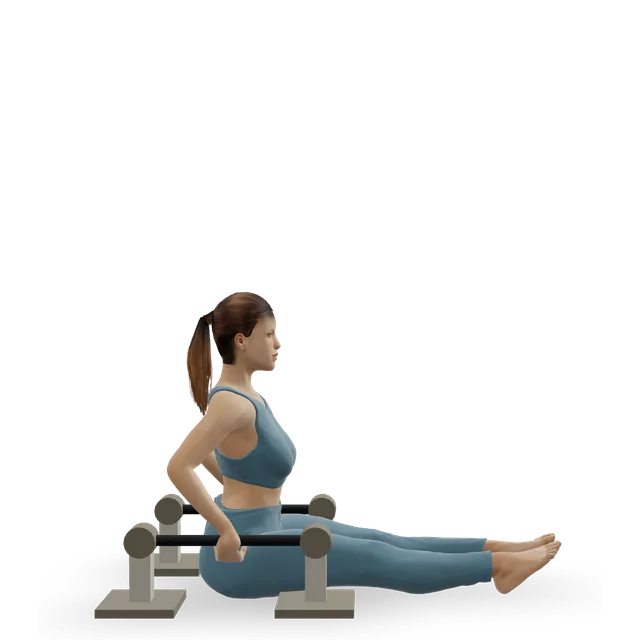
Loading the 3D figure…
Source-researched guide.
How to move
- Set up as for the tuck L-sit and lift the seat on straight arms.
- Extend the legs straight out in front with the toes pointed, as close to level with the floor as you can.
- Hold briefly with the shoulders down and the chest up, then lower under control.
Form cues
- Straighten the legs gradually, opening the knee angle a little at a time.
- Bent knees are fine while the hamstrings and hip flexors catch up.
Practice and cautions
No universal dose is assigned. Choose a manageable amount for your current capacity, leave room for controlled repetitions, and allow recovery. A clinician’s individual plan takes priority.
Heavy load on wrists and elbows. Use parallettes or a neutral grip if either complains. After abdominal or bowel surgery (including gallbladder or appendix removal, a hernia repair, hysterectomy, caesarean, weight-loss surgery or a kidney or liver transplant), or with a stoma, leave this out while your tummy heals: UK stoma and hospital leaflets advise against sit-ups and double leg raises at first. Build up through gentler core exercises, breathe out on the effort, and stop if you notice bulging around a scar or stoma. This is movement education, not an assessment or treatment prescription. Stop for sharp or increasing pain, dizziness, numbness or tingling; seek individual guidance for symptoms, injury or restrictions.
Sources and review status
Sources support the educational description; they do not establish that this exercise is suitable for you.
No variation is labeled clinically validated.
What it works
Muscles
Main: Abs, Hip flexors. Also: Triceps, Shoulders, Quads.
Anatomy: Rectus abdominis, Obliques, Transversus abdominis, Iliopsoas, Rectus femoris, Pectineus.
Equipment
None: body weight and floor space.
Level
Advanced. See the easier and harder options above.
Workouts that use it
Guides that use it
Similar moves
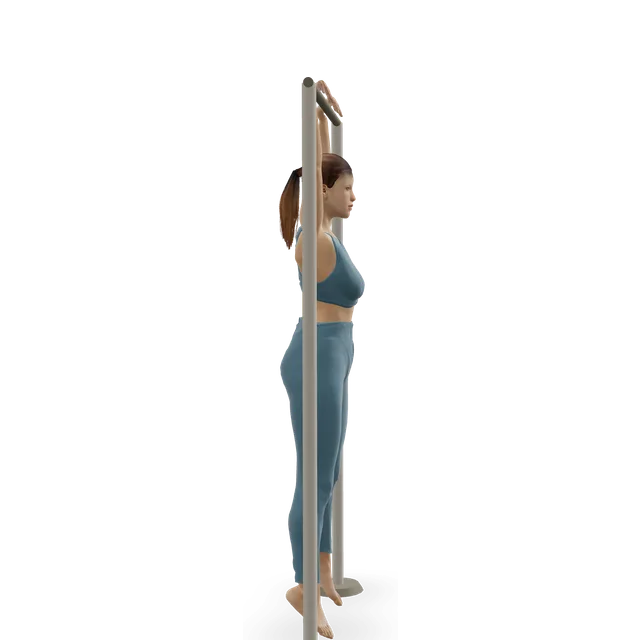 3D demoHanging straight-leg raiseAdvanced · Pull-up bar
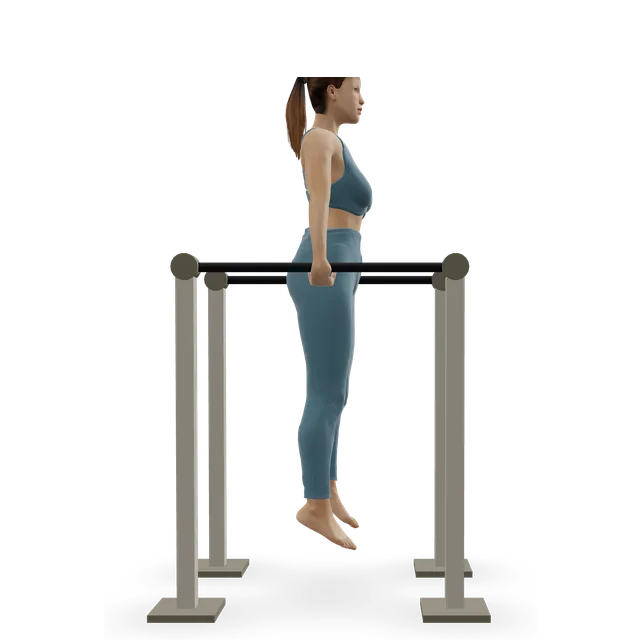 3D demoCaptain's chair knee raiseIntermediate · Other / check instructions
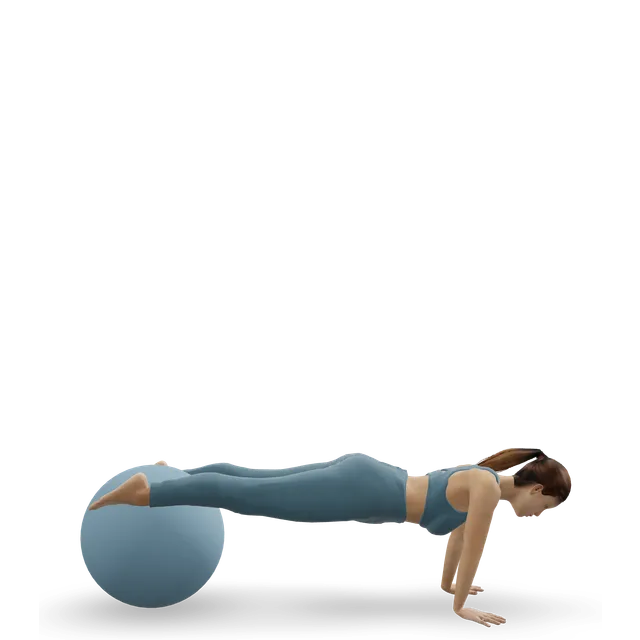 3D demoStability ball knee tuckAdvanced · Exercise ball
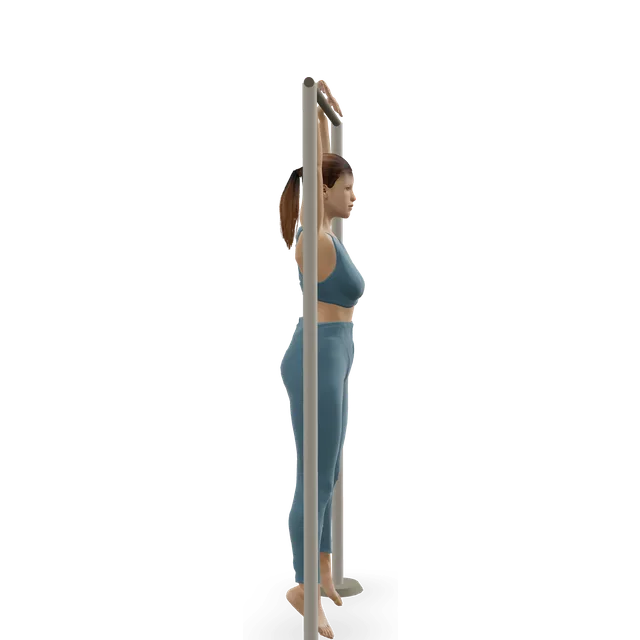 3D demoHanging pikeAdvanced · Pull-up bar
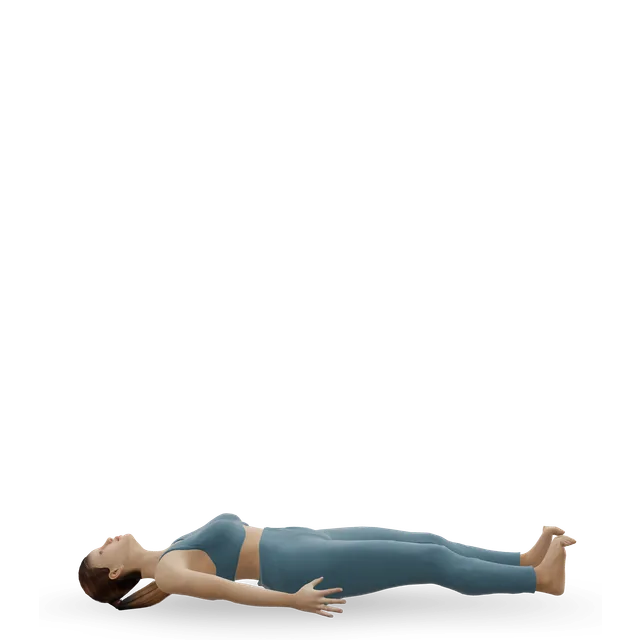 3D demoLeg pull-inIntermediate · No equipment
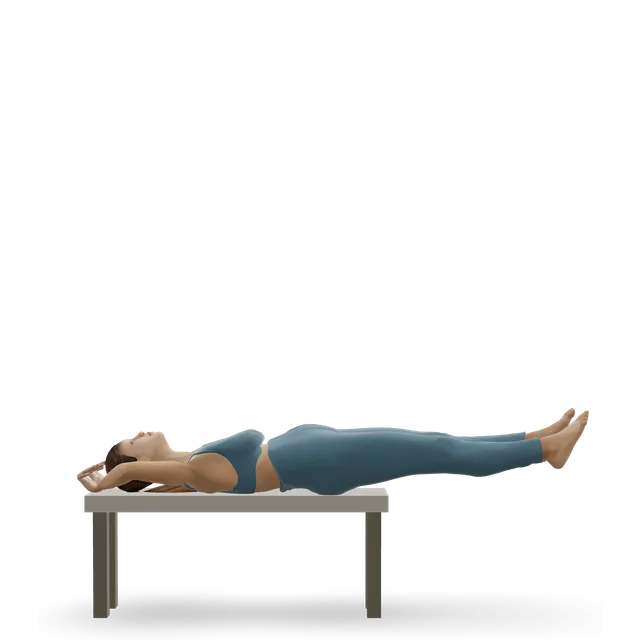 3D demoLying leg raise on a benchBeginner · A bench or box
Browse more
Questions people ask
What muscles does the L-sit work?
Mainly the abs and hip flexors, with help from the triceps, shoulders and quads.
What equipment do I need for the L-sit?
No equipment: your body weight and a little floor space.
Is the L-sit good for beginners?
It is an advanced move. Build up to it with the Tuck L-sit first.
What is an easier alternative to the L-sit?
Try the Tuck L-sit or the Hanging knee raise. Both are written steps in the same progression.
How do I make the L-sit harder?
Progress to the V-sit or the Dragon flag. Follow that guide’s technique and any stated timing.