What a plank asks of the wrist, and what no study has countedEmerging evidence
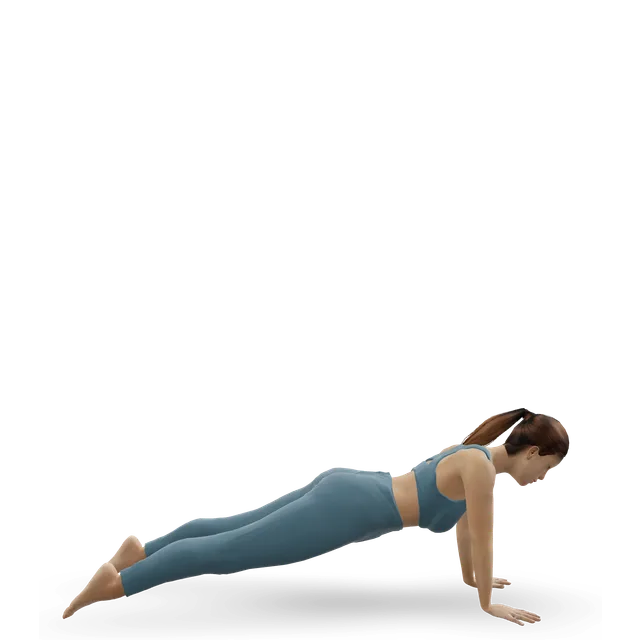
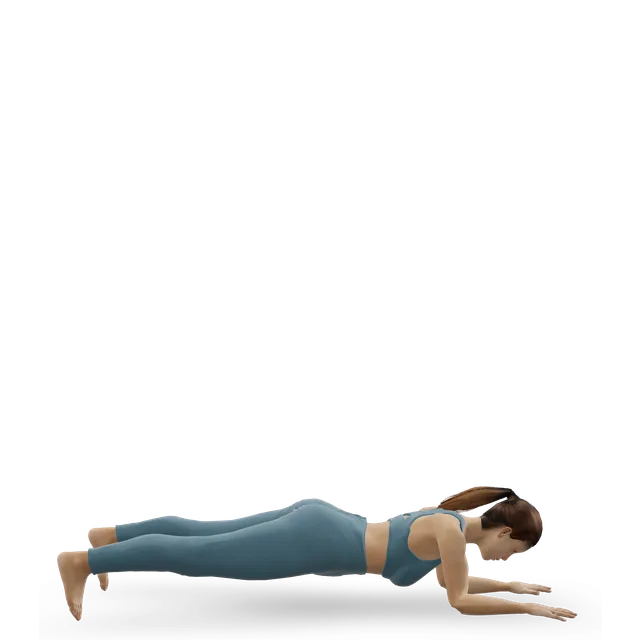
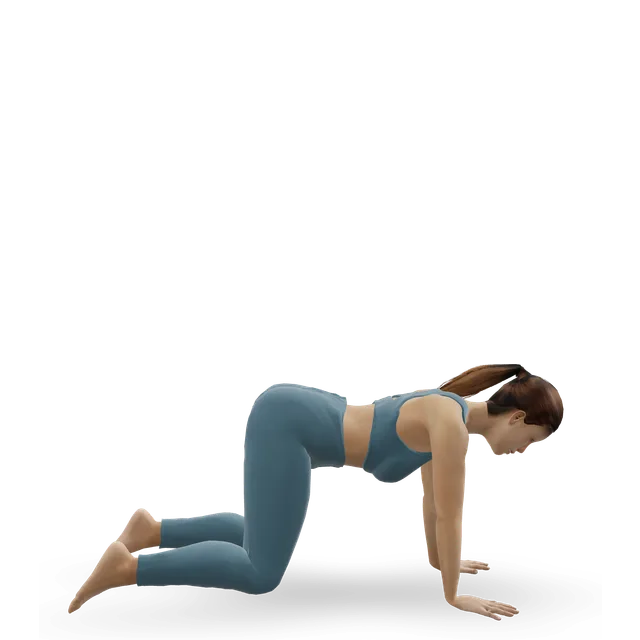
In a high (straight-arm) plank your hands sit under your shoulders with the wrists bent back close to the end of their range, and they hold that position while carrying a large share of your weight. Nobody has measured the plank itself. The nearest figures are from push-ups: the hands took a peak of about 64% of body mass in a regular push-up, 49% from the knees and 41% to 55% with the hands raised on a box (23 adults). Those are peak forces while moving, not a plank hold, and the top of a push-up, the plank position, carries less than the bottom. In 10 yoga practitioners, a floor pose bent the wrist back about 85 degrees; the often-quoted 90 degrees in a plank has never been measured.
Cadaver and lab studies show where the load goes when the wrist is bent back: in 8 donated wrists, pressure rose on the thumb side of the joint and moved towards the back of the wrist, compared with a knuckle position, and most of the load passed through the radius, the forearm bone on the thumb side; in 14 volunteers, force ran further towards the back and the little-finger side of the wrist. That explains why a wrist that is fine all day can complain in a plank. That this is the usual cause of plank wrist pain is our reading, since no study has counted it.
Sources 2, 3, 4, 5, 6, 7, 8
Where it hurts, and what it often isEmerging evidence
The one study that names the plank position looked at people referred to hand surgeons with pain at the back of the wrist when they loaded it bent back, in push-ups, planks, yoga or Pilates. Magnetic resonance imaging (MRI) found a cause at the back of the wrist in 84%, most often a small ganglion you can't see or feel (76%), then partial tears of the scapholunate ligament. It was read as an abstract, its numbers of people weren't given, and these were referred patients, so it shows a common pattern, not how often each cause happens in everyone who planks.
Pain in the middle of the back of the wrist that is worse at the end of the bend, with normal X-rays, can also be the joint lining being pinched; in 231 people who had surgery for it, 77% had pain brought on by bending the wrist back. The little-finger side points to the cartilage cushion there or the tendon beside it, and a clinician presses a soft spot just beyond the end of the ulna to check (the ulnar fovea sign). The thumb side points to de Quervain's, which hurts lifting the thumb and gripping. Tingling in the thumb and first fingers is carpal tunnel syndrome. A smooth lump is usually a ganglion, which UK hand surgeons call harmless.
Sources 1, 12, 13, 14, 15, 16, 17, 21, 22, 23
How common it is, and who gets itMixed evidence
Wrist pain is common wherever the hands bear a lot of weight: about half of adolescent gymnasts (53%, across 9 studies, low certainty), 56.7% of 321 adults who practise handstands (a self-selected online survey) and 20.4% of 270 CrossFit athletes, who reported a hand or wrist injury at some point, three quarters of them at the wrist. In young gymnasts, wrist pain went with more training hours and intensity. None of these studies looks at planks on their own.
It tends to bother people new to planks or adding long holds quickly, people who train a lot on their hands, and people whose wrists are already sore from typing, lifting or an old fall (our reading).
Sources 25, 26, 27, 28, 29
When a scan or test mattersStrong evidence
Not at first for a gradual ache without warning signs: the NHS starts with looking after it at home and a GP if it hasn't improved after 2 weeks. After a fall on the hand, it can be hard to tell a broken wrist from a bad sprain, and the NHS says you'll probably need an X-ray, with follow-up if the base of the thumb is tender: with follow-up if the base of the thumb is tender: across 8 studies of 1,685 wrist injuries with a normal first X-ray, 9.0% turned out to have a hidden scaphoid fracture, and no single sign ruled one out. MRI is the most accurate follow-up test.
For a central ache at the back of the wrist that keeps coming back, MRI can show a hidden ganglion, a partial ligament tear or, rarely, Kienböck's disease. But in a pinched joint lining, MRI matched what surgeons found poorly, so a scan matters most when an injection or surgery is being considered. Tingling that lasts needs a GP, who may arrange nerve tests.
Sources 37, 38, 19, 20, 18, 1, 13, 12
How it usually goesEmerging evidence
No study follows plank wrist pain. Arthritis UK says most hand and wrist pain isn't a sign of a serious or long-term problem and settles in a few days or weeks with simple self-care. NHS inform says new wrist pain "should begin to settle within 6 weeks"; an NHS trust leaflet says most soft tissue wrist injuries improve a lot within 6 weeks, "although some injuries may take up to 3 months or longer"; and a pinched joint lining usually settles over 2 to 3 months once the load changes, in hand surgeons' experience.
In young gymnasts who kept training unchanged, 89% of those with wrist pain still had it a year later, and among people who saw a GP with any new hand or wrist problem, 42% were fully better at a year and more than half still had some symptoms. That argues for changing the load early rather than waiting. No one can promise a date.
Sources 39, 42, 24, 12, 26, 48