Pain guide · Wrist and hand pain

Ganglion cyst on the wrist, hand or foot: will it go away, should you drain it, and training with one

A ganglion cyst is a smooth, harmless lump filled with thick fluid that grows from a joint or tendon lining, usually on the back or palm side of the wrist, at the base of a finger, or on the top of the foot. It can come and go, often grows with activity and shrinks with rest, and many go away without treatment, although studies vary widely on how many.

If it hurts, tingles or worries you, it can be drained with a needle or removed, but both have trade-offs: more than half come back after draining, and about 1 in 5 after open surgery. Don't hit it with a book. This guide sets out which lumps need a GP, what each treatment offers, how to keep training around a ganglion (push-ups, planks and grip), and recovery after surgery, with 3D demos.

When to get help first

Exercise is for pain that has been checked or is clearly mild and settling.

Get urgent medical help if

  • Ask for an urgent GP appointment or get help from NHS 111 if you have a lump that is very painful, hot or red. Redness may be harder to see on brown and black skin.
  • Same day: a joint or lump that is hot, red and swollen, or hand or wrist pain with a high temperature or feeling hot, cold or shivery. It could be an infection or gout.
  • Same day: you have lost the feeling in part or all of your hand.
  • After ganglion surgery: if the fingers of that hand turn pale or blue, feel cold, go numb or tingle, contact the unit the same day on the numbers in your discharge letter, or NHS 111 out of hours.
  • After surgery: redness, swelling, oozing or a smell from the wound, or a fever. Contact your surgical team the same day, or NHS 111 out of hours.
  • Throbbing pain and swelling in the arm, with red, blue or darker skin and swollen veins: ask for an urgent GP appointment or get help from NHS 111. It could be a blood clot.
  • Arm pain or swelling with breathlessness or chest pain: call 999 or go to A&E, and do not drive yourself. It can be a blood clot that has reached the lungs.

See a doctor or physiotherapist if

  • See a GP if you're worried about a lump, a lump gets bigger, or a lump is hard and doesn't move.
  • A new lump that is still there after 2 weeks, or one that grows back after it has been removed: see a GP, so it can be checked.
  • A lump that is deep under the skin, firm, hard to move and keeps growing, even if it doesn't hurt: see a GP soon. Rarely, a lump like this is a soft tissue sarcoma. If a lump is growing, your GP may arrange an ultrasound scan quickly to check what it is; most turn out to be harmless.
  • Any tingling or loss of feeling in the hand or wrist.
  • Swollen, stiff joints in several fingers or both hands, with morning stiffness lasting more than 30 minutes. NICE asks GPs to refer suspected rheumatoid arthritis urgently when the small joints of the hands are affected, even if blood tests are normal.
  • In a child: a lump that is growing, or bone pain or tenderness that is worse at night: see a GP.
  • A cyst by a fingernail that keeps leaking fluid or is changing the shape of the nail: see a GP.

Understand it

What it is

A ganglion cyst is a smooth lump filled with thick, jelly-like fluid that grows out of a joint lining or a tendon sheath (the tube a tendon slides in). The cause is often unknown, and some appear after an injury. They range from smaller than a pea to a few centimetres across.

The usual places: the back of the wrist, the commonest in adults; the palm side of the wrist, near the base of the thumb and often close to the pulse; the base of a finger, where a small, hard, pea-like 'seed ganglion' grows from the tendon sheath and hurts when you grip; the joint nearest a fingernail, where a 'mucous cyst' goes with arthritis in that joint and can groove the nail; and the top of the foot or front of the ankle, where shoes and laces press.

Sources 1, 2, 3, 4, 5, 6

Who gets it, and how it feels

They are much more common in women, most often between 15 and 40, and common in gymnasts. Children get them too: in 154 US children (average age 9), the commonest places were the back of the wrist, the palm side of the wrist and the finger tendons.

Most are painless, though some ache during or after moving the joint, and some people feel numbness. They often grow with activity and shrink with rest. A small hidden ganglion on the back of the wrist can ache before any lump shows. People worry: in one UK hand clinic, 28% of 50 patients feared their ganglion was cancer, and 38% disliked how it looked.

Sources 1, 4, 7, 8

How it's recognised, and what scans do and don't meanEmerging evidence

A doctor usually diagnoses a ganglion by examining it. Shining a light through it shows it's filled with fluid, and an ultrasound scan helps if they're unsure.

Ganglia are common on scans of people with no symptoms. MRI (magnetic resonance imaging) found small ganglia, about 8 mm long on average, in 53 of 103 wrists of volunteers without symptoms, mostly on the palm side. In 1,053 wrist MRI scans, palm-side ganglia were seen in 29% of patients, and 85% of those had no symptoms on that side. After keyhole removal of back-of-wrist ganglia, 23% of wrists still hurt, more often when there had been pain before, and an NHS leaflet notes that ongoing pain after surgery usually means the ganglion wasn't the source. So a small ganglion on a scan may not explain wrist pain.

Sources 4, 3, 9, 10, 11, 12

Lumps that aren't ganglions

Most hand and wrist lumps are ganglions, skin cysts, a benign growth from a tendon sheath (giant cell tumour of the tendon sheath) or swellings from arthritis, but a review warns that a cancer can look harmless. Look-alikes include swelling of the tendon linings in rheumatoid arthritis, a bony bump on the back of the hand (a carpal boss) and, rarely, a soft tissue sarcoma.

The NHS describes a sarcoma as a lump usually 'found deep under your skin', solid, painless and hard to move, that 'will continue to grow' and can become painful. That is why the warning signs above matter.

Sources 6, 13, 14

Many go away on their own, but how many varies widelyEmerging evidence

The NHS says ganglion cysts usually get better without treatment, which can take from several months up to a year. Other sources vary widely on how many go: a 2026 review says about 4 in 10, the American Academy of Orthopaedic Surgeons says more than half, and an NHS hand unit says nearly all eventually disappear.

In a UK study, 20 of 39 untreated ganglia on the palm side of the wrist had gone when people were asked 2 or 5 years later; a second study found untreated back-of-wrist ganglia also often went, though its figures don't add up. In children, 62 of 99 went on their own in a US study, on average about 14 months after they were first seen, and 11 of 14 in children under 10 in another. An NHS children's leaflet says it may take months to years.

Sources 1, 5, 4, 2, 15, 16, 17, 7, 18, 3

What helps, and how strong the evidence is

Leaving it alone is a safe choiceStrong evidence

NHS England's Evidence-Based Interventions guidance says wrist ganglia should be treated only if they cause pain, tingling or numbness, or worry that they might be cancer, and that 'doing nothing will not be harmful'. Drainage comes first; surgery only if that fails and the hand is restricted. An NHS hand unit doesn't routinely offer surgery for a simple wrist ganglion, because of the scar, the chance of it coming back and occasional nerve damage, stiffness or long-lasting pain.

The NHS suggests ibuprofen, and a wrist support or compression wrap, if it hurts with use, and says not to try to burst it.

Sources 5, 2, 1

Draining it (aspiration) often doesn't lastStrong evidence

Under local anaesthetic, a needle draws the fluid out. It confirms the lump is a cyst and can ease symptoms, but it often refills: across 12 studies, on average 59% came back; an NHS hand unit says up to 8 in 10, within weeks or months; and after a single needle puncture, 19 of 34 came back, on average 43 weeks later. NHS England's guidance says drainage cures a minority, about 3 in 10. In studies that weren't trials, drainage did no better than reassurance.

Adding a steroid injection didn't help: in a randomised trial both approaches worked in 33%, and a 2026 review found too little evidence to support it. Splinting after drainage didn't help either. Even so, people are often content: 95% of 21 people were satisfied 6 years after drainage, whether or not the cyst came back.

Sources 19, 2, 20, 5, 22, 23, 24, 21

Surgery: it comes back less often, with more downsidesStrong evidence

After removing the ganglion and its stalk through a cut (open surgery), it came back in 21% on average across 14 studies, with complications in about 14%. NHS leaflets say up to 2 or 3 in 10 come back. In two randomised trials, surgery cut the chance of it coming back by 76% compared with drainage.

Keyhole (arthroscopic) surgery averaged 6% recurrence and 4% complications, but in better-quality studies keyhole and open surgery had similar recurrence (7.9% and 9.8%), and a 2026 review of 6 studies found no difference in recurrence, pain or satisfaction, with a quicker return to work after keyhole surgery. In a small randomised trial of palm-side ganglia, recovery took about 6 days after keyhole surgery against 15 after open surgery.

The downsides: in a UK study of palm-side ganglia, 20% of those operated on had a complication, and they took 14 days off work on average. NHS England's guidance says hand use is restricted for 4 to 6 weeks. After 5 to 6 years, symptoms were similar whether a ganglion had been removed, drained or left alone, although people were more satisfied after surgery for back-of-wrist ganglia, and 1 in 4 wrists stayed weak whatever was done.

Sources 19, 25, 12, 30, 26, 27, 16, 17, 5, 4

Children: watch and wait firstEmerging evidence

In children, most ganglia go on their own, often within 1 to 2 years. An NHS children's leaflet says most can safely be left, offers drainage if one causes pain or discomfort while noting that it often comes back, and says surgery still carries a chance of it coming back.

Sources 7, 18, 3

Training with a ganglion: no study, but no reason to stopMixed evidence

No study has tested exercise for ganglia. Exercise won't make one go away, and there's no evidence that training causes one or makes it worse in the long run, though it may ache more after heavy use and settle with rest. For repetitive strain, the NHS advises against resting the area for more than a few days, because it becomes weaker and less flexible. So keep training, and change the positions that press on the lump or bend the wrist fully over it (our suggestion).

Sources 4, 1, 28

Seed ganglia and mucous cystsEmerging evidence

NHS England's guidance says a seed ganglion at the base of a finger can be punctured or drained, and a mucous cyst by the nail is only operated on if it keeps leaking fluid or is deforming the nail.

Source 5

How much pain is OK while you exercise?

The wrist and hand rule, and no pressing on the lumpEmerging evidence

Some discomfort during these exercises is fine. Keep it to about 5 out of 10 or less, settling within half an hour or so, with your hand no worse the next morning. If it is worse, do fewer, smaller or lighter next time, not nothing. An NHS wrist rehabilitation booklet uses the same limit.

An ache from pressing or bending over the ganglion means changing the position (fists, handles or forearms), not pushing through (our suggestion). Tingling and numbness are different: stop and get advice if an exercise brings them on and they don't fade quickly, or if your grip or thumb gets weaker.

Don't rest it completely: for repetitive strain, the NHS says resting for more than a few days makes the area weaker and less flexible. After drainage or surgery, follow the unit's instructions first.

Sources 29, 28

The exercise plan: 3 stages

Start at the first stage. Each move opens a full guide with a 3D demo.

Stage 1

Move freely and change positions (the first days to 2 weeks)

Keep using the hand. A wrist support or compression wrap can help if it aches with use, as the NHS suggests. Swap positions that bend the wrist fully over the lump: push-ups and planks on fists, handles or forearms. After surgery, do only what your team allows; gentle finger movement is usually encouraged from the start. Doses are the move pages' own unless marked.

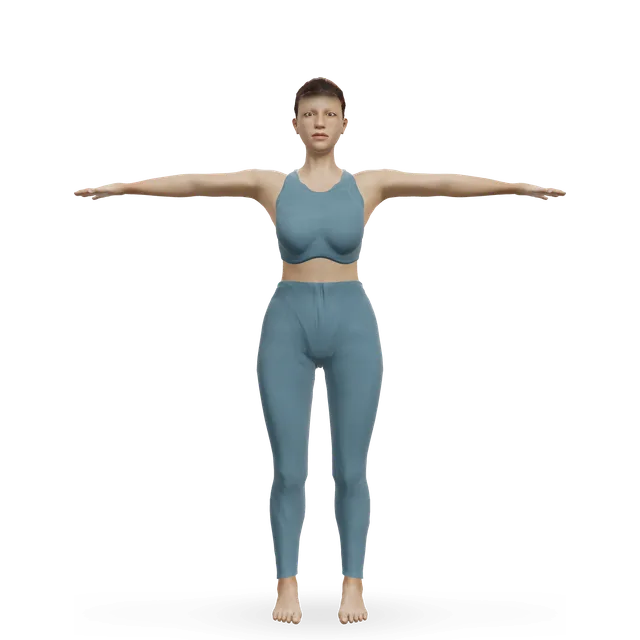
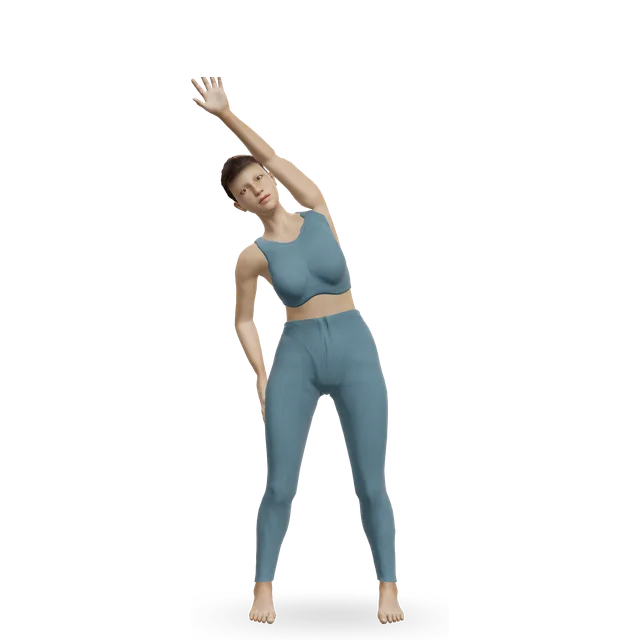
Wrist & forearm flow demonstrated on the 3D figure3D demoWrist & forearm flowBeginner · No equipment

10 slow reps in each direction · The move page's dose

Easier: Wrist circles · Harder: Wrist flexor stretch

Tendon glides (hand tendon gliding exercises) demonstrated on the 3D figure3D demoTendon glides (hand tendon gliding exercises)Beginner · No equipment

4 to 6 of each position, 5 s holds, up to 4 times a day · The move page's dose; after surgery, as your team allows

Harder: Ball squeeze

Wrist circles demonstrated on the 3D figure3D demoWrist circlesBeginner · No equipment

10 slow circles each way · Editorial dose

Harder: Wrist flexor stretch

Forearm plank demonstrated on the 3D figure3D demoForearm plankIntermediate · No equipment

3 holds of 20 to 45 s · A plank without bending the wrist back. The move page's dose

Easier: Stomach vacuum (drawing-in) · Harder: Plank walk-up

Wall push-up demonstrated on the 3D figure3D demoWall push-upBeginner · A wall

3 sets of 10 to 15, on fists or handles if bending the wrist hurts · The move page's dose

Harder: Push-up

Move on when: Everyday tasks are comfortable and these pass the pain rule.

Follow along: a timer, a cue and the next move, one step at a time.
Stage 2

Wrist and grip strength (about weeks 2 to 6)

Three sessions a week (editorial), starting light. The doses are the move pages' own or our de Quervain's guide's, which come from an NHS hand therapy programme.

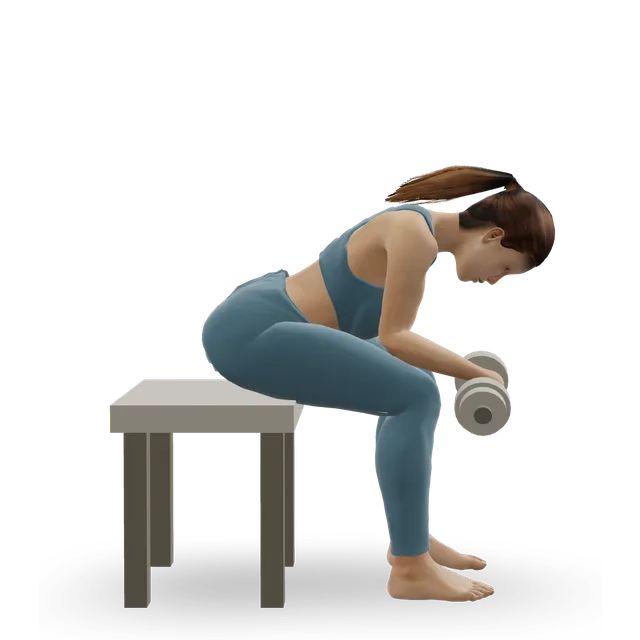
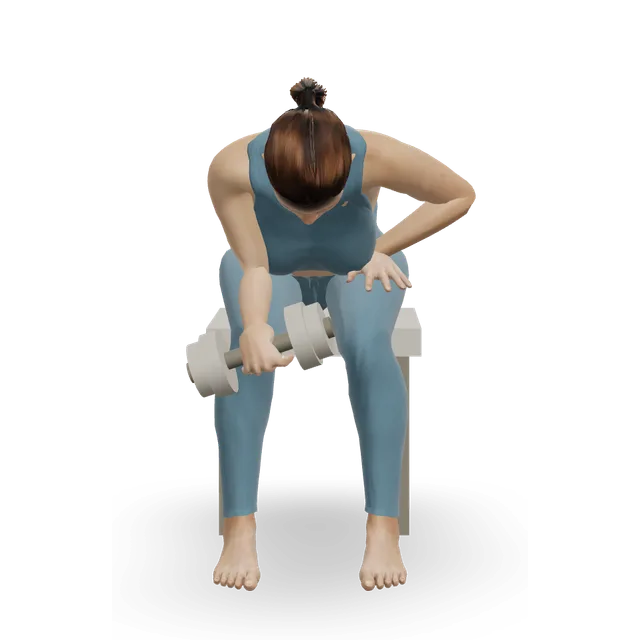
Wrist curls demonstrated on the 3D figure3D demoWrist curlsBeginner · A dumbbell

2 to 3 sets of 10 to 15, light · The move page's dose

Easier: Wrist-extensor eccentrics · Harder: Plate pinch

Reverse wrist curl demonstrated on the 3D figure3D demoReverse wrist curlBeginner · A dumbbell + A bench or box

2 sets of 10, light · Our de Quervain's guide's dose

Easier: Wrist-extensor eccentrics · Harder: Plate pinch

Dumbbell forearm rotation demonstrated on the 3D figure3D demoDumbbell forearm rotationBeginner · A dumbbell + A bench or box

2 sets of 10, light · Our de Quervain's guide's dose

Easier: Wrist-extensor eccentrics · Harder: Plate pinch

Band finger extension demonstrated on the 3D figure3D demoBand finger extensionBeginner · A band

2 sets of 10 · Our de Quervain's guide's dose

Easier: Ball squeeze · Harder: Plate pinch

Incline push-up demonstrated on the 3D figure3D demoIncline push-upBeginner · A bench or box

3 sets of 8 to 12, on fists or handles if needed · The move page's dose

Easier: Wall push-up · Harder: Push-up

Move on when: These are comfortable, and the lump doesn't ache more the next day.

Follow along: a timer, a cue and the next move, one step at a time.
Stage 3

Full positions, load and grip (from about week 6)

Bring back positions that bend the wrist fully under load, heavier carries and hanging. Training then carries on as normal.

Quadruped wrist rocks demonstrated on the 3D figure3D demoQuadruped wrist rocksBeginner · No equipment

10 rocks in each of 4 hand positions, starting with less weight through your hands · It bends the wrist back under load, so it waits until now with a back-of-wrist ganglion (editorial). The move page's dose and caution

Easier: Wrist flexor stretch

Push-up demonstrated on the 3D figure3D demoPush-upIntermediate · No equipment

3 to 4 sets of 5 to 12, flat hands if comfortable, otherwise handles · The move page's dose and caution

Easier: Wall push-up · Harder: Close-grip push-up (close triceps position)

Farmer's carry demonstrated on the 3D figure3D demoFarmer's carryBeginner · A dumbbell + A kettlebell

3 walks of 20 m, building to 4 walks of 30 to 40 m · Our de Quervain's guide's start, then the move page's dose

Harder: Suitcase carry

Bar hang demonstrated on the 3D figure3D demoBar hangIntermediate · Pull-up bar + A step

Short hangs, building to 60 to 90 s a day in total · A thicker or padded grip if a finger or palm ganglion hurts (editorial). The move page's dose

Easier: Exercise ball pyramid drape · Harder: One-arm dead hang

Move on when: Training carries on as normal. If the lump grows, becomes hard or fixed, or causes tingling, see a GP.

Follow along: a timer, a cue and the next move, one step at a time.

What to change for now

After drainage (aspiration)

NHS England's guidance and a review support these points; the details marked are our suggestions.

  • 1. Keep the small dressing over the needle mark clean and dry for a day (our suggestion).
  • 2. You don't need a splint afterwards: splinting after drainage didn't stop ganglia coming back.
  • 3. Use the hand normally as comfort allows, with the stage 1 and 2 exercises (our suggestion).
  • 4. It may refill, often within weeks or months. That isn't harmful, and you can talk to your GP about draining it again or about surgery.

Sources 5, 24, 2

After surgery (as your team allows)

Your surgical team's instructions come first. These steps come from NHS leaflets and guidance.

  • 1. Keep the hand raised for 24 to 48 hours. A bulky bandage usually stays on for 2 to 3 days, and some people have a plaster back-slab for 1 to 2 weeks.
  • 2. Move the fingers, elbow and shoulder gently from the start.
  • 3. Stitches come out at about 10 to 14 days. Once the wound has healed, massage the scar; it can stay tender for 6 to 8 weeks.
  • 4. Drive when you can grip the wheel tightly, often after about a week. Most people are back at work in 1 to 2 weeks, depending on the job, but full use of the hand can take 4 to 6 weeks.
  • 5. No sport until your surgeon says. Most people return to normal activities 2 to 6 weeks after surgery; then stages 2 and 3 of this plan.

Sources 30, 12, 5, 4

Training with a ganglion: positions and grip (our suggestion)

No study has tested training with a ganglion, so these are our suggestions.

  • 1. Push-ups and planks: use fists, push-up handles or dumbbells to keep the wrist straight, or plank on your forearms.
  • 2. Front-rack, catching and handstand work: lighter loads while it aches. Lifting straps can take some load off your grip in heavy pulls.
  • 3. A palm-side ganglion near the base of the thumb, or a small one at the base of a finger: thicker or padded grips and gloves can stop it pressing on bars and handles.
  • 4. If an exercise brings on tingling or numbness, stop it and see a GP: the ganglion may be pressing on a nerve.

A ganglion on the foot

The NHS says ganglion cysts can appear on the top of the foot. The shoe steps are our suggestion.

  • 1. Lace around the lump by skipping the eyelet over it, or loosen the laces there.
  • 2. Choose shoes with more room over the top of the foot, and put a soft pad beside the lump, not on it.
  • 3. The same rules apply as at the wrist: many go on their own, and a lump that grows, is hard and fixed, or is very painful, hot or red needs a GP.

Sources 1, 13

Positions to swap, and why

Habit or positionWhy it mattersInstead
Hitting it with a book, or squeezing it to burst itIt can injure your hand, the NHS warns that bursting one can cause infection or skin damage, and many come back anyway.Leave it alone, or ask your GP about draining it.
Popping it with a needle at homeInfection and skin damage.Drainage by a clinician, if it needs treating.
Push-ups on flat hands while the lump achesBending the wrist fully back presses on a ganglion on the back of the wrist (our reasoning).Push-ups on fists or handles, or on an incline.Try: Incline push-up
Straight-arm planks while the lump achesThe same full bend of the wrist under body weight (our reasoning).Forearm planks, which keep the wrist straight.Try: Forearm plank
Resting the hand completelyFor repetitive strain, the NHS says resting for more than a few days makes the area weaker and less flexible.Keep it moving with the wrist and forearm flow.Try: Wrist & forearm flow
Gripping thin bars hard with a finger or palm ganglionPressure on a small ganglion at the base of a finger hurts (our reasoning).Thicker or padded grips, or gloves.
Assuming any wrist lump is a ganglionA lump that grows, is hard and fixed, or comes back after removal needs checking.Check the warning signs, and see a GP if any apply.

Routines to follow

More moves for this area

Questions people ask

What is a ganglion cyst?

A smooth, harmless, fluid-filled lump that grows from a joint or tendon lining, usually on the wrist or hand and sometimes on the top of the foot. They are much more common in women and often appear between 15 and 40.

Will it go away on its own? How long does it take?

Often: the NHS says ganglion cysts usually get better without treatment, which can take from several months up to a year. Studies vary widely on how many go, from about 4 in 10 to most, and in children about two-thirds went in one study.

Should I hit it with a book?

No. Hitting it can injure your hand and is unlikely to get rid of it, and the NHS warns that bursting a ganglion can cause infection or skin damage. Many come back after being burst anyway.

Is draining it worth it?

Drainage with a needle confirms it's a cyst and can ease symptoms, but more than half come back. Adding a steroid injection doesn't seem to help. Many people are still glad they had it, even when the cyst returned.

Should I have it removed, and will it come back?

Surgery is for ganglia that still cause problems after drainage and restrict your hand. About 1 in 5 come back after open surgery, and about 1 in 7 people have a complication; keyhole surgery did better in some studies but similarly in the better ones. Long term, symptoms were similar whether a ganglion was removed, drained or left alone.

Can I work out with a ganglion cyst?

Yes. Change the positions that press on it or bend the wrist fully over it, such as push-ups on flat hands, and keep the rest of your training going. Exercise won't make it go, and it may ache after heavy use and settle with rest.

Can I do push-ups with a ganglion on my wrist?

Usually, on fists, push-up handles or dumbbells, or on your forearms for planks, which keep the wrist straight. If it tingles, or the lump grows, see a GP.

Could it be cancer? When should I worry about a lump?

Ganglions are harmless. See a GP if a lump gets bigger, is hard and doesn't move, has lasted more than 2 weeks or grows back after removal, and get urgent advice if it is very painful, hot or red. If a lump is growing, your GP may arrange an ultrasound scan quickly.

My child has a ganglion. What should we do?

Usually nothing: in children, most go on their own, often within 1 to 2 years. An NHS children's leaflet offers drainage if it causes pain or discomfort, noting that it often comes back.

What about a ganglion on my foot?

The NHS says ganglion cysts can appear on the top of the foot. Loosen or re-lace your shoes around it, and the same rules apply about lumps that grow or are hard and fixed.

How long is recovery after ganglion surgery?

Your surgical team sets the timeline. NHS leaflets describe stitches out at 10 to 14 days, driving when you can grip the wheel tightly, and most jobs after 1 to 2 weeks, with hand use restricted for about 4 to 6 weeks. The scar can be tender for 6 to 8 weeks.

Does a wrist support help?

The NHS suggests a wrist support or compression wrap if it hurts with use. A splint after drainage doesn't stop it coming back.

Related exercise guides

Other pain guides

Sources

  1. NHS · Ganglion cyst
  2. NHS Lothian · Ganglion cyst (St John's Hospital Hand Unit leaflet, 2020; review date 2022)
  3. St George's University Hospitals NHS · Paediatric ganglion (patient leaflet, 2025)
  4. AAOS OrthoInfo · Ganglion cyst of the wrist and hand
  5. Academy of Medical Royal Colleges · Evidence-Based Interventions: ganglion excision (NHS England guidance, reviewed 2024)
  6. Hasham 2007 · Diagnosis and treatment of swellings in the hand (review, Postgrad Med J)
  7. Dearden 2023 · What happens to children's hand and wrist ganglia: 154 children (prospective cohort, J Hand Surg Am)
  8. Westbrook 2000 · Ganglia: what 50 patients worried about (survey, J Hand Surg Br)
  9. Lowden 2005 · Wrist ganglia on the MRI scans of 103 wrists without symptoms (imaging study, J Hand Surg Br)
  10. Goller 2024 · Palm-side wrist ganglia on 1,053 MRI scans (imaging study, Eur Radiol)
  11. Kim 2013 · Recurrence and pain after keyhole removal of 115 back-of-wrist ganglia (case series, Arthroscopy)
  12. University Hospitals Coventry and Warwickshire NHS · Ganglion cysts (patient leaflet, 2024)
  13. NHS · Lumps
  14. NHS · Symptoms of soft tissue sarcoma
  15. Harris 2026 · Thumb-side wrist pain: first-line assessment and care (review, Can Fam Physician)
  16. Dias 2003 · Palm-side wrist ganglia treated or left alone: 155 patients (prospective cohort, J Hand Surg Br)
  17. Dias 2007 · Back-of-wrist ganglia treated or left alone, 6 years on: 236 patients (prospective cohort, J Hand Surg Eur)
  18. Wang 2001 · Hand and wrist ganglia in 14 children under 10, watched over time (case series, J Hand Surg Am)
  19. Head 2015 · Wrist ganglion treatment: 35 studies, 2,239 ganglia (systematic review and meta-analysis, J Hand Surg Am)
  20. Winek 2025 · Ganglia after a single needle puncture: 34 patients (case series and review, Cureus)
  21. Head 2015 · Six years after draining a wrist ganglion: 21 patients (follow-up study, Plast Surg)
  22. Varley 1997 · Draining wrist ganglia with or without a steroid injection (randomised trial, J Hand Surg Br)
  23. Ahmadi 2026 · Draining wrist ganglia with or without a steroid injection: 10 studies (scoping review, Curr Probl Diagn Radiol)
  24. Gude 2008 · Ganglion cysts of the wrist: causes, signs and management (review, Curr Rev Musculoskelet Med)
  25. Crawford 2018 · Keyhole against open removal of back-of-wrist ganglia: 16 studies (systematic review, J Hand Surg Eur)
  26. Seok 2026 · Open against keyhole removal of wrist ganglia: 6 studies (systematic review and meta-analysis, J Orthop Surg)
  27. Rocchi 2008 · Keyhole against open removal of palm-side wrist ganglia (randomised trial, Scand J Plast Reconstr Surg Hand Surg)
  28. NHS · Repetitive strain injury (RSI)
  29. Oxford University Hospitals NHS · Wrist fractures (rehabilitation booklet, 2024)
  30. Norfolk and Norwich University Hospitals NHS · Ganglion excision (patient leaflet, reviewed 2024)
  31. NICE NG12 · Suspected cancer: recognition and referral (sarcoma recommendations)
  32. NHS · Wrist pain
  33. NHS · Symptoms of bone cancer

Exercise education, not a diagnosis or treatment plan. It is written from the guidelines and studies listed above; review by a clinician is pending. If your pain follows an injury, is severe, is getting worse, or comes with any warning sign listed on this page, get it assessed. Health disclaimer.