Pain guide · Wrist and hand pain

TFCC tear and pain on the little-finger side of the wrist: what helps, what a scan shows, and exercises

The triangular fibrocartilage complex (TFCC) is a small cushion of cartilage and ligaments on the little-finger (pinky) side of the wrist. It steadies the two forearm bones and spreads load, and it can tear in a fall or a twist, or wear thin with age. A torn TFCC hurts when you turn a door handle, swing a racquet or lean on your hand, sometimes with clicking. Most tears are treated without surgery, and many settle, though the evidence is thinner than you might expect.

This guide covers what helps and how well it works, why a scan can mislead (tears are common in wrists that don't hurt), what to change for now, and a staged exercise plan with a 3D demo of each move, from protecting the wrist to taking weight through it. It also lists the look-alikes and the signs that need a clinician.

When to get help first

Exercise is for pain that has been checked or is clearly mild and settling.

Get urgent medical help if

  • Call 999 or go to A&E after an injury (don't drive yourself) if the arm, wrist or hand is numb, tingling or has pins and needles; a bone is sticking out or a bad cut is bleeding heavily; or the wrist, thumb or a finger has changed shape, is at an odd angle, or has turned blue, grey, white or cold.
  • Same day (NHS 111, an urgent treatment centre or an urgent GP appointment): a wrist or hand injury that is very painful, getting worse, very swollen or bruised, stiff, or that you can't use. It may be broken.
  • Same day: after a fall onto an outstretched hand, pain or tenderness at the base of the thumb on the back of the wrist (the hollow called the snuffbox), even if the wrist moves well or the first X-ray was normal. A broken scaphoid can hide on the first X-ray and is slow to heal if it's missed, so ask what follow-up is planned.
  • Same day (NHS 111): severe pain; feeling faint, dizzy or sick from the pain; a snap, grinding or popping noise at the time of the injury; you can't move the wrist or hold things; the wrist has changed shape or colour; or you've lost feeling in part or all of the hand.
  • Same day: a joint or lump that is hot, red and swollen, or hand or wrist pain with a high temperature or feeling hot, cold or shivery. It could be an infection or gout.
  • Same day (NHS 111): after an injury, the forearm locks so you can't turn the palm up or down, or the end of the forearm bone on the little-finger side clunks or sticks up at the back of the wrist. The joint between the forearm bones may have come out of place.

See a doctor or physiotherapist if

  • Not improved after 2 weeks of looking after it at home, getting worse, keeps coming back, or stopping you doing normal activities. In many areas you can refer yourself to NHS physiotherapy.
  • The wrist feels unstable or weak, or clicks with pain: see a GP or physiotherapist. It may need a hand specialist to check it.
  • Any tingling or loss of feeling in the hand or wrist, especially in the ring and little fingers.
  • You have diabetes and a hand problem: the NHS says hand problems can be more serious if you have diabetes.
  • Fingers that go cold, white or blue, with pain in the heel of the hand, especially if you use the hand to strike things: see a GP. An artery there can become blocked.

Understand it

What the TFCC is

The TFCC sits on the little-finger side of the wrist, between the end of the ulna (the forearm bone on that side) and the small wrist bones. It is a disc of tough cartilage (fibrocartilage) plus the ligaments that tie the two forearm bones together and the ulna to the wrist, and the sheath of a tendon. It steadies the distal radioulnar joint (DRUJ), where the forearm bones turn on each other as you turn your palm up and down, and spreads load across the wrist. Soft tissues give about 80% of that joint's stability.

Only the outer 20% or so of the disc has a blood supply. That is why tears at the edge can heal, while tears in the middle mostly can't, though they often stop hurting.

Sources 1, 2

Types of tear, and who gets them

Doctors sort tears into traumatic ones, from a fall on an outstretched hand or a forced twist, and degenerative ones, from wear. Traumatic tears are named by where they are: in the centre of the disc, at its edge on the little-finger side, at the ligaments to the wrist bones, or where it joins the radius. Tears at the edges may be repairable; a central tear can only be trimmed.

Repeated loading with the wrist bent towards the little finger, in racquet sports, golf, weight-bearing on the hands and manual work, raises the strain, as does an ulna that is long compared with the radius. Wear starts early: in a study of 180 wrists from people who had died, holes in the disc were absent before 20 and found in 7.6% of wrists of people in their 20s, rising to 53.1% over 60.

Sources 3, 1, 2, 4

How it's recognised

Pain on the little-finger side of the wrist, worse twisting, gripping or leaning on the hand, sometimes with clicking and a weak grip. A clinician will press a soft spot next to the bony knob on that side (the ulnar fovea). In 272 people who had keyhole wrist surgery, tenderness there picked up 95% of the ligament injuries it looks for and was seldom positive without one, though another study found it far less specific.

X-rays rule out a fracture and show the length of the forearm bones. MRI (magnetic resonance imaging) is the usual scan: in the figures one review cites, it finds about 92% of tears, but it misses some at the edge. Keyhole surgery (arthroscopy) is the most reliable test, and is used when surgery is being considered.

Sources 2, 1, 5

What a scan finding does and doesn't mean

TFCC tears are common in wrists that don't hurt. In 103 volunteers with no wrist symptoms, MRI looked abnormal in 39 wrists, including 23 complete tears, and in all 3 people over 60. In 92 people scanned for other wrist problems, 44% had TFCC changes, against 80% of 40 people who had pain on the little-finger side. A review of 7 studies (501 wrists) found such changes at every age.

So a tear on a scan doesn't prove it is causing your pain. What counts is whether your symptoms, the tender spot and the stability of the joint match it.

Sources 6, 4, 7, 8

Things that look like a TFCC tear

Several problems cause pain in the same place, and their signs overlap, so pain that doesn't settle needs a clinician's check.

  • The extensor carpi ulnaris (ECU) tendon on the back of the wrist: pain over the tendon, sometimes with it clicking out of its groove as the palm turns up. Overuse usually settles with a break from the provoking movement, a splint for about 3 weeks, anti-inflammatory medicines and retraining the muscle.
  • Ulnar impaction: a long ulna pressing into the wrist bones, usually with wear of the TFCC.
  • Other ligament injuries, and arthritis between the small wrist bones on that side.
  • The ulnar nerve at the wrist: weakness, clumsiness and numbness in the ring and little fingers.
  • The ulnar artery: a blocked artery from repeatedly striking things with the heel of the hand.
  • A fracture of the hamate, the tip of the ulna or the end of the radius.

Source 2

How it usually goes

Many tears settle without surgery. In 84 people splinted or in a cast for at least 4 weeks, 57% didn't go on to an operation. In 89 traumatic tears splinted for 6 weeks, 76% did well with a splint that also held the forearm still against 29% with a wrist splint. In 33 people whose forearm joint was stable, non-surgical care and keyhole trimming gave similar results at about 2 years, and a review of 8 studies (425 people) found non-surgical care comparable to surgery.

In one series of children and teenagers with a suspected TFCC injury, non-surgical care worked in 36%, and only with a cast above the elbow, so a young person with ongoing pain needs a hand specialist's assessment.

Sources 9, 10, 11, 12, 13

What helps, and how strong the evidence is

Non-surgical care comes first for a stable wristEmerging evidence

Reviews recommend non-surgical care first when the joint between the forearm bones is stable, and surgery for unstable patterns. In 84 people splinted or in a cast for at least 4 weeks, 57% didn't need an operation. A review of 8 studies (425 people, followed for 1 to 7 years) found results comparable to those of surgery, and in 33 people with a stable joint, non-surgical care and keyhole trimming gave similar results. There are no randomised trials yet, so this rests on weaker studies.

Sources 1, 9, 12, 11

After an injury, a splint that also holds the forearm did betterEmerging evidence

In 89 traumatic tears splinted for 6 weeks, 76% did well with a splint that also held the forearm still (above the elbow), against 29% with a wrist splint, and a joint between the forearm bones that had slipped out of line predicted a poor result. A review agreed. In another series, a wrist splint and a short cast did equally well. None of these were randomised trials.

Sources 10, 12, 9

Graded exercise: promising, but not yet tested against anythingEmerging evidence

The doses on this page come from one trial's hand therapy programme, in people whose tear was confirmed at keyhole surgery and left unrepaired: 2 weeks in a cast, then wrist movement within the pain limit, held contractions and light bands, a light hammer for turning the palm up and down from 4 weeks, and weight through the hand from 8 weeks.

A review proposes moving between stages using pain and strength targets, and its authors call this an untested framework rather than a guideline. In 32 people on a structured programme of splints, strengthening and balance work, pain fell from 5.3 to 0.5 out of 10, but there was no comparison group.

Sources 14, 1, 15

Surgery: it helps some people, but no trial has tested it yetMixed evidence

Keyhole trimming (debridement) is used for central tears, and repair for tears at the edge, especially when the forearm joint is unstable. In pooled case series, 92% returned to work after trimming but only 44% were pain-free; after repair of an edge tear, 68% returned to work and 41% still had pain.

The REINFORCER trial is testing trimming against a placebo operation, and repair against hand therapy, because, as its authors say, surgery for these tears has never been tested in a randomised trial.

Sources 2, 1, 16, 14

Injections and shockwave therapy: limited evidenceMixed evidence

A steroid injection may give short-term relief, and anti-inflammatory tablets ease pain over a few weeks without improving function. Shockwave therapy and platelet-rich plasma (PRP) injections are still being investigated: the evidence is limited and mostly borrowed from other conditions.

Source 1

Children and teenagers do less well without surgeryEmerging evidence

In one series of children and teenagers with a suspected TFCC injury, non-surgical care worked in 36%, and only with a cast above the elbow. It is a single study, but it is a reason for a young person with ongoing little-finger-side wrist pain to see a hand specialist.

Source 13

How much pain is OK while you exercise?

About 3 out of 10, settled within an hourEmerging evidence

The hand therapy programme behind this page's doses keeps every exercise and daily task within the pain limit. A review sets targets of resting pain at 3 out of 10 or less before loading, 3 or less during resistance exercise before progressing, and 2 or less during weight-bearing before the last stage; its authors call this an untested framework. It separates mild soreness that passes from pain that lingers or builds, which means too much load.

So keep pain during and after exercise to about 3 out of 10. Mild soreness that fades within an hour is fine; pain that lingers into the next day means the last step was too big. For weight through the hand, aim for 2 out of 10 or less. The settling times are editorial.

Painless clicking can be ignored, but painful clicking, a clunk or the wrist giving way means stop that movement and go back a step.

Sources 14, 1

The exercise plan: 4 stages

Start at the first stage. Each move opens a full guide with a 3D demo.

Stage 1

Protect and settle (about the first 2 weeks after an injury, or while it's irritable)

Wear the splint your clinician advises: after an injury, often one that also holds the forearm still for a few weeks; if the pain came on gradually, usually just a light support for heavy tasks. For now, avoid leaning on the hand, twisting under load and heavy gripping. Keep the fingers, elbow and shoulder moving, and move the wrist only within comfort, if your splint allows.

Tendon glides (hand tendon gliding exercises) demonstrated on the 3D figure3D demoTendon glides (hand tendon gliding exercises)Beginner · No equipment

4 to 6 of each position, holding each 5 s, up to 4 times a day · Fine in a splint. An NHS hand-therapy leaflet's dose

Harder: Ball squeeze

Ball squeeze demonstrated on the 3D figure3D demoBall squeezeBeginner · Other / check instructions

Gentle squeezes of very soft putty or a soft ball, 15 times, once or twice a day · Pain-free. The putty comes from the trial programme; the frequency is editorial

Harder: Band finger extension

Wrist & forearm flow demonstrated on the 3D figure3D demoWrist & forearm flowBeginner · No equipment

Slow, small, pain-free wrist movements, 10 times, twice a day · Only if you're not in a rigid splint. Editorial dose

Harder: Wrist flexor stretch

Breath reach demonstrated on the 3D figure3D demoBreath reachBeginner · No equipment

5 slow breaths, a few times a day · Keeps the shoulder moving while the wrist is protected

Move on when: Pain at rest is 3 out of 10 or less, you can grip lightly without pain, there's no night pain, and light wrist movement doesn't flare it (targets from a review whose authors call them an untested framework). After a cast, your clinician decides when it comes off: after 2 weeks in the trial programme.

Follow along: a timer, a cue and the next move, one step at a time.
Stage 2

Restore movement and start holds (about weeks 2 to 4)

Get the wrist moving in every direction, without weight, and start held contractions, all within the pain limit. Daily tasks up to about 1 kg. These doses come from one trial's hand therapy programme, in people whose tear was confirmed at keyhole surgery and left unrepaired.

Wrist & forearm flow demonstrated on the 3D figure3D demoWrist & forearm flowBeginner · No equipment

Bend the wrist both ways, move it side to side, and turn the palm up and down, 15 of each, 4 times a day · Without weight, within the pain limit

Harder: Wrist flexor stretch

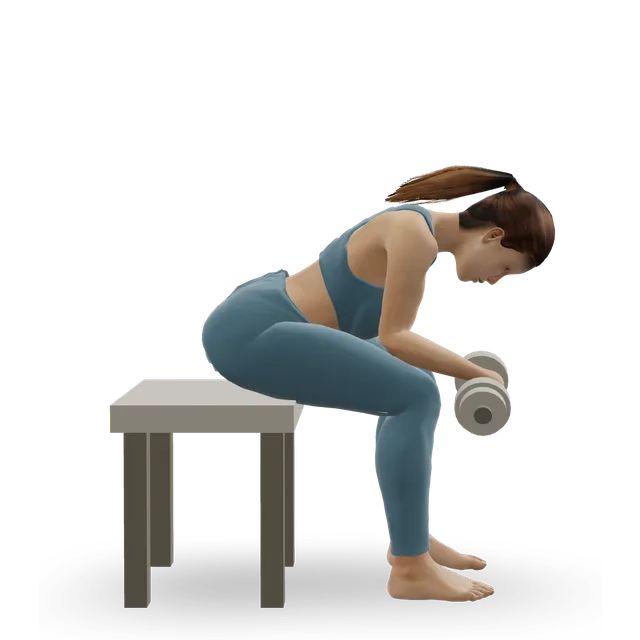
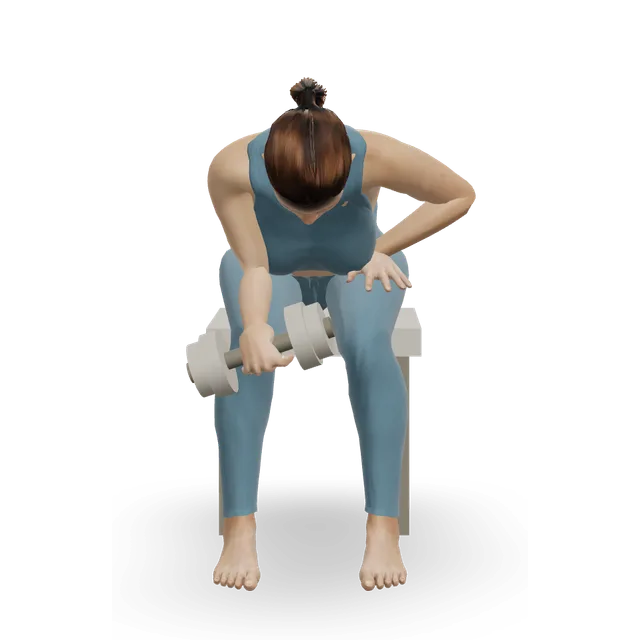
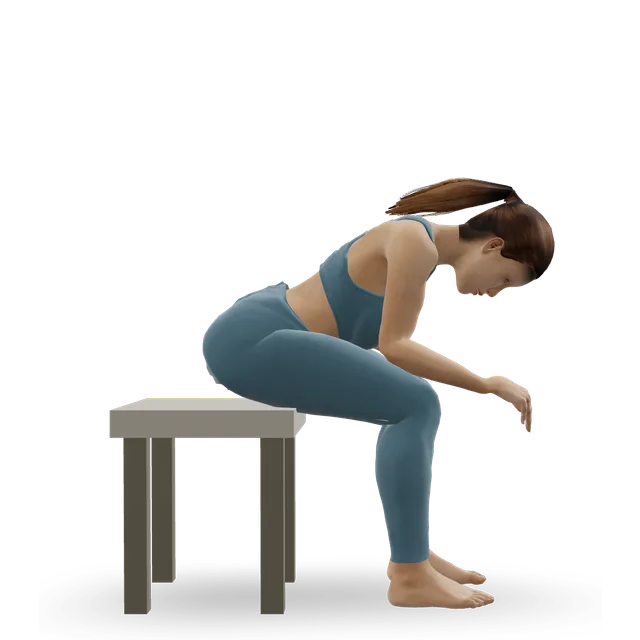
Wrist curls demonstrated on the 3D figure3D demoWrist curlsBeginner · A dumbbell

Held still, not lifted: hand level, no weight or the lightest, 10 holds of 10 s, 3 sets · With no weight, push the palm up into your other hand instead

Easier: Wrist-extensor eccentrics · Harder: Plate pinch

Reverse wrist curl demonstrated on the 3D figure3D demoReverse wrist curlBeginner · A dumbbell + A bench or box

Held still, palm down: 10 holds of 10 s, 3 sets

Easier: Wrist-extensor eccentrics · Harder: Plate pinch

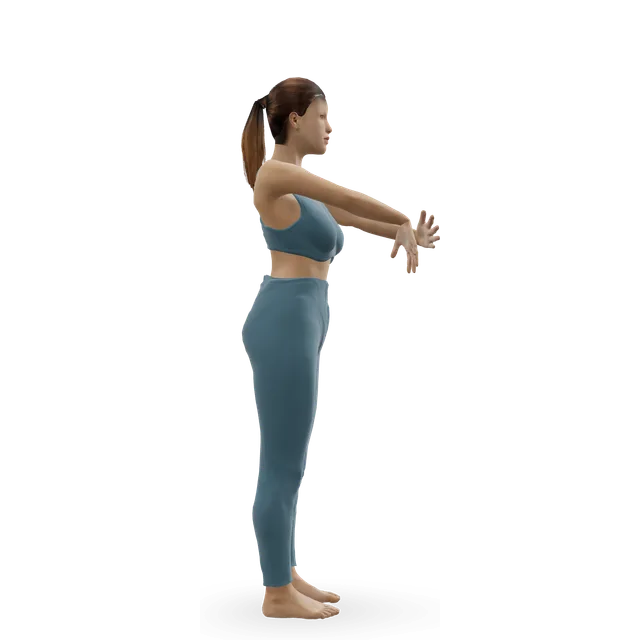
Wrist flexor stretch demonstrated on the 3D figure3D demoWrist flexor stretchBeginner · A wall

Gentle, 5 holds of 30 s, within the pain limit

Easier: Wrist circles · Harder: Quadruped wrist rocks

Move on when: The movements are comfortable, and the held contractions don't flare the wrist the next day.

Follow along: a timer, a cue and the next move, one step at a time.
Stage 3

Light loading (about weeks 4 to 8)

Add light resistance, slowly: a light band for wrist bends, and a light hammer, up to about 200 g, for turning the palm up and down. Daily tasks up to about 3 kg. Keep pain during the exercises to 3 out of 10 or less. Doses from the same trial programme unless marked.

Wrist curls demonstrated on the 3D figure3D demoWrist curlsBeginner · A dumbbell

A light band, forearm on a table, 15 times, up to 4 times a day · Or 2 to 3 sets of 15 most days (editorial)

Easier: Wrist-extensor eccentrics · Harder: Plate pinch

Reverse wrist curl demonstrated on the 3D figure3D demoReverse wrist curlBeginner · A dumbbell + A bench or box

A light band, palm down, 15 times, up to 4 times a day

Easier: Wrist-extensor eccentrics · Harder: Plate pinch

Dumbbell forearm rotation demonstrated on the 3D figure3D demoDumbbell forearm rotationBeginner · A dumbbell + A bench or box

A light hammer, up to about 200 g, held by the handle, 3 sets of 15

Easier: Wrist-extensor eccentrics · Harder: Forearm plank

Band finger extension demonstrated on the 3D figure3D demoBand finger extensionBeginner · A band

2 sets of 15, once a day · Editorial dose

Easier: Ball squeeze · Harder: Plate pinch

Move on when: Pain-free movement is at least 80% of the other side, grip at least 70%, and pain during the exercises is 3 out of 10 or less (the review's targets, from an untested framework).

Follow along: a timer, a cue and the next move, one step at a time.
Stage 4

Strength and weight through the hand (about 8 to 12 weeks on)

Build strength in every direction and start taking weight through the hand with the wrist kept straight. In the trial programme, daily tasks went up to about 5 kg from 8 weeks, and the heaviest tasks and fitness training resumed from 12 weeks, within the pain limit. Then add the skills of your sport.

Dumbbell forearm rotation demonstrated on the 3D figure3D demoDumbbell forearm rotationBeginner · A dumbbell + A bench or box

A hammer of up to about 300 g, 3 sets of 15 · From 12 weeks, heavier as the pain limit allows

Easier: Wrist-extensor eccentrics · Harder: Forearm plank

Farmer's carry demonstrated on the 3D figure3D demoFarmer's carryBeginner · A dumbbell + A kettlebell

Light, wrist kept straight, 3 carries of 20 to 30 m · A review suggests holds with the wrist straight; the dose is editorial

Harder: Suitcase carry

Wall push-up demonstrated on the 3D figure3D demoWall push-upBeginner · A wall

2 sets of 10 · Use fists or push-up handles if a flat palm hurts. Editorial dose

Harder: Push-up

Incline push-up demonstrated on the 3D figure3D demoIncline push-upBeginner · A bench or box

Once wall push-ups are pain-free: 2 to 3 sets of 8 to 12 · Handles or fists if needed. Editorial dose

Harder: Push-up

Forearm plank demonstrated on the 3D figure3D demoForearm plankIntermediate · No equipment

3 holds of 20 to 30 s · Weight on the forearms, not the wrists. Editorial dose

Easier: Stomach vacuum (drawing-in) · Harder: Plank walk-up

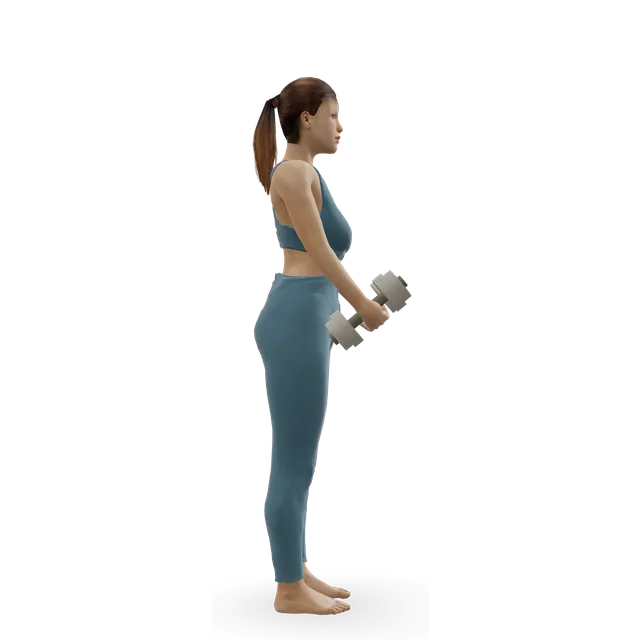
Hammer curl demonstrated on the 3D figure3D demoHammer curlBeginner · A dumbbell

Light, 2 to 3 sets of 10 to 15 · Editorial dose

Easier: Seated dumbbell curl · Harder: Alternating hammer curl

Move on when: Weight-bearing tasks cause 2 out of 10 or less and strength is at least 85% of the other side (the review's targets). Then build back to sport one change at a time.

Follow along: a timer, a cue and the next move, one step at a time.

What to change for now

What to change for now

Lean on fists or handles rather than a flat palm, keep the wrist straight when you grip and carry, and use the other hand or a jar opener for stiff lids and handles. Carry bags in the other hand or over the shoulder. These swaps are editorial, built on what loads the TFCC most: leaning on the hand, and gripping or twisting with the wrist bent towards the little finger.

Sources 2, 1

Splints and supports

After an injury, a splint for a few weeks helps, and in the studies above one that also held the forearm still did better for traumatic tears. If the pain came on gradually, long rigid splinting isn't needed: a light support during heavy tasks is enough.

Sources 10, 12, 1

When to ask about a hand specialist

If the pain hasn't settled after about 3 months of good non-surgical care, or the joint between the forearm bones feels unstable, ask your GP about a hand specialist. Surgery is an option then, not a first step. The 3-month point is editorial, based on the length of the programmes.

Sources 1, 2

Positions to swap, and why

Habit or positionWhy it mattersInstead
Push-ups and planks on flat palmsLeaning on a bent-back wrist loads the TFCC, especially with the wrist bent towards the little finger.Fists or push-up handles to keep the wrist straight, or take the weight on your forearms.Try: Forearm plank
The kneeling forearm stretch, palms flat and fingers pointing backIt puts body weight through a deeply bent wrist.The wrist flexor stretch against a wall, gently.Try: Wrist flexor stretch
Rocking your weight over your hands before the last stageWeight through the hand comes last in the trial programme, from about 8 weeks.Wrist movements without weight for now.Try: Wrist & forearm flow
Twisting under load: jar lids, screwdrivers, stiff door handles, wringing out clothsTurning the forearm under load stresses the TFCC and the joint between the forearm bones.Use the other hand or a jar opener for now, and build back with graded turning.Try: Dumbbell forearm rotation
Gripping hard with the wrist bent towards the little finger (racquets, clubs, hammers, heavy bags)That position raises the load through the TFCC.Keep the wrist straight, use lighter or thicker grips, and carry bags in the other hand.Try: Farmer's carry
Resting it completely for monthsThe programmes that have been studied protect the wrist briefly, then load it step by step.The staged plan, within the pain limit.Try: Wrist & forearm flow
Pushing through painful clicking or a clunkIt suggests the load is too high.Go back a step, and see a clinician if it keeps happening.

Routines to follow

More moves for this area

Questions people ask

What is a TFCC tear?

The TFCC is a small cushion of cartilage and ligaments on the little-finger side of the wrist that steadies the forearm bones and spreads load. It can tear in a fall or a twist, or wear thin with age and use.

What does a TFCC tear feel like?

Pain on the little-finger side of the wrist, worse turning a door handle or key, swinging a racquet or leaning on the hand, sometimes with clicking or a weak grip. Tenderness in the soft spot next to the bony knob on that side of the wrist is a strong clue.

Do I need an MRI for a TFCC tear?

Not always. MRI finds tears well, but tears are common in wrists that don't hurt, especially from middle age, so a scan only helps alongside the examination. It's most useful if surgery is being considered or the pain isn't settling.

Can a TFCC tear heal on its own?

Tears at the edge, which has a blood supply, can heal, and many tears settle without surgery: in one series, 57% avoided an operation after a splint or cast. Central tears don't heal, but they often stop hurting with care.

How long does a TFCC tear take to get better?

Structured programmes run for about 3 months, with weight through the hand from about 8 to 12 weeks. If it isn't improving after about 3 months of good care, ask about a hand specialist.

Should I wear a wrist brace for a TFCC tear?

After an injury, a splint for a few weeks helps, and one that also holds the forearm still did better than a wrist-only splint for traumatic tears. For a tear that came on gradually, a light support during heavy tasks is usually enough.

Do I need surgery for a TFCC tear?

Usually not at first. Surgery is considered when pain persists despite good non-surgical care, or the joint between the forearm bones is unstable. Results in case series are mixed, and the first randomised trial is still running.

What exercises help a TFCC tear, and which should I avoid?

Gentle wrist movements and held contractions first, then light bands, a light hammer for turning the palm up and down, and later weight through the hand with the wrist straight. For now, avoid leaning on a bent wrist and heavy twisting or gripping with the wrist bent towards the little finger.

Can I lift weights or do push-ups with a TFCC tear?

Yes, gradually: keep the wrist straight with handles, fists or neutral grips, keep pain to about 3 out of 10, and leave flat-palm push-ups until the later stages. The guide to wrist pain in push-ups covers technique.

Could my wrist pain be something else?

Yes: the tendon on the back of the wrist, a long ulna pressing on the wrist bones, a fracture, or the ulnar nerve or artery can all cause pain here. Tingling in the ring and little fingers points to the nerve, so get it checked.

Can a TFCC tear get worse?

Repeated heavy twisting and leaning on the wrist can keep it irritated. A wrist that starts to feel unstable, clunks or locks needs a hand specialist's assessment.

Related exercise guides

Other pain guides

Sources

  1. Liu 2026 · Diagnosis and non-surgical management of TFCC tears (narrative review, Front Sports Act Living)
  2. Satria 2025 · Ulnar-sided wrist pain: a systematic clinical approach (narrative review, Orthop Res Rev)
  3. Palmer 1989 · Triangular fibrocartilage complex lesions: a classification (J Hand Surg Am)
  4. Mikić 1978 · Age changes in the triangular fibrocartilage of the wrist (study of 180 wrists, J Anat)
  5. Tay 2007 · The ulnar fovea sign for little-finger-side wrist pain (diagnostic study of 272, J Hand Surg Am)
  6. Iordache 2012 · TFCC changes on MRI in wrists without symptoms (study of 103 volunteers, J Hand Surg Am)
  7. Fones 2025 · Incidental TFCC changes on wrist MRI (case series of 132, Hand)
  8. Portnoff 2024 · TFCC tears on MRI in people without symptoms (systematic review of 7 studies, Hand Surg Rehabil)
  9. Park 2010 · How many TFCC injuries need surgery after a splint or cast (retrospective study of 84, Orthopedics)
  10. Xiao 2021 · What predicts a poor result for traumatic TFCC tears treated without surgery (retrospective study of 89 wrists, Bone Joint J)
  11. Sander 2021 · Non-surgical care or keyhole trimming for TFCC tears with a stable joint (comparative study of 33, Eur J Trauma Emerg Surg)
  12. Choi 2024 · Traumatic TFCC tears treated without surgery (systematic review of 8 studies, J Wrist Surg)
  13. Shackleford 2026 · Non-surgical care for suspected TFCC injuries in children and teenagers (J Hand Surg Glob Online)
  14. Kaivorinne 2024 · The REINFORCER trial protocol and its hand therapy programme (BMJ Open)
  15. Tse 2023 · A structured non-surgical programme for traumatic TFCC tears (study of 32, no control group, Hand Surg Rehabil)
  16. McNamara 2020 · Results of treatment for traumatic TFCC tears (systematic review of 43 studies, J Hand Microsurg)
  17. NHS · Wrist pain
  18. NHS · Broken arm or wrist

Exercise education, not a diagnosis or treatment plan. It is written from the guidelines and studies listed above; review by a clinician is pending. If your pain follows an injury, is severe, is getting worse, or comes with any warning sign listed on this page, get it assessed. Health disclaimer.