Pain guide · Elbow pain

Elbow pain when doing push-ups: the back, inside and outside of the elbow, the nerve and what helps

Elbow pain when you do push-ups (press-ups) usually comes from one of a few places, and where it hurts is the best clue. An ache at the point of the elbow or just above it, worse as you push up and straighten, usually comes from the triceps tendon; pain on the bony bump on the outside, from the tennis elbow tendons; on the bump on the inside, from the golfer's elbow tendons; and tingling in the ring and little fingers at the bottom of the push-up, from the ulnar nerve, the "funny bone" nerve. No study counts how often each is the cause. Hand position matters: in a small lab study, hands together loaded the elbow far more than hands a little wider than your shoulders. Push-ups aren't bad for elbows: National Health Service (NHS) physiotherapy programmes use them to rebuild sore elbows.

This guide starts with the signs that need help, from a 999 call for arm pain with pressure across your chest, to an urgent treatment centre or accident and emergency (A&E) for a pop at the back of the elbow with weakness straightening your arm, and a same-day check through the NHS's 111 line (NHS 111) or a general practitioner (GP) for a hot, swollen elbow or one you can't straighten after a fall. It then maps the causes by where it hurts, explains what lab studies show about hand width and hand turn and why a scan rarely helps at first, shows how to change your push-up today, and gives a three-stage plan with a 3D demo of every move, from wall push-ups back to the floor.

When to get help first

Exercise is for pain that has been checked or is clearly mild and settling.

Get urgent medical help if

  • Call 999: arm pain that comes on suddenly with pressure, heaviness, tightness or squeezing across your chest, especially with shortness of breath, sweating or feeling sick. It could be a heart attack.
  • Call 999, even if it passes: sudden weakness or numbness in one arm, with a drooping face or slurred speech. These are signs of a stroke.
  • Go to A&E or call 999 if you've injured your arm and it is numb, tingling or has pins and needles; a bone is sticking out or a bad cut is bleeding heavily; or the arm or elbow has changed colour or shape, or is at an odd angle. Don't drive yourself.
  • Call 999 or go to A&E: after a fall or a blow, the elbow looks out of place, has changed shape, or you can't move it. Don't try to put it back in yourself. Support the arm in a sling or with a towel, hold an ice pack wrapped in a tea towel to it, and don't drive yourself.
  • Urgent treatment centre or A&E: a pop or snap at the back of the elbow during a push, a press or a dip, or after a fall onto an outstretched hand, then sudden pain and swelling, bruising at the back of the elbow or forearm, a gap above the point of the elbow, or weakness straightening the arm, especially overhead. Don't wait to see if it settles: a full tear in an active person is usually repaired, and expert guidance favours repairing it early.
  • Urgent treatment centre or A&E: severe pain in your arm and it's difficult to move; you've injured your arm and heard a snap, or your arm has changed shape; or your arm tingles or feels numb.
  • Same day (NHS 111): after a fall or knock you can't fully straighten the elbow, or the injured arm is very painful or the pain is getting worse, it's very swollen or bruised, it's stiff and hard to move, or you also have a very high temperature or feel hot, cold or shivery, which could be an infection. In a large study, about half of people who couldn't fully straighten the elbow after an injury had a fracture.
  • Same day (urgent GP appointment or NHS 111): a swollen elbow with a very high temperature, or you feel hot, cold or shivery; or severe pain in one joint that started suddenly, swelling around a joint, the skin around a joint has changed colour, or difficulty moving a joint. It could be an infection in the joint or the bursa, or gout.
  • Ask for an urgent GP appointment or get help from NHS 111 the same day if the skin over the swelling is painful, hot and swollen. Redness can be harder to see on brown or black skin. The bursa may be infected and need antibiotics, especially if there's a cut, graze or insect bite over it.
  • Same day (NHS 111): your arm hurts when you exercise, but the pain goes away when you rest.
  • Same day (call NHS 111, or go to A&E if you feel very unwell): after a big or unusual session, such as hundreds of pull-ups, push-ups, dips or curls, a challenge or a new class, muscle pain, swelling or weakness far worse than the session explains, and dark pee (red, brown, tea or cola coloured), sometimes starting hours or days later. Dark pee isn't always there, so muscles far sorer, more swollen or weaker than the session explains still need the same-day check. It can be rhabdomyolysis, a breakdown of muscle that can harm the kidneys.
  • You're taking a fluoroquinolone antibiotic and a tendon starts to hurt or swell: stop taking it, contact your doctor straight away, and rest the painful area until you've been seen.

See a doctor or physiotherapist if

  • Elbow or arm pain that hasn't gone after a few weeks of looking after it yourself (for tennis elbow, the NHS says after at least 2 weeks of self-care). In many areas you can refer yourself to NHS physiotherapy.
  • Pins and needles that keep coming back or are constant, numbness in the ring and little fingers that doesn't go, a weak or clumsy hand, or visible wasting between the thumb and index finger. Ask about referral: one NHS referral guide treats permanent numbness or wasting as urgent.
  • Pins and needles in the ring and little fingers that last more than 6 months despite the position changes on this page: the same NHS guide refers at that point.
  • Weakness straightening the arm that you notice without a clear injury, or back-of-elbow pain if you've had steroid injections near the elbow, have kidney disease or use anabolic steroids: get it checked. These can weaken the tendon.
  • An elbow that locks or catches: occasionally a loose piece of bone or cartilage is the cause.
  • A swelling on the point of the elbow that isn't better after 1 to 2 weeks of looking after it yourself.
  • A clunk, a feeling of giving way, or sharp pain on the outer elbow when you push up from a chair or do a push-up with your palms turned up, especially after an elbow dislocation or several steroid injections for tennis elbow: see a GP or physiotherapist (our suggestion). A loose elbow can look normal on an X-ray.
  • Elbow or forearm pain with pins and needles, or a sharp, hot or burning pain: it can come from a nerve in the neck, even if your neck doesn't hurt. See a GP or physiotherapist.
  • Contact your GP if you have elbow pain and have ever been diagnosed with cancer or a joint condition like rheumatoid arthritis, or your elbow is hot, swollen or tender, especially if you can't recall an injury. If your GP practice is closed, phone 111.
  • A swelling that keeps coming back, a firm lump that keeps growing, a lump that grows back after it was removed, or a lump with weight loss or night sweats: see a GP. Rarely, something else can look like bursitis.

Where does it hurt?

Location narrows the likely causes; it does not diagnose.

The point of the elbow or just above it, an ache worse pushing up, at the top of the push-up and in dips, close-grip presses and skull crushers, with your strength kept

Usually the triceps tendon (triceps tendinopathy), a rare and mostly mild problem.

Read: Triceps tendonitis →
A pop or tearing at the back of the elbow during a push, a dip or a fall, then swelling, bruising, a gap above the point of the elbow or weakness straightening the arm

Possibly a torn triceps tendon: go to an urgent treatment centre or A&E, as the warning signs say.

Read: Triceps tendonitis →
A jamming pain at the very back of the elbow only as it snaps fully straight, sometimes with catching or the last bit of straightening lost

Possibly a pinch at the back of the joint (posterior impingement), described in throwers and boxers.

Read: Elbow pain straightening →
A soft, squashy swelling on the point of the elbow, often after leaning on it or long forearm planks, with the elbow still moving

Olecranon bursitis. Hot, red and painful, or with a fever, it needs a same-day check.

Read: Elbow bursitis →
The bony bump on the outside, worse gripping the floor, handles or dumbbells, lifting and turning the wrist

Usually tennis elbow.

Read: Tennis elbow →
The outer elbow with a clunk, a feeling of giving way or a fear it will, pushing up from a chair or doing a push-up with your palms turned up, after a dislocation or repeated steroid injections

Possibly a loose elbow (posterolateral rotatory instability): see a GP or physiotherapist.

Read: Dislocated elbow →
The bony bump on the inside, worse gripping and bending the wrist

Usually golfer's elbow.

Read: Golfer's elbow →
Tingling or numbness in the ring and little fingers, at the bottom of the push-up, leaning on the elbow or sleeping with it bent

The ulnar nerve, squeezed behind the inner bump (cubital tunnel syndrome).

Read: Ulnar nerve entrapment →
A flick or snap over the inner bump as the elbow bends, sometimes with tingling

The ulnar nerve slipping, sometimes with part of the triceps (a snapping triceps). Painless slipping is common.

Read: Ulnar nerve entrapment →
Stiff all round, slowly losing the last bit of straightening, sometimes catching

Elbow arthritis or a loose fragment in the joint.

Read: Elbow arthritis and stiffness →
Elbow or forearm pain with pins and needles or burning that changes when you move your neck

A nerve in the neck.

Read: Pinched nerve in the neck →
Achy triceps and forearms the day after a big session, sore to press, gone within a few days

Muscle soreness. Muscles far sorer, more swollen or weaker than the session explains, especially with dark pee, need a same-day check.

Read: Elbow pain in pull-ups and curls →
Pain mainly when lifting and carrying, or on the bench press

Our elbow pain when lifting guide covers weights and carrying.

Read: Elbow pain when lifting →
The wrist rather than the elbow

A bent-back wrist under your body weight.

Read: Wrist pain in push-ups and yoga →
The shoulder rather than the elbow

The rotator cuff, the joint at the end of the collarbone (the acromioclavicular, or AC, joint) or the biceps tendon.

Read: Shoulder pain in push-ups →
Arm pain with pressure, heaviness or squeezing across the chest, or arm pain that comes on with effort and goes with rest

Possibly the heart: see the warning signs. That means especially an ache in the whole arm, or with chest, jaw or neck discomfort, rather than one sore spot at the elbow.

Understand it

What a push-up asks of the elbow, and what no study has countedEmerging evidence

In a push-up your hands carry about two-thirds of your body weight (about 64% in a lab study of 23 young adults, and 66% in another of 8 men), your elbows bend to about a right angle or more at the bottom, and your triceps straighten them again. In a lab study of 9 men, the force along the forearm peaked at about 45% of body weight, and at normal hand width the triceps worked at 56% of their maximum strength.

No study counts how often push-ups cause elbow pain: the only report naming push-ups as the trigger is a single case, an army recruit with a snapping triceps and a slipping ulnar nerve. In a survey of 181 Dutch calisthenics (bodyweight street workout) athletes, the elbow was named in 10% of the injury reports over a year, behind the shoulder (32%) and the wrist (15%), though the abstract doesn't say whether these are shares of injuries or of athletes. In powerlifting, elbow and upper arm injuries made up 8.0%, and the weight-training sports have low injury rates next to team sports. So the map on this page is built from what each condition is known to do, push-up lab studies and health-service pages.

Sources 1, 2, 3, 4, 5, 6, 7

The back of the elbow: the triceps tendon, a pinch in the joint and the bursaEmerging evidence

An ache at the point of the elbow or just above it, worse pushing and straightening against resistance, is the pattern of triceps tendon pain, which a review calls "the rarest of the tendinopathies around the elbow". Strength is usually kept, and it is thought to settle without surgery, though no treatment trial exists. A jamming pain only as the elbow snaps fully straight fits a pinch at the back of the joint (posterior impingement), described in throwers, in boxers after over-straightening injuries, and in 4 weightlifters among 36 athletes treated with keyhole surgery. No study has looked at it in push-ups.

A soft, squashy swelling on the point of the elbow is olecranon bursitis, often after leaning on it. Knee and elbow bursitis together affect at least 10 in 100,000 people a year, mostly men aged 40 to 60. About a third of knee and elbow bursitis is infected, one review says, as were 24% of cases in 2,692 soldiers with elbow bursitis, and a fever comes with up to 77% of infected cases. Unlike an infected joint, the elbow still moves.

Sources 8, 9, 10, 11, 12, 13, 14

A torn triceps tendon is rare, and easily missedEmerging evidence

Triceps tendon tears are rare: 0.5% of the tendon tears seen in US emergency departments, with men affected about 12 times as often as women. They usually come from a heavy push or a fall onto an outstretched hand. Steroid injections, anabolic steroids, kidney disease and diabetes raise the risk: of 262 people who had surgery, 10% had kidney disease, 7% used anabolic steroids and 5% had had a steroid injection. The signs are a pop, swelling, bruising, a gap above the point of the elbow and weakness straightening the arm, especially overhead.

Tears are often missed while the elbow is swollen: 10 of 23 in one surgical series were misdiagnosed at first, and one case report describes a tear drained three times as bursitis. A full tear in an active person is usually repaired, and in that series of 22 people, repairing the tendon directly was always possible within 3 weeks.

Sources 15, 16, 17, 18, 19

The outer and inner elbow, and a loose elbowEmerging evidence

Tennis elbow, on the outer bump, is the commonest elbow tendon problem, and golfer's elbow, on the inner bump, is up to 6 times less common. Both are brought on by gripping, lifting, wrist movement and twisting. No NHS page or study names push-ups or weight through the hands as a cause, so gripping push-up handles or dumbbells tightly is the likelier trigger (our reading).

Rarely, the outer elbow is loose (posterolateral rotatory instability), usually after a dislocation and, rarely, after repeated steroid injections for tennis elbow. It shows as a clunk, a feeling of giving way or a fear that it will when pushing up from a chair or doing a push-up with the palms turned up: in 8 people whose looseness was confirmed at surgery, each of those two tests was positive in 7. In another series, 12 of 92 people operated on for stubborn tennis elbow had a mildly loose elbow, all after repeated injections. The evidence is a few small case series, so the warning line about it is our suggestion.

Sources 20, 21, 8, 22, 23, 24

The ulnar nerve, and why tingling shows at the bottomEmerging evidence

The ulnar nerve runs in a groove behind the inner bump, and bending the elbow squeezes and stretches it: in 20 cadaver arms, bending from straight to about 135 degrees narrowed the tunnel by 30% to 41% and the nerve by 33% to 50%, and in 10 others the nerve stretched by 15% or more. So tingling in the ring and little fingers at the bottom of a push-up, or when you lean on the elbow, points to the nerve, while an ache at the point of the elbow that builds as you push up points to the triceps tendon. That is our reading: no study has measured it in push-ups.

Painless clicks are common. The ulnar nerve slipped over the inner bump without symptoms in 51% of 153 older volunteers and in 15.8% of the nerves of 38 healthy adults. A click with tingling, or a painful snap over the inner bump, sometimes with part of the triceps slipping too (a snapping triceps), needs assessing.

Sources 25, 26, 27, 28, 29, 30

Less common causes, and the heartEmerging evidence

Less often, elbow pain with push-ups comes from elbow arthritis (typically in middle-aged men who have done heavy manual work), gout, rheumatoid or psoriatic arthritis, or a nerve in the neck: NHS inform says problems felt in your elbow can occasionally come from your neck. Rarely, it is an infection, a fracture after a fall, or a tumour, and tumours at the elbow are mostly harmless; in 37 people with a tumour near the elbow, 57% had pain and 54% swelling.

The heart can show up as arm pain. The NHS sends arm pain that comes on suddenly with pressure, heaviness or squeezing across your chest to 999, and its heart attack page adds chest pain that spreads to the arms, neck or jaw. That is why an arm that aches with effort and settles with rest is in the warning signs: especially an ache in the whole arm, or one with chest, jaw or neck discomfort, rather than one sore spot at the elbow.

Sources 64, 61, 60, 37, 65, 62, 58, 63

"It hurts at the top, when I lock out"Emerging evidence

No study has measured elbow load or pain with a locked or over-straightened elbow in a push-up. A jam right at the end of straightening fits a pinch at the back of the joint, which is described after over-straightening injuries, and the NHS advises people with hypermobile joints: "do not overextend your joints just because you can". So while it hurts, straighten smoothly without snapping into the lockout (our suggestion). There's no reason to avoid straightening for good.

Sources 3, 9, 10, 31

What a scan shows, and what it doesn'tStrong evidence

Elbow tendon pain is diagnosed by examination: NHS Lothian says imaging is "rarely required, particularly if there has not been a fall or an injury". After a fall, an X-ray matters if you can't fully straighten the elbow. In 2,127 people with an elbow injury, 98.4% of adults and 95.8% of children who could fully straighten it had no fracture, while nearly half of those who couldn't had one. An X-ray can also show a fleck of bone pulled off with a torn triceps tendon (in 61% to 88% of tears that were operated on).

An ultrasound or magnetic resonance imaging (MRI) scan confirms and sizes a suspected triceps tear, though a normal MRI doesn't rule out a loose elbow, which shows only when it moves. Nerve conduction tests are for unclear or worsening nerve symptoms: in one trial, 76% of people with typical mild ulnar nerve symptoms had normal tests.

Sources 32, 33, 16, 17, 23, 34, 35

How it usually goesEmerging evidence

No study follows elbow pain from push-ups. For tennis elbow, the commonest elbow tendon problem, 89% of people in the untreated groups of 24 trials had improved by a year, however long they had had it. NHS inform expects new elbow pain to begin to settle within 6 weeks. No study follows triceps tendon pain; a review calls it self-limiting. Mild or moderate ulnar nerve symptoms improved in 89.5% of 70 people by 6 months with advice, and the NHS says bursitis usually gets better in a few weeks. No one can promise a date.

Sources 36, 37, 8, 35, 38

What helps, and how strong the evidence is

Push-ups are part of NHS elbow rehabilitationEmerging evidence

An NHS trust's elbow programme (Wrightington, Wigan and Leigh, WWL) ends with push-ups from the knees or the floor, "Repeat 10 times. Sets 3.", 3 to 4 times a week with at least a day off between, and says discomfort should ease within 2 hours; the leaflet is past its expiry date. Cambridge and Leeds use wall push-ups in elbow rehabilitation, without a fixed dose. These programmes were written for sore, stiff or injured elbows in general, not for pain from push-ups, and no trial has tested them for it.

Nothing shows that push-ups harm healthy elbows, and the weight-training sports have low injury rates next to team sports. The usual story is too much too soon, or hands too close together (our reading).

Sources 39, 40, 41, 7, 6

Hand position changes the load on the elbow: our reading of small lab studiesMixed evidence

In 9 healthy men, the triceps worked at 71% of their maximum with the hands together, 56% at normal width and 29% with the hands far apart, and hands placed further forward, towards the head, raised the strain on the inner elbow. Turning the hands inwards raised the shearing forces in two-handed push-ups, while in a one-handed study of 8 people, turning the hand outwards raised the inner-elbow shear by 50%, so the two point in different directions. Narrow and diamond push-ups worked the triceps harder than wide ones in studies of 40 adults and 20 men.

Push-up handles that keep the wrist straight put less load through the elbow but more through the shoulder in 14 men. Elbow flare has been studied for the shoulder blade, not the elbow, and no study links the elbow angle to elbow pain. None of these lab studies measured pain, and each used a handful of healthy people, so the hand advice on this page is our reading of them, not a tested treatment.

Sources 3, 42, 43, 44, 45, 46, 47

Inclines and knee push-ups take weight off the handsEmerging evidence

In a lab study of 23 young adults, the share of body weight on the hands was about 74% with the feet on a 61 cm box, 64% on the floor, 55% with the hands on a 30 cm box, 49% from the knees and 41% with the hands on a 61 cm box. In 8 men it was 66% on the floor and 53% from the knees, and in 28 trained men, less weight was on the hands at the top than at the bottom. These are healthy people in a lab, but they show why a wall, a worktop, a bench and the knees are steps back to the floor.

Sources 1, 2, 48

Loading the sore tendon: borrowed from other tendonsEmerging evidence

No trial has tested any exercise for triceps tendon pain or for elbow pain from push-ups, so this plan borrows. A UK consensus for tennis elbow agreed still holds of "up to 60 s and repeated five times, once daily", then lifting and lowering in "three sets of 10-15 repetitions, once daily", into pain the person finds acceptable. NHS inform's elbow exercises start with 2 to 3 repetitions and build to a maximum of 2 sets of 15. For the triceps tendon, our triceps guide borrows the order that patellar tendon trials tested: holds, then slow lifting and lowering, then heavier pressing.

Still holds pushed above a person's own pain threshold left more pain 30 minutes later in 24 people with tennis elbow, while holds below it didn't, which is why the holds here stay below the level that makes the pain climb.

Sources 49, 50, 51, 52, 53, 8

Tennis elbow: time and exercise do well, and steroid injections don't lastStrong evidence

In the untreated groups of 24 trials (1,085 people), 89% had improved by a year, and in two trials, physiotherapy and wait-and-see did about as well at a year. A steroid injection helped most at 6 weeks but did worse by a year: 69% success against 83% with wait-and-see in a trial of 185 people, where 47 of 65 early successes slipped back. NHS inform says steroid injections for golfer's elbow have "limited benefit" and "may be detrimental to the health of your tendon".

The NHS suggests a forearm strap for tennis elbow, but no study has tested a strap or sleeve for elbow pain from push-ups.

Sources 36, 54, 55, 21, 20

The ulnar nerve: advice and position changes firstEmerging evidence

In a trial of 70 people with mild or moderate ulnar nerve symptoms, 89.5% had improved by 6 months with information and avoiding the positions that brought them on, and night splints and nerve gliding exercises added nothing. NHS Lothian's referral guidance suggests a towel wrapped round the elbow at night "every night for at least three months", and refers after 6 months, or sooner for constant numbness, weakness or wasting. The British Society for Surgery of the Hand (BSSH) advises not leaning on the inside of the elbow. Surgery is for severe or worsening cases, mainly to prevent weakness.

Sources 35, 34, 27

How much pain is OK while you exercise?

About 3 to 4 out of 10, settled within an hour and no worse the next morningEmerging evidence

This guide uses the elbow hub's rule, as our other elbow guides do: some discomfort during the exercises is fine, but keep it mild, no more than about 3 to 4 out of 10. It should settle within an hour or so, and your elbow should be no worse the next morning. If it is worse, go lighter next time, not nothing; when a set no longer causes any discomfort, it's time to progress. The 3 to 4 figure is editorial: a UK tennis elbow consensus allowed pain the person finds acceptable, and noted that all but one tennis elbow trial asked for pain-free exercise.

NHS inform's elbow exercises allow a little more: 0 to 3 is minimal, 4 to 5 acceptable and 6 to 10 excessive, aiming to stay within 0 to 5, with the pain no worse the morning after. WWL's push-up programme says discomfort should ease within 2 hours. This site keeps the elbow limit lower because, in tennis elbow, still holds above people's own pain threshold left more pain 30 minutes later. In long-lasting muscle and joint pain, exercise into some pain did no worse than pain-free exercise (7 trials, 385 people), and carrying on with activity under a pain-monitoring rule did no harm in an Achilles tendon trial.

For push-ups (our suggestion, built on the same rule): use the step of the ladder (wall, worktop, bench, knees, floor) and the hand width where the last reps stay at about 3 to 4 out of 10, settle within an hour and leave the elbow no worse the next morning. If not, go back one step or widen your hands, not to nothing. Tingling or numbness in the fingers isn't a pain-rule question: stop at the depth or position that brings it on.

A pop, sudden weakness straightening the arm, a hot swollen elbow or chest pain are warning signs, not pain-rule questions. One warning line, from the NHS, is "your arm hurts when you exercise, but the pain goes away when you rest". In a push-up guide, that means especially an ache in the whole arm, or with chest, jaw or neck discomfort, rather than one sore spot at the elbow (our reading of the line): a sore tendon that eases between sets is what this pain rule is for.

Sources 49, 51, 39, 50, 56, 57, 58

The exercise plan: 3 stages

Start at the first stage. Each move opens a full guide with a 3D demo.

Stage 1

Keep pushing, change the push-up and calm the sore spot

About the first 2 weeks: push-ups at a wall or worktop with your hands a little wider than your shoulders and your fingers forward (the written steps below), holds for the sore tendon picked by where it hurts, and easy bending and straightening. No floor push-ups to failure, diamond push-ups or dips for now. With a diagnosed condition (a triceps tear, tennis or golfer's elbow, the ulnar nerve, bursitis, a dislocation or a loose elbow), that guide's plan comes first; after surgery or a fracture, your team's plan does.

Wall push-up demonstrated on the 3D figure3D demoWall push-upBeginner · A wall

3 sets of 10, hands a little wider than your shoulders, 3 to 4 days a week · WWL's push-up sets, reps and hand position, used here at the wall (editorial); Cambridge's and Leeds's elbow programmes use wall push-ups. Move to a steeper angle rather than push through pain, as the move page says for the wrists and shoulders

Harder: Push-up

Elbow bend and straighten (elbow range of motion) demonstrated on the 3D figure3D demoElbow bend and straighten (elbow range of motion)Beginner · No equipment

10 slow repetitions, up to 4 times a day · The move page's dose (an NHS Borders leaflet). With tingling in the ring and little fingers, skip long holds at full bend, as the move page says

Harder: Dumbbell biceps curl

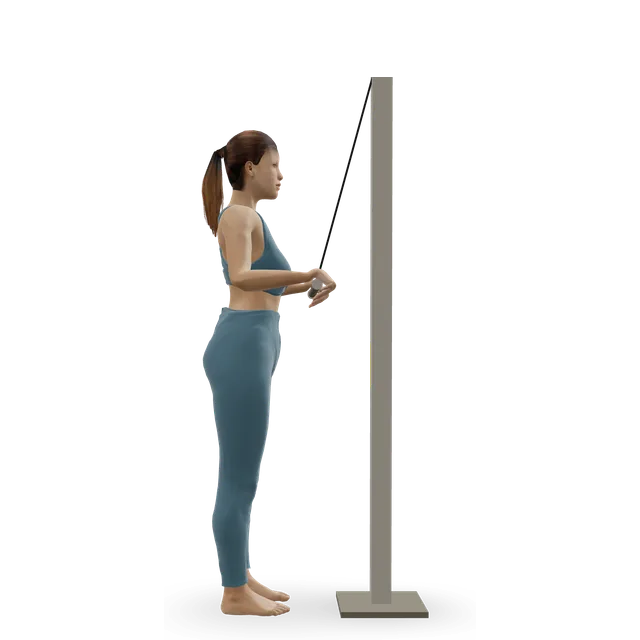
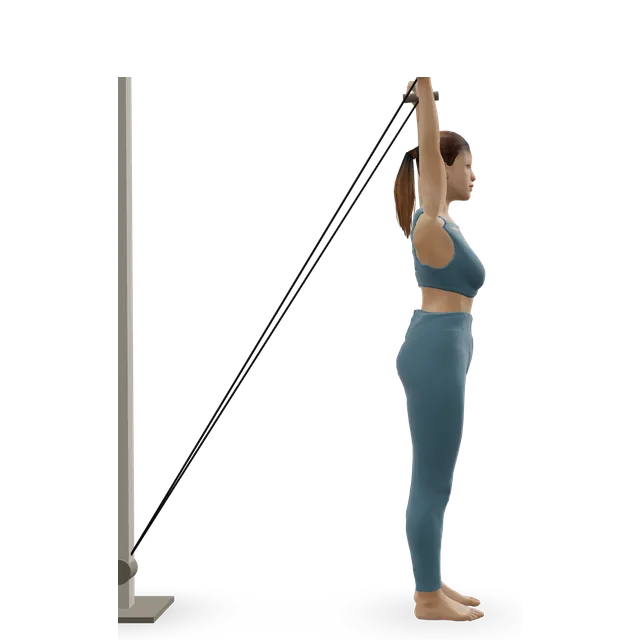
Triceps pushdown demonstrated on the 3D figure3D demoTriceps pushdownBeginner · A cable machine

Back of the elbow: 5 holds of 30 to 45 s at a moderate effort, the bar about halfway down, once a day · As in our triceps tendinopathy guide (editorial, borrowed from tendon holds). Stay below the level that makes the pain climb, and keep your wrists straight, as the move page says

Harder: Dumbbell skull crusher (lying triceps extension)

Reverse wrist curl demonstrated on the 3D figure3D demoReverse wrist curlBeginner · A dumbbell + A bench or box

Outer elbow: hold the weight still at the level position for up to 60 s, 5 times, once a day · The UK tennis elbow consensus's dose for still holds; the move page suggests the hold if lifting hurts

Easier: Wrist-extensor eccentrics · Harder: Plate pinch

Wrist curls demonstrated on the 3D figure3D demoWrist curlsBeginner · A dumbbell

Inner elbow: hold the weight still, 2 to 3 repetitions at first, building towards 2 sets of 8, 2 to 3 times a day · NHS inform's elbow exercise dose, used here for its wrist bending hold

Easier: Wrist-extensor eccentrics · Harder: Plate pinch

Band row demonstrated on the 3D figure3D demoBand rowBeginner · A band + An anchor point

3 sets of 10 to 15, stopping 2 to 3 reps short of failure · The move page's dose, an editorial starting point. Pulling keeps the arms training while pushing is lighter

Harder: Supported single-arm dumbbell row

Move on when: 3 sets of 10 at the wall or worktop stay within the pain rule, the holds no longer raise the pain, and the elbow has been no worse the next morning for a week (editorial).

Follow along: a timer, a cue and the next move, one step at a time.
Stage 2

Build the triceps and forearm, and lower the incline

About weeks 2 to 6, 3 or 4 days a week with a day off between push-up days: slow lifting and lowering for the sore tendon and the triceps, and push-ups on a lower surface, then from the knees.

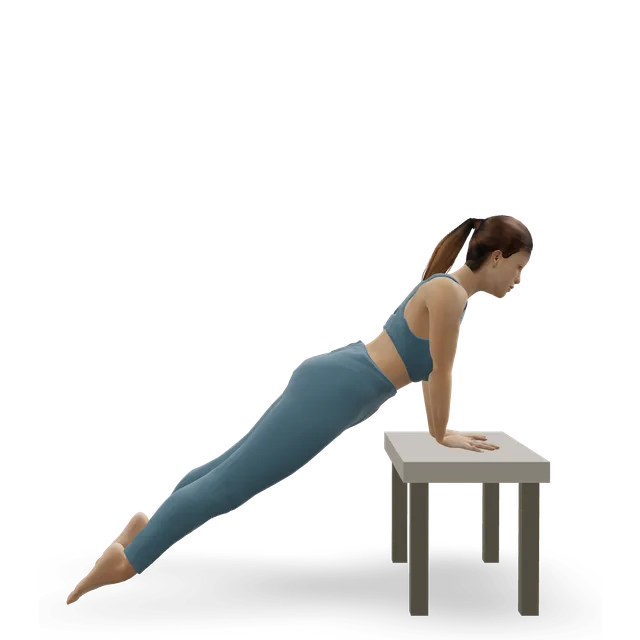
Incline push-up demonstrated on the 3D figure3D demoIncline push-upBeginner · A bench or box

3 sets of 10 on a worktop, then a bench; a notch lower when every set passes the pain rule · WWL's sets and reps (editorial on the incline). Hands on a 30 cm box carried about 55% of body weight, against 64% on the floor

Easier: Wall push-up · Harder: Push-up

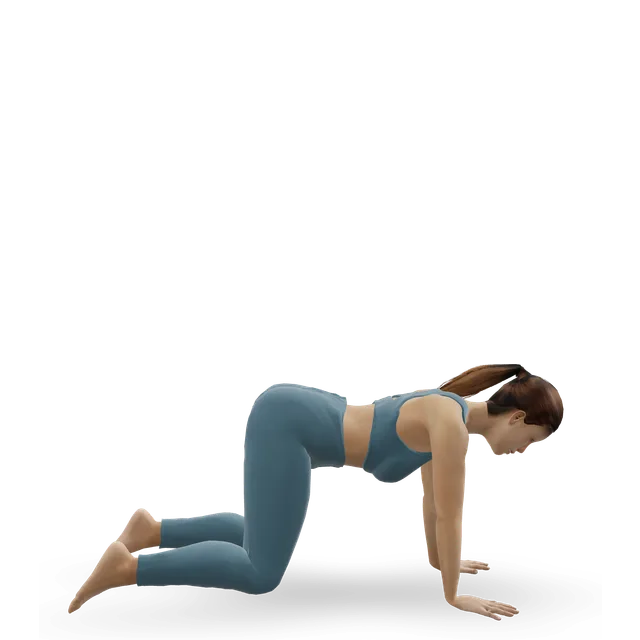
Knee push-up demonstrated on the 3D figure3D demoKnee push-upBeginner · No equipment

3 sets of 10, hands a little wider than your shoulders, 3 to 4 times a week with a day off between · WWL's level 3 push-up from the knees: "Repeat 10 times. Sets 3." Pad your knees, as the move page says

Easier: Incline push-up · Harder: Push-up

Triceps pushdown demonstrated on the 3D figure3D demoTriceps pushdownBeginner · A cable machine

3 sets of 10 to 15, lowering over 3 s, 2 to 3 times a week · As in our triceps tendinopathy guide (editorial)

Harder: Dumbbell skull crusher (lying triceps extension)

Wrist-extensor eccentrics demonstrated on the 3D figure3D demoWrist-extensor eccentricsBeginner · A dumbbell

Outer elbow: 3 sets of 10 to 15, once a day · The UK tennis elbow consensus's loading dose. For the inner elbow, use wrist curls at the same dose, up to NHS inform's maximum of 2 sets of 15

Harder: Wrist curls

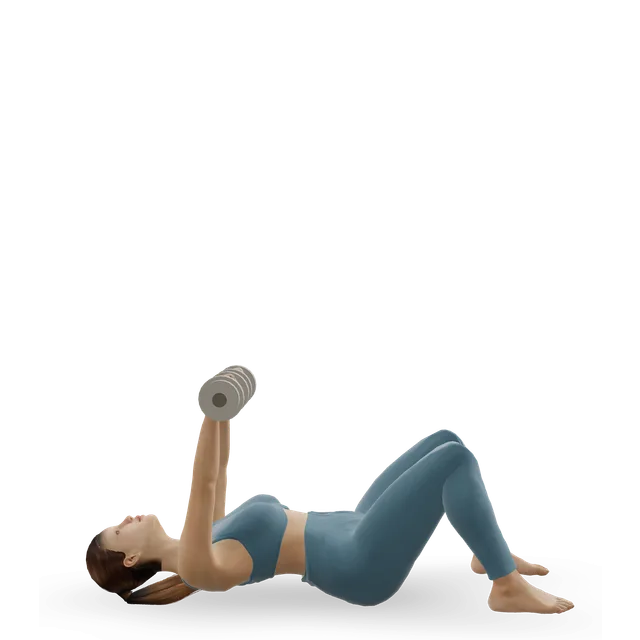
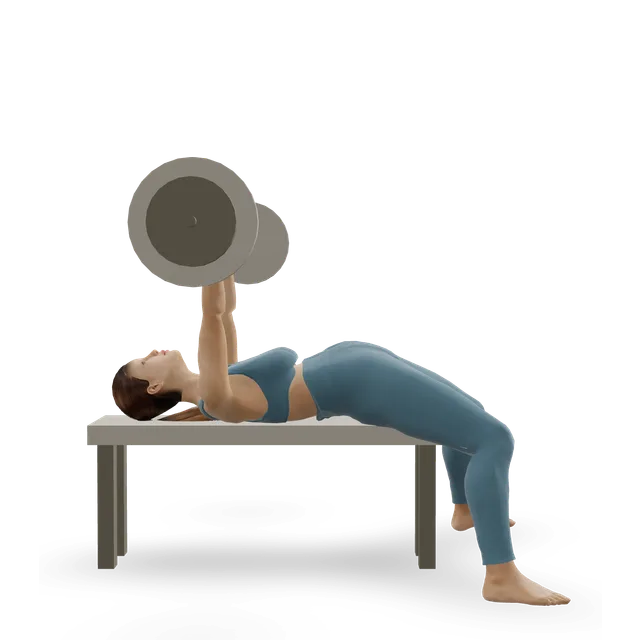
Dumbbell floor press demonstrated on the 3D figure3D demoDumbbell floor pressIntermediate · A dumbbell

2 to 3 sets of 8 to 12, stopping with 2 or 3 reps in reserve · The move page's dose, an editorial starting point. The floor stops your elbows, which shortens the range

Easier: Chest press machine · Harder: Bench press with chains

Scapular push-up (push-up plus) demonstrated on the 3D figure3D demoScapular push-up (push-up plus)Beginner · No equipment

2 to 3 sets of 10, at a wall or on your knees · As in our shoulder pain in push-ups guide (editorial). It keeps the shoulder blade working without deep elbow bending

Easier: Dumbbell shoulder-blade punch · Harder: Push-up

Move on when: 3 sets of 10 knee push-ups and the slow triceps and forearm work stay within the pain rule, with the elbow fine the next morning, for a week (editorial).

Follow along: a timer, a cue and the next move, one step at a time.
Stage 3

Back to the floor, then the harder push-ups

From about week 6, often later, 2 or 3 push-up sessions a week: full push-ups through a range that grows over the weeks, then one harder version at a time, while your usual training comes back by the written steps below. No study has tested a return to push-ups after elbow pain, so the order is editorial.

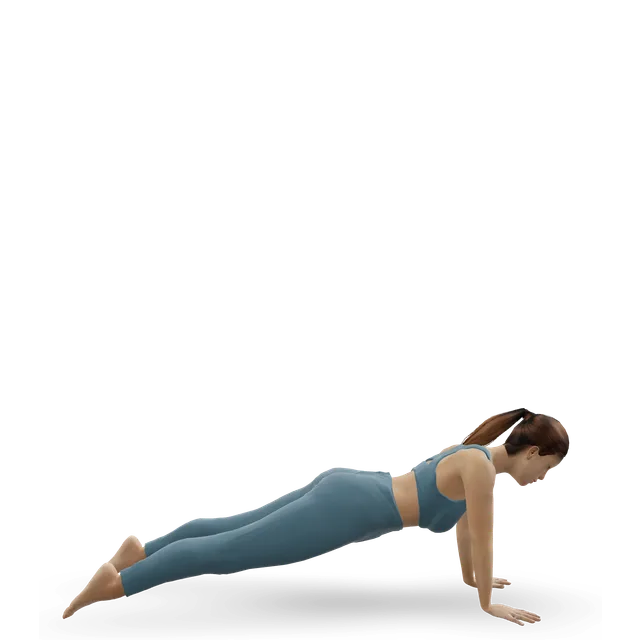
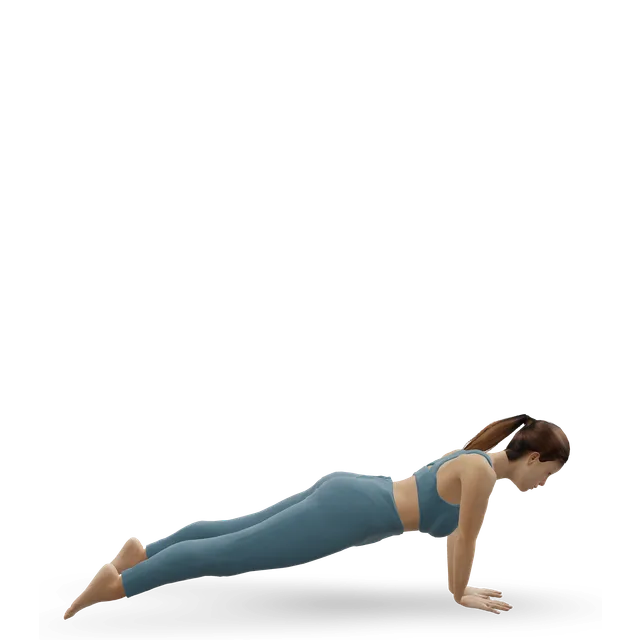
Push-up demonstrated on the 3D figure3D demoPush-upIntermediate · No equipment

3 sets of 10, hands a little wider than your shoulders; build to 3 sets of 15 before adding a harder version · WWL's full press-up dose; building to 15 is our push-up guide's ladder rule (editorial)

Easier: Wall push-up · Harder: Close-grip push-up (close triceps position)

Straight-arm plank (high plank) demonstrated on the 3D figure3D demoStraight-arm plank (high plank)Intermediate · No equipment

3 holds of 15 to 30 s · The move page's dose. Put your hands on a bench if the elbow complains (editorial)

Easier: Knee hover (Pilates tabletop hover) · Harder: Leg pull front (Pilates leg pull down)

Bear crawl demonstrated on the 3D figure3D demoBear crawlIntermediate · No equipment

4 crawls of 8 to 10 m · The move page's dose. Try it on fists or with your hands raised if your wrists complain, as the move page says

Easier: Knee hover (Pilates tabletop hover) · Harder: Spider crawl (low push-up knee drive)

Close-grip incline push-up demonstrated on the 3D figure3D demoClose-grip incline push-upBeginner · Other / check instructions

2 to 3 sets of 8 to 12 · As in our triceps tendinopathy guide (editorial): the step before diamond push-ups

Easier: Wall push-up · Harder: Push-up

Diamond push-up demonstrated on the 3D figure3D demoDiamond push-upIntermediate · No equipment

2 to 3 sets of 5 to 8, last and optional · Editorial. Hands together load the elbow the most, so the move page says move your hands apart if your elbows ache

Easier: Incline push-up · Harder: Archer push-up

Standing band external rotation demonstrated on the 3D figure3D demoStanding band external rotationBeginner · A band + An anchor point

2 to 3 sets of 12 to 15, twice a week, kept going · Editorial, as in our triceps tendinopathy guide: shoulder work supports pressing

Easier: Stick-assisted external rotation (lying) · Harder: Side-lying external rotation

Move on when: Full push-ups pass the pain rule for 2 weeks: then add one harder version at a time, and keep two strength days a week for the triceps and forearm for a few months after the pain has gone (editorial, as in our triceps guide). If it flares after a big day, go back a stage for a few days, not to nothing.

Follow along: a timer, a cue and the next move, one step at a time.

What to change for now

Your push-up for now (written steps)

Our 3D figure can't show these. They come from an NHS trust programme, NHS pages and small lab studies in healthy people; the hand advice is our reading of those studies, and where a step is our suggestion, it says so. No trial has tested a change to the push-up for elbow pain.

  • 1. Take weight off your hands: a wall, then a worktop or bench, then your knees, then the floor. Hands on a 61 cm box carried about 41% of body weight, against 64% on the floor.
  • 2. Hands a little wider than your shoulders (WWL's position), fingers pointing forward or slightly out, and under or just outside your shoulders rather than forward by your head. That placement is our reading of lab studies: hands placed forward raised the inner-elbow strain, and turning the hands in raised the shearing forces.
  • 3. No diamond or close-grip push-ups while it's sore: hands together asked the triceps for 71% of their maximum, against 56% at normal width and 29% with the hands far apart.
  • 4. With tingling in the ring and little fingers, stop above the depth where it starts, and don't lean on your elbows (our suggestion: bending and leaning squeeze the nerve).
  • 5. With an ache at the point of the elbow, use a shorter range at first and go a notch deeper each week (our suggestion).
  • 6. Straighten smoothly at the top, without snapping into a locked or over-straightened elbow (our suggestion; the NHS advises people with hypermobile joints not to overextend them).
  • 7. Push-up handles, fists or dumbbells keep the wrist straight and took some load off the elbow in a small lab study, but put more on the shoulder. Grip them lightly if the outer or inner bump hurts.
  • 8. Fewer, easier sets, 3 to 4 times a week with a day off between (WWL), stopping 2 or 3 reps short of failure, with no push-up challenges or maximum tests for now (our suggestion). In rare cases an extreme session breaks down muscle: 119 students developed muscle pain and dark urine after 120 push-ups in 5 minutes.
  • 9. Pad forearm planks, and don't lean on the point of the elbow (the NHS says avoid pressure on bursitis).

Sources 1, 39, 3, 42, 43, 25, 27, 31, 46, 59, 38

Dips, presses and the gym

Leave dips, bench dips, skull crushers and heavy close-grip pressing out while the back of the elbow hurts: they load the triceps tendon heavily, as our triceps guide says. They come back last, with dips only to about a right angle at the elbow, as our dips guide says. Elbow pain on the bench press follows the same rules, and our elbow pain when lifting guide covers it.

Keep using the arm

NHS inform says that after the first 48 hours you should try to use your elbow more, because exercise helps it and can relieve pain, and to avoid sports and heavy lifting until you have less discomfort and good movement. NHS Lothian says "Continuing to use your arm will not cause long term damage", and Arthritis UK says it's best not to rest for more than a few days. For pain, the NHS suggests paracetamol or ibuprofen, and a heat pack or frozen peas wrapped in a towel for 10 to 15 minutes every few hours for a couple of days.

Sources 37, 32, 60, 58

Back to your usual training (written steps)

No study has tested how push-ups come back after elbow pain, so these steps are our suggestion unless a source is named.

  • 1. Add one thing at a time: more reps, then the floor, then a harder version (close-grip, decline, archer, pike, then clap), then dips to about a right angle at the elbow, as our dips guide says.
  • 2. Keep two strength days a week for the triceps and forearm for a few months after the pain has gone (as in our triceps guide).
  • 3. Build any push-up challenge or test up over weeks, not from its top number, and stop sets 2 or 3 reps short of failure.
  • 4. Plyometric (clap) push-ups last: the catch "spikes load through the wrists, elbows and shoulders", as the move page says.
  • 5. If it flares after a big day, go back a stage for a few days, not to nothing, then build again.

Positions to swap, and why

Habit or positionWhy it mattersInstead
Diamond push-ups while it's soreHands together loaded the elbow the most in a small lab study.Hands a little wider than your shoulders, from the knees.Try: Knee push-up
Floor push-ups through painA floor push-up puts about two-thirds of your weight through your hands.Wall or worktop push-ups first.Try: Wall push-up
Hands turned inwards, or placed far forward by your headIn small lab studies, turning the hands in raised the shearing forces, and hands placed forward raised the inner-elbow strain.Fingers forward, hands under or just outside your shoulders, on an incline.Try: Incline push-up
Snapping into a hard lockoutA jam at full straightening is how a pinch at the back of the joint shows itself; for push-ups this is our inference.Straighten smoothly and lower slowly.Try: Incline push-up
Going to the bottom when your fingers tingleBending the elbow squeezes the ulnar nerve.A shorter range, and elbow bending without long holds at full bend.Try: Elbow bend and straighten (elbow range of motion)
Dips and bench dips while the back of the elbow hurtsThey load the triceps tendon heavily, as our triceps guide says.Slow pushdowns.Try: Triceps pushdown
Skull crushers and heavy close-grip pressing early onThey load the triceps tendon with the elbow deeply bent (editorial, as our triceps guide says).Kickbacks with your arm at your side.Try: Dumbbell triceps kickback
Push-up challenges, sets to failure and daily maximumsA sudden jump in load is the usual story (editorial), and in rare cases an extreme session breaks down muscle (rhabdomyolysis).Stop 2 or 3 reps short, 3 to 4 sessions a week.
Leaning on your elbows, or long forearm planks on a hard floorPressure irritates a bursa, and leaning on the inner elbow provokes the nerve.Pad your elbows, or hold a high plank with your hands on a bench.Try: Straight-arm plank (high plank)
Resting the arm completelyNHS inform says use your elbow more after the first 48 hours.The stage 1 moves.Try: Elbow bend and straighten (elbow range of motion)
A steroid injection near the triceps tendon, or repeated ones for tennis elbowSteroid injections are a risk factor for a torn triceps tendon and, repeated, for a loose outer elbow, and for tennis elbow they did worse than waiting by a year.Exercise first, and ask about the risks before any injection.
Waiting to see if a pop with weakness straightening settlesA full tear in an active person is usually repaired, and repairing the tendon directly was always possible within 3 weeks in one series.An urgent treatment centre or A&E.

Routines to follow

More moves for this area

Questions people ask

Why do my elbows hurt when I do push-ups?

A push-up puts about two-thirds of your weight through your hands, bends the elbow under load and asks the triceps to straighten it. Where it hurts is the best clue: the point of the elbow points to the triceps tendon, the outer bump to tennis elbow, the inner bump to golfer's elbow, and tingling in the ring and little fingers to the ulnar nerve.

Why does the inside of my elbow hurt during push-ups?

Usually golfer's elbow, the forearm tendons on the inner bump, especially if gripping hurts too; tingling in the ring and little fingers points to the ulnar nerve instead. Hands placed further forward raised the strain on the inner elbow in a lab study, so keep them under or just outside your shoulders.

Why does the back of my elbow hurt at the top of a push-up?

An ache at the point of the elbow as you push up is usually the triceps tendon, and a jam only as the elbow snaps fully straight can be a pinch at the back of the joint. Straighten smoothly without locking hard. A pop with weakness straightening the arm needs an urgent treatment centre or A&E.

Are push-ups bad for your elbows?

No. NHS physiotherapy programmes use wall, knee and full push-ups to rebuild sore elbows, at about 3 sets of 10. Too much too soon, or hands too close together, is the usual problem, not the exercise.

Should I stop doing push-ups if my elbow hurts?

Change them rather than stop: hands on a wall or worktop, a little wider than your shoulders, and fewer sets, keeping discomfort to about 3 to 4 out of 10 and no worse the next morning. NHS inform says using your elbow more after the first couple of days helps.

Are diamond push-ups bad for your elbows?

They load the elbow the most: in a lab study, the triceps worked at 71% of their maximum with the hands together, against 56% at normal width. Leave them out while it's sore and bring them back last, after close-grip push-ups are comfortable.

How should I place my hands?

A little wider than your shoulders, with the fingers pointing forward or slightly out, as an NHS trust's elbow programme and our reading of the lab studies suggest. Handles or fists keep the wrist straight and ease the elbow a little, but load the shoulder more.

Why do my fingers tingle when I do push-ups?

Tingling in the ring and little fingers usually comes from the ulnar nerve, which is squeezed and stretched when the elbow bends. Stop above the depth where it starts and avoid leaning on your elbows; most mild cases settle with this kind of advice. Numbness that doesn't go, or a weak, clumsy hand, needs a GP.

My elbows click when I do push-ups. Is that a problem?

Painless clicks are common: the ulnar nerve slips over the inner bump in many people without any symptoms. A click with tingling, a painful snap, a clunk on the outer side after a dislocation, or catching and locking needs checking.

Do I need a scan?

Usually not: elbow tendon pain is diagnosed by examination, and imaging is rarely needed without a fall or injury. An X-ray matters if you can't fully straighten the elbow after a fall, and an ultrasound or MRI scan for a suspected triceps tear.

How long until I can do push-ups normally again?

No one can promise a date. Most elbow tendon pain settles over weeks to months: untreated tennis elbow improved in 89% of people by a year, and mild nerve symptoms improved in about 9 in 10 by 6 months. Many people keep doing changed push-ups throughout.

When should I see a doctor?

Call 999 for arm pain with pressure across your chest, go to an urgent treatment centre or A&E for a pop at the back of the elbow with weakness straightening, and get help the same day for a hot, swollen elbow or one you can't straighten after a fall. See a GP if it isn't settling after a few weeks, or for numbness that doesn't go away. In the US, call 911 where this page says 999.

Related exercise guides

Other pain guides

Sources

  1. Wurm 2010 · Forces in push-up variations in 23 young adults, as a share of body weight (lab study, ISBS conference paper of Ebben 2011)
  2. Gouvali 2005 · Forces and muscle activity in push-up variants in 8 men (lab study, J Strength Cond Res)
  3. Donkers 1993 · Hand position and elbow load during push-ups in 9 healthy men (lab study, J Biomech)
  4. Lim 2022 · A snapping triceps and a slipping ulnar nerve after push-ups in an army recruit (case report, Malays Orthop J)
  5. Mohammad 2025 · Injuries in 181 Dutch calisthenics athletes (survey, J Sports Med Phys Fitness)
  6. Tung 2024 · Injuries in weightlifting and powerlifting: 17 reports (systematic review, BMJ Open Sport Exerc Med)
  7. Keogh 2017 · How common injuries are across the weight-training sports: 20 studies (systematic review, Sports Med)
  8. Donaldson 2014 · Tendon problems around the elbow, part 2: the inner elbow, the biceps and the triceps (review, Shoulder Elbow)
  9. Bowers 2022 · A pinch at the back of the elbow (posteromedial impingement) in throwing athletes (review, Curr Rev Musculoskelet Med)
  10. Valkering 2008 · A pinch at the back and outside of the elbow in 5 professional boxers (case series, Am J Sports Med)
  11. Koh 2018 · Keyhole surgery for a pinch at the back of the elbow in 36 athletes (case series, Knee Surg Sports Traumatol Arthrosc)
  12. Baumbach 2014 · Bursitis at the knee and the elbow, and how to treat it (literature review, Arch Orthop Trauma Surg)
  13. Schermann 2017 · Elbow bursitis in 2,692 soldiers (military records study, Mil Med)
  14. Blackwell 2014 · Olecranon bursitis (systematic overview, Shoulder Elbow)
  15. Whitmore 2025 · Tendon tears seen in US emergency departments over 20 years (national database study, Orthop J Sports Med)
  16. Dunn 2017 · Triceps tendon tears: 262 operated cases (systematic review, Hand)
  17. AAOS OrthoInfo · Triceps tendon tear at the elbow
  18. van Riet 2003 · Surgery for torn triceps tendons in 22 people (case series, J Bone Joint Surg Am)
  19. Shivdasani 2024 · Full triceps tears mistaken for elbow bursitis (case report, JSES Rev Rep Tech)
  20. NHS · Tennis elbow
  21. NHS inform · Golfers elbow
  22. Regan 2006 · Two apprehension tests, the chair and push-up signs, for a loose outer elbow in 8 people (case series, J Shoulder Elbow Surg)
  23. Quzli 2025 · Posterolateral rotatory instability of the elbow (narrative review, Cureus)
  24. Moon 2025 · Stubborn tennis elbow with a mildly loose elbow after repeated steroid injections, in 92 operated people (retrospective series, J Clin Med)
  25. Gelberman 1998 · How bending the elbow squeezes the ulnar nerve, in 20 cadaver arms (cadaver study, J Bone Joint Surg Am)
  26. Wright 2001 · How far the ulnar nerve slides and stretches as the arm moves, in 10 cadaver arms (cadaver study, J Hand Surg Am)
  27. British Society for Surgery of the Hand · Cubital tunnel syndrome (patient information)
  28. Endo 2021 · A slipping ulnar nerve on ultrasound in 153 volunteers, with and without symptoms (cross-sectional study, JSES Int)
  29. Liu 2024 · A slipping ulnar nerve without symptoms in 38 adults (ultrasound study, Quant Imaging Med Surg)
  30. Xia 2026 · Snapping triceps syndrome: 24 studies, 64 people (literature review, JSES Rev Rep Tech)
  31. NHS · Joint hypermobility syndrome (past its review date: reviewed August 2023, review due August 2026)
  32. NHS Lothian · Tennis elbow (patient leaflet, 2024)
  33. Appelboam 2008 · The elbow extension test to rule out a fracture in 2,127 adults and children (diagnostic study, BMJ)
  34. NHS Lothian RefHelp · Cubital tunnel syndrome (hand surgery referral guidance, 2026)
  35. Svernlöv 2009 · Advice, night splints or nerve gliding for ulnar nerve symptoms at the elbow in 70 people (randomised trial, J Hand Surg Eur)
  36. Ikonen 2022 · How tennis elbow goes without treatment: control groups of 24 trials, 1,085 people (systematic review and meta-analysis, Clin Orthop Relat Res)
  37. NHS inform · Elbow problems
  38. NHS · Bursitis
  39. Wrightington, Wigan and Leigh NHS trust · Elbow exercises level 3 (physiotherapy leaflet, past its expiry date: produced January 2024, expiry January 2026)
  40. Cambridge University Hospitals NHS Foundation Trust · Elbow range of movement exercises (physiotherapy leaflet, 2024)
  41. Leeds Teaching Hospitals NHS Trust · Radial head: phase 3 exercises (physiotherapy leaflet, 2022)
  42. Lou 2001 · Elbow load in push-ups with the forearm turned in or out (lab study, Clin Biomech)
  43. Chou 2002 · Elbow load in one-handed push-ups with the forearm in different positions, in 8 volunteers (lab study, Int J Sports Med)
  44. Cogley 2005 · Muscle activity with different hand positions in push-ups in 40 adults (lab study, J Strength Cond Res)
  45. Intziegianni 2026 · Chest and triceps activity in standard, diamond and wide push-ups in 20 men (lab study, Muscles)
  46. Polovinets 2026 · Push-up techniques and handles, and the load on the elbows and shoulders, in 14 men (lab study, Handchir Mikrochir Plast Chir)
  47. Suprak 2013 · Shoulder blade movement and arm angle in push-ups in 16 people (lab study, J Athl Train)
  48. Suprak 2011 · The share of body weight on the hands in push-up variants in 28 trained men (lab study, J Strength Cond Res)
  49. Bateman 2021 · A UK physiotherapy protocol for tennis elbow, agreed by consensus (consensus study, BMJ Open)
  50. Coombes 2016 · Still holds above and below the pain threshold in 24 people with tennis elbow (crossover study, Clin J Pain)
  51. NHS inform · Exercises for elbow problems
  52. Breda 2021 · Progressive tendon loading against eccentric squats in 76 people with patellar tendinopathy (randomised trial, Br J Sports Med)
  53. Kongsgaard 2009 · Steroid injections, eccentric decline squats or heavy slow resistance for patellar tendinopathy in 39 men (randomised trial, Scand J Med Sci Sports)
  54. Bisset 2006 · Physiotherapy, a steroid injection or wait and see for tennis elbow in 198 people (randomised trial, BMJ)
  55. Smidt 2002 · Steroid injections, physiotherapy or wait and see for tennis elbow in 185 people (randomised trial, Lancet)
  56. Smith 2017 · Should exercise be painful in long-lasting muscle and joint pain? 7 trials, 385 people (systematic review and meta-analysis, Br J Sports Med)
  57. Silbernagel 2007 · Carrying on with sport under a pain-monitoring model in 38 people with Achilles tendinopathy (randomised trial, Am J Sports Med)
  58. NHS · Elbow and arm pain
  59. Lin 2005 · Muscle breakdown (rhabdomyolysis) in 119 students after repeated push-ups (case series, Br J Sports Med)
  60. Arthritis UK · Elbow pain
  61. NHS · Gout (past its review date: reviewed August 2023, review due August 2026)
  62. Mazzolin 2023 · Tumours of the bones and soft tissues at the elbow in 37 people (case series, Acta Ortop Bras)
  63. NHS · Heart attack
  64. Gramstad 2006 · Managing elbow osteoarthritis (review, J Bone Joint Surg Am)
  65. Savvidou 2019 · Soft tissue tumours of the elbow (review, EFORT Open Rev)

Exercise education, not a diagnosis or treatment plan. It is written from the guidelines and studies listed above; review by a clinician is pending. If your pain follows an injury, is severe, is getting worse, or comes with any warning sign listed on this page, get it assessed. Health disclaimer.