Pain guide · Elbow pain

Triceps tendonitis and tears: back-of-elbow pain, a loading plan, and the weakness to get checked

Pain at the back of the elbow that is worse when you straighten your arm against resistance, in dips, close-grip presses, skull crushers or push-ups, can come from the triceps tendon where it attaches to the point of the elbow. Triceps (or tricep) tendonitis is uncommon and has hardly been studied, so the loading plan here is borrowed from tendons that have been, and it keeps you training while the tendon settles.

A tear is rarer still but time-sensitive. A pop at the back of the elbow with weakness straightening your arm, bruising or a gap above the point of the elbow needs checking within days, because a full tear in an active person is usually repaired early. This guide covers those signs, what raises the risk, partial tears and surgery, and a staged plan with 3D demos.

When to get help first

Exercise is for pain that has been checked or is clearly mild and settling.

Get urgent medical help if

  • Go to A&E or call 999 if you've injured your arm and it is numb, tingling or has pins and needles; a bone is sticking out or a bad cut is bleeding heavily; or the arm or elbow has changed colour or shape, or is at an odd angle. Don't drive yourself.
  • Urgent treatment centre or A&E: severe pain in your arm and it's difficult to move, or you've injured your arm and heard a snap. Tingling or numbness that comes on suddenly or after an injury belongs here too.
  • Same day (NHS 111): a pop or snap at the back of the elbow during a push, a press or a dip, or after a fall onto an outstretched hand, then sudden pain and swelling, bruising at the back of the elbow or forearm, a gap above the point of the elbow, or weakness straightening the arm, especially overhead. Don't wait to see if it settles: a full tear in an active person is usually repaired, and expert guidance favours repairing it early.
  • Same day (urgent GP appointment or NHS 111): a swollen elbow with a very high temperature, or you feel hot, cold or shivery; or sudden severe pain in one joint with swelling, a change of colour and difficulty moving it. It could be an infection in the joint or the bursa, or gout.
  • You're taking a fluoroquinolone antibiotic and a tendon starts to hurt or swell: stop taking it, contact your doctor straight away, and rest the painful area until you've been seen.
  • Same day (NHS 111): after a fall or knock you can't fully straighten the elbow, or the injured arm is very painful, very swollen or bruised, or stiff and hard to move. In a large study, about half of people who couldn't fully straighten the elbow after an injury had a fracture.
  • Call 999: arm pain that comes on suddenly with pressure, heaviness, tightness or squeezing across your chest, especially with shortness of breath, sweating or feeling sick. It could be a heart attack.

See a doctor or physiotherapist if

  • Elbow or arm pain that hasn't gone after a few weeks of looking after it yourself. In many areas you can refer yourself to NHS physiotherapy.
  • Weakness straightening the arm that you notice without a clear injury, or back-of-elbow pain if you've had steroid injections near the elbow, have kidney disease or use anabolic steroids: get it checked. These can weaken the tendon.
  • Tingling in the ring and little fingers, or a snap on the inner side of the elbow as it bends: possibly the ulnar nerve, sometimes with a snapping triceps.
  • A swelling on the point of the elbow that isn't better after 1 to 2 weeks of looking after it yourself.
  • In a thrower, pain at the back of the elbow as the arm straightens: get it assessed, as it can be bone spurs or a stress fracture rather than the tendon.

Where does it hurt?

Location narrows the likely causes; it does not diagnose.

Understand it

What it is

The triceps runs down the back of the upper arm, and its three heads join into one tendon that attaches to the point of the elbow (the olecranon); it straightens the elbow. Triceps tendinopathy, often called triceps tendonitis, is a gradual ache at the back of the elbow, worse straightening it against resistance. A tear can be partial, with some of the tendon still attached, or complete.

Sources 1, 2

How rare it isEmerging evidence

Tears are rare. In US emergency departments over 20 years, triceps tendon ruptures were about 0.5% of the tendon ruptures seen, about 1 in 200, at 0.02 per 100,000 people a year, with men at 12 times the rate of women and an average age of 44. Not everyone with a tear goes to an emergency department, so this probably undercounts them. In US active-duty military personnel the rate was 1.1 per 100,000 a year, and in a region of Slovakia 0.46 per 100,000.

The tendon has a broad, strong attachment, so it tears less often than other tendons, and reviews call tears rare or exceedingly rare. Triceps tendinopathy without a tear is described as very rare, with little published about it.

Sources 3, 4, 5, 1, 6, 2

Who gets it, and whyEmerging evidence

Most tears come from pushing a heavy load, in lifting or sport, or from a fall onto an outstretched hand, often as the triceps contracts while being forced to bend. In the US National Football League, 37 tears needed repair over 10 seasons, 86% of them in linemen, who missed 165 days on average. In another series of 19 professional players, 7 had warning pain before the tear.

Some things weaken the tendon: anabolic steroids, steroid injections, kidney disease, diabetes, an overactive parathyroid gland and a bursitis at the point of the elbow. In a review of 262 operated tears, kidney disease (10%) and anabolic steroid use (7%) were the commonest conditions, and 5 of the 19 football players had had a cortisone injection. These are links, not proof that each one caused the tear.

Sources 1, 7, 8, 9, 10, 11

Fluoroquinolone antibioticsMixed evidence

The UK's Medicines and Healthcare products Regulatory Agency (MHRA) warns that fluoroquinolone antibiotics can damage tendons, especially the Achilles tendon but also others, within 48 hours of starting or months after stopping, more often over 60, with kidney problems, after an organ transplant or when taken with steroid tablets. A UK study found the link only for Achilles ruptures (about 3 times the usual rate, and about 19 times with steroid tablets too), with no link to ruptures of the biceps or other tendons. No study looked at the triceps.

Sources 12, 13, 14

How it's told apart

An examination tells these apart. These are the usual patterns.

  • Triceps tendonitis: an ache at the tip of the elbow or just above it, tender on the tendon, worse with dips, close-grip presses, skull crushers and push-ups.
  • A tear: sudden sharp pain and swelling at the back of the elbow, bruising down the back of the elbow and forearm, a gap you can feel above the point of the elbow, and weakness straightening the elbow, especially overhead. Weakness isn't always obvious at first, and tears are often missed while the elbow is swollen: 10 of 23 in one series.
  • Olecranon bursitis: a soft swelling on the point of the elbow, often after leaning on it.
  • In throwers: pain at the back of the elbow as the arm straightens can be bone spurs or a stress fracture of the elbow tip.
  • A snapping triceps: a snap over the inner elbow as it bends, usually with an unstable ulnar nerve (58 of 64 reported cases), sometimes with tingling in the little finger.

Sources 1, 7, 15, 16, 17

Scans: when they helpEmerging evidence

With a suspected tear, an X-ray can show a small fleck of bone pulled off with the tendon (in 61% to 88% of operated tears in one review), and an ultrasound or magnetic resonance imaging (MRI) scan confirms the tear and how much of the tendon is involved, which guides treatment.

For tendon pain without a tear, a scan is rarely needed, and pain-free elbows often look abnormal: in 205 MRI scans every triceps tendon showed a line of bright signal, which the authors think is normal, and 9 of 26 pain-free professional baseball pitchers had changes where the triceps attaches.

Sources 1, 10, 18, 19

How it usually goes

There are no studies of how triceps tendonitis settles. In a case report, a climber's back-of-elbow pain went from 4 to 0 out of 10 over 10 weeks of shoulder-blade and triceps exercises, and she returned to her previous level. Of 10 partial tears in professional American football players, 6 healed without surgery, 1 later tore completely and 3 had repairs after the season for ongoing pain and weakness. The American Academy of Orthopaedic Surgeons (AAOS) says results without surgery are often satisfactory when less than half the tendon is torn, while bigger tears usually leave some lasting weakness.

Sources 20, 8, 1
What helps, and how strong the evidence is

The loading plan is borrowed from other tendonsEmerging evidence

No trial has tested any treatment for triceps tendonitis, so this guide borrows from tendons that have been studied, and says so. In 76 people with patellar tendinopathy, a progressive tendon-loading programme improved a 100-point symptom score by 28 points at 24 weeks, against 18 for slow lowering exercises alone. In 39 men with patellar tendinopathy, heavy, slow lifting and lowering kept its benefit at 6 months, while a steroid injection's early benefit faded. A review of Achilles and patellar programmes found little evidence for doing only the lowering phase.

Still holds were no better than lifting and lowering in a review of 10 trials, but can be a first step for some people. In 38 people with Achilles tendinopathy, carrying on running and jumping under a pain-monitoring rule did as well at 12 months as stopping for 6 weeks.

Sources 2, 21, 22, 23, 24, 25

A full tear: usually repaired, and repair is simplest earlyEmerging evidence

The AAOS recommends surgery for active people with a complete tear, and for pain or weakness that doesn't respond to other treatment; the tendon is reattached to the bone with strong stitches, usually as a day case. In one series of 22 people, a direct repair was always possible within 3 weeks of the injury, while later repairs needed a more complex reconstruction with a slower recovery. That, with expert guidance, is why a suspected tear needs checking within days. Reviews agree that most complete tears in fit people are repaired.

Sources 1, 15, 7, 11

Partial tears often heal without surgeryEmerging evidence

The AAOS considers non-surgical care for tears of less than half the tendon's width, for people with enough strength for what they need, or for those who can't safely have surgery: usually several weeks in a splint, then exercises. Full movement usually returns in about 3 months, and strength takes several months longer. A review says incomplete tears in people who can still straighten the arm against resistance are managed without surgery. In a small series of professional players, 6 of 10 partial tears healed this way.

Sources 1, 7, 8

How repairs turn outEmerging evidence

In a review of 262 operated tears (average age 46), 89% returned to their previous activity and 6% tore again. In 16 studies, 92% regained their previous function and 95% were satisfied, with complications in 15%, including retears in 5%. In 277 athletes, 93% returned to sport at about 5 months on average, 64% at their previous level or higher, with 4.4% retears. In 48 military personnel, 94% returned to duty. In 107 repairs at one group of hospitals, 14% had a complication and 13% needed another operation. These are mostly case series.

Sources 10, 26, 27, 28, 4, 29, 1

Steroid injections: a risk factor for tears, and short-lived help in other tendonsEmerging evidence

No study has tested steroid or platelet-rich plasma injections for triceps tendonitis. Steroid injections are listed as a risk factor for tears, and 5 of 19 professional football players with tears had had a cortisone injection. In other tendons, a steroid injection's early benefit faded: in patellar tendinopathy it had worn off by 6 months while heavy, slow exercise kept its benefit, and in tennis elbow fewer had recovered at a year (83% against 96% with a placebo injection). This guide doesn't suggest an injection near the triceps tendon.

Sources 1, 7, 8, 22, 30

How much pain is OK while you exercise?

The elbow pain rule, with holds below the pain thresholdEmerging evidence

Some discomfort during the exercises is fine. Keep it mild, no more than about 3 to 4 out of 10, settling within an hour, with the elbow no worse the next morning. If it's worse, go lighter next time, not to nothing; when a set no longer causes any discomfort, it's time to progress. The 3 to 4 out of 10 figure is our elbow rule, which is editorial; a UK physiotherapy consensus for tennis elbow allows exercise into "acceptable" levels of pain.

For holds, keep the load below the level that makes the pain climb during the hold: in tennis elbow, holds above a person's pain threshold left more pain half an hour later, while holds below it didn't. This is borrowed, as is the support for a little discomfort: in chronic muscle and joint pain, exercise into some pain gave a small short-term benefit, and in Achilles tendinopathy, training under a pain-monitoring rule did no harm.

Soreness rules help with the gym sessions: soreness that carries on through the warm-up, or comes back during the session, means 2 days off and a step back; soreness the next day (other than muscle soreness) means a day off and no progress. A suspected tear is different: stop and get it checked.

Sources 31, 32, 33, 25, 34

The exercise plan: 3 stages

Start at the first stage. Each move opens a full guide with a 3D demo.

Stage 1

Calm it, keep training: holds and light work (about weeks 0 to 2)

Keep the arm working, settle the pain with holds below the pain threshold, and keep pulling, legs and trunk going. The loading is borrowed from other tendons; no trial has tested it for the triceps. Doses are editorial unless marked as the move page's.

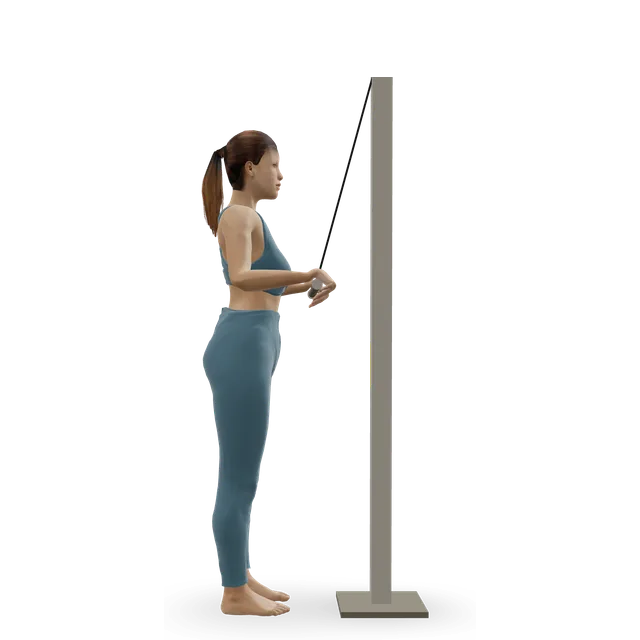
Triceps pushdown demonstrated on the 3D figure3D demoTriceps pushdownBeginner · A cable machine

As a hold: 5 holds of 30 to 45 s at a moderate effort, once a day · Push the bar to about halfway down and hold still. The same holds as our tennis and golfer's elbow guides, below the level that makes pain climb

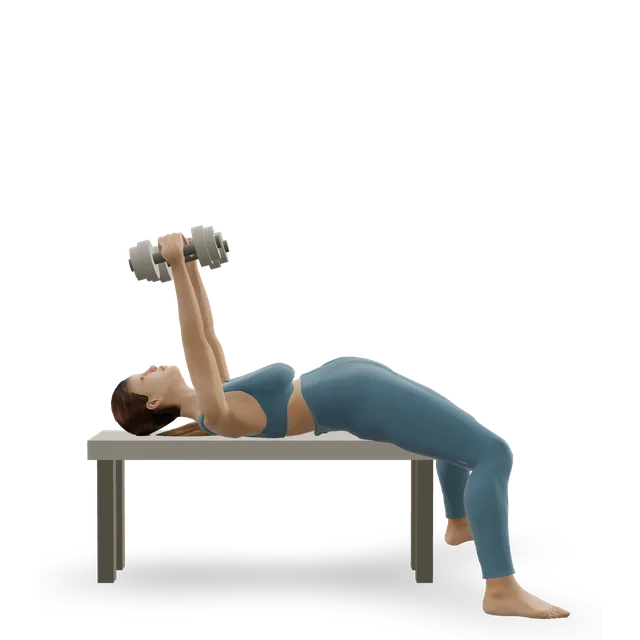
Harder: Dumbbell skull crusher (lying triceps extension)

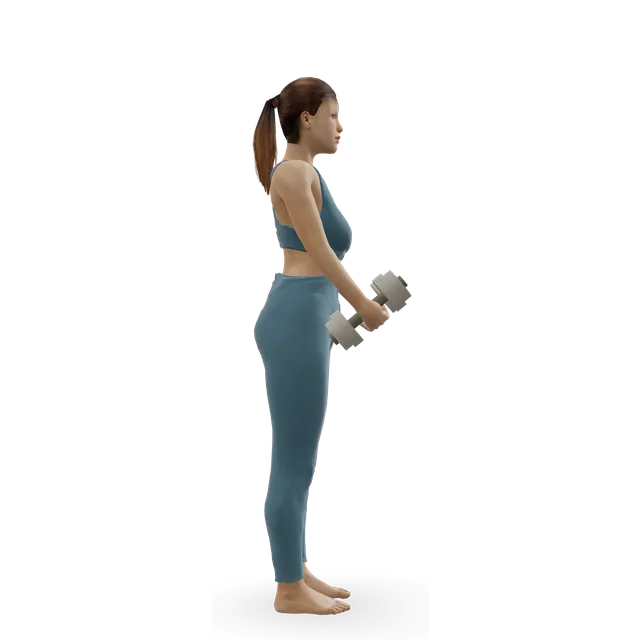
Elbow bend and straighten (elbow range of motion) demonstrated on the 3D figure3D demoElbow bend and straighten (elbow range of motion)Beginner · No equipment

10 slow repetitions, up to 4 times a day · The move page's dose

Harder: Dumbbell biceps curl

Band row demonstrated on the 3D figure3D demoBand rowBeginner · A band + An anchor point

3 sets of 10 to 15, stopping 2 to 3 reps short of failure, with 60 to 90 seconds' rest · The move page's dose. Pulling keeps training

Harder: Supported single-arm dumbbell row

Standing band external rotation demonstrated on the 3D figure3D demoStanding band external rotationBeginner · A band + An anchor point

2 to 3 sets of 12 to 15 · Shoulder and shoulder-blade work helped in one climber's case

Easier: Stick-assisted external rotation (lying) · Harder: Side-lying external rotation

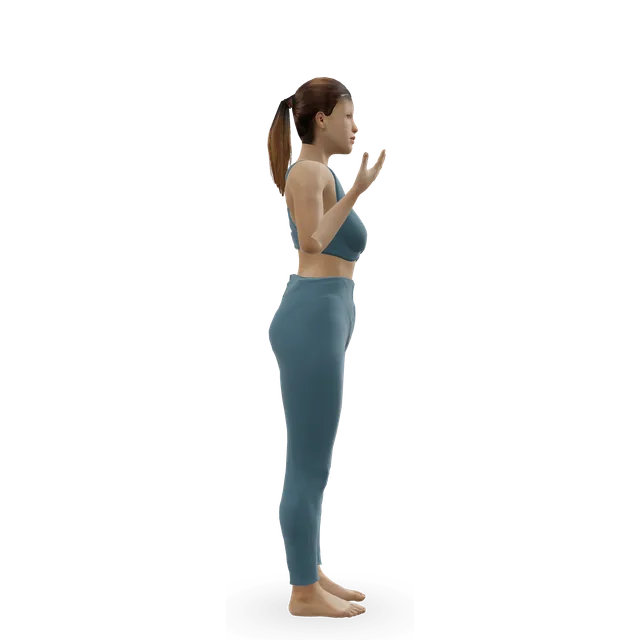
Wall push-up demonstrated on the 3D figure3D demoWall push-upBeginner · A wall

2 sets of 10, within the pain rule

Harder: Push-up

Move on when: The holds and daily life pass the elbow pain rule, the elbow is no worse the next morning for a week, and light pushdowns are comfortable (our suggestion).

Follow along: a timer, a cue and the next move, one step at a time.
Stage 2

Build: slow triceps work through more of the range (about weeks 2 to 8)

Lift and lower through a growing range, 2 to 3 times a week, adding load gradually, borrowed from heavy, slow loading in other tendons. Doses are editorial unless marked as the move page's.

Triceps pushdown demonstrated on the 3D figure3D demoTriceps pushdownBeginner · A cable machine

3 sets of 10 to 15, lowering over 3 s, 2 to 3 times a week

Harder: Dumbbell skull crusher (lying triceps extension)

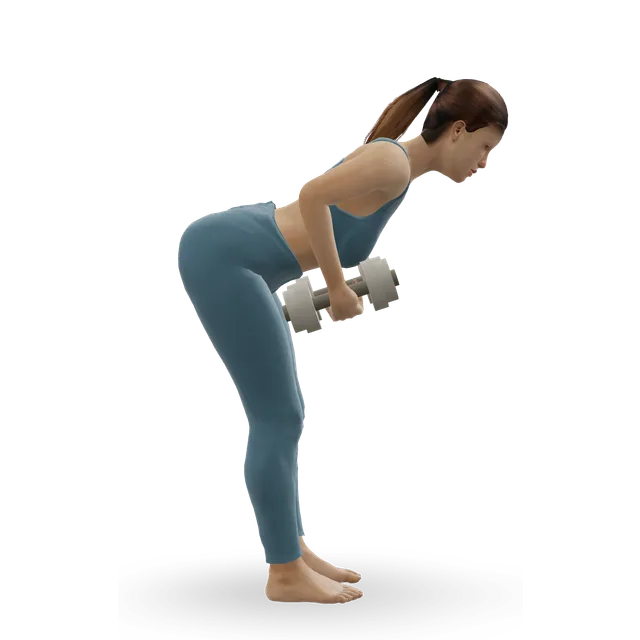
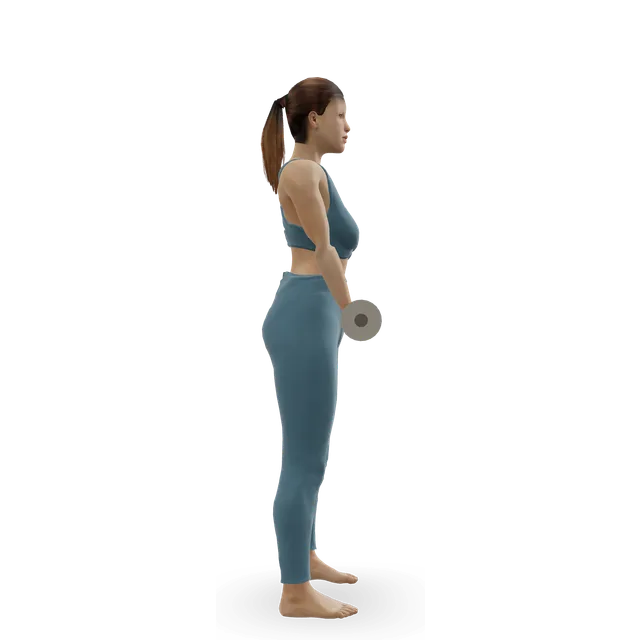
Dumbbell triceps kickback demonstrated on the 3D figure3D demoDumbbell triceps kickbackBeginner · A dumbbell

2 to 3 sets of 10 to 15, light · As in our elbow arthritis guide

Harder: Dumbbell skull crusher (lying triceps extension)

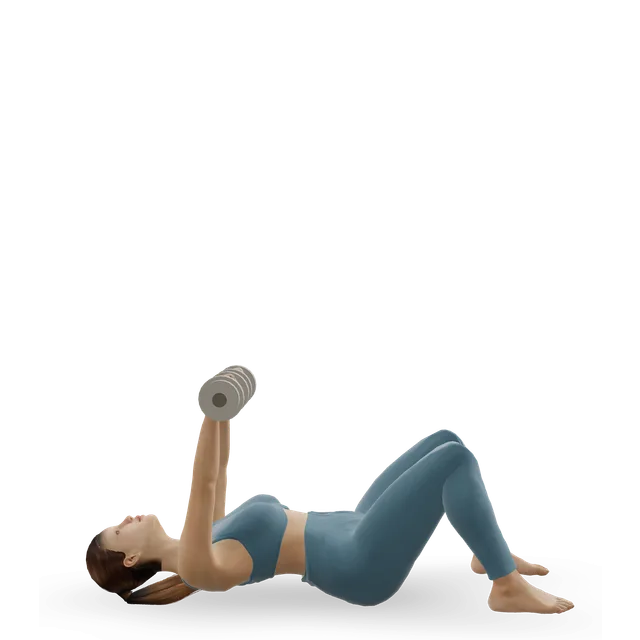
Dumbbell floor press demonstrated on the 3D figure3D demoDumbbell floor pressIntermediate · A dumbbell

2 to 3 sets of 8 to 12, stopping with 2 or 3 reps in reserve · The floor shortens the range

Easier: Chest press machine · Harder: Bench press with chains

Band row demonstrated on the 3D figure3D demoBand rowBeginner · A band + An anchor point

3 sets of 10 to 15, stopping 2 to 3 reps short of failure, with 60 to 90 seconds' rest · The move page's dose

Harder: Supported single-arm dumbbell row

Move on when: 3 sets of 15 slow pushdowns at a moderate weight pass the pain rule, with the elbow fine the next morning, for a week (our suggestion).

Follow along: a timer, a cue and the next move, one step at a time.
Stage 3

Heavier, then back to pressing and dips (from about week 6 to 8, often later)

Heavier, slow triceps work, then the presses and dips you want back. Starting at about half your old working weight and adding load in steps of 2 to 10% when you have reps to spare is our suggestion, using the American College of Sports Medicine's steps for healthy adults; no trial has tested them for a sore tendon. Doses are editorial.

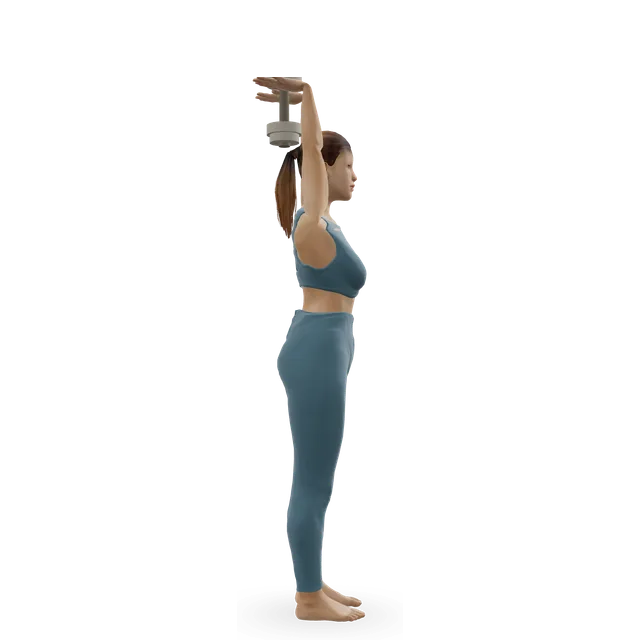
Standing overhead dumbbell triceps extension demonstrated on the 3D figure3D demoStanding overhead dumbbell triceps extensionIntermediate · A dumbbell

3 sets of 8 to 12 · As its page says, skip it with shoulder pain or finger tingling

Easier: Dumbbell triceps kickback · Harder: Triceps dip (upright)

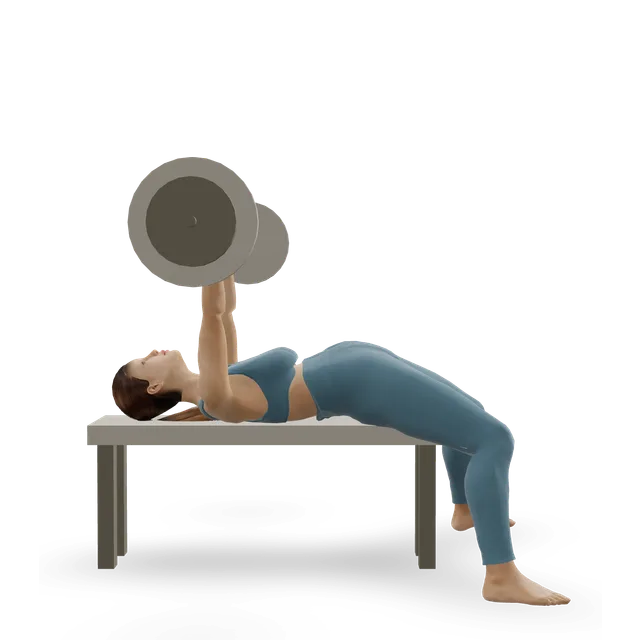
Close-grip barbell bench press demonstrated on the 3D figure3D demoClose-grip barbell bench pressIntermediate · A barbell + A bench or box

3 sets of 6 to 10, starting at about half your old working weight

Easier: Chest press machine · Harder: Dumbbell bench press

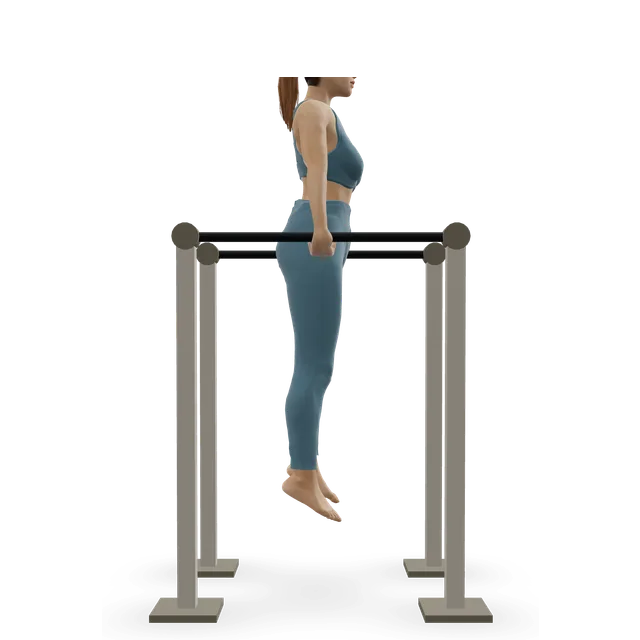
Parallel bar dip demonstrated on the 3D figure3D demoParallel bar dipAdvanced · Pull-up bar

2 to 3 sets of 5 to 8 · To about a right angle at the elbow, as our dips guide suggests

Easier: Bench dip · Harder: Ring dip

Move on when: Your usual sessions pass the pain rule for 2 weeks. Keeping one heavier, slow triceps exercise in your week for a few months is our suggestion. After a repair, follow your surgeon's plan instead.

Follow along: a timer, a cue and the next move, one step at a time.

What to change for now

What to change in pressing and dips for now

These are our suggestions; no trial has tested them for the triceps.

  • 1. Dips: stop at about a right angle at the elbow, or swap them for pushdowns while it's sore.
  • 2. Skull crushers and overhead extensions: leave them out early, as they load the tendon at length, and use pushdowns or kickbacks with the arm at your side.
  • 3. Close-grip bench: lighter, and from the floor or with a shorter range, before the full press.
  • 4. Lockouts and heavy partial presses: leave them for the last stage.
  • 5. Don't lean on the point of the elbow, and pad it if you have to.
  • 6. Back to heavier pressing: start at about half your old working weight, and add 2 to 10% when you can do 1 or 2 more reps than you planned, using the American College of Sports Medicine's steps for healthy adults.

Source 35

After a repair (notes, not a plan)

Follow your surgeon's plan. The AAOS describes about 2 weeks in a splint or brace, then a brace that lets you bend the elbow a little further each week until full movement returns over several weeks, physiotherapy for movement and strength, and limits on what you lift for about the first 12 weeks; about 6% of repairs tear again, so keep to the limits. In a review, athletes returned to sport at about 5 months on average.

Sources 1, 28

Positions to swap, and why

Habit or positionWhy it mattersInstead
Deep dips below a right angleOur dips guide stops at about a right angle at the elbow; deeper dips take the shoulder closer to its limit under your body weight.Triceps pushdowns now, and dips to a right angle in the last stage.Try: Triceps pushdown
Heavy skull crushers early onThey load the tendon in a lengthened position (editorial).Kickbacks with the arm at your side.Try: Dumbbell triceps kickback
Heavy close-grip bench pressA narrow grip moves more of the work onto the triceps.A lighter dumbbell floor press, with a shorter range.Try: Dumbbell floor press
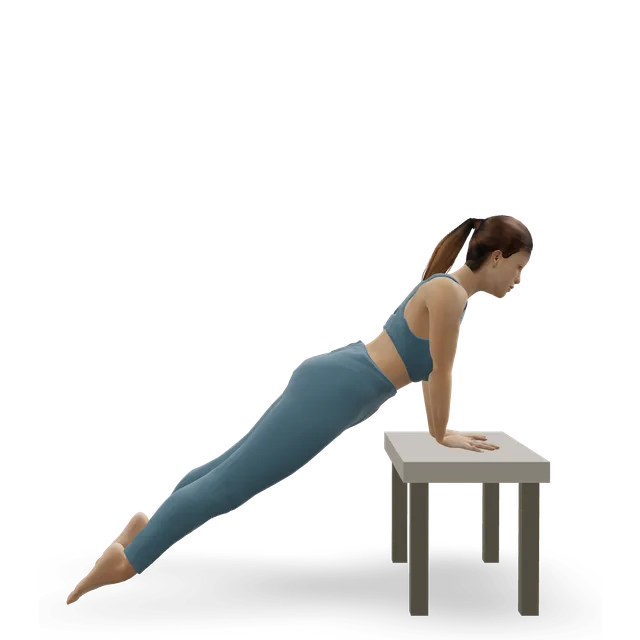
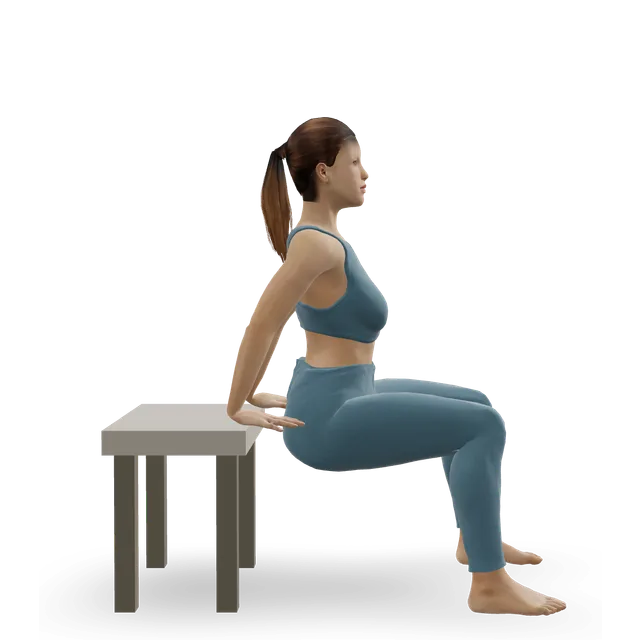
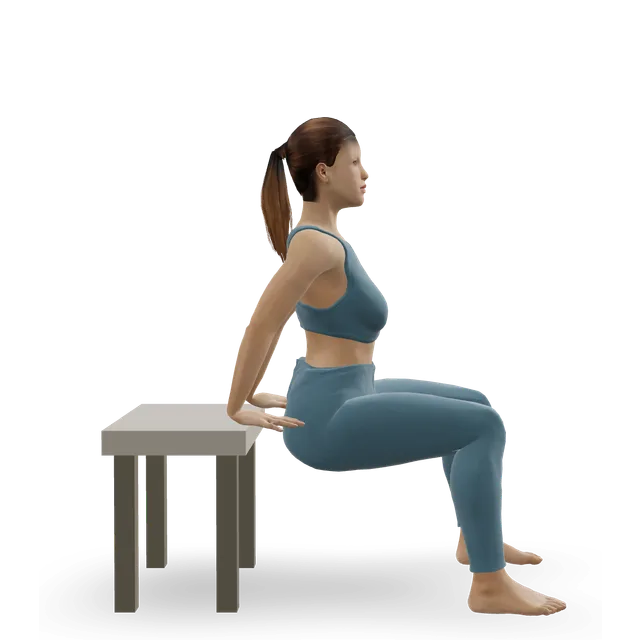
Bench dipsThey load the triceps heavily, and they take the shoulder furthest back of the dips.Close-grip incline push-ups.Try: Close-grip incline push-up
Complete rest until it stops hurtingBorrowed evidence from other tendons favours keeping the tendon loaded under a pain rule.The stage 1 holds and light work.Try: Triceps pushdown
A steroid injection near the tendonSteroid injections are a risk factor for tears, and their help is short-lived in other tendons.Exercise first; ask about the risks before any injection.
Carrying on with a fluoroquinolone antibiotic once a tendon hurtsThe MHRA says stop and contact your doctor straight away.Contact your doctor before the next dose.
Leaning on the point of the elbowIt can irritate the bursa there.Pad it, or keep your weight off it.

Routines to follow

More moves for this area

Questions people ask

How do I know if I've torn my triceps?

A pop at the back of the elbow during a push or a fall, then pain, swelling, bruising, a gap above the point of the elbow, and weakness straightening the arm, especially overhead. Get help from NHS 111 the same day: tears are often missed at first, and expert guidance favours repairing a full tear early.

Will a torn triceps tendon heal on its own?

A partial tear of less than half the tendon often heals with a splint and rehab. A complete tear in an active person is usually repaired, and bigger tears left alone usually leave some lasting weakness.

How long does triceps tendonitis take to heal?

There are no studies of the triceps to say. The loading programmes tested in other tendons ran for 12 to 24 weeks, so expect weeks to months rather than days, and no one can promise a time.

Can I still bench press and do dips?

Usually, with the changes we suggest: lighter, with a shorter range, such as a floor press, and dips only to about a right angle at the elbow, within the elbow pain rule. Build back to full pressing over the stages.

Is it triceps tendonitis or tennis elbow?

Go by where it hurts. Tennis elbow is on the outside of the elbow; the triceps tendon is at the back, worse straightening against resistance. Triceps tendon problems are much rarer.

Can steroids or antibiotics cause a triceps tear?

Anabolic steroids and steroid injections are linked with tears, as are kidney disease and some other conditions. Fluoroquinolone antibiotics carry a warning for tendon damage, mostly in the Achilles: if a tendon hurts while you're taking one, stop and contact your doctor.

What's the recovery after triceps surgery?

Usually about 2 weeks in a splint, then a brace that lets the elbow bend a little further each week, with limits on lifting for about the first 12 weeks. In a review, athletes returned to sport at about 5 months on average, and about 4 to 6% of repairs tore again.

Do I need a scan?

For tendon pain without a tear, usually not, and pain-free elbows often show signal in the tendon on MRI. A suspected tear needs an X-ray and usually an ultrasound or MRI scan, which guide treatment.

Is pain above the elbow at the back of my arm after a workout tendonitis?

Muscle soreness after new or heavy work is normal and fades, especially with lighter sessions repeated over the next week or two. Pain at the tendon near the point of the elbow that comes back with every push is more likely the tendon.

Should I wear a brace or a strap?

We found no study of a brace or strap for triceps tendonitis. After a tear, a splint or a hinged brace is part of the treatment your team prescribes.

Related exercise guides

Other pain guides

Sources

  1. AAOS OrthoInfo · Triceps tendon tear at the elbow
  2. Donaldson 2014 · Tendinopathies around the elbow, part 2: inner elbow, distal biceps and triceps (review, Shoulder Elbow)
  3. Whitmore 2025 · Acute tendon ruptures seen in US emergency departments (national database study, Orthop J Sports Med)
  4. Balazs 2016 · Triceps tendon repair in US military personnel (cohort, Injury)
  5. Sekáč 2024 · Distal triceps tendon ruptures in central Europe (retrospective study, J Clin Med)
  6. Rineer 2009 · Elbow tendinopathy and tendon ruptures (review, J Hand Surg Am)
  7. Yeh 2010 · Distal triceps rupture (review, J Am Acad Orthop Surg)
  8. Mair 2004 · Triceps tendon ruptures in professional American football players (case series, Am J Sports Med)
  9. Finstein 2015 · Triceps tendon ruptures needing repair in the National Football League (case series, Orthop J Sports Med)
  10. Dunn 2017 · Triceps tendon ruptures: 262 operated cases (systematic review, Hand)
  11. Keener 2015 · Distal triceps tendon injuries (review, Hand Clin)
  12. MHRA · Fluoroquinolone antibiotics: must now only be prescribed when other commonly recommended antibiotics are inappropriate (Drug Safety Update, 2024)
  13. MHRA · Fluoroquinolone antibiotics: new restrictions and precautions for use, including tendon damage (Drug Safety Update, 2019)
  14. Morales 2019 · Fluoroquinolone antibiotics and tendon rupture (nested case-control study, Clin Drug Investig)
  15. van Riet 2003 · Surgical treatment of distal triceps ruptures in 22 people (case series, J Bone Joint Surg Am)
  16. AAOS OrthoInfo · Elbow injuries in the throwing athlete
  17. Xia 2026 · Snapping triceps syndrome (review, JSES Rev Rep Tech)
  18. Valgaeren 2024 · Tendon signal changes on MRI in pain-free elbows (cross-sectional study, J Belg Soc Radiol)
  19. Gutierrez 2017 · Elbow MRI findings and later injury in pain-free professional pitchers (cohort, Sports Health)
  20. Vagy 2022 · Triceps tendinopathy in a rock climber (case report, Front Sports Act Living)
  21. Breda 2021 · Progressive tendon loading versus eccentric exercise for patellar tendinopathy (randomised trial, Br J Sports Med)
  22. Kongsgaard 2009 · Steroid injection, eccentric training or heavy slow resistance for patellar tendinopathy (randomised trial, Scand J Med Sci Sports)
  23. Malliaras 2013 · Achilles and patellar tendinopathy loading programmes (systematic review, Sports Med)
  24. Clifford 2020 · Isometric exercise for tendinopathy (systematic review and meta-analysis, BMJ Open Sport Exerc Med)
  25. Silbernagel 2007 · Continuing sport with a pain-monitoring model in Achilles tendinopathy (randomised trial, Am J Sports Med)
  26. Tran 2022 · Outcomes and complications of distal triceps repair (systematic review, JSES Rev Rep Tech)
  27. Alnaji 2022 · Surgical repair of distal triceps ruptures (systematic review, J Shoulder Elbow Surg)
  28. Vandenberg 2026 · Return to sport after distal triceps repair (systematic review, JSES Rev Rep Tech)
  29. Macknet 2022 · Complications after repair of 107 distal triceps tears (cohort, JSES Rev Rep Tech)
  30. Coombes 2013 · A steroid injection, physiotherapy or both for tennis elbow (randomised trial, JAMA)
  31. Bateman 2021 · An optimised UK physiotherapy protocol for tennis elbow (consensus study, BMJ Open)
  32. Coombes 2016 · Isometric exercise above and below the pain threshold in tennis elbow (experimental study, Clin J Pain)
  33. Smith 2017 · Should exercises be painful in chronic musculoskeletal pain? (systematic review and meta-analysis, Br J Sports Med)
  34. Fees 1998 · Upper limb weight-training changes for the injured athlete, with the soreness rules (clinical perspective, Am J Sports Med)
  35. American College of Sports Medicine 2009 · Progression models in resistance training for healthy adults (position stand, Med Sci Sports Exerc)
  36. NHS · Elbow and arm pain
  37. NHS · Tendonitis

Exercise education, not a diagnosis or treatment plan. It is written from the guidelines and studies listed above; review by a clinician is pending. If your pain follows an injury, is severe, is getting worse, or comes with any warning sign listed on this page, get it assessed. Health disclaimer.