Pain guide · Elbow pain

UCL injury of the elbow: rest and rehab or Tommy John surgery, and the way back to throwing

The ulnar collateral ligament (UCL) on the inside of the elbow holds the joint together against the outward force of every throw. In pitchers and other throwers it can wear down over months or tear suddenly with a pop, causing inner-elbow pain, slower or less accurate throws and sometimes tingling in the little finger. Many partial tears recover with a break from throwing and rehab; complete tears in people who want to keep throwing hard are often rebuilt, the operation known as Tommy John surgery.

This guide is for older teenagers and adults: in younger throwers the growth plate takes the strain instead, and our Little League elbow guide covers it. It sets out the signs that need checking soon, what rehab, platelet-rich plasma (PRP) injections and surgery achieve, realistic recovery times, the workload limits that protect the elbow, and a staged plan back to throwing with 3D demos.

When to get help first

Exercise is for pain that has been checked or is clearly mild and settling.

Get urgent medical help if

  • Go to A&E or call 999 if you've injured your arm and it is numb, tingling or has pins and needles; a bone is sticking out or a bad cut is bleeding heavily; or the arm or elbow has changed colour or shape, or is at an odd angle. Don't drive yourself.
  • Urgent treatment centre or A&E: severe pain in your arm and it's difficult to move, or you've injured your arm and heard a snap. Tingling or numbness that comes on suddenly or after an injury belongs here too.
  • Same day (NHS 111, or your team doctor): a pop on the inside of the elbow while throwing, with sudden pain, especially if you can't carry on throwing or the elbow feels loose. Stop throwing and get it checked.
  • Same day (urgent GP appointment or NHS 111): a swollen elbow with a very high temperature, or you feel hot, cold or shivery; or sudden severe pain in one joint with swelling, a change of colour and difficulty moving it. It could be an infection in the joint or the bursa, or gout.
  • Same day (NHS 111): after a fall or knock you can't fully straighten the elbow, or the injured arm is very painful, very swollen or bruised, or stiff and hard to move. In a large study, about half of people who couldn't fully straighten the elbow after an injury had a fracture.
  • After surgery: a high temperature, or feeling hot, cold or shivery; or a wound that is red, hot, swollen or oozing: contact your surgical team, ask for an urgent GP appointment or get help from NHS 111. These can be signs of an infection. If you feel unwell and the wound looks infected, go to A&E.
  • Call 999: arm pain that comes on suddenly with pressure, heaviness, tightness or squeezing across your chest, especially with shortness of breath, sweating or feeling sick. It could be a heart attack.

See a doctor or physiotherapist if

  • Inner-elbow pain when you throw, or a feeling that the elbow gives way, especially if your throws have lost speed or accuracy and don't recover after a short break from throwing: get it assessed by a GP, a physiotherapist or a sports medicine clinic.
  • Pins and needles that keep coming back or are constant, numbness in the ring and little fingers that doesn't go, a weak or clumsy hand, or visible wasting between the thumb and index finger. Ask about referral: one NHS referral guide treats permanent numbness or wasting as urgent.
  • Pain at the back of the elbow as the arm straightens when you throw: bone spurs or a stress fracture at the tip of the elbow need assessing.
  • An elbow that locks or catches: occasionally a loose piece of bone or cartilage is the cause.
  • A child or young teenager with inner-elbow pain from throwing: stop throwing and get it checked. The growth plate there usually closes by about 15, and our Little League elbow guide covers it.
  • New or worse tingling in the ring and little fingers after UCL surgery: tell your surgical team. The ulnar nerve is the commonest complication, and it often settles.

Where does it hurt?

Location narrows the likely causes; it does not diagnose.

Understand it

What it is

The UCL is a band on the inner side of the elbow, running from the bony bump on the inside of the upper arm (the medial epicondyle) to the inner side of the forearm bone (the ulna); its front bundle does most of the work. As the arm cocks back to throw, the elbow is bent outwards, and the UCL, helped by the forearm muscles that start on the same bump, holds it together.

Most tears come from wear over time, as repeated throws stress the ligament. A tear can also happen suddenly, with a pop and immediate pain, and the thrower can't carry on. A fall that dislocates the elbow can tear it too.

Sources 1, 2, 3

Who gets itEmerging evidence

Mostly baseball pitchers, but also position players, softball players, javelin throwers, gymnasts and volleyball players. In a survey of 5,088 professional baseball players, 25% of Major League pitchers and 15% of minor league pitchers had had a reconstruction.

Reconstructions are rising, and they are commonest at 15 to 19: 56.8% of operations in a US insurance database, about 22 per 100,000 a year in that age group, and in New York State the rate tripled over 10 years. In professional baseball, a UCL injury ended the season 60% of the time. Non-throwing athletes injure it too, less often: a review found reports from 11 sports.

Sources 1, 3, 4, 5, 6, 7, 8

What raises the riskEmerging evidence

The American Academy of Orthopaedic Surgeons (AAOS) lists the number of pitches, innings and months of pitching a year, being taller and heavier, throwing faster, off-season showcases, and above all pitching with arm pain or while tired. In 23 professional pitchers, those injured over the next 3 seasons had thrown faster in spring training (about 89 against 85 miles an hour). In 296 professional pitchers, losing 5° or more of shoulder rotation or of lifting the arm, against the other side, went with 2.6 to 2.8 times the risk of an elbow injury. These are small studies that show links, not causes.

Sources 3, 9, 10

How it is told apart

Only an assessment can be sure. These are the usual patterns.

  • The UCL: pain on the inside of the elbow during or after throwing, often with lost speed or accuracy (pitches start to sail high), sometimes tingling in the ring and little fingers. At first it hurts only with many or hard throws, later even at rest.
  • The forearm tendons (golfer's elbow in a thrower): pain on the inside when throwing, which the AAOS calls similar to golfer's elbow, often tender over the bump and worse gripping.
  • The ulnar nerve: electric-shock pain from the funny bone into the forearm, with numbness or tingling in the ring and little fingers during or after throwing, sometimes with a painful snap as the nerve slips.
  • The back of the elbow: pain at the tip of the elbow as the arm straightens can be bone spurs from the bones being forced together, or a stress fracture of the elbow tip, the commonest place for stress fractures in throwers.
  • A child or young teenager: the growth centre on the inner bump usually fuses by about 15, and until then the same force falls on the growth plate (Little League elbow).

Sources 1, 3, 11

Scans: what they show and what they don'tMixed evidence

X-rays come first; they are often normal but can show calcium in the ligament or bone spurs. A magnetic resonance imaging (MRI) scan, often with dye injected into the joint, shows the ligament, partial tears, and whether it tore at the upper-arm or the forearm end, which matters for treatment.

Throwing changes the elbow. In 23 uninjured high-school pitchers, 20 had at least one MRI finding, most often a thickened UCL. In 26 pain-free professional pitchers, half showed scarring in the ligament and 4 had partial tears, and no single finding predicted injury the next season, though another study of 41 pain-free pitchers found some findings did go with later injury. A thicker ligament on stress ultrasound went with more findings in 651 professional pitchers. So a scan is read alongside your symptoms and examination, not on its own.

Sources 1, 2, 12, 13, 14, 15

How it usually goes without surgeryEmerging evidence

No trial has compared rehab with surgery; the evidence is case series and cohorts, mostly in professional baseball. In 31 throwers treated with at least 3 months' rest and rehab, 42% returned to their previous level, at an average of about 24 weeks. In one professional organisation, 26 of 28 players with incomplete injuries returned after rehab. In 32 professional pitchers, a third failed rehab and needed reconstruction, and tears at the forearm end were 12.4 times as likely to fail.

Outside professional sport, a review of 15 studies (513 patients) found most people did well with either treatment, with too little evidence to say which is better. A period of rehab helps show who really needs surgery.

Sources 16, 17, 18, 19

What helps, and how strong the evidence is

A break from throwing and rehab come first for most partial tearsEmerging evidence

The AAOS describes stopping all overhead and throwing activities, then a re-check after about 6 to 12 weeks: if the ligament is no longer tender and the tests don't hurt, physiotherapy works on throwing mechanics and forearm and core strength before a throwing programme. A 2026 review describes 2 to 6 weeks of protection in a hinged brace, with grip and shoulder strengthening from the start, within a non-surgical trial of about 3 months.

Wilk's programme moves the elbow in a pain-free range (often about 10° to 100° at first), adds 5° to 10° a week to reach the full range by 3 to 4 weeks, then strengthens the forearm muscles that support the UCL and the shoulder, with throwing drills from about 6 to 7 weeks. Return rates without surgery range from 42% to over 80% in case series, mostly in professional baseball players.

Sources 1, 2, 20, 16, 17

Platelet-rich plasma is unprovenMixed evidence

PRP is an injection of the platelet-rich part of your own blood. In 34 athletes with partial tears that hadn't settled after 2 months, 88% were back at their previous level about 12 weeks after one injection. In 44 high-level baseball players given 1 to 3 injections, 32 had good or excellent results. In 23 partial tears treated with 2 injections, a brace and rehab, 22 returned to play. None of these had a comparison group.

In the largest comparison, 544 professional players treated without surgery, the 133 who had PRP took longer to return to throwing and play, and PRP didn't improve return to play or how long the ligament held up; the injections varied. The AAOS calls the evidence inconclusive, and a 2026 review calls it controversial. Steroid injections are typically not recommended for UCL tears, because the steroid may weaken the tissue and stop it healing.

Sources 21, 22, 23, 24, 1, 2

Reconstruction: most return, but it takes a year or moreEmerging evidence

Tommy John surgery builds a new ligament from a tendon graft, usually the palmaris longus from the wrist or a hamstring tendon. It is generally offered for complete tears, for tears where the ligament pulled off the bone, or when rehab has failed. In 1,281 athletes (743 followed for at least 2 years), 83% returned to the same or a higher level; throwing started at about 4.4 months and full competition at about 11.6 months on average. Complications affected 20%, mostly minor. A review of 8 studies found 83% excellent results and 10% complications, mostly ulnar nerve symptoms.

In Major League Baseball pitchers, 83% returned to the major leagues at about 20.5 months on average; of established pitchers, 67% returned to the same level, and 57% went back on the injured list for the throwing arm. The AAOS says full recovery takes about 12 to 18 months and about 80% compete again at the same level. In 34 javelin throwers, 82% returned at about 11 months, and in non-throwing athletes 86% returned after surgery.

Sources 25, 26, 27, 28, 1, 29, 8

Tommy John surgery doesn't make you throw harderEmerging evidence

In 28 Major League pitchers who returned after surgery, pitch speed changed no differently from matched pitchers who hadn't had it. In 147 pitchers, fastball speed and other measures fell after surgery, by about as much as in matched pitchers. One study found pitchers did better after surgery than in the injured season before it, which isn't the same as throwing harder than before the injury.

Yet in a survey of 235 players, coaches and parents, 51% of high-school athletes, 37% of parents and 30% of coaches thought players without an elbow injury should have the operation to improve performance, and many expected a return in under 9 months.

Sources 30, 28, 27, 31

Repair with a reinforcing tape suits some tearsEmerging evidence

For some recent tears where the ligament has pulled off the bone and the tissue is good, surgeons can reattach your own ligament and reinforce it with a strong tape (an internal brace). In 111 overhead athletes, 92% of those who wanted to returned to the same or a higher level, at about 6.7 months on average; a 2026 review cites a comparison of about 9 against 13 months to competition for repair against reconstruction. These are case series, and your sport, position, tear and tissue decide whether it's an option.

Sources 32, 2, 1

Interval throwing programmes make sense but are unvalidatedEmerging evidence

Programmes build distance, then effort, then mound work over several weeks, and throwing should be pain-free throughout. A 2025 review of 9 published baseball programmes found they were mostly variations on one original, poorly specified (an average of 20 out of 30 on a checklist of the details they should give), and almost untested. So the steps in this guide are a sensible framework, not a proven one.

Sources 20, 33, 34
How much pain is OK while you exercise?

Strength work: the elbow rule. Throwing: no painEmerging evidence

For the strength stages, use the elbow pain rule: mild discomfort is fine, no more than about 3 to 4 out of 10, settling within an hour, with the elbow no worse the next morning. Stop anything that brings on tingling in the ring and little fingers. A UK physiotherapy consensus allows exercise into "acceptable" levels of pain for tennis elbow; the exact figure is our elbow rule, which is editorial. Physiotherapists also use soreness rules: soreness that carries on through the warm-up, or comes back during the session, means 2 days off and a step back.

Throwing is stricter. Wilk's programme says throwing should be done without pain or a significant increase in symptoms, and the AAOS clears full competition when speed and control improve without any pain. Our suggestion: pain on the inner elbow during a throwing session means stop that session; soreness the next morning means drop back a step; and a flare at the same step twice means seeing your clinician before going on. There are no trials of exercising a ligament into pain.

Sources 35, 36, 20, 1

The exercise plan: 4 stages

Start at the first stage. Each move opens a full guide with a 3D demo.

Stage 1

Protect and calm: no throwing (often the first 2 to 6 weeks; your clinician sets the time)

Settle the pain and tenderness, keep the elbow moving in a pain-free range, and keep the grip, shoulder blades, trunk and legs working. No throwing of any kind. A hinged brace, if your clinician gives you one, and gentle still holds are written steps below. Doses are editorial unless a source is named.

Elbow bend and straighten (elbow range of motion) demonstrated on the 3D figure3D demoElbow bend and straighten (elbow range of motion)Beginner · No equipment

10 slow repetitions, up to 4 times a day · The move page's dose, within the range that doesn't hurt, often about 10° to 100° at first in Wilk's programme

Harder: Dumbbell biceps curl

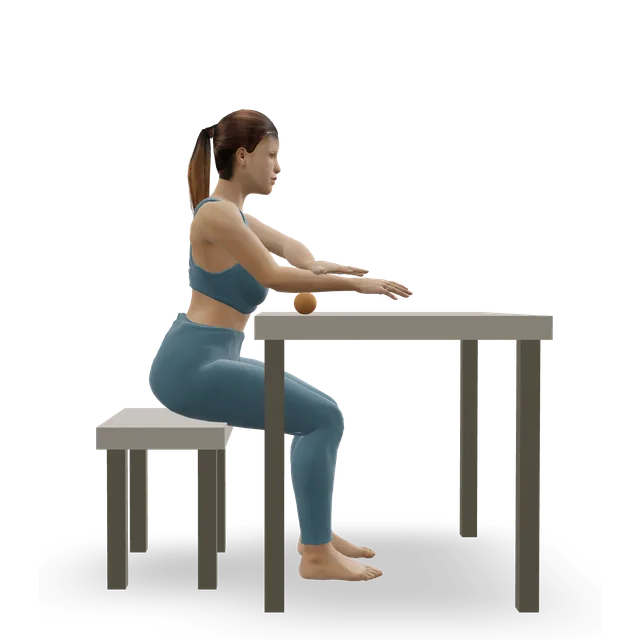
Ball squeeze demonstrated on the 3D figure3D demoBall squeezeBeginner · Other / check instructions

5 to 10 gentle squeezes of 5 s, a few times a day · Grip work starts early in a 2026 review's plan

Easier: Tendon glides (hand tendon gliding exercises) · Harder: Band finger extension

Prone Y-T-W raises demonstrated on the 3D figure3D demoProne Y-T-W raisesBeginner · No equipment

2 sets of 5 of each shape · As in our Little League elbow guide

Easier: Wall angel · Harder: Bent-over reverse fly

Glute bridge demonstrated on the 3D figure3D demoGlute bridgeBeginner · No equipment

2 sets of 10 to 12, 3 times a week · Legs and trunk keep training

Easier: Pelvic tilt into bridge · Harder: Single-leg glute bridge

Dead bug demonstrated on the 3D figure3D demoDead bugBeginner · No equipment

2 sets of 6 to 8 on each side, slowly

Easier: Dead bug heel taps · Harder: Forearm plank

Move on when: Daily life is pain-free, the elbow is barely tender, the range is full or nearly full and pain-free, and your clinician agrees. Wilk's next phase starts with the full throwing range, minimal pain and tenderness and good elbow strength.

Follow along: a timer, a cue and the next move, one step at a time.
Stage 2

Build strength, still no throwing (often about weeks 3 to 8)

Strengthen the forearm muscles that support the UCL, the rotator cuff and shoulder blades, and the legs and trunk, as in the Thrower's Ten programme Wilk describes. Still no throwing. Doses are editorial.

Wrist curls demonstrated on the 3D figure3D demoWrist curlsBeginner · A dumbbell

2 to 3 sets of 12 to 15, light and slow · The forearm muscles that bend the wrist lie over the UCL and help it

Easier: Wrist-extensor eccentrics · Harder: Plate pinch

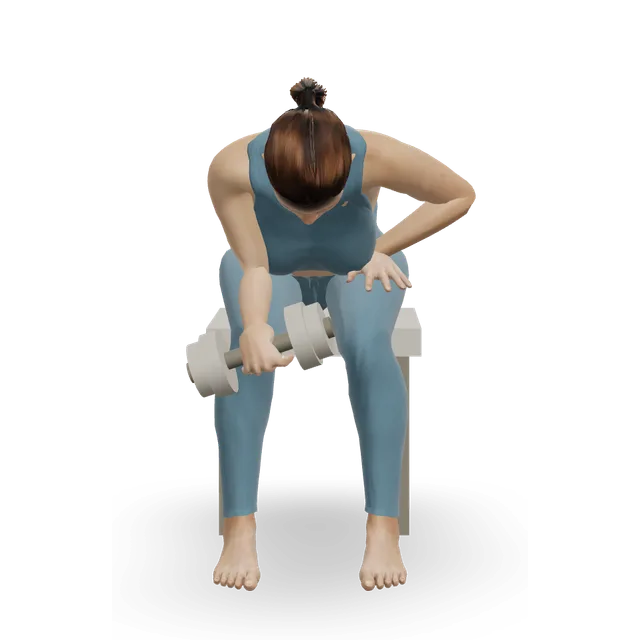
Dumbbell forearm rotation demonstrated on the 3D figure3D demoDumbbell forearm rotationBeginner · A dumbbell + A bench or box

2 to 3 sets of 10 · A light dumbbell held near one end

Easier: Wrist-extensor eccentrics · Harder: Plate pinch

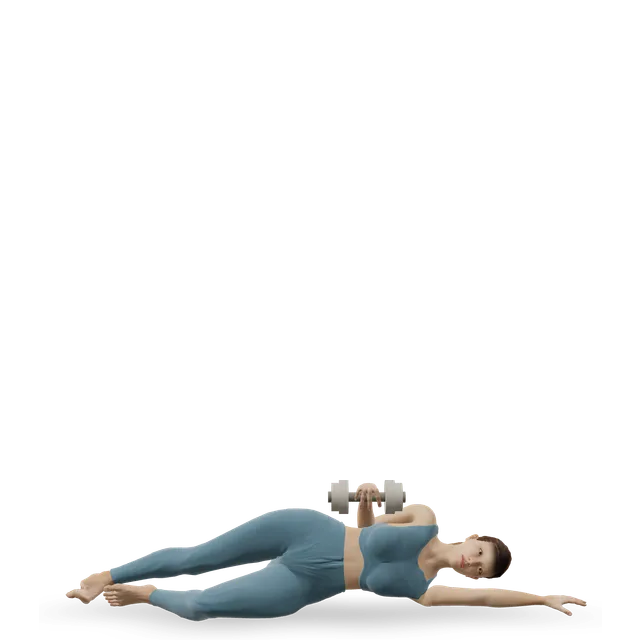
Side-lying external rotation demonstrated on the 3D figure3D demoSide-lying external rotationBeginner · A dumbbell

2 to 3 sets of 10 to 15 · Part of the Thrower's Ten

Easier: Standing band external rotation · Harder: Cuban rotation

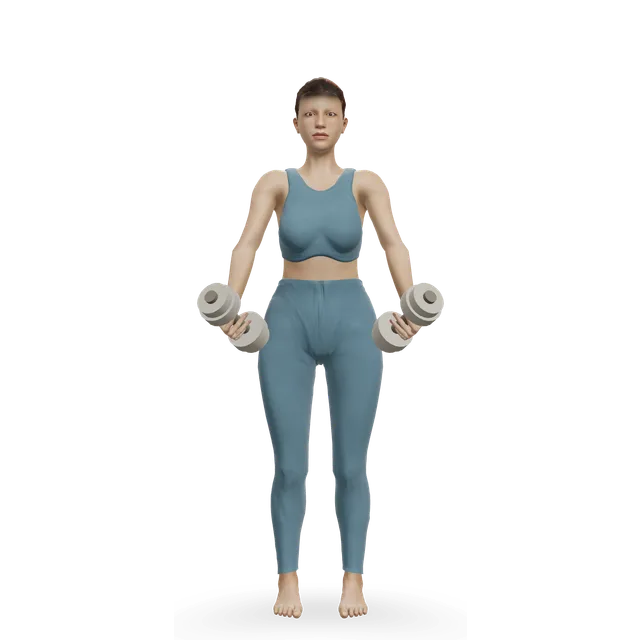
Scaption raise demonstrated on the 3D figure3D demoScaption raiseBeginner · A dumbbell

2 to 3 sets of 10 to 15 · Thumbs up; also in the Thrower's Ten

Easier: Band lateral raise · Harder: Smith machine upright row

Move on when: Full pain-free movement, no pain or tenderness, and strength at least 70% of the other arm (Wilk's start for advanced strengthening). On the AAOS route, the ligament is no longer tender and the tests don't hurt.

Follow along: a timer, a cue and the next move, one step at a time.
Stage 3

Power: two-hand, then one-hand throws with a light ball (often about weeks 6 to 12)

Prepare the arm for throwing forces with medicine-ball throws, two hands before one, as Wilk describes, with the strength work kept up. Doses are editorial.

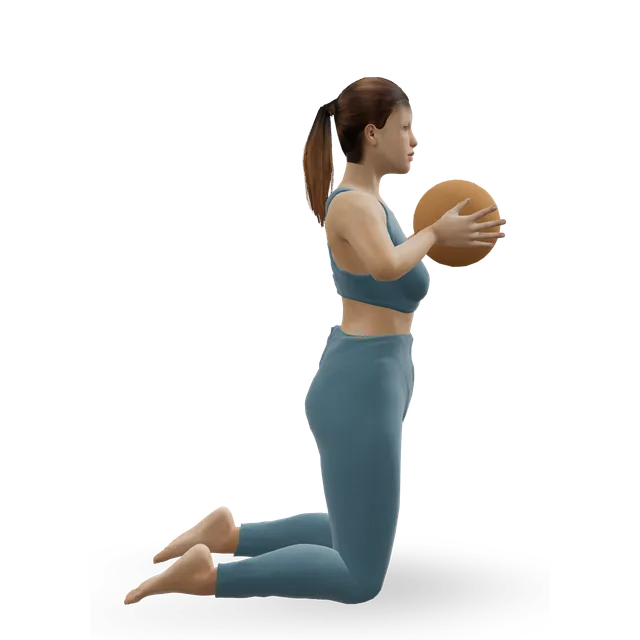
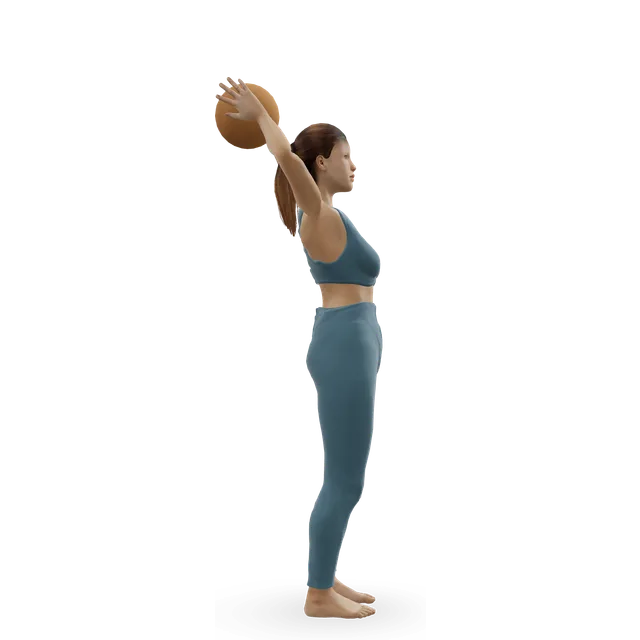
Medicine-ball chest push demonstrated on the 3D figure3D demoMedicine-ball chest pushBeginner · Medicine ball

2 sets of 5 with a light ball (1 to 2 kg), both hands · As in our Little League elbow guide

Harder: Two-hand overhead throw

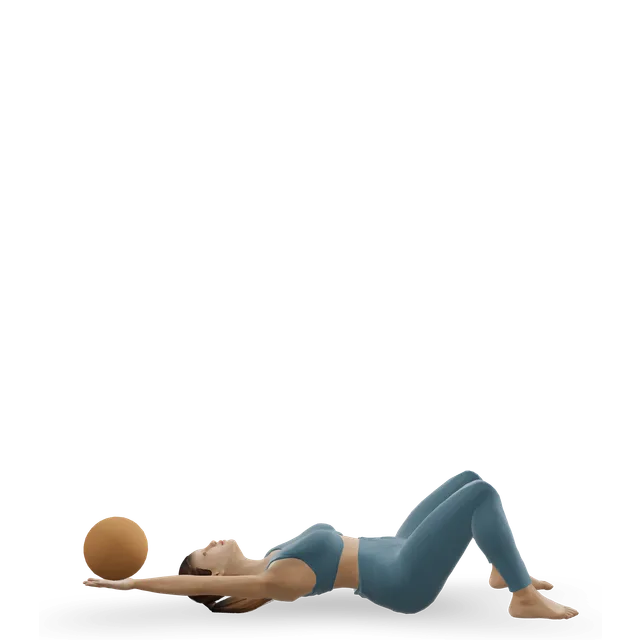
Lying one-arm overhead throw demonstrated on the 3D figure3D demoLying one-arm overhead throwIntermediate · Medicine ball

2 sets of 5 with each arm, light ball · One-hand throws come after two-hand throws

Easier: Two-hand overhead throw

Move on when: Wilk's checks before the throwing programme: full pain-free throwing range, no pain or tenderness, satisfactory strength, a stable elbow, pain-free medicine-ball throws, and your doctor's clearance. A 2026 review adds equal, pain-free straightening and no tenderness on the inner elbow.

Follow along: a timer, a cue and the next move, one step at a time.
Stage 4

Back to throwing: the interval throwing programme (often from about 2 to 3 months without surgery; after surgery, when your surgeon allows)

Rebuild throwing distance, then effort, then mound or position-specific throwing, pain-free, with the strength work kept going. The steps are below. After a reconstruction, one protocol starts at about week 16 and others no earlier than 6 months, so follow your surgeon's. Doses are editorial unless a source is named.

Thoracic rotation demonstrated on the 3D figure3D demoThoracic rotationBeginner · No equipment

6 rotations per side, moving with the breath · The move page's dose, before throwing

Easier: Side-lying open book · Harder: World's greatest stretch

Standing band external rotation demonstrated on the 3D figure3D demoStanding band external rotationBeginner · A band + An anchor point

1 set before throwing and 2 sets of 12 to 15 after · Wilk's before-and-after pattern; the sets are editorial

Easier: Stick-assisted external rotation (lying) · Harder: Side-lying external rotation

Wrist curls demonstrated on the 3D figure3D demoWrist curlsBeginner · A dumbbell

2 sets of 12 to 15, after throwing

Easier: Wrist-extensor eccentrics · Harder: Plate pinch

Scaption raise demonstrated on the 3D figure3D demoScaption raiseBeginner · A dumbbell

2 sets of 10 to 15 on days you don't throw · Wilk's day-after routine works the shoulder blades and rotator cuff

Easier: Band lateral raise · Harder: Smith machine upright row

Move on when: You've completed the programme without symptoms and your speed and control are back, and your clinician clears you for competition. Then stay within Pitch Smart's limits for your age, and take the yearly break from throwing.

Follow along: a timer, a cue and the next move, one step at a time.

What to change for now

Written steps: protecting the ligament

Our 3D figure can't show these; your clinician's plan comes first.

  • 1. No throwing of any kind (pitching, catching, fielding throws or long toss) until your clinician re-checks the elbow, often after about 6 to 12 weeks.
  • 2. A hinged brace, if you're given one, stops the last part of straightening and protects against the outward bending force. Wear it as you're told.
  • 3. Still holds from the start: push gently against your other hand to bend, straighten and turn the elbow and wrist, without moving, about 5 holds of 5 seconds, pain-free (the dose is our suggestion).
  • 4. Keep fit with running, cycling and leg and trunk work.

Sources 1, 20, 2

Written steps: the interval throwing programme

From Wilk's programme, with the warm-up from our baseball workout. Programmes differ, and none has been properly tested.

  • 1. Start only when your clinician clears it, with daily life and the strength stages pain-free.
  • 2. Warm up first with our baseball arm care warm-up, or the throws warm-up for javelin, then one set of your band and forearm exercises.
  • 3. Long toss on flat ground: start at about 45 feet (14 m) and build the distance over the sessions to 120 or 180 feet (37 or 55 m), depending on your position. Throwing on alternate days at first is our suggestion.
  • 4. Pitchers then move to the mound: about 50% effort, then 75%, 90% and 100%, over 4 to 6 weeks, building the number of pitches.
  • 5. Add breaking balls only once you can throw 40 to 50 pitches at 80% effort or more without symptoms.
  • 6. Stop the session for pain on the inner elbow; drop back a step if it's sore the next morning; see your clinician if it flares twice at the same step (our suggestion).
  • 7. Once you're back, stay within Pitch Smart's limits for your age.

Sources 20, 34, 37

After a reconstruction or repair (examples, not a plan)

Follow your surgeon's protocol, which depends on the technique. As examples: Wilk describes a splint at 90° for the first week, then a hinged brace, light resistance at weeks 3 to 4, the Thrower's Ten by week 6, medicine-ball throws from week 12, an interval programme at week 16 and competitive throwing at about 9 months. A 2026 review puts full return at about 12 to 14 months on average, and the AAOS says about 12 to 18 months for complete recovery. A repair with a reinforcing tape usually runs faster.

Sources 20, 2, 1, 32

Workload once you're back: Pitch Smart

Pitch Smart, from Major League Baseball and USA Baseball, sets daily pitch limits (95 at 15 to 16, 105 at 17 to 18 and 120 at 19 to 22), rest days by pitch count, and no pitching on 3 days running. At 15 to 18 it advises no more than 100 innings in 12 months and at least 4 months off competitive pitching a year, including 2 to 3 months with no overhead throwing; at 19 to 22, at least 3 months off competitive pitching, including 4 weeks with no throwing at all. It advises against playing for several teams at once and playing catcher when you're not pitching. These are expert limits, not tested as a package, but pitching with pain or while tired carries the highest risk.

Sources 37, 38, 39, 3

Positions to swap, and why

Habit or positionWhy it mattersInstead
Throwing through inner-elbow painPitchers who throw with arm pain or while tired have the highest injury rate.Stop the session, and follow the throwing rule.
Playing for several teams at once, showcases, or catching on days you're not pitchingWorkload adds up across teams; the AAOS links off-season showcases with more injuries, and Pitch Smart advises against several teams and catching when not pitching.One team at a time, with pitch counts and rest days tracked.
Pitching all year roundOveruse injuries come from short-term and long-term overuse, Pitch Smart says.At least 3 to 4 months off competitive pitching a year, including weeks with no throwing at all.
Rotations with the arm up at 90° early onThey put the same outward bending force through the inner elbow; a 2026 review avoids them early after surgery.Rotations with the elbow at your side.Try: Standing band external rotation
Long hangs and hard gripping in the first weeksGrip work comes back early but gently, and hanging loads the elbow's tendons heavily.Gentle ball squeezes and light wrist curls.Try: Ball squeeze
A steroid injection for a UCL tearMost surgeons don't recommend it, because the steroid may weaken the tissue and stop it healing.Rehab first; ask about the evidence before any injection.
Going straight back to the mound or to full-effort throwsSymptoms usually come back at longer distances, higher effort or on the mound.The long-toss steps first, then 50% effort on the mound.
Ignoring lost speed or accuracyIt is often the first sign of a UCL problem.Get it assessed before it becomes a tear.

Routines to follow

More moves for this area

Questions people ask

Can a UCL tear heal without surgery?

Many partial tears do well with a break from throwing and rehab: in one professional organisation, 26 of 28 players with incomplete injuries returned. Complete tears, and tears at the forearm end of the ligament, fail rehab more often. Most of this evidence comes from professional baseball case series.

How long is recovery without surgery?

Usually about 6 to 12 weeks without throwing, then strengthening and a throwing programme that takes several more weeks. In one series, those who returned did so at an average of about 6 months.

How long is recovery after Tommy John surgery?

About 12 to 18 months for full recovery. In a large series, throwing started at about 4 months and full competition at about 12, and Major League pitchers took about 20 months on average to return to the majors. No one can promise a date.

Does PRP work for a UCL tear?

It's unproven. Small series without a comparison group report good results, but in 544 professional players PRP didn't improve return to play and slowed it.

Is it a UCL tear or golfer's elbow?

Both hurt on the inner elbow. A UCL problem shows up when you throw, often with lost speed or accuracy, while golfer's elbow is more about gripping and bending the wrist, and the two can happen together. An assessment, sometimes with an MRI scan, tells them apart.

What's the difference between UCL repair and reconstruction?

Reconstruction builds a new ligament from a tendon graft. Repair reattaches your own ligament and reinforces it with a strong tape, and suits some recent tears where the ligament has pulled off the bone. Repair had a faster return in case series, about 7 months on average in one.

Will Tommy John surgery make me throw harder?

No. Pitch speed after surgery was no different from matched pitchers who hadn't had it. The operation is for an injured ligament, not for uninjured players.

Do I need an MRI?

Not always at first: X-rays come first, and an MRI, often with dye, shows the ligament when the diagnosis or the plan depends on it. Throwing elbows often show changes without pain, so the scan is read alongside the examination.

How many pitches can I throw?

Follow Pitch Smart for your age: for example up to 95 a day at 15 to 16, 105 at 17 to 18 and 120 at 19 to 22, with rest days set by your pitch count. Never pitch with arm pain, while tired, or on 3 days running.

I'm 14 and my inner elbow hurts when I throw. Is it my UCL?

At your age the growth plate on the inner elbow is usually still open, so the injury is more often Little League elbow. Stop throwing and get it checked; our Little League elbow guide covers it.

I don't throw. Can I injure my UCL?

Yes, though it's less common, for example in a fall that dislocates the elbow. Non-throwing athletes often do well without surgery, and 86% returned after surgery when they needed it.

Related exercise guides

Other pain guides

Sources

  1. AAOS OrthoInfo · Ulnar collateral ligament (UCL) injury
  2. Ryan 2026 · Management of ulnar collateral ligament injuries of the elbow (review, Curr Rev Musculoskelet Med)
  3. AAOS OrthoInfo · Elbow injuries in the throwing athlete
  4. Conte 2015 · How common UCL surgery is in professional baseball players (survey, Am J Sports Med)
  5. Erickson 2015 · Trends in UCL reconstruction in the United States (insurance database study, Am J Sports Med)
  6. Hodgins 2016 · UCL reconstruction in New York State over 10 years (population study, Am J Sports Med)
  7. Camp 2018 · Time out of play for 49,955 injuries in professional baseball (injury surveillance, Am J Sports Med)
  8. Miltenberg 2025 · UCL injuries in non-throwing athletes (systematic review, JSES Rev Rep Tech)
  9. Bushnell 2010 · Top pitch speed and elbow injury in professional pitchers (cohort, Am J Sports Med)
  10. Wilk 2014 · Shoulder range deficits and elbow injury in professional pitchers (cohort, Am J Sports Med)
  11. Hodge 2023 · Little League elbow (medial epicondyle apophysitis) (StatPearls review)
  12. Hurd 2011 · MRI of the throwing elbow in uninjured high-school pitchers (cross-sectional study, Am J Sports Med)
  13. Gutierrez 2017 · Elbow MRI findings and later injury in pain-free professional pitchers (cohort, Sports Health)
  14. Garcia 2019 · MRI findings in pain-free elbows and later injury in Major League pitchers (cohort, Orthop J Sports Med)
  15. Hanna 2024 · Stress ultrasound of the UCL in 651 professional pitchers (cross-sectional study, Am J Sports Med)
  16. Rettig 2001 · Non-surgical treatment of UCL injuries in throwing athletes (case series, Am J Sports Med)
  17. Ford 2016 · Return to play after UCL injuries in professional baseball, by MRI grade (case series, Am J Sports Med)
  18. Frangiamore 2017 · MRI signs that non-surgical treatment of a UCL tear will fail in professional pitchers (case-control study, Am J Sports Med)
  19. Biz 2019 · Non-surgical versus surgical treatment of elbow UCL injuries (systematic review, Orthop Surg)
  20. Wilk 2012 · Rehabilitation of the overhead athlete's elbow (clinical review, Sports Health)
  21. Podesta 2013 · Platelet-rich plasma for partial UCL tears (case series, Am J Sports Med)
  22. Dines 2016 · Platelet-rich plasma for UCL injuries in high-level throwers (case series, Am J Orthop)
  23. Deal 2017 · Platelet-rich plasma for partial UCL tears, with MRI follow-up (case series, Orthop J Sports Med)
  24. Chauhan 2019 · Non-surgical treatment of UCL injuries with and without platelet-rich plasma in professional baseball (matched cohort, Am J Sports Med)
  25. Cain 2010 · UCL reconstruction in 1,281 athletes (case series, Am J Sports Med)
  26. Vitale 2008 · Outcomes of UCL reconstruction in overhead athletes (systematic review, Am J Sports Med)
  27. Erickson 2014 · Return to pitching after Tommy John surgery in Major League Baseball (cohort, Am J Sports Med)
  28. Makhni 2014 · Performance and reinjury after Tommy John surgery in 147 Major League pitchers (cohort, Am J Sports Med)
  29. Wallace 2025 · Return to sport after UCL reconstruction in javelin throwers (systematic review, Int J Sports Phys Ther)
  30. Jiang 2014 · Pitch speed before and after UCL reconstruction in Major League pitchers (cohort, Am J Sports Med)
  31. Ahmad 2012 · Public perceptions of Tommy John surgery (survey, Phys Sportsmed)
  32. Dugas 2019 · UCL repair reinforced with collagen-coated tape in overhead throwers (case series, Am J Sports Med)
  33. Reinold 2002 · Interval sport programmes for baseball, tennis and golf (clinical guidelines, JOSPT)
  34. Langhans 2025 · Published baseball interval throwing programmes compared (systematic review, Sports Health)
  35. Bateman 2021 · An optimised UK physiotherapy protocol for tennis elbow (consensus study, BMJ Open)
  36. Fees 1998 · Upper limb weight-training changes for the injured athlete, with the soreness rules (clinical perspective, Am J Sports Med)
  37. Major League Baseball and USA Baseball · Pitch Smart: pitching guidelines
  38. Major League Baseball and USA Baseball · Pitch Smart: ages 15 to 18
  39. Major League Baseball and USA Baseball · Pitch Smart: ages 19 to 22
  40. NHS · Elbow and arm pain

Exercise education, not a diagnosis or treatment plan. It is written from the guidelines and studies listed above; review by a clinician is pending. If your pain follows an injury, is severe, is getting worse, or comes with any warning sign listed on this page, get it assessed. Health disclaimer.