Pain guide · Elbow pain

Little League elbow: inner elbow pain in young throwers, how long to rest, and the way back to throwing

Little League elbow is a strain on the growth plate at the bony bump on the inside of the elbow, from a lot of throwing, too little rest, or throwing with a tired arm. It mostly affects pitchers aged about 8 to 15, but catchers, fielders and children in other throwing sports get it too. Rest from throwing is the treatment: expert advice is at least 4 to 6 weeks, with most children pitching again at about 12 weeks, though no trial has compared rest periods.

This guide is written for young players, parents and coaches. It starts with the signs that need checking the same day, such as a pop or an elbow that locks, then explains what X-rays and scans can and can't show, how long to rest, and a staged plan with 3D demos back to throwing, within the pitch counts and rest days on our baseball and softball page.

When to get help first

Exercise is for pain that has been checked or is clearly mild and settling.

Get urgent medical help if

  • Go to A&E or call 999 if you've injured your arm and it is numb, tingling or has pins and needles; a bone is sticking out or a bad cut is bleeding heavily; or the arm or elbow has changed colour or shape, or is at an odd angle. Don't drive yourself.
  • Same day (A&E or an urgent treatment centre): a sudden pop or sharp pain on the inside of the elbow during a throw, followed by pain, swelling or bruising, or an elbow that won't straighten. The growth plate bump can pull away (an avulsion fracture), and an X-ray shows how far it has moved.
  • Same day: the elbow locks or catches, or suddenly can't fully bend or straighten. A loose piece of bone or cartilage, or damage to the joint surface on the outer side of the elbow, can do this.
  • Urgent treatment centre or A&E: severe pain in your arm and it's difficult to move, or you've injured your arm and heard a snap. Tingling or numbness that comes on suddenly or after an injury belongs here too.
  • Same day (urgent GP appointment or NHS 111): a swollen elbow with a very high temperature, or you feel hot, cold or shivery; or sudden severe pain in one joint with swelling, a change of colour and difficulty moving it. It could be an infection in the joint or the bursa, or gout.

See a doctor or physiotherapist if

  • Inner-elbow pain when you throw, or a feeling that the elbow gives way, especially in a young thrower: stop throwing and see a GP or a sports physiotherapist.
  • Slower or wilder throws, or a sore arm after games. Young players often play down or hide pain to keep playing, so parents and coaches should ask, and stop throwing for the day if the answer is yes.
  • Pain that comes back when throwing restarts, or hasn't settled after a few days of complete rest: stop throwing again until the child has been assessed.
  • Pain on the outside of the elbow when throwing: get it checked. Early damage to the joint surface there is often missed on X-rays, and it heals best when it is caught early.
  • Tingling or numbness into the ring and little fingers when throwing: the ulnar nerve may be irritated, so get it assessed.
  • Pain at night or at rest, a fever, weight loss, or swelling in both elbows. These aren't typical of an overuse injury and need a GP.

Understand it

What it is

The bony bump on the inside of the elbow (the medial epicondyle) has its own growth centre, which appears at about 6 to 7 years old and usually fuses by about 15, though it can stay open until about 17. The forearm muscles that grip, and the elbow's inner ligament, attach to it. Each throw bends the elbow outwards with large forces as the arm comes forward.

In a growing child the growth cartilage is weaker than the ligament and tendons pulling on it, so the repeated pull falls on the growth plate. It gets irritated and can widen, and in the severe form the bump pulls off (an avulsion fracture). Once the growth plate has fused, the same forces fall on the ligament instead. That is why ligament reconstructions (Tommy John surgery) peak at 15 to 19: they made up 56.8% of these operations in one US insurance database.

Sources 1, 2, 3, 4, 5, 6, 7

Who gets it

It mostly affects boys aged about 8 to 15 who pitch, but also catchers, infielders and outfielders who throw a lot, and young players in softball, tennis, water polo and volleyball. In 317 children seen over 15 years at one children's hospital, the average age was 12.8, 98% were boys and 98% played baseball; the rest included a few tennis players and American football quarterbacks.

Arm pain is common in young pitchers: in 476 pitchers aged 9 to 14 followed for a season, half had elbow or shoulder pain. In Japanese surveys, 9.0% of youth players reported an elbow injury in a season in 2021, down from 19.1% in 2011 after rule changes.

Sources 4, 5, 8, 9, 10

What raises the risk: the list for parents and coaches

The biggest factors are the amount of throwing and too little recovery, above all pitching with a tired or sore arm. In studies of young pitchers, the risk went up with more pitches per game and per season; pitching on consecutive days, for several teams with overlapping seasons, or in several games a day; more months a year, more showcases and faster pitching; more than 100 innings a year; training more than 16 hours a week; and earlier elbow pain. On magnetic resonance imaging (MRI) before a season, 47% of players who played all year had elbow changes, against 11% of the others. Catchers make a lot of throws too, and had the most changes at the growth centre in one X-ray study.

Pitch type is debated. Sliders went with more elbow pain in one study and curveballs with more arm pain in a survey, but curveballs before 13 weren't linked with serious injury over 10 years. Pitch Smart, the youth pitching guidelines from Major League Baseball and USA Baseball, advises fastballs and changeups first and breaking pitches from 13. A throwing shoulder that is stiffer turning inwards was found in 55% of the children examined in one series, and went with a slower recovery.

Sources 10, 11, 12, 13, 14, 15, 16, 17, 8

How it's recognised

Pain on the inner elbow that builds gradually, at first only when pitching and later with any throwing, with tenderness on the bump, sometimes swelling or lost elbow movement, and slower or less accurate throws. Occasionally it starts with a painful pop. Young athletes often play down their symptoms to keep playing.

A doctor or physiotherapist diagnoses it from the story and an examination of the elbow and the shoulder. Pain on the outer side of the elbow, locking or catching points to a different problem, such as a loose fragment or damage to the joint surface.

Sources 4, 5, 18, 3, 2

What X-rays and scans do and don't meanEmerging evidence

X-rays of both elbows, so they can be compared, are usual at the first visit. They show whether the growth plate is open, and can show widening, fragments or a bump that has pulled away, though they can also look normal in a child who still has pain. After a pop or sudden severe pain, an X-ray is needed the same day.

Changes are very common in young throwers who feel fine. In 343 Little League players, the growth centre looked enlarged on X-ray in all the pitchers and catchers and 90% of the fielders, and separated in 50% to 70%, yet only about half of those with a separated or broken-up growth centre had any soreness. On MRI, 35% of 26 Little League players without symptoms had inner elbow changes before a season. By the end of a season in which every player kept to the pitching limits, 48% had changes, and 28% had had elbow pain during it; 3 years later 58% had changes, and 27% reported throwing elbow pain. Ultrasound found small flakes pulled off at the ligament's attachment in 36% of 64 throwing elbows without symptoms.

A finding still matters. Changes on ultrasound before a season went with 2.5 times the odds of an elbow injury during it (28.8% against 11.9% of 210 players aged 7 to 12), so in a child who feels fine a scan finding is a reason to look hard at the workload, not a diagnosis on its own. And a normal X-ray doesn't rule an injury out: in 50 boys with inner elbow pain, ultrasound found small avulsions in 78%, and 72% of those had normal X-rays.

Sources 18, 5, 6, 4, 16, 14, 19, 20, 21, 22, 23

Pain on the outer elbow is a different problemEmerging evidence

Pain on the outer side of a young thrower's elbow can come from osteochondritis dissecans (OCD), where throwing squashes and damages the joint surface on that side. On ultrasound screening of primary-school-age players in Japan, 1.4% had it, only about a third of them (34.4%) had ever had elbow pain, and 73% were at the earliest stage. Early, stable lesions in children whose growth plate is still open usually heal with months off throwing (16 of 17 in one series), though healing on X-ray took over a year on average; unstable ones often need surgery. X-rays can miss early lesions, so outer elbow pain needs checking. Our elbow OCD guide covers it.

Sources 24, 2, 40, 41

How it usually goes

Rest usually works. In 268 children with the growth plate form at one hospital, the median return to sport was 12 weeks, with half returning between 7 and 18 weeks. Pain came back in 13%, at a median of 2 years, more often in children who had had symptoms for longer before they were diagnosed, and one child who didn't rest went on to pull the bump off.

Over 5 years in another group of 44 children, 84% returned to competition, 20% changed position, 21% had pain again, and fewer than half were still playing baseball; very few needed arm surgery. Left untreated, it can lead to loose fragments, deformity and early arthritis.

Sources 8, 25, 5, 4
What helps, and how strong the evidence is

Rest from throwing: expert advice of weeks, not daysMixed evidence

A 2006 review advises complete rest from throwing for at least 4 to 6 weeks, then strengthening and a gradual throwing programme, with most young throwers back to competitive pitching at about 12 weeks. That is expert advice: the review grades it C, the level for expert opinion and usual practice. One hospital's case series, published only as a conference abstract, found much the same: 268 children rested, three-quarters of them completely, and returned to sport at a median of 12 weeks.

No trial has compared different rest periods, so nobody knows the best length, and the clinician sets it for each child. It is often longer when the bump has pulled away: in 50 throwers with that injury, those treated without surgery spent a median of 32 days in a cast, brace or sling and returned to sport at about 13 weeks. Rest means all throwing: pitching, catching, fielding throws and throwing practice at home (our reading of the professional bodies' advice).

Sources 18, 8, 6, 4, 5

Pain usually comes first, so stop at painEmerging evidence

In 50 young throwers whose growth plate bump pulled off during a throw, 84% of the 37 who were asked had had inner elbow pain beforehand. In a US survey of 754 young pitchers, often pitching with arm pain went with 7.5 times the odds of injury, and often pitching with a tired arm with 7.9 times. Across 5 studies, arm tiredness had the strongest link with injury of any risk factor.

These are observational studies, not trials, but they point the same way: pain and tiredness are signals to stop, not to push through.

Sources 6, 11, 26

Pitch counts and rest days help, but don't guarantee safetyEmerging evidence

After US high schools brought in pitching restrictions, overall shoulder and elbow injury rates didn't change. But rules requiring rest between pitching days went with about two-thirds fewer injuries, and daily caps of 105 pitches or fewer with 60% fewer. Over 10 years, pitching more than 100 innings a year went with 3.5 times the risk of surgery or retiring injured.

Limits are not the whole answer: in 26 Little League players who kept to them all season, 48% still had elbow MRI changes at the end, mainly linked with playing all year. Pitch Smart adds rest days, months off and one team at a time to the daily counts.

Sources 27, 19, 13, 17

Warm-up programmes cut throwing injuries in young playersEmerging evidence

In a trial of 237 Japanese players aged 9 to 11, randomised by team, a warm-up of 5 stretching, 2 mobility and 2 balance exercises cut shoulder and elbow injuries from 3.1 to 1.7 per 1,000 player sessions of practice or games, and raised ball speed. An earlier trial in 305 players aged 8 to 11, without randomisation, roughly halved inner elbow injuries (0.8 against 1.7 per 1,000).

These are prevention studies. We borrow them to shape the rehab plan, which no trial has tested.

Sources 28, 29

Weighted balls: faster throws, but more elbow injuries in one trialEmerging evidence

In a trial of 38 pitchers aged 13 to 18, a 6-week weighted-ball programme raised pitch speed by 3.3%, but 4 of the 17 who did it had elbow injuries, against none in the comparison group. It is one small trial, but it is a reason not to use weighted balls to speed up a return.

Source 30

When the bump pulls off: surgery for some, and no clear benefit in trials of children's fracturesEmerging evidence

In 50 young throwers whose bump pulled off, surgeons fixed the more displaced ones with a screw (46%), and each extra millimetre of displacement made surgery 6.4 times more likely. The rest healed in a cast, brace or sling. Every child returned to sport, and 41% of those with a screw later had it removed. This is one series without a comparison group.

In children's inner-elbow fractures generally, most of which come from falls rather than throwing, two trials (334 and 72 children) found arm function at a year about the same with or without surgery, with more repeat operations after surgery (24 children against 3 in the larger trial). Bones joined more often after surgery (97% against 46% in pooled observational studies), but that didn't show up as better function. Whether this applies to young pitchers who want to keep pitching hasn't been tested.

Sources 6, 31, 32, 33

Rehab exercises and graded throwing: consistent advice, not testedEmerging evidence

Professional bodies agree on the order: rest, then movement and strength for the forearm, upper arm, shoulder, back and core, then a gradual return through positions with fewer throws to full-effort pitching, once there is no pain or swelling, movement is full and strength is normal. No trial has tested an exercise programme for Little League elbow.

A 2025 review found that published throwing programmes are mostly versions of one old programme, and none has been validated. One distance-based programme for 9 to 12 year olds was built from data on 1,022 boys. The throwing steps on this page are our suggestion, built from that shared advice.

Sources 5, 34, 18, 35, 36

How much pain is OK while you exercise?

No pain at the bump: our suggestion, built on consistent adviceEmerging evidence

This rule is our editorial suggestion. No study has tested a pain rule for Little League elbow, and no throwing programme has been validated, but professional advice is consistent: go back only when pain-free, and stop when it hurts. If your child's clinician or coach has given you a programme, follow theirs.

Throwing: no pain at the inner elbow bump during throwing, straight afterwards or the next morning. Tired forearm muscles are fine; pain at the bump is not. If it hurts, no more throwing that day, and the next session starts a step lower. If pain comes back each time throwing restarts, stop until the child has been checked again.

Strength exercises: no pain at the bump, at most a mild working ache in the muscles that settles within the hour, and nothing worse the next morning. This is stricter than our rule for adults' elbow pain, because pitching with pain went with 7.5 times the odds of injury, and most children whose bump pulled off had pain first.

Parents and coaches: ask the morning after every session whether the elbow hurts, feels stiff or looks swollen. If the answer is yes, no throwing that day.

Sources 5, 4, 34, 18, 6, 11

The exercise plan: 3 stages

Start at the first stage. Each move opens a full guide with a 3D demo.

Stage 1

Stop throwing, keep moving (often the first 4 to 6 weeks; the clinician sets the time)

No throwing of any kind: no pitching, catching, fielding throws or throwing at home. Ice wrapped in a towel can ease pain. Keep fit with running, cycling, leg and trunk work and other sports that don't hurt the elbow, aiming for the NHS's average of at least 60 minutes of activity a day. Batting practice waits until the clinician agrees (our suggestion).

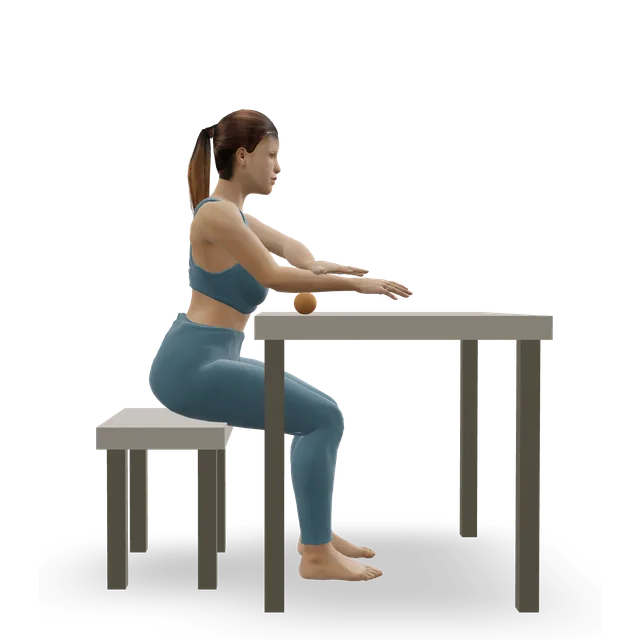
Elbow bend and straighten (elbow range of motion) demonstrated on the 3D figure3D demoElbow bend and straighten (elbow range of motion)Beginner · No equipment

10 slow repetitions, once or twice a day · To keep full movement; never push into pain at the bump. The repetitions are the move page's NHS leaflet dose

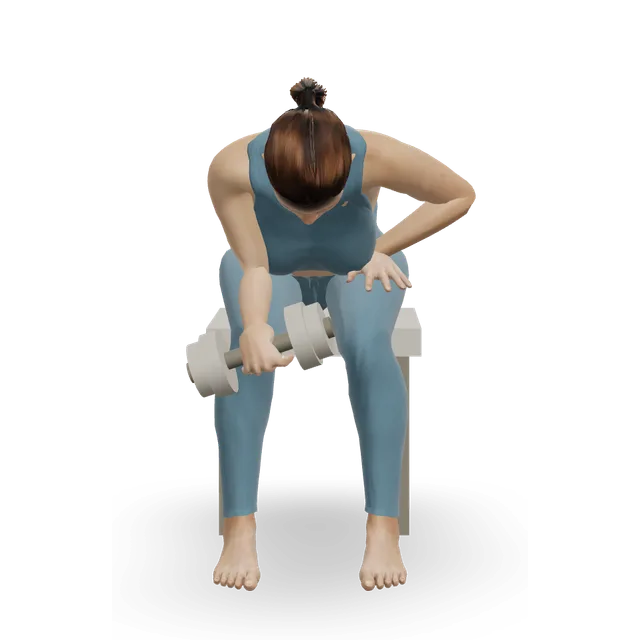
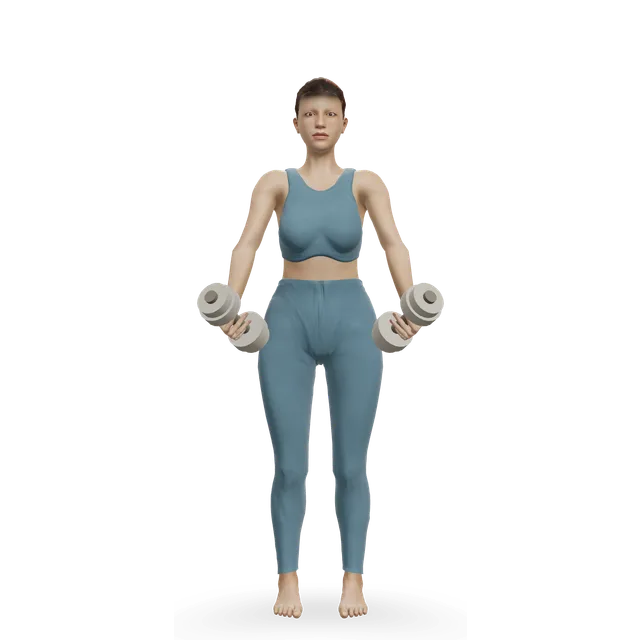
Harder: Dumbbell biceps curl

Wrist & forearm flow demonstrated on the 3D figure3D demoWrist & forearm flowBeginner · No equipment

A few slow rounds, once a day · Pain-free. Editorial dose

Harder: Wrist flexor stretch

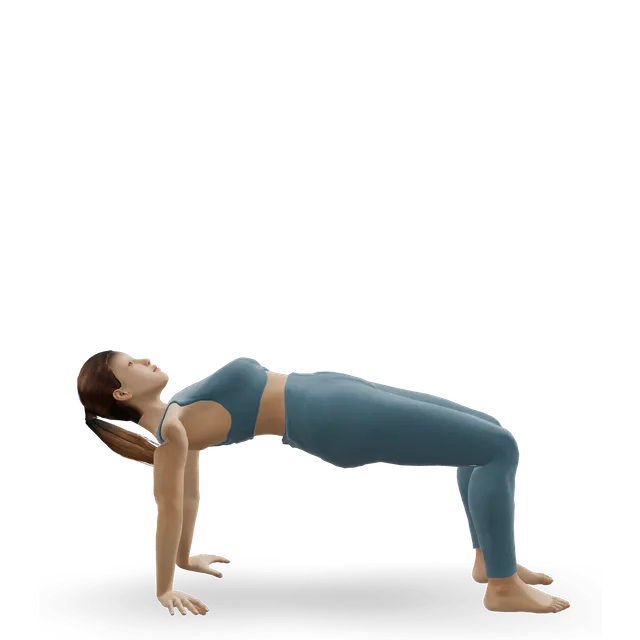
Glute bridge demonstrated on the 3D figure3D demoGlute bridgeBeginner · No equipment

2 sets of 10 to 12, 3 times a week · Editorial dose

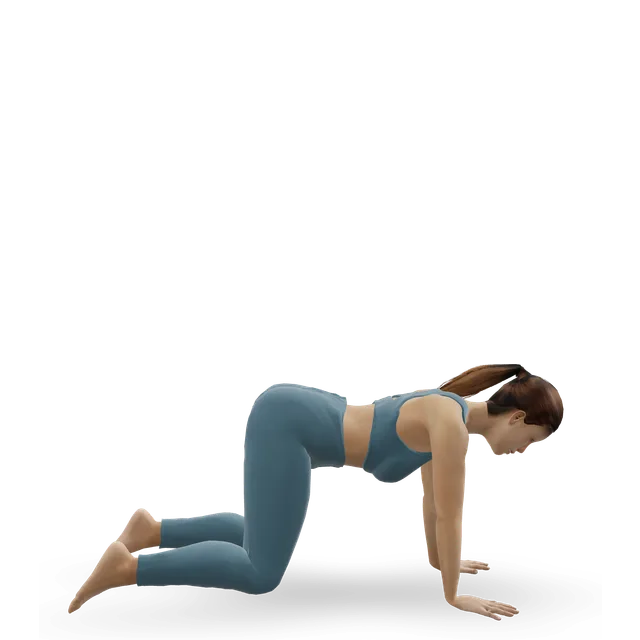
Easier: Pelvic tilt into bridge · Harder: Glute kickback (quadruped hip extension)

Dead bug demonstrated on the 3D figure3D demoDead bugBeginner · No equipment

2 sets of 6 to 8 each side, slowly · Editorial dose

Harder: Forearm plank

Single-leg stand demonstrated on the 3D figure3D demoSingle-leg standBeginner · A wall

3 holds of 30 s on each leg · Balance was part of the warm-up that cut injuries in a trial. Editorial dose

Easier: Tandem stance and heel-to-toe walk · Harder: Single-leg reach matrix

Stationary cycling demonstrated on the 3D figure3D demoStationary cyclingBeginner · Cardio machine

20 to 30 minutes, 3 times a week · Or running. Editorial dose

Harder: Air bike intervals

Move on when: No pain at rest or in daily tasks, no tenderness when the bump is pressed, the elbow bends and straightens as far as the other one, and the clinician agrees. This is often at about 4 to 6 weeks.

Follow along: a timer, a cue and the next move, one step at a time.
Stage 2

Build strength, still no throwing (often about weeks 4 to 8)

2 to 3 sessions a week for the forearm, shoulder, shoulder blade, trunk and hips, with light weights, slow lifting and lowering, and no pain at the bump. The doses are our throwing arm strength workout's, which are editorial.

Wrist curls demonstrated on the 3D figure3D demoWrist curlsBeginner · A dumbbell

2 sets of 12 to 15, palm up, a light weight, slowly · Sharp pain at the bony bump, or an elbow that is worse the next day, means too much too soon

Easier: Wrist-extensor eccentrics · Harder: Plate pinch

Prone Y-T-W raises demonstrated on the 3D figure3D demoProne Y-T-W raisesBeginner · No equipment

2 sets of 5 of each shape · Forehead on a towel

Easier: Wall angel · Harder: Bent-over reverse fly

Single-leg Romanian deadlift demonstrated on the 3D figure3D demoSingle-leg Romanian deadliftAdvanced · A dumbbell

2 sets of 8 each leg, no weight · Fingertips on a wall at first. Editorial dose

Easier: Dumbbell Romanian deadlift

Cross-body shoulder stretch demonstrated on the 3D figure3D demoCross-body shoulder stretchBeginner · No equipment

3 holds of 30 s on the throwing side · Only if that shoulder is stiffer turning inwards; a clinician can check. Editorial dose

Harder: Sleeper stretch

Move on when: All of these are pain-free, the elbow moves fully, strength feels the same on both sides, and the clinician clears a return to throwing.

Follow along: a timer, a cue and the next move, one step at a time.
Stage 3

Back to throwing, step by step (often about weeks 6 to 12, sometimes longer)

Follow the graded throwing steps in the notes below, on alternate days at first, and start every session with the baseball arm care warm-up. Keep the strength work going twice a week, but not the day before a long throwing session, and go back through positions with fewer throws before pitching. The steps are our suggestion: if your clinician or coach has given you a throwing programme, follow theirs.

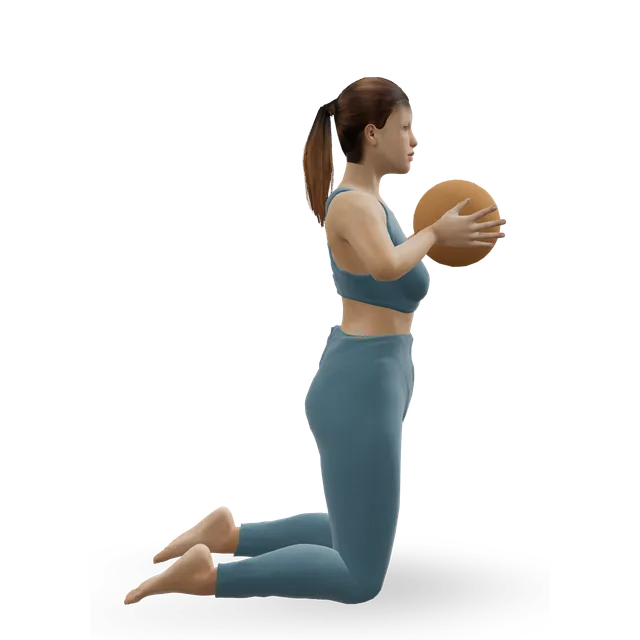
Medicine-ball chest push demonstrated on the 3D figure3D demoMedicine-ball chest pushBeginner · Medicine ball

2 sets of 5 with a light ball (1 to 2 kg), both hands · Editorial dose

Harder: Two-hand overhead throw

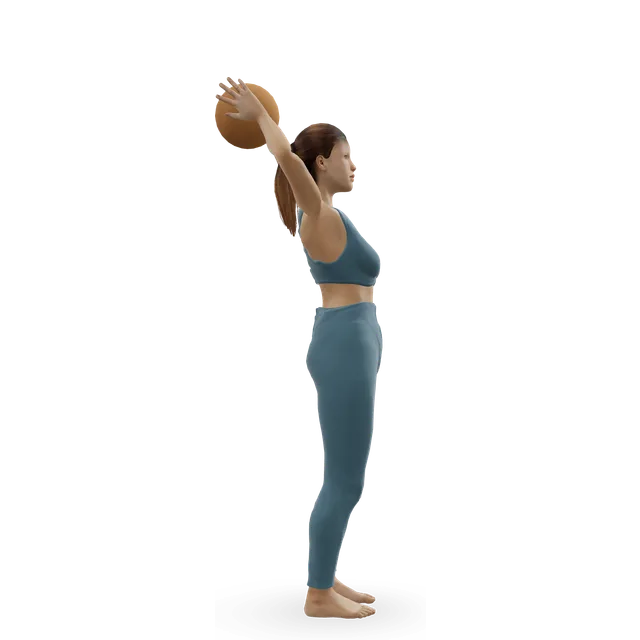
Two-hand overhead throw demonstrated on the 3D figure3D demoTwo-hand overhead throwIntermediate · Medicine ball

2 sets of 5 against a wall, light ball · Editorial dose

Easier: Medicine-ball chest push · Harder: Lying one-arm overhead throw

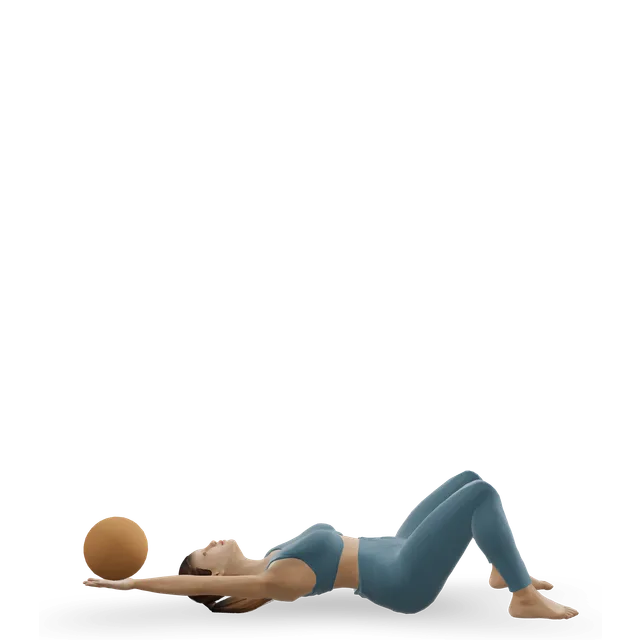
Lying one-arm overhead throw demonstrated on the 3D figure3D demoLying one-arm overhead throwIntermediate · Medicine ball

2 sets of 5 each arm, light ball, to a partner · The throwing arm strength workout's dose

Easier: Two-hand overhead throw

Thoracic rotation demonstrated on the 3D figure3D demoThoracic rotationBeginner · No equipment

6 each side, before throwing · The move page's dose

Easier: Side-lying open book · Harder: World's greatest stretch

Scapular push-up (push-up plus) demonstrated on the 3D figure3D demoScapular push-up (push-up plus)Beginner · No equipment

2 sets of 10, on the knees first · Editorial dose

Easier: Dumbbell shoulder-blade punch · Harder: Pike push-up

Move on when: The throwing steps are complete with no elbow pain during, straight after or the next morning, strength is full, and the clinician agrees. Then games, then pitching within the daily limits and rest days for your child's age, with months off each year.

Follow along: a timer, a cue and the next move, one step at a time.

What to change for now

Graded steps back to throwing (our suggestion)

No throwing programme has been validated. These steps follow the principles the sources share: pain-free first, short and easy before long and hard, and a step back for any pain. If your child's clinician or coach has a programme, use theirs instead.

  • 1. Start only when your clinician has cleared throwing, daily life is pain-free, and the strength stage is pain-free.
  • 2. Warm up first, for example with our baseball arm care warm-up.
  • 3. Begin with easy, short throws on flat ground: about 25 throws at half effort to a partner about 9 to 14 m (30 to 45 feet) away, every other day.
  • 4. Stay on each step for at least 2 pain-free sessions. Add distance first, then the number of throws, then effort, one change at a time.
  • 5. Go back to fielding positions with fewer throws, such as first base or short spells in the outfield, before pitching or catching.
  • 6. Pitching: flat ground first, then the mound at about half effort with a small number of pitches, building over several sessions towards game effort and the pitch count for your age.
  • 7. Any pain during throwing, straight after or the next morning: stop for the day, rest at least a day, and restart one step lower. If it happens twice, see your clinician again.

Sources 5, 34, 18, 36, 35, 28

Pitch counts and rest days: for parents and coaches

These are Pitch Smart's guidelines and the UK youth league rules, and they match our baseball and softball page. They are limits, not targets, and they apply all year, across every team. A rule requiring rest between pitching days went with about two-thirds fewer arm injuries in US high schools.

  • Count every pitch, in games and practice, across every team, including showcases and extra throwing at home. Pitch Smart puts this on the parent and the player, because children often play in several leagues.
  • Daily limits: 50 pitches at 7 and 8, 75 at 9 and 10, 85 at 11 and 12, 95 at 13 to 16, and 105 at 17 and 18.
  • Rest days at 14 and under: none after 1 to 20 pitches, 1 day after 21 to 35, 2 after 36 to 50, 3 after 51 to 65, and 4 after 66 or more. At 15 to 18: none after 1 to 30, 1 day after 31 to 45, 2 after 46 to 60, 3 after 61 to 75 (61 to 80 at 17 and 18), and 4 after more.
  • No pitching on 3 days in a row, whatever the count, and no pitching in more than one game a day.
  • Months off: up to 14, at least 4 months a year off throwing, with 2 to 3 of them in a row. From 15, 4 months off competitive pitching, including 2 to 3 months in a row off all overhead throwing.
  • One team at a time. Pitch Smart advises against playing catcher when not pitching; under Little League rules a player who has caught 4 or more innings can't pitch that day, and British under-16s may not pitch and catch on the same day.
  • Fastballs and changeups first; breaking pitches from 13, once those are consistent.
  • UK youth leagues (British Baseball Federation, 2026) allow 85 pitches a day at under-12 and 95 at under-14 and under-16. These are maximums, and coaches should manage the load below them, especially early in the season.
  • Play other sports during the year. The NHS asks children for an average of at least 60 minutes of activity a day, across a variety of activities.

Sources 17, 37, 38, 27, 39

While your child is resting

Running, cycling, leg and trunk work, and other sports that don't hurt the elbow can carry on. We suggest batting, fielding drills and practice throws all wait until the clinician says otherwise.

Ice wrapped in a towel and simple painkillers can ease pain. Anti-inflammatories aren't usually needed once throwing stops. In one study, injured adolescent pitchers had used anti-inflammatories and ice more often to prevent injury, which may mean they were pitching through pain (our reading).

Sources 18, 4, 5, 12

Technique and speed

A qualified coach or physiotherapist can look at throwing technique, which is part of both treatment and prevention. Build control first, then accuracy, then speed.

Sources 5, 4

Positions to swap, and why

Habit or positionWhy it mattersInstead
Throwing through elbow pain, or using ice and painkillers to keep pitchingOften pitching with arm pain went with 7.5 times the odds of injury, most children whose bump pulled off had pain first, and injured pitchers had used anti-inflammatories more often.Stop throwing for the day, get it checked, and follow the plan.
Pitching for two teams in the same season, or in several games a dayBoth went with more arm pain in a national survey, and Pitch Smart advises against them.One team at a time, and count pitches across every team.
A pitcher who also plays catcherCatching adds a lot of throws. Pitch Smart advises pitchers not to catch when they aren't pitching, and Little League and UK under-16 rules limit pitching and catching on the same day.A position with fewer throws, such as first base.
Year-round baseball with no months offPlaying all year went with more elbow MRI changes (47% against 11%), and with changes that got worse over time.At least 4 months a year off throwing, 2 to 3 of them in a row, and other sports.
Breaking pitches before about 13Sliders went with 86% more elbow pain in one study.Fastballs and changeups first.
Weighted-ball programmes to throw harderIn a small trial of pitchers aged 13 to 18, 4 of the 17 who did one had elbow injuries, against none in the comparison group.Strength and power work, such as light medicine-ball throws, once the clinician allows.Try: Two-hand overhead throw
Heavy or fast wrist curls early onThey load the inner elbow bump, where the forearm muscles attach.Light, slow sets, from stage 2 only.
Showcase or radar-gun throwing at maximum effortFaster pitching and more showcases went with injury in adolescent pitchers.Control first, then accuracy, then speed.

Routines to follow

More moves for this area

Questions people ask

What is Little League elbow?

It's a strain injury of the growth plate at the bony bump on the inside of the elbow, from repeated throwing. In growing children this growth area is weaker than the muscles and ligament that pull on it. It is most common in pitchers aged about 8 to 15.

How long should my child stop throwing?

Expert advice is at least 4 to 6 weeks of complete rest from throwing, then strengthening and a gradual return, with most children pitching competitively again at about 12 weeks. No trial has compared rest periods, so the clinician sets the time for your child. It is often longer if the bump has pulled away.

Can my child still play sport while resting?

Yes, if it doesn't hurt the elbow: running, cycling, leg and core work and other sports without throwing keep them fit. We suggest batting and fielding drills wait until the clinician agrees.

Does my child need an X-ray or a scan?

Often an X-ray of both elbows at the first visit, and the same day after a pop, locking or a sudden loss of movement. Scans aren't routine: changes are common in young throwers without pain, and a normal X-ray doesn't rule out a small injury. The clinician goes by the symptoms and the examination first.

Will my child need surgery?

Rarely. Surgery is for a bump that has pulled away and moved, loose fragments, or damage to the joint surface that doesn't heal. In children's inner-elbow fractures generally, two trials found a cast about as good as surgery at a year.

When can my child pitch again?

When the elbow is pain-free, moves fully and is as strong as the other side, and a graded throwing programme has gone well with no pain during, after or the next morning. Most children are back to competitive pitching at about 12 weeks, but the clinician decides.

How many pitches can my child throw?

Pitch Smart's daily limits are 50 pitches at 7 and 8, 75 at 9 and 10, 85 at 11 and 12, and 95 at 13 to 16, with rest days after each count (4 days after 66 or more at 14 and under). UK youth leagues allow 85 at under-12 and 95 at under-14 and under-16. Count every pitch, across every team.

Is it caused by curveballs?

Not mainly. Breaking pitches went with more arm pain in some studies, but the amount of throwing, pitching tired or sore, and too little rest matter more. Pitch Smart advises fastballs and changeups until about 13.

Can it come back?

Yes, in about 1 in 8 to 1 in 5 children in two studies. Keeping to pitch counts, rest days and months off, and stopping at the first sign of pain, are the best protection.

What exercises help?

After the rest, strengthening for the forearm, shoulder, shoulder blade, trunk and hips, then a graded return to throwing. In Japanese studies, warm-up programmes with stretches, balance and strength work cut elbow injuries in young players by about half.

What should parents and coaches watch for?

Elbow pain when throwing, slower or wilder throws, a child who stops wanting to pitch, or a sore arm after games. Children often hide pain to keep playing, so ask, and stop throwing for the day if they say yes.

Does it happen in other sports?

Yes, in softball, tennis, water polo, volleyball and in American football quarterbacks. We found no studies in cricket, but the same advice applies to any child with inner elbow pain from throwing.

Related exercise guides

Other pain guides

Sources

  1. Hodge 2023 · Medial epicondyle apophysitis, or Little League elbow (StatPearls review)
  2. Matković 2024 · Osteochondritis dissecans of the elbow in overhead athletes (narrative review, Diagnostics)
  3. AAOS OrthoInfo · Elbow injuries in the throwing athlete
  4. AAOS OrthoInfo · Throwing injuries in the elbow in children
  5. American Academy of Pediatrics (HealthyChildren.org) · Little League elbow
  6. Zheng 2025 · Inner-elbow growth plate fractures in young throwers: a severe Little League elbow (case series, OJSM)
  7. Erickson 2015 · Elbow ligament (UCL) reconstruction in the US, 2007 to 2011 (insurance database study, AJSM)
  8. Heyworth 2021 · Clinical features and outcomes of Little League elbow in 317 young athletes (case series, conference abstract, OJSM)
  9. Kouno 2023 · Elbow injuries in Japanese youth baseball, 2011 and 2021 (repeated surveys, OJSM)
  10. Lyman 2002 · Pitch type, pitch count and elbow and shoulder pain in 476 youth pitchers (cohort study, AJSM)
  11. Yang 2014 · Risky pitching activities and injuries in 754 youth pitchers (national survey, AJSM)
  12. Olsen 2006 · Risk factors for shoulder and elbow injuries in adolescent pitchers (case-control study, AJSM)
  13. Fleisig 2011 · Serious injury in 481 young baseball pitchers over 10 years (prospective study, AJSM)
  14. Pennock 2016 · Elbow MRI changes before the season in symptom-free Little League players (prospective study, JBJS Am)
  15. Agresta 2019 · Risk factors for baseball arm injuries: 14 prospective studies (systematic review, OJSM)
  16. Hang 2004 · X-ray changes at the inner elbow in 343 Little League players (cross-sectional study, AJSM)
  17. Major League Baseball and USA Baseball · Pitch Smart: pitching guidelines for youth and adolescent pitchers, by age group
  18. Cassas 2006 · Childhood and adolescent sports-related overuse injuries (review, Am Fam Physician)
  19. Pytiak 2017 · Elbow MRI changes over a season in Little League pitchers who kept to pitch limits (prospective study, OJSM)
  20. Holt 2020 · Elbow MRI changes in Little League players over 3 years (cohort study, AJSM)
  21. McGinley 2026 · Ligament avulsions on ultrasound in a third of symptom-free young baseball players (cross-sectional study, J Shoulder Elbow Surg)
  22. Shitara 2021 · Symptom-free elbow ultrasound changes and later elbow injury in 210 young players (prospective cohort, OJSM)
  23. Lampe 2026 · Are X-rays missing the real injury in Little League elbow? (diagnostic study, conference abstract, OJSM)
  24. Matsuura 2024 · Ultrasound screening for capitellar osteochondritis dissecans in young baseball players over 15 years (screening cohort, JSES Int)
  25. Jensen 2024 · What happens to young players 5 years after Little League elbow or shoulder (retrospective cohort, J Pediatr Orthop)
  26. Salamh 2020 · Shoulder and elbow injuries and risk factors in adolescent pitchers (systematic review and meta-analysis, Phys Ther Sport)
  27. Kriz 2026 · Do pitching restrictions reduce shoulder and elbow injuries in high school baseball? (surveillance study, OJSM)
  28. Sakata 2019 · A warm-up programme and throwing injuries in 237 youth baseball players (randomised trial, AJSM)
  29. Sakata 2018 · A prevention programme and inner-elbow injuries in 305 youth baseball players (non-randomised controlled trial, AJSM)
  30. Reinold 2018 · A 6-week weighted-ball throwing programme in 38 high-school pitchers (randomised trial, Sports Health)
  31. Perry 2026 · Surgery or a cast for children's displaced inner-elbow fractures: the SCIENCE trial (RCT of 334, Lancet)
  32. Grahn 2025 · Casting or surgery for children's inner-elbow fractures (RCT of 72, JAMA Netw Open)
  33. Bonczar 2026 · Treating children's inner-elbow fractures: bone healing and complications (systematic review and meta-analysis, J Child Orthop)
  34. AAOS OrthoInfo · Baseball and softball injury prevention
  35. Langhans 2025 · What published baseball interval throwing programmes contain (systematic review, Sports Health)
  36. Axe 1996 · A distance-based interval throwing programme for Little League-aged players (development study, AJSM)
  37. Little League · Pitch count regulations
  38. British Baseball Federation · Youth National Baseball League rules sheet 2026, version 2
  39. NHS · Physical activity guidelines for children and young people
  40. Mihara 2009 · Rest for elbow osteochondritis dissecans in 39 young baseball players (case series, AJSM)
  41. Matsuura 2008 · Rest for early elbow osteochondritis dissecans in 176 young baseball players (cohort study, AJSM)
  42. NHS · Elbow and arm pain
  43. Lintner 2023 · Childhood and adolescent sports-related overuse injuries (review, Am Fam Physician)

Exercise education, not a diagnosis or treatment plan. It is written from the guidelines and studies listed above; review by a clinician is pending. If your pain follows an injury, is severe, is getting worse, or comes with any warning sign listed on this page, get it assessed. Health disclaimer.