Pain guide · Elbow pain

Elbow pain from pull-ups, chin-ups and curls: what's likely, what to change and how to build back

Elbow pain from pull-ups, chin-ups, rows and curls is usually a load problem: the pulling, hanging or gripping has got ahead of what the tendons at the elbow are ready for. Where it hurts is the best clue: the inner elbow (often golfer's elbow, or the ulnar nerve if your ring and little fingers tingle), the outer elbow (tennis elbow), the crease at the front (the biceps tendon) or the back (the triceps).

You can often keep training by changing the pull rather than stopping it. This guide covers the signs that need checking first, what the evidence says about each change (mostly lab studies, not trials), the pain rule, and a staged plan back to full pull-ups with 3D demos of every move.

When to get help first

Exercise is for pain that has been checked or is clearly mild and settling.

Get urgent medical help if

  • Go to A&E or call 999 if you've injured your arm and it is numb, tingling or has pins and needles; a bone is sticking out or a bad cut is bleeding heavily; or the arm or elbow has changed colour or shape, or is at an odd angle. Don't drive yourself.
  • Urgent treatment centre or A&E: severe pain in your arm and it's difficult to move, or you've injured your arm and heard a snap. Tingling or numbness that comes on suddenly or after an injury belongs here too.
  • Same day (NHS 111): a pop or snap and sudden pain during an effort, which could be a torn tendon. At the front of the elbow, with bruising and a bulge in the upper arm, don't wait for it to settle: a torn biceps tendon is best repaired within the first 2 to 3 weeks.
  • Same day (call NHS 111, or go to A&E if you feel very unwell): after a big or unusual session, such as hundreds of pull-ups or curls, a challenge or a new class, muscle pain, swelling or weakness far worse than the session explains, and dark pee (red, brown, tea or cola coloured), sometimes starting hours or days later. It can be rhabdomyolysis, a breakdown of muscle that can harm the kidneys.
  • Call 999: sudden, severe pain in a swollen, tight muscle.
  • Same day (urgent GP appointment or NHS 111): a swollen elbow with a very high temperature, or you feel hot, cold or shivery; or sudden severe pain in one joint with swelling, a change of colour and difficulty moving it. It could be an infection in the joint or the bursa, or gout.
  • Call 999: arm pain that comes on suddenly with pressure, heaviness, tightness or squeezing across your chest, especially with shortness of breath, sweating or feeling sick. It could be a heart attack.

See a doctor or physiotherapist if

  • Pins and needles that keep coming back or are constant, numbness in the ring and little fingers that doesn't go, a weak or clumsy hand, or visible wasting between the thumb and index finger. Ask about referral: one NHS referral guide treats permanent numbness or wasting as urgent.
  • Elbow or arm pain that hasn't gone after a few weeks of looking after it yourself. In many areas you can refer yourself to NHS physiotherapy.
  • An elbow that locks or catches: occasionally a loose piece of bone or cartilage is the cause.
  • Elbow pain in a child or teenager, a swelling or lump, or pain and swelling in several joints. A UK care pathway lists these as reasons for referral rather than routine tennis elbow care.
  • Inner-elbow pain when you throw, or a feeling that the elbow gives way, especially in a young thrower.

Where does it hurt?

Location narrows the likely causes; it does not diagnose.

Understand it

Who gets itEmerging evidence

Climbers: in older data from elite sport climbers, injuries of the elbow, forearm, wrist and hand made up 62% of the total, and the elbow problems described include golfer's elbow, brachialis and biceps tendonitis and sprains of the ligament on the inside of the elbow. Recent reviews put the fingers first, and in one series of 911 climbing injuries the shoulder came second. In 426 indoor climbers, 42.4% injured an arm, shoulder or hand within a year (13 injuries per 1,000 hours of climbing), with campus board training and a previous injury the strongest links. A review of 34 studies linked harder climbing, bouldering, a weaker grip, the crimp grip and a previous injury with overuse injuries; a strength programme prevented shoulder and elbow injuries, and the evidence on training volume conflicts.

Lifters: across weightlifting, powerlifting, bodybuilding, strongman, Highland Games and CrossFit, the elbow is among the commonest places to be injured, with strains, tendonitis and sprains the commonest injuries, though injury rates are low next to team sports. CrossFit athletes have high rates of shoulder, elbow and wrist injuries, though the studies are mostly case reports and case series. In a Finnish population study of 4,783 people aged 30 to 64, 1.3% had tennis elbow and 0.4% golfer's elbow, both linked with forceful, repetitive arm work.

Sources 1, 2, 3, 4, 5, 6, 7, 8

Telling the causes apart

Only an examination can be sure. These are the usual patterns, and the "Where does it hurt?" list above links each guide.

  • Tendon pain comes on over days or weeks as pulling or gripping builds up, hurts at one spot, and is worse when the muscle that uses that tendon works against resistance.
  • A torn biceps tendon gives a pop, severe pain that may ease within a week or two, bruising, a bulge as the muscle bunches towards the shoulder, and weakness turning the palm up. It usually happens when the elbow is forced straight against a load, such as lowering a heavy weight.
  • The ulnar nerve gives tingling or numbness in the ring and little fingers, worse with the elbow kept bent. In a study of 20 arms from donated bodies, bending the elbow fully narrowed the tunnel the nerve runs through by 30% to 41% and squashed the nerve by up to 50%. In three climbers, nerve compression had at first been treated as a tendon problem.
  • Delayed muscle soreness after unaccustomed lowering work, such as slow negatives or a new programme, is expected and settles; repeating lighter sessions protects against it.

Sources 9, 10, 11, 12, 13

Scans: rarely needed, and often misleadingEmerging evidence

Tendon pain is diagnosed from the story and an examination; a suspected biceps tear may need an ultrasound or magnetic resonance imaging (MRI) scan. Elbows that don't hurt often look abnormal on scans. Tendon changes on the outer elbow showed on MRI in 37% of 30 pain-free volunteers aged 35 to 65, more often with age, and on ultrasound in 59% of 102 pain-free senior tennis players. In 205 elbow MRI scans, 8% showed changes in the inner elbow tendons that were presumed to cause no symptoms.

Sources 9, 14, 15, 16

How it usually goesStrong evidence

Most elbow tendon pain settles with time. In the untreated or placebo groups of 24 tennis elbow trials (1,085 people), half of those still affected improved every 2.5 to 3 months, and 89% had improved by a year, however long they had had it. Golfer's elbow and biceps tendon pain have hardly been studied, so their guides borrow from tennis elbow.

Source 17
What helps, and how strong the evidence is

Grip changes: lab studies in healthy people, not injury trialsEmerging evidence

In 19 trained men, overhand, underhand, neutral (palms facing) and rope pull-ups worked the arm and shoulder muscles much alike over a full repetition. In 25 young adults, the chin-up worked the biceps and chest muscles harder than the pull-up. In 16 people, turning the palm down made the brachioradialis do more of the elbow-bending work, while biceps activity didn't change. In 11 men, front pull-ups favoured the biceps and brachialis, reverse (underhand) pull-ups the rotator cuff, and wide pull-ups the lats, and in the same group wide and reverse grips moved the shoulder in ways linked with impingement.

None of these studies measured elbow pain or injuries, and we found no study that tested a grip change as a treatment. Our suggestion is to use the grip that doesn't hurt: neutral handles or rings are worth trying, and chin-ups can wait while the front of the elbow is sore.

Sources 18, 19, 20, 21, 22

Load: the risk is in sudden increasesEmerging evidence

An International Olympic Committee consensus names poor management of training load, including rapid increases, as a major risk factor for injury. In climbers, campus board training went with 2.48 times the odds of an injury to the arm, shoulder or hand, and harder climbing and bouldering with more overuse injuries. The American College of Sports Medicine advises adding 2 to 10% to a load once you can do 1 or 2 more reps than planned, and 2 to 3 strength sessions a week for beginners. How much to cut back while the elbow settles hasn't been tested; the volume steps in this guide are our suggestion.

Sources 23, 4, 5, 24

Exercise helps elbow tendon pain, but modestlyMixed evidence

The best evidence is for tennis elbow. In 30 trials (2,123 people), exercise did better than passive treatments, though the effect was small, and better than steroid injections on every measure except short-term pain; the certainty of this evidence is low to very low. A UK physiotherapy consensus for tennis elbow combines advice, exercise into acceptable levels of pain, and a brace or strap. Golfer's elbow and biceps tendon pain have hardly been studied, so their treatment is borrowed from tennis elbow. In 30 inactive men, adding forearm training to pull-up practice raised the number of pull-ups more than core or interval training, which is about performance, not pain.

Sources 25, 26, 27

A steroid injection: short-term help, worse at a yearStrong evidence

In a trial of 198 people with tennis elbow, a steroid injection worked best at 6 weeks, but 47 of the 65 early successes relapsed, and it did worse than physiotherapy in the long run. In another trial of 165 people, fewer had recovered a year after a steroid injection than after a placebo injection (83% against 96%), and more relapsed (54% against 12%).

Sources 28, 29

The ulnar nerve: change the positions that provoke itEmerging evidence

In a randomised trial of 70 people with mild to moderate symptoms, 89.5% of those followed up improved within 6 months after being told what causes it and how to avoid the positions that provoke it, and night splints and nerve-gliding exercises added nothing. The British Society for Surgery of the Hand advises not leaning on the inner elbow or keeping it bent, a towel wrapped round the elbow at night or a splint from a therapist, and surgery for severe cases or those that don't respond.

Sources 30, 10

A torn biceps tendon is time-sensitiveStrong evidence

Tears at the elbow are uncommon, about 3 to 5 per 100,000 people a year, and rare in women. The American Academy of Orthopaedic Surgeons says repair is ideally done within the first 2 to 3 weeks, before the tendon and muscle scar and shorten; after 3 weeks, rebuilding the tendon with a graft becomes more common. Without repair, other muscles usually allow full movement, but there is about 30% to 40% less strength, mainly in turning the palm up.

Source 9

How much pain is OK while you exercise?

The elbow pain rule, and the soreness rules for the gymEmerging evidence

Some discomfort during pulling, curling and forearm exercises is fine. Keep it mild, no more than about 3 to 4 out of 10, settling within an hour, with the elbow no worse the next morning. If it's worse, go lighter next time, not to nothing. Stop anything that brings on tingling in the ring and little fingers.

The 3 to 4 out of 10 figure is editorial, the same as in our other elbow guides. A UK physiotherapy consensus for tennis elbow allows exercise into acceptable levels of pain, and in long-lasting muscle and joint pain, exercise that was allowed to hurt did slightly better in the short term than pain-free exercise, and no worse later. For holds, keep the load below the level that makes the pain climb: in tennis elbow, holds above a person's pain threshold left more pain half an hour later, while holds below it didn't.

For the pulling sessions, use the soreness rules from upper-limb weight training. Soreness in the warm-up that goes away: stay at that level. Soreness that carries on, or comes back later in the session: 2 days off and drop back a level. Soreness the next day (other than muscle soreness): a day off, and don't move up. No soreness: move up about once a week. Muscle soreness after new lowering work is expected and fades.

Sources 26, 31, 32, 33, 13

The exercise plan: 3 stages

Start at the first stage. Each move opens a full guide with a 3D demo.

Stage 1

Keep pulling, change the pull (about weeks 0 to 2)

Train within the pain rule with a gentler pull, and start holds for the sore side, chosen by where it hurts. The changes to the pull are written steps below. The holds use the doses in our golfer's elbow, tennis elbow and biceps tendon guides, which borrow a UK tennis elbow consensus dose; the other doses are editorial.

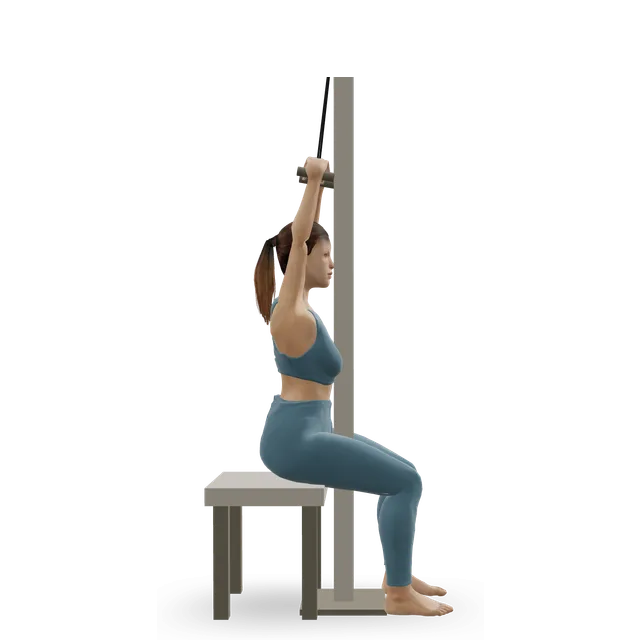
V-bar pulldown demonstrated on the 3D figure3D demoV-bar pulldownBeginner · A cable machine

3 sets of 8 to 12, stopping 2 or 3 reps short of failure · Palms facing each other

Harder: Pull-up

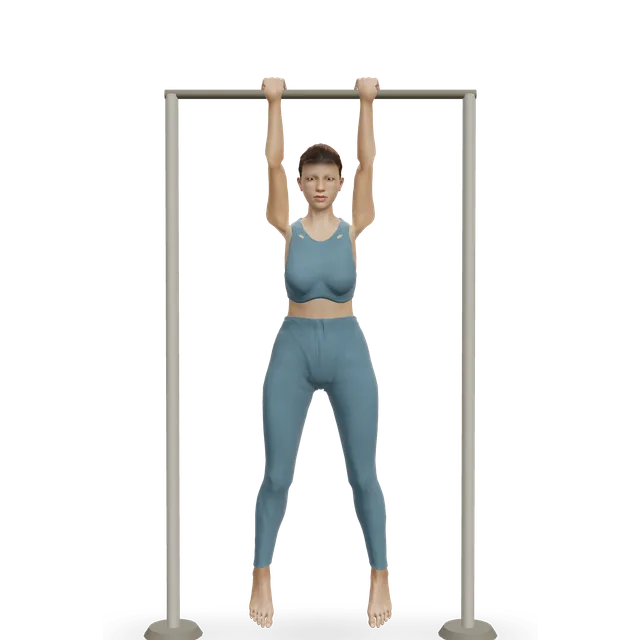
Scapular pull-up demonstrated on the 3D figure3D demoScapular pull-upIntermediate · Pull-up bar

2 sets of 8 to 10 · Only if hanging is comfortable

Easier: Assisted pull-up (machine) · Harder: Pull-up

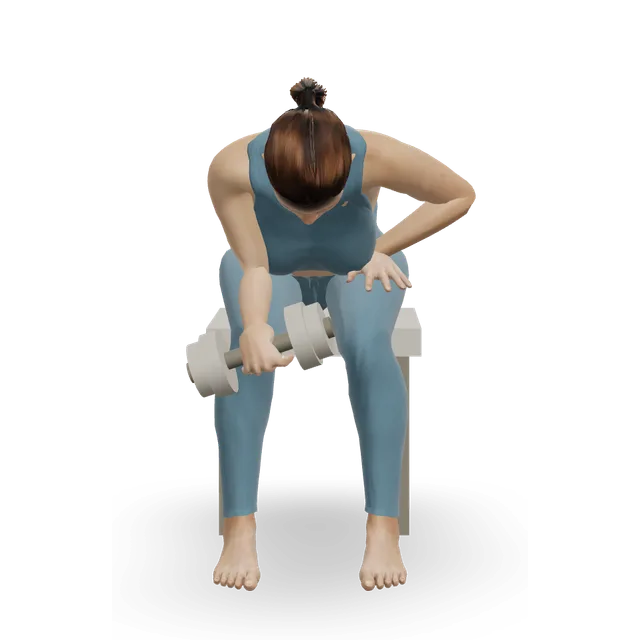
Wrist curls demonstrated on the 3D figure3D demoWrist curlsBeginner · A dumbbell

Inner-elbow pain: 5 holds of 30 to 45 s, once a day · Palm up, the wrist level, held still

Easier: Wrist-extensor eccentrics · Harder: Plate pinch

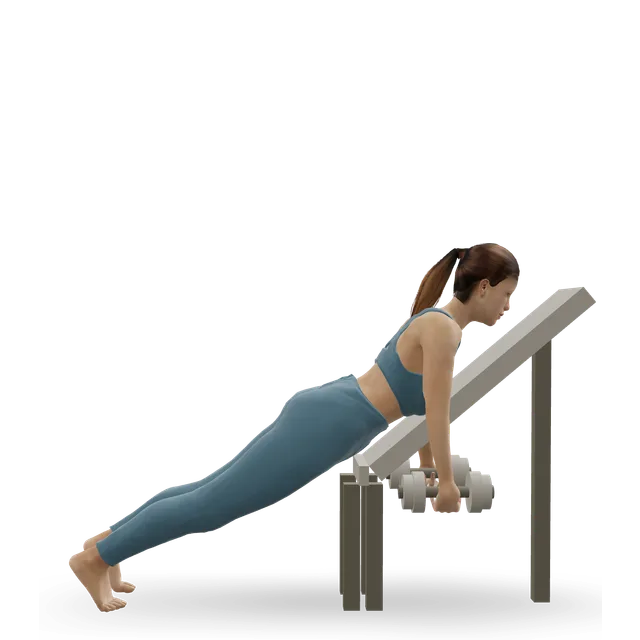
Reverse wrist curl demonstrated on the 3D figure3D demoReverse wrist curlBeginner · A dumbbell + A bench or box

Outer-elbow pain: 5 holds of 30 to 45 s, once a day · Palm down, the wrist level, held still

Easier: Wrist-extensor eccentrics · Harder: Plate pinch

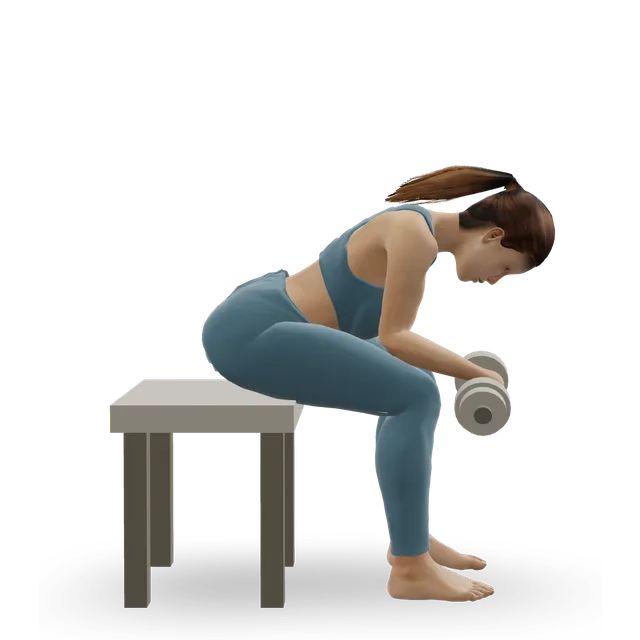
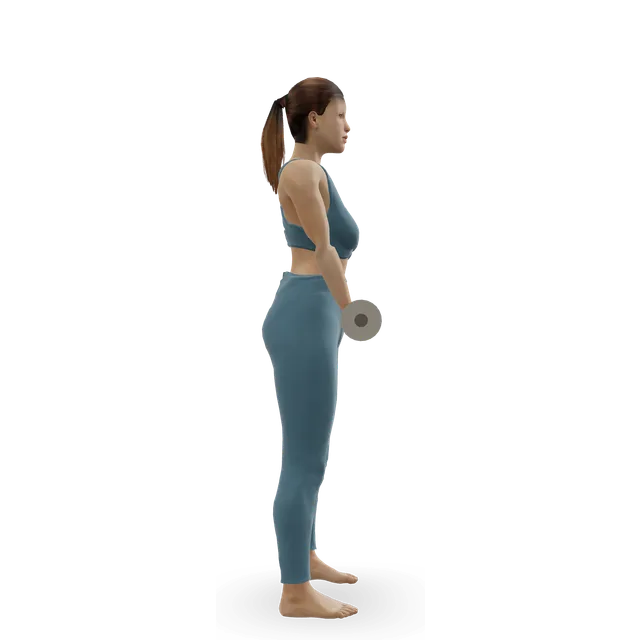
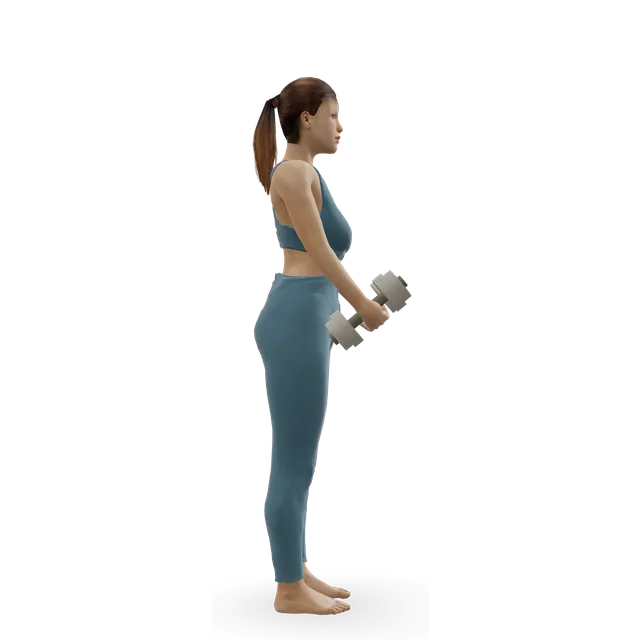
Dumbbell biceps curl demonstrated on the 3D figure3D demoDumbbell biceps curlBeginner · A dumbbell

Front-of-elbow pain: 5 holds of 30 to 45 s, once a day · Held still with the elbow at about a right angle

Easier: Seated dumbbell curl · Harder: Incline inner biceps curl

Move on when: Daily life and the stage 1 pulls pass the elbow pain rule for a week, and the holds no longer raise the pain (our suggestion).

Follow along: a timer, a cue and the next move, one step at a time.
Stage 2

Build the forearm and the pull (about weeks 2 to 6)

Lift and lower for the forearm and biceps, and rebuild a full-range pull with help, 2 to 3 times a week. Doses are editorial unless marked as the move page's.

Wrist curls demonstrated on the 3D figure3D demoWrist curlsBeginner · A dumbbell

3 sets of 10 to 15, once a day, lowering over 3 s

Easier: Wrist-extensor eccentrics · Harder: Plate pinch

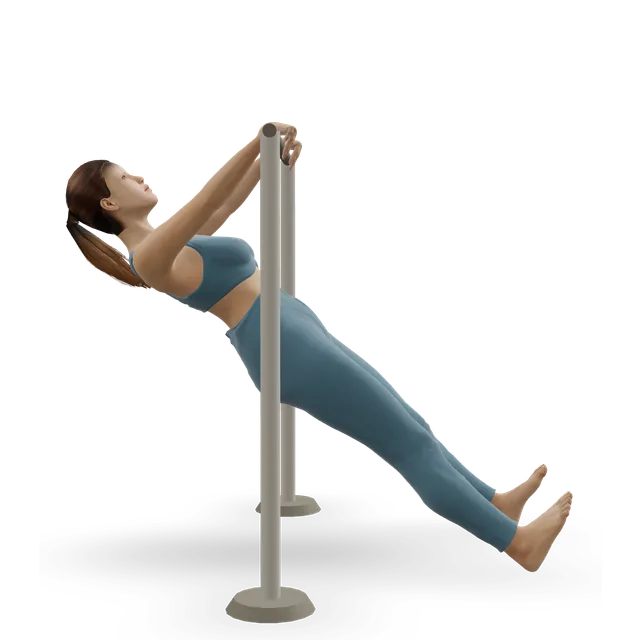
Inverted row demonstrated on the 3D figure3D demoInverted rowIntermediate · Pull-up bar

3 sets of 8 to 12 · Rings let your hands turn to a comfortable angle

Easier: Incline ring row · Harder: Bent-over barbell row

Band-assisted pull-up demonstrated on the 3D figure3D demoBand-assisted pull-upIntermediate · A band + Pull-up bar

2 to 4 sets of 8 to 12 with a band that lets you finish each set in good form · The move page's dose, from the American Council on Exercise. A neutral or shoulder-width grip

Easier: Assisted pull-up (machine) · Harder: Pull-up

Move on when: 3 sets of 8 to 12 band-assisted pull-ups pass the pain rule, with the elbow fine the next morning, for a week (our suggestion).

Follow along: a timer, a cue and the next move, one step at a time.
Stage 3

Back to the bar (from about week 4 to 8)

Unassisted pulls, then your usual programme, adding a rep or two, or 2 to 10% more load, only after a session that passed the pain rule. Doses are editorial.

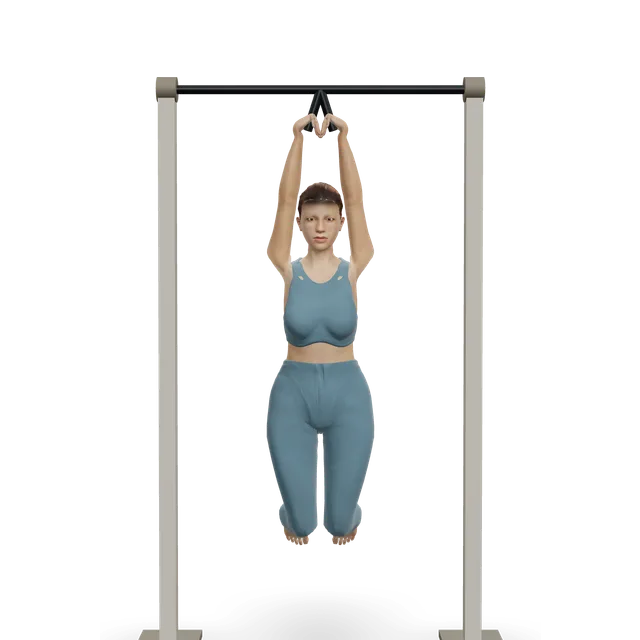
Negative pull-up demonstrated on the 3D figure3D demoNegative pull-upIntermediate · Pull-up bar + A step

3 sets of 3 to 5, lowering over 3 to 5 s · Expect some delayed muscle soreness at first

Easier: Assisted pull-up (machine) · Harder: Pull-up

V-bar pull-up demonstrated on the 3D figure3D demoV-bar pull-upAdvanced · Pull-up bar + Other / check instructions

3 sets, stopping 2 or 3 reps short of failure

Easier: V-bar pulldown · Harder: Pull-up

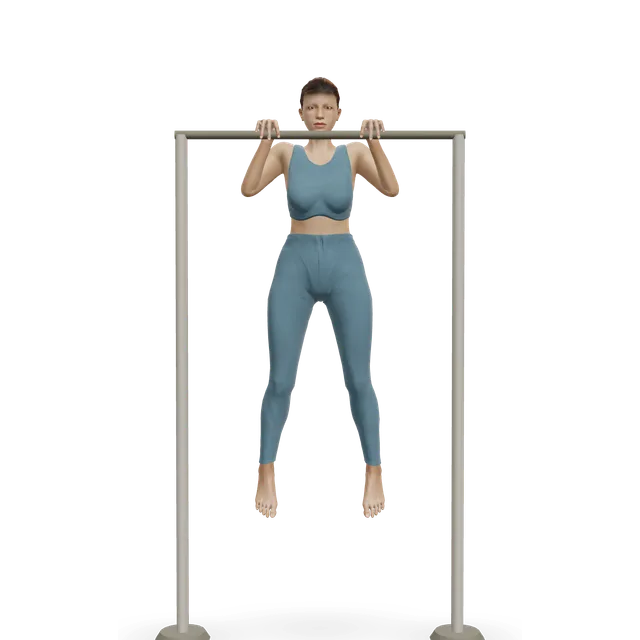
Pull-up demonstrated on the 3D figure3D demoPull-upAdvanced · Pull-up bar

3 sets, stopping 2 or 3 reps short of failure · Shoulder-width overhand grip

Easier: Assisted pull-up (machine) · Harder: Weighted pull-up

Chin-up demonstrated on the 3D figure3D demoChin-upAdvanced · Pull-up bar

2 to 3 sets, stopping 2 or 3 reps short of failure · Only once the front of the elbow has settled

Easier: Assisted pull-up (machine) · Harder: Weighted pull-up

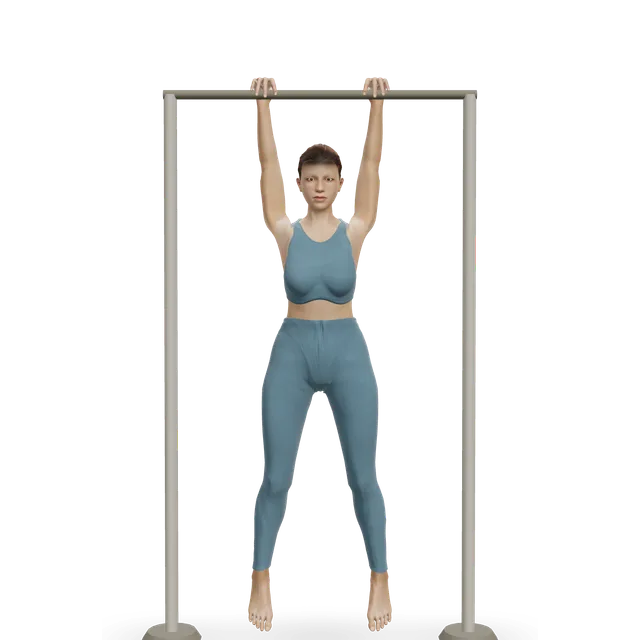
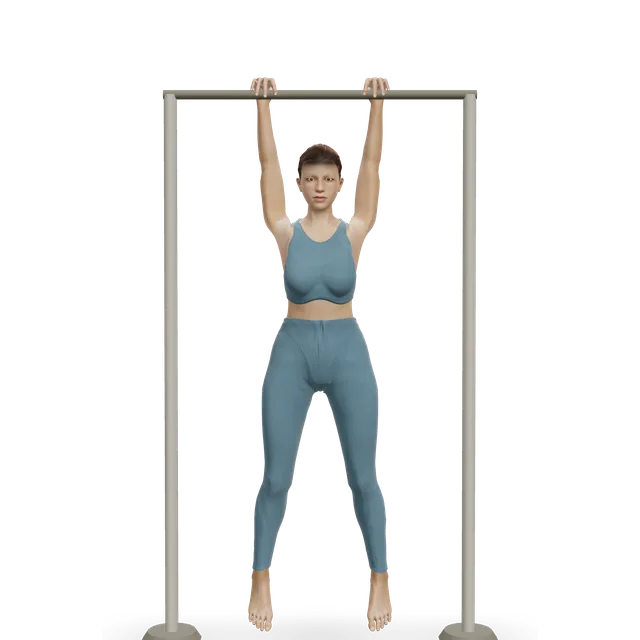
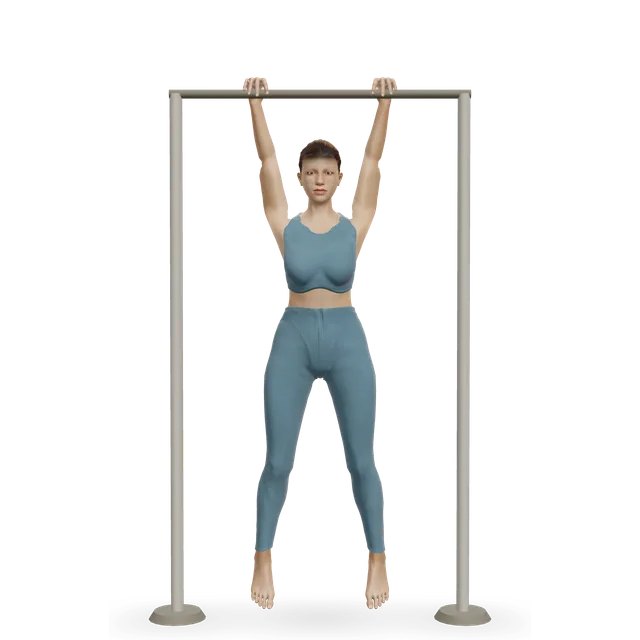
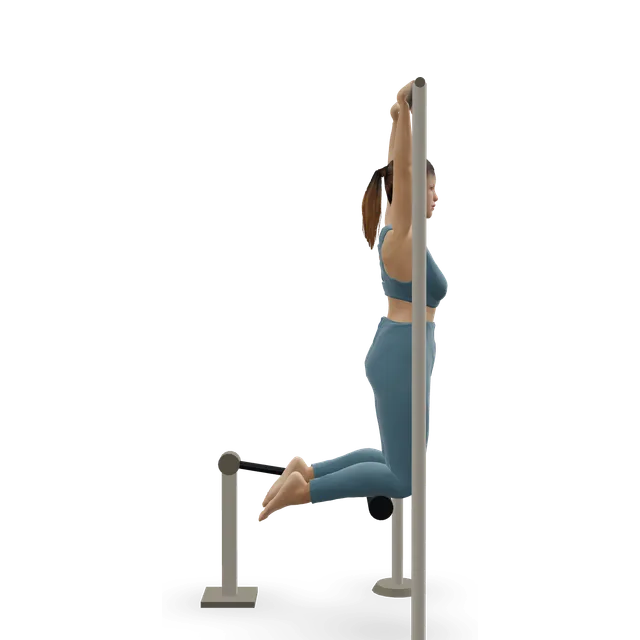
Bar hang demonstrated on the 3D figure3D demoBar hangIntermediate · Pull-up bar + A step

3 to 5 holds of 10 to 20 s, with your feet ready to take your weight · Its page warns that hanging loads the elbow's tendons heavily, so it comes back last, once carries are comfortable

Easier: Exercise ball pyramid drape · Harder: One-arm dead hang

Move on when: Your usual sessions pass the pain rule for 2 weeks. Keeping the forearm work twice a week is our suggestion.

Follow along: a timer, a cue and the next move, one step at a time.

What to change for now

Written steps: change the pull today

Our 3D figure can't show these changes. None has been tested in a trial for elbow pain: the grip evidence is lab work in healthy people, and the volume steps are our suggestion.

  • 1. Volume: halve your pulling and hanging for 1 to 2 weeks, and stop every set 2 or 3 reps short of failure (our suggestion).
  • 2. Grip: use the one that doesn't hurt. Neutral handles, a V-bar or rings let the hands turn. With pain at the front of the elbow, leave chin-ups and heavy curls for now; with pain on the outside, avoid wide palm-down grips and reverse curls.
  • 3. Width: hands about shoulder-width apart rather than very wide.
  • 4. The bottom: lower under control into the hang rather than dropping into it, since a biceps tendon usually tears when the elbow is forced straight under load (our suggestion).
  • 5. The top: with tingling in the little finger, don't hold the elbow fully bent at the top, don't lean on the inner elbow, and don't sleep with the arm tucked up.
  • 6. Grip load: use lifting straps for heavy rows, deadlifts and shrugs, and shorten dead hangs and fingerboard sessions (our suggestion).
  • 7. Rest: leave at least a day between hard pulling sessions (our suggestion).
  • 8. Coming back: add 1 or 2 reps, or 2 to 10% more load, only after a session that passed the pain rule.

Sources 23, 18, 19, 20, 22, 9, 11, 10, 24

Climbers

Our suggestion: climb easier routes for now, leave out the campus board, and do strength work off the wall. In a review of climbers, a strength programme prevented shoulder and elbow injuries, and campus board training went with more injuries of the arm, shoulder and hand. Elbow tendon problems and sprains of the ligament on the inside of the elbow are all described in climbers, so where it hurts still guides which plan to follow.

Sources 5, 4, 1

Positions to swap, and why

Habit or positionWhy it mattersInstead
Sets to failure, kipping and high-rep challengesSudden jumps in load are a major injury risk, and big, unusual sessions can cause rhabdomyolysis.Strict pull-ups, stopping 2 or 3 reps short of failure.Try: Pull-up
Chin-ups with front-of-elbow painChin-ups work the biceps harder than pull-ups, and the biceps tendon is the sore one.Neutral-grip pulldowns.Try: V-bar pulldown
Reverse curls with outer-elbow painPalm-down curling loads the sore tendon heavily (editorial), so our tennis elbow guide brings reverse curls back last.Hammer curls.Try: Hammer curl
Long dead hangs and fingerboard sessionsHanging loads the grip and the elbow's tendons heavily.Rows with your feet on the floor, and short hangs later.Try: Inverted row
Holding the elbow fully bent with tingling fingersBending the elbow fully squashes the ulnar nerve, and avoiding the positions that provoke it is the main treatment.Stop just short of full bending, and wrap a towel round the elbow at night.
Gripping as hard as you can on heavy rows and deadliftsForceful arm work is linked with tennis and golfer's elbow.Lifting straps for heavy pulls.
Weighted pull-ups while it's soreExtra load before the tendon has settled (our suggestion).Band-assisted pull-ups, then bodyweight.Try: Band-assisted pull-up
Campus board trainingIt went with 2.48 times the odds of an injury to the arm, shoulder or hand in indoor climbers.Strength training off the wall and easier climbing for now.

Routines to follow

More moves for this area

Questions people ask

Why does the inside of my elbow hurt when I do pull-ups?

Usually golfer's elbow: the tendons that bend the wrist and turn the palm down start on the inner bump, and gripping and hanging load them hard. If your ring and little fingers tingle, it's more likely the ulnar nerve. Change the grip and the volume, and start the holds in stage 1.

Why does the outside of my elbow hurt?

Usually tennis elbow, which gripping and palm-down pulls and rows tend to aggravate. A neutral grip, straps for heavy pulls and the reverse wrist curl holds in stage 1 are the usual first changes. Most cases improve within a year, even without treatment.

Why does the front of my elbow hurt with chin-ups and curls?

Usually the biceps tendon, and occasionally the brachialis, from chin-ups, curls and carrying. A pop with bruising or a bulge in the upper arm needs a same-day check, because a torn tendon is best repaired within 2 to 3 weeks.

Should I stop doing pull-ups?

Usually not completely: for elbow tendon pain, exercise has done better in trials than waiting or passive treatments. Change the grip, cut the volume and stop sets short of failure, within the elbow pain rule. Stop and get it checked for a pop, sudden weakness or tingling that won't go away.

Which grip is best for elbow pain?

The one that doesn't hurt. Lab studies in healthy people show the grips work the muscles much alike, with more biceps in chin-ups, but we found none that tested a grip for elbow pain. Neutral handles or rings are worth trying.

How long until I'm back to full pull-ups?

It varies, and no study has followed elbow pain from pull-ups. In tennis elbow trials, half of those still affected improved every 2.5 to 3 months even without treatment, and 89% had improved by a year. The plan here takes roughly 6 to 12 weeks back to full pull-ups, which is an editorial estimate, not a promise.

Do lifting straps or a forearm strap help?

Lifting straps take the grip out of heavy rows and deadlifts, which spares the forearm tendons, though that hasn't been tested for elbow pain. A forearm strap for tennis or golfer's elbow is covered in those guides.

Should I do dead hangs for elbow pain?

Not while it's sore: hanging loads the grip and the elbow's tendons heavily, as the bar hang's own page warns. Bring back short hangs in the last stage, once carrying weights is comfortable.

Can I keep climbing?

Usually, with changes we suggest: easier routes, less volume, no campus board for now and strength work off the wall. Harder climbing and bouldering went with more overuse injuries in climbers, and campus board training with more injuries of the arm, shoulder and hand.

Is it a nerve problem?

Tingling or numbness in the ring and little fingers, worse with the elbow bent, points to the ulnar nerve. Most mild cases improve once you avoid the positions that bring it on, but constant numbness, a weak hand or wasting needs a GP.

Do I need a scan?

Usually not: the story and an examination are enough, and scans of elbows that don't hurt often show tendon changes. A suspected biceps tear may need an ultrasound or MRI scan.

My arms are swollen and my pee is dark after hundreds of pull-ups. What now?

Get medical help the same day, from NHS 111, or A&E if you feel very unwell: it could be rhabdomyolysis. Call 999 for sudden, severe pain in a swollen, tight muscle. Don't train again until you've been checked.

Related exercise guides

Other pain guides

Sources

  1. Holtzhausen 1996 · Elbow, forearm, wrist and hand injuries in sport rock climbers (review, Clin J Sport Med)
  2. Schöffl 2015 · Trends in 911 climbing injuries (case series, Wilderness Environ Med)
  3. Vagy 2026 · Musculoskeletal injuries in rock climbing (scoping review, BMJ Open Sport Exerc Med)
  4. van Middelkoop 2015 · Upper limb injuries in 426 indoor climbers (cohort, Int J Sports Med)
  5. Quarmby 2023 · Risk factors and prevention of overuse injuries in adult climbers (systematic review, Front Sports Act Living)
  6. Keogh 2017 · Injuries across the weight-training sports (systematic review, Sports Med)
  7. Nicolay 2022 · Upper limb injuries in CrossFit athletes (review, Curr Rev Musculoskelet Med)
  8. Shiri 2006 · How common tennis elbow and golfer's elbow are in 4,783 adults (population study, Am J Epidemiol)
  9. AAOS OrthoInfo · Biceps tendon tear at the elbow
  10. British Society for Surgery of the Hand · Cubital tunnel syndrome (patient information)
  11. Gelberman 1998 · The ulnar nerve and the cubital tunnel as the elbow bends (cadaver study, J Bone Joint Surg Am)
  12. Meller 2024 · Ulnar nerve compression misdiagnosed as elbow tendinopathy in climbers (case series, Curr Sports Med Rep)
  13. Hody 2019 · Eccentric muscle contractions: risks and benefits (review, Front Physiol)
  14. Paluch 2024 · MRI of the extensor tendon in 30 pain-free volunteers (cross-sectional study, Shoulder Elbow)
  15. Crema 2026 · Ultrasound of the extensor tendon in pain-free senior tennis players (cross-sectional study, Skeletal Radiol)
  16. Valgaeren 2024 · Tendon signal changes on MRI in pain-free elbows (cross-sectional study, J Belg Soc Radiol)
  17. Ikonen 2022 · How tennis elbow settles without treatment (systematic review and meta-analysis, Clin Orthop Relat Res)
  18. Dickie 2017 · Muscle activity in pull-up variations (laboratory study, J Electromyogr Kinesiol)
  19. Youdas 2010 · Muscle activity and elbow motion in the pull-up and chin-up (laboratory study, J Strength Cond Res)
  20. Kleiber 2015 · The biceps and brachioradialis in elbow bending with the palm up, down or neutral (laboratory study, Front Physiol)
  21. Urbanczyk 2020 · Muscle forces in three pull-up techniques (laboratory and modelling study, Scand J Med Sci Sports)
  22. Prinold 2016 · Shoulder blade movement in three pull-up techniques (laboratory study, J Sci Med Sport)
  23. Soligard 2016 · Load in sport and risk of injury (International Olympic Committee consensus statement, Br J Sports Med)
  24. American College of Sports Medicine 2009 · Progression models in resistance training for healthy adults (position stand, Med Sci Sports Exerc)
  25. Karanasios 2021 · Exercise for tennis elbow: 30 trials, 2,123 people (systematic review and meta-analysis, Br J Sports Med)
  26. Bateman 2021 · An optimised UK physiotherapy protocol for tennis elbow (consensus study, BMJ Open)
  27. Sepehri Rahnama 2025 · Forearm or core training for pull-up performance in inactive men (randomised trial, Sports)
  28. Bisset 2006 · Physiotherapy, a steroid injection or wait and see for tennis elbow (randomised trial, BMJ)
  29. Coombes 2013 · A steroid injection, physiotherapy or both for tennis elbow (randomised trial, JAMA)
  30. Svernlöv 2009 · Non-surgical treatment of cubital tunnel syndrome (randomised trial, J Hand Surg Eur)
  31. Smith 2017 · Should exercises be painful in chronic musculoskeletal pain? (systematic review and meta-analysis, Br J Sports Med)
  32. Coombes 2016 · Isometric exercise above and below the pain threshold in tennis elbow (experimental study, Clin J Pain)
  33. Fees 1998 · Upper limb weight-training changes for the injured athlete, with the soreness rules (clinical perspective, Am J Sports Med)
  34. NHS · Elbow and arm pain
  35. MedlinePlus · Rhabdomyolysis (US National Library of Medicine)

Exercise education, not a diagnosis or treatment plan. It is written from the guidelines and studies listed above; review by a clinician is pending. If your pain follows an injury, is severe, is getting worse, or comes with any warning sign listed on this page, get it assessed. Health disclaimer.