Strength at home
Dumbbell chest workout: flat, incline and neutral-grip presses, flys and a pullover
A whole chest session with dumbbells and a bench. You press flat first, then on an incline, then with your palms facing, then fly, with an optional pullover and a row to balance the pushing. Dumbbells and a barbell built strength alike in trials, and chest activity is similar with both, though nobody has compared chest growth. No trial has tested this session: the order follows our machine chest workout and chest workout, and the doses are our editorial starting point. Our dumbbell bench press guide shows how to get the dumbbells into place and down safely, step by step.
Warm-up
- Shoulder CARs (controlled articular rotations)3 slow circles each way, each armBeginner · Shoulders, Back · 3D demoWithin the range you can controlEasier: Arm circlesHarder: Sleeper stretch
- Band pull-apart15 repsIntermediate · Shoulders, Back · 3D demoA light band, arms straight. No band? 10 slow shoulder circles each wayEasier: Prone Y-T-W raisesHarder: Tuck back lever
- Beginner · Shoulders, Chest, Abs · 3D demoAt a wall or a bench: let your shoulder blades come together, then push them apartEasier: Dumbbell shoulder-blade punchHarder: Push-up



Main press
Rest 90 s to 2 min between sets
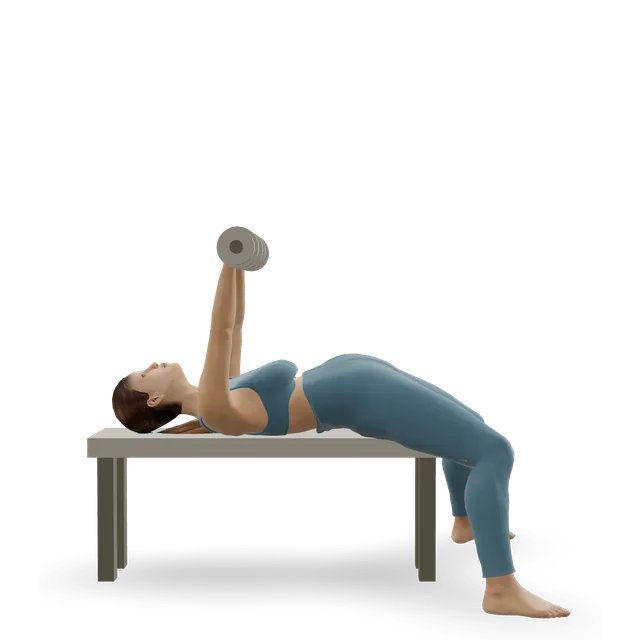
- Dumbbell bench press1 warm-up set of 8Intermediate · Chest, Triceps, Shoulders · 3D demoAt about half your working weight. Sit with the dumbbells on your thighs and use your knees to help bring them to your chest, one at a timeEasier: Barbell bench pressHarder: Bench press with bands
- Dumbbell bench press3 × 6 to 12Intermediate · Chest, Triceps, Shoulders · 3D demoLower to the sides of your chest and press up over it. Stop 2 or 3 reps short. At the end, bring the dumbbells to your chest, then your thighs, and sit upEasier: Barbell bench pressHarder: Bench press with bands
Angled press
Rest 90 s between sets
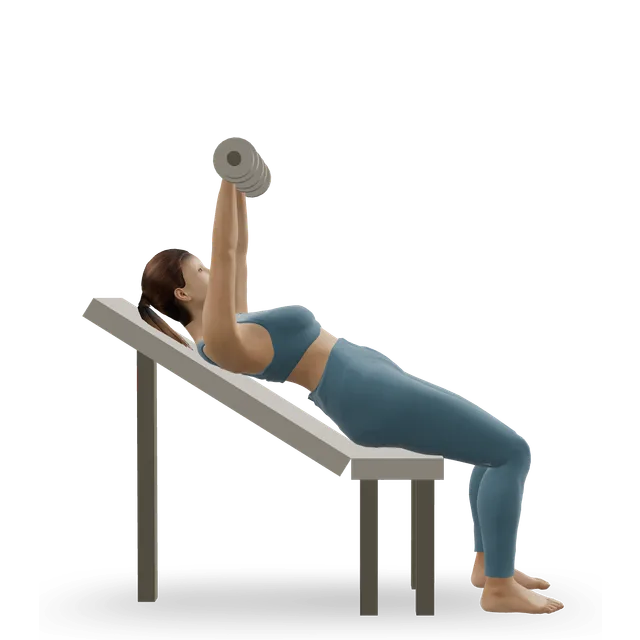
- Incline dumbbell press3 × 8 to 12Intermediate · Chest, Triceps, Shoulders · 3D demoBench at about 30 to 45 degrees; start lighter than on the flat bench. Stop 2 or 3 reps shortEasier: Barbell bench pressHarder: Bench press with bands
Second press
Rest 90 s between sets
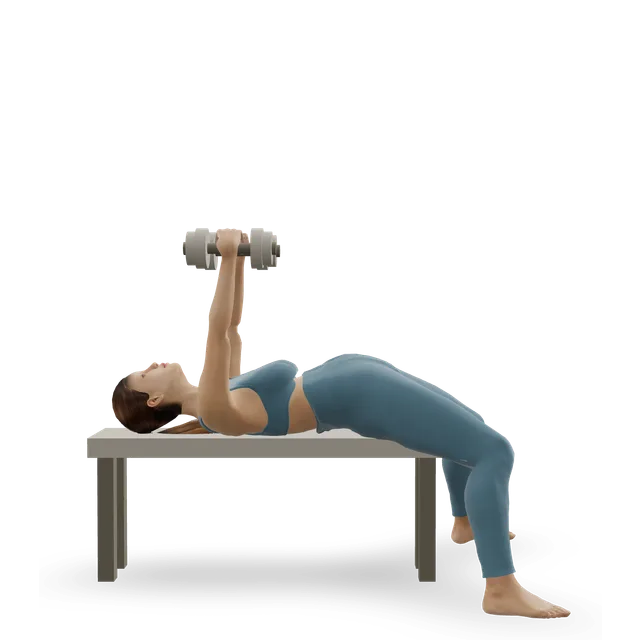
- Neutral-grip dumbbell bench press2 × 8 to 12Intermediate · Chest, Triceps, Shoulders · 3D demoPalms facing, elbows close to your sides. If your shoulders complain on the main press, use this one there insteadEasier: Barbell bench pressHarder: Bench press with bands
Fly
Rest 60 to 90 s between sets
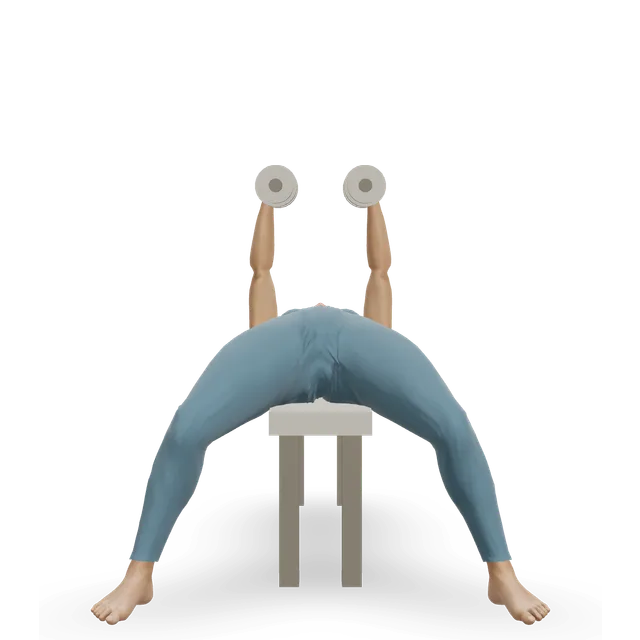
- Dumbbell fly2 to 3 × 10 to 15Intermediate · Chest, Shoulders · 3D demoElbows softly bent, and never lower your hands below chest level. The last set can end 0 to 2 reps shortEasier: Cable flyHarder: Bodyweight fly on rolling bars
Finisher (optional)
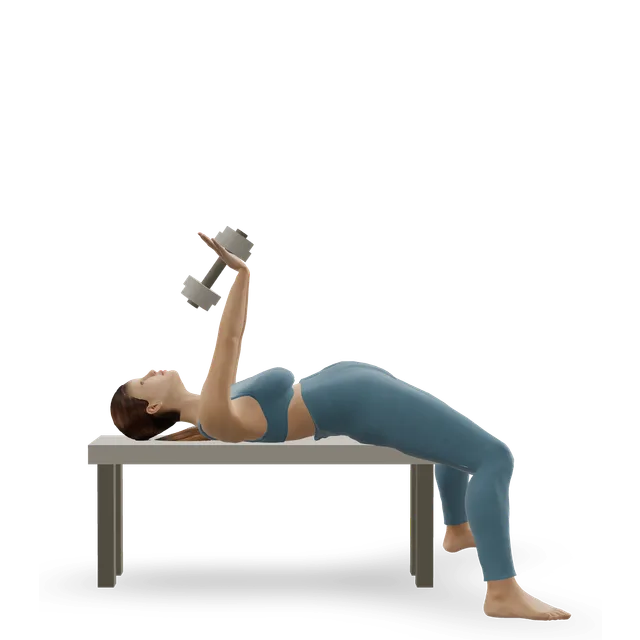
- Dumbbell pullover (along the bench)2 to 3 × 8 to 12Intermediate · Chest, Back, Triceps · 3D demoStop with 2 or 3 reps in reserve. Skip it if the front of your shoulder pinches with your arms overheadEasier: Incline cable pulloverHarder: Straight-arm cross-bench dumbbell pullover
Balance
- Supported single-arm dumbbell row2 × 10 to 12 each sideIntermediate · Back, Biceps, Shoulders · 3D demoHand and knee on the bench, back flat; a pull to balance the pressesEasier: Incline ring rowHarder: Bent-over barbell row

Cool-down (optional)
- Beginner · Chest, Shoulders · 3D demoOnly as far as feels comfortableEasier: Elbows backHarder: Fish pose (Matsyasana)

Tips
- In your first two weeks, do 2 sets of each move and stop every set with 3 or 4 reps to spare. After that, stop 2 or 3 reps short on the presses; the last set of flys can go 0 to 2 short.
- When every set reaches the top of its range, move up to the next dumbbell. The jump is 1 to 2 kg a hand, a big step at light weights, so reach the top of the range on every set first.
- If a rep fails, lower the dumbbells to your chest and tip them out to the sides. Never fight a falling dumbbell over your face, and don't drop dumbbells from straight arms.
- A spotter's hands go at your wrists, not your elbows.
- Shoulders: keep pain to about 5 out of 10 or less, back to its usual level by your next session; a sharp pinch means a shorter range, a lighter weight or stop. A pop or tearing feeling at the front of your armpit or chest needs checking the same day (NHS 111 or an urgent treatment centre).
- Breathe out as you press rather than holding your breath. With high blood pressure, keep breathing and stop well short of failure. With a pacemaker or defibrillator, ask your doctor before upper-body strength training.
- After heart surgery through the breastbone, a heart or lung transplant, or breast cancer surgery or reconstruction, follow your surgical team's advice before pushing with your arms.
- Later in pregnancy, avoid lying flat on your back for more than a few minutes: use the incline press instead of the flat ones, and do the flys standing with a band.
- No bench? Our chest workout at home uses the floor press and floor flys.
- Once or twice a week, with a pulling session in the same week, such as our back workout or a pull day, to keep your shoulders balanced.
The doses are suggested starting points, not a prescription. Choose a range you can control and stop for sharp or increasing pain, numbness or tingling. Get individual advice after an injury or surgery, or if you are pregnant or managing a health condition.
Guides that recommend it
Find more moves like these
More strength at home




Beginner bodyweight workout
A 20-minute full-body workout with no equipment: squats, knee push-ups, bridges, lunges and planks.
20 minBeginner10 movesNo equipment


Full-body bodyweight workout
An intermediate no-equipment workout: push-ups, split squats, single-leg bridges, pike push-ups and core work.
30 minIntermediate11 movesNo equipment

Full-body dumbbell workout
A 35-minute full-body strength workout with dumbbells: goblet squats, presses, rows, Romanian deadlifts and carries.
35 minIntermediate9 movesA band, A dumbbellQuestions people ask
How long does the dumbbell chest workout: flat, incline and neutral-grip presses, flys and a pullover take?
About 35 minutes, including any warm-up and cool-down listed. Shorten it by doing fewer rounds; lengthen it by adding one.
What equipment do I need?
You need: A band, A dumbbell, A bench or box, A wall. Each move links to its guide, where you can find an alternative if you are missing something.
Is it suitable for beginners?
It is written for beginners. 10 of its 10 moves have an easier option listed beside them if you need one.
How do I make it easier or harder?
Use the easier or harder option listed under each move, change the number of rounds, or adjust the rest. Progress one change at a time.