Dumbbell pullover (along the bench)
Lying along a flat bench with one dumbbell held in both hands above your chest, arms nearly straight, you lower it in an arc behind your head and pull it back over your chest. Lying along the bench supports your whole back, unlike the cross-bench pullovers where only the shoulders rest on it. EMG studies find the pullover works the chest more than the lats, despite its name as a back exercise.
Movement guide
Dumbbell pullover (along the bench)
Loading the 3D figure…
Make it easier or harder
Choose a version that fits your control and comfort.
Easier option
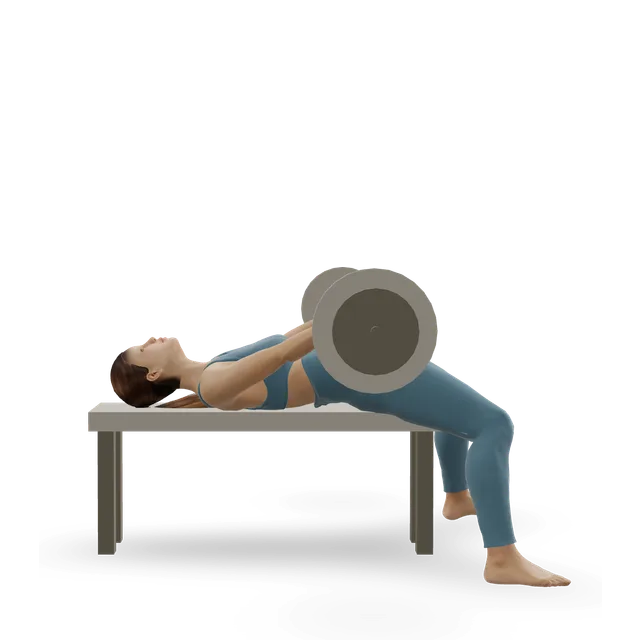
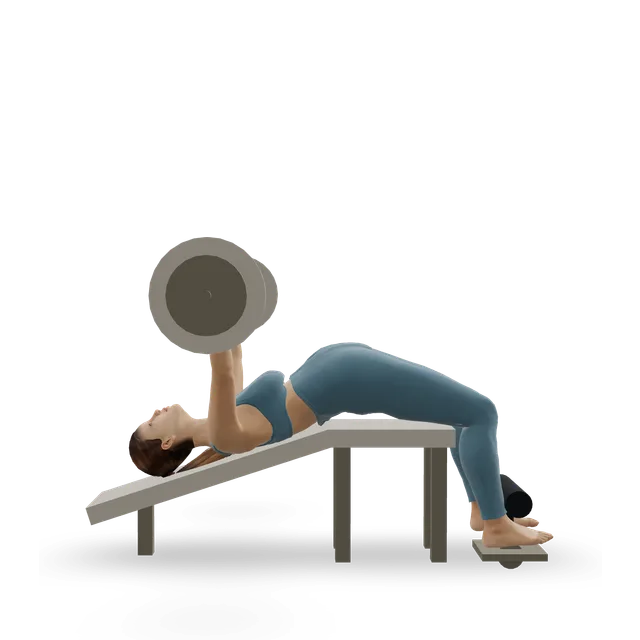
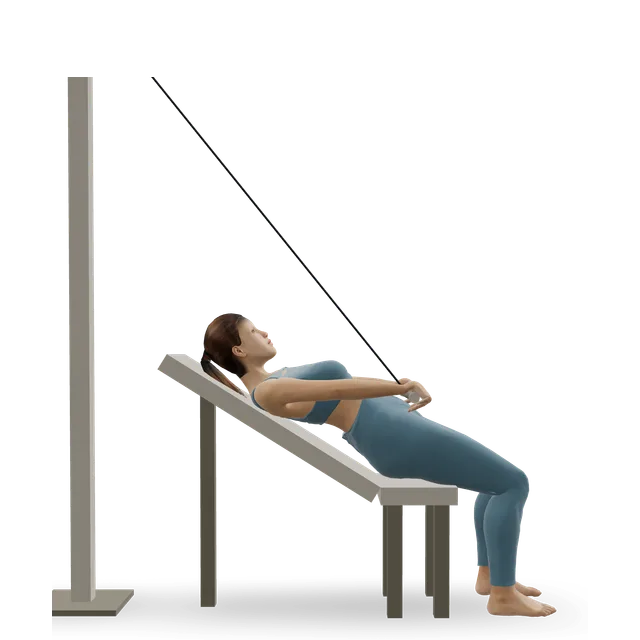 3D demoIncline cable pulloverBeginner · A cable machine + A bench or box
Similar move, beginner grade.
This move
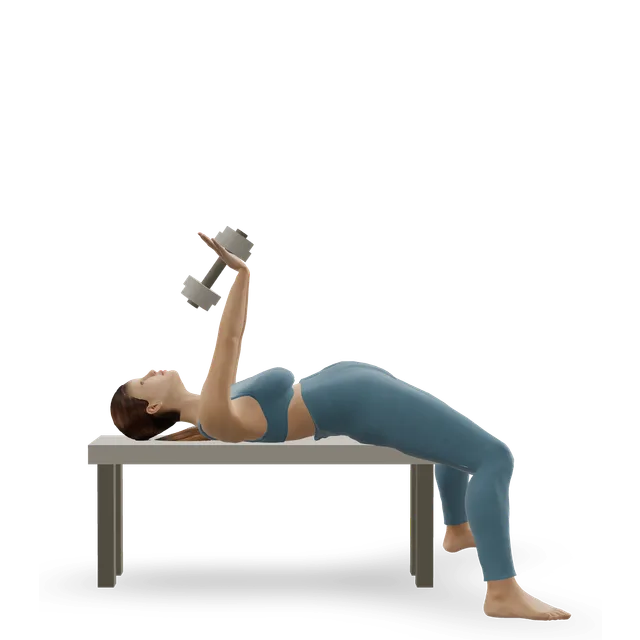 3D demoDumbbell pullover (along the bench)Intermediate · A dumbbell + A bench or box
Intermediate grade.
Harder option
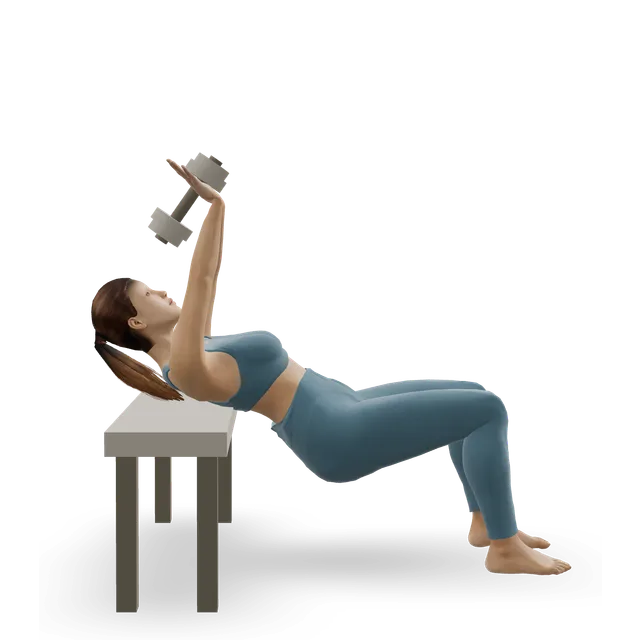 3D demoStraight-arm cross-bench dumbbell pulloverIntermediate · A dumbbell + A bench or box
Suggested next step, intermediate grade.
Source-researched guide.
How to move
- Lie face up along a flat bench with your head supported and your feet flat on the floor.
- Hold one dumbbell above your chest with both hands, palms cupped under the top plate, arms nearly straight.
- Breathing in, lower the dumbbell in an arc behind your head, keeping the slight bend in your elbows, until you feel a stretch across your chest and under your arms.
- Pull it back along the same arc until it is over your chest again.
- After the last rep, bring the dumbbell to your chest and lower it to the floor beside the bench.
Form cues
- Keep the bend in your elbows fixed; the movement is at the shoulders.
- Keep your ribs down and your lower back on the bench.
- Avoid: rushing the lowering.
Practice and cautions
2 to 3 sets of 8 to 12, stopping with 2 or 3 reps in reserve (our editorial starting point).
Check your grip before every set and cup the inner plate with both palms so the weight cannot slip through toward your face. Lower only as far as your shoulders allow without the ribs flaring, and finish by lowering the dumbbell to the floor rather than sitting up with it overhead. This is movement education, not an assessment or treatment prescription. Stop for sharp or increasing pain, dizziness, numbness or tingling; seek individual guidance for symptoms, injury or restrictions.
Sources and review status
Sources support the educational description; they do not establish that this exercise is suitable for you.
- ACE · Lying pullovers (intermediate; face up on a bench, the weights lowered overhead on straight arms and pulled back) ↗
- Marchetti & Uchida 2011 · The barbell pullover worked the pectoralis major more than the latissimus dorsi (EMG of 8 men, J Appl Biomech) ↗
- Di Fonza 2026 · Latissimus dorsi activity across pulling exercises: the pullover favours the chest rather than the lats (narrative review of 23 EMG studies, JFMK) ↗
No variation is labeled clinically validated.
What it works
Muscles
Main: Chest. Also: Back, Triceps, Shoulders.
Anatomy: Pectoralis major, Pectoralis minor, Serratus anterior.
Equipment
A dumbbell + A bench or box
Level
Intermediate. See the easier and harder options above.
Workouts that use it
Guides that use it
Similar moves
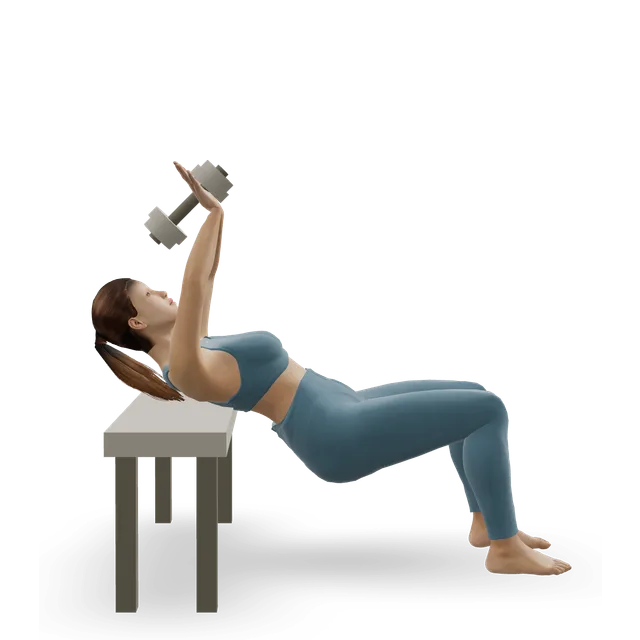
Browse more
Questions people ask
What muscles does the Dumbbell pullover (along the bench) work?
Mainly the chest, with help from the back, triceps and shoulders.
What equipment do I need for the Dumbbell pullover (along the bench)?
A dumbbell + A bench or box.
Is the Dumbbell pullover (along the bench) good for beginners?
It is graded intermediate. If it is too hard right now, start with the Incline cable pullover.
What is an easier alternative to the Dumbbell pullover (along the bench)?
Try the Incline cable pullover. It works similar muscles at a lower grade.
How do I make the Dumbbell pullover (along the bench) harder?
Progress to the Straight-arm cross-bench dumbbell pullover or the Bent-arm barbell pullover. Follow that guide’s technique and any stated timing.