How to do dumbbell pullovers: chest or lats, the set-up, and your shoulders
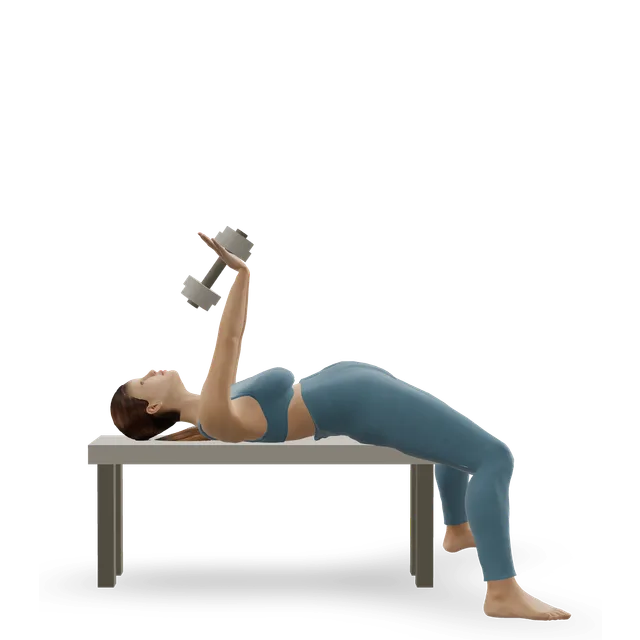
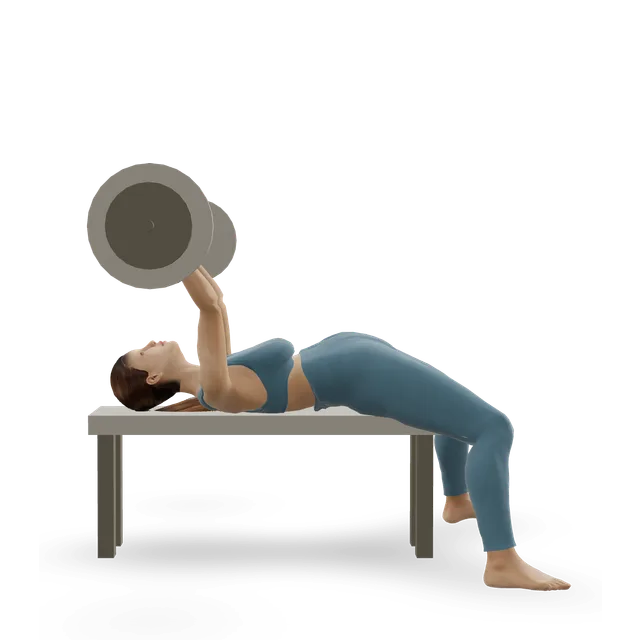
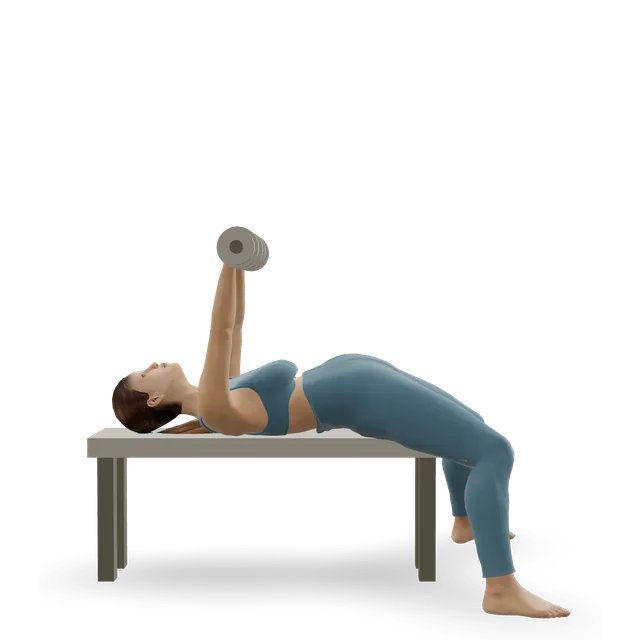
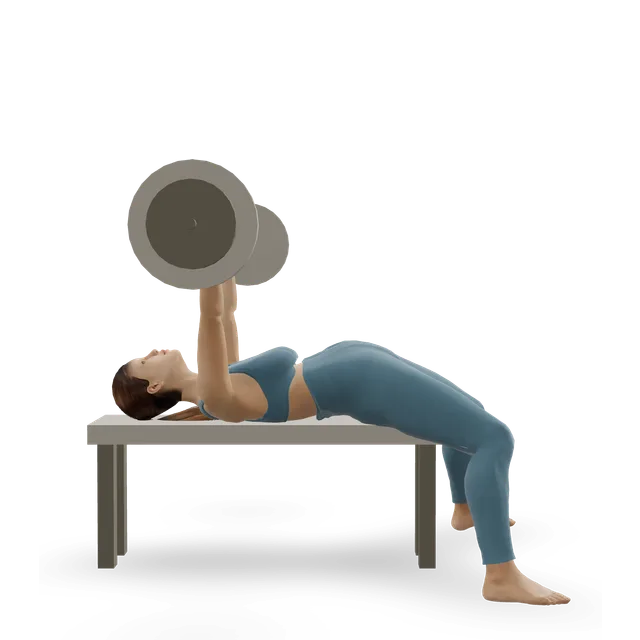
A dumbbell pullover starts with a dumbbell held over your chest as you lie on a bench. You lower it in an arc behind your head with your arms nearly straight, then pull it back. It works your chest and your lats, with your triceps, the back of your shoulders and your abs helping.
Studies of muscle activity found it works the chest more than the lats, but the evidence is thin: three small studies, and the one that tested different points in the arc held each position still and didn't standardise its readings. No study has shown it expands your ribcage, and no trial has measured how much muscle it builds. It loads your shoulder at the end of its overhead reach, so go light.
This guide covers the pullover step by step on the 3D figure, along or across the bench, bent or straight arms, the cable and barbell versions, how heavy and how many, and keeping your shoulders comfortable.
Lying on a bench, you lower a dumbbell from over your chest in an arc behind your head, then pull it back. ACE rates its lying pullover as intermediate; our move pages start with one dumbbell cupped in both hands and a slight bend in the elbows.
In 8 men the chest worked harder than the lats, and in 20 adults a straight-arm pulldown worked the lats harder than a pullover did. A 2026 review advises against treating the pullover as a first-choice lat exercise. The evidence is three small studies of muscle activity, so it's a lean, not a verdict.
In one study, the chest worked most with the arms between pointing at the ceiling and halfway back overhead. Lying down, a dumbbell is heaviest when your arms are behind your head, so the pullover mostly loads that stretched, chest-heavy part of the arc (our reading of the mechanics).
We found no study testing whether pullovers widen the ribcage, and no trial of how much muscle they build: the review found only three muscle-activity studies.
A hospital physiotherapy handout on shoulder-safe weight training advises against taking a bar or dumbbell behind your head and neck, saying you should always be able to see your hands. With a sore or stiff shoulder, keep the arc short enough that you can still see the dumbbell.
A pullover moves your shoulder, not your elbow: the dumbbell goes back as your arms rise overhead, and comes back over your chest as you pull your arms down. Your shoulder blades turn upwards as your arms go back, and your ribs and lower back stay still.
The muscles
The chest (mostly its middle and lower fibres), the lats, the long head of the triceps and the back of the shoulder, with your abs holding your ribs down. Coaching texts often name the serratus anterior and teres major as well; none of the studies we read measured them.
Neither label fits neatly. Pulling the dumbbell back over your chest is the same shoulder movement as a pulldown, but the chest does more of the work, so put it after your presses or your rows.
The pullover studies use EMG (electromyography: electrodes measuring how hard a muscle works over a few reps), which isn't a validated predictor of which exercise grows a muscle more.
In 8 healthy men doing barbell pullovers at 30% of body weight, the chest worked harder than the lats, and how hard each worked depended on the weight's leverage; the study gave no ratio. In 20 active adults, a barbell pullover worked most muscles harder than a straight-arm pulldown, but the lats and triceps worked harder in the pulldown. The studies agree in direction, but they're small, measure activity rather than growth, and differ in set-up, so we grade this mixed.
Where in the arc: one study, plus our readingMixed evidence
15 trained men pushed as hard as they could, without moving, at five shoulder angles from arms by their sides to arms overhead, lying for the pullover and standing for a pulldown. Chest activity in the pullover was higher with the arms overhead than by the sides, and the authors placed the chest's emphasis between arms vertical and halfway back, and the lats' between your sides and vertical. The muscle readings weren't standardised, the efforts were held still and the two positions differed, so this is a clue. That a lying dumbbell loads the overhead part most is our reading of the mechanics, not a measurement.
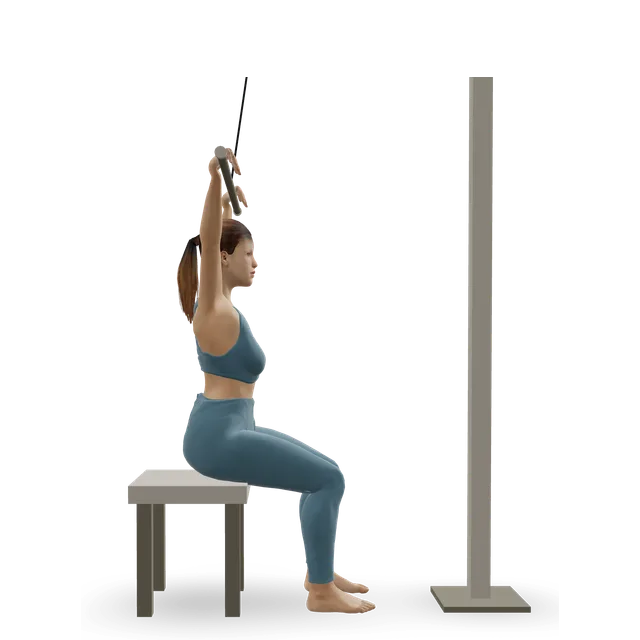
For the lats, a straight-arm pulldownEmerging evidence
The lats and triceps worked harder in a standing straight-arm pulldown than in a pullover, and a 2026 review of lat studies says the pullover shouldn't be your first choice for the lats.
No trial has measured muscle growth or strength from pullovers, no study has tested the ribcage claim, and no study has counted pullover injuries. Everything here is muscle activity in a single session.
How to do a dumbbell pullover, step by step
From our move page and ACE's lying pullover; the bracing cue is coaching practice.
Lie face up along a flat bench with your head supported and your feet flat on the floor.
Hold one dumbbell above your chest with both palms cupped under its top plate, arms nearly straight. Use a fixed dumbbell, or check the collars are tight.
Keep your lower back and ribs down on the bench, as if bracing for a light push.
Breathing in, lower the dumbbell in an arc behind your head, keeping the slight bend in your elbows, until you feel a stretch across your chest and under your arms, or your shoulders say stop.
Breathing out, pull it back along the same arc until it's over your chest again.
After the last rep, bring the dumbbell to your chest and lower it to the floor beside the bench rather than sitting up with it overhead.
Loading the 3D figure…
Drag to turn
Gets into position, then repeats the movement. Technical checks passed; qualified exercise review is pending.
Along or across the bench, bent or straight arms, and other versions
Along the bench
The easier start: your head and back are supported, and it's the version our chest and back workout uses.
Across the bench
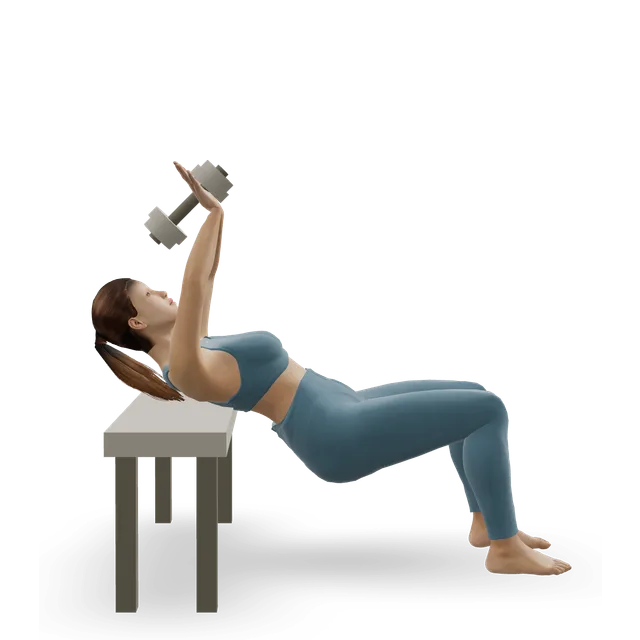
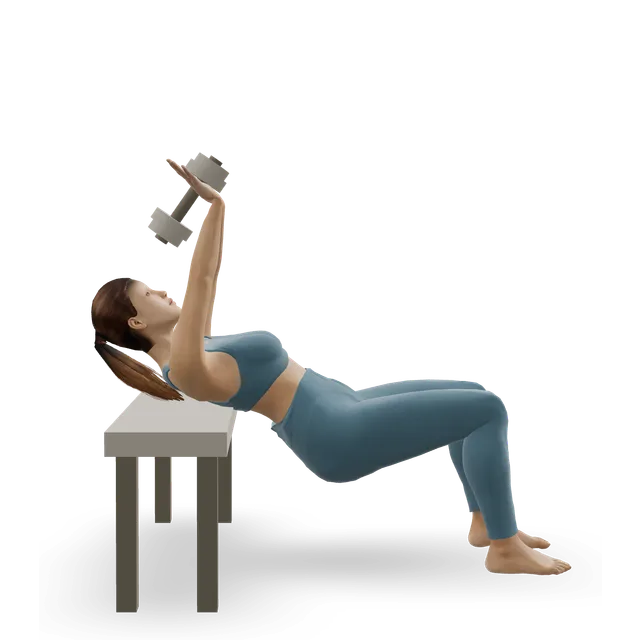
Only your upper back and shoulders rest on the bench, with your hips lower and your feet flat. It needs more trunk control, so our move pages list it after a pain-free overhead reach lying on your back.
Bent or straight arms
Bending your elbows shortens the lever, so the same dumbbell feels lighter; straight arms make it harder (our reading of the mechanics). ACE teaches straight arms with a dumbbell in each hand; our move pages keep a slight, fixed bend. Either way, keep the bend the same through each rep.
The floor stops the dumbbell behind your head, which keeps the range short for stiff or sore shoulders, in line with the hospital handout's advice. We have no floor demo: follow the bench steps lying on the floor.
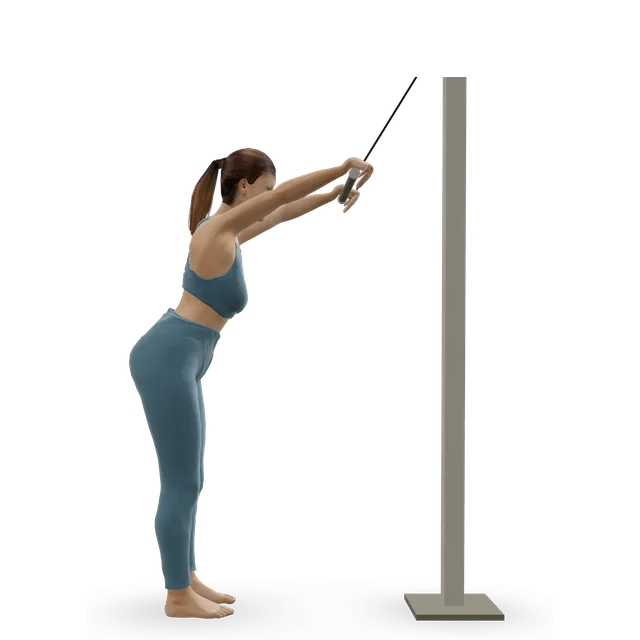
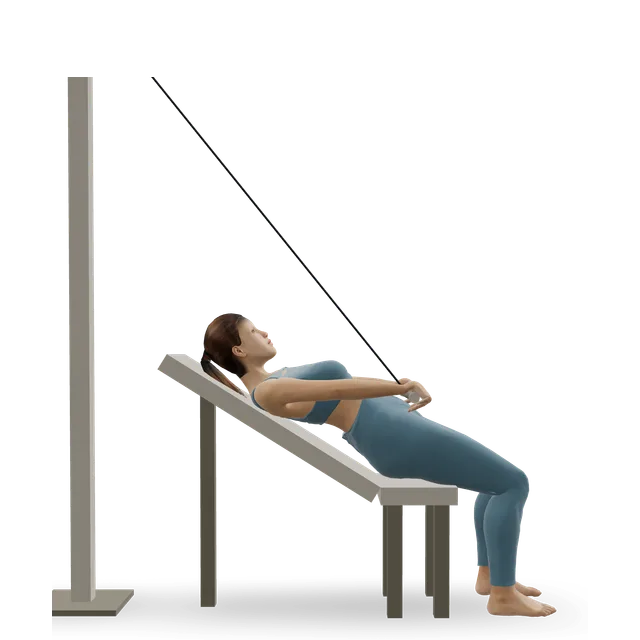
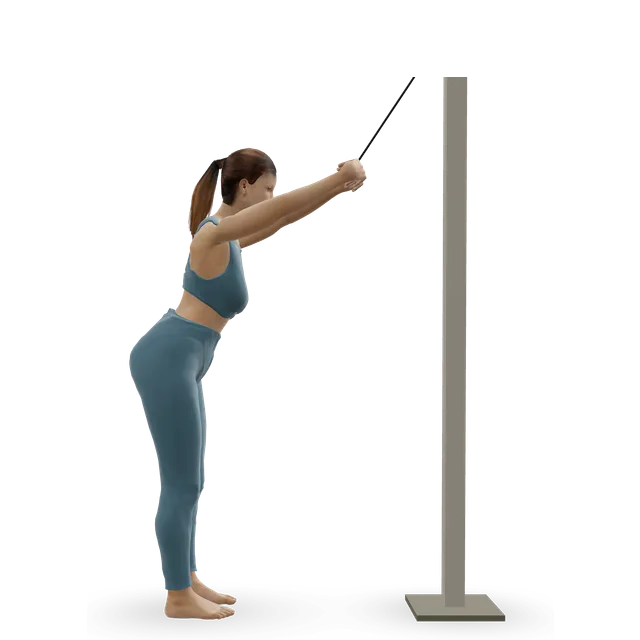
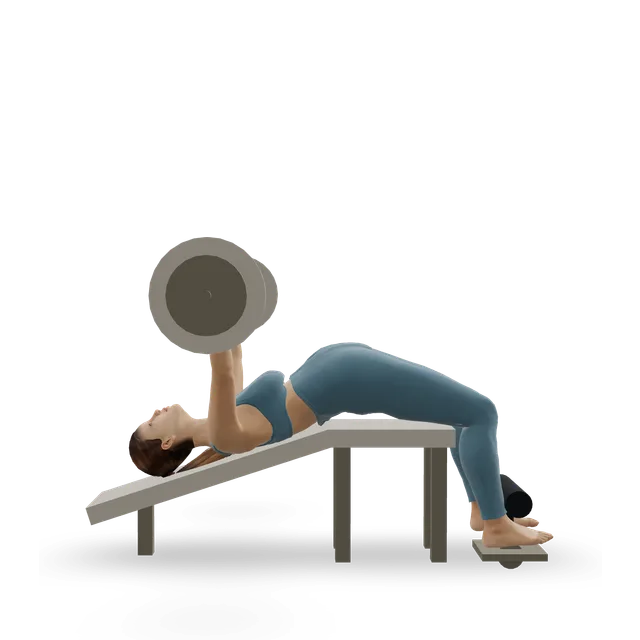
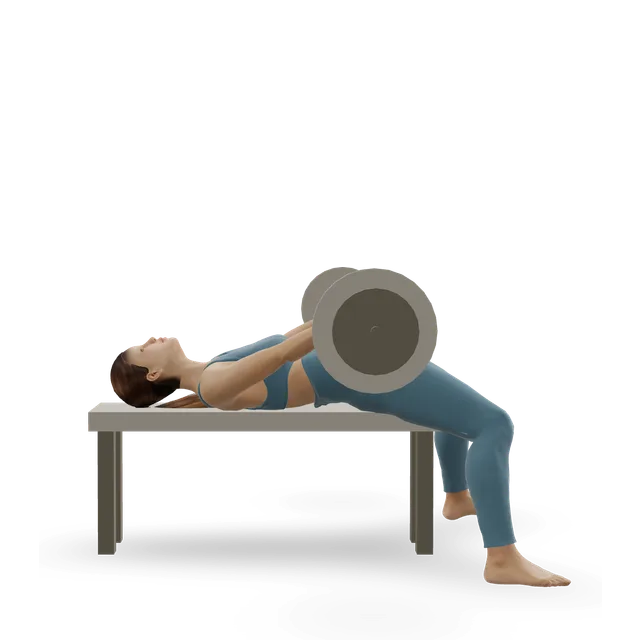
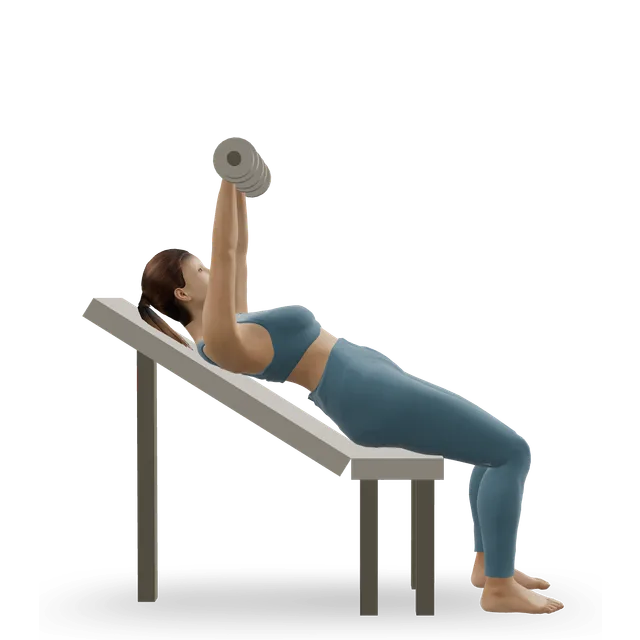
A barbell pullover is the version two of the three studies tested. The standing straight-arm pulldown and the incline cable pullover keep a cable's pull on the part of the arc where the lats work most. The decline barbell pullover puts your head below your hips: skip it with glaucoma, as our breathing guide advises against long head-down positions.
Wall angels, 8 slow slides (our shoulder mobility routine); the straight-arm pulldown, 2 to 3 sets of 10 to 15, stopping 2 or 3 reps short (our editorial starting point); then the dumbbell pullover along the bench, the cross-bench pullovers and the bent-arm barbell pullover, each 2 to 3 sets of 8 to 12, stopping 2 or 3 reps short (their move pages). Keep the arc short to begin with.
The incline cable pullover and the wide-grip decline barbell pullover, 2 to 3 sets of 8 to 12, and the lying barbell front raise to pullover, 2 to 3 sets of 10 to 15, stopping 2 or 3 reps short (their move pages); the rope straight-arm pulldown, 2 to 3 sets of 10 to 15 (our editorial starting point).
2 to 3 sets of 8 to 12, stopping with 2 or 3 RIR (reps in reserve: how many more reps you could have done), as our move page and our chest and back workout give it. Keep every set 2 or 3 reps short: the hardest point is at the end of your overhead reach.
How heavy
Lighter than you expect: a weight you can stop and reverse smoothly behind your head. People underestimate how many reps they have left by about 1, so stop when the arc starts to change.
Stop where your shoulders are comfortable and your ribs stay down.
Ribs lifting and your lower back arching
Use a lighter weight and a shorter arc, as our move page cues.
Bending your elbows more as you go
That turns it into a triceps extension: keep the same bend through each rep.
Too heavy
If you can't stop and reverse smoothly behind your head, the weight is too heavy for now.
Sitting up with the dumbbell overhead
Bring it to your chest first, then lower it to the floor, as our move page says.
Pullovers and your shoulders
A loaded overhead reach
The pullover takes your shoulder to the end of its overhead range with a weight in your hands. That's fine for many shoulders if you start light; it's the part of the lift to respect.
What the hospital handout saysEmerging evidence
A shoulder-safe weight training handout from a hospital physiotherapy department advises against any exercise with a bar or dumbbell behind the head and neck, saying you should always be able to see your hands when looking straight ahead. It's caution, not a study.
Skip it if reaching overhead pinches, as our chest and back workout says, or keep the arc short enough to see the dumbbell, within a pain of about 5 out of 10 that settles by your next session. After a dislocation, wait until your physiotherapist clears loaded overhead work. The NHS says not to make up your own strenuous exercises or use heavy gym equipment while your shoulder hurts.
Tears of the chest tendon are uncommon and are most likely when the muscle lengthens under a heavy load, mostly in men aged 30 to 60, typically during heavy lifting. After a repair, an NHS physiotherapy leaflet brings back presses and flys from about 3 months without letting your elbows drop below shoulder level, and advises against heavy weights with low reps; ask your surgeon or physiotherapist before stretched-position moves like pullovers.
A flat bench keeps your head level, but skip the decline version: our breathing guide advises against long head-down positions with glaucoma.
High blood pressure
Breathe out as you pull and keep the weights moderate, as our breathing guide says. High blood pressure means readings of 140/90 or higher; with controlled blood pressure, the American Heart Association considers low- to moderate-intensity strength training with proper breathing safe.
Dumbbell bench presses and incline dumbbell presses, 3 sets of 8 to 12 (our push day workouts); lat pulldowns, 3 sets of 8 to 12 (pull day B); scapular push-ups, 10 reps (our push day warm-up); the doorway chest opener, 30 seconds (our chest and back workout).
Our chest and back workout uses the pullover as an optional finisher, 2 to 3 sets of 8 to 12. You can add it after the presses in our chest and triceps workout or push day B at the same dose (our suggestion).
If you get chest pain or pressure, feel faint or dizzy, are unusually breathless, or your heart races or beats irregularly during exercise, as our plans advise. The American Heart Association says these need immediate medical evaluation.
For chest pain that feels tight, heavy or squeezing, or spreads to your arms, neck, jaw or back; arm pain that comes on suddenly with pressure, heaviness or squeezing across your chest; a headache that starts suddenly and is extremely painful, especially while lifting or straining; someone who faints while exercising; palpitations that don't go away, or come with chest pain, breathlessness or feeling faint; severe difficulty breathing; or angina pain that doesn't stop after rest and your medicine. Don't drive yourself to A&E.
If you haven't exercised for some time or have a medical condition, speak to your GP first, as the NHS advises. Get advice before heavy lifting if your blood pressure is uncontrolled, or you have heart disease or chest pain when you're active, a pacemaker or defibrillator, diabetic eye disease, glaucoma, a hernia, recent eye or tummy surgery, or you're pregnant, as our breathing guide lists.
The same day: NHS 111 or an urgent treatment centre
A pop or tearing at the front of the armpit or chest during a lift, followed by bruising into the chest or upper arm, a change in the shape of the chest or armpit (a thinner or lost armpit fold, or a chest or nipple that looks uneven), or weakness pushing, can be a torn pec tendon. Stop, and get it checked the same day; don't wait for it to settle. In the US, go to urgent care.
Ask for an urgent GP appointment or get help from NHS 111
If you have sudden or very bad shoulder pain, you can't move your arm, your shoulder has changed shape or is badly swollen, you have pins and needles that don't go away, no feeling in your arm, or pain after an injury or fall. These can be signs of a dislocated or broken bone, or a torn tendon. Don't try to put a shoulder back yourself.
No study has shown that pullovers, or any exercise, widen an adult's ribcage, and we found none testing it. Treat the pullover as a chest and shoulder exercise.
"The pullover is a back exercise"Mixed evidence
It worked the chest more than the lats in the muscle-activity studies, and a straight-arm pulldown worked the lats harder. It's a chest exercise that also works your lats.
No study has counted pullover injuries. A hospital handout advises against weights behind the head for shoulder safety, so start light, keep the range you can control, and skip it if it pinches.
Both, but more chest as far as the studies show: the chest worked harder than the lats, and a straight-arm pulldown worked the lats harder than a pullover. The evidence is three small muscle-activity studies, so count it as a chest exercise that also works your lats.
How do I make pullovers work my lats more?
Use a cable. The straight-arm pulldown or the incline cable pullover keeps tension on the part of the arc, from overhead down to your hips, where the lats work hardest. A lying dumbbell is heaviest behind your head, where the chest works most.
Do pullovers expand your ribcage?
No study has shown it, and we found none testing it. Treat the pullover as a chest and shoulder exercise.
How far back should I take a pullover?
Only as far as your shoulders allow without pinching, your ribs lifting or your lower back arching. With a sore shoulder, keep the dumbbell where you can still see it.
Straight arms or bent arms for pullovers?
Bending your elbows shortens the lever, so the same dumbbell feels lighter; straight arms make it harder. A slight, fixed bend is a good start, and the important thing is keeping the same bend through each rep.
Should I do pullovers along the bench or across it?
Along the bench, with your head supported, is the easier start. Across the bench, with only your upper back on it and your hips low, needs more control. Both work the same muscles.
Can I do dumbbell pullovers on the floor?
Yes. The floor stops the dumbbell behind your head, which keeps the range short for stiff or sore shoulders. Follow the same steps lying on the floor.
How many sets and reps of pullovers should I do?
2 to 3 sets of 8 to 12, stopping 2 or 3 reps short of failure, with 60 to 90 seconds' rest. Go lighter than you expect, because the hardest point is at the end of your overhead reach.
Are pullovers bad for your shoulders?
No study has counted pullover injuries. The pullover loads your shoulder at the end of its reach, so skip it if reaching overhead pinches, start light, and keep a short arc after an injury. A pop or tearing in your chest or armpit needs checking the same day.
Is the dumbbell pullover a push or a pull?
Neither label fits neatly. Pulling the dumbbell back over your chest is the same shoulder movement as a pulldown, but the chest does more of the work, so put it after your presses or rows as a finisher.
Do pullovers work the serratus anterior?
None of the studies we read measured it. Coaching texts often say so, but the evidence that exists is for the chest, lats, triceps and the back of the shoulder.
Exercise education, not a personal prescription, and clinical review of these guides is pending. Check with a GP before starting hard training if you have a heart condition, chest pain, dizziness or breathlessness when active, and stop for sharp or increasing pain. Health disclaimer.