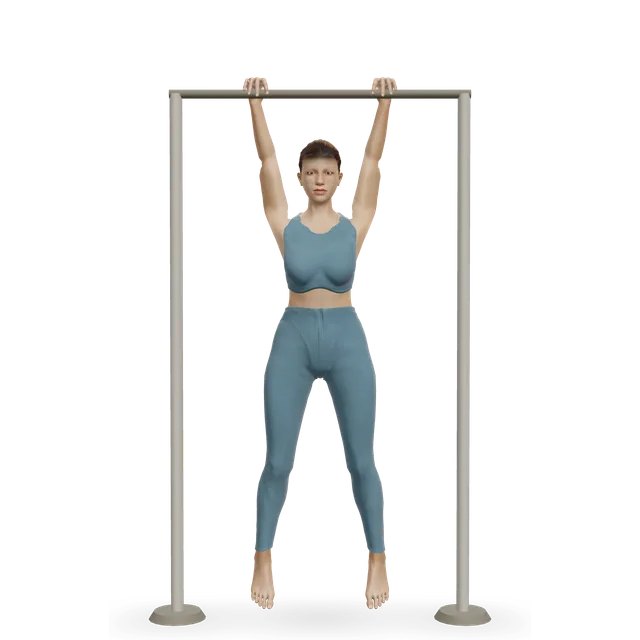
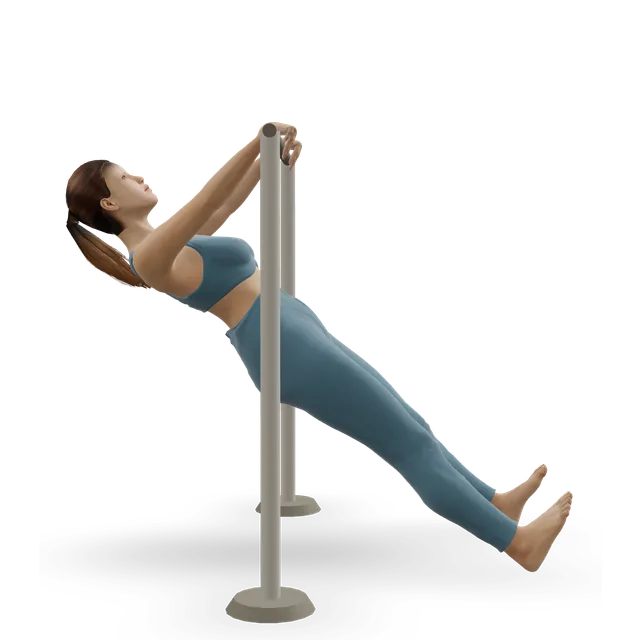
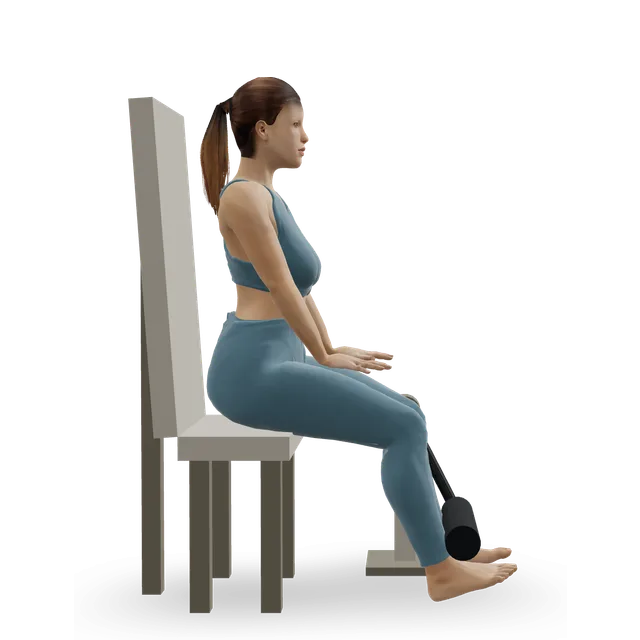
Training guide

How to do a lat pulldown: grip, form, behind the neck and the path to a pull-up

A lat pulldown is the pull-up's movement on a machine. With your thighs held under the pads, you pull a bar from overhead to your upper chest, then let it rise until your arms are straight. The weight stack sets the load, so you can start lighter than your body weight and add a little at a time.

The research is mostly short lab studies of muscle activity, and they agree on two useful things: grip width matters far less than gym lore says, and pulling behind your neck adds nothing. Two 8-week trials found that pulldowns alone more than doubled pull-up reps, but only in young men who could already do one or two; no study has tested people starting from zero, or women.

This guide covers the set-up, grip, how far to lean, where the bar goes, behind-the-neck pulling, what it works, the path to a pull-up, sets and reps, and the warning signs to act on, with a 3D demo of every step.

The short version

Set the machine first

Fix the thigh pad so it presses firmly on the tops of your thighs, and set the seat so you can reach the bar with straight arms, as the American Council on Exercise (ACE) advises. The pad stops you lifting off the seat as the weight gets heavier.

Source 1

Grip: overhand, a little wider than your shoulders

Width matters less than people think. Grips from 1 to 2 times shoulder width gave similar muscle activity in 15 men, with a little more weight lifted at the narrower widths (about 80 kg against 77.3 kg for 6 reps), and in 40 trained men seven different grips all worked the lats about the same. Choose the grip that feels best.

Sources 2, 3

Pull to your upper chest, with a small lean

Lean back no more than about 30 degrees, draw your shoulders down first, then drive your elbows down to your sides. Stop when the bar nears your chest or your elbows stop moving down and start moving back, and let the bar rise until your arms are straight.

Source 1

Pull in front, not behind your neck

Front pulldowns worked the lats as much as or more than behind-the-neck pulldowns while pulling, in three small studies. Weight trainers who did behind-the-neck pulldowns and presses more often had signs of a loose, unstable shoulder. No study has counted injuries, but there's nothing to gain.

Sources 4, 5, 6, 7

A step towards a pull-up, not the whole route

In two 8-week trials by one research group, young men who could already do 2 or 3 pull-ups reached about 6 with pulldowns alone. No study has tested people who can't yet do one, or women, and in women swimmers pulldown strength predicted pull-ups only loosely. Practise on the bar too.

Sources 8, 9, 10

Machines build strength as well as free weights

Across 13 studies of 1,016 adults, machine and free-weight training raised strength equally when compared head to head, and people got strongest on the kit they trained with. A 2026 overview by the American College of Sports Medicine (ACSM) found the type of equipment didn't consistently change results.

Sources 11, 12

What the lat pulldown is, and what it works

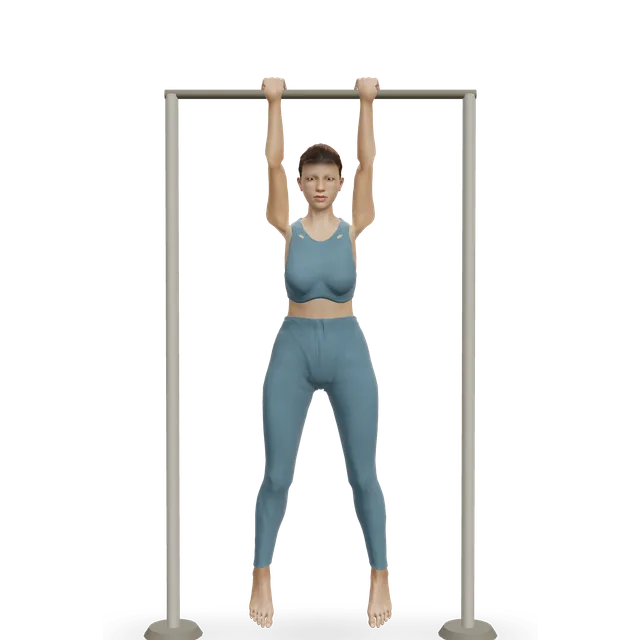
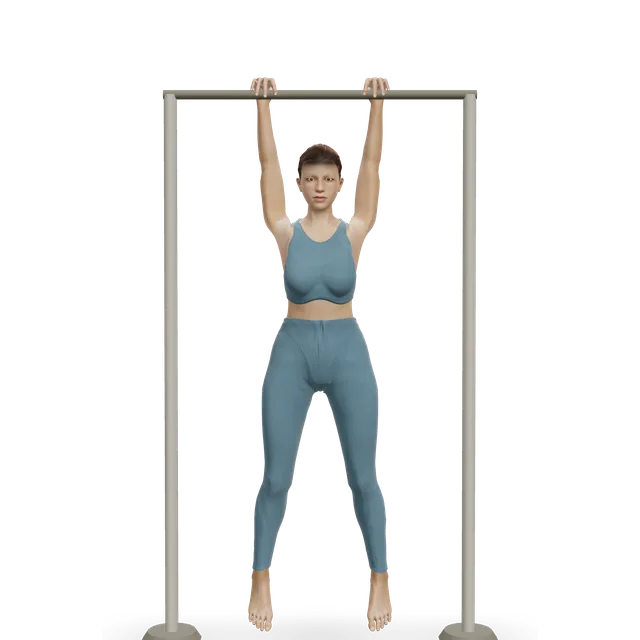
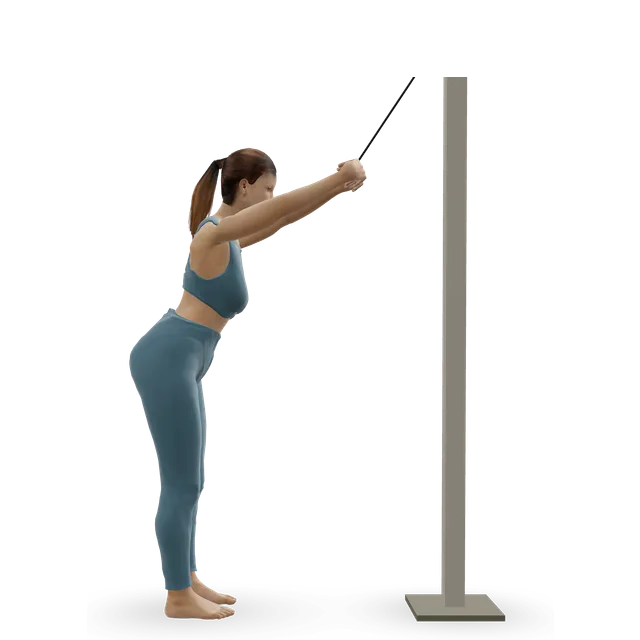
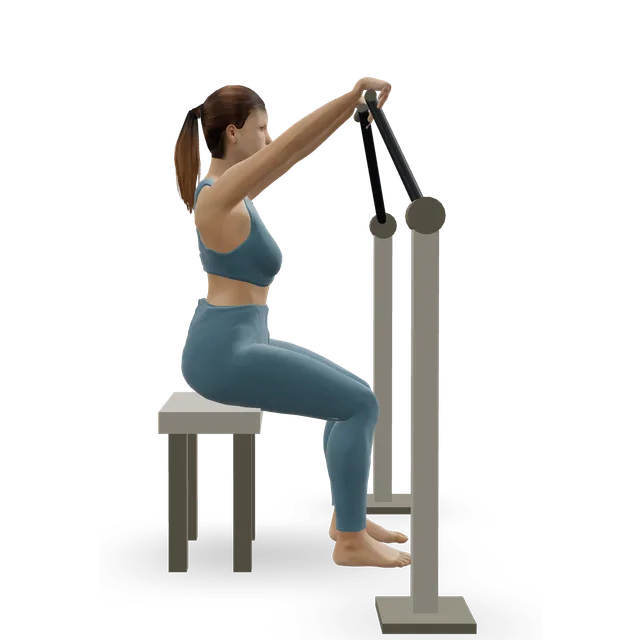
The pull-up's movement, with the load on a stack

You sit with your thighs fixed and pull a bar down from overhead, so the machine, not your body weight, sets the load. ACE rates it a beginner exercise, and the National Academy of Sports Medicine (NASM) calls it a foundational step for people working towards their first pull-up.

Sources 1, 13

What it works

The latissimus dorsi (the lats), the broad muscles down the sides of your back, do most of the work, pulling your upper arms down to your sides. The teres major, rear shoulders, rhomboids and trapezius control your shoulder blades, and the biceps and other elbow muscles bend your arms. In 40 trained men, the lats stayed the main working muscle whatever the grip.

Sources 13, 3, 14

It works your arms too

In 29 untrained men, 10 weeks of pulldowns alone grew the elbow-bending muscles by 6.1%, about as much as curls alone (5.8%), with similar strength gains. It's a fair arm exercise as well as a back exercise.

Source 15

How it differs from a pull-up

In a pull-up you lift your whole body from a hang; in a pulldown your body stays put and the bar moves. Chin-ups worked the biceps and lower-back muscles harder than pulldowns in one comparison. In college students, the heaviest single pull-up (with help or added weight) averaged 1.16 times body weight in men and 0.73 in women, against 0.93 and 0.55 for their heaviest pulldown.

Sources 16, 17

What the evidence says

Grip width changes littleEmerging evidence

In 15 men, grips 1, 1.5 and 2 times shoulder width gave similar activity in the lats, trapezius and infraspinatus, and the widest grip lifted a little less (77.3 kg against about 80 kg for 6 reps). In 40 men with at least 5 years of training, seven pulldown variants made no difference to lat activity. A 2026 review of 23 studies calls the width findings inconsistent.

Sources 2, 3, 14

Palms forward or palms up: unsettledMixed evidence

In 12 men, palms facing forward drew more lat activity than palms facing you, whatever the width, and in 10 men a wide grip to the front drew the most of four grips. The larger study of 40 trained men found no difference across grips, including palms up and palms facing each other.

Sources 18, 5, 3

Pulling in front works the lats as well or betterEmerging evidence

In 24 trained men, lat activity didn't differ between front and behind-the-neck pulldowns; the chest muscle worked more in front, the rear shoulder and biceps more behind, and the authors advised avoiding the behind-the-neck version. In 10 men, the front pulldown drew more lat activity. In 14 trained men, it drew more lat activity while pulling down, and the behind-the-neck version more while letting the bar up.

Sources 4, 5, 6

Behind-the-neck pulling and loose shouldersEmerging evidence

Of 123 male weight trainers and 36 men who didn't lift, the lifters more often had signs of a loose, unstable shoulder, and those signs went with behind-the-neck pulldowns and presses. Lifters who strengthened the muscles that turn the arm out had them less often. A snapshot like this can't show cause, and no study has counted injuries.

Source 7

Pulldowns raised pull-ups in men who could already do oneEmerging evidence

Two 8-week randomised trials by one research group trained recreationally active young men on the pulldown three times a week: 4 sets of 12, starting at 65% of their maximum and rising to 80%. Pull-ups rose from about 2.2 to 5.8 in one trial and from 2.6 to 6.3 in the other, and their strength in a held, all-out pull by about a quarter, with no change in upper-arm size. Everyone could already do at least one pull-up, and no women took part.

Sources 8, 9

Pulldown strength is a loose guide to pull-upsEmerging evidence

In 35 college men, the heaviest pulldown and heaviest pull-up were closely linked (a correlation of 0.78, where 1 is a perfect link and 0 none), but not in 23 women (0.44, not significant). In 28 elite women swimmers the link was moderate (0.34), and pull-up reps didn't track pulldown reps; the authors advise against swapping one for the other.

Sources 17, 10

A cue helps beginners, a littleEmerging evidence

In 8 women new to strength training, instruction to focus on the lats raised lat activity during light pulldowns, though biceps activity didn't fall. It's a sensible cue, not a must.

Source 19

Machines and free weights build strength equallyStrong evidence

A meta-analysis of 13 studies (1,016 adults) found no difference in strength when machine and free-weight training were compared head to head, and similar muscle growth in the 5 studies that measured it; people improved most on the kit they trained with. Trials in 46 young adults and 38 trained men found the same, and the ACSM's overview of 137 reviews found equipment type didn't consistently change results.

Sources 11, 20, 21, 12

The shoulder is a common site of lifting injuriesEmerging evidence

In a review, up to 36% of documented weight-training injuries and disorders were at the shoulder, mostly from surveys and reports looking back in time.

Source 22

What the evidence can't tell you

Most pulldown studies measured muscle activity in a few reps, which doesn't show what an exercise builds over months. No trial has compared grips for strength or muscle, no study has counted pulldown injuries, and no study has timed a first pull-up from zero.

Source 14

How to do a lat pulldown, step by step

From ACE's seated lat pulldown, NASM's coaching points and our move page. Wrapping your thumbs round the bar is our addition.

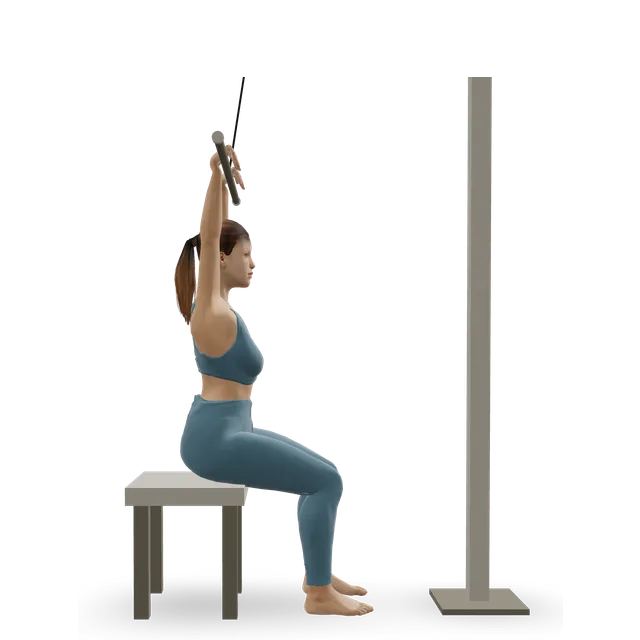
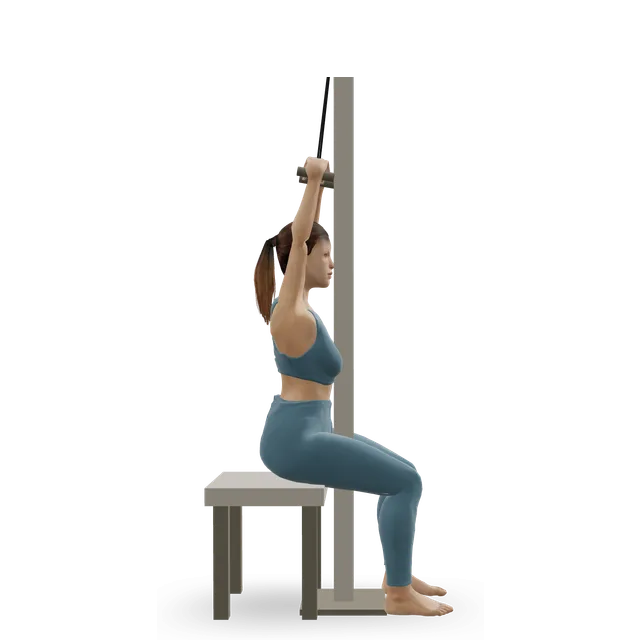
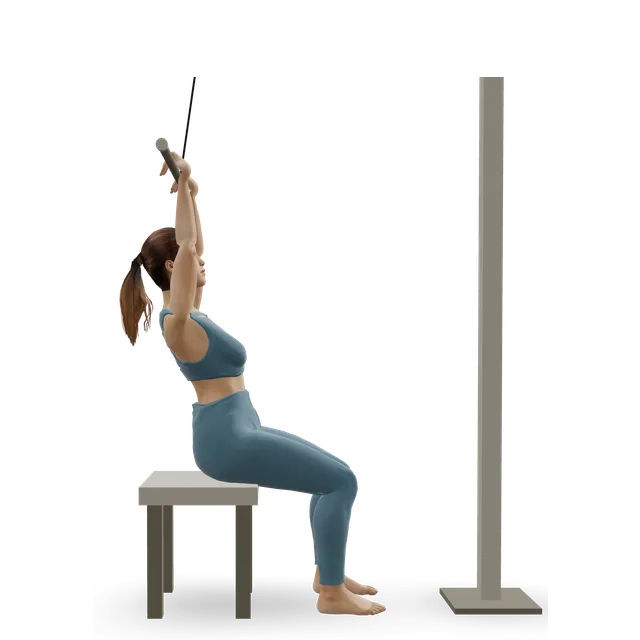
  1. Set the thigh pad so it presses firmly on the tops of your thighs, and the seat so you can reach the bar with your arms straight.
  2. Take the bar overhand, a little wider than your shoulders, with your thumbs round it, and sit down with your thighs under the pad.
  3. Sit tall, brace your stomach and lean back slightly, no more than about 30 degrees.
  4. Breathing out, draw your shoulders down away from your ears, then drive your elbows down towards your sides to bring the bar to your upper chest.
  5. Stop when the bar nears your chest, or when your elbows stop moving down and start moving back. Keep your trunk still.
  6. Let the bar rise slowly until your arms are straight and your shoulder blades lift a little, without letting the stack slam.
  7. After your last rep, stand up with the bar and let it back up under control, rather than letting it snatch out of your hands.

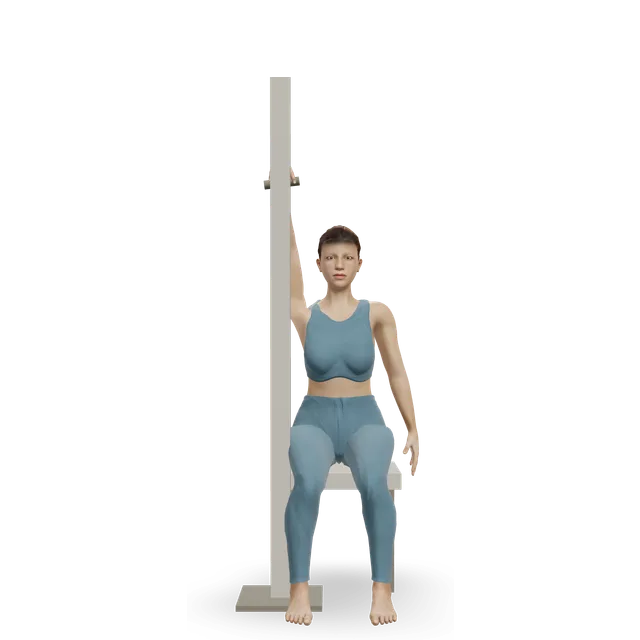
Loading the 3D figure…

Gets into position, then repeats the movement. Technical checks passed; qualified exercise review is pending.

The movement on the figure: Lat pulldown

Grip width and type

Width: a little wider than your shoulders

Any width from about shoulder width to twice that works the lats much the same, and a narrower grip lets you lift a little more. Start a little wider than your shoulders and move in if your shoulders complain (our suggestion).

Sources 2, 3

Overhand, underhand or palms facing

NASM describes the underhand grip as bringing in more biceps and letting you lift more. In pulldowns, though, two muscle activity studies found the same biceps activity whatever the grip, and in the largest the lats stayed the main working muscle with every grip. Underhand is the chin-up grip, so it suits chin-up practice.

Sources 13, 18, 23, 3

Sore shoulders or elbows

A hospital sports-medicine handout advises pulling to the chest in front of your head with a medium grip, and calls the palm-up grip the safest; NASM calls the neutral (palms-facing) grip often the most shoulder-friendly. Neither claim has been tested in a trial. Our elbow pain from pull-ups guide uses the V-bar, with the palms facing.

Sources 24, 13

Thumbs round the bar

Some gym guides suggest a thumbless grip to take the biceps out of the pull. No study has tested it, and wrapping your thumbs is the safer default (our editorial view).

How far to lean, and where the bar goes

A small lean

ACE says lean back no more than about 30 degrees. In 40 trained men, a 30-degree lean raised rear-shoulder activity without changing lat activity. Leaning further turns the pulldown into a row.

Sources 1, 3

To your upper chest

Pull towards the top or middle of your chest. ACE says stop when the bar nears or touches your chest, or when your elbows stop moving down and start moving back, because pulling further adds stress to the shoulder joint.

Sources 1, 13

All the way up

Let the bar rise until your arms are straight. Across 16 studies of many exercises, training through a full range built more strength than partial reps.

Source 25

Elbows, not hands

NASM's cue is to drive your elbows down and back rather than pull with your hands. Draw your shoulders down first, then pull; thinking about your lats helped beginners use them more.

Sources 13, 19

Behind-the-neck pulldowns

No extra benefit for the lats

In three small studies, front pulldowns worked the lats as much as or more than behind-the-neck pulldowns while pulling the bar down.

Sources 4, 5, 6

A link with loose shoulders

Weight trainers who did behind-the-neck pulldowns and presses more often had signs of an unstable shoulder at the front. It's a snapshot, not proof of harm, and no study has counted injuries.

Source 7

What clinicians and coaches advise

A hospital sports-medicine handout says always avoid wide-grip pulldowns behind the neck. NASM says the variation is generally best avoided, because it puts the shoulders and neck in less favourable positions without a meaningful advantage.

Sources 24, 13

Our advice

Pull in front. Leave the behind-the-neck version out altogether if you have neck or shoulder pain, a shoulder that has dislocated or feels loose, or stiff shoulders that make the position hard to reach (our editorial view, in line with its move page).

The path to a pull-up

What the trials did

Recreationally active young men trained only on the pulldown, three times a week for 8 weeks: 4 sets of 12, each rep taking about 6 seconds, starting at 65% of their maximum and adding 5% every 2 weeks. Pull-ups rose from about 2 or 3 to about 6.

Sources 8, 9

What they can't tell you

Everyone in both trials, run by the same research group, was a young man who could already do at least one pull-up. No study has tested pulldowns in people starting from zero, or in women, and in women the link between pulldown strength and pull-ups was weaker.

Sources 8, 9, 17, 10

Your heaviest pulldown and your body weight

In one study of college students, people's heaviest pull-up, with help or added weight, was higher relative to body weight than their heaviest pulldown: 1.16 against 0.93 times body weight in men, and 0.73 against 0.55 in women. Our reading of those averages: you don't need to pull your full body weight on the machine before trying a pull-up. People vary, and machines differ.

Source 17

Pair it with bar work

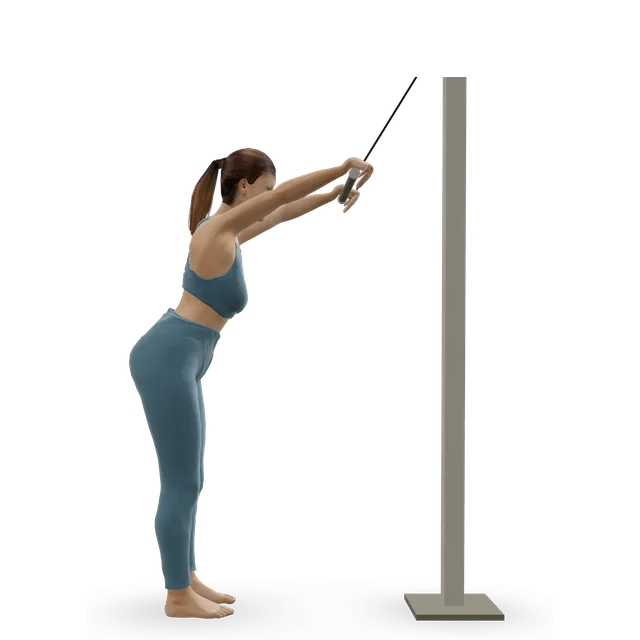
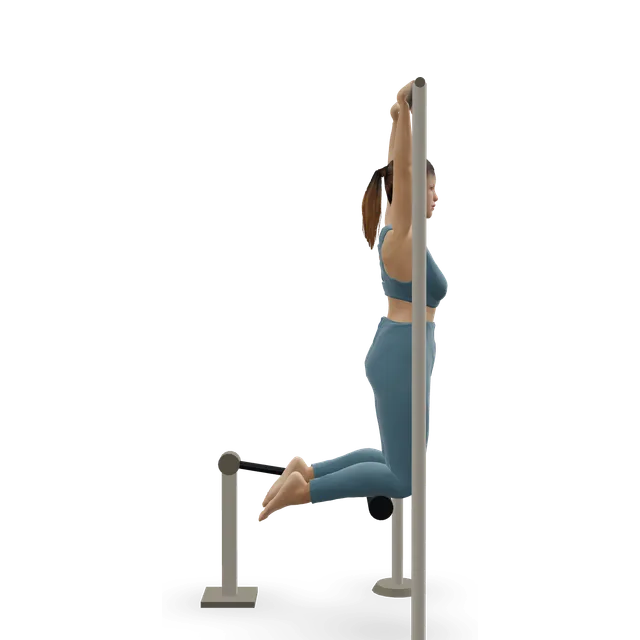
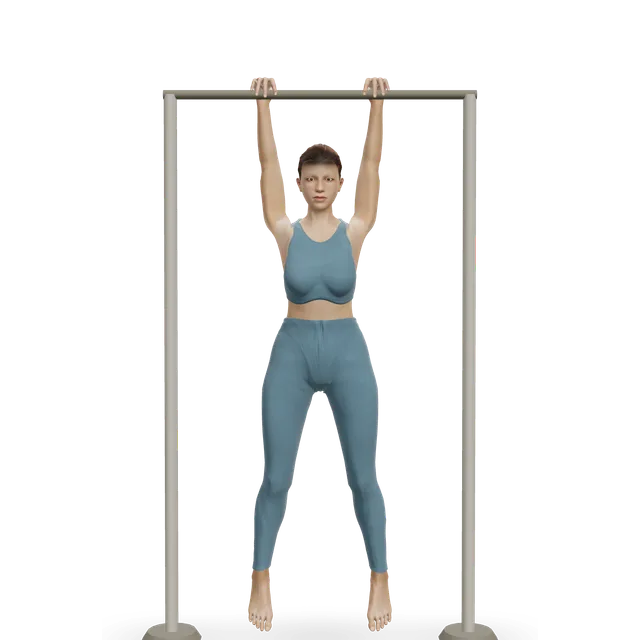
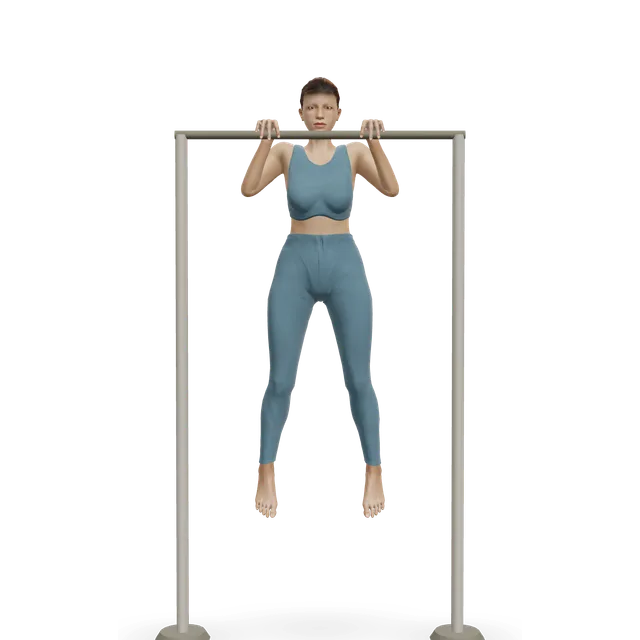
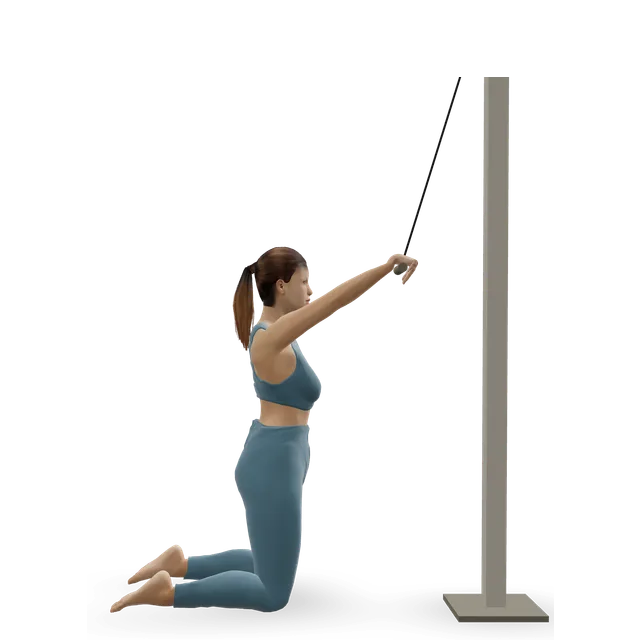
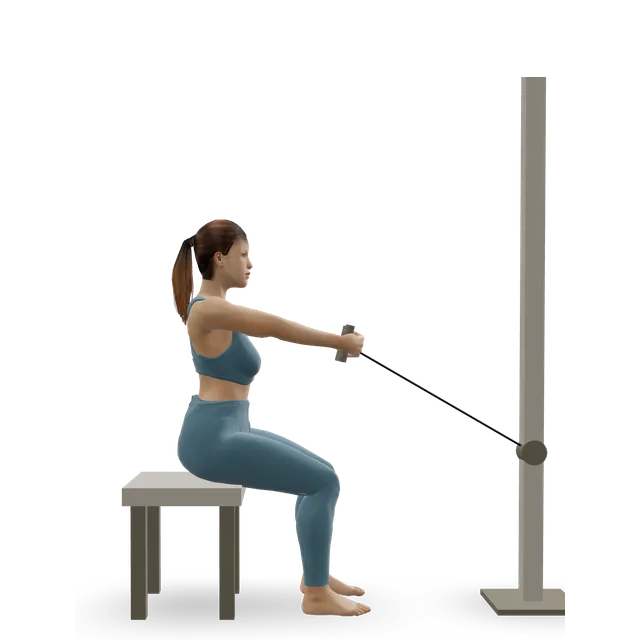
ACE's four moves towards a pull-up are assisted pull-ups, a biceps curl on suspension straps, straight-arm pulldowns and slow lowering chin-ups; NASM pairs the pulldown with assisted or lowering pull-ups. Our first pull-up workout trains several steps in each session, two or three times a week, and tests a chin-up every second week.

Sources 26, 13

Your ladder, with doses

Shoulder-blade pull-ups, 2 sets of 6 to 8, and slow negatives, 3 sets of 3 lowers of 3 to 5 seconds, as in our first pull-up workout. Straight-arm pulldowns and assisted pull-ups, 2 to 4 sets of 8 to 12, ACE's dose. Pulldowns, 3 sets of 8 to 12, stopping 2 or 3 reps short of failure (our plans). Then chin-ups and pull-ups, 3 sets of 3 to 8, as in our pull-up progression workout.

Source 26

How long it takes: our estimate

No study has timed a first pull-up from scratch. Our pull-up guide's estimate is a few weeks if you're close, and often 2 to 6 months from no pulling strength. In the trials, men who could already do 2 or 3 reached about 6 in 8 weeks.

Sources 8, 9

From the pulldown to the pull-up

Work up in order, training several steps in each session; the doses are in the ladder note above.

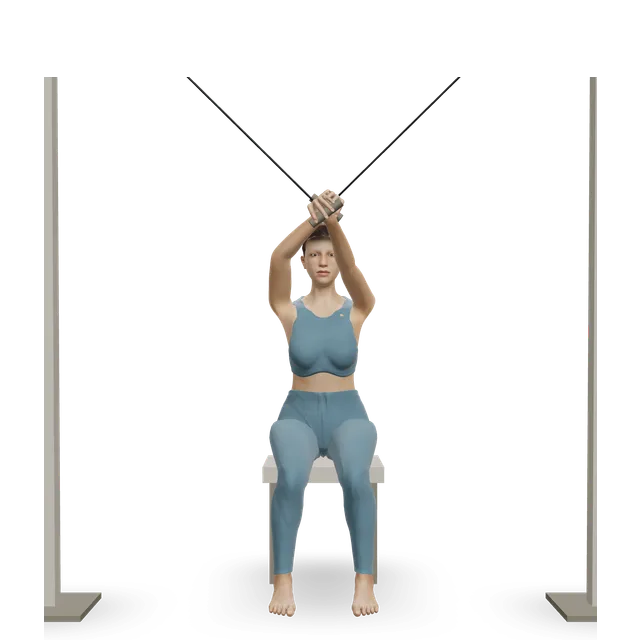
Grips and variations

Swap any of the two-arm versions in at the standard pulldown's 3 sets of 8 to 12 (our plans); do the one-arm versions for 2 to 3 sets of 8 to 12 each side (our editorial starting point).

Sets, reps and how often

Sets and reps

3 sets of 8 to 12, as in our full-body gym workout A. In your first two weeks, do 2 sets and stop each with 3 or 4 reps to spare, as our plans advise.

How hard

Stop 2 or 3 reps short of failure: 2 to 3 RIR (reps in reserve: how many more reps you could have done), our plans' rule for big lifts. Our upper body and pull day B workouts, for people further on, go to 1 or 2.

Rest

About 90 seconds between sets, as in our full-body gym workout A; our plans give 90 seconds to 2 minutes for big lifts in sets of 8 to 12.

How often

Train your back about twice a week, our plans' default. In the ACSM's overview, strength rose most with at least two sessions a week; the pull-up trials used three.

Sources 12, 8, 9

Adding weight

When every set reaches 12 reps, move to the next pin or the smallest add-on weight and go back to 8 (our plans' double progression).

Measuring progress

Log the pin and reps for every set, with the same seat, thigh pad and grip each time: machines differ, so your numbers only compare with themselves (our editorial advice). On the way to a pull-up, test a chin-up every second week.

What to expect

The movement feels smoother within a couple of weeks and the weights climb quickly at first (our estimate). In the trials, strength in a held, all-out pull rose about a quarter in 8 weeks, and in untrained men 10 weeks of pulldowns grew the arm muscles about 6%. Gains slow with experience, as our progressive overload guide explains.

Sources 8, 9, 15

Common mistakes and how to fix them

Swinging and leaning far back

It turns the pulldown into a heave. Keep the lean small and fixed; if you have to swing to move the weight, it's too heavy.

Sources 1, 13

Pulling behind your neck

No benefit for the lats, and some risk for your shoulders. Pull to your upper chest.

Sources 24, 13

Pulling the bar too far

Once your elbows stop going down and start going back, pulling further adds stress to the shoulder. Stop at your upper chest.

Source 1

Shrugging, or poking your chin forward

NASM lists shrugged shoulders and a forward head among the common faults. Draw your shoulders down first and keep your head in line with your body.

Source 13

Pulling with your arms

Think of your elbows going down to your sides. A cue to think about the lats raised lat activity in beginners.

Sources 13, 19

Stopping short at the top

A full range builds more strength. Let your arms straighten on every rep.

Source 25

A loose thigh pad

Your hips lift as the weight gets heavier. Set the pad firmly on your thighs, as our move page advises.

Letting the bar fly up after the last rep

Stand up with the bar and let it back under control rather than letting it snatch out of your hands, as our move page advises.

Who should change the lat pulldown

Shoulder pain

Pull in front with a medium or palms-facing grip, stop at your upper chest and lighten the load. Keep pain to about 5 out of 10 or less, settling by your next session, the rule our shoulder guides use; our shoulder impingement plan uses pulldowns to the front, 3 sets of 10.

Source 24

A shoulder that has dislocated or feels loose

Leave out behind-the-neck pulling, and follow our shoulder dislocation guide before you pull overhead.

Source 7

Elbow pain

Use the V-bar with your palms facing and a lighter load, and keep pain mild: about 3 to 4 out of 10, settling within an hour and no worse the next morning, as our elbow guides advise. With pain at the front of the elbow, leave the underhand grip for now, and stop anything that brings on tingling in your ring and little fingers.

After heart or breast surgery, or a transplant

After heart surgery through the breastbone, a heart or lung transplant, or breast cancer surgery or reconstruction, follow your surgical team's advice before you pull with your arms, as our group cautions say.

High blood pressure

The American Heart Association says people with controlled high blood pressure can safely do low- to moderate-intensity strength training with proper breathing. Breathe out as you pull, and use weights you could lift 10 to 15 times, as our blood pressure guide advises.

Source 27

Pregnancy

The NHS says you can carry on strength training at the gym if you already do it, and stop if you feel uncomfortable, too hot or unwell. The pulldown is done sitting upright.

Source 28

Older adults

Our gym workout for seniors includes the pulldown, pulled to the front of the head. We found no pulldown study in older adults.

Workouts to follow

Full-body gym workout A is the best place to start. The first pull-up workout and the pull-up progression take you from the machine to the bar.

Plans that use it

The pulldown comes round once or twice a week in each of these plans.

Warning signs

Call 999 (911 in the US)

For chest pain that feels tight or like squeezing, or spreads to your arms, neck or jaw; severe difficulty breathing; or arm pain that comes on suddenly with pressure, heaviness or squeezing across your chest.

Sources 29, 30

Go to an urgent treatment centre or A&E

For severe pain in your arm that makes it difficult to move; an arm injury where you heard a snapping noise or your arm has changed shape; or an arm that tingles or feels numb.

Source 30

Ask for an urgent GP appointment or get help from NHS 111

For sudden or very bad shoulder pain; not being able to move your arm; a shoulder or arm that has changed shape or is badly swollen; pins and needles that don't go away; no feeling in your arm or shoulder; an arm or shoulder that's hot or cold to touch; pain that started after an injury or fall; severe pain in both shoulders; or feeling feverish or unwell. Also if your arm hurts when you exercise but the pain goes away when you rest. In the US, contact your doctor or urgent care.

Sources 31, 30

See a GP

If shoulder pain is getting worse or hasn't improved after 2 weeks, or it's very difficult to move your arm; if elbow or arm pain hasn't gone after a few weeks; or with tennis elbow, if it isn't better after at least 2 weeks of rest and self-care.

Sources 31, 30, 32

A pop at the front of the elbow

A pop or snap with sudden pain during a heavy pull, especially with bruising and a bulge in the upper arm, could be a torn biceps tendon. Get help from NHS 111 the same day and don't wait for it to settle: it's best repaired within the first 2 to 3 weeks, as our elbow guides explain.

Sore, or hurt?

Achy back and arm muscles for a day or two after a new session are normal. Sharp, pinching pain at the top or front of the shoulder, a shoulder that feels as if it might slip, elbow pain that builds through a set, or tingling into your ring and little fingers isn't: change the grip or stop, and see our shoulder and elbow guides.

Myths

"Behind-the-neck pulldowns are fine for everyone, and work the lats better"Emerging evidence

Front pulldowns worked the lats as much as or more than behind-the-neck ones while pulling, in three small studies; behind-the-neck pulling went with signs of loose shoulders in weight trainers, and a hospital sports-medicine handout says always avoid it. No study has counted injuries, but there's no reason to take the risk.

Sources 4, 5, 6, 7, 24

"A wide grip builds a wider back"Emerging evidence

Grips from 1 to 2 shoulder widths gave similar lat activity, and seven grips gave the same in 40 trained men. No training trial has compared grip widths for muscle growth.

Sources 2, 3

"Underhand pulldowns are a biceps exercise"Emerging evidence

Biceps activity didn't change with the grip in two pulldown studies, and the lats stayed the main working muscle whatever the grip.

Sources 18, 23, 3

"You need to pull your body weight on the machine before you can do a pull-up"Emerging evidence

In one study, people's best pull-up was higher relative to body weight than their best pulldown, in men and in women. Our reading of those averages: a pulldown below your body weight doesn't rule out a pull-up.

Source 17

"Lat pulldowns won't help you do a pull-up"Emerging evidence

In two trials, pulldowns alone took young men from about 2 or 3 pull-ups to about 6 in 8 weeks. The opposite claim, that pulldowns are enough on their own, goes too far: the trials only included men who could already do one, and in women swimmers the link was loose.

Sources 8, 9, 10

"Machines don't build real strength"Strong evidence

Head to head, machines and free weights raised strength equally across 13 studies, and the ACSM's overview found equipment type didn't consistently change results. You get strongest at what you train, so practise the lifts you care about.

Sources 11, 12

"Lean right back to work your lats harder"Emerging evidence

A 30-degree lean raised rear-shoulder activity, not lat activity, and ACE caps the lean at about 30 degrees.

Sources 3, 1

Questions people ask

How do you do a lat pulldown properly?

Set the thigh pad so it holds your thighs firmly, take the bar a little wider than your shoulders and lean back slightly, no more than about 30 degrees. Draw your shoulders down, drive your elbows to your sides to bring the bar to your upper chest, then let it rise slowly until your arms are straight.

What grip is best for lat pulldowns: wide or close?

Either. Grips from 1 to 2 shoulder widths worked the lats about the same, and the widest let people lift a little less; in 40 trained men, seven different grips all worked the lats alike. Use the one that feels best on your shoulders and elbows.

Overhand or underhand lat pulldowns?

Overhand is the standard. Underhand is the chin-up grip and suits chin-up practice; despite its reputation, it didn't change biceps activity in two studies, and the lats did most of the work whatever the grip. A palms-facing V-bar is the usual swap for sore elbows or shoulders.

Should you lean back on lat pulldowns?

A little. ACE suggests no more than about 30 degrees, and in one study a 30-degree lean worked the rear shoulders more without working the lats more. If you have to swing back to move the weight, it's too heavy.

Should the lat pulldown bar go to your chin or your chest?

To your upper chest. Stop when the bar nears your chest or your elbows stop moving down and start going back, because pulling further adds stress to the shoulder.

Are behind-the-neck lat pulldowns bad?

They don't work the lats any better: front pulldowns worked them as much or more while pulling. Weight trainers who did them more often had signs of an unstable shoulder, and a hospital sports-medicine handout says always avoid them. No study has counted injuries, but there's no reason to take the risk.

What muscles do lat pulldowns work?

Mainly the lats, the broad muscles down the sides of your back, helped by the teres major, rear shoulders, the muscles between your shoulder blades and your biceps. In one trial, 10 weeks of pulldowns grew the arm muscles about as much as curls did.

How many sets and reps of lat pulldowns should I do?

Start with 3 sets of 8 to 12, stopping 2 or 3 reps short of failure, with about 90 seconds' rest, and train your back about twice a week. When every set reaches 12 reps, add the next weight and go back to 8.

How much should I be able to lat pulldown?

Compare yourself with yourself: machines differ, so numbers don't transfer between gyms. In one study of college students, the heaviest single pulldown averaged about 93% of body weight in men and 55% in women, but that's one group, not a standard.

Lat pulldown or pull-up: which is better?

They train the same muscles. The pull-up is harder because you lift your whole body, and chin-ups worked the biceps and lower back more than pulldowns. Pulldowns let you start lighter and add weight in small steps, and machines build strength about as well as free weights.

Do lat pulldowns help you do a pull-up?

Yes, but practise on the bar too. In two 8-week trials, pulldowns alone took young men from about 2 or 3 pull-ups to about 6, but everyone could already do one, and no study has tested women or people starting from zero. Pair pulldowns with assisted pull-ups and slow negatives.

Why do lat pulldowns hurt my shoulder or elbow?

Often it's the grip, the range or the load. Pull in front of your head with a medium or palms-facing grip, stop at your upper chest and lighten the load, keeping shoulder pain to 5 out of 10 or less and elbow pain to about 3 to 4. See a GP if shoulder pain isn't better after 2 weeks, or elbow pain after a few weeks.


Sources

  1. ACE · Seated lat pulldown (exercise library, rated beginner, American Council on Exercise)
  2. Andersen 2014 · Grip width in the lat pulldown: strength and muscle activity in 15 men (study, JSCR)
  3. Buonsenso 2025 · Seven lat pulldown grips in 40 trained men (muscle activity study, J Funct Morphol Kinesiol)
  4. Sperandei 2009 · Front, behind-the-neck and V-bar pulldowns in 24 trained men (muscle activity study, JSCR)
  5. Signorile 2002 · Four hand positions in the lat pulldown in 10 men (muscle activity study, JSCR)
  6. Padovan 2024 · Front vs behind-the-neck lat pulldown in 14 trained men (high-density muscle activity study, J Hum Kinet)
  7. Kolber 2013 · Signs of shoulder instability and looseness in 123 weight trainers and 36 non-lifters (cross-sectional study, JSCR)
  8. Li 2025 · Eight weeks of lat pulldown training and pull-up reps in 34 active men (randomised trial, Eur J Sport Sci)
  9. Li 2025 · Eight weeks of lat pulldown training, with or without brain stimulation, in 25 active men (randomised trial, Life)
  10. Halet 2009 · Lat-pull strength and pull-ups in 28 elite college women swimmers (study, JSCR)
  11. Haugen 2023 · Free-weight vs machine training for strength, muscle and jumping: 13 studies, 1,016 adults (systematic review and meta-analysis, BMC Sports Sci Med Rehabil)
  12. Currier 2026 · Resistance training for muscle function, size and performance in healthy adults: 137 reviews (ACSM position stand, MSSE)
  13. Sutton 2026 · The biomechanics of the lat pulldown: muscles, grip and form (National Academy of Sports Medicine)
  14. Di Fonza 2026 · Lat muscle activity in common back exercises: 23 studies (narrative review, J Funct Morphol Kinesiol)
  15. Gentil 2015 · Lat pulldowns vs biceps curls for 10 weeks in 29 untrained men (randomised trial, Asian J Sports Med)
  16. Doma 2013 · Chin-ups vs lat pulldowns: movement and muscle activity (muscle activity study, Sports Biomech)
  17. Johnson 2009 · Lat-pull and pull-up strength in 35 men and 23 women (study, JSCR)
  18. Lusk 2010 · Grip width and forearm position in the lat pulldown in 12 men (muscle activity study, JSCR)
  19. Snyder 2009 · Expert instruction and lat activity in the pulldown in 8 untrained women (muscle activity study, JSCR)
  20. Schwanbeck 2020 · Free weights vs machines for 8 weeks in 46 young adults (randomised trial, JSCR)
  21. Hernández-Belmonte 2023 · Free-weight vs machine training for 8 weeks in 38 trained men (randomised trial, MSSE)
  22. Kolber 2010 · Shoulder injuries attributed to resistance training (review, JSCR)
  23. Lehman 2004 · Muscle activity in pulldowns and seated rows held by 12 men (muscle activity study, Dyn Med)
  24. Mass General Sports Medicine · Strength training for the shoulder (patient handout)
  25. Pallarés 2021 · Full vs partial range of movement in strength training: 16 studies (systematic review and meta-analysis, Scand J Med Sci Sports)
  26. Crockford 2015 · Four moves to help you master the pull-up (American Council on Exercise)
  27. Paluch 2024 · Resistance exercise training with and without cardiovascular disease: 2023 update (American Heart Association scientific statement, Circulation)
  28. NHS · Exercise in pregnancy
  29. NHS · Heart attack
  30. NHS · Elbow and arm pain
  31. NHS · Shoulder pain
  32. NHS · Tennis elbow

Exercise education, not a personal prescription, and clinical review of these guides is pending. Check with a GP before starting hard training if you have a heart condition, chest pain, dizziness or breathlessness when active, and stop for sharp or increasing pain. Health disclaimer.