How to do chest flys: dumbbell, cable and machine flys, your shoulders, what they work, and how many
A chest fly opens your arms wide in an arc, elbows softly bent, then hugs them back together in front of your chest. Lower only until your arms are about level with your chest, keep the same elbow bend all the way, and pick a weight you can control for 10 to 15 reps. Do 2 or 3 sets after your presses.
Flys work the big chest muscle with your elbows held still, so your triceps get a rest. Machine and cable flys came close to the bench press for chest activity in one study, and machine flys grew the chest in an 8-week trial, but they don't shape an inner chest.
This guide covers dumbbell, cable and machine flys step by step on the 3D figure, how heavy and how many, flys against the bench press, and how to look after your shoulders.
Open your arms wide in an arc with your elbows softly bent, then hug them back together in front of your chest. Do it with dumbbells on a bench, cables, a pec deck machine or a band. A hospital shoulder handout advises never flying with straight elbows and never lowering the dumbbells below chest level.
The pectoralis major, the big chest muscle, with the front of the shoulder helping and the biceps steadying the elbow. In 17 trained men, the bench press drew about 16% more chest activity than the dumbbell fly and much more triceps work; in 12 adults, chest activity was similar in both.
In a study funded by ACE (the American Council on Exercise) in 14 trained men, the pec deck drew 98% and a bent-forward cable crossover 93% of the bench press's chest activity, against 69% for incline dumbbell flys and 61% for push-ups.
In a trial in 81 active young adults, the 27 who did 8 weeks of machine flys thickened their chest 5 to 7% and gained 10% in strength. In 15 untrained men, one set of pec deck flys grew the chest as much as three sets over 12 weeks, the upper and lower chest equally: flys don't shape an inner chest.
Much lighter than you press: trained men's 6-rep maximum fly was 40.5 kg for both dumbbells together, against 88.5 kg on the bench press. Do 2 or 3 sets of 10 to 15, resting 60 to 90 seconds, with the last set 0 to 2 reps short of failure, as our workouts and plans suggest.
Lower to about chest level with your elbows bent: cautious advice from a hospital handout and an NHS trust leaflet, since no trial has tested how far to go. A sudden pop or ripping feeling in your chest or armpit, then bruising or an uneven chest, needs checking the same day.
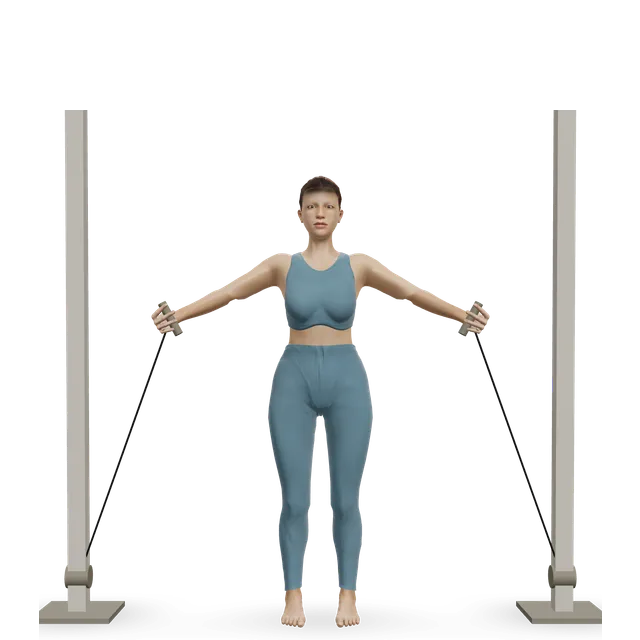
Lying on a bench, sitting at a machine or standing between cables or with a band, you open your arms wide in an arc with the elbows softly bent and fixed, then bring them together in front of your chest. Only the shoulder moves, which makes it an isolation exercise, and the bench press, which bends and straightens the elbow too, a compound one, as our compound vs isolation guide explains.
The chest muscle
The pectoralis major is a broad muscle with two parts, one from the collarbone and one from the breastbone, joined in one tendon on the upper arm bone. It brings your arm across your body, turns it in and lifts it forwards.
In 13 trained men, the front of the shoulder worked about as hard in the dumbbell fly (18.8% of a maximal effort) as in the bench press (21.4%), and less than in the shoulder press (33.3%); the side and back of the shoulder barely worked. Band flys shifted a little work from the chest to the front of the shoulder in 29 adults.
The dumbbell fly drew 57 to 86% more biceps activity than the bench press, to hold the elbow bent, and much less triceps work, because the elbow doesn't straighten.
At the bottom of a fly your arm is out to the side and turned out, the position ACE calls vulnerable on the pec deck. In a cadaver study, the lowest chest fibres stretched most in the last part of the arm moving back, and heavy load on those stretched fibres is the proposed way the tendon tears.
Most of these comparisons use EMG (electromyography: electrodes measuring how hard a muscle works), which shows effort in a few reps, not what a muscle builds. The growth trials below matter more.
Pec tears are more likely in men aged 30 to 60 and with anabolic steroid use, and about half of published cases happened in weight training. People with past shoulder problems may need a shorter range or a different exercise. Later in pregnancy, lying flat on your back for more than a few minutes isn't advised.
81 active young adults were split into three groups of 27 for 8 weeks. The fly group did 5 sets of 10 to 12 on a machine (90 seconds' rest, three days a week, adding weight when every set reached 12): chest thickness rose about 5 to 7% and strength about 10%. Fifteen minutes of chest stretching 4 days a week gave similar results, and the control group didn't change. One trial, read in full.
One set grew the chest as much as three, in beginnersEmerging evidence
15 untrained young men trained on the pec deck for 12 weeks in a within-person comparison of 1 set and 3 sets, each set to failure. The upper chest grew 17 and 18% and the lower chest 21 and 21%, with pec deck strength up 46 and 43%. No part of the chest grew more than another.
In 17 trained men at their 6-rep maximum, the bench press drew more chest (about 16% over the whole lift), front shoulder and triceps activity than the dumbbell fly, while the fly drew more biceps activity. In 12 adults at their 6-rep maximum, chest and front shoulder activity didn't differ between the bench press, dumbbell press and dumbbell fly. Small studies of muscle activity.
Machine and cable flys in an ACE-funded studyEmerging evidence
In 14 trained men lifting 80% of their maximum for 5 reps, the pec deck drew 98% and the bent-forward cable crossover 93% of the bench press's chest activity; the chest press machine 79%, incline dumbbell flys and dips 69%, and push-ups 61%. ACE funded the study and reported it in its own publications, not a peer-reviewed journal.
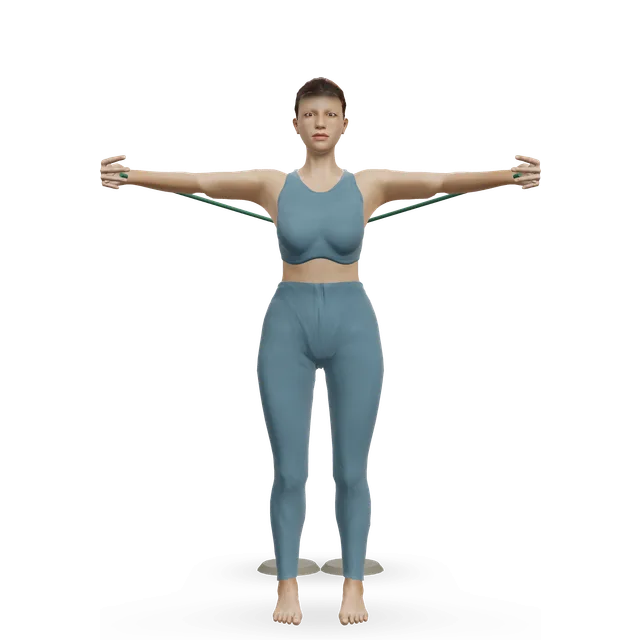
In 29 adults, band flys drew slightly less chest and more front shoulder activity than dumbbell flys at the same 10-rep effort, a workable alternative. Across 8 small studies, elastic bands built strength about as well as weights and machines.
Flys or presses, machines or free weightsStrong evidence
The American College of Sports Medicine's (ACSM) overview of 137 reviews found too little data to say whether single-joint exercises like the fly or multi-joint ones like the press build more muscle, or whether machines or free weights do. Across 13 studies, free weights and machines built similar strength and muscle.
In 26 trained men, adding 30-second loaded chest stretches between bench press sets for 8 weeks added no chest growth or strength. Training at long muscle lengths favoured growth in some muscles but not others, and the ACSM found too little data on range of motion for muscle growth. No trial has tested how far to lower in a fly.
In 365 published cases, 83% of pec tears happened while the muscle was working, not from a direct blow, and 48% during weight training. Heavy load on the stretched lowest fibres is the proposed mechanism, and one report describes a 33-year-old amateur, with no steroid use, who tore his chest muscle on a chest fly machine. Tears are rare, and these are case reports, so there are no rates for flys.
Muscle grew most with about 10 or more hard sets a week, each extra set adding a little with diminishing returns, and how many days you spread them over mattered little. Fly sets count fully for the chest; presses and push-ups count too.
Steps from our move page; the soft elbow bend follows the study protocol (about 150 to 160 degrees) and the hospital handout. Lowering to about chest level is cautious advice from that handout and an NHS trust leaflet; no trial has tested how far to go. Finishing on your thighs is our suggestion.
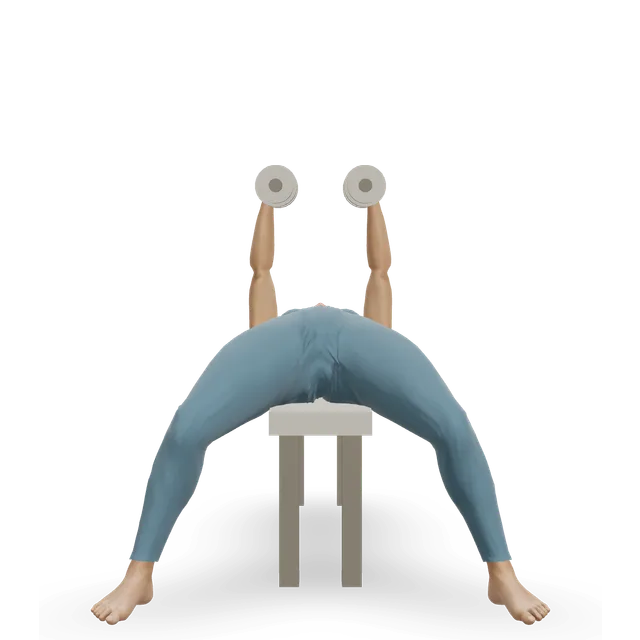
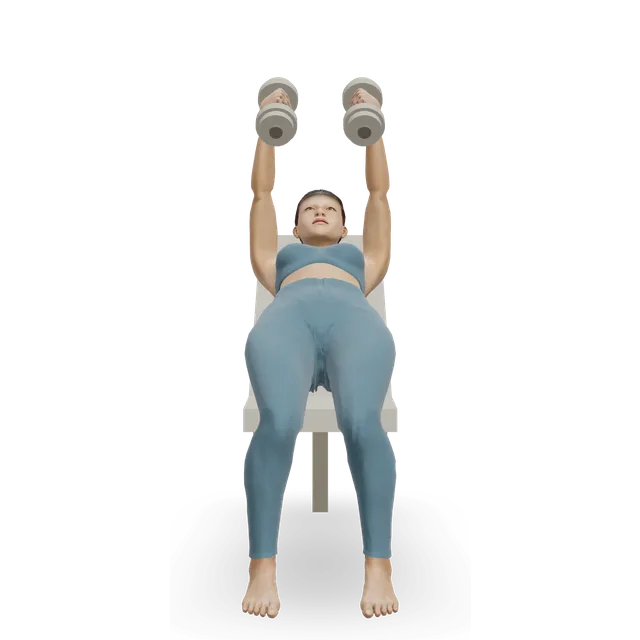
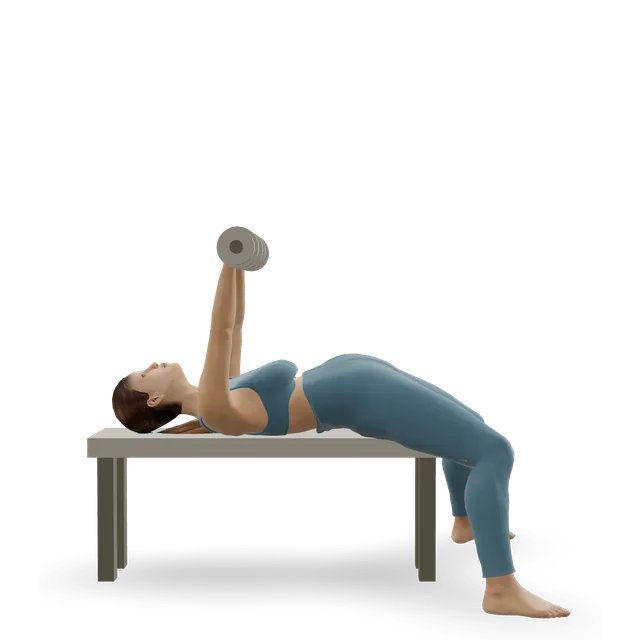
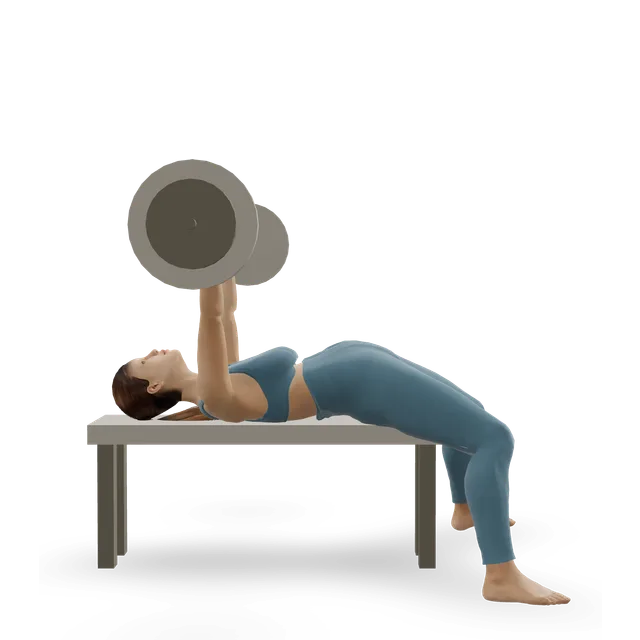
Lie on a flat bench with your feet flat on the floor, holding a dumbbell in each hand over your chest, palms facing each other.
Bend your elbows slightly and keep that bend fixed for the whole set: a soft bend, never straight.
Breathe in and open your arms wide in a slow arc until the dumbbells are about level with your chest.
Breathe out and bring them back up over your chest along the same arc, as if hugging a barrel.
Stop just before the dumbbells touch, and repeat.
To finish, bring the dumbbells to your chest and sit up with them resting on your thighs.
Loading the 3D figure…
Drag to turn
Gets into position, then repeats the movement. Technical checks passed; qualified exercise review is pending.
Steps from our move page; setting the arms a few clicks forward follows the hospital shoulder handout, which also says never to let the weight stretch your arms so far that your elbows pass behind your chin.
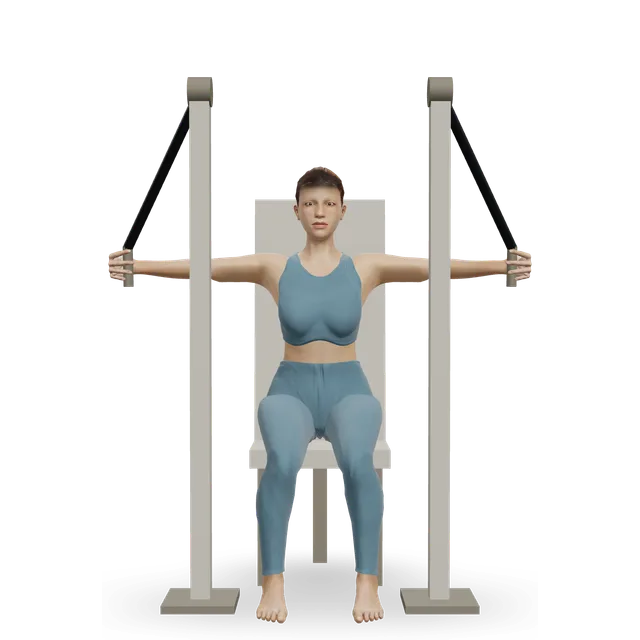
Set the seat so the handles sit at chest height, and set the range pin or dial a few clicks forward so the first rep starts from a comfortable stretch.
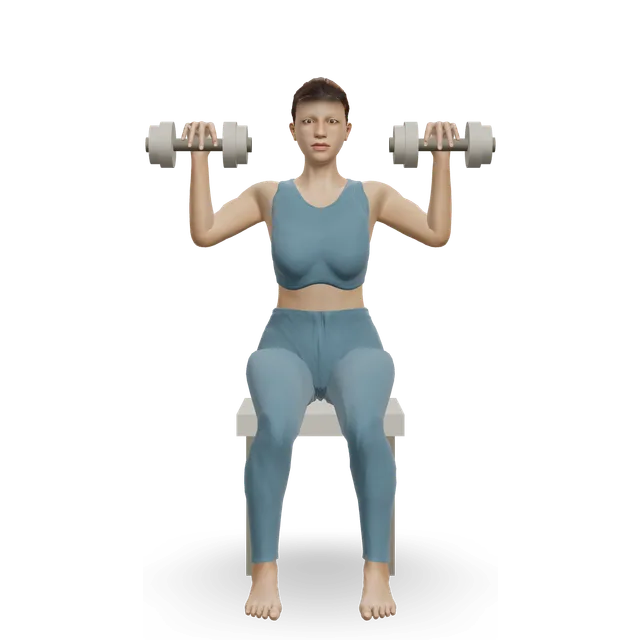
Sit tall with your back against the pad and a slight, fixed bend in your elbows.
Sweep your arms together in front of your chest.
Open back out with control to a moderate stretch, not your furthest reach, without letting the weight pull your arms open.
If reaching back for both handles bothers your shoulders, bring them in one at a time.
Loading the 3D figure…
Drag to turn
Gets into position, then repeats the movement. Technical checks passed; qualified exercise review is pending.
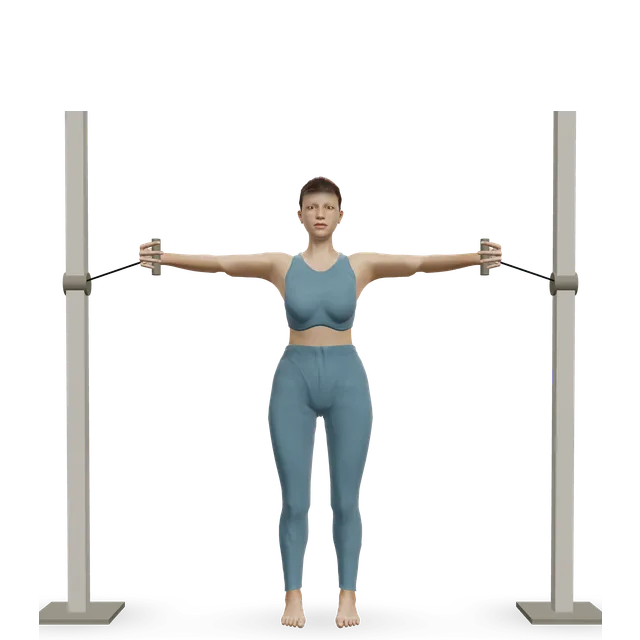
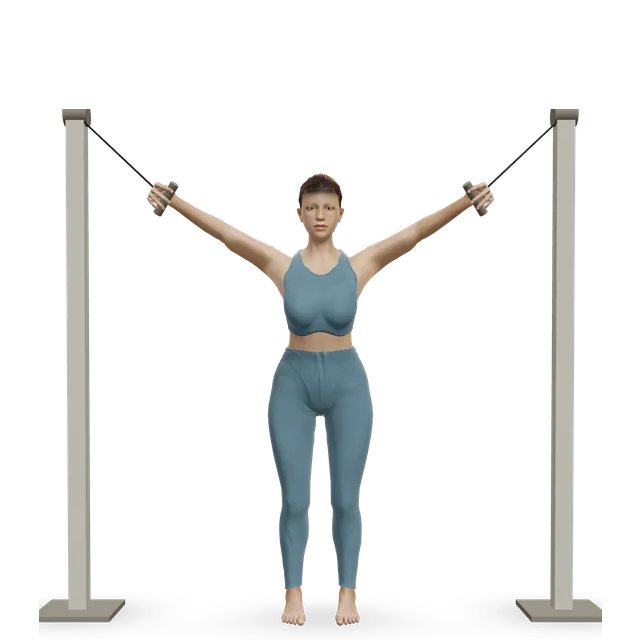
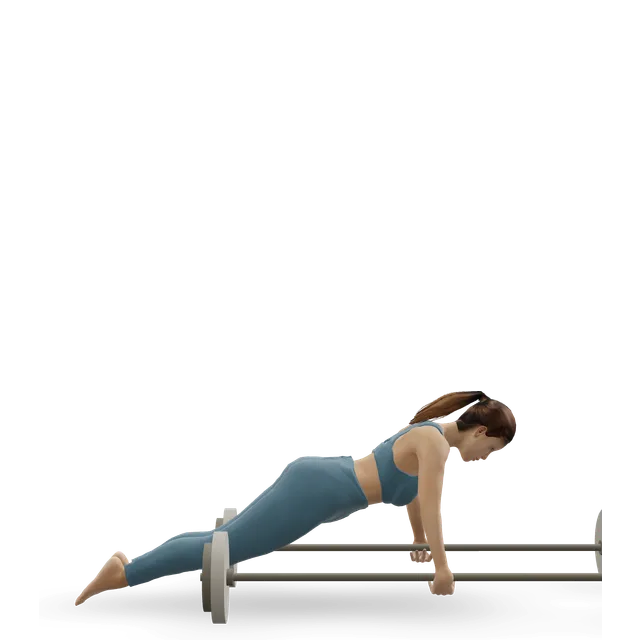
Machine flys at 2 sets of 12 to 15, slow on the way back (our bodybuilding upper-body workout); cable flys at 3 sets of 12 to 15, resting 60 to 90 seconds (our push day workout B); the bent-forward crossover and the standing band fly at 2 to 3 sets of 10 to 15 (their move pages' editorial doses); dumbbell, incline and one-arm flys at 2 or 3 sets of 10 to 15 (our editorial starting point); the bodyweight fly on rolling bars at 2 to 3 sets of 5 to 8 (its move page's dose).
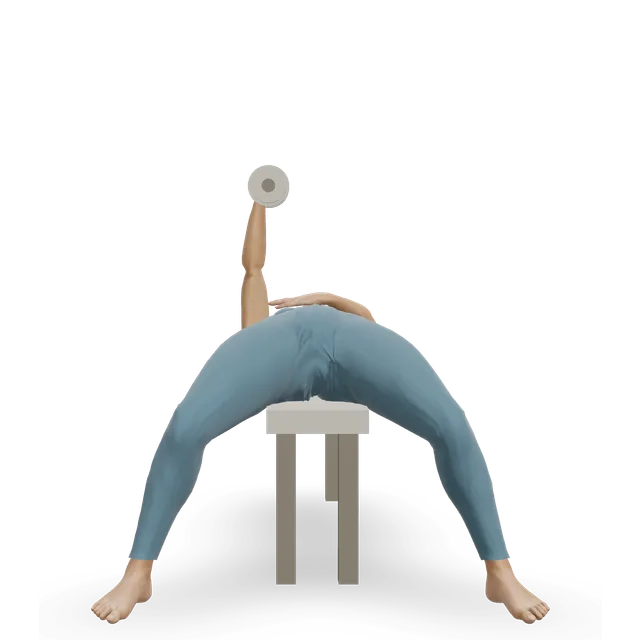
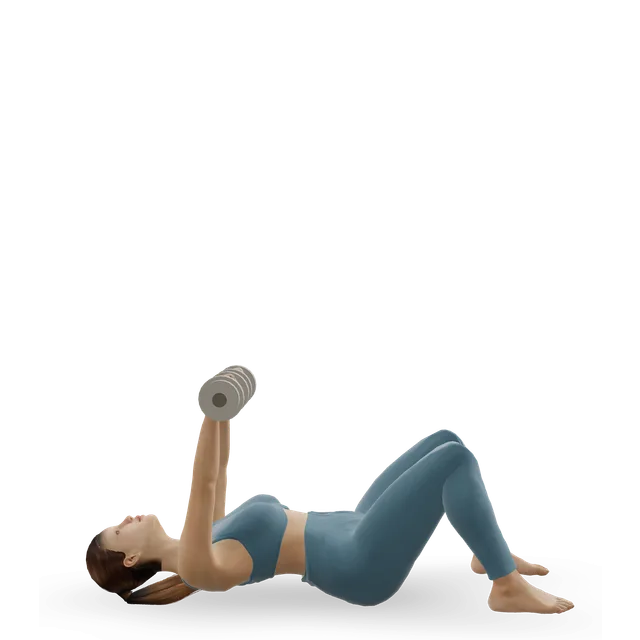
No bench? The floor stops your arms at about chest level, the limit the hospital handout and NHS trust leaflet recommend; no study has tested the floor fly itself, and we have no 3D demo of it yet. In words:
Lie on your back on the floor, knees bent and feet flat, a dumbbell in each hand over your chest, palms facing.
With a soft, fixed bend in your elbows, open your arms wide until your upper arms rest lightly on the floor.
Hug the dumbbells back up over your chest, and repeat.
Loop a band round a sturdy post behind you at chest height, step forward until it's taut, and sweep your arms together in front of your chest. Band flys worked the chest slightly less and the shoulder a little more than dumbbell flys, and bands built strength about as well as weights.
Push-ups train the chest well without a fly; our push-up guide takes you from the wall to the floor.
Flys against the bench press and push-up
The bench press works the chest a little harder overall
It drew more chest activity than the dumbbell fly in trained men, though not in a smaller mixed group, and it also trains the shoulders and triceps with about twice the weight.
Push-ups drew 61% of the bench press's chest activity in trained men and felt much easier to them; for most people they're the place to start, with our push-up guide.
Not for health or strength if you press and do push-ups. There's too little data to say single-joint exercises build more muscle than presses, but flys add chest work without tiring the triceps, which is useful when your arms or elbows need a rest.
Much lighter than pressing: trained men's 6-rep maximum fly was 40.5 kg for both dumbbells together against 88.5 kg on the bench press. Pick a weight you can control for 10 to 15 reps without your elbows straightening or the weights dropping below chest level, using our plans' starting-weight method.
2 or 3 sets of 10 to 15, with the last set 0 to 2 reps short of failure, as our plans say for small moves and our chest workouts use (cable flys at 3 sets of 12, or 12 to 15). In beginners, one set grew the chest as much as three, so start with one or two and build up. Count fly sets towards about 10 or more chest sets a week.
60 to 90 seconds between sets, as our plans suggest for isolation moves. Do flys after your presses, as our chest workouts do: lifting early in the session helped strength, while the order made no consistent difference to growth.
Add reps until every set reaches the top of the range, then move up the smallest step: one plate on a stack, or the next dumbbell (double progression, as our plans describe). Fly jumps are big for a small movement, so be patient.
What to expect
Chest thickness grew about 5 to 7% in 8 weeks in active adults, and 17 to 21% in 12 weeks in untrained men. Visible change takes months.
Press first, while you're fresh, as our chest workouts do.
Flys and your shoulders
How far to lower
A hospital shoulder handout says never to fly with straight elbows or lower the dumbbells below chest level, and an NHS trust leaflet for people returning after a pec repair says not to let the elbow drop below the level of the shoulder. That's cautious advice rather than a tested rule: no trial has compared fly ranges.
Set the arms a few clicks forward to limit how far back they go, and never let the weight stretch your arms so your elbows pass behind your chin, as the handout says. ACE advises against the pec deck for people with a history of shoulder problems.
For shoulder strengthening, pain up to about 5 out of 10 is acceptable if it's back to normal by your next session; for a pulled chest muscle, about 3 to 4 out of 10, settled within the day, with the stretched arm-out position coming back last. Sharp pain in the joint, a catch or a feeling of slipping means stop. That's from our shoulder pain from bench press and pec strain guides.
Shoulder injuries in lifting
The shoulder is one of the areas most often hurt in weight training, up to 36% of injuries in one review, which is why the range and the weight matter.
A sudden pop or ripping feeling in your chest or arm during a fly or press, then pain, weakness, bruising on the chest or inside of the arm, or a chest, armpit or nipple that now looks uneven, can be a torn chest tendon: stop and get it checked the same day. Repair has the best results soon after the injury.
Follow your team's plan. The NHS trust leaflet brings chest strengthening back from about 3 months, with the elbow no lower than the shoulder in bench presses and flys; our pec strain guide leaves heavy flys and the pec deck until about 6 months.
Presses first: dumbbell bench and incline presses, push-ups at 3 sets of 6 to 15 (our upper body workout at home) and the dumbbell floor press at 2 to 3 sets of 8 to 12 (its move page's editorial dose); then the back of the shoulders with face pulls at 3 sets of 12 to 20 (our upper body workout at home) and band pull-aparts at 15 reps (our chest workout's warm-up).
While your shoulder hurts, the NHS advises against making up your own strenuous exercises or using heavy gym equipment. Shorten the range, use the pec deck with its pin set forward, or swap to presses, and follow our shoulder pain from bench press guide.
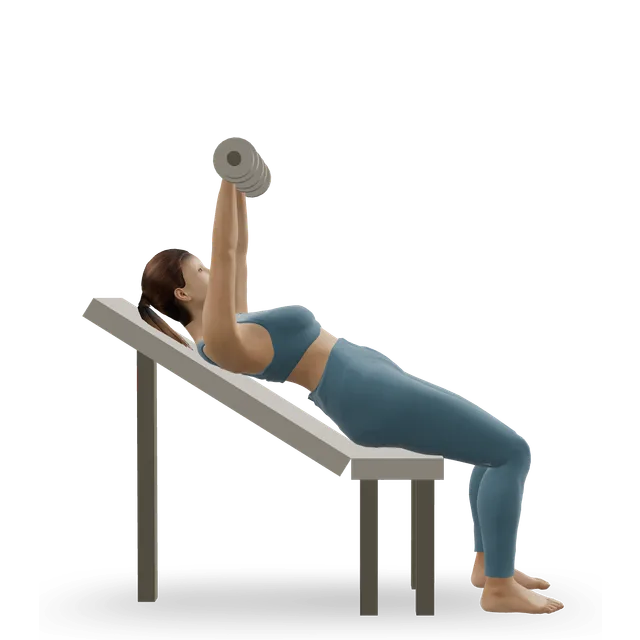
Avoid lying flat on your back for more than a few minutes later in pregnancy: do flys standing with cables or a band, or on an incline bench (our suggestion).
Follow your surgeon's advice before pushing, pulling or lifting with your arms, as our heart surgery guide says.
New to the gym
Start with the machine fly or cable fly, which our move pages put before the dumbbell fly because the path is set or easier to control.
Workouts to follow
Our home chest workout uses push-ups, floor presses and flys with no bench. The gym chest workout uses cable flys at 3 sets of 12 after the bench press; push day workout B at 3 sets of 12 to 15; the bodybuilding upper-body workout machine flys at 2 sets of 12 to 15.
For chest pain that feels tight, heavy or squeezing, or spreads to your arms, neck, jaw, back or stomach; chest pain with sweating, feeling sick, light-headed or short of breath; or severe difficulty breathing. It could be a heart attack, so this comes before thinking about a strained muscle. Don't drive yourself to A&E.
A pop or ripping feeling during a lift, then bruising on the chest or inside the arm, an uneven chest, armpit or nipple, or weakness pushing: it can be a torn chest tendon. Seek medical care straight away: NHS 111 or an urgent treatment centre, or your doctor or urgent care in the US.
Sudden or very bad shoulder pain; you can't move your arm; your arm or shoulder has changed shape or is badly swollen; pins and needles that don't go away; no feeling in the arm or shoulder; or pain after an injury or fall. These can be signs of a broken or dislocated bone or a torn tendon.
For chest pain, feeling faint or unusual breathlessness, as our plans' safety note says.
Myths
"Flys shape the inner chest"Mixed evidence
We found no evidence for it. Twelve weeks of pec deck grew the upper and lower chest equally, and no study of an "inner chest" was found: it isn't a separate muscle.
"You need flys to build your chest"Emerging evidence
Presses and push-ups work the chest hard, and there's too little data to say single-joint exercises add more muscle. Flys are a useful extra, not a requirement.
"Lower the dumbbells as far as you can for a bigger stretch"Emerging evidence
Loaded stretches between sets added no growth in trained men, there's too little data on range for growth, and the stretched, arm-back position is where tears are thought to happen under heavy load. The hospital handout says no lower than chest level.
"Machine flys don't work as well as dumbbell flys"Emerging evidence
The pec deck drew 98% of the bench press's chest activity in one study, machine flys grew the chest 5 to 7% in 8 weeks, and free weights and machines built similar muscle across 13 studies.
Lie on a bench with a dumbbell in each hand over your chest, palms facing and elbows softly bent. Open your arms wide in a slow arc until the weights are about level with your chest, then hug them back up, keeping the same elbow bend throughout.
What muscles do chest flys work?
Mainly the pectoralis major, the big chest muscle, with the front of your shoulders helping and your biceps steadying your elbows. Unlike the bench press, they barely work your triceps.
Chest fly or bench press: which is better?
The bench press works your chest a little harder overall, uses your shoulders and triceps too, and moves about twice the weight; machine and cable flys came close to it for chest activity in one study. Press first, then add flys for extra chest work.
Dumbbell, cable or machine flys: which is best?
All of them work. The pec deck and a bent-forward cable crossover drew 93 to 98% of the bench press's chest activity in one study, and machine flys grew the chest 5 to 7% in 8 weeks. Machines set the path for you; dumbbells only need a bench.
How heavy should chest flys be?
Much lighter than pressing: trained men flew about 40 kg for both dumbbells together, against 88 kg on the bench press. Pick a weight you can control for 10 to 15 reps without your elbows straightening.
How many sets and reps of chest flys should I do?
2 or 3 sets of 10 to 15, resting 60 to 90 seconds, with the last set 0 to 2 reps short of failure. In beginners, one set grew the chest as much as three over 12 weeks.
Why do chest flys hurt my shoulder?
Usually your arms are going too far back, your elbows are too straight or the weight is too heavy. Stop at about chest level, keep a soft elbow bend and set a pec deck a few clicks forward. If it still hurts, swap to a press or push-up and read our shoulder pain from bench press guide.
Can chest flys tear your pec?
Rarely, but yes: tears happen when the stretched chest muscle is heavily loaded, and one was reported on a chest fly machine. A sudden pop or ripping feeling, then bruising, an uneven chest or weakness pushing, needs checking the same day.
Do chest flys work the inner chest?
No exercise singles out an inner chest. In beginners, pec deck training grew the upper and lower chest equally, so flys build the chest muscle as a whole.
Do I need to do chest flys?
Not if you press and do push-ups, which train your chest hard. Flys are a useful extra for chest size, or when your triceps or elbows need a rest.
Can I do chest flys at home?
Yes. Lie on the floor with dumbbells so your upper arms touch down at about chest level, or anchor a band behind you for a standing fly. Band flys worked the chest slightly less and the shoulders slightly more than dumbbell flys.
Incline or flat chest flys?
Both work your chest. No study has shown incline flys build the upper chest more, and the pec deck grew the upper and lower chest equally. Use the angle your shoulders like best.
Exercise education, not a personal prescription, and clinical review of these guides is pending. Check with a GP before starting hard training if you have a heart condition, chest pain, dizziness or breathlessness when active, and stop for sharp or increasing pain. Health disclaimer.