Up and walking within days
Most people sit in a chair after a day, walk after 3 days and manage stairs after 5 or 6. At home, the NHS says to start being active, such as going for walks, as soon as you feel well enough.
Exercise guide
After a heart bypass or a valve operation, most people are walking within days, are back to most normal activities after about 6 weeks, and are fully recovered in 2 to 3 months. Cardiac rehabilitation is for people who've had heart surgery too, and it helps.
This guide covers the first weeks at home, how to protect your breastbone after open heart surgery (including the "keep your move in the tube" approach some UK hospitals now use), when you can lift, drive, swim and play sport, cardiac rehab and strength training, recovery after TAVI (transcatheter aortic valve implantation) or keyhole surgery, and the warning signs. Hospitals' rules on using your arms differ, so we set them side by side: follow your own team's rules.
Most people sit in a chair after a day, walk after 3 days and manage stairs after 5 or 6. At home, the NHS says to start being active, such as going for walks, as soon as you feel well enough.
One NHS heart unit suggests a walk of no more than 5 minutes on your third day home, adding 5 minutes every 2 or 3 days, aiming to walk briskly for 30 minutes, 5 days a week, by 6 weeks.
Most people are back to most normal activities after about 6 weeks. After open heart surgery, strenuous jobs such as carrying heavy bags or vacuuming wait until the wound has healed, usually 8 to 12 weeks. Recovery is quicker after TAVI or keyhole valve surgery.
The breastbone takes about 3 months to heal, and hospitals' rules on using your arms differ, from half a kettle for weeks to no weight limit with pain as your guide. In one trial of 72 people and several large before-and-after hospital studies, less strict rules didn't cause more breastbone or wound problems, but there's no UK trial.
UK standards say people who've had bypass or valve surgery should be offered rehab. In coronary heart disease it cut heart attacks and hospital admissions, and after valve surgery it improves fitness, though trials are few. Ask your team for a referral.
The NHS says no heavy lifting for 3 months. You mustn't drive a car for at least 4 weeks after bypass or valve surgery (2 weeks after TAVI). Call 999 for chest pain that feels tight or like squeezing, or spreads to your arms, neck or jaw, or for severe difficulty breathing.
A coronary artery bypass graft (CABG) uses healthy blood vessels from your leg or chest to get round narrowed or blocked arteries to the heart; most people have 3 or 4 grafts. It's usually done through a long cut down the centre of your chest and breastbone, which is closed with wires that are usually left in for good, and it takes 3 to 6 hours. Most people spend about a week in hospital, and full recovery takes 2 to 3 months.
A damaged valve, usually the aortic or mitral valve, is replaced with a mechanical valve, which lasts but means taking an anticoagulant (usually warfarin) for life, or a tissue valve, which lasts about 15 to 20 years. Some valves are repaired instead. Open heart surgery through the breastbone is the most common way; keyhole surgery through smaller cuts in the chest isn't always suitable, but recovery is usually quicker.
In TAVI, a new aortic valve is passed through a blood vessel in the top of your leg, your arm or your chest, usually while you're awake; it takes 1 to 2 hours and the heart isn't stopped. NICE (the National Institute for Health and Care Excellence) suggests it for people who would find recovery from open surgery too hard, for example because of frailty. Most people go home after 1 to 2 days.
The two halves of the breastbone are wired together and heal like a broken bone. Guy's and St Thomas' says this takes about 3 months, and Kent's leaflet expects it to be fully healed by 12 weeks. A swollen area at the top of the wound is common and settles as it heals. Some people are given a support vest: one NHS heart unit asks for it to be worn day and night for at least 6 weeks.
Sternal precautions, limits on how you use your arms, aim to stop the breastbone wound breaking down or getting infected. A US review found they come from expert opinion or indirect evidence and differ widely, even between hospitals in the same state. For scale: a cough puts about 27 kg (60 lb) of force across the breastbone and a sneeze about 41 kg (90 lb), and people cough and sneeze safely after surgery, though violent coughing has caused wounds to open.
Deep infection of the breastbone wound affected 1.2% of 4,596 people in Iceland between 2001 and 2024, falling to none after 2017. The strongest risk factors are diabetes, obesity, using both arteries from inside the chest wall for the grafts, chronic obstructive pulmonary disease (COPD) and long operations.
Atrial fibrillation (AF), an irregular heartbeat, is common in the first days after heart surgery: across 52 studies it affected 8% to 61% of people, most often after valve or combined operations. The NHS says it usually gets better after a few days. After valve surgery, some people need a pacemaker if it doesn't.
Mood swings, crying for no clear reason, nightmares, poor concentration, low mood and anxiety are normal reactions to major surgery and usually settle. If they last, talk to your GP (general practitioner) or rehab nurse; cardiac rehab includes emotional support.
The operation, your medicines and cardiac rehab carry the evidence for your heart. The evidence on arm limits comes from one small trial and hospital studies, and none of it is from the UK.
In 107 trials with 26,886 people with coronary heart disease, most after a heart attack, bypass or stent, rehab cut heart attacks by about a quarter (high certainty) and hospital admissions by about a third (moderate certainty), probably cut deaths, and improved quality of life.
Source 13
In 6 trials with 364 people after valve surgery, rehab improved fitness by the end of the programme. Its effects on deaths, hospital stays and quality of life are very uncertain because the trials were few and small.
Source 14
In one trial, 72 adults either used their arms as pain allowed or followed strict precautions for 4 to 6 weeks. Physical function at 4 and 12 weeks was no different, and neither were arm function, pain, fear of movement or quality of life.
Source 9
In US hospitals that switched from strict precautions to this approach, people had about 3 times the odds of going straight home, with no difference in breastbone wound problems (1,104 people), and 84% went home against 70% before, with similarly low infection rates (2,190 people). Other studies found better mobility scores (614 people) and a faster return to function (200 people). Two reviews, of 14 and 12 studies, judged the newer approaches as safe as strict precautions.
These are before-and-after studies, mostly from the US, Canada and Australia, plus one small trial. There's no UK trial, so follow your own team's breastbone rules.
In 18 trials with 3,462 people, resistance training after surgery through the breastbone was safe and feasible and improved fitness about as much as aerobic training. In small studies, machine arm exercises from 2 weeks after surgery kept breastbone movement within 2 mm without more pain (16 people), and a supervised arm programme started in hospital caused no breastbone problems (55 people). The American Heart Association says progressive arm and trunk exercise, pain free and with the arms kept close, is safe and effective. Start it with your rehab team.
In a trial of 249 people waiting for a bypass, twice-weekly exercise and education cut the hospital stay by about a day and improved quality of life for up to 6 months. In 12 trials with 695 people having heart or major tummy surgery, breathing muscle training before the operation roughly halved the risk of pneumonia and shortened the stay by about a day, though the trials weren't blinded.
Incentive spirometers, the devices you breathe in through to raise a ball or piston, did no better than other breathing physiotherapy at preventing chest complications after a bypass (7 studies, 592 people, low quality). Use whatever your hospital teaches.
Source 41
The British Heart Foundation (BHF) says getting active before surgery will benefit most people, pointing to the trial in which exercise and education while waiting for a bypass shortened the hospital stay.
Some hospitals offer a breathing trainer to use before surgery. Ask your team whether they recommend one.
Source 40
Our editorial starting point: keep walking or cycling at a comfortable effort within any limits your cardiologist sets, add gentle strength work, and stop smoking. If you get angina, follow our heart disease guide's angina advice. If you're waiting for valve surgery and get symptoms when you exert yourself, keep to your heart team's limits.
From University Hospital Southampton's leaflets and the "Keep Your Move in the Tube" description, with the NHS and BHF for when people usually get up. Do what your own physiotherapists teach.
See the movement on the 3D figure: Lateral breathing (Pilates breathing)
These are what NHS hospital leaflets usually say. If your team's leaflet differs, follow theirs.
Stay indoors for the first 2 days. On day 3, walk for no more than 5 minutes; your garden counts. Add 5 minutes every 2 or 3 days, starting each walk slowly, building to a brisk pace and slowing down to finish. The goal is to walk briskly for 30 minutes, 5 days a week, 6 weeks after leaving hospital. It's normal to be a little breathless, you don't need to avoid stairs, but avoid icy paths.
Source 4
Kent's leaflet sets the same 30-minute goal at a moderate pace, starting from the distance you walked in hospital. Guy's and St Thomas' suggests adding a few minutes every 1 to 2 days, feeling a little warm and moderately short of breath, but never so breathless that you can't speak a full sentence.
Pain and stiffness around the neck, chest and shoulders are common. Southampton's arm exercises, 3 times a day: raise one arm slowly above your head and lower it, then the other; shrug your shoulders up and relax; roll your shoulders backwards; 5 to 10 of each. Raising your arms over your head is fine as long as you're not holding, lifting or pushing anything. Kent's version is twice a day for 6 weeks. Avoid any movement that causes pain or clicking in your breastbone.
Guy's and St Thomas' lists vacuuming, home improvement jobs, heavy shopping bags, lifting children, digging, mowing and walking a dog that pulls on its lead as things to avoid until your breastbone has healed, and the BHF suggests asking family and friends to help with jobs like these. Hospitals using "Keep Your Move in the Tube" let some of them come back sooner, done with your arms close and within pain.
Once your wounds are clean and dry you can wash as normal, but one NHS unit says showers are better at first, because pushing yourself out of a bath strains the breastbone.
Source 4
For the first 6 weeks at home after surgery through the breastbone, based on NHS hospital leaflets rather than a tested programme. It isn't for after TAVI, which has its own advice, and your hospital's own exercises come first.
Doses from Southampton's leaflets unless stated: 4 slow deep breaths and a minute of ankle circles every half hour while you're awake at first; thigh tightening and knee bends, 5 to 10 each leg; arm raises, shoulder rolls and shrugs, 5 to 10 each, 3 times a day; shoulder-blade squeezes, 5 holds of 5 seconds. Neck stretch: hold 5 to 10 seconds, 2 to 4 times each side (the move page's dose). Seated march: 1 to 2 minutes as a warm-up (the move page's dose). Sit to stand with your hands on your thighs, 5 to 8 building to 10, and calf raises, 10 building to 15, holding a worktop with your elbows by your sides (our editorial starting points).
 3D demoLateral breathing (Pilates breathing)Beginner · No equipment
 3D demoAnkle circlesBeginner · No equipment
 3D demoQuad set (static quads)Beginner · No equipment
 3D demoSupine heel slideBeginner · No equipment
 3D demoBreath reachBeginner · No equipment
 3D demoShoulder rollsBeginner · No equipment
 3D demoSeated upper-back lift (sit tall, shoulders back)Beginner · A bench or box
 3D demoSide neck stretchBeginner · No equipment
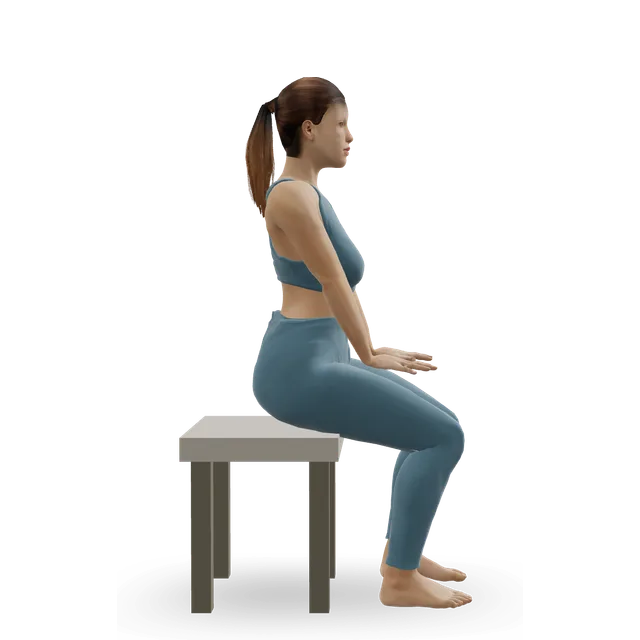 3D demoSit to stand, pushing on the thighsBeginner · A bench or box
 3D demoSeated marchBeginner · A bench or box
 3D demoSlow calf raiseBeginner · A wall
 3D demoTreadmill walkingBeginner · Cardio machine
Traditional sternal precautions limit lifting, pushing, pulling, reaching behind you and raising your arms, often for up to 12 weeks, with weight limits from about 2 to 9 kg. A US review found they have no agreed definition and rest on expert opinion or indirect evidence. Southampton describes the old rule as nothing heavier than half a kettle (about 2 kg) for 12 weeks.
When you lift, push or pull, keep your upper arms close to your body, as if inside a tube around your chest: this shortens the lever on your breastbone. Reaching without a load, overhead, out to the side or behind your back, is allowed. There are no set weights or weeks: you build up at your own pace, within pain. Southampton sums it up as "Let pain be your guide": if an activity makes your pain worse, stop or bring the load closer.
One trial of 72 people found pain-guided arm use as good as strict precautions, and before-and-after studies of thousands of people in hospitals that switched found no rise in breastbone or wound problems and more people going straight home. There's no UK trial.
Southampton has no weight restrictions and teaches the tube approach it calls mindful movement. Guy's and St Thomas' says avoid lifting more than a half-filled kettle until the breastbone heals, in about 3 months. Kent says no more than 2 kg for 6 weeks, building up from 6 to 12 weeks. A US hospital handout keeps a 10 lb (about 4.5 kg) limit for 6 weeks.
Follow your own team's breastbone rules: your hospital will give you its version. Whatever the rules, keep your upper arms close when you lift, push or pull, keep your shoulders moving with unloaded arm exercises, and stop anything that hurts or makes your breastbone click. If you were given a support vest, wear it as advised.
A guide to what most sources say, not a plan: your surgical and rehab teams set yours.
Up from the day after the operation: a chair after a day, walking after 3 days, stairs after 5 or 6. Breathing, circulation and arm exercises several times a day.
Rest, short walks building from about 5 minutes, and the arm and shoulder exercises. No heavy lifting and no driving. Hospitals differ on when walks start outdoors: Southampton suggests from day 3.
Walking towards 30 minutes, 5 days a week, by 6 weeks, light jobs around the house, and a stationary exercise bike at a gentle pace. You can legally drive a car from 4 weeks (2 weeks after TAVI), but Guy's and St Thomas' and Kent advise waiting 6. Lifting limits range from none (Southampton) to half a kettle (Guy's and St Thomas') or 2 kg (Kent).
Most normal activities from about 6 weeks after a bypass or keyhole valve surgery, and up to 12 weeks after open valve surgery. Cardiac rehab exercise classes, light work from about 8 weeks, and lifting building up gradually. Southampton expects rehab classes from about 8 weeks, while UK standards want rehab to start within 2 weeks of leaving hospital, with the exercise part sometimes later.
Heavy lifting (the NHS says none for 3 months), sports with twisting such as golf and tennis, swimming, cycling on the road and manual work. Guy's and St Thomas' asks for no strenuous twisting sport for 12 weeks; Kent and Southampton put swimming at about 12 weeks.
UK standards say people who've had a bypass, or a valve repaired or replaced, should be offered rehab, whatever their age, sex, ethnic group or condition. NICE's rehab recommendation is written for after a heart attack, its valve guideline has no exercise recommendation, and the national audit doesn't yet report how many people take up rehab after surgery alone.
UK standards want rehab to start within 2 weeks of leaving hospital, though some parts, such as exercise, may start later. Southampton's booklet says you can usually join a programme about 8 weeks after surgery. So the assessment and education can start early, and the exercise classes after the first weeks (our reading).
An assessment, then exercise, education and emotional support, in a class, at home, online or a mix. Southampton's courses run for 6 to 12 weeks.
After a bypass, as part of coronary heart disease: yes, with fewer heart attacks and hospital admissions in 107 trials. After valve surgery: it improves fitness, but the evidence is thinner (6 trials). If you haven't been offered rehab, ask your team or GP.
UK cardiac physiotherapists' standards work at a moderate effort, 11 to 14 on the 6 to 20 Borg scale, starting near 11: warm and breathing harder, but able to talk. Aerobic exercise 3 times a week for 20 to 60 minutes, after a 15-minute warm-up and before a 10-minute cool-down. Our heart disease guide explains the talk test and the Borg scale, and why beta blockers make heart rate targets unreliable.
The same standards start at 1 set of 8 to 10 with a light weight, building to 3 sets, at about 30 to 40% of the most you could lift once for the arms and 50 to 60% for the legs. In plain words: choose a weight you could lift at least 15 times, and stop at 8 to 10. Legs can start in rehab; arm strength work comes when your rehab team says it's fine.
The NHS says no heavy lifting for 3 months. After that, and for interval training or competitive sport, check with your cardiac team first.
In rehab, or with your team's agreement. Cardio at 11 to 14 on the Borg scale, building to 20 to 60 minutes after a 15-minute warm-up (UK cardiac physiotherapists' standards); a stationary bike at a gentle pace is fine before your rehab review (Guy's and St Thomas'). Strength: 1 set of 8 to 10, building to 3 sets (the same standards), legs first; the band row, wall push-up and curl only when your team says arm work is fine. Stretches once your team agrees: the doorway stretch gently for 20 to 30 seconds with no pulling at the scar (our editorial starting point), and thoracic rotation, 6 each side in a small range at first (the move page's dose).
 3D demoStanding marchBeginner · No equipment
 3D demoStationary cyclingBeginner · Cardio machine
 3D demoRecumbent exercise bikeBeginner · Cardio machine
 3D demoLow step-upBeginner · A step
 3D demoSeated knee extension (chair)Beginner · A bench or box + Something with weight
 3D demoBand rowBeginner · A band + An anchor point
 3D demoWall push-upBeginner · A wall
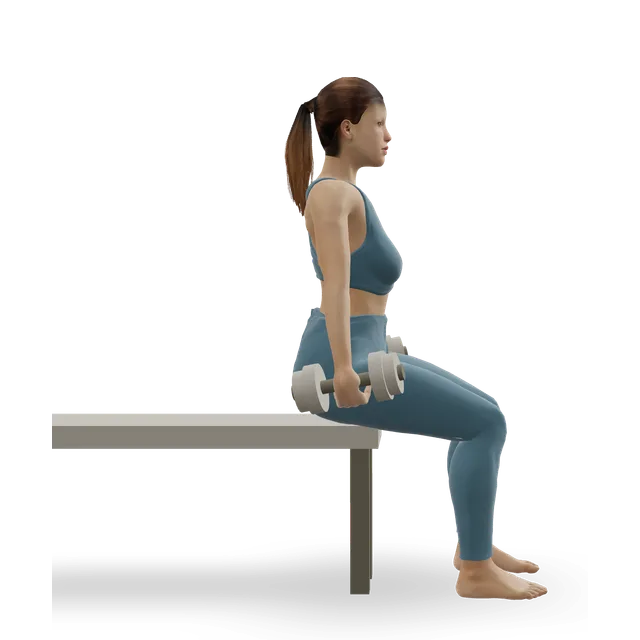 3D demoSeated dumbbell curlBeginner · A dumbbell + A bench or box
 3D demoDoorway chest openerBeginner · A wall
 3D demoThoracic rotationBeginner · No equipment
The cardiac rehab session is for after your rehab assessment, with your team's agreement; its arm moves already have a marching option. The heart failure and chair workouts suit low-energy days: leave out their band row, wall push-up, curl and side raise until your team says arm work is fine. Easy cardio once you're walking 10 to 20 minutes comfortably. The walk after meals includes a wall push-up: march instead until your team agrees. The breathing routine helps with anxiety and sleep: sit, and skip the breath holds.
A 45-minute home session built like a UK cardiac rehab class: a 15-minute warm-up, 20 minutes of cardio mixed with light strength, and a 10-minute cool-down.
45 minBeginner14 movesA wall, A bench or boxA 40-minute heart failure workout you can do seated or standing: a long, gentle warm-up, cardio mixed with light strength, and a slow cool-down.
40 minBeginner13 movesA bench or box, A wallA 20-minute seated workout for older adults who cannot stand for long: marching, leg and arm strength, posture, and sit-to-stands that lead back to standing.
20 minBeginner11 movesA bench or box, Something with weightA steady 30 to 45 minute cardio session at talk-but-not-sing pace: walk, cycle, row or cross-train, counting toward weekly activity guidelines.
40 minBeginner3 movesCardio machine, A wallA 10-minute routine for straight after a meal: an easy walk, a few simple standing moves from blood sugar trials, then a short walk to finish.
10 minBeginner6 movesCardio machine, A bench or boxA 6-minute breathing routine: slow breathing, crocodile breathing, alternate nostril breathing, box breathing and 4-7-8 breathing.
6 minBeginner5 movesNo equipmentThe walking plan after your first 6 weeks, building to 150 minutes a week; the seniors' plan after rehab, with your team's agreement.
A free 8-week walking plan for beginners: build to 150 minutes of brisk walking a week, with intervals, hills and two short strength sessions.
6 training days40 minBeginner3 days a weekA 12-week exercise plan for over-65s: strength and balance three times a week, short balance sessions and daily walks, based on falls-prevention trials.
3 training days40 minBeginnerThere's no cut through the breastbone, so the breastbone rules don't apply: the tube goes in through a blood vessel in the top of your leg, your arm or your chest. Most people go home after 1 to 2 days and recover fully in 6 to 10 weeks. The BHF lists vacuuming, heavy bags, heavy pans, mowing and lifting children or heavy pets among things you may be asked to avoid while you recover, and you should be invited to cardiac rehab. You mustn't drive a car for 2 weeks.
Smaller cuts in the chest usually mean a quicker recovery, with most normal activities back after about 6 weeks. Follow your team's advice on using your arms, which may differ from the breastbone rules.
For a car or motorcycle licence, the Driver and Vehicle Licensing Agency (DVLA) says you mustn't drive for at least 4 weeks after a bypass or valve surgery, or 2 weeks after TAVI, and you don't need to tell them if you have no other condition that affects driving. Bus and lorry drivers must wait 3 months and tell the DVLA. Guy's and St Thomas' and Kent advise waiting at least 6 weeks; check your insurer. You still have to wear a seatbelt: a small cushion between it and your chest helps.
Guy's and St Thomas' suggests 8 to 12 weeks off. Southampton says most people go back to light work after 8 weeks and physical work after 12, ideally with a phased return.
Southampton says no restrictions are needed: build up gradually, in a position that doesn't press on your wound. Guy's and St Thomas' says sex is no more stressful on the heart than 15 minutes of brisk walking, light housework or gardening, and the BHF says most people are back to it after about 6 weeks.
Golf, tennis, squash, road cycling, fishing and weightlifting wait for about 12 weeks, while the breastbone heals (Guy's and St Thomas', Kent), and so does swimming (Kent, Southampton). A stationary bike at a gentle pace is fine earlier.
AF is common in the first days and usually settles. At home, palpitations need a call to your care team or NHS 111, and 999 if they come with chest pain, breathlessness or fainting. Our atrial fibrillation guide covers exercise if it carries on.
Warfarin can make you bleed more than normal, so the NHS says take care with activities that could cause cuts or bruising, and carry your alert card. Avoid contact sports while you take a blood thinner (our suggestion).
Source 3
Beta blockers slow your heart, so go by how hard exercise feels, not your pulse. Never stop or change a heart medicine yourself; ask your team.
If you needed a pacemaker after valve surgery, follow its arm advice too: our pacemaker guide covers it.
Source 28
This is general information, not a diagnosis: your surgical and rehab teams know your operation, so use the contact numbers they gave you. In the US, call 911 where this page says 999.
Call 999 (911 in the US) if:
Source 16
The NHS adds these. Don't drive yourself to A&E (accident and emergency):
Sit and rest on the floor with your knees bent and your back supported. Take a 300 mg aspirin if you have one and aren't allergic to aspirin, and use your GTN (glyceryl trinitrate) if you have angina, unless the 999 call handler tells you otherwise. If someone stops responding and stops breathing, start CPR (cardiopulmonary resuscitation).
Call 999 or go to A&E if palpitations don't go away, or come with chest pain, shortness of breath, feeling faint or fainting. If palpitations have stopped, ask for an urgent GP appointment or call NHS 111.
Source 49
Call 999 if someone faints while exercising or lying down, has chest pain or a pounding or irregular heartbeat, or can't be woken within a minute. After any other faint, tell your care team or see a GP.
Source 50
If you've recently had a bypass or valve replacement and have any of these, call your care team. If you can't, ask for an urgent GP appointment or call NHS 111.
One NHS heart unit says to contact your GP as soon as possible if your wound shows any of these:
Stop if you get chest pain, palpitations, dizziness or light-headedness, and get urgent advice if it doesn't settle quickly with rest. Don't exercise again that day, and tell your rehab team before your next session. Also stop any movement that causes pain or clicking in your breastbone.
Source 4
If you're thinking about suicide or can't keep yourself safe, call 999 or go to A&E. For urgent help, call Samaritans free on 116 123, any time, or in England call 111 and select the mental health option. In the US, call or text 988.
The NHS's 3 months is for heavy lifting. Raising your arms without a load is encouraged from the first days, 3 times a day in one NHS unit's programme, as long as you're not holding, lifting or pushing anything.
Most people walk after 3 days, and the NHS says to start being active, such as going for walks, as soon as you feel well enough. NHS hospitals build walking up to 30 minutes, 5 days a week, by 6 weeks.
Some hospitals use that rule; others now set no weight limit and use pain and "keep your move in the tube" instead. In one trial and in large hospital studies, less strict rules didn't cause more breastbone or wound problems. Practice varies, so follow your own team's rules.
UK standards say people who've had bypass or valve surgery should be offered it. It cuts heart attacks and hospital admissions in coronary heart disease and improves fitness after valve surgery.
One NHS heart unit says to contact your GP as soon as possible for clicking or grinding in your breastbone, and to avoid movements that cause it.
Source 4
Use what your hospital gives you, but incentive spirometers did no better than other breathing physiotherapy after a bypass (7 studies). Deep breaths and walking are the basics: Southampton calls walking the best way to exercise and expand your lungs.
For a car licence, the legal minimum is 4 weeks after a bypass or valve surgery and 2 weeks after TAVI. Many hospitals advise 6, and insurers may have their own rules. Bus and lorry drivers must wait 3 months and tell the DVLA.
Resistance training after surgery through the breastbone was safe and feasible across 18 trials, and the American Heart Association says progressive arm and trunk exercise, pain free with the arms kept close, is safe and effective. Rehab starts light, with 1 set of 8 to 10, and builds up.
You'll walk within days, and at home you build up your walking week by week. Most people are back to most normal activities after about 6 weeks, cardiac rehab exercise classes often start around then, and full recovery takes 2 to 3 months. Follow your own team's plan.
One NHS heart unit suggests no more than 5 minutes on your third day home, adding 5 minutes every 2 or 3 days, aiming for 30 minutes of brisk walking, 5 days a week, by 6 weeks. Start slowly, finish slowly, and walk at a pace where you can still speak in full sentences.
They're rules to protect your breastbone while it heals, such as limits on lifting, pushing and pulling with your arms. Hospitals' rules differ a lot and come from expert opinion. In one trial and large hospital studies, less strict, pain-guided rules didn't cause more breastbone or wound problems, but follow your own team's rules.
When you lift, push or pull, you keep your upper arms close to your body, as if inside a tube around your chest, which takes strain off your breastbone. Reaching up without a load is fine, and you let pain guide what you do. Some UK hospitals now teach it; others still use set limits.
The NHS says no heavy lifting for 3 months. Before then, hospitals differ: some limit you to half a kettle, others set no weight limit if you keep your arms close and it doesn't hurt. Ask your team which rules they use.
Gentle arm and shoulder exercises start in the first days, and raising your arms without a load is fine. Most everyday tasks come back by about 6 weeks, and heavy lifting, digging or vacuuming nearer 3 months.
Deep breathing, ankle and leg movements, gentle shoulder rolls, shrugs and arm raises, and a daily walk, as NHS heart units teach. Strength and harder exercise come later, in cardiac rehab.
For a car licence, not for at least 4 weeks after bypass or valve surgery, or 2 weeks after TAVI, and you don't need to tell the DVLA if there's no other problem. Many hospitals advise waiting 6 weeks, so check your insurer. Bus and lorry drivers must wait 3 months and tell the DVLA.
Usually after about 12 weeks, when the breastbone has healed: NHS hospitals list golf, tennis, swimming and road cycling for then. A stationary bike at a gentle pace is fine earlier.
Yes: UK standards say you should be offered it. In coronary heart disease, rehab cut heart attacks by about a quarter and hospital admissions by about a third; after valve surgery it improves fitness, though trials are few. Ask your team or GP for a referral.
Tell your GP as soon as possible: one NHS heart unit lists clicking or grinding of the breastbone among wound warning signs that need checking. Avoid movements that cause it until you've been seen.
Call 999 for chest pain that feels tight or like squeezing, or spreads to your arms, neck or jaw, severe breathlessness, signs of a stroke, or a painful, swollen, red, warm leg or arm. Call your care team or NHS 111 for a wound that's red, sore, swollen or oozing, a high temperature, or palpitations.
Exercise education, not a diagnosis or treatment plan, and clinical review of these guides is pending. Stop and get advice for chest pain, unusual breathlessness, dizziness or fainting, or new pain, and check with your doctor or midwife first if they have told you to limit activity. Health disclaimer.









