Strength at home
Heart failure exercises at home: a seated or standing session
Built on the British Heart Foundation's advice for heart failure and the chair-based and walking programme used in a UK home rehab trial (REACH-HF). Every move has a seated option, so you can do it sitting on a tired day or standing on a good one. Work at a level where you're breathing harder but can still hold a conversation, breathe out on each effort, and never hold your breath. Use it once your heart failure team or cardiac rehab assessment says exercise is right for you: it doesn't replace rehab.
Warm-up (about 15 minutes)
- Seated march3 minBeginner · Hip flexors, Quads, Abs · 3D demoEasy pace, swinging your arms low. Seated, or standing holding a chair back. You should be able to chat easilyHarder: Standing march
- Thoracic rotation5 each sideBeginner · 3D demoSeated, arms crossed on your chest, turning from the ribsEasier: Side-lying open bookHarder: World's greatest stretch
- Seated march3 minBeginner · Hip flexors, Quads, Abs · 3D demoA little brisker. March standing if you feel well todayHarder: Standing march
- Standing hip CARs2 slow circles each legBeginner · Glutes, Hip flexors, Hip abductors · 3D demoStanding with a hand on the wall. Seated: lift each knee a little and draw small circles with itHarder: 90/90 hip lift-off
- Seated march4 minBeginner · Hip flexors, Quads, Abs · 3D demoBuild gradually until you're breathing a little harder but can still talkHarder: Standing march




Cardio and strength circuit (about 13 minutes)
2 rounds · Rest 1 min of easy marching or slow breathing between rounds
- Seated march1 minBeginner · Hip flexors, Quads, Abs · 3D demoBrisk: knees up, arms swinging. Seated or standingHarder: Standing march
- Sit to stand from a chair8 to 10Beginner · Quads, Glutes, Hamstrings · 3D demoBreathe out as you stand. If it's hard, push on your thighs or do 5Harder: Bodyweight squat
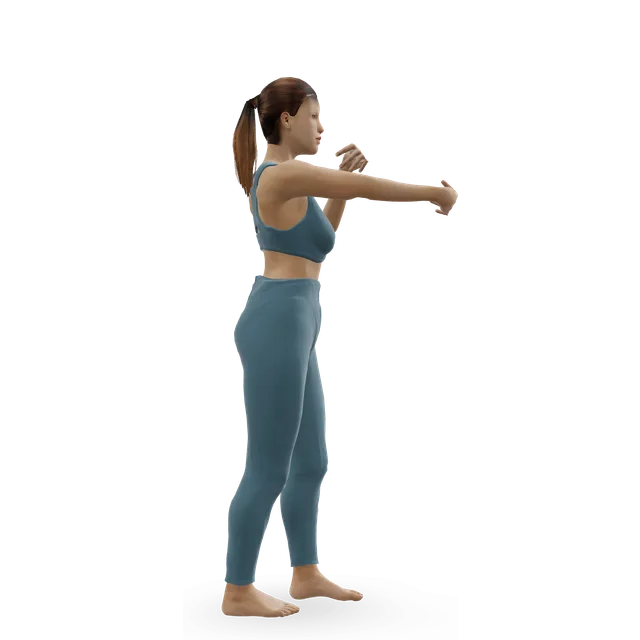
- Beginner · Shoulders, Triceps, Chest · 3D demoSeated or standing: punch forwards at a steady rhythm, not overheadHarder: Step jack (low-impact jumping jack)
- Band row8 to 10Beginner · Back, Biceps, Shoulders · 3D demoLight band anchored at chest height; breathe out as you pullHarder: Supported single-arm dumbbell row
- Seated knee extension (chair)8 each legBeginner · Quads · 3D demoStraighten slowly, lower more slowlyEasier: Quad set (static quads)Harder: Leg extension
- Wall push-up8 to 10Beginner · Chest, Triceps, Shoulders · 3D demoKeep it at the wall, breathing out as you push away. Seated option: arm curls with tins or water bottlesHarder: Push-up




Cool-down (about 10 minutes)
- Seated march3 minBeginner · Hip flexors, Quads, Abs · 3D demoGradually slower, until your breathing is back to normalHarder: Standing march
- Beginner · Calves · 3D demoGentle heel lifts keep the blood moving as you cool downHarder: Slow calf raise
- Wall calf stretch (gastrocnemius)30 s each sideBeginner · Calves · 3D demoStanding, hands on the wall; leave it out if you're seatedEasier: Seated calf stretch with a towelHarder: Toes-tucked kneeling (toe squat)
- Standing quad stretch30 s each sideBeginner · Quads, Hip flexors · 3D demoHold the wall; leave it out if you're seatedHarder: Couch stretch
- Beginner · 3D demoSitting, not lying down. Gentle, with no holdsEasier: Breath reachHarder: Crocodile breathing (prone diaphragmatic breathing)




Tips
- New to it? Do one round of the circuit, and add the second when the first feels comfortable. On a low day, the warm-up and cool-down alone are a session, or swap the whole thing for a 5 to 10-minute walk.
- Weigh yourself first if your team has asked you to. Don't exercise if you've suddenly gained weight, your ankles are more swollen, or you feel unwell or more tired or breathless than normal: contact your heart failure team instead.
- Go by how it feels, not your heart rate: beta blockers, ivabradine and digoxin all slow the heart.
- Breathe out on each effort and never hold your breath. Leave out planks, full press-ups and heavy weights.
- Stop if you get palpitations, extreme breathlessness, light-headedness or chest pain. Call 999 for chest pain that feels tight or spreads to your arms, neck or jaw, or for severe difficulty breathing.
- Don't lie down straight after: sit for the breathing, and stand up slowly.
- On a fluid limit, ask your team how to fit drinks around exercise, especially in hot weather.
- Aim for at least 3 sessions a week, building up over 2 to 3 months, with walking on other days if you can.
The doses are suggested starting points, not a prescription. Choose a range you can control and stop for sharp or increasing pain, numbness or tingling. Get individual advice after an injury or surgery, or if you are pregnant or managing a health condition.
Guides that recommend it
Find more moves like these
More strength at home




Beginner bodyweight workout
A 20-minute full-body workout with no equipment: squats, knee push-ups, bridges, lunges and planks.
20 minBeginner10 movesNo equipment


Full-body bodyweight workout
An intermediate no-equipment workout: push-ups, split squats, single-leg bridges, pike push-ups and core work.
30 minIntermediate11 movesNo equipment


Full-body dumbbell workout
A 35-minute full-body strength workout with dumbbells: goblet squats, presses, rows, Romanian deadlifts and carries.
35 minIntermediate9 movesA band, A dumbbellQuestions people ask
How long does the heart failure exercises at home: a seated or standing session take?
About 40 minutes, including any warm-up and cool-down listed. Shorten it by doing fewer rounds; lengthen it by adding one.
What equipment do I need?
You need: A bench or box, A wall, A band, An anchor point, Something with weight. Each move links to its guide, where you can find an alternative if you are missing something.
Is it suitable for beginners?
It is written for beginners. 4 of its 13 moves have an easier option listed beside them if you need one.
How do I make it easier or harder?
Use the easier or harder option listed under each move, change the number of rounds, or adjust the rest. Progress one change at a time.