Cardio & conditioning
Cardiac rehab exercises at home: a 45-minute session
This follows the shape of a cardiac rehabilitation class: a long, gradual warm-up, a circuit that alternates cardio with light strength moves, and a long cool-down. It is for people who have had their cardiac rehab assessment, or have finished rehab and want to keep going at home, with their team's agreement; it doesn't replace rehab. Work at 11 to 14 on the 6 to 20 Borg scale: breathing harder, but still able to talk. Everything is standing or seated, and the arm moves have a marching option for after heart surgery.
Warm-up (about 15 minutes)
- Standing march3 minBeginner · Hip flexors, Abs, Glutes · 3D demoEasy pace, arms swinging low: easy to talk, about 9 to 10 on the Borg scale. Hold a counter if you need itHarder: Standing band hip flexion
- Standing hip CARs2 slow circles each legBeginner · 3D demoHold the wall; small circlesHarder: 90/90 hip lift-off
- Standing march2 minBeginner · Hip flexors, Abs, Glutes · 3D demoA little briskerHarder: Standing band hip flexion
- Beginner · Hip abductors, Shoulders, Calves · 3D demoSteady. Arms to shoulder height; after heart surgery, keep your arms by your sidesEasier: Seated marchHarder: Jumping jack
- Wall calf stretch (gastrocnemius)15 s each sideBeginner · Calves · 3D demoA short stretch; march gently between sides to stay warmEasier: Seated calf stretch with a towelHarder: Contract-relax hamstring stretch (PNF)
- Standing Quad Stretch15 s each sideBeginner · 3D demoHold the wallHarder: Face-down quad and hip flexor stretch with a strap
- Standing march4 minBeginner · Hip flexors, Abs, Glutes · 3D demoRe-warm: build to about 11, breathing a little harder but talking easilyHarder: Standing band hip flexion





Conditioning circuit (about 20 minutes)
2 rounds · Rest 1 min of easy marching between rounds
- Standing march1 minBeginner · Hip flexors, Abs, Glutes · 3D demoBrisk: knees up, arms swinging. 12 to 14: you can still talkHarder: Standing band hip flexion
- Beginner · Quads, Glutes, Hamstrings · 3D demo8 to 10 steady stands; breathe out as you stand. After heart surgery, follow your team's advice on pushing up with your armsHarder: Bodyweight squat
- Low step-up1 minBeginner · Quads, Glutes, Hamstrings · 3D demoChange the leading leg every 4 steps; keep a rail or wall within reachHarder: Step-up
- Band row1 minBeginner · Back, Biceps, Shoulders · 3D demo8 to 10 slow pulls with a light band; breathe out as you pull. After heart surgery, march instead until your team says arm work is fineHarder: Supported single-arm dumbbell row
- Beginner · Hip abductors, Shoulders, Calves · 3D demoSteady rhythm. After heart surgery, march insteadEasier: Seated marchHarder: Jumping jack
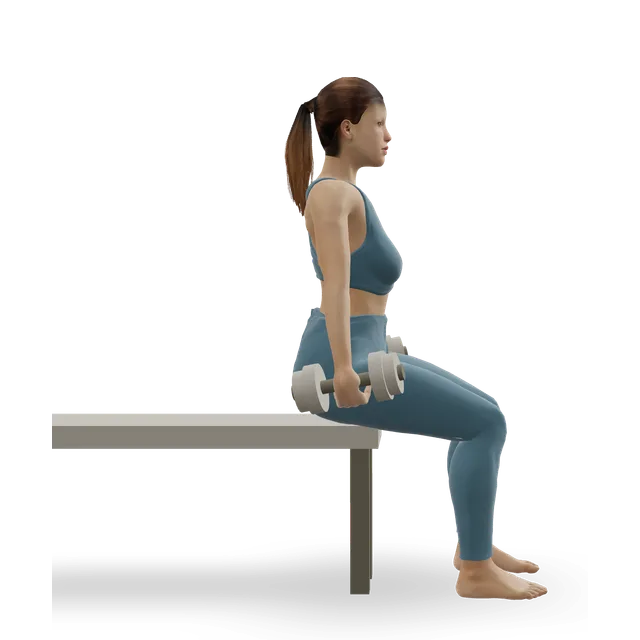
- Seated dumbbell curl1 minBeginner · Biceps, Forearms · 3D demo8 to 10 with light weights, tins or water bottles; keep breathing. After heart surgery, check the weight with your team firstHarder: Dumbbell biceps curl
- Standing march1 minBeginner · Hip flexors, Abs, Glutes · 3D demoBriskHarder: Standing band hip flexion
- Slow calf raise1 minBeginner · Calves · 3D demo10 to 15 slow raises, holding a chair backEasier: Seated bent-knee calf raise (soleus raise)Harder: Standing dumbbell calf raise
- Wall push-up1 minBeginner · Chest, Triceps, Shoulders · 3D demo8 to 10; breathe out as you push away. After heart surgery, march instead until your team says it's fine; with heart failure, keep to the wall versionHarder: Push-up





Cool-down (about 10 minutes)
- Standing march3 minBeginner · Hip flexors, Abs, Glutes · 3D demoGradually slower, until you're back to easy (9 to 10)Harder: Standing band hip flexion
- Treadmill walking2 minBeginner · Quads, Calves, Glutes · 3D demoA slow walk round the room or gardenHarder: Treadmill jogging
- Wall calf stretch (gastrocnemius)30 s each sideBeginner · Calves · 3D demoEasier: Seated calf stretch with a towelHarder: Contract-relax hamstring stretch (PNF)
- Standing Quad Stretch30 s each sideBeginner · 3D demoHold the wallHarder: Face-down quad and hip flexor stretch with a strap
- Cross-body shoulder stretch30 s each sideBeginner · Shoulders, Back · 3D demoSkip it after heart surgery until your team says it's fineHarder: Sleeper stretch
- Beginner · 3D demoSitting, not lying down. Gentle, with no holdsEasier: Breath reachHarder: Crocodile Breathing (prone diaphragmatic breathing)



Tips
- Use this after your cardiac rehab assessment, or once you've finished rehab, and check the level with your team. If you haven't been offered rehab, ask your GP or cardiologist.
- New to it? Do one round of the circuit, and add the second when the first feels like 13 or less.
- Rate your effort while you exercise, not afterwards. On a beta blocker, ignore heart rate formulas and go by how it feels.
- Keep your feet moving between moves, never hold your breath, and don't lie down straight after.
- Don't start if you feel unwell or have a temperature, chest pain at rest, or a heartbeat that's irregular and not normal for you. Stop, sit down and don't restart that day if you feel dizzy, get chest pain or your heartbeat becomes very irregular.
- Chest pain: stop, rest and use your GTN (glyceryl trinitrate) as prescribed, with a second dose after 5 minutes if the first doesn't help. Call 999 if it's still there 5 minutes after the second dose, or straight away if it feels tight or like squeezing, or spreads to your arms, neck or jaw.
- With heart failure, skip it on days you feel more tired or breathless than usual, and weigh yourself regularly.
- Carry your GTN if you have it, and keep water nearby.
The doses are suggested starting points, not a prescription. Choose a range you can control and stop for sharp or increasing pain, numbness or tingling. Get individual advice after an injury or surgery, or if you are pregnant or managing a health condition.
Guides that recommend it
Find more moves like these
More cardio & conditioning



HIIT workout at home
A 20-minute no-equipment HIIT workout: jumping jacks, jump squats, mountain climbers, burpees, skips and bear crawls.
20 minIntermediate10 movesNo equipment

Plyometric workout
An advanced jump training session: pogo hops, box jumps, split squat jumps, broad jumps and depth jumps.
30 minAdvanced8 movesA bench or box, A stepEasy cardio workout
A steady 30 to 45 minute cardio session at talk-but-not-sing pace: walk, cycle, row or cross-train, counting toward weekly activity guidelines.
40 minBeginner3 movesCardio machine, A wallQuestions people ask
How long does the cardiac rehab exercises at home: a 45-minute session take?
About 45 minutes, including any warm-up and cool-down listed. Shorten it by doing fewer rounds; lengthen it by adding one.
What equipment do I need?
You need: A wall, A bench or box, A step, A band, An anchor point, A dumbbell, Cardio machine. Each move links to its guide, where you can find an alternative if you are missing something.
Is it suitable for beginners?
It is written for beginners. 4 of its 14 moves have an easier option listed beside them if you need one.
How do I make it easier or harder?
Use the easier or harder option listed under each move, change the number of rounds, or adjust the rest. Progress one change at a time.