Posture guide

Rib flare: why your lower ribs stick out, and what exercise can and can't do

Rib flare is when the lower ribs at the front stick out more than the chest above or the tummy below, on one side or both. It isn't a medical diagnosis, and no study has measured how common it is. What is known: women's ribs slope more steeply than men's, the lower rib cage widens in pregnancy, and doctors describe lower ribs that flare on their own, with no other chest problem.

No study has shown that rib flare comes from weak abs, or that breathing exercises pull the ribs back in, though strength and breathing work can help you feel and move better. Ribs that stick out on one side, with a hump when you bend forward, should be checked for scoliosis, and a sunken or pushed-out breastbone by a GP.

This guide covers what's known about rib cage shape, pregnancy and children, the moves that help with 3D demos, and when to get checked.

The short version

Not a diagnosis, and not measured

Rib flare means lower ribs at the front that stick out more than the chest above or the tummy below, on one side or both. No study has measured how common it is. In medicine the term mostly describes the lower ribs in chest wall conditions, and an X-ray measure in scoliosis.

Sources 1, 2

Rib cages differ

Women's ribs slope more steeply than men's, the lower rib cage widens in pregnancy, and babies' ribs sit more horizontally until about age 2.

Sources 3, 4, 5

Not shown to be weak abs

The tummy muscles pull the ribs down only when you breathe out hard. In pregnancy, when the lower ribs widen most, the breathing muscles keep their strength. We found no study linking the position of the lower ribs to tummy strength.

Sources 6, 4, 7

Breathing your ribs back in is untested

We found no trial measuring whether breathing or core exercises move the lower ribs. The best-known method, balloon breathing, is published as a clinical suggestion. Strength and breathing work can still help you feel and move better.

Source 8

One side needs a check

Ribs that stick out on one side, with a hump when you bend forward, can be scoliosis, and a sunken or pushed-out breastbone is a difference in the chest wall. A GP can check both.

Sources 9, 10, 11

What rib flare is

What people mean

The lower edge of the rib cage at the front (the costal margin) looks prominent. People notice it lying down, arching the back, reaching overhead, after pregnancy or when they're lean.

Doctors use 'rib flare' or 'costal flaring' mostly for lower ribs that stick out alongside a sunken or pushed-out breastbone, on one side (typically the left) or both. A review notes that flaring can also appear on its own, with no other chest problem. Researchers have also started measuring a 'rib flare distance' on X-rays of teenagers with scoliosis.

Sources 1, 12, 2

The angle under the breastbone

The angle where the two sides of the lower rib cage meet under the breastbone is called the subcostal angle. It widens in pregnancy, from about 68.5 degrees early on to 103.5 degrees at the end.

Source 4

How it's checked

There's no validated home or clinic test for rib flare on its own, and the popular check that your thumbs along the lower ribs should form a right angle has no source we could find. A clinician looks at whether one side sticks out with a hump on bending forward (scoliosis), at the shape of the breastbone, at signs of rickets in a young child, and at breathing effort in a baby.

Sources 10, 11, 13, 14

What's known about rib cage shape

Women and menEmerging evidence

In 40 healthy adults, women had smaller rib cages for their height and more steeply sloping ribs than men. The authors suggest this shape suits the extra room needed in pregnancy.

Source 3

PregnancyStrong evidence

The lower rib cage widens: the angle under the breastbone goes from about 68.5 to 103.5 degrees, and the width and lower circumference of the rib cage are larger late in pregnancy than after the birth. In 18 women followed through pregnancy, the rib cage changed shape but not volume.

Sources 4, 15

BabiesEmerging evidence

In 66 children, babies' ribs sat more horizontally and their chests were rounder. Most of the change towards the adult shape happened in the first 2 years.

Source 5

Breathing and movementStrong evidence

On a deep breath in, muscles between the ribs and in the neck lift the rib cage, and breathing out lets it settle. Only one study has measured how the ribs turn as you breathe in living people.

Sources 6, 16

Lean bodies and reaching overhead

The edge of the rib cage is easier to see with less fat over it, and raising your arms or arching your back lifts the front of the rib cage (our editorial observation).

What the evidence says

How common is it?

We found no study measuring how common rib flare is in healthy people, and no agreed definition outside chest wall and scoliosis research. A review of chest wall conditions describes flaring that appears on its own, with no other abnormality.

Source 1

Tummy muscles and breathingStrong evidence

The diaphragm is the main muscle for breathing in. The tummy muscles, with the inner muscles between the lower ribs, pull the rib cage down when you breathe out hard. In pregnancy, breathing-muscle strength stayed normal even though the chest wall changed shape, and the diaphragm's contact with the lower ribs increased.

Sources 6, 7, 4

What pregnancy does to the tummy musclesEmerging evidence

As the bump grows, the tummy muscle fibres lengthen by up to 15%, which reduces the force they can produce. That's a reason to rebuild strength after the birth, not proof that rib flare comes from weak muscles.

Source 4

Breathing exercises and rib positionEmerging evidence

We found no trial measuring whether breathing or core exercises change rib position or the angle under the breastbone. Balloon breathing comes from a 2010 clinical suggestion: its authors proposed that breathing out against a balloon makes the tummy muscles pull the lower ribs down and in, but they didn't test it.

Source 8

A sunken or pigeon chestEmerging evidence

A sunken breastbone (pectus excavatum) or a pushed-out one (pectus carinatum) affects about 1 in 100 children, and both are 3 to 5 times more common in boys. Rib flare is often seen with a sunken chest, and both shapes tend to become more obvious in the growth spurt. A review found 'no clear consensus' on what exercise does for them.

Sources 17, 11, 1

ScoliosisStrong evidence

Ribs that stick out on one side, most obvious when bending forward, are a recognised sign of scoliosis, which most often starts between 10 and 15. The NHS says scoliosis isn't linked to bad posture, exercise or diet.

Sources 9, 10, 18, 2

After pregnancy

The rib cage after the birth

The lower rib cage is wider late in pregnancy than after the birth, so it narrows again. We found no study tracking how fully the angle under the breastbone returns.

Source 4

A gap between the tummy musclesStrong evidence

The two long tummy muscles often separate in pregnancy, usually by about 2 finger widths, and the NHS says the gap usually goes back to normal by the time your baby is 8 weeks old. In 300 first-time mothers in Norway, 60% had a gap 6 weeks after the birth, 45% at 6 months and 33% at 12 months. An NHS trust leaflet calls a gap of 1 to 2 finger widths usual.

Sources 19, 20, 21

What exercise does for the gapEmerging evidence

In 175 first-time mothers, a weekly exercise class with daily pelvic floor training didn't reduce how many had a gap. A 2026 review of 9 trials (450 women) found exercise narrowed the gap by about 8 mm, without better function. Expect stronger muscles rather than a closed gap.

Sources 22, 23

What the NHS suggests

Pelvic floor and deep stomach exercises, standing tall, and avoiding sit-ups, planks, high-impact exercise, straining on the toilet and heavy lifting to start with. Check the gap regularly, and see a GP if it's still obvious 8 weeks after the birth. Our diastasis recti guide covers the check and the exercises.

Sources 20, 21

Ribs that stick out on one side

ScoliosisStrong evidence

Signs include the ribs sticking out on one side, a hump on one side of the back when bending forward, uneven shoulders, a shoulder or hip sticking out, leaning to one side, and clothes that don't fit well. The NHS says it's unlikely there's anything seriously wrong, but it's best to get it checked. NHS Lothian's guidance for GPs says no exercise will make scoliosis worse, and swimming may help. The scoliosis guide covers the rest.

Sources 9, 10, 18

A lopsided chest wallEmerging evidence

With a sunken or pushed-out breastbone, the lower ribs may flare on one side, typically the left, or on both, and the chest can look lopsided. A GP can refer you to a specialist if the shape bothers you or comes with symptoms.

Sources 1, 11

Babies and children

Babies' ribsEmerging evidence

Babies' ribs sit more horizontally and their chests are rounder, which can look like flaring. Most of the change towards the adult shape happens by about age 2.

Source 5

Breathing effort is different

A baby or child whose tummy sucks in under the ribs while they breathe fast or grunt is working hard to breathe. That's a reason to call 999, not rib flare.

Source 14

Rickets

Rickets, usually from too little vitamin D or calcium, can show as bumps where the ribs meet the cartilage at the front (felt to the side of the nipple line), swollen wrists and ankles, and bowed legs. See a GP if you're worried.

Sources 24, 13

Growth spurts

Scoliosis most often starts between 10 and 15, and a pigeon chest usually appears in the growth spurt around puberty. A new one-sided rib bump or a change in chest shape in a teenager is worth a calm GP check. A chest wall difference that's obvious early in childhood may lead doctors to check for a connective tissue condition.

Sources 9, 17

What helps, and how much

If nothing hurts

If your lower ribs stick out on both sides, nothing hurts and you have none of the warning signs below, there's no evidence that anything needs correcting: we found no study of rib flare on its own (our editorial reading). The moves below are for strength and comfort.

Trunk strength

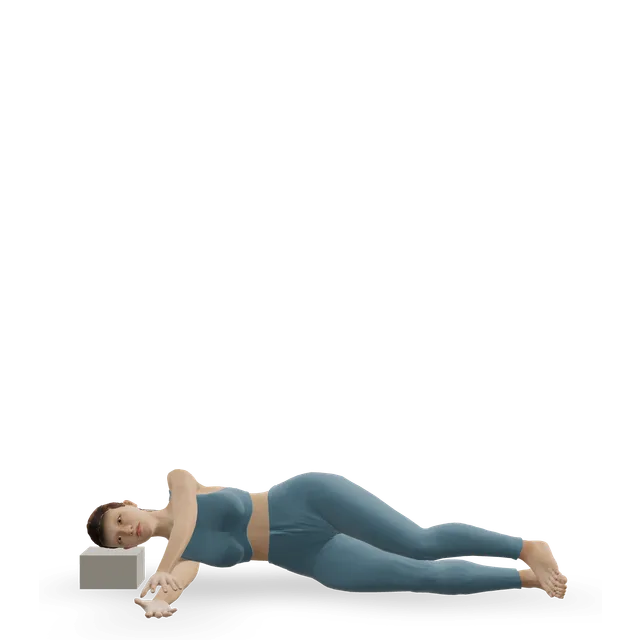
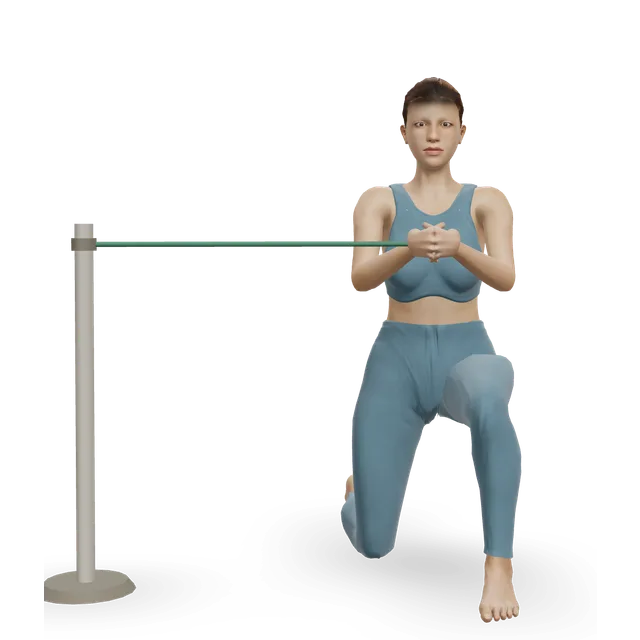
Dead bugs, 2 to 3 sets of 6 to 8 each side, or the easier heel taps; knee planks, 3 to 5 holds of 15 to 30 seconds; the half-kneeling Pallof press, 2 to 3 sets of 8 to 10 each side (our editorial starting points). After a birth, start with the side-lying tummy draw-in at the move page's dose, which is the NHS's: hold for up to 10 seconds, up to 10 times.

Source 20

Breathing practice

Lateral breathing (5 to 8 breaths at the start of every session), crocodile breathing (5 minutes of easy nose breathing, about 4 seconds in and 6 out) and slow breathing (at least 5 minutes, done regularly), all at their move pages' doses. A long, unhurried breath out is a comfortable cue, but none of this has been shown to change rib shape.

Sources 6, 8

Upper back

For ribs that flare mainly when you reach overhead: band rows at the move page's dose (3 sets of 10 to 15), foam roller thoracic extension at the move page's dose (5 to 8 slow breaths at each of 3 or 4 spots) and wall angels, 8 slow slides (editorial). Clear the foam roller first if you have osteoporosis.

After a birth

Pelvic floor exercises at the move page's dose (start with 8 slow holds of up to 10 seconds and 8 quick squeezes, three times a day), the side-lying draw-in, and heel slides at the move page's dose (10 slow repetitions each side, once or twice a day), which are also in an NHS trust leaflet. Avoid sit-ups, planks and high-impact exercise to start with, as the NHS advises.

Sources 20, 21

A sunken or pigeon chest

Braces for a pigeon chest are usually worn for at least 20 hours a day, and specialist clinics use a suction device (a vacuum bell) for a sunken chest. A review found no clear consensus on exercise, so use it for strength and posture, and leave the chest shape to a specialist.

Sources 1, 17

Lateral breathing, step by step

The move page's dose: 5 to 8 breaths at the start of every session; no trial has tested this breath on its own. Stop and breathe normally if you feel dizzy or light-headed.

  1. Sit tall, or lie on your back with your knees bent and feet flat. Wrap your hands around the sides of your lower ribs.
  2. Breathe in through your nose and feel your ribs widen into your hands and towards your back, without your shoulders lifting.
  3. Breathe out slowly through pursed lips, as if through a straw. Let your ribs soften together and your lower belly draw gently in.
  4. Keep it unforced: about 3 to 5 seconds in, and a slightly longer breath out.

See the movement on the 3D figure: Lateral breathing (Pilates breathing)

Breathing practice

At the move pages' doses, for comfort and relaxation. None of these has been shown to change rib shape.

Trunk strength

Two or three times a week, at the doses above. In the early weeks after a birth, start with the draw-in, pelvic floor and heel slides, and leave planks until later, as the NHS advises.

Upper back

Band rows and the foam roller at their move pages' doses; wall angels, 8 slow slides, keeping your lower back's gentle curve (editorial).

Routines to follow

For comfort and strength: none of these is a rib flare fix. After a birth, the postnatal and pelvic floor routines come first.

When to get checked

Call 999 for a baby or child who

This is effortful breathing, not rib flare.

  • Is having difficulty breathing: you may notice grunting noises, their tummy sucking under their ribs, or fast breathing.
  • Has pauses when they breathe.
  • Has blue or grey skin, tongue or lips (on brown or black skin, this may be easier to see on the palms, the soles of the feet, the lips, gums or inside the eyelids).
  • Is floppy and won't wake up or stay awake.

Source 14

See a GP: possible scoliosis

Get it checked if you notice:

  • The ribs sticking out on one side, or a hump on one side of the back when bending forward.
  • Uneven shoulders, a shoulder or hip sticking out, or leaning to one side.
  • A visibly curved spine, or clothes that don't fit well.

Sources 9, 10, 18

See a GP: chest shape

A sunken or pushed-out breastbone, especially one that's getting more obvious in a growth spurt, or that comes with breathlessness, chest pain or tiring quickly on exercise.

Sources 11, 17

After a birth

A tummy gap that's still obvious 8 weeks after the birth: see a GP, who can refer you to a physiotherapist. An NHS trust leaflet suggests seeing a physiotherapist for a gap wider than 2 finger widths with a visible bulge.

Sources 20, 21

A young child

Bowed legs, swollen painful wrists, pain in the back, ribs, pelvis or legs, or not wanting to walk much: see a GP, who can check for rickets.

Source 24

Chest-wall pain with a stiff back

Pain where the ribs join the breastbone, difficulty expanding your chest on a deep breath, and back stiffness that's worse in the morning can be ankylosing spondylitis. See a GP.

Source 25

Painful or clicking lower ribs

Our rib pain guide covers painful, clicking or moving lower ribs, and when they need urgent help.

Myths

"Rib flare means weak abs."Emerging evidence

We found no study showing it. Rib cages differ between women and men and widen in pregnancy, breathing-muscle strength stays normal in pregnancy, and the tummy muscles pull the ribs down only when you breathe out hard.

Sources 6, 4, 7, 3

"You can breathe your ribs back in."Emerging evidence

We found no trial measuring it. Balloon breathing comes from a clinical suggestion built on theory. Breathing practice can feel good, but it isn't a proven way to change rib shape.

Source 8

"Flared ribs are just bad posture."Strong evidence

Ribs that stick out on one side with a hump on bending forward can be scoliosis, which isn't caused by posture, and a sunken or pushed-out breastbone is a difference in the chest wall.

Sources 9, 10, 11

"Rib flare damages your breathing."Emerging evidence

In pregnancy, when the lower ribs widen most, the breathing muscles keep their strength and the diaphragm's contact with the lower ribs increases. We found no study showing harm from rib flare on its own.

Sources 4, 7

"Crunches will close the gap after pregnancy."Emerging evidence

The NHS advises avoiding sit-ups and planks at first, and trials haven't shown that exercise closes the gap, though it does build strength.

Sources 20, 22, 23

Questions people ask

What is rib flare?

It's when the lower ribs at the front stick out more than the chest above or the tummy below, on one side or both. It isn't a medical diagnosis. Doctors use the term mostly for the lower ribs in chest wall conditions, and in scoliosis research.

Is rib flare normal?

Nobody has measured how common it is. Rib cages do differ: women's ribs slope more steeply than men's, the lower rib cage widens in pregnancy, and doctors describe lower ribs that flare on their own with no other chest problem. If both sides look alike, nothing hurts and you have none of the warning signs, there's no evidence it needs correcting.

What causes rib flare?

It can come from the shape of your rib cage, and pregnancy widens the lower ribs. It can also come with a chest wall difference (a sunken or pushed-out breastbone), scoliosis (ribs sticking out on one side) or, in young children, rickets. Nobody has measured how often each applies.

Is rib flare caused by weak abs?

We found no study showing that. The tummy muscles pull the ribs down only when you breathe out hard, and in pregnancy, when the lower ribs widen most, the breathing muscles keep their strength. Strong tummy muscles are worth having, but they haven't been shown to reshape the ribs.

Can you fix rib flare with exercise or breathing?

We found no trial testing it. The best-known method, balloon breathing, is a clinical suggestion rather than a tested treatment. Exercise builds trunk strength and control, and breathing practice can help you relax, but neither is a proven way to change rib shape.

Why do my ribs stick out on one side?

A sunken or pushed-out breastbone can make the lower ribs flare on one side, typically the left. If the ribs stick out on one side with a hump when you bend forward, or your shoulders or waist look uneven, see a GP to check for scoliosis. The NHS says it's unlikely to be anything serious, but it's best to get it checked.

Is rib flare after pregnancy permanent?

The lower rib cage is wider late in pregnancy than after the birth, so it narrows again, but we found no study tracking how fully it returns. A gap between the tummy muscles usually goes back to normal by 8 weeks; see a GP if it's still obvious then.

Is rib flare linked to diastasis recti?

Both are common after pregnancy, and the tummy gap can run up towards the ribs. In one study of first-time mothers, 60% had a gap 6 weeks after the birth and 33% at 12 months. Our diastasis recti guide covers the check and the exercises.

Can rib flare cause pain?

Rib flare on its own hasn't been shown to cause pain. Painful or clicking lower ribs, or pain where the ribs meet the breastbone, have other causes, which our rib pain guide covers. In a young adult, chest-wall pain with morning back stiffness can be ankylosing spondylitis, so see a GP.

Is rib flare the same as pectus excavatum?

No, but they often come together: rib flare is often seen with a sunken chest. Chest wall differences like this affect about 1 in 100 children and often become more obvious in the growth spurt. A GP can refer you if the shape bothers you, or if you get breathless or have chest pain.

Do babies and toddlers have flared ribs?

Babies' ribs sit more horizontally and their chests are rounder until about age 2, which can look like flaring. A baby whose tummy sucks in under the ribs while breathing fast or grunting needs 999. Bowed legs or swollen wrists need a GP check for rickets.

Is there surgery for rib flare?

Surgeons sometimes correct lower-rib flaring as part of an operation for a sunken chest. For a pigeon chest, specialist clinics use braces worn for at least 20 hours a day. A GP can refer you if the shape of your chest bothers you.


Sources

  1. Sonel Tur 2025 · Pectus deformities and rehabilitation (review, Turk J Phys Med Rehabil)
  2. Wright 2026 · Rib flare distance: an X-ray measure of the rib cage in adolescent scoliosis (measurement study, Spine Deformity)
  3. Bellemare 2003 · Sex differences in the size and shape of the rib cage in 40 adults (X-ray study, Am J Respir Crit Care Med)
  4. LoMauro 2015 · Respiratory physiology of pregnancy (review, Breathe)
  5. Openshaw 1984 · Changes in rib cage shape during childhood (X-ray and CT study, Thorax)
  6. De Troyer 2011 · Mechanics of the respiratory muscles (review, Comprehensive Physiology)
  7. Contreras 1991 · Breathing drive and breathing muscle function in 18 pregnant women (cohort study, Am Rev Respir Dis)
  8. Boyle 2010 · The value of blowing up a balloon (clinical suggestion, N Am J Sports Phys Ther)
  9. NHS · Scoliosis (past its review date: reviewed April 2023, review due April 2026)
  10. Scoliosis Research Society · Diagnosing scoliosis, and screening
  11. Janssen 2024 · Pectus excavatum and carinatum: epidemiology, causes and clinical features (narrative review, J Thorac Dis)
  12. Haecker 2023 · Surgery for pectus excavatum with costal flaring in 5 patients (case series, Ann Thorac Surg Short Rep)
  13. Munns 2016 · Global consensus recommendations on nutritional rickets (consensus statement, J Clin Endocrinol Metab)
  14. NHS · Bronchiolitis
  15. LoMauro 2019 · How the lungs, chest wall and breathing muscles adapt in pregnancy: 18 women (cohort study, J Appl Physiol)
  16. Lee 2015 · Biomechanics of the thorax: research evidence and clinical expertise (review, J Man Manip Ther)
  17. Kowalska 2026 · Congenital chest wall deformities in children (narrative review, Children)
  18. NHS Lothian RefHelp · Scoliosis: guidance for GPs (paediatric orthopaedics)
  19. Sperstad 2016 · Diastasis recti from pregnancy to 12 months after the birth in 300 first-time mothers (cohort study, British Journal of Sports Medicine)
  20. NHS · Your post-pregnancy body
  21. East Sussex Healthcare NHS Trust · Pelvic health physiotherapy: diastasis of rectus abdominis muscles postpartum (past its review date: reviewed December 2021, review due November 2024)
  22. Gluppe 2018 · A postnatal exercise class and diastasis recti in 175 first-time mothers (RCT, Physical Therapy)
  23. Capoccia Giovannini 2026 · Exercise for diastasis recti after birth: 9 trials (systematic review and meta-analysis, Hernia)
  24. NHS · Rickets and osteomalacia
  25. NHS · Ankylosing spondylitis: symptoms (past its review date: reviewed January 2023, review due January 2026)

Exercise education, not a diagnosis or treatment plan, and clinical review of these guides is pending. Get a curve or hunch that is new or getting worse checked, above all in a growing child or after a fall, and get urgent help for numbness or weakness in the legs or a change in bladder or bowel control. Health disclaimer.