Knee pain from netball: landings, the ACL, kneecap and tendon pain, growing knees and what helps

Sore knees after netball are common, and most netball knee problems are minor. Landings, sudden stops and a busy week of matches all ask a lot of the knee. Most often it's tired, overloaded knees, kneecap pain or the tendon just below the kneecap, and in a growing player a tender bump below the knee is usually Osgood-Schlatter. A pop on a landing with swelling within hours, or a knee that gives way, is different: it can be a torn anterior cruciate ligament (ACL), one of netball's serious injuries, and needs checking.

This guide starts with the signs that need accident and emergency (A&E), such as a pop with fast swelling, and those that need the National Health Service's 111 line (NHS 111) or a general practitioner (GP) the same day, such as a knee that locks. It then maps the causes by where it hurts and how old you are, gives Netball Australia's KNEE warm-up and England Netball's advice in their own words, covers landing technique, the footwork rule and knee braces, and gives a four-stage plan with a 3D demo of every move, back to training and matches.

When to get help first

Exercise is for pain that has been checked or is clearly mild and settling.

Get urgent medical help if

  • Go to A&E (accident and emergency) if you've injured your knee and it has changed shape, it becomes very swollen very quickly, you felt a pop or snap, you can see bone sticking out, or it's bleeding heavily. Don't drive yourself: ask someone to take you, or call 999 if the pain means you can't move your leg to get there.
  • Call 999 or go to A&E if you heard a crack when you were injured, the knee has changed shape or points at an odd angle, the leg below it is numb or tingling, or the skin has changed colour or is cold to touch. You may have broken a bone. Don't drive yourself.
  • Get advice from NHS 111 now: you cannot move the knee or put any weight on it, or it is very painful, badly swollen or has changed shape.
  • You hurt your knee and cannot take 4 steps, or you are 55 or over and have injured it: get it checked the same day for a broken bone.
  • Signs of a torn ligament: you felt or heard a pop, the whole knee swelled within a few hours, or it gives way, feels loose or bends further back than the other knee. Get it assessed promptly, the same or the next day: our ACL, PCL and outer knee ligament (LCL) guides explain what happens next.
  • Get advice from NHS 111 now: the knee locks, gives way or clicks painfully. Painless clicking is normal.
  • Get advice from NHS 111 now: after a twist, your knee won't go fully straight, or something blocks the last part of straightening, even if you can still walk on it. A torn piece of meniscus caught in the joint can do this, and it needs checking promptly.
  • The knee is locked and you cannot fully straighten it.
  • Signs of more than an MCL sprain: the whole knee swells within a few hours, you felt a pop, or the knee gives way or feels very unstable. An MCL sprain usually swells only over the inner side; these signs suggest another injury, often to the ACL, so get it assessed promptly.
  • Go to A&E: you've injured your knee and it has changed shape, becomes very swollen very quickly, you felt a pop or snap, bone is sticking out, or it's bleeding heavily. Call 999 if you can't get to A&E because the pain stops you moving your leg. Don't drive yourself. While you wait, keep the knee still and supported with padding, and don't raise it, stand or walk on it, or try to put the kneecap back yourself.
  • Get help from NHS 111 if you've injured your knee and it's very painful, swollen or bruised, you can't stand up or move your knee, or you think your kneecap came out of place and went back.
  • Same day: a pop or tearing feeling at the front of the knee after a fall, stumble, jump or landing, then you can't straighten the knee or lift the straight leg off the bed, there's a dent above or below the kneecap, or the kneecap sits higher or lower than on the other side. Go to A&E or an urgent treatment centre, or get help from NHS 111. A torn quadriceps or patellar tendon does best when it's repaired soon.
  • A child or teenager: after a jump, landing or fall, a pop or sudden severe pain below the kneecap, and the knee will not straighten or take weight. Get it checked the same day: the bony bump below the kneecap can break away instead of the tendon tearing, or a sleeve of bone and cartilage can pull off the lower kneecap.
  • After a jump, landing or fall: a pop or sudden severe pain at the bump, and the knee will not straighten or take weight, or is badly swollen or has changed shape. Get it checked the same day: the bump itself can break away.
  • Get advice from NHS 111 now: a hot, red or swollen knee with sudden severe pain, a very high temperature (although not everyone has one), or feeling hot, cold or shivery. This can be a joint infection.
  • Same day (urgent GP appointment or NHS 111): sudden, severe pain in one joint, with swelling, a change in skin colour or difficulty moving it, especially if you feel unwell, hot, cold or shivery or have a high temperature (although not everyone has one). It could be an infection in the joint, gout or calcium crystals (pseudogout), and only a sample of fluid from the joint can tell them apart.
  • Ask for an urgent GP appointment or get help from NHS 111 the same day if your child or teenager has pain in the hip, groin, thigh or knee and is limping; call 999 or go to A&E if they can't put any weight on their leg. Hip problems can sometimes be felt in the thigh or knee, and some children with a slipped growth plate only have knee pain. Don't let them walk, run or play sport on it while you wait.
  • Same day (urgent GP appointment or NHS 111): throbbing pain in one leg (rarely both), usually the calf or thigh; swelling in one leg (rarely both); red, blue or darkened skin; or swollen veins; or sudden worse pain and swelling around a lump at the back of the knee (a possible clot or a burst Baker's cyst).
  • Call 999 or go to A&E if breathing suddenly becomes difficult, if pain in your chest or upper back comes on suddenly with breathlessness or a very fast heartbeat, or if someone passes out. Do not drive yourself. It can be a blood clot that has reached the lungs.
  • Call 999 if someone faints while exercising, or has chest pain that doesn't go away, spreads to the arms, neck, jaw, stomach or back, or comes with sweating, feeling sick, light-headedness or breathlessness.
  • Call 999 or go to A&E: back or leg symptoms with numbness around the genitals or bottom, new trouble controlling your bladder or bowels, or severe or worsening weakness or numbness in both legs.

See a doctor or physiotherapist if

  • Knee pain that has not improved within a few weeks of looking after it at home. Many areas offer NHS physiotherapy without a GP referral.
  • Pain building just below the kneecap with jumping or running: tendon pain weakens the tendon, so start our jumper's knee guide's plan early. Pain building just above it, worse with deep squats, jumping or kneeling, is quadriceps tendinopathy: start that guide's plan early.
  • Kneecap pain that hasn't improved within 6 weeks of changing your activities and doing the exercises, or that gets worse: talk to a GP or physiotherapist.
  • The knee gives way, the whole knee swells, or it catches or locks: that isn't typical of kneecap or tendon pain. Get it checked for a ligament or meniscus injury (our suggestion).
  • A twisting or landing injury with a pop or snap, or a knee that changed shape or swelled very quickly, is the A&E sign above, in the NHS's words. If you didn't go at the time and the knee has since settled and you can walk on it, still get it assessed soon by your GP, an NHS physiotherapy service (many areas take self-referrals) or a fracture or sports injury clinic.
  • A knee that keeps giving way in daily life despite rehab: ask about surgery. Carrying on with an unstable knee risks further damage inside it.
  • A child or young teenager with a suspected ACL injury: ask for a specialist assessment.
  • A knee that still feels loose or gives way at about 6 weeks: ask for an orthopaedic opinion. Looseness that persists beyond about 6 weeks is when surgeons consider an operation.
  • A child or teenager with pain on the inner side of the knee after an injury: get it checked, because the growth plate can be injured instead of the ligament.
  • A child or teenager with a knee injury: get it checked, because the growth plate can be injured, or a piece of bone pulled off with the ligament, instead of the ligament tearing.
  • A tear after a significant twisting injury, especially in a younger person.
  • Catching, locking or swelling at the joint line that hasn't settled after about 3 months of exercise and other non-surgical care: ask your GP or physiotherapist about a specialist review. A magnetic resonance imaging (MRI) scan may be considered then.
  • The kneecap slips out again, or keeps feeling as if it will: ask for a specialist assessment. Repeat dislocations are common, and a second one is when surgery is usually discussed.
  • Swelling that keeps coming back, or painful catching or clicking: a loose piece of bone or cartilage needs checking.
  • A child or teenager with pain at a bump just below the kneecap or at its lower tip, worse with squats, jumps and kneeling: see our Osgood-Schlatter and Sinding-Larsen-Johansson guides, and get it checked if it is getting worse.
  • Pain just below the kneecap that keeps coming back with sport, or knee pain that has not improved within a few weeks of cutting back. A GP or physiotherapist can confirm what it is.
  • Pain that makes sport no fun, or makes your child want to stop, even after cutting back.
  • Contact your GP practice if your child's knee locks or gives way regularly; is hot, swollen or tender, especially if they can't recall an injury; they often limp after activities; they have knee pain that wakes them at night; they avoid activities because of increasing symptoms; or they have a lump in or around the knee that doesn't go away.
  • See a GP for bone pain or tenderness, particularly if it's worse at night, or a lump or swelling that is growing.
  • Swelling in several joints, or morning stiffness that lasts more than 30 minutes: see a GP. It can be an inflammatory arthritis such as rheumatoid arthritis rather than osteoarthritis.
  • Numbness, tingling or weakness that travels down the leg from the back. That points to a nerve (sciatica) rather than the knee.

Where does it hurt?

Location narrows the likely causes; it does not diagnose.

Both knees and the front of the thighs ache the day after a match, a tournament or the first sessions of a season, easing as you move

Tired, overloaded knees and thighs, the commonest cause. A lighter day or two, then the plan below.

Read: Knee pain after a workout →

A diffuse ache around or behind the kneecap, worse on stairs, squats and after sitting

Kneecap (patellofemoral) pain, common in teenage girls in jumping and pivoting sports. Hip and thigh strength helps.

Read: Runner's knee →

One point at the lower tip of the kneecap, sore at the start of play, easing as you warm up, worse afterwards

Jumper's knee (patellar tendinopathy). Common in jumping sports; staged tendon loading helps.

Read: Jumper's knee →

A tender bump just below the knee in a player of about 10 to 15

Osgood-Schlatter, common in growing players in running and jumping sports. An activity ladder with strength work helps most.

Read: Osgood-Schlatter →

A pop on a landing or a turn, swelling within hours, then a knee that gives way

Possibly a torn ACL. Uncommon, but netball's serious knee injury: go to A&E, as the warning signs say.

Read: ACL injury →

The inner side after the knee was knocked or bent inwards in a collision or a landing

Possibly a sprain of the inner knee ligament (the medial collateral ligament, MCL). Get it assessed.

Read: MCL sprain →

The joint line after a twist on a planted foot, with catching, locking or a knee that won't straighten

Possibly a meniscus tear. Get advice the same day if it locks, as the warning signs say.

Read: Meniscus tear →

The kneecap slipped out to the side on a turn or a landing

A dislocated kneecap. Uncommon: A&E if it's still out, NHS 111 if it went back.

Read: Kneecap dislocation →

The back of the knee after matches

Usually the hamstring tendons or a Baker's cyst; a swollen, throbbing calf needs checking the same day.

Read: Pain behind the knee →

A child or teenager with knee or thigh pain and a limp, the knee itself looking normal

Possibly the hip (a slipped growth plate). Rare, but it needs checking the same day.

Read: SUFE (slipped hip growth plate) →

A hot, red, swollen knee with sudden severe pain or a fever

Possibly a joint infection. Rare: get advice from NHS 111 now, as the warning signs say.

Read: Swollen knee →

The ankle after landing on another player's foot

Usually a sprain, netball's commonest injury. Our ankle pain from netball guide covers it.

Read: Ankle pain from netball →

Fainting or chest pain on court

Possibly the heart: call 999, as the warning signs say.

Understand it

Common, mostly minor, and the serious injuries are uncommonEmerging evidence

In community netball there are about 13.8 to 14 injuries of any kind per 1,000 hours played, and at the 2019 World Cup "2/3 of injuries did not result in time-loss". In 2016, Australian community netball insurance paid out on about 3 claims per 1,000 participants. Across 46 studies, "Many authors stated that most netball injuries are minor", though they defined minor in different ways.

Physiotherapy researchers at La Trobe University put it plainly: "But what we can say from the limited evidence available is the overall risk of knee and joint injury in community netball is low." Each study counted injuries its own way, so these figures can't be compared directly.

Sources 1, 2, 3, 4, 5, 6, 7

Ankles are hurt more often, but knees cost the mostStrong evidence

Across 46 studies, "Injuries to the ankle and knee were the most common (in 19 studies)", with the ankle 13% to 84% and the knee 8% to 50% of injuries. In professional Australian netball the knee was 15.7% of injuries that needed medical attention. Knee injuries were 42% of successful insurance claims in Australia in 2016 and 56.9% of claim costs in Victoria in 1999. In the UK Superleague, matches carried far more injuries per hour than training (41.12 against 1.10 per 1,000 hours).

Sources 6, 8, 4, 9, 10

Landing is where most knee injuries happenEmerging evidence

Netball's footwork rule holds a landing in place: after landing on one foot, a player may step with the other foot, lift the landing foot and must "pass or shoot before the landing foot is regrounded", and most netball landings are on one leg. Across the adult studies, "Landing was the most reported situation of knee injury, representing 46.6% of all knee injuries".

In two video series of elite ACL injuries, "Seventeen of the ACL injuries occurred from jump-landing actions and only two from cutting manoeuvres", most often braking hard after a high pass on a wide, two-footed landing with a nearly straight knee; in another 16, the player was knocked off balance in the air, or landed well and then turned and leaned the trunk without moving the feet. These are descriptive video studies: they show patterns, not causes.

Sources 11, 12, 13, 14, 15, 16

The ACL: uncommon for any one player, but netball's serious knee injuryEmerging evidence

"Anterior cruciate ligament rupture was the most common diagnosis" among 4,596 Australian netball hospital admissions (16.5%, at an average age of 27), from data for 2000 to 2004. Netball is among the sports with the most ACL reconstructions in Australia, and in New Zealand "netball, rugby and football accounting for the highest number of injuries", with the fastest rise in girls aged 15 to 19 (up 120% in a decade). These are counts of operations, not rates per player; in population data more men than women have ACL reconstructions. Netball Australia's insurance data put ACL injury at "approximately 25% of serious injuries".

Across sports, female athletes injure the ACL about 1.7 times as often per game or session as male athletes. Most of a netballer's knee injuries are not the ACL: it was 6.4% of knee injuries in Australia's high-performance athletes.

Sources 17, 18, 19, 20, 21, 22, 23

Who gets knee pain from netballEmerging evidence

Adults and older teenagers have the most knee and ankle sprains; children hurt their arms, wrists and hands more. In New Zealand, knee injury claims in 10 to 14 year olds rose 2.5-fold over a decade, and Netball New Zealand reports "ACC accepted 6,514 netball-related injury claims for 10 to 14-year-olds in 2025, almost 1,700 more than the next-highest age group" (ACC is New Zealand's accident insurer). In one community club, a previous injury went with about 7 times the odds of a leg injury over the season, an association.

In a review and expert consensus, poor landing technique was the top risk factor to fix in women's netball.

Sources 6, 1, 24, 25, 26

When a scan matters, and what tendon scans meanEmerging evidence

After an injury, the Ottawa rule in the warning signs (you can't take 4 steps, or you're 55 or over) decides who needs an X-ray. The NHS says a GP can "refer you to hospital for a scan or specialist treatment", and a dislocated kneecap usually needs X-rays even if it went back. A magnetic resonance imaging (MRI) scan is for a suspected ACL, meniscus or kneecap injury where the result changes treatment.

For kneecap and tendon pain a scan rarely helps: "Sonographic hypoechoic regions were present in 35 of 250 (14%) patellar tendons in athletes who had never had anterior knee pain" (changes on ultrasound in tendons that didn't hurt).

Sources 27, 28, 29

What usually happensEmerging evidence

The NHS says knee pain "can often be treated at home. You should start to feel better in a few days", and "After 2 weeks, most sprains and strains will feel better", though severe ones can take months. Jumper's knee improves over months: in the largest trial, symptom scores rose by 28 points in 24 weeks with staged loading.

In Osgood-Schlatter, "After 12 weeks, 80% reported a successful outcome, which increased to 90% at 12 months", and 16% were back in sport at 12 weeks and 69% at 12 months, in one study without a comparison group. After an ACL reconstruction, high-performance Australian athletes took a median of 369 days to return to sport, and 62% of club and community netballers went back to netball.

Sources 27, 30, 31, 32, 20, 33

When it isn't netball: the causes the warning signs cover

Some knee pain has causes netball didn't create, or needs more than a plan, and the warning signs follow the pages behind them. A knee that changed shape, swelled fast or went with a pop needs A&E, in the words of the NHS knee pain, dislocated kneecap, sprains and strains and meniscus tear pages, and the Ottawa knee rule, tested in emergency departments, picks out who needs an X-ray. A pop at the front of the knee with a knee you can't straighten can be a torn quadriceps or patellar tendon, as the American Academy of Orthopaedic Surgeons (AAOS) describes, and in a child the bony bump or a sleeve of cartilage can pull away instead, as two case series describe. A hot, swollen knee can be an infection, as the NHS septic arthritis page says, and a child with knee pain and a limp follows the NHS limping page.

A swollen, throbbing calf can be a blood clot or a burst Baker's cyst, and sudden breathlessness a clot in the lungs, as the NHS pages on deep vein thrombosis (DVT), Baker's cyst and pulmonary embolism say; fainting or chest pain on court needs a 999 call, as the NHS fainting and chest pain pages say; and pain that travels down from the back is sciatica, in the NHS's words. A knee that is locked, a tear after a significant twist, a knee that keeps giving way or a loose inner knee follows a British Medical Journal (BMJ) guideline panel, two trials in younger adults, a European meniscus consensus, an NHS programme on knee keyhole surgery, the NHS page on why ACL surgery is done, a UK trial of reconstruction against rehab, an international consensus on ACL injuries in children, a US ligament guideline, the AAOS and a review of inner knee ligament injuries. Repeat kneecap dislocations follow nidirect and a population study; growing knees, NHS trust leaflets, the AAOS, children's physiotherapists and NHS inform; bone pain, the NHS bone cancer page; kneecap pain, NHS inform; and swelling in several joints or long morning stiffness, NICE's arthritis guideline (NICE is the National Institute for Health and Care Excellence) and the NHS rheumatoid arthritis page.

Sources 27, 28, 30, 57, 58, 59, 60, 61, 62, 63, 64, 65, 66, 67, 68, 69, 70, 71, 72, 73, 74, 75, 76, 77, 78, 79, 80, 81, 82, 83, 84, 85, 86, 87, 34, 88, 89, 90, 91, 92


What helps, and how strong the evidence is

Warm-ups with strength and landing work halve ACL injuries (in other sports)Strong evidence

Across 8 meta-analyses, prevention programmes cut all ACL injuries by about half (odds ratio 0.50) and non-contact ACL injuries in female athletes by about two-thirds (odds ratio 0.33). In 18 studies of 27,231 young female athletes, "NMT reduced the risk for ACL injury from 1 in 54 to 1 in 111" (NMT is neuromuscular training: strength, balance and landing work), more in school-age players and when each session included landing and lower body strength exercises. In women's football, exercise programmes cut ACL injuries by 45% (low-level evidence).

Doing it regularly matters: studies where athletes kept to the programme had much lower ACL rates. All of this evidence comes from other sports, mostly football, basketball, handball and volleyball. Exercise and Sport Science Australia says evidence for "several high-risk sports is unclear", and asks for studies in netball.

Sources 35, 36, 37, 38, 39

The KNEE programme and NetballSmart: built on what works, not yet tested on injuriesMixed evidence

Netball Australia's KNEE programme has four parts (warm-up and footwork; strength; balance and landing; agility), and "The KNEE Program needs to be completed at least twice a week for maximum effectiveness and must be continued for the effects to be maintained". The recreational version is "a complete warm up for recreational netballers (14 years+)", with a junior version for younger players. Netball New Zealand calls its NetballSmart Dynamic Warm-up "the official 15-20 minute warm-up for Netball", and its coaching sheet says "Do the NSDWU with every training and game."

Neither has been tested on injury rates. KNEE improved one direction of a balance test against a usual warm-up in a trial of two teams; NetballSmart warm-ups improved landing technique in 77 school players and some performance tests in 81 others; and coached strength and jump training improved landing in 23 girls aged 11 to 13. In four community clubs, only 12% to 18% of the recommended KNEE activities were done as intended, and the strength, landing and agility parts were mostly skipped; coaches found it long and complex. Our reading: the evidence from other sports is strong enough to do it, all four parts included.

Sources 21, 40, 41, 42, 43, 44, 45, 46, 47, 48

Landing technique and the footwork ruleEmerging evidence

The ACL video authors suggest "shoulder-width foot landings, with ≥30° knee flexion, a small amount of plantar-flexion and good balance" (plantar flexion is the foot pointing slightly down). Netball Australia's manual lists good technique as feet shoulder-width apart, hips and knees bent and knees in line with the feet, and coaches with cues about the result: a coach may say "imagine sitting back in a chair" when landing, rather than "bend your knees".

In a lab study of 18 players, an extra step after landing didn't lower landing forces, and "The run-on technique of landing appears to be most beneficial to reducing loads on the lower limb"; the author concluded "A change to the footwork rules cannot be recommended based on the results of this study".

Sources 12, 49, 50, 26

Jumper's knee and growing knees: graded loadingEmerging evidence

In 76 athletes with jumper's knee, staged tendon loading (holds, slow heavy strength, springs, then sport) did better than eccentric exercise: "The improvement in VISA-P score was significantly better for PTLE than for EET after 24 weeks (28 vs 18 points, adjusted mean between-group difference, 9 (95% CI 1 to 16); p=0.023)" (VISA-P is a 100-point tendon score; PTLE is the staged loading). No study has counted jumper's knee in netball players.

In 51 young people aged 10 to 14 with Osgood-Schlatter, an activity ladder that kept pain at 2 out of 10 or less, with strength work, was followed by improvement in most; the study had no comparison group.

Sources 31, 32

After an ACL reconstructionEmerging evidence

In 267 Australian netballers followed for at least 7 years, "Most (62%) participants returned to netball", and "The prevalence of repeat ACL injury was higher in the contralateral knee (10%) than the ACL-reconstructed knee (4%) at 7 years postoperatively"; players who had surgery as teenagers had about 4.5 times the risk of a graft rupture. Across sports, "On average, 81% of people returned to any sport, 65% returned to their preinjury level of sport and 55% returned to competitive level sport after surgery".

In 106 athletes in pivoting sports, "The reinjury rate was significantly reduced by 51% for each month RTS was delayed until 9 months after surgery" (RTS is return to sport). The return is your surgical team's decision.

Sources 33, 51, 52

Knee braces: no netball study, inconsistent elsewhereMixed evidence

No study has tested a knee brace in netball. In 7 studies of US college American football players, 3 found fewer knee injuries with braces and 4 found more, and the review concluded "Data from existing research are inconsistent." England Netball's domestic rules let players wear medical aids designed for sport, but "Any medical aid must be approved by a qualified medical practitioner especially when returning to Netball from injury".

Sources 53, 54

Stretching before play doesn't prevent injuries; strength doesStrong evidence

Across 25 trials in 26,610 people (other sports), stretching programmes didn't prevent injuries (relative risk 0.96), while "Strength training reduced sports injuries to less than 1/3 and overuse injuries could be almost halved."

Source 55

A return to netball after knee pain: no study found

We found no study that tested a way back to netball after knee pain without a structural injury, and no study of the KNEE programme or NetballSmart with injuries as the outcome. The steps in the last stage are our suggestion.

How much pain is OK while you exercise?

0 to 2 is safe, up to 5 for joint pain, 3 for a tendon, 2 for a growing knee, and no new swellingEmerging evidence

Rate your knee pain from 0 to 10 during and after exercise. In the pain-monitoring model used in knee trials, 0 to 2 counts as safe, up to 5 as acceptable and above 5 as too much. Aim for 0 to 3. Up to 5 is fine for joint pain (arthritis, kneecap pain) if it passes the next check. For a painful tendon (jumper's knee), keep it to 3, the limit the largest patellar tendon trial used.

By the next morning your knee should be back to its usual level. If it is not, drop back one step next time (fewer sets, a shallower range, a lower step), not to nothing. Over the weeks pain should hold steady or ease; that last check is our suggestion rather than a tested rule.

Some knee programmes say you should feel no pain at all. The trials allowed some, and a meta-analysis found exercising into some pain did no worse than pain-free exercise. NICE says joint pain may rise when you start exercising with arthritis, and that regular exercise still helps in the long run.

Sharp, catching or giving-way pain, or new swelling, is a reason to stop and get it checked.

The largest patellar tendon trial kept exercise pain at 3 out of 10 or less, a lower ceiling than for joint pain. Keep the rest of your activity within the same limit, and expect the tendon to settle back to its usual level by the next morning.

The progress test from that trial: do one single-leg squat and rate the tendon pain. Move to the next stage when it is 3 or less and you have done at least a week at the current stage.

One NHS trust asks you to keep pain between 0 and 3 out of 10. If it goes higher, you're usually doing too much: cut the repetitions or the load.

Swelling is the other gauge: if the knee swells, you've done too much. The same trust suggests measuring round the middle of both knees with a soft tape. More than 1 cm bigger on the injured side may mean you're overdoing it, so let it settle before carrying on.

Rate the knee from 0 to 10 during activity, straight after, and the next morning. In the tested programme, 0 to 2 is the "OK zone": move up a step on the ladder only when pain stays at 2 or less at all three points, and go one step down if it suddenly gets worse.

For netball (our suggestion, built on the rules above, the KNEE programme and the jump-landing studies): judge each session or match by your knee during it, that evening and the next morning, and count jumps and landings, not just minutes. Joint and kneecap pain can go up to 5 out of 10 if the knee is back to its usual level by the next morning; pain at one point below the kneecap keeps to 3; a growing knee keeps to 2. If the knee is worse the next morning, cut the jumping and landing drills and match time next time, not all netball, and avoid doubling your court time from one week to the next. A pop, fast swelling, giving way, locking, a kneecap that slips, a limp or a hot knee isn't a pain-rule question: stop and see the warning signs.

Sources 93, 94, 95, 31, 91, 27, 96, 32, 86, 34, 21, 12

The exercise plan: 4 stages

Start at the first stage. Each move opens a full guide with a 3D demo.

Stage 1

Settle: calm the knee and keep it moving

About the first 1 to 2 weeks: walking and stairs within the pain rule, the knee bending and straightening fully, the thigh switched on, and holds that ease tendon pain. Shooting and passing practice standing still can carry on within the pain rule (our suggestion). With a diagnosed ACL, MCL or meniscus tear, a dislocated kneecap or a tendon tear, that guide's plan comes first, and after surgery your surgical team's; players aged about 10 to 15 with Osgood-Schlatter follow that guide and the 2 out of 10 rule.

Quad set (static quads) demonstrated on the 3D figure3D demoQuad set (static quads)Beginner · No equipment

Hold 10 s, 10 times, 2 to 3 times a day · As in our football knee guide (an NHS trust's meniscal tear leaflet)

Harder: Straight-leg raise

Straight-leg raise demonstrated on the 3D figure3D demoStraight-leg raiseBeginner · No equipment

Hold 10 s, 10 times, 2 to 3 times a day · As in our football knee guide (an NHS trust's meniscal tear leaflet)

Easier: Quad set (static quads) · Harder: Leg extension

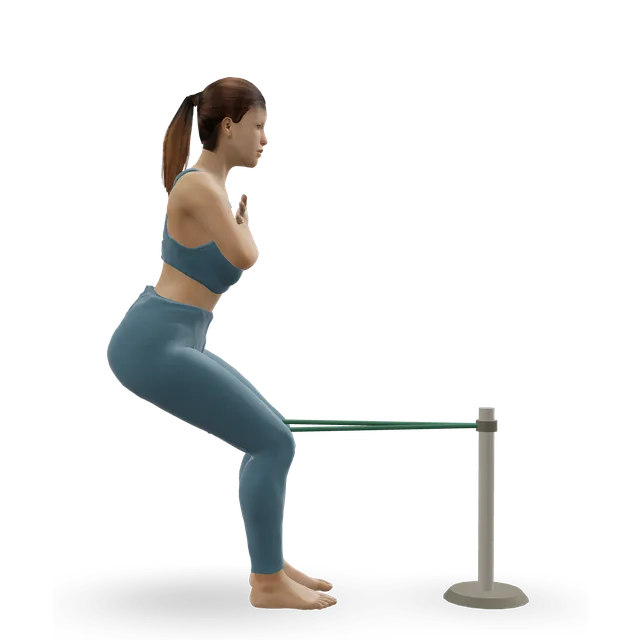
Spanish squat (band squat hold) demonstrated on the 3D figure3D demoSpanish squat (band squat hold)Intermediate · A band + An anchor point

4 to 5 holds of 30 to 45 seconds at a hard-but-OK effort, with 1 to 2 minutes' rest, once a day · From the move page's dose (modelled on the tendon trial's holds). For pain just below the kneecap

Easier: Straight-leg raise · Harder: Pistol squat

Glute bridge demonstrated on the 3D figure3D demoGlute bridgeBeginner · No equipment

Hold 5 to 10 s, 10 times · As in our football knee guide (an NHS trust's meniscal tear leaflet)

Easier: Pelvic tilt into bridge · Harder: Single-leg glute bridge

Supine heel slide demonstrated on the 3D figure3D demoSupine heel slideBeginner · No equipment

10 slow repetitions each side, once or twice a day · From the move page's dose (an editorial starting point). Bending back towards full range after a knock or sprain

Harder: Hip windshield wipers

Recumbent exercise bike demonstrated on the 3D figure3D demoRecumbent exercise bikeBeginner · Cardio machine

10 to 20 minutes at a moderate effort to start, building towards 30 · From the move page's dose (an editorial starting point). Fitness while the knee settles

Harder: Stationary cycling

Move on when: Walking, stairs and getting up from a chair are within the pain rule, the knee straightens fully, and there's no new swelling the next morning (editorial, as in our football knee guide).

Follow along: a timer, a cue and the next move, one step at a time.
Stage 2

Build: thigh, hip, hamstring and calf strength

About weeks 2 to 6, 2 or 3 strength days a week: the strength the KNEE programme's strength part assumes, working the hip and knee together.

Sit to stand from a chair demonstrated on the 3D figure3D demoSit to stand from a chairBeginner · A bench or box

2 to 3 sets of 8 to 10, arms crossed when you can, lowering slowly · As in our football knee guide (editorial)

Easier: Sit to stand, pushing on the thighs · Harder: Bodyweight squat

Wall sit demonstrated on the 3D figure3D demoWall sitBeginner · A wall

4 holds of 20 to 45 s at a comfortable depth, breathing normally · As in our football knee guide (editorial). Shallower if the kneecap hurts; read the move page's blood pressure caution

Easier: Straight-leg raise · Harder: Spanish squat (band squat hold)

Step-up demonstrated on the 3D figure3D demoStep-upBeginner · A step

2 sets of 5 to 8 each leg, a rail or wall to hand · As in our football knee guide (editorial). Low step first

Easier: Low step-up · Harder: Dumbbell step-up

Lateral band walk demonstrated on the 3D figure3D demoLateral band walkBeginner · A band

3 sets of 10 to 15 steps each way · As in our football knee guide (editorial). Hip strength for knee control

Easier: Hip abduction machine · Harder: Lateral band walk, band at the feet

Nordic curl demonstrated on the 3D figure3D demoNordic curlAdvanced · An anchor point

2 × 3 to 6 · As in our netball strength and landing workout (editorial). Lower as slowly as you can and catch yourself with your hands

Easier: Slider hamstring curl · Harder: Full Nordic curl

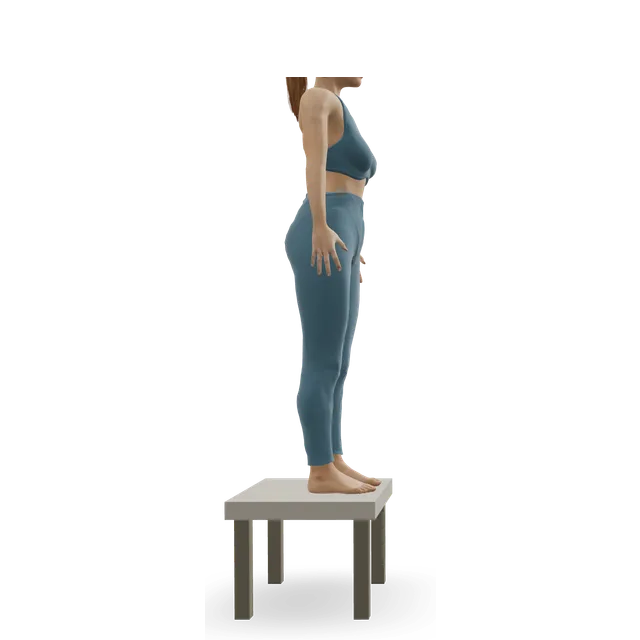
Single-leg calf raise from a step demonstrated on the 3D figure3D demoSingle-leg calf raise from a stepIntermediate · A step + A wall

2 × 12 each leg · As in our netball strength and landing workout (editorial). Slow on the way down

Easier: Slow calf raise · Harder: Single-leg pogo hops

Move on when: 3 sets of 10 sit-to-stands without hands, and step-ups on each leg, are within the pain rule, with no swelling the next morning (editorial, as in our football knee guide).

Follow along: a timer, a cue and the next move, one step at a time.
Stage 3

Land and stop: single-leg strength and landing

About weeks 6 to 12, 2 or 3 days a week, with no hard jumping the day before a match: the single-leg strength and quiet, balanced landings that the ACL prevention programmes and the netball video studies point to.

Snapdown to athletic landing demonstrated on the 3D figure3D demoSnapdown to athletic landingBeginner · No equipment

2 × 5, hold each landing 2 s · As in our netball strength and landing workout (editorial). Land quietly: hips back, knees bent and over the toes

Easier: Bodyweight squat · Harder: Box drop landing

Box drop landing demonstrated on the 3D figure3D demoBox drop landingIntermediate · A step

3 × 5 · As in our netball strength and landing workout (editorial). Step off and land on both feet; keep the box low with knee pain, as the move page says

Easier: Snapdown to athletic landing · Harder: Depth jump

Dumbbell goblet squat demonstrated on the 3D figure3D demoDumbbell goblet squatIntermediate · A dumbbell

3 × 8 · As in our netball strength and landing workout (editorial). Stop 1 to 3 reps short of failure

Easier: Bodyweight squat · Harder: Barbell front squat

Rear-foot-elevated split squat (Bulgarian split squat) demonstrated on the 3D figure3D demoRear-foot-elevated split squat (Bulgarian split squat)Intermediate · A bench or box

3 × 8 each leg · As in our netball strength and landing workout (editorial). Front knee tracks over the toes

Easier: Reverse lunge · Harder: Split squat jump

Single-leg Romanian deadlift demonstrated on the 3D figure3D demoSingle-leg Romanian deadliftAdvanced · A dumbbell

3 × 8 each leg · As in our netball strength and landing workout (editorial). Fingertips on a wall at first, as the move page says

Easier: Dumbbell Romanian deadlift

Single-leg hop and stick demonstrated on the 3D figure3D demoSingle-leg hop and stickIntermediate · No equipment

3 × 5 each leg · As in our netball strength and landing workout (editorial). Only once you're cleared after a knee injury, as the move page says

Easier: Standing broad jump with stuck landing · Harder: Alternate-leg bounding

Move on when: Landings stay quiet with the knee over the middle of the foot, single-leg strength feels close to the other side, one single-leg squat hurts 3 out of 10 or less for tendon pain, and there's no swelling the next morning (editorial).

Follow along: a timer, a cue and the next move, one step at a time.
Stage 4

Back on court: the KNEE warm-up, then training and matches

From about weeks 10 to 12, then for good: Netball Australia's KNEE warm-up at every session, at least twice a week and kept up all season, strength twice a week (stages 2 and 3), and netball back by the written steps below. After an ACL reconstruction, the return is your surgical team's decision. No study has tested a return to netball after knee pain without a structural injury; the order is our suggestion, built on the KNEE programme, the landing studies and the return-to-sport evidence.

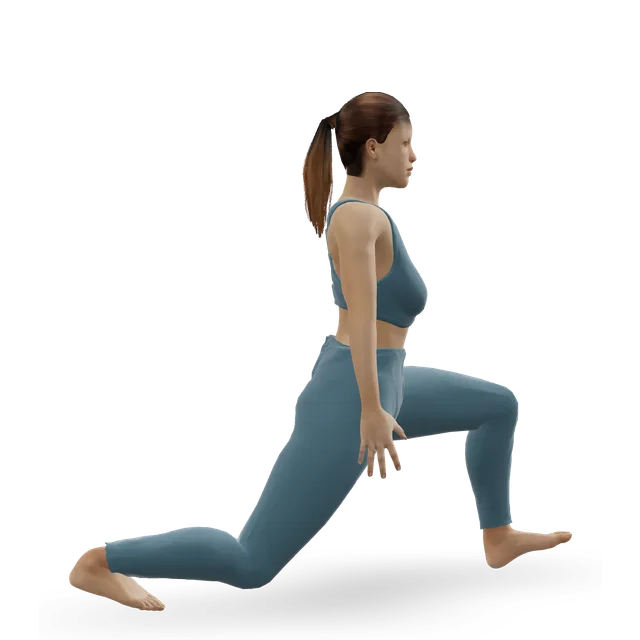
Reverse lunge demonstrated on the 3D figure3D demoReverse lungeIntermediate · No equipment

2 × 12 each leg · As in our netball KNEE warm-up (the KNEE programme's reverse lunge and drive)

Easier: Split squat · Harder: Split squat with dumbbells

Bodyweight squat demonstrated on the 3D figure3D demoBodyweight squatBeginner · No equipment

2 × 12 · As in our netball KNEE warm-up (the KNEE programme's squats, arms overhead)

Easier: Sit squat (partial squat) · Harder: Dumbbell goblet squat

Single-leg Romanian deadlift demonstrated on the 3D figure3D demoSingle-leg Romanian deadliftAdvanced · A dumbbell

2 × 8 each side · As in our netball KNEE warm-up (the KNEE programme's arabesque)

Easier: Dumbbell Romanian deadlift

Single-leg hop and stick demonstrated on the 3D figure3D demoSingle-leg hop and stickIntermediate · No equipment

5 each leg, hold 2 s · As in our netball KNEE warm-up (balance and landing: land quietly, knee over the foot)

Easier: Standing broad jump with stuck landing · Harder: Alternate-leg bounding

Rocket jump (jump and reach) demonstrated on the 3D figure3D demoRocket jump (jump and reach)Intermediate · No equipment

10 · As in our netball KNEE warm-up (two-footed jump and land, arms up as if catching). Leave it out while the knee is irritable, as the move page says

Easier: Standing long jump · Harder: Box jump and leap off

Shuttle runs demonstrated on the 3D figure3D demoShuttle runsAdvanced · No equipment

2 each side · As in our netball KNEE warm-up (the Y-drill: sprint, slow down in small steps, then cut). Wide turns first, sharper over the weeks, as the move page says

Easier: Treadmill jogging

Move on when: Training and matches stay within the pain rule with no swelling the next morning (editorial). After a flare, drop back a stage for a week rather than stopping.

Follow along: a timer, a cue and the next move, one step at a time.

What to change for now

What to do now (written steps)

Our 3D figure can't show these. They come from the NHS, the netball landing studies and Netball Australia's manual; where a step is our suggestion, it says so.

  • 1. The NHS: put as little weight as possible on a sore knee at first, use an ice pack wrapped in a tea towel for up to 20 minutes every 2 to 3 hours, and painkillers such as paracetamol or ibuprofen gel.
  • 2. A pop, fast swelling, a knee that locks or gives way, or a kneecap that slips: stop and follow the warning signs. At one state championship, 54.7% of injured players finished the game before seeking treatment.
  • 3. Land with your feet about shoulder-width apart, knees bent and in line with your feet, rather than wide and stiff, as the ACL video authors and Netball Australia's manual advise. Turn your whole body towards your next pass rather than twisting over planted feet (our reading of the video studies).
  • 4. Practise run-on landings and a controlled pivot within the footwork rule: in the lab, run-on landings had the lowest forces (our suggestion, from that study).
  • 5. Build court time gradually around tournaments and growth spurts: claims spiked around trials and tournaments in New Zealand. Netball New Zealand: "If a player is experiencing pain, or seems more tired than usual, listen to them."

Sources 27, 12, 49, 50, 56, 24, 25

The KNEE warm-up (written steps, in Netball Australia's words)

From Netball Australia's KNEE programme pages and manual; our netball KNEE warm-up workout follows the recreational version.

  • 1. Before every court session or match, "at least twice a week", kept up all season. Players who play once a week add it on another day.
  • 2. All four parts: warm-up and footwork, strength, balance and landing, and agility. The strength, landing and agility parts are the ones clubs skip most.
  • 3. Technique first: "it must be done with correct technique to ensure risky movements are eliminated rather than reinforced".
  • 4. Players under 14 use Netball Australia's junior version.

Sources 21, 40, 49, 44

Back to netball (written steps)

Our suggestion, built on the KNEE programme's four principles of take-off, landing, deceleration and change of direction, and the return-to-sport evidence; none has been tested for knee pain. Move up a step when the last one stayed within the pain rule and the knee was back to normal the next morning.

  • 1. Shooting and passing standing, then on the move without jumping.
  • 2. Footwork drills and the KNEE warm-up.
  • 3. Jumping to catch and landing drills, two feet first, then one.
  • 4. Defending, intercepting and drills with contact in the air.
  • 5. A practice match or a quarter, then a full match.
  • 6. After an ACL reconstruction, your surgical team decides, and waiting at least 9 months went with fewer reinjuries in other athletes. If you wear a knee brace on return, England Netball asks for it to be approved by a doctor.
  • 7. Everyday activity comes back alongside: stairs, kneeling a minute or two at a time, cycling and swimming are fine within the pain rule (editorial). Walking netball is a gentler way back for adults who want it.

Sources 21, 52, 54

Positions to swap, and why

Habit or positionWhy it mattersInstead
Playing on after a pop, fast swelling, catching or giving wayThese are the NHS's signs of a ligament, meniscus or kneecap injury that needs checking.Stop, and follow the warning signs.
Landing wide and stiff-legged after a high pass, or with the knee caving inThe commonest elite ACL pattern was a wide two-footed landing on a nearly straight knee.Feet about shoulder-width, knees bent and over the feet.Try: Snapdown to athletic landing
Skipping the warm-up, or a warm-up of jogging and stretching onlyStrength and landing warm-ups halve ACL injuries in other sports; stretching alone doesn't prevent injuries.Our netball KNEE warm-up, at least twice a week.Try: Single-leg hop and stick
Doing only the footwork part of KNEEClubs mostly skip strength, landing and agility, the parts the trials in other sports say matter.All four parts, a few exercises from each.Try: Reverse lunge
Every jumping drill while the tendon below the kneecap hurtsTendon pain eases with staged loading, not more jumping.Shooting and passing without jumping for now, with daily holds.Try: Spanish squat (band squat hold)
A tournament weekend straight after a break, or doubling court time in a weekKnee and ankle claims spiked around trials and tournaments in New Zealand.Build court time and matches gradually.
A knee brace on a healthy knee as protectionNo netball study has tested one, and results in American football are inconsistent.The KNEE warm-up and strength work.Try: Dumbbell goblet squat
Returning to matches as soon as an ACL reconstruction feels fineReinjury fell by 51% for each month return was delayed, up to 9 months, in other athletes.The return-to-sport tests in our ACL surgery guide.
Resting completely until it stops hurtingMost knee pain improves with home care in days, and tendon and growing knee pain respond to graded loading.The stage 1 moves.Try: Quad set (static quads)
A growing player training through pain at the bump below the kneeThe tested programme kept pain at 2 out of 10 or less.Our Osgood-Schlatter guide's activity ladder, with thigh holds.Try: Wall sit

Routines to follow

More moves for this area

Questions people ask

Is netball bad for your knees?

No. Knee injuries are less common than ankle injuries in netball, most netball injuries are minor, and physiotherapy researchers describe the overall risk of knee injury in community netball as low. The ACL is the serious risk, and a strength and landing warm-up halves it in other sports.

Why does my knee hurt after netball?

Most often it's tired, overloaded knees after a busy week, kneecap pain, or the tendon just below the kneecap from jumping and landing. In growing players it's often a sore bump below the knee (Osgood-Schlatter). A pop with swelling, or a knee that gives way or locks, is different and needs checking the same day.

How do ACL injuries happen in netball?

Mostly on landing: 17 of 21 elite ACL injuries on video came from jump landings, often braking hard after a high pass on a wide, stiff landing. Others happened after a bump in the air or a twist of the trunk over planted feet.

What is the KNEE programme?

Netball Australia's warm-up, with warm-up and footwork, strength, balance and landing, and agility parts, done at least twice a week and kept up all season. It hasn't been tested on injury rates yet, but it's built from warm-ups that halve ACL injuries in other sports.

Does the footwork rule hurt your knees?

In a lab study, an extra step after landing didn't lower landing forces, and the author couldn't recommend changing the rule. How you land matters more: run-on landings had the lowest forces.

Should I wear a knee brace for netball?

Not to prevent injury: no netball study has tested one, and results in American football were inconsistent. If you wear a medical aid when returning from an injury, England Netball asks that a doctor approves it.

Can I play netball with knee pain?

Often yes, within the pain rule: up to 5 out of 10 for joint and kneecap pain, 3 for the tendon below the kneecap and 2 for a growing knee, and back to normal by the next morning. Not with a pop, swelling, locking or giving way.

How long until I'm back after knee pain from netball?

Most knee pain eases within days to a few weeks, and tendon pain takes months of staged loading. We don't promise a time: move on by the checks in each stage.

How many netballers get back after an ACL reconstruction?

In 267 Australian netballers, 62% went back to netball, and over about 7 years 10% tore the other knee's ACL and 4% the graft, more often in teenagers. Waiting at least 9 months went with fewer reinjuries in other athletes, and your surgical team decides when.

My daughter has a sore bump below her knee. Should she stop netball?

Usually not completely: an activity ladder that keeps pain at 2 out of 10 or less, with strength work, helped most 10 to 14 year olds in one study, though many took months to get fully back to sport. A limp, a hot swollen knee or pain at night needs a GP.

Do I need a scan?

Not for most aches. An X-ray is for a knee you can't take 4 steps on after an injury, and an MRI for a suspected ACL, meniscus or kneecap injury when it changes treatment.

When should I see a doctor?

Go to A&E for a pop or snap with fast swelling, a knee that changed shape, or a kneecap that's still out. Get advice from NHS 111 the same day for a knee that locks, gives way or won't straighten, a hot swollen knee, or a child with knee pain and a limp. See a GP or physiotherapist if knee pain hasn't improved within a few weeks; in the US, call 911 where this page says 999.

Related exercise guides

Other pain guides

Sources

  1. Franettovich Smith 2020 · Injuries in an Australian community netball club over a season (cohort study, Phys Ther Sport)
  2. McManus 2006 · Injuries and risk factors in 368 non-elite netballers (cohort, J Sci Med Sport)
  3. Janse van Rensburg 2022 · Injury and illness at the 2019 Netball World Cup (observational study, Phys Sportsmed)
  4. Joseph 2019 · Australian community netball injury insurance claims in 2016 (insurance data audit, J Sci Med Sport)
  5. Patterson 2022 · Is netball actually bad for knees and ankles? (expert commentary by La Trobe University physiotherapy researchers, The Conversation)
  6. Downs 2021 · Injuries in netball: 46 studies (systematic review, Sports Med Open)
  7. Hopper 1995 · Netball injuries in competition over 5 years in Western Australia (study, Br J Sports Med)
  8. Toohey 2022 · Injuries in professional Australian netball over 3 seasons (cohort study, J Sci Med Sport)
  9. Otago 2007 · Netball insurance claims in Victoria and prevention priorities (insurance data study, J Sci Med Sport)
  10. Horne 2025 · Match and training injuries over a season in elite UK netball (cohort study, BMJ Open Sport Exerc Med)
  11. Mullally 2021 · How non-contact knee injuries happen in adult netball: 6 studies (systematic review, Phys Ther Sport)
  12. Belcher 2024 · Video analysis of 21 ACL injuries in elite netball games (case series, Sports Biomech)
  13. Stuelcken 2016 · How ACL injuries happen in elite women's netball (video analysis, J Sports Sci)
  14. Mullally 2023 · Injuries, and knee injuries, in 193 female recreational netballers (survey, Phys Ther Sport)
  15. World Netball · Rules of Netball, 2024 edition
  16. Clark 2021 · Knee ligament injury prevention and screening in community netball (clinical commentary, Int J Sports Phys Ther)
  17. Flood 2009 · Basketball and netball injuries admitted to hospital in Australia, 2000 to 2004 (hospital data study, Med J Aust)
  18. Janssen 2012 · ACL reconstructions in Australia, 2003 to 2008, by sport (national data study, Scand J Med Sci Sports)
  19. Sutherland 2019 · ACL reconstructions in New Zealand and the rise in young women (national data study, ANZ J Surg)
  20. Rigg 2023 · ACL injuries, return to sport and later injuries in Australia's high-performance athletes over 5 years (retrospective study, Phys Ther Sport)
  21. Netball Australia · The KNEE Program: about the programme
  22. Montalvo 2019 · ACL injury risk in female and male athletes across sports: 58 studies (systematic review and meta-analysis, Br J Sports Med)
  23. AAOS OrthoInfo · Anterior cruciate ligament (ACL) injuries
  24. Belcher 2020 · Ten years of netball ankle and knee injury claims in New Zealand (national review, J Sci Med Sport)
  25. Netball New Zealand (NetballSmart) · AIMS netballers sit within the age group recording the most netball injuries (news item, 2026)
  26. Whitehead 2025 · Injury risk factors in women's netball and which to tackle first (systematic review and Delphi consensus, BJSM)
  27. NHS · Knee pain
  28. NHS · Dislocated kneecap
  29. Cook 1998 · Ultrasound of 320 patellar tendons without symptoms in elite basketball, cricket, netball and Australian football players (cross-sectional study, Clin J Sport Med)
  30. NHS · Sprains and strains
  31. Breda 2021 · Progressive tendon loading or eccentric exercise for jumper's knee in 76 patients (randomised trial, Br J Sports Med)
  32. Rathleff 2020 · Activity modification and knee strengthening for Osgood-Schlatter disease in 51 adolescents (cohort study, OJSM)
  33. Honeywill 2024 · Second ACL injuries in 267 Australian netballers after reconstruction (cohort study, OJSM)
  34. AAOS OrthoInfo · Osgood-Schlatter disease
  35. Webster 2018 · ACL injury reduction training programmes (meta-analysis of meta-analyses, J Orthop Res)
  36. Petushek 2019 · Preventing ACL injuries in young female athletes: 18 studies, 27,231 athletes (systematic review and meta-analysis, Am J Sports Med)
  37. Crossley 2020 · Injury prevention programmes in women's football: 12 trials, 11,773 players (systematic review and meta-analysis, Br J Sports Med)
  38. Sugimoto 2012 · Doing neuromuscular training as planned and ACL injury risk in female athletes: 6 studies (meta-analysis, J Athl Train)
  39. Collings 2026 · Reducing the risk of ACL injury: an Exercise and Sport Science Australia position statement (Sports Medicine)
  40. Netball Australia · The KNEE Program: the recreational programme (players aged 14 and over)
  41. Netball New Zealand · NetballSmart: the official injury prevention programme (web page)
  42. Netball New Zealand · NetballSmart Dynamic Warm-Up coaching sheet
  43. Grayson 2024 · The KNEE programme and a balance-reach test in netball players (randomised trial, Phys Ther Sport)
  44. Saad 2021 · How the KNEE programme was delivered in community netball (observational study, J Sports Sci)
  45. Smith 2024 · Coaches' views on injury prevention programmes in community netball (qualitative study, Phys Ther Sport)
  46. Belcher 2021 · Short and long NetballSmart warm-ups and landing technique in youth netballers (12-week study, Phys Ther Sport)
  47. McKenzie 2019 · The NetballSmart Dynamic Warm-up and physical performance in 81 youth players (cluster randomised trial, Phys Ther Sport)
  48. Hopper 2017 · Strength and jump training and landing in netballers aged 11 to 13 (randomised trial, Front Physiol)
  49. Netball Australia · The KNEE Program recreational manual (coaching manual)
  50. Otago 2004 · Landing forces in netball and the footwork rule (lab study of 18 players, J Sci Med Sport)
  51. Ardern 2014 · Return to sport after ACL reconstruction (systematic review and meta-analysis, Br J Sports Med)
  52. Grindem 2016 · Simple decision rules and reinjury after ACL reconstruction: the Delaware-Oslo cohort (cohort study, BJSM)
  53. Pietrosimone 2008 · Preventive knee braces in college American football: 7 studies (systematic review, J Athl Train)
  54. England Netball · 2026 Domestic Rules Guidance (January 2026)
  55. Lauersen 2014 · Exercise to prevent sports injuries: 25 trials (systematic review and meta-analysis, Br J Sports Med)
  56. Hume 2000 · Injury prevention advice and what 940 netballers at a state championship did (survey, J Sci Med Sport)
  57. NHS · Meniscus tear (knee cartilage damage)
  58. Stiell 1995 · Derivation of the Ottawa knee rule for X-rays after knee injury (Ann Emerg Med)
  59. Stiell 1996 · Prospective validation of the Ottawa knee rule (JAMA)
  60. Siemieniuk 2017 · Arthroscopic surgery for degenerative knee disease and meniscal tears (BMJ Rapid Recommendation)
  61. AAOS OrthoInfo · Collateral ligament injuries
  62. AAOS OrthoInfo · Quadriceps tendon tear
  63. AAOS OrthoInfo · Patellar tendon tear
  64. Yellin 2024 · Patellar sleeve injuries in 90 children and teenagers (case series, J Child Orthop)
  65. Milner 2024 · Fractures of the bony bump below the knee in young people with and without Osgood-Schlatter (J Pediatr Orthop)
  66. NHS · Septic arthritis
  67. NHS · Limping in children
  68. NHS · DVT (deep vein thrombosis)
  69. NHS · Baker's cyst
  70. NHS · Pulmonary embolism
  71. NHS · Chest pain (past its review date: reviewed August 2023, review due August 2026)
  72. NHS · Fainting
  73. NHS · Sciatica
  74. NHS inform · Exercises to help with patellofemoral knee pain
  75. NHS · Why ACL (anterior cruciate ligament) surgery is done
  76. Beard 2022 · Reconstruction vs rehab for non-acute ACL injury: ACL SNNAP (RCT, Lancet)
  77. Ardern 2018 · International Olympic Committee consensus statement on ACL injuries in children (BJSM)
  78. Logerstedt 2017 · Knee ligament sprain: US physical therapy clinical practice guideline, revision (JOSPT)
  79. Chen 2008 · MCL injuries of the knee: current treatment concepts (review, Curr Rev Musculoskelet Med)
  80. Kopf 2020 · Management of traumatic meniscus tears: the 2019 ESSKA meniscus consensus (Knee Surg Sports Traumatol Arthrosc)
  81. Skou 2022 · Early surgery or exercise and education for meniscal tears in young adults (RCT of 121, NEJM Evid)
  82. van der Graaff 2022 · Keyhole surgery against physical therapy for traumatic meniscal tears in 100 adults aged 18 to 45: STARR (RCT, BJSM)
  83. Evidence-Based Interventions programme (Academy of Medical Royal Colleges) · Arthroscopic surgery for meniscal tears (reviewed 2024)
  84. nidirect (Northern Ireland) · Dislocated kneecap
  85. Sanders 2018 · First-time kneecap dislocation: a 21-year population study (Sports Health)
  86. Sherwood Forest Hospitals NHS Foundation Trust · Osgood Schlatter's disease (patient leaflet, 2025)
  87. Cambridge University Hospitals NHS Foundation Trust · Sinding-Larsen-Johansson syndrome (patient information, 2024)
  88. Association of Paediatric Chartered Physiotherapists · Calcaneal apophysitis (Sever's): information for parents and carers (2023)
  89. NHS inform · Knee problems in children and young people
  90. NHS · Symptoms of bone cancer
  91. NICE · Osteoarthritis in over 16s: diagnosis and management (NG226, guideline)
  92. NHS · Rheumatoid arthritis: symptoms (past its review date: reviewed March 2023, review due March 2026)
  93. Thomeé 1997 · Treating patellofemoral pain in young women with a pain-monitoring model (Phys Ther)
  94. Smith 2017 · Should exercises be painful in chronic musculoskeletal pain? (systematic review and meta-analysis, Br J Sports Med)
  95. Ageberg 2010 · NEMEX-TJR neuromuscular training for severe hip or knee osteoarthritis, and its pain rule (BMC Musculoskelet Disord)
  96. Royal Berkshire NHS Foundation Trust · ACL injury: non-operative management (physiotherapy leaflet, 2024)

Exercise education, not a diagnosis or treatment plan. It is written from the guidelines and studies listed above; review by a clinician is pending. If your pain follows an injury, is severe, is getting worse, or comes with any warning sign listed on this page, get it assessed. Health disclaimer.