Knee pain from basketball: jumper's knee, kneecap pain, growing knees, ACL tears and what helps

Sore knees after basketball are common and usually settle within days, and over half of college basketball injuries keep players out for less than a day. Where it hurts points to the cause: a diffuse ache around the kneecap is usually kneecap pain, one point just below it jumper's knee, and in a growing player a tender bump below the knee Osgood-Schlatter. A pop on a landing or a cut with swelling within hours is different: it can be a torn ligament or cartilage and needs checking.

This guide starts with the signs that need accident and emergency (A&E), such as a pop with fast swelling, and those that need the National Health Service's 111 line (NHS 111) or a general practitioner (GP) the same day, such as a knee that locks or gives way, or a child with knee pain and a limp. It then maps the causes by where it hurts and how old you are, gives the National Basketball Association (NBA) and USA Basketball limits for young players in their own words, covers jumping, court time, rest days and the 10-minute warm-up, and gives a four-stage plan with a 3D demo of every move, back to practice and games.

When to get help first

Exercise is for pain that has been checked or is clearly mild and settling.

Get urgent medical help if

  • Go to A&E if you've injured your knee and it has changed shape, it becomes very swollen very quickly, you felt a pop or snap, you can see bone sticking out, or it's bleeding heavily. Don't drive yourself: ask someone to take you, or call 999 if the pain means you can't move your leg to get there.
  • Call 999 or go to A&E if you heard a crack when you were injured, the knee has changed shape or points at an odd angle, the leg below it is numb or tingling, or the skin has changed colour or is cold to touch. You may have broken a bone. Don't drive yourself.
  • Get advice from NHS 111 now: you cannot move the knee or put any weight on it, or it is very painful, badly swollen or has changed shape.
  • You hurt your knee and cannot take 4 steps, or you are 55 or over and have injured it: get it checked the same day for a broken bone.
  • Signs of a torn ligament: you felt or heard a pop, the whole knee swelled within a few hours, or it gives way, feels loose or bends further back than the other knee. Get it assessed promptly, the same or the next day: our ACL, PCL and outer knee ligament (LCL) guides explain what happens next.
  • Get advice from NHS 111 now: the knee locks, gives way or clicks painfully. Painless clicking is normal.
  • Get advice from NHS 111 now: after a twist, your knee won't go fully straight, or something blocks the last part of straightening, even if you can still walk on it. A torn piece of meniscus caught in the joint can do this, and it needs checking promptly.
  • Same day: a pop or tearing feeling at the front of the knee after a fall, stumble, jump or landing, then you can't straighten the knee or lift the straight leg off the bed, there's a dent above or below the kneecap, or the kneecap sits higher or lower than on the other side. Go to A&E or an urgent treatment centre, or get help from NHS 111. A torn quadriceps or patellar tendon does best when it's repaired soon.
  • A child or teenager: after a jump, landing or fall, a pop or sudden severe pain below the kneecap, and the knee will not straighten or take weight. Get it checked the same day: the bony bump below the kneecap can break away instead of the tendon tearing, or a sleeve of bone and cartilage can pull off the lower kneecap.
  • Get help from NHS 111 if you've injured your knee and it's very painful, swollen or bruised, you can't stand up or move your knee, or you think your kneecap came out of place and went back.
  • Get advice from NHS 111 now: a hot, red or swollen knee with sudden severe pain, a very high temperature (although not everyone has one), or feeling hot, cold or shivery. This can be a joint infection.
  • Same day (urgent GP appointment or NHS 111): sudden, severe pain in one joint, with swelling, a change in skin colour or difficulty moving it, especially if you feel unwell, hot, cold or shivery or have a high temperature (although not everyone has one). It could be an infection in the joint, gout or calcium crystals (pseudogout), and only a sample of fluid from the joint can tell them apart.
  • Call 999 or go to A&E if your child gets sudden pain in their hip, knee or thigh (hip problems can sometimes be felt in the thigh or knee) or cannot put any weight on their leg. If your child is limping, ask for an urgent GP appointment or get help from NHS 111 the same day. This applies to teenagers too, and in some children knee pain is the only sign.
  • Ask for an urgent GP appointment or get help from NHS 111 the same day if your child or teenager has pain in the hip, groin, thigh or knee and is limping; call 999 or go to A&E if they can't put any weight on their leg. Hip problems can sometimes be felt in the thigh or knee, and some children with a slipped growth plate only have knee pain. Don't let them walk, run or play sport on it while you wait.
  • A child over 9 with a limp and a hip that is stiff or painful to move, or with groin, thigh or knee pain and a limp: get help the same day and mention the hip (our suggestion, from guidance for doctors). A slipped growth plate needs a hip X-ray the same day; don't let them walk, run or play sport on it while you wait.
  • Same day (urgent GP appointment or NHS 111): throbbing pain in one leg (rarely both), usually the calf or thigh; swelling in one leg (rarely both); red, blue or darkened skin; or swollen veins; or sudden worse pain and swelling around a lump at the back of the knee (a possible clot or a burst Baker's cyst).
  • Call 999 or go to A&E if breathing suddenly becomes difficult, if pain in your chest or upper back comes on suddenly with breathlessness or a very fast heartbeat, or if someone passes out. Do not drive yourself. It can be a blood clot that has reached the lungs.
  • Someone who faints while exercising, or who has fainted and can't be woken within a minute, has chest pain or a pounding, fluttering or irregular heartbeat, or hasn't fully recovered.
  • Call 999 or go to A&E: back or leg symptoms with numbness around the genitals or bottom, new trouble controlling your bladder or bowels, or severe or worsening weakness or numbness in both legs.

See a doctor or physiotherapist if

  • Knee pain that has not improved within a few weeks of looking after it at home. Many areas offer NHS physiotherapy without a GP referral.
  • Pain building just below the kneecap with jumping or running: tendon pain weakens the tendon, so start our jumper's knee guide's plan early. Pain building just above it, worse with deep squats, jumping or kneeling, is quadriceps tendinopathy: start that guide's plan early.
  • Kneecap pain that hasn't improved within 6 weeks of changing your activities and doing the exercises, or that gets worse: talk to a GP or physiotherapist.
  • The knee gives way, the whole knee swells, or it catches or locks: that isn't typical of kneecap or tendon pain. Get it checked for a ligament or meniscus injury (our suggestion).
  • A twisting or landing injury with a pop or snap, or a knee that changed shape or swelled very quickly, is the A&E sign above, in the NHS's words. If you didn't go at the time and the knee has since settled and you can walk on it, still get it assessed soon by your GP, an NHS physiotherapy service (many areas take self-referrals) or a fracture or sports injury clinic.
  • A knee that keeps giving way in daily life despite rehab: ask about surgery. Carrying on with an unstable knee risks further damage inside it.
  • A knee that still feels loose or gives way at about 6 weeks: ask for an orthopaedic opinion. Looseness that persists beyond about 6 weeks is when surgeons consider an operation.
  • A child or young teenager with a suspected ACL injury: ask for a specialist assessment.
  • A child or teenager with a knee injury: get it checked, because the growth plate can be injured, or a piece of bone pulled off with the ligament, instead of the ligament tearing.
  • Catching, locking or swelling at the joint line that hasn't settled after about 3 months of exercise and other non-surgical care: ask your GP or physiotherapist about a specialist review. A magnetic resonance imaging (MRI) scan may be considered then.
  • The kneecap slips out again, or keeps feeling as if it will: ask for a specialist assessment. Repeat dislocations are common, and a second one is when surgery is usually discussed.
  • Pain in one spot on the top of the shin bone, just below the knee, that you can point to with a fingertip, worse with impact and later present at rest or at night: a possible stress fracture. Stop running and jumping until it has been checked.
  • A child or teenager with pain at a bump just below the kneecap or at its lower tip, worse with squats, jumps and kneeling: see our Osgood-Schlatter and Sinding-Larsen-Johansson guides, and get it checked if it is getting worse.
  • Contact your GP practice if your child's knee locks or gives way regularly; is hot, swollen or tender, especially if they can't recall an injury; they often limp after activities; they have knee pain that wakes them at night; they avoid activities because of increasing symptoms; or they have a lump in or around the knee that doesn't go away.
  • A child or teenager whose knee pain is there at rest or worse at night, or comes with a limp, swelling, a high temperature, unusual tiredness or weight loss: see a GP.
  • See a GP for bone pain or tenderness, particularly if it's worse at night, or a lump or swelling that is growing.
  • A teenager with weeks of groin, thigh or knee pain that comes and goes with activity, even without a limp: ask the GP to examine the hip and arrange a hip X-ray, and say you're worried about a slipped growth plate. Once there is a limp, the same-day lines above apply.
  • Bone pain that is constant or worse at night, especially with a lump, unexplained weight loss, fever or tiredness, or a past history of cancer.
  • Tendon pain above or below the kneecap and you take steroid tablets or have steroid injections, use anabolic steroids, have kidney disease, gout, rheumatoid arthritis, lupus or diabetes, or have recently taken a fluoroquinolone antibiotic: tell your GP or physiotherapist and build up more gradually. These can weaken the tendon. If you're taking a fluoroquinolone now, stop taking it and contact your doctor straight away, as the UK medicines regulator advises.
  • Numbness, tingling or weakness that travels down the leg from the back. That points to a nerve (sciatica) rather than the knee.

Where does it hurt?

Location narrows the likely causes; it does not diagnose.

Both knees and the front of the thighs ache the day after a game, a tournament or the first practices of the season, easing as you move

Tired, overloaded knees and thighs, or muscle soreness, the commonest cause. A lighter day or two, then the plan below.

Read: Knee pain after a workout →

A diffuse ache around or behind the kneecap, worse on stairs, squats and after sitting

Kneecap pain (patellofemoral pain), the commonest front-of-knee pain in players. Hip and knee exercise together is the treatment.

Read: Runner's knee →

One point at the lower tip of the kneecap, sore at the start of a session, easing as you warm up, worse afterwards or the next morning

Jumper's knee (patellar tendinopathy), found in about 1 in 3 elite men and 1 in 5 youth players. Staged tendon loading is the treatment.

Read: Jumper's knee →

One point just above the kneecap, worse with deep squats and jumping

The quadriceps tendon, less common than the tendon below the kneecap.

Read: Quadriceps tendinopathy →

A tender bump just below the knee in a player of about 10 to 15

Osgood-Schlatter disease, a sore growth area. A short cut-back and an activity ladder help most.

Read: Osgood-Schlatter →

The lower tip of the kneecap in a growing player of about 9 to 14

Sinding-Larsen-Johansson syndrome, the same kind of growth area problem at the kneecap.

Read: Sinding-Larsen-Johansson →

A pop on a landing or a cut, swelling within hours, then a knee that gives way

An anterior cruciate ligament (ACL) tear, often with a meniscus tear: uncommon but serious. Go to A&E, as the warning signs say.

Read: ACL injury →

The joint line after a twist, with catching, locking or a knee that won't straighten

A meniscus tear. A knee that locks or won't straighten needs checking the same day.

Read: Meniscus tear →

The kneecap slipped out to the side on a cut or a landing

A dislocated kneecap, the commonest cause of fast swelling under 16. Get help the same day.

Read: Kneecap dislocation →

The inner side after a blow from another player or a twist

A sprain of the inner knee ligament (the medial collateral ligament, MCL). Get it assessed.

Read: MCL sprain →

A pop below or above the kneecap on landing, then you can't straighten the knee or lift the straight leg

A torn patellar or quadriceps tendon, which is rare: get help the same day.

Read: Kneecap tendon rupture →

A teenager with knee or thigh pain and a limp, the knee itself looking normal

Possibly the hip: a slipped growth plate (slipped upper femoral epiphysis), which is rare. Get help the same day.

Read: SUFE (slipped hip growth plate) →
Show all 17 areasShow fewer areas

Understand it

Common, and mostly minorStrong evidence

In US college basketball, injuries that kept players out for less than a day made up over half of all injuries, and across 11 studies the knee was 17.8% of 12,960 basketball injuries, behind the ankle (21.9%). In 100 US high schools the ankle and foot (39.7%) and the knee (14.7%) were the commonest places hurt, at 1.94 injuries per 1,000 player sessions, and across 22 studies ankle and knee injuries together were 41.3% of basketball injuries.

The knee costs the most time when it is a structural injury: in US college men, injuries inside the knee caused the most absences of more than 10 days, and in women, preseason practice injury rates were more than twice those of regular-season practice. In the NBA, "Patellofemoral inflammation is the most significant problem in terms of days lost in competition, whereas ankle sprains are the most common injury", and "True ligamentous injuries of the knee were surprisingly rare"; ACL tears were 0.8% of injuries across the NBA and the Women's NBA (WNBA) over 6 seasons.

Sources 1, 2, 3, 4, 5, 6, 7, 8

Sprints, stops, cuts and jumpsEmerging evidence

Basketball changes movement constantly: 8 elite Australian men changed what they were doing about every 2 seconds, players cover about 5 to 6 km in a game's live time, and US college men averaged about 55 to 70 jumps of more than 175 mm a session, in practice and games alike. Each landing brakes the body through the thigh muscles, the kneecap and the patellar tendon, which is why the front of the knee is where it usually hurts.

Sources 9, 10, 11

The kneecap: the commonest front-of-knee acheEmerging evidence

Kneecap pain (patellofemoral pain) is a diffuse ache around or behind the kneecap, worse on stairs, squats and after sitting. In 242 Canadian college players, 43% reported knee pain, and the authors found a diffuse ache around the front of the knee common and pain at the lower tip of the kneecap uncommon: most of it was a kneecap ache, not the tendon. At preseason screening of 810 US middle and high school players, front-of-knee pain was found in 25.3% of knees, more in girls than boys, and over one season new kneecap pain developed in 9.66 per 100 girls, all of them in middle school.

Sources 12, 13, 14

Jumper's knee: the tendon just below the kneecapStrong evidence

Jumper's knee (patellar tendinopathy) is pain at one point at the lower tip of the kneecap, sore at the start of a session, easing as you warm up and worse afterwards. In Norwegian elite athletes, current symptoms were found in 31.9% of basketball players (all men) and 44.6% of volleyball players; across 891 Dutch non-elite athletes in 7 sports it was 8.5%, and almost twice as common in men as in women. In 515 Canadian youth players over a season, 19.0% had patellar tendon pain.

In Dutch basketball and volleyball players, 13% developed it over about 3 years; men had twice the odds, and the authors advise taking the total tendon load into account. These are surveys and cohorts, so they show who gets it, not what causes it.

Sources 15, 16, 17, 18

Growing knees: Osgood-Schlatter and Sinding-Larsen-JohanssonEmerging evidence

In a growing child or teenager, a tender bump just below the knee is Osgood-Schlatter disease, and pain at the lower tip of the kneecap is Sinding-Larsen-Johansson syndrome. At preseason screening of school players, Osgood-Schlatter was found in 2.5% and Sinding-Larsen-Johansson in 4.8%. In older Finnish data, 21.2% of teenagers active in sport at 13 had had Osgood-Schlatter against 4.5% of those who weren't, and in 956 Brazilian 12 to 15 year olds it was 9.8%, linked with regular sport. NHS inform calls these knee growth area problems a common cause of knee pain in children and young people. They aren't growing pains, which the NHS describes as an ache in both legs in the evening or at night that has gone by the morning.

Girls who played only one sport had about 1.5 times the risk of kneecap pain diagnoses and about 4 times the risk of Osgood-Schlatter or Sinding-Larsen-Johansson, an association, not proof that specialising caused it.

Sources 13, 19, 20, 21, 22, 23

Twists and landings: the ACL, the meniscus and the kneecapStrong evidence

In US college basketball, the ACL injury rate was 0.29 per 1,000 sessions in women against 0.08 in men, most of them without contact, and the authors write that "the actual rate of injury remains low and should not be a deterrent to participation in sports". A later study found women still tear an ACL at higher rates than men in comparable sports. In 39 basketball ACL injuries on video, women landed with more bend at the knee and hip but had 5.3 times the relative risk of the knee caving inwards, and movements were often disturbed by opponents.

In 1,145 knees that swelled with blood after an injury, magnetic resonance imaging (MRI) found an ACL tear in 52%, a meniscus tear in 41% and a dislocated kneecap in 17%, and in those aged 16 and under the dislocated kneecap was the commonest. In the NBA, isolated meniscus tears cost about 41 to 44 days, and 19.4% of players didn't return to play.

Sources 24, 25, 26, 27, 28

When a scan or test mattersEmerging evidence

Jumper's knee and kneecap pain are diagnosed by examination. Tendon changes on ultrasound in pain-free tendons went with at least four times the risk of later tendon pain, but other factors beyond the tendon's structure are involved, and meniscus findings on MRI are common in people without knee pain. After a fall or a twist, the Ottawa knee rule decides who needs an X-ray (see the warning signs). An MRI matters after a pop with fast swelling, a knee that locks or gives way, or a kneecap that slipped out.

In a child, a limp or hip pain needs the hip examined, and the National Institute for Health and Care Excellence (NICE) asks clinicians to consider a very urgent X-ray for children and young people with unexplained bone swelling or pain, to look for a bone tumour, which is rare.

Sources 29, 30, 31, 27, 32

How it usually goesEmerging evidence

Aches settle within days. Jumper's knee is often slow: symptoms had lasted a mean of 32 months in elite athletes and 18.9 months in club athletes. In the largest trial's staged programme, 43% were back in their sport at their previous level at 24 weeks (against 27% with decline squats, a difference that could be chance), and the fastest return was after 4 weeks; 5 years on, 76% felt recovered and 71% were back in their chosen sport, though almost a quarter didn't feel recovered. In the NBA, all 46 players diagnosed with patellar tendinopathy in one study returned.

For Osgood-Schlatter, older Finnish data recorded a mean of 3.2 months off training; in a Danish programme, 80% reported success at 12 weeks and 90% at 12 months, and 69% were back in sport at 12 months. After ACL reconstruction, 86% of NBA players returned, at a mean of 11.6 months, 69.5% of WNBA players and 87% of high school players in one surgeon's accelerated programme, where 7.0% of girls later tore the graft and 16.1% the other knee; across sports, 65% returned to their pre-injury level. No one can promise a date.

Sources 15, 16, 33, 34, 35, 19, 36, 37, 38, 39, 40

When it isn't basketball: the causes the warning signs cover

Some knee pain has causes basketball didn't create, or needs more than a plan, and the warning signs follow the pages behind them. A knee that changed shape, swelled fast or went with a pop needs A&E, in the words of the NHS dislocated kneecap page, and the Ottawa knee rule, tested in emergency departments, picks out who needs an X-ray. A pop at the front of the knee with a knee you can't straighten can be a torn quadriceps or patellar tendon, as the American Academy of Orthopaedic Surgeons (AAOS) describes; steroids and some antibiotics can weaken these tendons. In children and teenagers, a pop below the kneecap can pull off a piece of bone or a sleeve of cartilage instead, as a case series of 90 young people describes. A repeat dislocation of the kneecap is when surgery is usually discussed, as nidirect explains. A meniscus whose symptoms haven't settled after three months of non-surgical treatment may need an MRI, the Evidence-Based Interventions programme says, and NHS inform says to talk to a professional if kneecap pain hasn't improved within 6 weeks.

A limp with knee or thigh pain in a child or teenager can come from the hip, as the NHS limping and irritable hip pages say, and a slipped growth plate needs checking the same day: NHS inform's page on a slipped upper femoral epiphysis (SUFE) describes it, and in a UK national study of 486 children the slip worsened the longer diagnosis took. NHS inform lists the signs in a child's knee that need a GP, and tender bumps below the kneecap are usually Osgood-Schlatter or Sinding-Larsen-Johansson, as the AAOS and two NHS trusts describe. A hot, swollen knee can be a joint infection, which the NHS septic arthritis page says is urgent; a swollen, throbbing calf a blood clot or a burst Baker's cyst, and sudden breathlessness a clot in the lungs, as the NHS DVT, Baker's cyst and pulmonary embolism pages explain. Someone who faints while exercising needs a 999 call, as the NHS fainting page says. Numbness around the genitals or both legs weak needs a 999 call, as the NHS sciatica page says. One spot on the shin bone that hurts with landings can be a stress fracture, as Health New Zealand describes, and bone pain that is constant or worse at night needs checking, the NHS bone cancer page says, though that is rare.

Sources 67, 68, 69, 70, 71, 72, 73, 74, 75, 76, 77, 78, 79, 80, 81, 82, 83, 84, 85, 86, 87, 88, 89, 90, 91
What helps, and how strong the evidence is

Jumper's knee: staged tendon loading did better than painful decline squatsEmerging evidence

In the largest trial, 76 people (mostly athletes) did daily holds of 5 times 45 seconds at about 70% effort with the knee bent about 60 degrees, then leg press or leg extension every second day from 4 sets of 15 down to 4 sets of 6 with more load, then jumps and cutting every third day, then sport, moving on when tendon pain on a single-leg squat was 3 out of 10 or less after at least a week. At 24 weeks the tendon score improved by 28 points against 18 with painful decline squats (difference 9 points, 1 to 16).

Heavy slow strength training kept its gains at 6 months, while a steroid injection's early benefit faded: its authors write that the injection "has good short-term but poor long-term clinical effects". Five years after the trial, 76% felt recovered.

Sources 33, 41, 34

In season: holds or slow strength ease pain; painful decline squats didn't helpEmerging evidence

In players with jumper's knee who kept training and competing, 4 weeks of holds or of slow strength work eased tendon pain "without a modification of training and competition load", and the two did about equally well. Painful decline squats while playing a full volleyball season did nothing. These trials were small and in season, so they show what can be done while playing, not a cure.

Sources 42, 43

Kneecap pain: hip and knee exercise togetherStrong evidence

An international consensus says "Combining hip and knee exercises is recommended to reduce pain and improve function in the short, medium and long term" for kneecap pain. No trial has tested it in basketball players alone, but the landings and stops load the same joint.

Source 44

Growing knees: a short cut-back and an activity ladderEmerging evidence

In a Danish programme for 51 adolescents with Osgood-Schlatter, players began with "a temporary reduction in sport participation" and daily thigh holds of 10 times 30 seconds with bridges, then home strengthening and a pain-guided activity ladder, moving up only when the knee stayed at 2 out of 10 or less. At 12 weeks, 80% reported success, rising to 90% at 12 months, though only 69% were back in sport at a year. The programme had no comparison group. NHS inform calls it finding the right balance between pain and activity.

Sources 36, 21

Warm-up programmes: fewer injuries, with caveats in basketballMixed evidence

Across sports, 8 meta-analyses found that prevention programmes "reduce the risk of all ACL injuries by half in all athletes and non-contact ACL injuries by two-thirds in female athletes". In basketball alone, programmes cut leg injuries (odds ratio 0.69) and ankle sprains (0.45), but 3 studies were too few to show an effect on ACL tears (1.09).

The 10-minute SHRed Injuries Basketball warm-up (13 exercises: running, agility, strength and balance) went with a 36% lower rate of ankle and knee injuries in players aged 11 to 18, but that study compared seasons rather than randomising teams, and players did the exercises as prescribed only about half the time (48%). A home wobble-board programme in 920 high school players cut injuries that came on suddenly (rate ratio 0.71), though its drop in ankle sprains alone wasn't significant, and the FIFA 11+, football's injury prevention warm-up, cut overall injuries in one Italian youth club whose players were boys with average ages of 13.5 and 15.2, with no difference in knee injuries alone.

Sources 45, 46, 47, 48, 49, 50

Young players: hours, games, rest days and specialisationEmerging evidence

The NBA and USA Basketball say "Ensure rest from organized basketball at least one day per week, and extended time away from organized basketball each year", and that players "should demonstrate caution in scheduling or participating in more than one game per day, especially on consecutive days". Their maximums are 1 game a day and 3 hours a week of organised basketball at 7 to 8, 2 games a day and 5 hours at 9 to 11, 10 hours at 12 to 14 and 14 hours from about 14 to 18, with at least 2 rest days a week up to 11 and 1 after, and at most 4, 5, 7 and 9 to 10 months a year in organised basketball. Their guidelines page recommends 2 games a week at 12 to 14, while the published paper "recommends a maximum of two games per week per player through childhood, and a maximum of three games per week through late adolescence". Pickup games and shooting alone don't count, and they recommend delaying specialisation in basketball "until at least age 14".

The American Academy of Pediatrics (AAP) warns that early specialisation can have harmful physical and psychological effects, and the American Medical Society for Sports Medicine (AMSSM) recommends limiting weekly and yearly participation and monitoring training load during the growth spurt. These are expert consensus: the working group notes that the injury data on early specialisation "are limited and do not provide consistent evidence". We found no guidance on young players' loads from FIBA (the International Basketball Federation), Basketball England or Basketball Australia.

Sources 51, 52, 53, 54, 23

Load: count jumps and court time (evidence borrowed from volleyball)Emerging evidence

Most of the evidence on jump load comes from volleyball. In young elite volleyball players, the odds of jumper's knee rose 1.72 times for each extra weekly hour of training and 3.88 times for each extra set of matches, and boys' weekly jump counts in training ranged from 50 to 666. The one basketball workload study is small: in 49 teenage players, those who were injured had quieter previous 3 and 4 weeks and a big previous week. In professional men, fewer players were injured after steady weekly loads than after sharp rises or drops, and players who did too little also had a higher risk. These are observational studies; no trial has tested a jump or minutes limit in basketball.

Sources 55, 56, 57, 58, 59

Straps, tape, ankle braces and injectionsEmerging evidence

In 97 athletes with jumper's knee, a strap or sports tape cut pain on a single-leg decline squat by about 13 to 14 mm on a 100 mm scale against no support, but not against placebo tape: comfort, not a cure. Lace-up ankle braces don't raise knee injuries: in the largest basketball brace trial, using the brace "did not significantly increase the incidence or severity of acute knee injuries". Steroid injections help tendon pain only briefly.

Sources 60, 61, 41

Most players get backEmerging evidence

All 46 NBA players with jumper's knee in one study returned. After isolated meniscus tears in the NBA, about 1 in 5 didn't return. After ACL reconstruction, 86% of NBA players and 69.5% of WNBA players returned, and 87% of high school players in one surgeon's series; across sports, 65% returned to their pre-injury level of sport. A torn ACL in a player who wants to return to cutting and jumping is usually reconstructed, and our ACL guides carry the decisions and the return-to-sport tests.

Sources 35, 28, 37, 38, 39, 40

How much pain is OK while you exercise?

0 to 2 is safe, up to 5 is acceptable, 3 for a tendon and 2 for a growing kneeEmerging evidence

Rate your knee pain from 0 to 10 during and after exercise. In the pain-monitoring model used in knee trials, 0 to 2 counts as safe, up to 5 as acceptable and above 5 as too much. Aim for 0 to 3. Up to 5 is fine for joint pain (arthritis, kneecap pain) if it passes the next check. For a painful tendon (jumper's knee), keep it to 3, the limit the largest patellar tendon trial used.

By the next morning your knee should be back to its usual level. If it is not, drop back one step next time (fewer sets, a shallower range, a lower step), not to nothing. Over the weeks pain should hold steady or ease; that last check is our suggestion rather than a tested rule.

Some knee programmes say you should feel no pain at all. The trials allowed some, and a meta-analysis found exercising into some pain did no worse than pain-free exercise. NICE says joint pain may rise when you start exercising with arthritis, and that regular exercise still helps in the long run.

Sharp, catching or giving-way pain, or new swelling, is a reason to stop and get it checked.

The largest patellar tendon trial kept exercise pain at 3 out of 10 or less, a lower ceiling than for joint pain. Keep the rest of your activity within the same limit, and expect the tendon to settle back to its usual level by the next morning.

The progress test from that trial: do one single-leg squat and rate the tendon pain. Move to the next stage when it is 3 or less and you have done at least a week at the current stage.

For growing knees (Osgood-Schlatter and Sinding-Larsen-Johansson): the Danish programme moves up its activity ladder only when there is no knee pain during the activity or the next morning, at most 2 out of 10, and goes one step down if the pain suddenly gets worse. NHS inform calls it finding the right balance between pain and activity.

One NHS trust asks you to keep pain between 0 and 3 out of 10. If it goes higher, you're usually doing too much: cut the repetitions or the load.

Swelling is the other gauge: if the knee swells, you've done too much. The same trust suggests measuring round the middle of both knees with a soft tape. More than 1 cm bigger on the injured side may mean you're overdoing it, so let it settle before carrying on.

For jumping (our suggestion, built on the same rules): count your jumps and landings, and add more only when the last session stayed within your limit and the knee was back to normal the next morning. Pain from one bad landing with swelling, a knee that gives way or won't straighten, or a hot knee isn't a pain-rule question: see the warning signs.

For basketball (our suggestion, built on the rules above and the largest jumper's knee trial's limit): judge each practice or game by the knee during it, that evening and the next morning. Kneecap pain can go up to 5 out of 10 if the knee is back to its usual level by the next morning; pain at one point below the kneecap keeps to 3; a growing knee keeps to 2. If the knee is worse the next morning, cut the jumping drills and minutes next time, not all basketball. A young player also keeps to the NBA and USA Basketball limits whatever the knee feels like. A pop, fast swelling, giving way, catching, a limp or a hot knee isn't a pain-rule question: stop and see the warning signs.

Sources 62, 92, 63, 64, 33, 36, 21, 93, 51

The exercise plan: 4 stages

Start at the first stage. Each move opens a full guide with a 3D demo.

Stage 1

Calm it and keep moving: holds

At least a week: cut the jumping that hurts (the written steps below), keep shooting and other activity within the pain rule, and start daily holds for the thigh with hip and calf work. The order follows the largest jumper's knee trial (holds, slow strength, springs, sport). With a diagnosed ACL or meniscus tear, a dislocated kneecap, a tendon tear or a stress fracture, that guide's plan comes first, and after surgery, your surgical team's; players aged 10 to 14 with Osgood-Schlatter or Sinding-Larsen-Johansson follow the growing-knee doses and the 2 out of 10 rule.

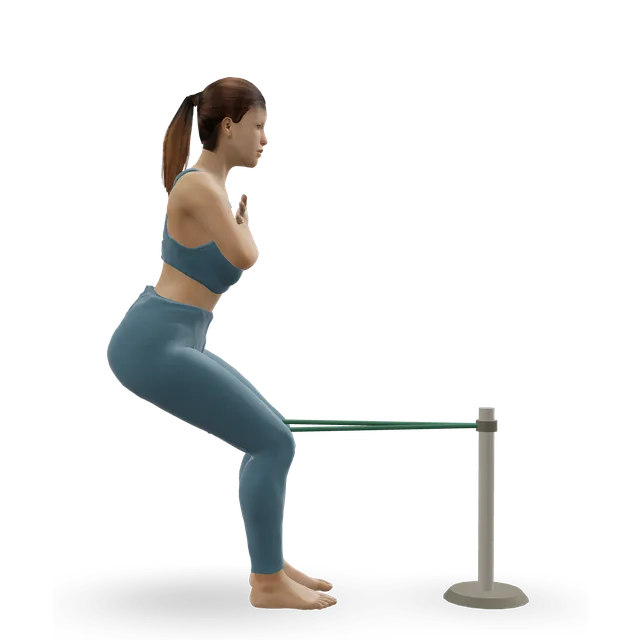
Spanish squat (band squat hold) demonstrated on the 3D figure3D demoSpanish squat (band squat hold)Intermediate · A band + An anchor point

4 to 5 holds of 30 to 45 seconds at a hard-but-OK effort, with 1 to 2 minutes' rest, once a day · From the move page's dose (modelled on the trial's 5 holds of 45 seconds at about 70% effort). Check the anchor every time, as the move page says

Easier: Straight-leg raise · Harder: Pistol squat

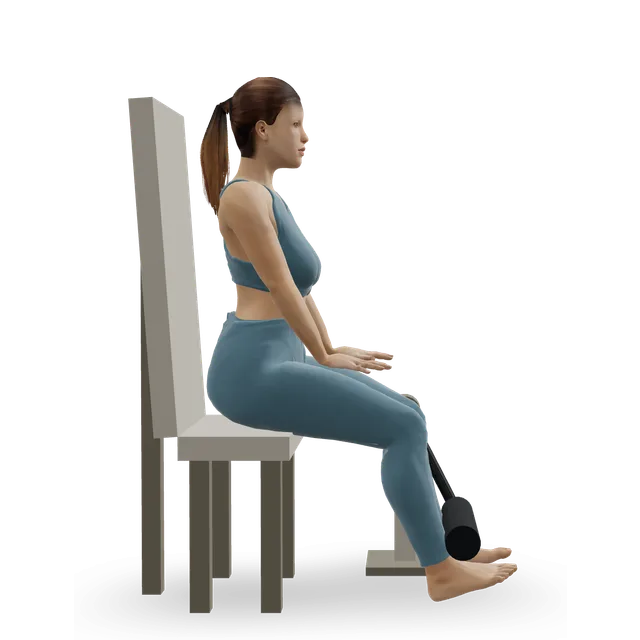
Leg extension demonstrated on the 3D figure3D demoLeg extensionBeginner · Strength machine

If you have a machine: 5 holds of 45 s at about 70% effort, the knee bent about 60 degrees · The trial's stage 1 dose. With kneecap pain, work between 90 and 45 degrees of bend first, as the move page says

Easier: Straight-leg raise · Harder: Barbell box squat

Wall sit demonstrated on the 3D figure3D demoWall sitBeginner · A wall

10 to 14 year olds: 10 holds of 30 s each day. Adults: 5 holds of 30 to 45 s · The Osgood-Schlatter programme's daily thigh holds; the adult dose is our jumper's knee guide's (editorial). Breathe throughout, as the move page says

Easier: Straight-leg raise · Harder: Spanish squat (band squat hold)

Glute bridge demonstrated on the 3D figure3D demoGlute bridgeBeginner · No equipment

3 sets of 10, every other day · As in our jumping knee guide (the Osgood-Schlatter programme's bridges). Hip and knee exercise together for kneecap pain

Easier: Pelvic tilt into bridge · Harder: Single-leg glute bridge

Standing wall-press hip abduction demonstrated on the 3D figure3D demoStanding wall-press hip abductionBeginner · A wall

3 to 5 holds of 5 to 15 seconds each side, twice a day · From the move page's dose (the LEAP trial's standing hold). Hip strength for kneecap pain

Easier: Supine isometric hip abduction (belt press) · Harder: Lateral band walk

Slow calf raise demonstrated on the 3D figure3D demoSlow calf raiseBeginner · A wall

3 sets of 12 · As in our jumper's knee guide (editorial). Calves for take-off and landing

Easier: Seated bent-knee calf raise (soleus raise) · Harder: Standing dumbbell calf raise

Move on when: One single-leg squat hurts 3 out of 10 or less after at least a week (the trial's test); for growing knees, everyday activity stays at 2 out of 10 or less during, straight after and the next morning.

Follow along: a timer, a cue and the next move, one step at a time.
Stage 2

Slow strength

About weeks 2 to 6, often longer, on alternate days with the holds on the days between: heavier, slower lifting through a growing range. Players aged 10 to 14 follow the Osgood-Schlatter programme's home strengthening instead (wall squats, then slow squats, then lunges, every other day).

Leg press demonstrated on the 3D figure3D demoLeg pressBeginner · Strength machine

4 sets of 15, building over weeks to 4 sets of 6 with more load · The trial's stage 2 dose

Harder: Bodyweight squat

Leg extension demonstrated on the 3D figure3D demoLeg extensionBeginner · Strength machine

4 sets of 15, building to 4 sets of 6 · The trial's stage 2 dose; one leg at a time if one side is sore

Easier: Straight-leg raise · Harder: Barbell box squat

Split squat demonstrated on the 3D figure3D demoSplit squatIntermediate · No equipment

3 sets of 8 to 10 each leg · As in our jumper's knee guide (editorial). Pad the back knee, as the move page says

Easier: Bodyweight squat · Harder: Reverse lunge

Step-up demonstrated on the 3D figure3D demoStep-upBeginner · A step

3 sets of 10 each leg, a low step first · As in our jumping knee guide (editorial). Lower yourself under control, as the move page says

Easier: Low step-up · Harder: Dumbbell step-up

Lateral band walk demonstrated on the 3D figure3D demoLateral band walkBeginner · A band

2 to 3 sets of 10 to 15 steps each way · As in our jumping knee guide (editorial). Hip strength for knee control on cuts

Easier: Hip abduction machine · Harder: Lateral band walk, band at the feet

Nordic curl demonstrated on the 3D figure3D demoNordic curlAdvanced · An anchor point

2 sets of 3 to 6 · As in our basketball strength and jump workout (editorial). Hamstrings, part of the ACL prevention warm-ups our basketball page lists

Easier: Slider hamstring curl · Harder: Full Nordic curl

Move on when: The single-leg squat test stays at 3 out of 10 or less after at least a week at this stage (the trial's test).

Follow along: a timer, a cue and the next move, one step at a time.
Stage 3

Land, then spring

Every third day, with the holds and strength work on the other days: soft landings first, then quick, springy jumps on two legs, then one, then sideways.

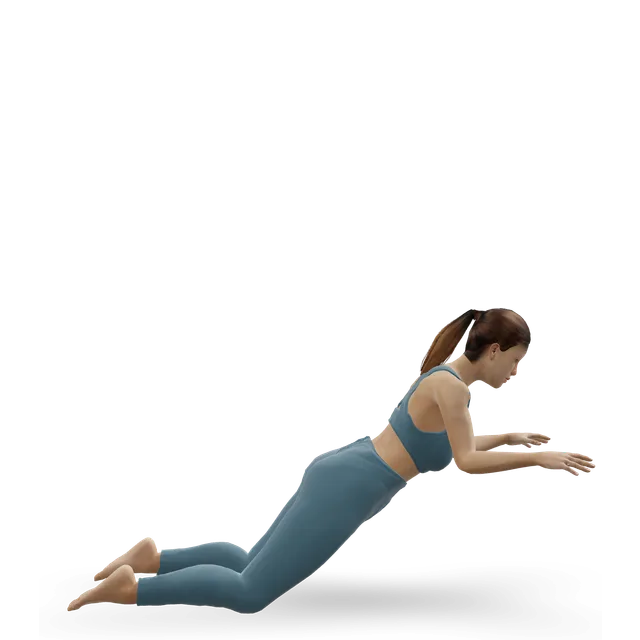
Snapdown to athletic landing demonstrated on the 3D figure3D demoSnapdown to athletic landingBeginner · No equipment

2 sets of 5, holding each landing for 2 s · As in our basketball strength and jump workout (editorial): land quietly, knees over the toes

Harder: Box drop landing

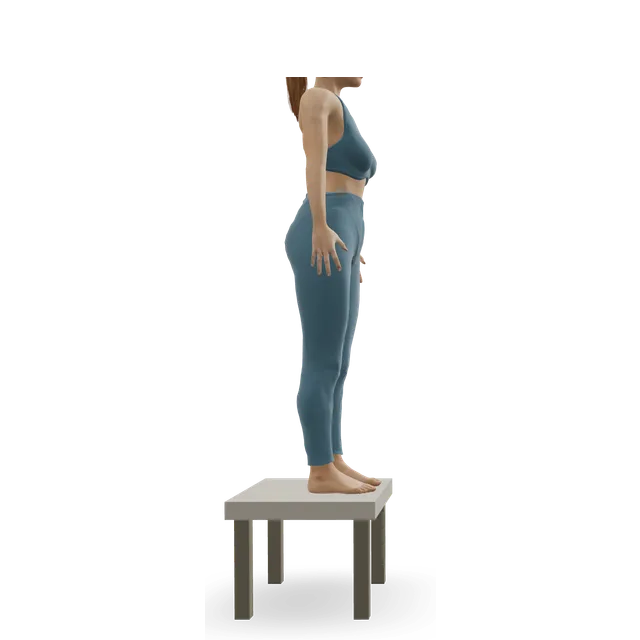
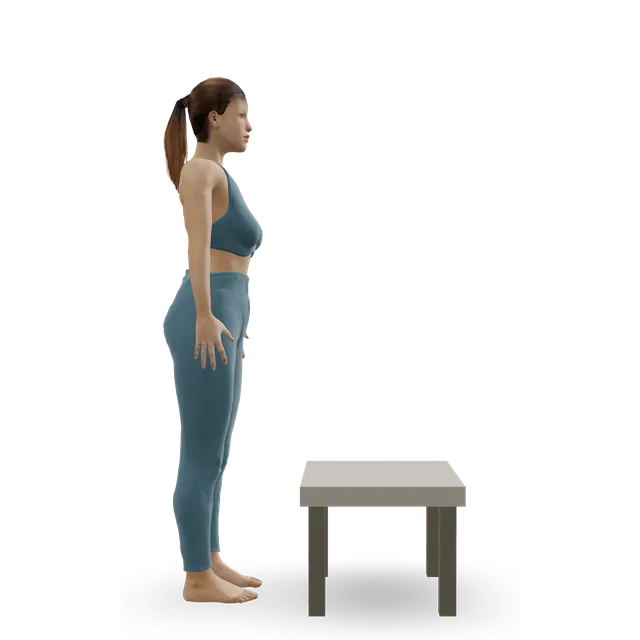
Box drop landing demonstrated on the 3D figure3D demoBox drop landingIntermediate · A step

3 sets of 5, from a box of about 20 to 30 cm · As in our jumping knee guide (editorial). Keep the box low with knee pain, as the move page says

Easier: Snapdown to athletic landing · Harder: Depth jump

Pogo hops demonstrated on the 3D figure3D demoPogo hopsIntermediate · No equipment

3 sets of 10 on two legs · The trial's first jumping dose

Easier: Ankle bounces (mini pogo) · Harder: Single-leg pogo hops

Box jump demonstrated on the 3D figure3D demoBox jumpIntermediate · A bench or box

3 sets of 5 to 10, stepping down every rep · As in our jumping knee guide: the trial named box jumps; stepping down is the move page's rule

Easier: Jump squat · Harder: Depth jump

Single-leg hop and stick demonstrated on the 3D figure3D demoSingle-leg hop and stickIntermediate · No equipment

3 sets of 5 each leg · As in our jumper's knee guide (editorial), on the way to the trial's one-leg sets

Easier: Standing broad jump with stuck landing · Harder: Alternate-leg bounding

Lateral bound (skater jump) demonstrated on the 3D figure3D demoLateral bound (skater jump)Beginner · No equipment

3 sets of 4 each side, sticking each landing for 2 s · As in our basketball strength and jump workout (editorial). Sideways landings for cuts; leave it out while the knee hurts, as the move page says

Harder: Bench jump-over

Move on when: The single-leg squat test stays at 3 out of 10 or less after at least a week of springs (the trial's test).

Follow along: a timer, a cue and the next move, one step at a time.
Stage 4

Back on court: drills, then practice, then games

Sport drills every 2 to 3 days, holds on the days between and strength twice a week, then for good: the warm-up's hops and landings, cuts and slides, then practice and games by the written steps below. No study has tested a return to basketball after knee pain; the order is our suggestion, built on the trial's staged return and the NBA and USA Basketball guidelines.

Single-leg cone hops demonstrated on the 3D figure3D demoSingle-leg cone hopsAdvanced · Other / check instructions

10 to 15 each leg, forwards and backwards over a line · As in our basketball injury prevention warm-up (editorial, following the SHRed developers' handout): level 1

Easier: Forward cone hops

Jump squat demonstrated on the 3D figure3D demoJump squatIntermediate · No equipment

8 to 12, landing quietly with the knees over the toes · As in our basketball injury prevention warm-up (editorial, following the SHRed developers' handout). The move page says it is the wrong starting point for irritable knees, so it comes last

Easier: Bodyweight squat · Harder: Box jump

Side-stepping (sideways walking) demonstrated on the 3D figure3D demoSide-stepping (sideways walking)Beginner · A wall

1 to 2 court lengths, forwards then a zig-zag shuffle back · As in our basketball injury prevention warm-up (editorial, following the SHRed developers' handout)

Harder: Lateral band walk

Shuttle runs demonstrated on the 3D figure3D demoShuttle runsAdvanced · No equipment

4 to 6 runs, wide turns first, then sharper over the sessions · As in our high ankle sprain guide (editorial). Sharp turns load the knee far more than straight running, as the move page says

Easier: Treadmill jogging

Spanish squat (band squat hold) demonstrated on the 3D figure3D demoSpanish squat (band squat hold)Intermediate · A band + An anchor point

4 to 5 holds of 30 to 45 seconds on days without drills · Adapted from the move page's dose; the trial kept its stage 1 holds going on days without sport

Easier: Straight-leg raise · Harder: Pistol squat

Leg press demonstrated on the 3D figure3D demoLeg pressBeginner · Strength machine

Twice a week at your stage 2 load · As in our jumper's knee guide (the trial's upkeep)

Harder: Bodyweight squat

Move on when: Drills and practices stay at 3 out of 10 or less for a tendon, or within the knee rule for kneecap pain, and the knee is back to normal the next morning (the trial's rule and the knee hub's). If it flares, drop back a stage for a week, not to nothing (editorial).

Follow along: a timer, a cue and the next move, one step at a time.

What to change for now

What to do now (written steps)

Our 3D figure can't show these. They come from the NHS knee pain page, NHS inform and the largest jumper's knee trial; where a step is our suggestion, it says so.

  • 1. The NHS suggests putting as little weight as possible on a newly painful knee at first, an ice pack wrapped in a towel for up to 20 minutes every 2 to 3 hours, and paracetamol or ibuprofen gel or tablets; NHS inform says avoid sports or heavy lifting until you have less discomfort and good movement.
  • 2. Cut the jumping that hurts, not all basketball: in the largest trial, activities that caused considerable tendon pain were reduced or avoided for at least 4 weeks. Keep shooting and skill work within the pain rule (our suggestion).
  • 3. Start the daily holds in stage 1 straight away; they ease tendon pain for many people.
  • 4. A pop, fast swelling, a knee that locks or gives way, a child with a limp, or a hot, red knee isn't an ordinary basketball ache: see the warning signs.

Sources 65, 66, 33

Jumping, court time, games and rest days (written steps)

The 3D figure can't show these. The youth limits are the NBA and USA Basketball's own; the rest is our suggestion, built on the trials and studies named, and none has been tested as a way to treat knee pain in basketball.

  • 1. Count jumps and court minutes, skip the jumping drills that hurt for a week or two, and add back one practice or game at a time (our suggestion); holds or slow strength eased tendon pain in season without cutting play.
  • 2. No games on back-to-back days while the knee is settling, and caution with more than one game a day, as the NBA and USA Basketball advise.
  • 3. Young players keep to their age group's maximum weekly hours of organised basketball, games per day, rest days and months off, and specialise in basketball no earlier than 14.
  • 4. Preseason: start strength and court work 4 to 6 weeks before the season rather than in the first week of practice (our suggestion); preseason practice injury rates in college women were more than twice those of the regular season.
  • 5. After a break, build up gradually; in teenage players, injuries followed a big week after quieter ones.

Sources 33, 42, 51, 52, 6, 57

The warm-up, straps and shoes (written steps)

The 3D figure shows the warm-up's moves, not the whole routine. These come from the SHRed warm-up studies, a strap trial and a brace trial, or are our suggestion.

  • 1. Do a 10-minute warm-up with running, agility, strength and balance before every practice and game, such as our basketball injury prevention warm-up; the SHRed warm-up went with 36% fewer ankle and knee injuries, and time was the commonest reason teams skipped it.
  • 2. A patellar strap or tape can ease tendon pain a little, no more than placebo tape; wear one for comfort if it helps.
  • 3. A lace-up ankle brace for an ankle you've sprained doesn't raise the risk to your knee.
  • 4. Shoes: court shoes in good repair that grip without sticking (our suggestion; no study has tested basketball shoes for knee pain).

Sources 47, 48, 60, 61

Basketball comes back (written steps)

Our suggestion, built on the largest jumper's knee trial's staged return, the NBA and USA Basketball guidelines and our basketball page; untested as a return to basketball. Move on when each step passes the pain rule and the knee is back to normal the next morning.

  • 1. Shooting with no jumping: free throws and form shooting, then set shots.
  • 2. Layups and jump shots at an easy pace, then defensive slides and cuts at half speed.
  • 3. Non-contact half-court drills, then full-court drills.
  • 4. A full practice, then controlled scrimmage with contact.
  • 5. Games: limited minutes first, one game a week, then two; no games on back-to-back days while the knee is settling.
  • 6. Young players keep within their age group's weekly hours, games per day, rest days and months off, and players with Osgood-Schlatter follow the 2 out of 10 activity ladder.
  • 7. Do the 10-minute warm-up before every practice and game, and keep two strength sessions a week (stages 2 and 3, or our basketball strength and jump workout).
  • 8. After an ACL reconstruction, the return-to-sport tests in our ACL surgery recovery guide and your team's clearance come first.

Sources 33, 51, 47, 36

Positions to swap, and why

Habit or positionWhy it mattersInstead
Playing on after a pop, fast swelling, catching or giving wayThese are signs of a ligament, meniscus or kneecap injury that needs checking.Stop, and follow the warning signs.
Every jumping drill while the tendon below the kneecap hurtsJump load goes with jumper's knee in volleyball studies.Shooting and skill work for now, with daily holds.Try: Spanish squat (band squat hold)
Painful decline squats while playing a full seasonThey did nothing for players who kept training and competing.The staged plan: holds, then leg press and leg extensions.Try: Leg press
Back-to-back games and tournaments, or a sudden big week after a breakInjuries followed a big week after quieter ones in teenage players, and the NBA and USA Basketball advise caution with more than one game a day.Build minutes and games gradually, with rest days.
Skipping the warm-upThe 10-minute SHRed warm-up went with 36% fewer ankle and knee injuries.Our basketball injury prevention warm-up before every practice and game.
Landing stiff-legged, or with the knee caving inThe knee caving inwards is the common pattern in ACL tears on video.Soft landings with the knees over the toes.Try: Snapdown to athletic landing
A young player in one sport all yearSingle-sport girls had more front-of-knee pain, and the guidelines advise specialising no earlier than 14.Other sports and months off organised basketball.
Resting completely for weeksLoading treats tendon and kneecap pain.The stage 1 moves: wall sits and bridges.Try: Wall sit
Relying on a strap or an MRIStraps help a little, no more than placebo tape, and tendon changes on scans also appear in pain-free players.The strength plan; a strap for comfort if you like.
Avoiding an ankle brace because you think it will hurt your kneeLace-up braces didn't raise knee injuries in the largest basketball brace trial.A lace-up brace if you've sprained an ankle (our basketball ankle guide).

Routines to follow

More moves for this area

Questions people ask

Why do my knees hurt after basketball?

Usually the front of the knee: a diffuse ache around the kneecap, or one point below it (the tendon), after more jumping, landing and stopping than your knees are used to. It's common and usually settles in days. A pop, fast swelling or a knee that gives way is different and needs checking.

What should I do if my knee hurts after basketball?

Rest it from jumping for a day or two, use ice and paracetamol or ibuprofen gel as the NHS suggests, and keep moving within comfort. Then start the holds in stage 1. Get it checked if it swelled fast, locks, gives way or won't take weight.

Why does the bottom of my kneecap hurt after basketball?

One point at the lower tip of the kneecap that is sore at the start of a session and eases as you warm up is usually jumper's knee. In a growing player of about 9 to 14, the same spot is more often Sinding-Larsen-Johansson syndrome.

Should I stop playing basketball with jumper's knee?

Cut the jumping that hurts for a few weeks and keep pain at 3 out of 10 or less, rather than stopping everything; jumping comes back in stages. Holds and slow strength eased pain even in season.

My teenager's knee hurts after basketball. Is it growing pains?

Unlikely: growing pains come in both legs in the evening or at night and are gone by the morning. A tender bump below the knee is usually Osgood-Schlatter, which settles with a short cut-back and strength work in most. A limp with knee or thigh pain needs a same-day check, because the hip can be the cause.

How much basketball is too much for a young player?

The NBA and USA Basketball suggest at most 10 hours of organised basketball a week at 12 to 14 and 14 hours from about 14 to 18, at least one rest day a week, and months off each year, with specialisation no earlier than 14. Pickup games and shooting on your own don't count, and a growing knee that hurts keeps to the 2 out of 10 rule as well.

Do knee straps or sleeves help?

A strap or tape eased tendon pain a little, but no more than placebo tape. Wear one for comfort if it helps, alongside the exercises.

How do I prevent knee pain in basketball?

Do a 10-minute warm-up with landings, strength and balance before every practice and game, build minutes and games gradually, and keep two strength sessions a week. Across sports, such programmes halve ACL injuries.

Why do women tear their ACL more in basketball?

Women college players tear an ACL about 3 to 4 times as often as men, though the rate is still low and is no reason not to play. On video, women's knees caved inwards on landing more often, and landing and strength warm-ups cut the risk.

Do I need a scan?

Usually not: jumper's knee and kneecap pain are diagnosed by examination. An X-ray after a fall if the Ottawa knee rule says so, and an MRI after a pop with fast swelling, locking or giving way.

How long does it take?

Aches settle in days; jumper's knee often takes months, and the fastest return in the largest trial was 4 weeks. After ACL surgery, NBA players returned at a mean of 11.6 months. No one can promise a date.

When should I see a doctor?

Go to A&E for a pop with fast swelling or a knee that changed shape. Get same-day help for a knee that locks, gives way, won't take weight or is hot and swollen with a fever, or a child with knee pain and a limp; see a GP or physiotherapist if it isn't better within a few weeks. In the US, call 911 where this page says 999.

Related exercise guides

Other pain guides

Sources

  1. Zuckerman 2018 · Injuries in US college basketball, 2009 to 2015 (surveillance study, Br J Sports Med)
  2. Andreoli 2018 · Basketball injuries: 11 studies, 12,960 injuries (integrative review, BMJ Open Sport Exerc Med)
  3. Borowski 2008 · Injuries in US high school basketball, 2005 to 2007 (surveillance study, Am J Sports Med)
  4. Stojanović 2025 · Basketball injuries by body part and cause: 22 studies (systematic review and meta-analysis, Sports Med)
  5. Dick 2007 · Injuries in US college men's basketball over 16 seasons (NCAA surveillance study, J Athl Train)
  6. Agel 2007 · Injuries in US college women's basketball over 16 seasons (NCAA surveillance study, J Athl Train)
  7. Drakos 2010 · Injuries in the NBA over 17 seasons (surveillance study, Sports Health)
  8. Deitch 2006 · Injury risk in WNBA and NBA players compared (surveillance study, Am J Sports Med)
  9. McInnes 1995 · The physical load of competition in 8 elite Australian basketball players (observational study, J Sports Sci)
  10. Stojanović 2018 · What a basketball game demands: 25 studies (systematic review, Sports Med)
  11. Saucier 2021 · Jumps and workload in a US college men's basketball team measured with smart shorts (observational study, Sensors)
  12. Hannington 2022 · How common front-of-knee pain is, and where it hurts, in 242 Canadian college basketball players (cross-sectional study, J Athl Train)
  13. Foss 2014 · Front-of-knee pain diagnoses in 810 middle and high school basketball players, girls and boys compared (preseason screening study, J Athl Enhanc)
  14. Myer 2010 · New front-of-knee pain over a season in female middle and high school basketball players (prospective cohort, Clin Biomech)
  15. Lian 2005 · How common jumper's knee is in 613 elite athletes from different sports (cross-sectional study, Am J Sports Med)
  16. Zwerver 2011 · Jumper's knee in 891 non-elite athletes from 7 sports (cross-sectional survey, Am J Sports Med)
  17. Owoeye 2021 · Patellar and Achilles tendon problems in 515 youth basketball players (cohort study, Int J Environ Res Public Health)
  18. de Vries 2015 · Risk factors for jumper's knee in 385 volleyball and basketball players (prospective cohort, Scand J Med Sci Sports)
  19. Kujala 1985 · Osgood-Schlatter's disease in adolescent athletes: incidence and duration (retrospective study, AJSM)
  20. de Lucena 2011 · Osgood-Schlatter and its associated factors in 956 Brazilian adolescents (cross-sectional study, AJSM)
  21. NHS inform · Knee apophysitis (Osgood Schlatter's and Sinding-Larsen Johansson syndrome)
  22. NHS · Growing pains
  23. Hall 2015 · Single-sport specialisation and front-of-knee pain in adolescent female athletes (J Sport Rehabil)
  24. Agel 2005 · ACL injuries in US college basketball and soccer over 13 years (surveillance study, AJSM)
  25. Agel 2016 · ACL injury rates across 15 US college sports, 2004/05 to 2012/13 (surveillance study, Clin J Sport Med)
  26. Krosshaug 2007 · How ACL injuries happen in basketball: 39 videos (video analysis, Am J Sports Med)
  27. Olsson 2016 · What MRI found in 1,145 knees that bled into the joint after an injury (cohort study, Osteoarthritis Cartilage)
  28. Yeh 2012 · Isolated meniscus injuries in NBA players and their effect on performance (cohort study, Am J Sports Med)
  29. McAuliffe 2016 · Can ultrasound changes predict Achilles and patellar tendon pain? (systematic review, BJSM)
  30. Englund 2008 · Meniscal tears on MRI in 991 middle-aged and older people from the general population (study, N Engl J Med)
  31. Bachmann 2004 · Accuracy of the Ottawa knee rule (systematic review, Ann Intern Med)
  32. National Institute for Health and Care Excellence (NICE) · Suspected cancer: recognition and referral (NG12, guideline)
  33. Breda 2021 · Progressive tendon loading for patellar tendon pain in 76 athletes (RCT, Br J Sports Med)
  34. Deng 2025 · Patellar tendinopathy 5 years after exercise therapy, 58 athletes (cohort follow-up of a trial, Am J Sports Med)
  35. Jildeh 2021 · Patellar tendinopathy and player performance in the NBA (cohort study, Orthop J Sports Med)
  36. Rathleff 2020 · Activity modification and knee strengthening for Osgood-Schlatter disease, with its patient leaflet and activity ladder (cohort of 51 adolescents, Orthop J Sports Med)
  37. Harris 2013 · Return to sport and performance after ACL reconstruction in NBA players (cohort study, Sports Health)
  38. Tramer 2020 · Return to play and performance after ACL reconstruction in WNBA players (cohort study, Orthop J Sports Med)
  39. Shelbourne 2009 · Return to basketball and soccer after ACL reconstruction in school-aged athletes (cohort study, Sports Health)
  40. Ardern 2014 · Return to sport after ACL reconstruction (systematic review and meta-analysis, Br J Sports Med)
  41. Kongsgaard 2009 · Steroid injection, eccentric training or heavy slow resistance for patellar tendinopathy (randomised trial, Scand J Med Sci Sports)
  42. van Ark 2016 · Isometric and isotonic programmes for patellar tendinopathy in season (RCT, J Sci Med Sport)
  43. Visnes 2005 · Eccentric training for jumper's knee during the volleyball season (RCT, Clin J Sport Med)
  44. Crossley 2016 · Patellofemoral pain consensus statement, part 2: exercise, taping, bracing and foot orthoses (Br J Sports Med)
  45. Webster 2018 · ACL injury prevention programmes: 8 meta-analyses combined (meta-analysis of meta-analyses, J Orthop Res)
  46. Taylor 2015 · Preventing leg injuries in basketball: 10 studies (systematic review and meta-analysis, Sports Health; read in full)
  47. Emery 2022 · The SHRed Injuries Basketball warm-up in players aged 11 to 18 (quasi-experimental study, J Orthop Sports Phys Ther)
  48. Owoeye 2020 · How well youth basketball teams kept to the SHRed warm-up (cohort study, J Sports Sci)
  49. Emery 2007 · A home wobble-board programme in 920 high-school basketball players (cluster randomised trial, Clin J Sport Med)
  50. Longo 2012 · The FIFA 11+ in an Italian basketball club (cluster randomised trial, AJSM)
  51. NBA and USA Basketball · Youth Basketball Guidelines: health and wellness, participation and sports specialisation (2016)
  52. DiFiori 2018 · The NBA and USA Basketball's recommendations for youth basketball (consensus statement, Sports Med)
  53. Brenner 2016 · Sports specialization and intensive training in young athletes (American Academy of Pediatrics clinical report, Pediatrics)
  54. American Medical Society for Sports Medicine (AMSSM) · Press release on its position statement on overuse injuries and burnout in youth sports (2014)
  55. Visnes 2013 · Training volume and body build as risk factors for jumper's knee in 141 young elite volleyball players (cohort study, Scand J Med Sci Sports)
  56. Bahr 2014 · Jump counts in young elite volleyball players: 11,943 jumps on video (observational study, Br J Sports Med)
  57. Benson 2021 · Workloads of injured and uninjured youth basketball players (cohort study of 49 players, Front Sports Act Living)
  58. Weiss 2017 · Training load and injury in men's professional basketball (cohort study, Int J Sports Physiol Perform)
  59. Caparrós 2018 · Low game workloads and injury risk in men's professional basketball (cohort study, J Sports Sci Med)
  60. de Vries 2016 · A patellar strap and sports tape for patellar tendinopathy in 97 athletes (randomised trial, Scand J Med Sci Sports)
  61. McGuine 2011 · Lace-up ankle braces and injury rates in high school basketball players (RCT, AJSM)
  62. Thomeé 1997 · Treating patellofemoral pain in young women with a pain-monitoring model (Phys Ther)
  63. Smith 2017 · Should exercise be painful in long-lasting muscle and joint pain? 7 trials (meta-analysis, Br J Sports Med)
  64. NICE · Osteoarthritis in over 16s: diagnosis and management (NG226, guideline)
  65. NHS · Knee pain
  66. NHS inform · Knee problems
  67. NHS · Pulmonary embolism
  68. NHS · DVT (deep vein thrombosis)
  69. NHS · Baker's cyst
  70. NHS · Septic arthritis
  71. NHS · Fainting
  72. NHS · Symptoms of bone cancer
  73. NHS · Dislocated kneecap
  74. Stiell 1995 · Derivation of the Ottawa knee rule for X-rays after knee injury (Ann Emerg Med)
  75. Stiell 1996 · Prospective validation of the Ottawa knee rule (JAMA)
  76. AAOS OrthoInfo · Quadriceps tendon tear
  77. AAOS OrthoInfo · Patellar tendon tear
  78. NHS · Sciatica
  79. Yellin 2024 · Patellar sleeve injuries in 90 children and teenagers (case series, J Child Orthop)
  80. NHS · Limping in children
  81. NHS · Hip pain in children (irritable hip)
  82. NHS inform · Slipped upper femoral epiphysis (SUFE) in children and young people
  83. Perry 2022 · Slipped capital femoral epiphysis in Great Britain: 486 children followed for 2 years (national cohort, Bone Joint J)
  84. Evidence-Based Interventions programme (Academy of Medical Royal Colleges) · Arthroscopic surgery for meniscal tears (reviewed 2024)
  85. NHS inform · Exercises to help with patellofemoral knee pain
  86. Health New Zealand Te Whatu Ora · Stress fractures of the foot and shin bone
  87. nidirect (Northern Ireland) · Dislocated kneecap
  88. American Academy of Orthopaedic Surgeons, OrthoInfo · Osgood-Schlatter disease (knee pain)
  89. Sherwood Forest Hospitals NHS Foundation Trust · Osgood Schlatter's disease (patient leaflet, 2025)
  90. Cambridge University Hospitals NHS Foundation Trust · Sinding-Larsen-Johansson syndrome (patient information, 2024)
  91. NHS inform · Knee problems in children and young people
  92. Ageberg 2010 · NEMEX-TJR neuromuscular training for severe hip or knee osteoarthritis, and its pain rule (BMC Musculoskelet Disord)
  93. Royal Berkshire NHS Foundation Trust · ACL injury: non-operative management (physiotherapy leaflet, 2024)

Exercise education, not a diagnosis or treatment plan. It is written from the guidelines and studies listed above; review by a clinician is pending. If your pain follows an injury, is severe, is getting worse, or comes with any warning sign listed on this page, get it assessed. Health disclaimer.