Knee pain after Pilates: kneeling, reformer footwork, the kneecap, locked knees and what to change

Knee pain after Pilates usually comes from three things: kneeling on the mat or the reformer's carriage, which presses on the tendon just below the kneecap; footwork, squats and lunges with a deep bend, which squeeze the kneecap; and deep bends with a twist, such as frogs, rocking or side-sitting, which can strain the cartilage cushion on the inner side (the meniscus). Pilates is safe for most people, and it eases knee arthritis in trials. Padding, a smaller bend, soft knees, lighter springs and a few swaps for a while, then building the thigh and hip back up, usually sort it out.

This guide starts with the signs that need help, from the National Health Service's 111 line (NHS 111) or accident and emergency (A&E) for a knee that locks, gives way or swells fast after a pop, to the same day for a hot swelling over the kneecap or a swollen, red or painful calf. It then sorts the causes by where it hurts and which moves bring it on, explains what to change in kneeling, footwork and the deep-bend moves and how to talk to your instructor, and gives a four-stage plan with a 3D demo of every move, back to kneeling and full footwork.

When to get help first

Exercise is for pain that has been checked or is clearly mild and settling.

Get urgent medical help if

  • Go to A&E (accident and emergency) if you've injured your knee and it has changed shape, it becomes very swollen very quickly, you felt a pop or snap, you can see bone sticking out, or it's bleeding heavily. Don't drive yourself: ask someone to take you, or call 999 if the pain means you can't move your leg to get there.
  • Get advice from NHS 111 now: you cannot move the knee or put any weight on it, or it is very painful, badly swollen or has changed shape.
  • You hurt your knee and cannot take 4 steps, or you are 55 or over and have injured it: get it checked the same day for a broken bone.
  • Get advice from NHS 111 now: the knee locks, gives way or clicks painfully. Painless clicking is normal.
  • Get advice from NHS 111 now: after a twist, your knee won't go fully straight, or something blocks the last part of straightening, even if you can still walk on it. A torn piece of meniscus caught in the joint can do this, and it needs checking promptly.
  • The knee is locked and you cannot fully straighten it.
  • Get advice from NHS 111 now: a hot, red or swollen knee with sudden severe pain, a very high temperature, or feeling hot, cold or shivery. This can be a joint infection.
  • Get advice from NHS 111 now: a hot, red or swollen knee with sudden severe pain, a very high temperature (although not everyone has one), or feeling hot, cold or shivery. This can be a joint infection.
  • Same day (urgent GP appointment or NHS 111): sudden, severe pain in one joint, with swelling, a change in skin colour or difficulty moving it, especially if you feel unwell, hot, cold or shivery or have a high temperature (although not everyone has one). It could be an infection in the joint, gout or calcium crystals (pseudogout), and only a sample of fluid from the joint can tell them apart.
  • Same day: the swelling over or below the kneecap becomes hot, red or more painful, the skin over it is broken, or you have a high temperature or feel shivery, sick or unwell. Ask for an urgent GP appointment or call NHS 111: it may be infected and need antibiotics.
  • Call 999 or go to A&E if redness spreads through the skin around the knee (cellulitis) and you have a very high temperature or feel hot, cold or shivery, a fast heartbeat or fast breathing, purple patches on the skin, feel dizzy or faint, are confused, or have cold, clammy or pale skin. These can be signs of a serious infection. Don't drive yourself.
  • Same day (urgent GP appointment or NHS 111): throbbing pain in one leg (rarely both), usually the calf or thigh; swelling in one leg (rarely both); red, blue or darkened skin around the painful area, which may be harder to see on brown or black skin; or swollen veins. This can be a deep vein thrombosis (DVT). It is more likely after surgery, a hospital stay, 3 or more days in bed, a journey of over 4 hours, pregnancy or a recent birth, cancer, a previous clot, or oestrogen-containing contraception or HRT.
  • Same day (urgent GP appointment or NHS 111): throbbing pain in one leg (rarely both), usually the calf or thigh; swelling in one leg (rarely both); red, blue or darkened skin; or swollen veins; or sudden worse pain and swelling around a lump at the back of the knee (a possible clot or a burst Baker's cyst).
  • Call 999 or go to A&E if breathing suddenly becomes difficult, if pain in your chest or upper back comes on suddenly with breathlessness or a very fast heartbeat, or if someone passes out. Do not drive yourself. It can be a blood clot that has reached the lungs.
  • A high temperature, or feeling hot, cold or shivery, or redness, tenderness, swelling or pain in the knee that is not getting better or is getting worse: ask for an urgent GP appointment or get help from NHS 111. These can be signs of an infection.
  • Same day (urgent GP appointment or NHS 111): new difficulty lifting the front of your foot or toes (foot drop), or a foot that slaps down or catches as you walk, especially if it is getting worse. Weakness in both legs, or with numbness around the genitals or bottom or bladder or bowel changes, is the 999 emergency above.
  • Call 999 or go to A&E: back or leg symptoms with numbness around the genitals or bottom, new trouble controlling your bladder or bowels, or severe or worsening weakness or numbness in both legs.

See a doctor or physiotherapist if

  • Knee pain that has not improved within a few weeks of looking after it at home. Many areas offer NHS physiotherapy without a GP referral.
  • A tear after a significant twisting injury, especially in a younger person.
  • A knee that keeps giving way.
  • Catching, locking or swelling at the joint line that hasn't settled after about 3 months of exercise and other non-surgical care: ask your GP or physiotherapist about a specialist review. A magnetic resonance imaging (MRI) scan may be considered then.
  • Kneecap pain that hasn't improved within 6 weeks of changing your activities and doing the exercises, or that gets worse: talk to a GP or physiotherapist.
  • Bursitis that hasn't improved, or is getting worse, after 1 to 2 weeks of looking after it yourself, a knee you can't move, or very severe, sharp or shooting pains: see a GP.
  • Your knee is hot, swollen or tender, especially if you can't remember injuring it: contact your GP practice, or NHS 111 if it's closed. A hot knee with a very high temperature is urgent (above).
  • Tingling or numbness down the outer shin or on the top of your foot, without an injury or weakness, after sitting with your legs crossed, kneeling or squatting for a long time: change position, and see a GP if it doesn't settle. Difficulty lifting the front of your foot is the same-day line above.
  • Sudden, severe and persistent knee pain, often on the inner side, that came on with little or no injury, especially if you're over 60: see a GP rather than assuming it's arthritis. Early X-rays are usually normal, and a magnetic resonance imaging (MRI) scan may be needed.
  • Swelling in several joints, or morning stiffness that lasts more than 30 minutes: see a GP. It can be an inflammatory arthritis such as rheumatoid arthritis rather than osteoarthritis.
  • Bone pain that is constant or worse at night, especially with a lump, unexplained weight loss, fever or tiredness, or a past history of cancer.
  • Numbness, tingling or weakness that travels down the leg from the back. That points to a nerve (sciatica) rather than the knee.
  • Knees that bend back, with joint pain, repeated sprains, joints that slip out, tiredness or poor balance: see a GP about joint hypermobility syndrome.
  • Exercise pain that takes hours to settle, keeps waking you, or builds week on week: ease off and tell your physiotherapist.

Where does it hurt?

Location narrows the likely causes; it does not diagnose.

A tender spot just below the kneecap, over the tendon, after kneeling on the mat or the carriage

Pressure on the tendon and the bony bump below the kneecap, where most of the weight lands when you kneel (our reading of kneeling studies). Our kneeling guide covers it.

Read: Knee pain when kneeling →

A soft, squashy swelling on the front of the kneecap after kneeling

Bursitis, often called housemaid's knee.

Read: Knee bursitis →

The same swelling, now hot and red, with broken skin or a temperature

A possibly infected bursa: get help the same day, as the warning signs say.

Read: Knee bursitis →

Around or behind the kneecap with footwork, squats, lunges, stairs or long sitting

Usually kneecap (patellofemoral) pain, often called runner's knee.

Read: Runner's knee →

Just below the kneecap, worse with jumps on the jump board

Possibly patellar tendon pain.

Read: Jumper's knee →

A sharp pain on the inner joint line in a deep bend with a twist (frogs, rocking, side-sitting), sometimes catching

Possibly the meniscus. A knee that locks or won't straighten needs checking, as the warning signs say.

Read: Meniscus tear →

After a twist or a fall from the reformer: a pop, swelling within hours, a knee that gives way

Possibly a torn ligament (the ACL) or meniscus: get it checked, as the warning signs say.

Read: ACL injury →

The inner side a few centimetres below the joint, tender to touch, worse on stairs

Possibly pes anserine pain.

Read: Pes anserine pain →

The inner knee from mid-life, a stiff ache worse in deep bends and getting up from the floor

Usually knee arthritis on the inner side.

Read: Knee arthritis →

The back of the knee with the knees locked straight in footwork or standing work, or knees that bend back past straight

Knees that bend back (hyperextension): a soft knee, and strength and control rather than more range.

Read: Hyperextended knee →

A lump at the back of the knee that makes deep bends tight

Often a Baker's cyst. A painful, swollen calf with it needs a same-day check.

Read: Baker's cyst →

A numb outer shin or top of the foot after long kneeling or sitting back on the heels

The nerve below the outer knee, pressed by the position. A foot that won't lift needs a same-day check.

Read: Foot drop →
Show all 17 areasShow fewer areas

Understand it

Pilates is safe for most people, and it helps knee arthritisEmerging evidence

No study gives a Pilates injury rate for the knee or any other part, and no country collects Pilates injury statistics. The nearest figure is instructors' own work aches: 35.5% of 166 Brazilian Pilates instructors reported knee pain (instructors, not clients). In a back pain trial, 1 of 44 people in the Pilates group had knee pain.

For knee arthritis, Pilates eased pain more than no exercise and about as much as other exercise across 11 small trials (476 people), at low to very low certainty. Side effects were rarely measured: only 2 of the 11 trials reported them, finding none of note, a pilot trial of 54 adults had no serious side effects, and a review of Pilates in adults over 50 with long-term joint and muscle conditions found no significant ones.

Sources 1, 2, 3, 4, 5, 6, 7, 8

What Pilates asks of the kneeEmerging evidence

On the mat, the knee hover, all-fours work (cat-cow, the bird dog) and the kneeling side kick put weight on the knees; rocking, the single-leg kick, rolling moves and hugging a knee in during the leg stretches bend it deeply; and the mermaid is often done side-sitting. On the reformer, footwork is a lying leg press against 2 to 4 springs, from a deep bend to straight; the knee stretches, kneeling abdominals and kneeling arm work kneel on the carriage; frogs and circles with the feet in straps bend and turn the knees; and standing work and the jump board load them upright.

The reformer maker lists ankle, knee and hip bending as precautions for footwork and an inability to kneel for kneeling abdominals, and the classical manual lists knee issues for the knee stretch series. A teaching encyclopedia's footwork cue is to avoid hyperextending the knees.

Sources 9, 10, 11

Kneeling and the kneecapEmerging evidence

In 10 adults kneeling in miners' postures, most of the pressure went through the tendon and the bony bump just below the kneecap rather than the kneecap itself, and knee pads lowered the peak but left high pressure over the bursa. Kneeling on one knee gave the highest knee forces of the kneeling postures. In cadaver knees, kneeling at about a right angle raised the pressure behind the kneecap compared with the same bend unloaded.

A Pilates class kneels for minutes, not hours. The kneeling linked with worsening kneecap cartilage, in 600 people at risk of arthritis, was 30 minutes or more on 6 or more days a week, and the link weakened once a high-riding kneecap was allowed for; kneeling at work for more than 30 minutes a day went with knee arthritis (odds ratio 1.29 across 14 studies) and about double the risk of meniscal damage. So in our reading, the kneeling in a class is a much smaller dose; these are studies of workers, not of Pilates.

Sources 12, 13, 14, 15, 16, 17

Deep bends, footwork and the kneecapEmerging evidence

In 20 healthy adults, kneecap stress in the gym leg press was higher than in a seated knee extension once the knee bent past about 48 degrees; in squats it was higher at 60 to 90 degrees of bend; and in another study, kneecap compression was greatest near full bend in squats and leg presses. A review of squat depth puts the peak stress behind the kneecap at about a right angle.

No study has measured knee load in reformer footwork. On an instrumented footbar, the force worked out from the springs differed from the force measured, so spring settings are only a rough guide to the load; and in 15 people doing footwork, two different muscle strategies appeared depending on the direction they pushed the bar. In our reading of the leg press and squat studies, a sore kneecap usually copes better with the knees bending less at the start of footwork and pushing in line with the feet.

Sources 18, 19, 20, 21, 22, 23

Deep twisting bends and the meniscusEmerging evidence

In 10 people in an MRI scanner, both menisci slid backwards in a deep knee bend and carried more of the contact. The risk factors for meniscal tears are age over 60, male sex, work kneeling and squatting, climbing many stairs, and contact and pivoting sports: a very different dose from a Pilates class. Frogs and circles in the straps, a deep single-leg kick or rocking can twist a deeply bent knee (our reading); an Australian Pilates body notes that frogs and bicycles may twist the knee and irritate a new knee replacement if not controlled well.

Sources 24, 25, 26, 27

Locked knees and very flexible kneesEmerging evidence

Knees that straighten more than 5 degrees past straight (genu recurvatum) can go with knee pain and poor control at the end of straightening, an expert commentary says. Snapping the knees straight at the end of each footwork push loads the back of the knee, and the teaching cue is not to (our reading). With hypermobility, the NHS says do not overextend your joints just because you can. In contact sport, hypermobile players had more knee injuries, and in 132 young dancers, those with both hypermobility and scoliosis mostly had kneecap pain, with weaker knee muscles and poorer balance (other groups, not Pilates).

Sources 28, 11, 29, 30, 31

Rare but serious: falls, an infected bursa and a clot

A fall from the reformer or the jump board can injure the knee: a news report describes a client who slid and fell off the reformer on her first jump, and an Australian Pilates body reported hearing of a broken leg in a reformer class. Kneecap bursitis is uncommon even in workers (0.6% of men and 0.2% of women in one regional workforce), but about a third of kneecap and elbow bursitis is infected, with a temperature over 37.8 degrees and broken skin among the signs. A swollen, red or painful calf can be a clot. These are rare: they show what the warning signs are for, not a risk.

Sources 32, 33, 34

Telling the causes apart, and when a scan mattersEmerging evidence

A general practitioner (GP) or physiotherapist asks which moves bring it on and where exactly it hurts, then examines the kneecap, the joint line and how the knee bends and straightens. Kneecap pain is pain around or behind the kneecap made worse by loaded bent-knee activity such as squatting, stairs and long sitting; the best single test is pain in a squat. The NHS sorts knee pain by pattern: a warm, red knee made worse by kneeling or bending suggests bursitis; a knee that gives way, won't straighten or popped at the time suggests a torn ligament, tendon or meniscus.

For an ache after class that is settling, no scan is needed (our reading). An X-ray matters after a fall or if you can't take weight. Meniscal tears are common on the magnetic resonance imaging (MRI) scans of knees that don't hurt: in 991 people aged 50 to 90, 61% of those with a tear had no pain, aching or stiffness in the past month, and a guideline panel calls them usually incidental. Catching or occasional locking wasn't helped by removing the torn piece more than by sham surgery; a truly locked knee that can't fully straighten is the exception that needs prompt assessment.

Sources 35, 36, 37, 38, 39, 40, 41

How it usually goesEmerging evidence

No study has followed Pilates clients with knee pain. The NHS says knee pain can often be treated at home and you should start to feel better in a few days, and to see a GP if it doesn't improve within a few weeks; bursitis should go away in a few weeks. Kneecap pain can linger: in a 5 to 8 year follow-up of two trials, more than half of those who answered reported an unfavourable recovery, but 48 of 50 who had an X-ray had no arthritis, and in 40 young women given education, graded training and a pain-monitoring system, 85% were doing sport without pain a year later.

Muscle soreness after a new class peaks at 1 to 3 days and goes within 5 to 7. Giving way is common in mid-life and later (11.8% of 2,351 adults over 3 months) and goes with knee pain and a weak thigh, so the thigh is the target. No one can promise a date.

Sources 35, 41, 42, 43, 44, 45

What helps, and how strong the evidence is

Kneeling: pad it, keep it short, or swap itEmerging evidence

No trial has tested a change to Pilates for knee pain that Pilates caused. The NHS advises padding when you put a lot of pressure on your knees, for example when kneeling, and taking regular breaks. After a knee replacement, a 30 mm foam pad lowered the contact pressure enough that none of 60 people rated kneeling impossible or extremely difficult. Pads don't remove all the pressure, so if kneeling still hurts, swap the move, and kneel on both knees rather than one where you can.

Sources 41, 46, 12, 13

Footwork: a comfortable bend, soft knees and lighter springsEmerging evidence

Because kneecap stress rises with deeper loaded bends in the gym, setting the footbar or stopper so the knees bend less at the start, starting with lighter springs, pushing in line with your second toe and keeping the knees soft at the end are our suggestion for a sore kneecap. Footwork's own knee load hasn't been measured, and spring settings are only a rough guide to the load, so judge by how the knee feels. Heavier springs aren't safer in themselves either: on balance moves such as the elephant, a lighter spring makes the carriage less stable and the trunk muscles work harder, in a lab study of 18 women. Ask your instructor to watch the direction you push the bar, since it changes which muscles work.

Sources 18, 20, 19, 22, 47, 23, 11

Strengthen the hip and thigh for kneecap painStrong evidence

An international consensus recommends combining hip and knee exercises to reduce pain and improve function in the short, medium and long term, in preference to knee exercises alone. A Cochrane review of 31 trials (1,690 people) found exercise reduced pain during activity by about 1.5 points on a 0 to 10 scale in the short term, on very low quality but consistent evidence. Adding Pilates-based core exercise to physiotherapy helped 34 teenagers with kneecap pain more than physiotherapy alone.

Sources 48, 49, 50, 36

A worn meniscus: exercise does as well as surgeryStrong evidence

In 140 middle-aged adults with a worn (degenerative) meniscal tear, 12 weeks of supervised exercise did as well as keyhole surgery at 2 years and built more thigh strength, with no serious harms in either group, and there was no difference in arthritis at 10 years. A Danish evidence statement recommends exercise as the treatment of choice for middle-aged and older people with degenerative meniscal tears, and a guideline panel recommends against keyhole surgery in nearly all of them.

Sources 51, 52, 26, 39

Knee arthritis and knee replacement: Pilates can be part of itEmerging evidence

For knee arthritis, Pilates eased pain more than no exercise and as much as other exercise in small trials, and NICE recommends therapeutic exercise tailored to the person for everyone with osteoarthritis. After a knee replacement, Pilates-based exercise added to standard exercise improved balance and quality of life in 34 people, and core stability exercise by video call helped function in 42 (that trial doesn't call it Pilates). After a partial anterior cruciate ligament (ACL) tear managed without surgery, 12 weeks of mat Pilates strengthened the thigh more than no treatment in 50 adults. We found no trial of Pilates after ACL reconstruction.

Sources 5, 6, 53, 54, 55, 56

Kneeling after a knee replacement isn't harmful, but it is often uncomfortableEmerging evidence

A review found no evidence of any clinical reason not to kneel on a replaced knee, but across 36 studies about two thirds of people still couldn't kneel a year after surgery, and about half after 3 years. When watched, 81% of 122 people could kneel, though only 37% thought they could. The NHS says do not kneel on your new knee until your doctor says you can. An Australian Pilates body advises a foam pad and limited time kneeling, and finds that knee stretches on the reformer can often be too painful, with the scooter as an alternative; its advice hasn't been tested.

Sources 57, 58, 59, 60, 27

Some pain during exercise is acceptableEmerging evidence

In a trial of 38 people with Achilles tendon pain, carrying on with running and jumping under a pain-monitoring model did no harm compared with stopping. Across trials of long-lasting muscle and joint pain, exercise that allowed some pain did no worse than pain-free exercise, with no difference in side effects, though the certainty is low. The pain rule below uses the knee hub's version of that model.

Sources 43, 61, 62, 63

A gentler classEmerging evidence

In 168 adults with back pain, low-intensity Pilates worked about as well as high-intensity Pilates and brought fewer side effects, about 20 fewer people in 100 with one. Choosing a gentler class for a few weeks while the knee settles is our suggestion from this trial, which was about backs, not knees.

Source 64

How much pain is OK while you exercise?

0 to 2 is safe, up to 5 is acceptable, back to usual by the next morning; no sharp or catching pain inside the kneeEmerging evidence

This guide uses the knee hub's rule. Rate your knee pain from 0 to 10 during and after exercise. In the pain-monitoring model used in knee trials, 0 to 2 counts as safe, up to 5 as acceptable and above 5 as too much. Aim for 0 to 3 most of the time.

By the next morning your knee should be back to its usual level. If it is not, drop back one step next time (fewer sets, a shallower range, a lower step), not to nothing. Over the weeks pain should hold steady or ease; that last check is our suggestion rather than a tested rule.

Some knee programmes say you should feel no pain at all. The trials allowed some, and a meta-analysis found exercising into some pain did no worse than pain-free exercise.

Sharp, catching or giving-way pain, or new swelling, is a reason to stop and get it checked.

Sharp, catching or giving-way pain, or new swelling, is a reason to stop and get it checked. Stop the move straight away for a sharp pain inside the knee when you bend deeply or twist, a kneecap that feels as if it slips, or numbness in your lower leg while kneeling or side-sitting (our suggestion).

For Pilates (our suggestion, built on the same rule): judge each class by the knee during the kneeling, footwork and deep-bend moves, that evening and the next morning. A move that takes the knee above about 5 out of 10, or any sharp, catching or twisting pain inside the knee, gets its swap for now (padding, a smaller bend, standing instead of kneeling), and kneeling and deep twisting bends come back only when they are comfortable. Swelling the next morning means less next time.

Sources 43, 62, 35

The exercise plan: 4 stages

Start at the first stage. Each move opens a full guide with a 3D demo.

Stage 1

Settle: change the moves, switch the thigh and hip on

About the first 2 weeks: classes with the kneeling and deep bends taken out, the knee bending and straightening fully, and the thigh and hip working in easy ranges. With a diagnosed meniscus tear, arthritis, bursitis or a knee replacement, that guide's or your team's plan comes first; with a warning sign, get checked first.

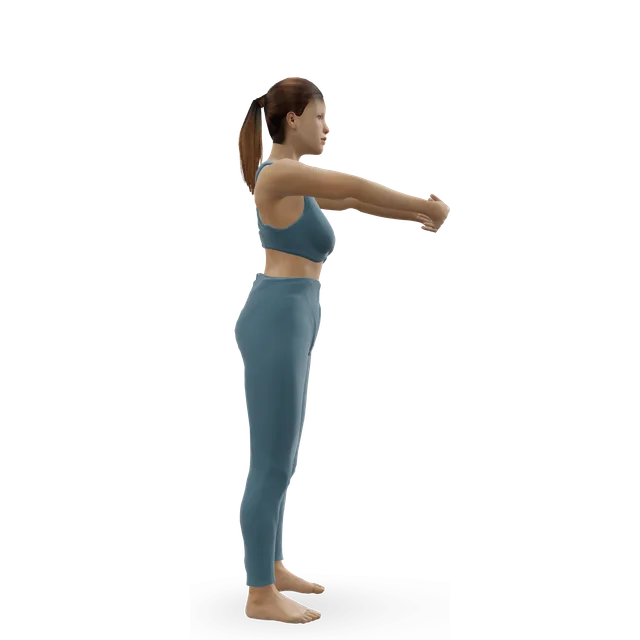
Quad set (static quads) demonstrated on the 3D figure3D demoQuad set (static quads)Beginner · No equipment

Hold 10 s, 10 times, 2 to 3 times a day · As in our knee pain after yoga guide (an NHS trust's meniscal tear leaflet's dose, as our golf knee guide carries it)

Harder: Straight-leg raise

Straight-leg raise demonstrated on the 3D figure3D demoStraight-leg raiseBeginner · No equipment

Hold 10 s and lower slowly, 10 times · As in our knee pain after yoga guide (the same NHS trust leaflet's dose)

Easier: Quad set (static quads) · Harder: Leg extension

Supine heel slide demonstrated on the 3D figure3D demoSupine heel slideBeginner · No equipment

10 slow repetitions each side, once or twice a day · The move page's dose. Bend only as far as is comfortable

Harder: Hip windshield wipers

Pelvic tilt into bridge demonstrated on the 3D figure3D demoPelvic tilt into bridgeBeginner · No equipment

8 slow reps · As in our Pilates for knee pain class (editorial); knees in line with your feet

Harder: Glute bridge

Clamshell demonstrated on the 3D figure3D demoClamshellBeginner · No equipment

10 each side · As in our Pilates for knee pain class (editorial); skip it if the outside of your hip is sore

Easier: Supine isometric hip abduction (belt press) · Harder: Lateral band walk

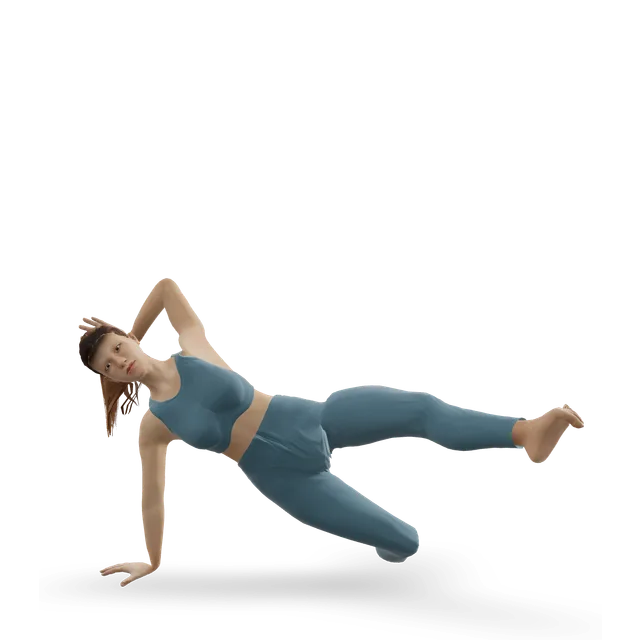
Side kick (Pilates side kick series) demonstrated on the 3D figure3D demoSide kick (Pilates side kick series)Beginner · No equipment

8 to 10 each side · The move page's dose. Bottom knee bent for balance

Harder: Side-lying leg circles (Pilates side kick series)

Move on when: The knee straightens fully, walking and stairs are within the pain rule, and a class with the swaps leaves the knee no worse the next morning (editorial).

Follow along: a timer, a cue and the next move, one step at a time.
Stage 2

Build the thigh and hip in a part bend

About weeks 2 to 6, 2 or 3 strength days a week: standing strength with the knee over the middle of the foot, in the shallow range a sore kneecap tolerates, and pushing like footwork without kneeling.

Seated knee extension (chair) demonstrated on the 3D figure3D demoSeated knee extension (chair)Beginner · A bench or box + Something with weight

3 sets of 10 to 15 each leg, 2 to 3 days a week · The move page's dose. From a right angle to about halfway if the full range hurts, as the move page says

Easier: Quad set (static quads) · Harder: Leg extension

Sit to stand from a chair demonstrated on the 3D figure3D demoSit to stand from a chairBeginner · A bench or box

10 times, without your hands when you can, building to 2 to 3 sets · As in our knee pain after yoga guide (an NHS trust's meniscal tear leaflet's 10 times; the sets are editorial)

Easier: Sit to stand, pushing on the thighs · Harder: Bodyweight squat

Sit squat (partial squat) demonstrated on the 3D figure3D demoSit squat (partial squat)Beginner · No equipment

8 slow reps, knees bending to about 45 degrees or less · As in our Pilates for knee pain class (editorial); the depth follows the kneecap stress studies

Harder: Bodyweight squat

Wall sit demonstrated on the 3D figure3D demoWall sitBeginner · A wall

4 holds of 20 to 45 s at a comfortable depth · As in our knee pain after yoga guide (editorial); shallower if the kneecap hurts

Easier: Straight-leg raise · Harder: Spanish squat (band squat hold)

Single-leg stand demonstrated on the 3D figure3D demoSingle-leg standBeginner · A wall

5 to 10 s, building to 30 s, 5 to 10 times each leg, a hand near a support · As in our knee pain after yoga guide (an NHS trust's meniscal tear leaflet's dose); standing knee soft

Easier: Tandem stance and heel-to-toe walk · Harder: Single-leg reach matrix

Single-leg circle (Pilates one leg circle) demonstrated on the 3D figure3D demoSingle-leg circle (Pilates one leg circle)Beginner · No equipment

5 circles each direction, each leg · The move page's dose. Small circles, other knee bent

Harder: Corkscrew (Pilates)

Move on when: 3 sets of sit-to-stands and a 30-second single-leg stand pass the pain rule, with no swelling the next morning (editorial).

Follow along: a timer, a cue and the next move, one step at a time.
Stage 3

Deeper bends, kneeling on padding

About weeks 4 to 8: deeper loaded bends and the first kneeling, on thick padding, for short spells.

Step-up demonstrated on the 3D figure3D demoStep-upBeginner · A step

5 to 10 times each leg, 2 to 3 sets, a low step first · As in our knee pain after yoga guide (an NHS trust's meniscal tear leaflet's dose)

Easier: Low step-up · Harder: Dumbbell step-up

Split squat demonstrated on the 3D figure3D demoSplit squatIntermediate · No equipment

3 sets of 8 to 10 each leg · As in our knee pain after yoga guide (from our runner's knee guide). Pad the back knee and shorten the range, as the move page says

Easier: Bodyweight squat · Harder: Reverse lunge

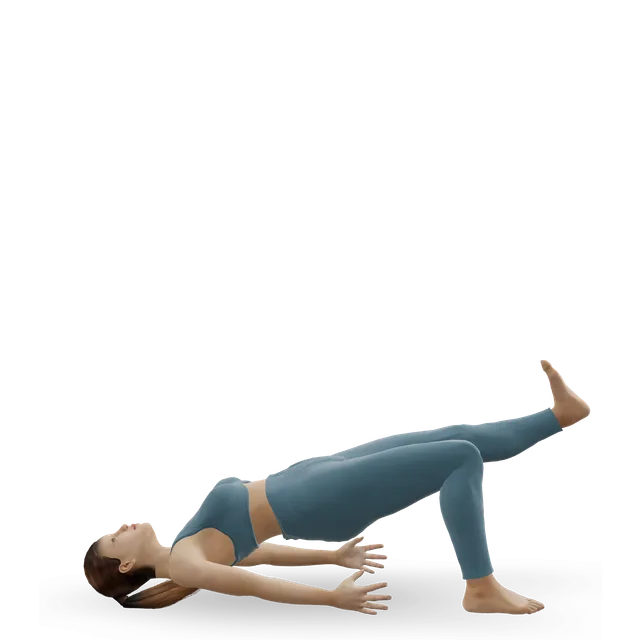
Shoulder bridge (Pilates) demonstrated on the 3D figure3D demoShoulder bridge (Pilates)Intermediate · No equipment

3 to 5 kicks each leg · The move page's dose. Bend the standing knee more if the hamstring cramps, as the move page says

Easier: Wall bridge (feet-on-wall bridge) · Harder: Leg pull back (Pilates leg pull up)

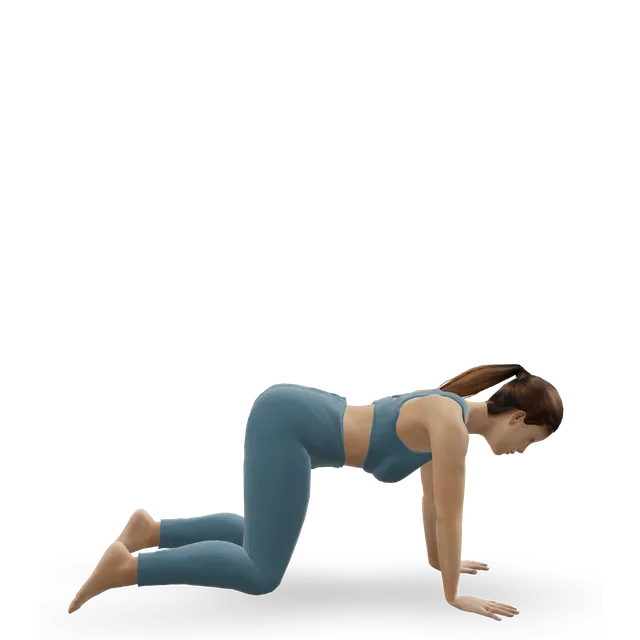
Cat-cow demonstrated on the 3D figure3D demoCat-cowBeginner · No equipment

8 waves, slower than feels natural · The move page's dose. The first kneeling, on a thick pad

Harder: Half lord of the fishes (Ardha Matsyendrasana)

Knee hover (Pilates tabletop hover) demonstrated on the 3D figure3D demoKnee hover (Pilates tabletop hover)Beginner · No equipment

3 holds of 15 to 30 seconds · The move page's dose. On a thick pad

Harder: Straight-arm plank (high plank)

Bird dog, one limb at a time demonstrated on the 3D figure3D demoBird dog, one limb at a timeBeginner · No equipment

5 each side · As in our wrist pain from yoga guide (our yoga for wrists class's dose); on a thick pad

Easier: Side-lying tummy draw-in · Harder: Bird dog

Move on when: A few minutes of kneeling on padding and the split squat pass the pain rule for a week (editorial).

Follow along: a timer, a cue and the next move, one step at a time.
Stage 4

Back to your usual Pilates

From about week 6, often later, then for good: kneeling, deeper footwork and the deep-bend moves back one at a time, by the written steps below, with two strength days a week kept. No study has tested a return to Pilates after knee pain; the order (shallow before deep, both knees before one, no twist before twist) is our suggestion.

Kneeling side kick (Pilates side kick kneeling) demonstrated on the 3D figure3D demoKneeling side kick (Pilates side kick kneeling)Advanced · No equipment

4 each side · The move page's dose. Pad the kneeling knee, as the move page says; leave it out with a knee replacement until your team agrees

Easier: Side-lying leg circles (Pilates side kick series)

Single-leg kick (Pilates one leg kick) demonstrated on the 3D figure3D demoSingle-leg kick (Pilates one leg kick)Beginner · No equipment

6 to 8 each leg · The move page's dose. A smaller range if deep bending hurts the kneecap, as the move page says

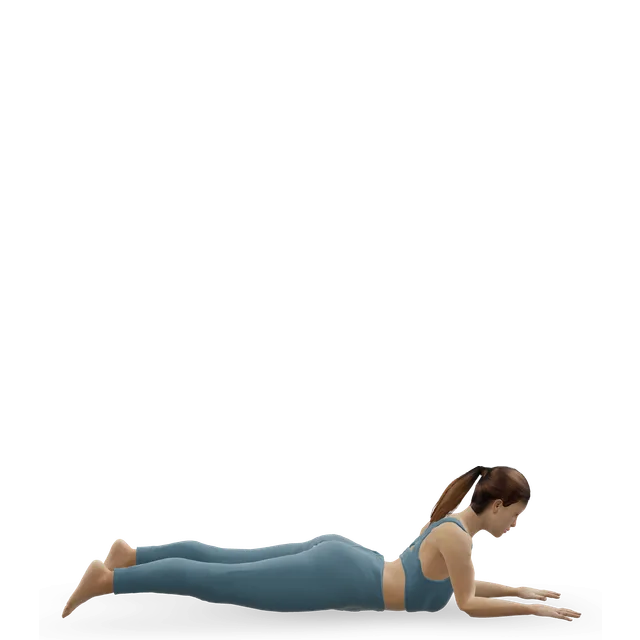
Easier: Sphinx pose (Salamba Bhujangasana) · Harder: Double-leg kick (Pilates double kick)

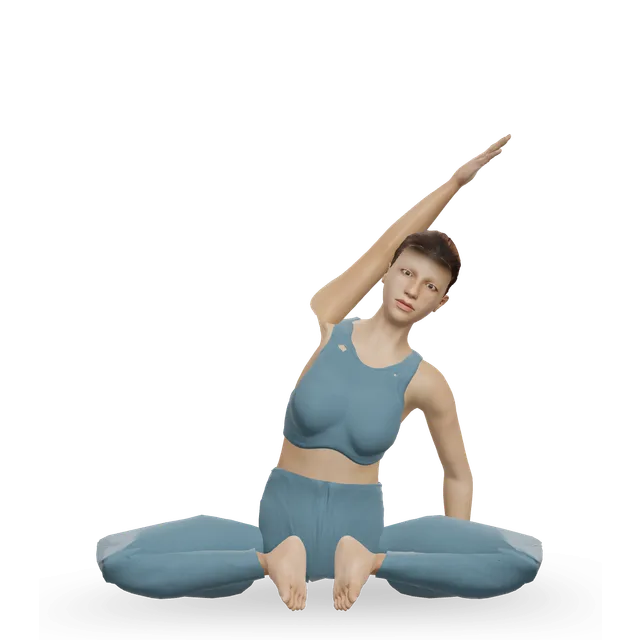
Mermaid (Pilates seated side bend) demonstrated on the 3D figure3D demoMermaid (Pilates seated side bend)Beginner · No equipment

3 each direction, each side · The move page's dose. Cross-legged, on a block or on a chair before side-sitting, as the move page says

Harder: Side bend (Pilates)

Rocking (Pilates) demonstrated on the 3D figure3D demoRocking (Pilates)Advanced · No equipment

5 reps · The move page's dose. Last, and not with a knee injury, as the move page says

Easier: Double-leg kick (Pilates double kick)

Reverse lunge demonstrated on the 3D figure3D demoReverse lungeIntermediate · No equipment

2 sets of 8 each leg, a hand on a support · Editorial. Lower the back knee under control, as the move page says

Easier: Split squat · Harder: Split squat with dumbbells

Move on when: Each move passes the pain rule for a week before the next comes back; then full footwork, the knee stretches and the jump board, one at a time. If it flares, go back a stage for a few days, not to no Pilates (editorial).

Follow along: a timer, a cue and the next move, one step at a time.

What to change for now

Your Pilates for now (written steps)

Our 3D figure shows the moves, not your padding, the footbar, the springs or what you tell your instructor. These steps come from the NHS, kneeling studies, the reformer's maker and teaching sources and a Pilates body's advice; where a step is our suggestion, it says so. None has been tested in a trial against knee pain from Pilates.

  • 1. A warning sign first: a pop with fast swelling, a knee that locks or gives way, a hot swelling over the kneecap, a swollen, red or painful calf, or a foot that won't lift.
  • 2. Tell your instructor before class which knee hurts and what you'll change, so they can offer swaps. For example: "My left kneecap aches after kneeling and footwork. Could I have extra padding, a smaller bend in footwork and a swap for the knee stretches?" (our wording).
  • 3. Kneeling: a folded mat, a thick pad or a towel on the carriage, short spells and regular breaks, as the NHS advises for kneeling; kneel on both knees rather than one where you can.
  • 4. If kneeling still hurts, swap it: a forearm plank on padded knees or a standing version for the knee hover and all fours; the side kick lying down for the kneeling side kick; the elephant or the scooter for the knee stretches; seated arm work for kneeling arm work (our suggestion; a Pilates body suggests the scooter after a knee replacement).
  • 5. Footwork: set the footbar or stopper so your knees bend less at the start, start with lighter springs, push in line with your second toe, and keep your knees soft at the end of each push rather than snapping them straight (our suggestion, from leg press studies and the teaching cue; footwork's knee load hasn't been measured).
  • 6. Springs are only a rough guide to the load: go by how the knee feels, not the number of springs.
  • 7. Deep, twisting bends: leave out frogs and circles in the straps, deep rocking, a full-range single-leg kick and side-sitting in the mermaid for now (our suggestion, following the move pages).
  • 8. Standing work and the jump board: a soft knee and a short range in side splits and lunges, and the jump board last (our suggestion).
  • 9. After a knee replacement: follow your team; don't kneel on the new knee until your doctor says you can, as the NHS says, then a foam pad and short spells, as a Pilates body advises.
  • 10. Getting back to a full class: bring back one change a week, shallow before deep, both knees before one, and no twist before twist (our suggestion).

Sources 41, 46, 13, 11, 22, 9, 10, 27, 60

Positions to swap, and why

Habit or positionWhy it mattersInstead
Kneeling on a bare carriage or a thin matMost of the pressure lands on the tendon and bump below the kneecap.A thick pad and shorter spells, or a forearm plank.Try: Forearm plank
The reformer's knee stretches and kneeling abdominals while kneeling hurtsYou kneel on a moving carriage; the manual lists knee issues and the maker an inability to kneel as precautions.The elephant, standing work, or leave them out.
The kneeling side kickOne knee takes the load, and its page says avoid it with knee problems.The side kick lying down.Try: Side kick (Pilates side kick series)
Footwork from a deep bend with heavy springsKneecap stress rises with deeper loaded bends in leg press studies.A shallower bend and lighter springs, and seated knee extensions in a comfortable range.Try: Seated knee extension (chair)
Snapping the knees straight at the end of footwork or in standing workIt loads the back of the knee; the teaching cue is to avoid it.Soft knees, and balance work.Try: Single-leg stand
Frogs and circles in the straps with a sore inner kneeA deep bend with a turn loads the back of the meniscus.A bridge, until deep bends are comfortable.Try: Pelvic tilt into bridge
Rocking and a full-range single-leg kickDeep knee bends; the rocking page says avoid it with a knee injury.Swimming, with the knees straight.Try: Swimming (Pilates)
Side-sitting in the mermaidThe knees twist and bend deeply.Cross-legged, on a block or on a chair, as the move page says.
Jump board work while the knee is soreImpact, and the falls in news reports.Sit-to-stands, then footwork with a shallow bend.Try: Sit to stand from a chair
Stopping Pilates altogetherExercise is the treatment for kneecap pain and a worn meniscus, and the thigh weakens with rest.Lying, side-lying and standing Pilates.Try: Clamshell

Routines to follow

More moves for this area

Questions people ask

Why do my knees hurt after Pilates?

Usually from kneeling, which presses on the tendon just below the kneecap, from footwork and squats with a deep bend, which squeeze the kneecap, or from a deep bend with a twist. Where it hurts is the best clue: the front points to the kneecap, the inner joint line to the meniscus.

Why do my knees hurt after reformer Pilates?

Footwork is a lying leg press, and in gym studies kneecap stress rises as the knee bends deeper under load; the knee stretches and kneeling abdominals kneel on the carriage. Use a shallower bend and lighter springs, pad the carriage and keep the knees soft at the end of each push.

Why does my kneecap hurt after Pilates?

Kneecap pain is worse with loaded bent-knee activity such as squats, stairs and long sitting, and kneeling adds pressure just below it. Hip and thigh strengthening is the treatment with the best evidence.

Why does the inside of my knee hurt after Pilates?

On the joint line, after frogs, rocking, side-sitting or a deep twisting bend, it can be the meniscus, especially if it catches. A stiff ache from mid-life is more often arthritis, and a tender spot just below the joint can be pes anserine pain.

Is kneeling bad for my knees?

Not in the amounts a class uses, in our reading: the kneeling linked with cartilage wear or arthritis is 30 minutes or more on most days, at work, for years. Pad the knees, kneel for shorter spells and swap kneeling moves while it hurts.

Should I lock my knees in footwork?

No: a soft knee at the end of each push is the usual cue, and knees that bend back past straight need control and strength rather than more range. If your knees bend back a long way and other joints hurt too, see a GP about hypermobility.

Can I do Pilates with a torn meniscus?

Usually yes, with deep twisting bends and long kneeling left out for now: exercise did as well as surgery for a worn meniscus in a trial. A knee that locks and won't straighten needs checking first.

Can I kneel on the reformer after a knee replacement?

Only when your team says so. Kneeling hasn't been shown to harm a new knee, but it is often uncomfortable; a Pilates body suggests a foam pad, short spells and the scooter instead of the knee stretches.

What should I tell my instructor?

Before class, say which knee hurts and what you'll change, so they can offer swaps. Ask for padding, a smaller bend and lighter springs in footwork, and options for kneeling and frogs.

Do I need a scan?

Usually not: meniscal tears are common on the scans of knees that don't hurt. An X-ray matters after a fall or if you can't take weight, and a specialist may want an MRI scan for a locked knee or catching that hasn't settled after about 3 months.

When should I see a doctor?

Get advice from NHS 111 now for a knee that is hot and swollen with a temperature, locks or gives way, or that you can't put weight on, and go to A&E for a pop with fast swelling. Get a same-day check for a hot, red swelling over the kneecap or a swollen, red or painful calf. In the US, call 911 where this page says 999.

How long will it take?

The NHS says knee pain often starts to ease within a few days, and to see a GP if it hasn't improved within a few weeks. Kneecap pain can take longer, so start the strength work early. No one can promise a date.

Related exercise guides

Other pain guides

Sources

  1. Pilates Association Australia 2026 · How safe is Pilates, and what does the evidence actually show? (professional body's article; Australia collects no Pilates injury data, and its rate table names no study)
  2. Silva-Filho 2018 · Work-related pain in 166 Pilates instructors (cross-sectional survey, Rev Bras Med Trab)
  3. Yamato 2015 · Pilates for low back pain: 10 trials, 510 adults (Cochrane review)
  4. Wajswelner 2012 · Clinical Pilates or general exercise for chronic low back pain in 87 adults (randomised trial, Med Sci Sports Exerc)
  5. de Oliveira 2025 · Pilates for knee osteoarthritis: 11 trials, 476 people (systematic review and meta-analysis, Int J Rheum Dis)
  6. Zhang 2025 · Pilates for knee osteoarthritis: 8 trials, 322 people (systematic review and meta-analysis, Ann Med)
  7. Rabiei 2023 · Pain education then Pilates for knee osteoarthritis: 54 adults (pilot randomised trial, Arthritis Res Ther)
  8. Denham-Jones 2022 · Pilates for adults over 50 with long-term muscle and joint conditions: 7 studies, 397 people (systematic review, Musculoskeletal Care)
  9. Balanced Body · Allegro reformer user guide, with safety notes and each sample exercise's precautions (maker's guide, 2026)
  10. Balanced Body · Contrology classical reformer manual, with each exercise's precautions (maker's manual)
  11. Pilatesology · Footwork series on the reformer (classical exercise encyclopedia)
  12. Porter 2010 · Pressure on the knee when kneeling, with and without kneepads: 10 people (lab study, Appl Ergon)
  13. Pollard 2011 · Forces on the knee when kneeling and squatting: 10 adults (lab study, J Appl Biomech)
  14. Lee 2014 · Deep knee bends and kneeling before and after knee replacement (review of cadaver studies, Clin Orthop Surg)
  15. Haj-Mirzaian 2021 · Frequent kneeling and kneecap cartilage over 2 years in 600 people (cohort study, Eur Radiol)
  16. Wang 2020 · Work and knee osteoarthritis: 80 studies (systematic review and meta-analysis, Arthritis Care Res)
  17. Bahns 2021 · Work kneeling, squatting and meniscal lesions: 22 studies (systematic review and meta-analysis, BMC Musculoskelet Disord)
  18. Steinkamp 1993 · Kneecap stress in the leg press and leg extension at four knee angles: 20 adults (lab study, Am J Sports Med)
  19. Powers 2014 · Kneecap stress in squats and seated knee extensions: 10 people (lab study, J Orthop Sports Phys Ther)
  20. Escamilla 1998 · Knee forces in the squat, leg press and knee extension: 10 men (lab study, Med Sci Sports Exerc)
  21. Hartmann 2013 · Squat depth and the load on the knee and spine (narrative review, Sports Med)
  22. Brodt 2014 · An instrumented reformer footbar: spring settings against measured force in one volunteer (methods study, J Appl Biomech)
  23. Cantergi 2015 · Muscle strategies for leg pushes on a reformer: 15 people (lab study, J Electromyogr Kinesiol)
  24. Yao 2008 · The menisci and joint contact in a deep knee bend: MRI in 10 people (imaging study, J Orthop Res)
  25. Snoeker 2013 · Risk factors for meniscal tears: 11 studies, 7,358 people (systematic review and meta-analysis, J Orthop Sports Phys Ther)
  26. Thorlund 2018 · Risk factors, diagnosis and non-surgical treatment for meniscal tears (evidence statement, Br J Sports Med)
  27. Pilates Association Australia 2017 · How to help my client who is having or had a total knee replacement (instructors' professional body; advice, untested)
  28. Loudon 1998 · Knees that bend back (genu recurvatum syndrome) (clinical commentary, J Orthop Sports Phys Ther)
  29. NHS · Joint hypermobility syndrome (past its review date: reviewed August 2023, review due August 2026)
  30. Pacey 2010 · Joint hypermobility and leg joint injury in sport: 18 studies (systematic review and meta-analysis, Am J Sports Med)
  31. Steinberg 2021 · Hypermobility, scoliosis and kneecap pain in 132 young dancers (cross-sectional study, BMC Musculoskelet Disord)
  32. ABC News 2023 · Pilates injuries are on the rise, body says, amid calls for regulation (news report: a fall from the reformer and two reports of broken bones)
  33. Le Manac'h 2012 · Knee bursitis in 3,710 workers (cross-sectional study, Occup Med)
  34. Baumbach 2014 · Kneecap and elbow bursitis: 52 papers and a treatment plan (literature review, Arch Orthop Trauma Surg)
  35. NHS · Knee pain
  36. Willy 2019 · Patellofemoral pain (clinical practice guideline, J Orthop Sports Phys Ther; abstract read; a 2024 correction couldn't be read)
  37. Crossley 2016 · Patellofemoral pain consensus, part 1: definitions, examination and natural history (consensus statement, Br J Sports Med)
  38. Englund 2008 · Meniscal tears on MRI in 991 people aged 50 to 90 from the general population (population study, N Engl J Med)
  39. Siemieniuk 2017 · Keyhole surgery for degenerative knee disease and meniscal tears (clinical practice guideline, BMJ Rapid Recommendation)
  40. Sihvonen 2016 · Catching, locking and surgery for a worn meniscus: 146 adults (secondary analysis of a sham-controlled trial, Ann Intern Med)
  41. NHS · Bursitis (past its review date: reviewed October 2023, review due October 2026)
  42. Lankhorst 2016 · Outcomes 5 to 8 years after a diagnosis of kneecap pain: 60 people followed up (cohort study, Br J Sports Med)
  43. Thomeé 1997 · Education, graded training and pain monitoring for kneecap pain in 40 young women (randomised trial, Phys Ther)
  44. Felson 2007 · Knee buckling in 2,351 adults (population study, Ann Intern Med)
  45. Hody 2019 · Eccentric muscle contractions: risks and benefits, including delayed onset muscle soreness (review, Front Physiol)
  46. Watamori 2025 · A thick pad and kneeling after knee replacement: 60 people (lab study, J Exp Orthop)
  47. Kim 2024 · Reformer spring resistance and core muscle activity in 18 women (lab study, Healthcare)
  48. Crossley 2016 · Patellofemoral pain consensus, part 2: exercise, taping, bracing and insoles (consensus statement, Br J Sports Med)
  49. van der Heijden 2015 · Exercise for kneecap pain: 31 trials, 1,690 people (Cochrane review)
  50. Azab 2022 · Pilates-based core exercise added to physiotherapy for kneecap pain in 34 teenagers (randomised trial, Eur Rev Med Pharmacol Sci)
  51. Kise 2016 · Exercise therapy or keyhole surgery for a worn meniscus in 140 middle-aged adults: the OMEX trial (randomised trial, BMJ; one of two errata couldn't be read)
  52. Berg 2025 · Keyhole surgery or exercise for a worn meniscus: 10-year follow-up of the OMEX trial (randomised trial, Br J Sports Med)
  53. NICE NG226 · Osteoarthritis in over 16s: diagnosis and management (recommendations)
  54. Karaman 2017 · Pilates-based exercise after a knee replacement: 34 people (randomised trial, Physiother Theory Pract)
  55. Süzer 2025 · Core stability exercise by video call after a knee replacement: 42 people (randomised trial, Physiother Theory Pract)
  56. Çelik 2017 · Mat Pilates for a partial ACL tear managed without surgery: 50 adults (randomised trial, Knee Surg Sports Traumatol Arthrosc)
  57. Wylde 2019 · Kneeling ability after knee replacement (narrative review, EFORT Open Rev)
  58. Nadeem 2021 · Kneeling after knee replacement: 36 studies (systematic review and meta-analysis, Knee Surg Relat Res)
  59. Hassaballa 2004 · Observed and self-reported kneeling after knee replacement: 122 people (study, Knee Surg Sports Traumatol Arthrosc)
  60. NHS · Recovering from a knee replacement
  61. Silbernagel 2007 · Carrying on with sport under a pain-monitoring model for Achilles tendinopathy: 38 people (randomised trial, Am J Sports Med)
  62. Smith 2017 · Should exercises be painful in long-lasting muscle and joint pain? 7 trials, 385 people (systematic review and meta-analysis, Br J Sports Med)
  63. Tran 2025 · Painful or pain-free exercise for long-lasting muscle and joint pain: 16 trials (updated systematic review and meta-analysis, J Orthop Sports Phys Ther)
  64. Coelho 2025 · High- or low-intensity Pilates in 168 adults with chronic low back pain (randomised trial, J Physiother)

Exercise education, not a diagnosis or treatment plan. It is written from the guidelines and studies listed above; review by a clinician is pending. If your pain follows an injury, is severe, is getting worse, or comes with any warning sign listed on this page, get it assessed. Health disclaimer.