Pain guide · Knee pain

Knee pain when doing wall sits: the kneecap, how deep you sit, where your feet go and how long

Knee pain when you do wall sits usually comes from the kneecap. The deeper you sit, the harder your thighs work and the harder the kneecap presses into its groove: in two lab studies of slow moving wall squats, the load behind the kneecap was greatest between about 60 and 90 degrees of knee bend, and higher still with the heels close to the wall so the knees travelled past the toes. Long holds to failure add to it, and they push blood pressure up fast. Where it hurts is the best clue: a dull ache around the kneecap points to kneecap pain, one point just below it to the patellar tendon, and catching at the joint line to the meniscus. Wall sits aren't bad for your knees: still holds are part of the treatment for kneecap and tendon pain. A shallower angle, the feet walked out and shorter holds usually help. No study has counted knee pain from wall sits, so this guide says where each piece of advice comes from.

This guide starts with the signs that need help, from accident and emergency (A&E) for a knee that changed shape or swelled fast after a pop, to advice from the National Health Service's 111 line (NHS 111) for a knee that locks, gives way or is hot and swollen with a fever, and a same-day check for a swollen, painful calf. Because wall sits raise blood pressure, it also says who should ask a general practitioner (GP) first. It then maps the causes by where it hurts, explains what the studies show about depth, foot position, holding time and blood pressure, and why a scan rarely helps, shows how to change your wall sit today, and gives a three-stage plan with a 3D demo of every move, from shallow holds back to full wall sits.

When to get help first

Exercise is for pain that has been checked or is clearly mild and settling.

Get urgent medical help if

  • Go to A&E if you've injured your knee and it has changed shape, it becomes very swollen very quickly, you felt a pop or snap, you can see bone sticking out, or it's bleeding heavily. Don't drive yourself: ask someone to take you, or call 999 if the pain means you can't move your leg to get there.
  • Get advice from NHS 111 now: you cannot move the knee or put any weight on it, or it is very painful, badly swollen or has changed shape.
  • Get advice from NHS 111 now: the knee locks, gives way or clicks painfully. Painless clicking is normal.
  • Get advice from NHS 111 now: after a twist, your knee won't go fully straight, or something blocks the last part of straightening, even if you can still walk on it. A torn piece of meniscus caught in the joint can do this, and it needs checking promptly.
  • Same day: a pop or tearing feeling at the front of the knee after a fall, stumble, jump, landing or a heavy squat, then you can't straighten the knee or lift the straight leg off the bed, there's a dent above or below the kneecap, or the kneecap sits higher or lower than on the other side. Go to A&E or an urgent treatment centre, or get help from NHS 111. A torn quadriceps or patellar tendon does best when it's repaired soon.
  • Signs of a torn ligament: you felt or heard a pop, the whole knee swelled within a few hours, or it gives way, feels loose or bends further back than the other knee. Get it assessed promptly, the same or the next day: our ACL, PCL and outer knee ligament (LCL) guides explain what happens next.
  • You hurt your knee and cannot take 4 steps, or you are 55 or over and have injured it: get it checked the same day for a broken bone.
  • Get advice from NHS 111 now: a hot, red or swollen knee with sudden severe pain, a very high temperature (although not everyone has one), or feeling hot, cold or shivery. This can be a joint infection.
  • Call 999 or go to A&E if your child gets sudden pain in their hip, knee or thigh (hip problems can sometimes be felt in the thigh or knee) or cannot put any weight on their leg. If your child is limping, ask for an urgent GP appointment or get help from NHS 111 the same day. This applies to teenagers too, and in some children knee pain is the only sign.
  • Same day (urgent GP appointment or NHS 111): throbbing pain in one leg (rarely both), usually the calf or thigh; swelling in one leg (rarely both); red, blue or darkened skin; or swollen veins; or sudden worse pain and swelling around a lump at the back of the knee (a possible clot or a burst Baker's cyst).
  • Call 999 or go to A&E if breathing suddenly becomes difficult, if pain in your chest or upper back comes on suddenly with breathlessness or a very fast heartbeat, or if someone passes out. Do not drive yourself. It can be a blood clot that has reached the lungs.
  • Call 999 or go to A&E: back or leg symptoms with numbness around the genitals or bottom, new trouble controlling your bladder or bowels, or severe or worsening weakness or numbness in both legs.
  • Same day (call NHS 111, or go to A&E if you feel very unwell): after a big or unusual session, such as a first spin class, a workout of 100 back squats, or intervals of wall sits, squats, lunges and jumps, a challenge or a new class, muscle pain, swelling or weakness far worse than the session explains, and dark pee (red, brown, tea or cola coloured), sometimes starting hours or days later. Dark pee isn't always there, so muscles far sorer, more swollen or weaker than the session explains still need the same-day check. It can be rhabdomyolysis, a breakdown of muscle that can harm the kidneys.
  • Call 999: shoulder or arm pain with chest pain that feels tight or squeezing, or chest pain that spreads to your arms, neck or jaw, especially with shortness of breath, sweating or feeling sick. It could be a heart attack.
  • Someone who faints while exercising, or who has fainted and can't be woken within a minute, has chest pain or a pounding, fluttering or irregular heartbeat, or hasn't fully recovered.

See a doctor or physiotherapist if

  • Wall sits raise blood pressure while you hold them, so breathe normally and never hold your breath. Ask your GP first if your blood pressure is 160/100 or higher and untreated, or if you have heart disease, and skip them with Marfan syndrome, vascular Ehlers-Danlos syndrome or aortic disease.
  • Knee pain that has not improved within a few weeks of looking after it at home. Many areas offer NHS physiotherapy without a GP referral.
  • Kneecap pain that hasn't improved within 6 weeks of changing your activities and doing the exercises, or that gets worse: talk to a GP or physiotherapist.
  • The knee gives way, the whole knee swells, or it catches or locks: that isn't typical of kneecap or tendon pain. Get it checked for a ligament or meniscus injury (our suggestion).
  • Catching, locking or swelling at the joint line that hasn't settled after about 3 months of exercise and other non-surgical care: ask your GP or physiotherapist about a specialist review. A magnetic resonance imaging (MRI) scan may be considered then.
  • Tendon pain above or below the kneecap and you take steroid tablets or have steroid injections, use anabolic steroids, have kidney disease, gout, rheumatoid arthritis, lupus or diabetes, or have recently taken a fluoroquinolone antibiotic: tell your GP or physiotherapist and build up more gradually. These can weaken the tendon. If you're taking a fluoroquinolone now, stop taking it and contact your doctor straight away, as the UK medicines regulator advises.
  • Bursitis that hasn't improved, or is getting worse, after 1 to 2 weeks of looking after it yourself, a knee you can't move, or very severe, sharp or shooting pains: see a GP.
  • A child or teenager with pain at a bump just below the kneecap or at its lower tip, worse with squats, jumps and kneeling: see our Osgood-Schlatter and Sinding-Larsen-Johansson guides, and get it checked if it is getting worse.
  • Numbness, tingling or weakness that travels down the leg from the back. That points to a nerve (sciatica) rather than the knee.
  • Swelling in several joints, or morning stiffness that lasts more than 30 minutes: see a GP. It can be an inflammatory arthritis such as rheumatoid arthritis rather than osteoarthritis.

Where does it hurt?

Location narrows the likely causes; it does not diagnose.

Around or behind the kneecap, hard to point to, worse the deeper you sit, on stairs and after sitting with your knees bent

Usually kneecap pain (patellofemoral pain). A smaller bend, the feet walked out and shorter holds usually help, with hip and knee strength work.

Read: Runner's knee →
One point at the lower tip of the kneecap, worse with jumping and deep loaded bending

Usually patellar tendon pain (jumper's knee). Holds are part of its treatment; keep it to 3 out of 10 or less.

Read: Jumper's knee →
One point at the top edge of the kneecap, worse at the deepest bend

Possibly quadriceps tendon pain. Our guide uses wall sits at 45 to 60 degrees, not a right angle yet.

Read: Quadriceps tendinopathy →
Below the kneecap, either side of the tendon, as the knee snaps straight when you stand up out of the hold

Possibly fat pad irritation. The hold itself keeps the knee bent; push up the wall slowly and stop just short of locking (our reading).

Read: Fat pad impingement →
The inner or outer joint line, with catching, locking or swelling later that day

Often a meniscus tear. A knee that locks needs checking.

Read: Meniscus tear →
A squeezed feeling behind the knee at a deep bend, with no lump or swelling

Common and harmless (editorial). A lump points to a Baker's cyst, and a swollen, painful calf below it needs a same-day check.

Read: Pain behind the knee →
A burn or shake in the front of the thighs during the hold, easing within a minute or two

The thigh muscles working, not knee pain.

Achy thighs a day or two after a wall sit challenge or a class of wall sits and squats

Muscle soreness, which fades within days. Muscles far sorer, more swollen or weaker than the session explains need a same-day check.

Read: Knee pain after a workout →
A stiff ache in both knees from mid-life, worse getting going

Often knee arthritis, for which exercise is a core treatment. Wall sits can stay at a depth that passes the pain rule.

Read: Knee arthritis →
The same knee pain in squats, the leg press or the leg extension

Often the same kneecap or tendon. Our squatting, leg press and leg extension guides cover depth, range and a plan.

Read: Knee pain when squatting →
A child or teenager with pain at a bump just below the kneecap

Often Osgood-Schlatter disease, a growth-area pain that settles with time.

Read: Osgood-Schlatter →
Knee or thigh pain with back pain, or tingling down the leg

A nerve from the back rather than the knee.

Read: Sciatica →

Understand it

What a wall sit asks of the knee, and what no study has measuredEmerging evidence

You lean your back and bottom against a wall, walk your feet out, slide down to a depth you can hold, at most with the knees at a right angle, and hold, as the site's wall sit move page teaches. The thighs hold your body weight the whole time, and the kneecap presses into its groove harder the more the knee bends and the harder the thigh works.

Only two lab studies have measured the kneecap in the wall squat, and both used slow moving reps, not holds. In 18 adults using a weight they could lift 12 times, the force behind the kneecap was greater between 60 and 90 degrees of knee bend in wall squats than in a one-leg squat, and the authors suggest staying between 0 and 50 degrees to keep it lowest. In 16 adults, heels close to the wall let the knees travel past the toes and raised kneecap load at 90 to 100 degrees. In a lab model of 10 people, kneecap stress was lowest in squats from about 45 degrees to straight. That a still wall sit behaves the same way, and the "up to about 50 degrees" advice that follows from it, is our reading of these moving squat studies; no study has measured a held wall sit or counted knee pain from wall sits.

Sources 1, 2, 3

How deep, how long, and the blood pressureEmerging evidence

Depth sets the effort as well as the kneecap load. In 23 adults holding 2-minute wall squats from a gentle bend to a right angle, blood pressure rose from 134/76 to 196/112 mmHg. In 62 healthy adults holding a wall sit at about a right angle until fatigue, 98% were stopped because the lower number passed a safety limit of 115 mmHg, after about 50 seconds; no one came to harm. In 26 men with raised blood pressure, a session of four 2-minute wall squats peaked at about 171/113 mmHg, and 6 passed the limit, with no adverse effects.

Holds also build strength mostly near the angle you hold: in a review of 26 studies, holds at longer muscle lengths (deeper bends, for the thighs) built more muscle and carried over better to movement. So a deep wall sit held to failure is the hardest version for the kneecap and the blood pressure, and the least useful while your knee is sore (our reading).

Sources 4, 5, 6, 7

Wall sits for blood pressure: why people do long holdsEmerging evidence

Across 270 trials, isometric (still) training lowered resting blood pressure by about 8/4 mmHg, more than aerobic exercise, and the wall squat ranked first for the top number. In 24 trials of adults with raised blood pressure, office readings fell by about 7/4 mmHg, but the certainty was very low to low, and side effects were about one per 38,444 holds. Small wall sit trials lowered clinic readings by 12.4/6.2 mmHg at home over 4 weeks and the top number by 12.9 mmHg at work over 12 weeks. An expert review notes guidelines still put aerobic and strength exercise first, and the British Heart Foundation adds that you must remember to breathe. If the routine hurts your knees, sit higher or use a handgrip squeeze instead, as the wall sit move page says.

Sources 8, 9, 10, 11, 12, 13

Where it hurts, and what it usually is

No study counts the causes of knee pain in wall sits, so these come from other groups.

  • Around or behind the kneecap: kneecap (patellofemoral) pain, which particularly affects teenagers and young adults and is brought on by squatting, stairs and sitting with the knees bent. In 175 college athletes, those with diffuse front-of-knee pain tolerated less load in a held knee extension than those with pain at one point or none.
  • One point at the lower tip of the kneecap: patellar tendon pain, for which holds are part of the first stage of treatment, kept to 3 out of 10 or less.
  • Weak thighs predicted later kneecap pain in military recruits; weak hips didn't predict it across studies.
  • A stiff ache in both knees from mid-life: knee arthritis, which NICE says is diagnosed without a scan from 45 with typical symptoms. In 90 adults with knee arthritis, one or three wall squats held to fatigue made them less sensitive to pressure pain straight away but didn't change their knee pain.

Sources 14, 15, 16, 17, 18, 19, 20

Who gets it

People who sit deeper than they can hold, keep their heels close to the wall, hold to failure or join wall sit challenges and tests; people with kneecap or tendon pain from running, jumping or squatting; and people doing the blood pressure routine whose knees don't like a deep bend (our reading). Kneecap pain is common in teenagers and young adults, and weak thigh muscles predicted it in military recruits. Serious causes are uncommon: a torn ligament or tendon, a locked knee, an infected joint and a clot are in the warning signs.

Sources 14, 18

When a scan helps, and what it can't tell youStrong evidence

Not at first for kneecap, tendon or arthritis pain, which are recognised from the story and an examination. An NHS leaflet says there are no specific tests for kneecap pain and that changes behind the kneecap on scans are common in people with or without it; NICE says diagnose osteoarthritis without imaging when the symptoms are typical; and years after kneecap pain, 48 of 50 people had no arthritis on X-ray.

Scans and tests matter for a knee that locks or won't straighten, a pop with fast swelling, a suspected tendon tear, a fall that meets the broken bone check, a hot, swollen knee, which may need fluid taken off and tested, and a swollen, painful calf, which needs checking for a clot.

Sources 15, 20, 21, 22, 23, 24

How it usually goesMixed evidence

No study follows knee pain from wall sits. The NHS says knee pain can often be treated at home and you should start to feel better in a few days, and to see a GP if it doesn't improve within a few weeks. Kneecap pain is often slower: an NHS leaflet says it can take 3 to 6 months to improve; in 310 people, 55% and 40% had not recovered well at 3 and 12 months, and pain lasting more than 2 months at the start was the most consistent sign of a slower recovery, so it pays to start early. Of 60 people followed up 5 to 8 years later, 57% reported an unfavourable recovery, though almost none had arthritis. Patellar tendon pain improved over 24 weeks of staged loading in a trial. No one can promise a date.

Sources 22, 15, 25, 21, 17

What helps, and how strong the evidence is

Wall sits aren't bad for your knees; depth and feet change the loadEmerging evidence

In slow moving wall squats, kneecap load was lowest up to about 50 degrees of bend and highest between 60 and 90, and higher with the heels close to the wall. Still holds have been used to treat kneecap pain: in 40 young women, an isometric (still) programme did as well as an eccentric one, and 85% were back in sport without pain at 12 months, though there was no untreated group; in 98 young dancers, isometric exercise eased kneecap symptoms against controls. Applying the moving squat studies to a held wall sit is our reading.

Sources 1, 2, 3, 27, 28

Kneecap pain: exercise first, with the hips and knees togetherStrong evidence

In a Cochrane review of 31 trials (1,690 people), exercise eased pain during activity by about 1.5 points out of 10 and improved function by about 12 points out of 100 in the short term, and hip and knee exercise together eased pain by about 2.2 points more than knee exercise alone; the certainty was very low, but the results were consistent. An international consensus statement recommends exercise, especially hip and knee exercises combined. An NHS leaflet for kneecap pain uses moving wall squats, sliding down to a depth you can comfortably tolerate, in 3 sets of 8 to 12 every other day.

Sources 14, 26, 15

Patellar tendon pain: holds help some people, staged loading does bestMixed evidence

In 6 volleyball players, one session of thigh holds cut pain on a decline squat from 7 to almost 0 out of 10 for at least 45 minutes. Larger studies haven't matched that: in 29 athletes in season, isometric and moving programmes eased pain equally; in a 21-person crossover trial, pain fell by only 0.9 out of 10 after either; and a review of 10 trials found holds no better than moving exercise for tendon pain. The largest patellar tendon trial (76 people) started with machine holds, then slow heavy strength work, springy loading and sport, keeping pain at 3 out of 10 or less, and beat eccentric exercise at 24 weeks.

Sources 29, 30, 31, 32, 17

Knee arthritis: exercise helps, and a wall squat session alone didn't change painStrong evidence

NICE says offer therapeutic exercise to everyone with osteoarthritis, and warn that joint pain may rise when you start. In a Cochrane review of 139 trials, exercise improved knee arthritis pain slightly (about 9 points out of 100, low certainty) and function moderately (about 11 points, moderate certainty). In 90 adults with knee arthritis, one or three wall squats changed pressure pain sensitivity but not knee pain, so wall sits are one option, not a treatment on their own.

Sources 20, 33, 19

Keep training under a pain-monitoring ruleEmerging evidence

A pain-monitoring model first used in 40 young women with kneecap pain let training continue with pain up to 5 out of 10, back to its usual level by the next morning. Continued running and jumping under the model did as well as rest in 38 people with Achilles tendon pain, and in 7 trials of long-lasting pain, exercise allowed to hurt a little did no worse than pain-free exercise. Most of this is borrowed from other knee and tendon pain.

Sources 27, 34, 35

How much pain is OK while you exercise?

0 to 2 safe, up to 5 acceptable, 3 for a tendon, back to usual by the next morningEmerging evidence

This guide uses the knee hub's rule, as our other knee guides do. Rate your knee pain from 0 to 10 during and after exercise. In the pain-monitoring model used in knee trials, 0 to 2 counts as safe, up to 5 as acceptable and above 5 as too much. Aim for 0 to 3 most of the time. By the next morning your knee should be back to its usual level. If it is not, drop back one step next time (fewer sets, a shallower range, a lower step), not to nothing. Over the weeks pain should hold steady or ease; that last check is our suggestion rather than a tested rule. The scale comes from a pain-monitoring model first used in a kneecap pain trial in 40 young women; continued loading under it did no harm in Achilles tendon pain, and exercise into some pain did no worse in long-lasting pain (7 trials). An NHS leaflet for kneecap pain agrees that some discomfort during or after the exercises is normal and not harmful.

For one sore point just below or above the kneecap (a tendon), keep it to 3 out of 10 or less, the patellar tendon trial's limit, and cut painful loading for the first weeks.

Sharp, catching or giving-way pain, or new swelling, is a reason to stop and get it checked.

For wall sits (our suggestion, built on the same rule): the burn in your thighs isn't knee pain. Choose the depth, the foot position, the hold time and the swap where your knee stays at 5 out of 10 or less (3 for one sore point at a tendon) and is back to normal by the next morning; if it isn't, go 1 to 2 cm higher on the wall next time, not to nothing. A pop, a knee that locks or gives way, new swelling, a hot knee, a swollen calf, chest pain, or feeling faint or very dizzy during a hold isn't a pain-rule question: see the warning signs.

Sources 27, 34, 17, 35, 15

The exercise plan: 3 stages

Start at the first stage. Each move opens a full guide with a 3D demo.

Stage 1

Hold where it doesn't hurt

About weeks 0 to 2: the strength moves 3 days a week, the holds daily if you have tendon pain. Keep the thighs working in the ranges the kneecap and tendon tolerate, and start the hip work the guidelines recommend. With a diagnosed condition, that guide's plan comes first; after surgery, your team's plan does.

Quad set (static quads) demonstrated on the 3D figure3D demoQuad set (static quads)Beginner · No equipment

10 holds of 5 s, 2 to 3 times a day · The knee hub's dose (editorial)

Harder: Straight-leg raise

Wall sit demonstrated on the 3D figure3D demoWall sitBeginner · A wall

4 holds of 30 s, shallow, up to about 50 degrees of bend, feet walked out · As in our runner's knee guide (editorial); the depth is the move page's cue for pain behind the kneecap, our reading of moving wall squat studies. Breathe normally through the hold

Easier: Straight-leg raise · Harder: Spanish squat (band squat hold)

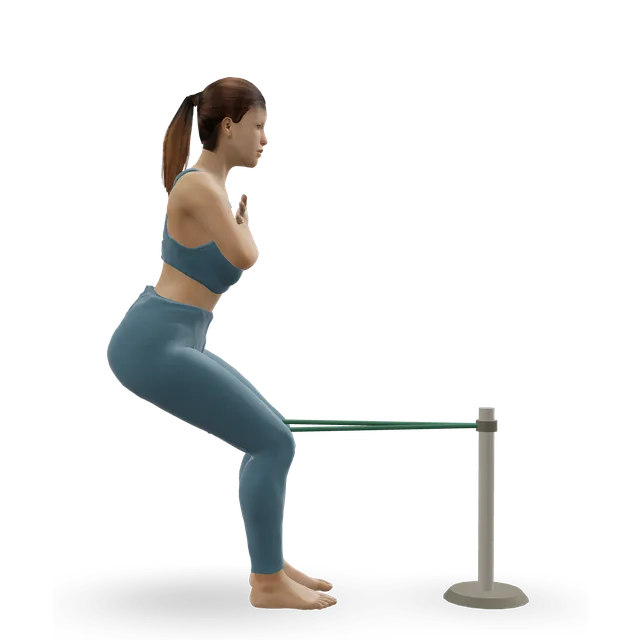
Spanish squat (band squat hold) demonstrated on the 3D figure3D demoSpanish squat (band squat hold)Intermediate · A band + An anchor point

4 to 5 holds of 30 to 45 seconds at a hard-but-OK effort, with 1 to 2 minutes' rest, once a day in the isometric stage · The move page's dose, modelled on the patellar tendon trial's holds. For tendon pain, and optional for kneecap pain

Easier: Straight-leg raise · Harder: Pistol squat

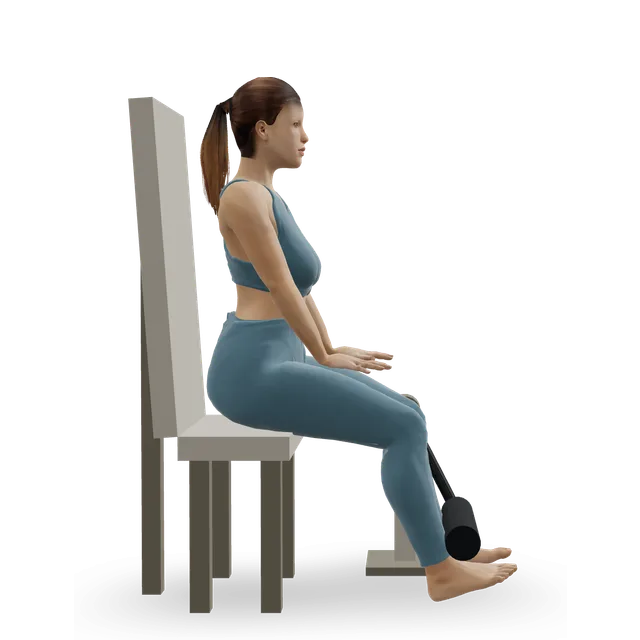
Leg extension demonstrated on the 3D figure3D demoLeg extensionBeginner · Strength machine

Kneecap pain: 3 sets of 10 to 15, from 90 to about 45 degrees of bend only. Tendon pain: 5 holds of 45 s, knee bent about 60 degrees · As in our squatting knee guide (editorial; the range from a lab model and the move page's caution, the holds from the tendon trial)

Easier: Straight-leg raise · Harder: Barbell box squat

Glute bridge demonstrated on the 3D figure3D demoGlute bridgeBeginner · No equipment

2 sets of 10 · The knee hub's dose (editorial): hip work alongside knee work, as the consensus recommends

Easier: Pelvic tilt into bridge · Harder: Single-leg glute bridge

Recumbent exercise bike demonstrated on the 3D figure3D demoRecumbent exercise bikeBeginner · Cardio machine

10 to 20 minutes at a moderate effort to start, building towards 30 (our editorial starting point). · The move page's dose

Harder: Stationary cycling

Move on when: Shallow wall sits and the knee work pass the pain rule, and your knee is back to normal the next morning, for a week. With tendon pain, one single-leg squat hurts 3 out of 10 or less after at least a week at this stage, the tendon trial's test as our squatting guide uses it (editorial).

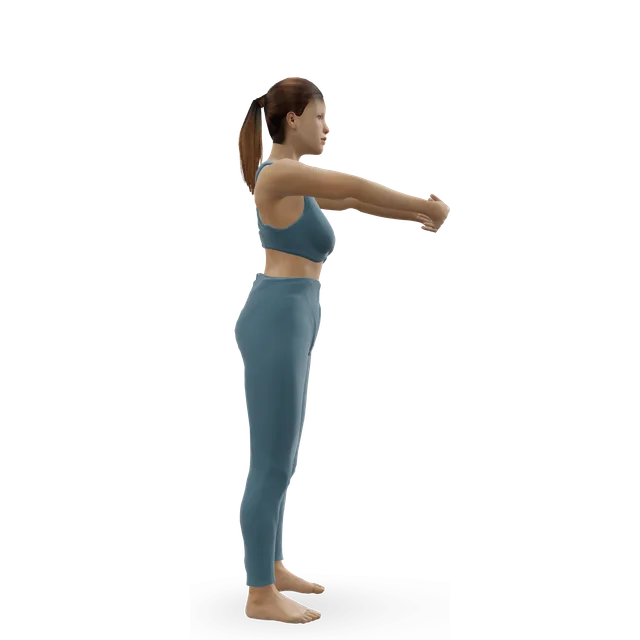
Follow along: a timer, a cue and the next move, one step at a time.
Stage 2

Deeper and longer, one change at a time

About weeks 2 to 6, 2 or 3 sessions a week: wall sits at a deeper, comfortable depth, and standing knee strength through more of the range.

Wall sit demonstrated on the 3D figure3D demoWall sitBeginner · A wall

4 holds of 20 to 45 s at a comfortable depth · The knee hub's dose (editorial). Go 1 to 2 cm lower only when 45 seconds is easy at a depth, as the site's wall sit guide suggests

Easier: Straight-leg raise · Harder: Spanish squat (band squat hold)

Sit squat (partial squat) demonstrated on the 3D figure3D demoSit squat (partial squat)Beginner · No equipment

3 sets of 10, knee bend about 45 degrees or less at first · The knee hub's dose (editorial)

Harder: Bodyweight squat

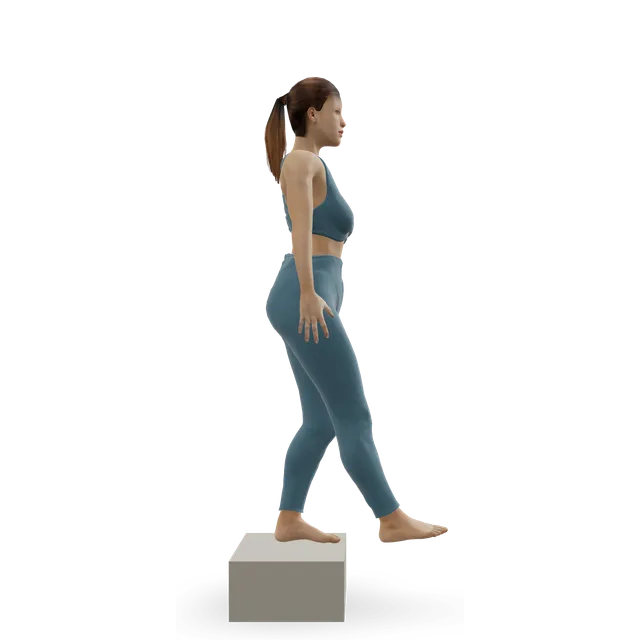
Step-up demonstrated on the 3D figure3D demoStep-upBeginner · A step

3 sets of 8 to 10 each leg, a low step first · The knee hub's dose (editorial)

Easier: Low step-up · Harder: Dumbbell step-up

Leg press demonstrated on the 3D figure3D demoLeg pressBeginner · Strength machine

3 sets of 10 to 12, depth limited at first, lowering over about 3 seconds · As in our squatting knee guide (editorial)

Harder: Bodyweight squat

Lateral band walk demonstrated on the 3D figure3D demoLateral band walkBeginner · A band

3 sets of 10 to 15 steps each way · The knee hub's dose (editorial): hip work, as the consensus recommends

Easier: Hip abduction machine · Harder: Lateral band walk, band at the feet

Clamshell demonstrated on the 3D figure3D demoClamshellBeginner · No equipment

2 sets of 12 each side · The knee hub's dose (editorial)

Easier: Supine isometric hip abduction (belt press) · Harder: Lateral band walk

Move on when: Wall sits at your chosen depth and 3 sets of step-ups pass the pain rule, and your knee settles by the next morning (the knee hub's and runner's knee guide's check; editorial).

Follow along: a timer, a cue and the next move, one step at a time.
Stage 3

Back to full wall sits and your training

From about week 6, later for tendon pain: the wall sit you want, for strength, a class, a test or blood pressure, and full-range leg strength, one change at a time by the written steps below. No study has tested a return to wall sits after knee pain, so the order is editorial.

Wall sit demonstrated on the 3D figure3D demoWall sitBeginner · A wall

For your legs, 4 holds of 20 to 45 s, deepening towards thighs level with the floor only if your knees are happy. For blood pressure, 4 holds of 2 minutes with 2 minutes' rest, 3 days a week, at a depth that feels about 4 out of 10 at the end of the first hold and 8 to 9 by the last · The site's wall sit guide (editorial for the legs; the blood pressure routine from the wall sit trials). Breathe throughout, and read the blood pressure line in the warning signs first

Easier: Straight-leg raise · Harder: Spanish squat (band squat hold)

Dumbbell goblet squat demonstrated on the 3D figure3D demoDumbbell goblet squatIntermediate · A dumbbell

3 sets of 8 to 12, deeper as tolerated · The knee hub's dose (editorial)

Easier: Bodyweight squat · Harder: Barbell front squat

Split squat demonstrated on the 3D figure3D demoSplit squatIntermediate · No equipment

3 sets of 8 each leg · The knee hub's dose (editorial)

Easier: Bodyweight squat · Harder: Reverse lunge

Patrick step-down demonstrated on the 3D figure3D demoPatrick step-downIntermediate · A step

3 sets of 8 to 10 each leg · The knee hub's dose (editorial)

Easier: Bodyweight squat · Harder: Skater squat

Single-leg Romanian deadlift demonstrated on the 3D figure3D demoSingle-leg Romanian deadliftAdvanced · A dumbbell

3 sets of 8 each leg, fingertips on a wall at first · As in our squatting knee guide (editorial)

Easier: Dumbbell Romanian deadlift

Move on when: Your usual wall sits and leg sessions pass the pain rule for 2 weeks: then single-leg or weighted wall sits, challenges and tests, one at a time. Keep two strength sessions a week with hip and knee work for a few months after the pain has gone, as the kneecap consensus favours. If a session flares it, go back a stage for a few days, not to nothing (editorial).

Follow along: a timer, a cue and the next move, one step at a time.

What to change for now

Your wall sit for now (written steps)

Our 3D figure can't show your knee angle, how far your feet are from the wall or how long you hold. These steps come from the site's wall sit guide and move page, two lab studies of moving wall squats, the blood pressure studies and the tendon trial; no trial has tested a change to the wall sit for knee pain, and each step names its source or says it is our suggestion.

  • 1. Depth: with pain behind the kneecap, a small bend, up to about 50 degrees, as the move page says (our reading of moving wall squat studies); with tendon pain, about 60 degrees, as in the tendon trial's holds; then go 1 to 2 cm lower at a time (the site's wall sit guide).
  • 2. Feet: walk them out so your shins stay upright and your knees stay over your ankles, in line with your toes (the site's wall sit guide and the heel-to-wall study).
  • 3. Hold: several holds of 20 to 45 seconds rather than one long one, and never to failure while it hurts (the knee hub's dose, editorial; diastolic pressure passed 115 mmHg in about 50 seconds when people held to fatigue).
  • 4. Breathe: normally throughout, counting out loud, as the move page says; a held breath sends blood pressure very high.
  • 5. Mark your depth on the wall with tape so every hold matches (the site's wall sit guide).
  • 6. Stand up slowly afterwards, as blood pressure can dip, and with glaucoma keep holds short and keep breathing (the move page).
  • 7. Push up the wall slowly and stop just short of locking your knees, especially with pain below the kneecap (our suggestion, borrowed from our fat pad guide).
  • 8. A gym ball behind your back is an option: in moving squats it loaded the kneecap less than the wall overall, though more at some angles on the way down; it is untested in holds (our reading).

Sources 1, 2, 5, 36, 17

Everyday life and sport (written steps)

Our suggestions unless a source is named.

  • 1. The NHS's first steps for knee pain: put as little weight as possible on it, for example avoid standing for a long time, use an ice pack wrapped in a tea towel for up to 20 minutes every 2 to 3 hours, and painkillers such as paracetamol or ibuprofen gel or tablets.
  • 2. Walking and stairs from the start, as comfort allows.
  • 3. Long sitting with your knees bent: stretch your legs out or stand up every 30 to 60 minutes while kneecap pain is sore.
  • 4. Fitness classes, boot camps and challenges: shallow wall sits and shorter holds until stage 3 passes, and wall sit challenges last.
  • 5. Running, jumping and court sports: build back over a few weeks once your usual leg sessions pass the rule; with tendon pain, springy and sport-specific work comes last, as the tendon trial did.
  • 6. Skiing, where the wall sit is a common conditioning drill: the same ladder, with stage 3 passed before the trip.
  • 7. The NHS suggests a blood pressure check at a pharmacy or GP surgery if you're 40 or over and haven't had one for more than 5 years: worth doing before long wall sit holds.

Sources 22, 17, 37

Braces, taping and injections

The kneecap pain consensus is uncertain about taping and bracing and doesn't recommend mobilising the kneecap or knee on its own; an NHS leaflet says taping can be an effective temporary treatment. No study has tested sleeves or braces for wall sits: fine for comfort, not a treatment (editorial).

Sources 26, 15

Positions to swap, and why

Habit or positionWhy it mattersInstead
Sitting to a right angle with a sore kneecapIn moving wall squats, kneecap load was greatest between 60 and 90 degrees of bend (our reading for holds).A small bend, up to about 50 degrees, lowering 1 to 2 cm at a time.
Heels close to the wall, knees past the toesIt raised kneecap load at 90 to 100 degrees of bend in a lab study of moving wall squats.Feet walked out, shins upright.
Holding to failure, or wall sit challengesDiastolic pressure passed 115 mmHg in about 50 seconds when people held to fatigue, and holds build strength mostly at the angle held.Several holds of 20 to 45 seconds.
Holding your breathBlood pressure climbs very high with a held breath.Breathe normally and count out loud.
Weighted or single-leg wall sits early onMore load on the kneecap at the same angle (our reading).Two legs, body weight, shallow.
Wall sits on through pain at one point below the kneecap above 3 out of 10The largest patellar tendon trial kept pain at 3 or less.The Spanish squat, or leg extension holds.Try: Spanish squat (band squat hold)
Snapping your knees straight to stand up, with pain below the kneecapOur fat pad guide links pain there with the knee forced fully straight (our reading for wall sits).Push up the wall slowly, stopping just short of locked.
Deep squats, lunges and jump squats in the same circuit with kneecap painDeep knee bending loads the kneecap in lab studies.Hip work instead for now.Try: Glute bridge
Pushing on through a pop, locking, giving way or new swellingThat isn't typical of kneecap or tendon pain.Stop and get it checked.
Long wall sits with untreated blood pressure of 160/100 or higherThe site's wall sit blood pressure line says ask your GP first.Ask your GP first; walking meanwhile (our suggestion).
Resting the leg completelyExercise is the first treatment for kneecap and tendon pain.The stage 1 moves.Try: Quad set (static quads)
A brace or sleeve as the fixNo study has tested one for wall sits (editorial).The staged plan.

Routines to follow

More moves for this area

Questions people ask

Why do my knees hurt when I do wall sits?

Usually the kneecap: the deeper you sit, the harder it presses into its groove, and in lab studies of moving wall squats its load was greatest between 60 and 90 degrees of bend. Feet close to the wall and long holds make it worse. Sit higher, walk your feet out and use shorter holds.

Are wall sits bad for your knees?

No. A shallow wall sit is a gentle way to work your thighs, and still holds have been used to treat kneecap pain in trials. A deep hold to failure is the hard version, not the wall sit itself.

How low should I go in a wall sit with knee pain?

With pain around the kneecap, keep the bend small, up to about 50 degrees, where kneecap load was lowest in lab studies of moving wall squats; applying that to holds is our reading. Lower the depth 1 to 2 cm at a time as it settles.

Where should my feet be?

Far enough from the wall that your shins stay upright and your knees stay over your ankles, in line with your toes. With the heels close to the wall, the knees passed the toes and kneecap load rose in a lab study.

How long should I hold a wall sit with knee pain?

Several holds of 20 to 45 seconds at a comfortable depth, as our knee guides use, rather than one long hold. Holding to failure drives blood pressure up fast.

Can wall sits help patellar tendonitis?

Holds eased tendon pain quickly for some people, but larger studies found them no better than other exercise. A staged programme that starts with holds and keeps pain at 3 out of 10 or less did best in the largest trial, so holds are an option, not a must.

Can I do wall sits with knee arthritis?

Usually, at a depth that passes the pain rule; exercise is a core treatment for arthritis. In one trial, wall squats changed sensitivity to pressure pain but not knee pain, so they are one option among many.

Are wall sits safe for blood pressure?

For most people, yes, and trials have used them to lower blood pressure, but pressure rises sharply during a hold. Breathe throughout, and ask your GP first if your blood pressure is 160/100 or higher and untreated, or if you have heart disease.

What can I do instead of wall sits?

The Spanish squat, the leg extension from 90 to about 45 degrees of bend, a leg press with the depth limited, and step-ups keep your thighs working. For blood pressure, a handgrip squeeze is the alternative the move page gives.

Why does the front of my knee hurt after wall sits but not during?

Kneecap pain often shows up afterwards, especially after long or deep holds. If it isn't back to normal by the next morning, sit higher and hold for less next time.

How long will it take?

No one can promise a date. The NHS says many knee problems start to feel better within a few days, but kneecap pain can take months, and starting exercise early helps, because pain lasting more than 2 months predicted a slower recovery.

When should I see a doctor?

Go to A&E for a knee that changed shape or swelled fast after a pop. Get advice from NHS 111 for a knee that locks, gives way or is hot and swollen with a fever, and a same-day check for a swollen, painful calf; call 999 for chest pain or sudden breathlessness, or if someone faints during a hold. In the US, call 911 where this page says 999.

Related exercise guides

Other pain guides

Sources

  1. Escamilla 2009 · Kneecap force and stress in moving wall squats and one-leg squats in 18 adults (lab study, Med Sci Sports Exerc)
  2. Escamilla 2023 · Kneecap load in moving wall and ball squats with the heels near or far from the wall in 16 adults (lab study, Med Sci Sports Exerc)
  3. Powers 2014 · Kneecap joint stress in squats and knee extensions in 10 people (lab study, JOSPT)
  4. Goldring 2014 · Wall squat depth, heart rate and blood pressure in 23 adults (lab study, J Sports Sci)
  5. Jones 2026 · Blood pressure during plank and wall sit holds to fatigue in 62 adults (lab study, J Hypertens)
  6. Wiles 2018 · Blood pressure during wall sits in 26 men with raised blood pressure (lab study, Medicine)
  7. Oranchuk 2019 · Isometric training: muscle length, intensity and intent, 26 studies (systematic review, Scand J Med Sci Sports)
  8. Edwards 2023 · Exercise training and resting blood pressure: 270 trials, 15,827 people (network meta-analysis, Br J Sports Med)
  9. Hansford 2021 · Isometric training for adults with raised blood pressure, and its safety: 24 trials, 1,143 people (meta-analysis, Hypertens Res)
  10. Taylor 2019 · Four weeks of home wall sits in 24 people with untreated stage 1 high blood pressure (randomised crossover trial, J Hypertens)
  11. Cohen 2023 · Wall sits or handgrip at work for 12 weeks in 77 adults with untreated high blood pressure (randomised trial, J Clin Hypertens)
  12. Edwards 2024 · Isometric exercise training and high blood pressure (review, Sports Med)
  13. British Heart Foundation · Can wall squats and planks lower your blood pressure? (2023)
  14. van der Heijden 2015 · Exercise for treating patellofemoral pain: 31 trials (Cochrane review)
  15. St George's University Hospitals NHS · Patello-femoral pain (patient leaflet: wall squats, 3 sets of 8 to 12, and what pain is normal, 2026)
  16. Hannington 2022 · Where front-of-knee pain sits and how much load a held knee extension tolerates, in 175 athletes (cross-sectional study, J Sci Med Sport)
  17. Breda 2021 · Progressive tendon loading or eccentric exercise for jumper's knee in 76 patients (randomised trial, Br J Sports Med)
  18. Neal 2019 · Risk factors for patellofemoral pain: 18 prospective studies (systematic review and meta-analysis, BJSM)
  19. Zabarmawi 2025 · One or three wall squats and pain in 90 adults with knee osteoarthritis (randomised trial, BMJ Open)
  20. NICE NG226 · Osteoarthritis in over 16s: diagnosis and management (2022)
  21. Lankhorst 2016 · What predicts a poor outcome 5 to 8 years after patellofemoral pain (cohort study, BJSM)
  22. NHS · Knee pain
  23. NHS · Septic arthritis
  24. NHS · DVT (deep vein thrombosis)
  25. Collins 2013 · What predicts recovery from kneecap pain at 3 and 12 months in 310 people (cohort from two trials, BJSM)
  26. Collins 2018 · Consensus statement on exercise therapy and physical interventions for patellofemoral pain (BJSM)
  27. Thomeé 1997 · Isometric or eccentric training with a pain-monitoring model for kneecap pain in 40 young women (randomised trial, Phys Ther)
  28. Steinberg 2020 · Isometric exercises or balance training for kneecap pain in 98 young dancers (controlled trial, Eur J Sport Sci)
  29. Rio 2015 · Isometric holds and kneecap tendon pain in 6 volleyball players (randomised crossover study, Br J Sports Med)
  30. van Ark 2016 · Isometric and isotonic programmes for patellar tendon pain in season in 29 athletes (randomised trial, J Sci Med Sport)
  31. Holden 2020 · Isometric exercise and pain in patellar tendon pain in 21 people (randomised crossover trial, J Sci Med Sport)
  32. Clifford 2020 · Isometric exercise for tendon pain: 10 trials (systematic review and meta-analysis, BMJ Open Sport Exerc Med)
  33. Lawford 2024 · Exercise for osteoarthritis of the knee: 139 trials (Cochrane review)
  34. Silbernagel 2007 · Continued sport with a pain-monitoring model in Achilles tendinopathy in 38 people (randomised trial, AJSM)
  35. Smith 2017 · Should exercises be painful in long-lasting muscle and joint pain? 7 trials, 385 people (meta-analysis, BJSM)
  36. MacDougall 1985 · Blood pressure during heavy lifting in 5 bodybuilders (lab study, J Appl Physiol)
  37. NHS · High blood pressure
  38. NHS · Heart attack
  39. NHS · Pulmonary embolism

Exercise education, not a diagnosis or treatment plan. It is written from the guidelines and studies listed above; review by a clinician is pending. If your pain follows an injury, is severe, is getting worse, or comes with any warning sign listed on this page, get it assessed. Health disclaimer.