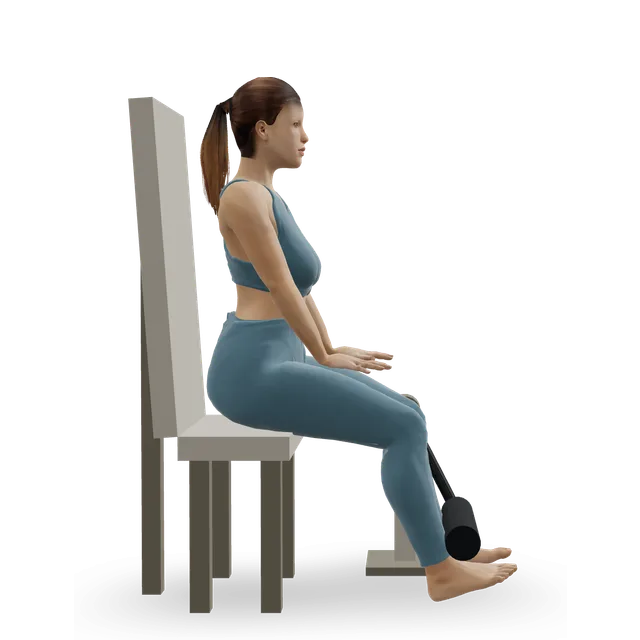
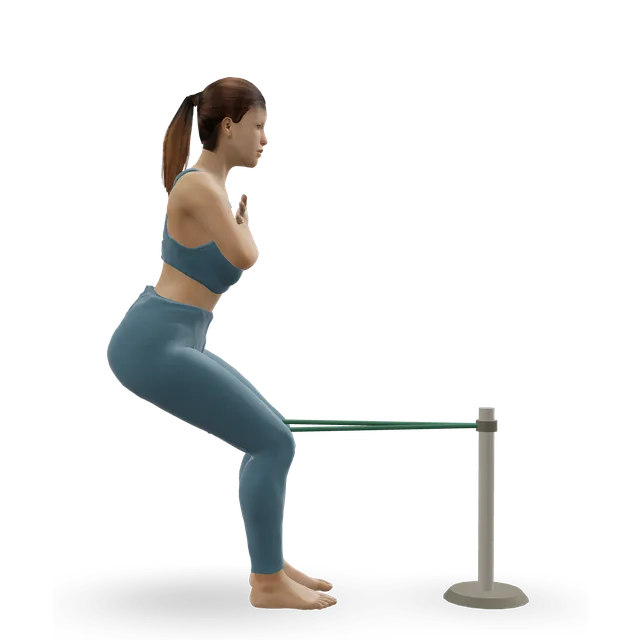
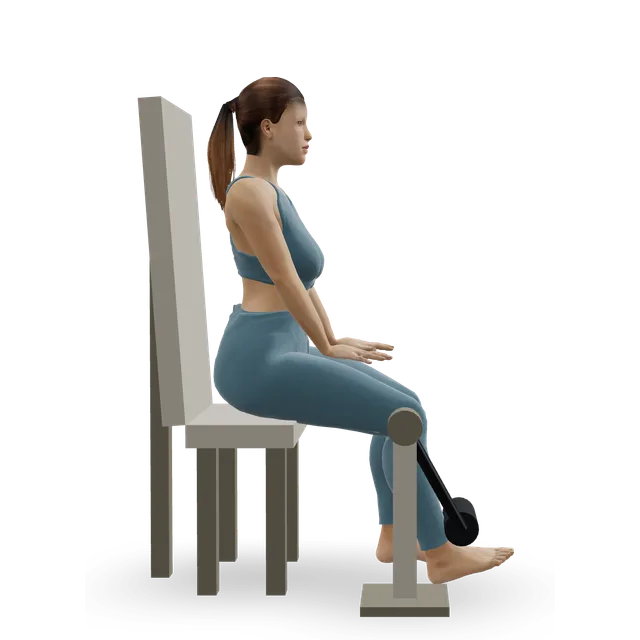
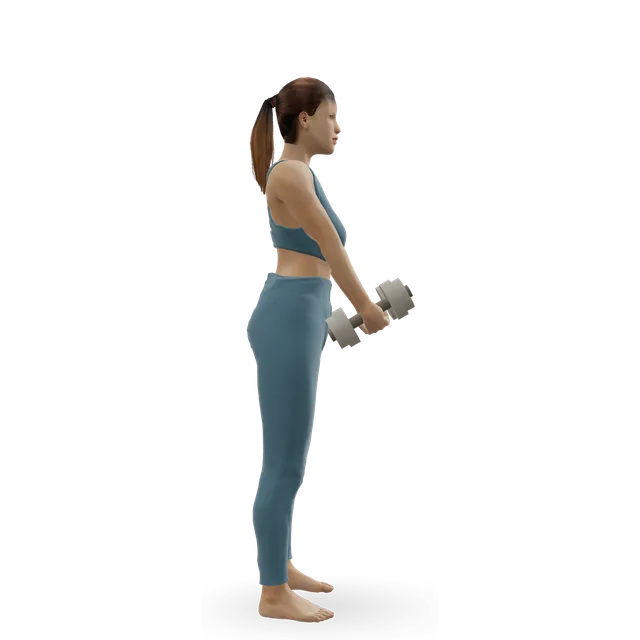
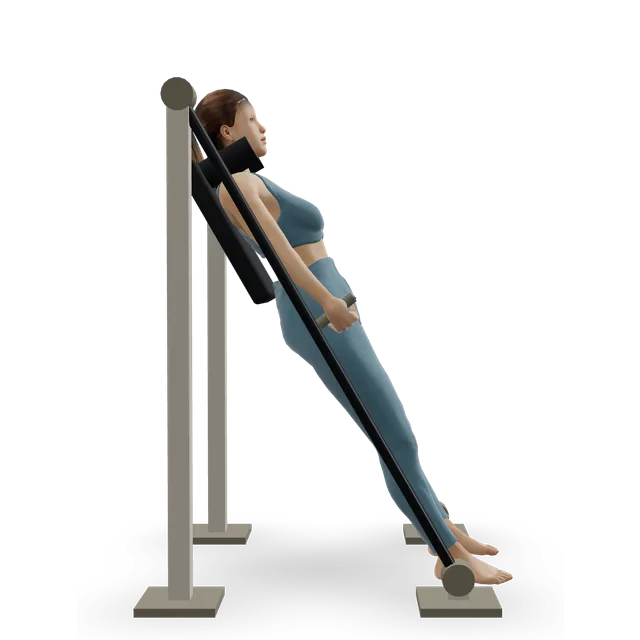
Range is the main dialEmerging evidence
In 20 healthy adults, stress behind the kneecap was higher on the leg extension than on the leg press with the knee nearly straight (0 and 30 degrees) and higher on the leg press with the knee well bent (60 and 90 degrees), crossing at about 48 degrees (only 4 angles were measured). In 10 adults, the squat put more stress behind the kneecap at 90, 75 and 60 degrees, and the knee extensions more at 30, 15 and 0; a cam machine (one whose resistance changes through the lift) loaded the kneecap less than ankle weights from 60 to 90 degrees, and the authors advise doing the machine version from 90 to 45 degrees of bend.
That range is also the median of the kneecap pain trials: across 79 studies, 28 used a seated knee extension, at a median of 3 sets of 10, from 90 to 45 degrees, at 70% of the most you could lift once (one-repetition maximum, 1RM). In a computer model, cartilage stresses on the leg extension were no higher than normal, or than in closed chain exercise (with the feet on the ground or a platform), from 20 to 90 degrees. These are lab studies in healthy people; none measured pain.
Sources 2, 3, 26, 27
Leg extensions are used to treat knee painStrong evidence
Clinical guidelines and international consensus put exercise first for kneecap pain, with hip and knee strengthening together, whether or not the exercise is weight-bearing; a Dutch guideline asks for at least 6 to 12 weeks, and to reconsider the diagnosis if 12 weeks haven't helped. Knee extensions did as well as a seated leg press over 6 weeks in 45 men, and an open chain programme (the foot moving freely, as on the leg extension) did as well as a closed chain one in 60 people, with the results holding at 5 years.
For knee arthritis, NICE offers therapeutic exercise to everyone and warns that pain may rise at first; across 139 trials, exercise eased pain slightly and improved function (low to moderate certainty). In 377 adults over 50 with knee arthritis, single-leg machine training including the leg extension, 3 times a week for 18 months, eased pain no more at heavy loads (75% to 90% of 1RM) than at light loads (3 sets of 15 at 30% to 40%), and the heavy group reported more minor complaints (53 against 30).
Sources 28, 29, 8, 16, 30, 31, 32, 15, 33, 34
Patellar tendon pain: holds, then slow heavier repsEmerging evidence
In the largest trial (76 people), daily single-leg holds came first, on the leg extension by preference or the leg press: 5 holds of 45 seconds at about 60 degrees of bend with 2 minutes' rest, building towards 70% effort. Then came slow single-leg reps every second day, 4 sets of 15 between about 10 and 60 degrees, building to heavier sets of 6 and then towards 90 degrees and nearly straight, with two further stages towards sport. Pain was kept at 3 out of 10 or less, and the programme beat painful decline squats by 9 points on a 100-point tendon score at 24 weeks, with a wide margin of uncertainty (1 to 16).
Holds are not magic. They eased pain a lot straight away in 6 volleyball players, but no more than moving reps over 4 weeks in 29 athletes, only briefly in 21 people, and no better across 10 trials; short holds worked as well as long ones (16 men). Moderate loads (55%) did as well as heavy ones (90%) over a year in 44 adults, and a steroid injection's early relief faded by 6 months where slow heavy training lasted (39 men). The Dutch guideline asks for at least 12 weeks, and a review warns rehab can be slow and sometimes frustrating.
Sources 35, 36, 37, 38, 39, 40, 41, 42, 16, 9
After ACL surgery: your team decides, and a limited range looks safeMixed evidence
An international guideline from Aspetar, a sports medicine hospital in Qatar, starts leg extensions at about week 4 between 90 and 45 degrees of bend, on very low certainty evidence with strong panel agreement. Cambridge's NHS programme widens the range by about 10 to 15 degrees a week to full range by week 8, and starts resistance at week 4 after a patellar tendon graft but at week 12 after a hamstring graft; a US guideline from the Multicenter Orthopaedic Outcomes Network (MOON) limits the first 6 weeks to light-load, short-arc work. Across studies, start times ranged from the first day to 270 days.
Across 10 trials, open chain exercise after reconstruction didn't loosen the knee more than closed chain work, and early leg extensions in a limited range didn't loosen hamstring grafts (49 people); open chain work built more thigh strength by 3 to 4 months (9 trials, very low to low certainty), and a 2025 review found it helped most from about week 4, once closed chain work had started (low-quality studies). The caution is going to full range too early: full-range work by week 6 after a hamstring graft added about 1 millimetre of looseness (68 people), and on the leg extension, unlike in the squat, adding weight raised the strain on the ACL. In knees with a torn ACL and no surgery, leg extension work built more thigh strength without loosening the knee (42 people), and a review of 6 small trials found closed chain work no better than open chain. Your team's plan comes first.
Sources 43, 44, 45, 46, 47, 48, 49, 50, 51, 52, 53, 54
The pad and the pivot: one commentary and small lab studiesEmerging evidence
On the leg extension, the forward pull on the shin that loads the ACL runs from about 40 degrees to straight, peaking at about 14 degrees (10 men lifting a weight they could lift 12 times); in living knees, ACL strain at 10 and 20 degrees rose with a 45-newton weight, while moving between 35 and 90 degrees didn't strain it. One expert commentary puts the peak ACL load at about 158 newtons, below the roughly 303 newtons of level walking, and reports ACL force at 30 degrees of about 400 newtons with the pad near the ankle against about 200 with it near mid-shin.
Small lab studies agree that a pad nearer the knee reduced the shin's forward slide (12 knees without an ACL), and mathematical models say the best pad spot varies with knee angle and that a knee out of line with the machine's pivot changes the loads. No study has tested pad position for pain, so lining the side of your knee up with the pivot and putting the pad on the lower shin is coaching practice, and after an ACL injury or surgery the pad and range are your team's call.
Sources 5, 6, 55, 56, 57, 58, 59