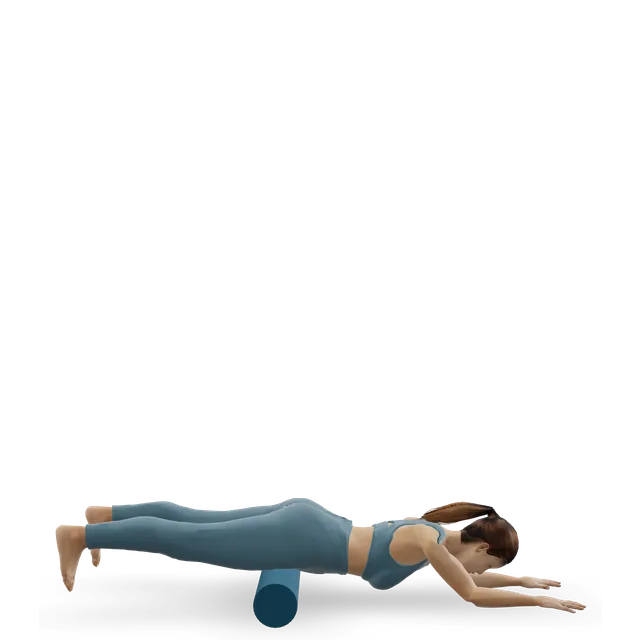
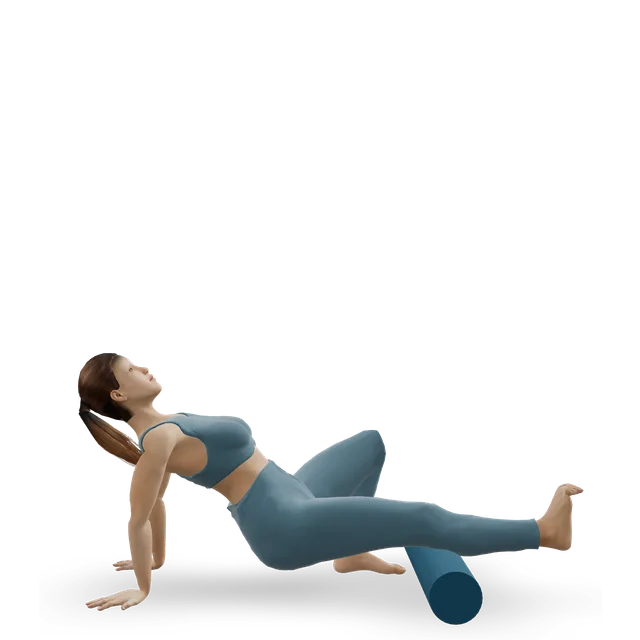
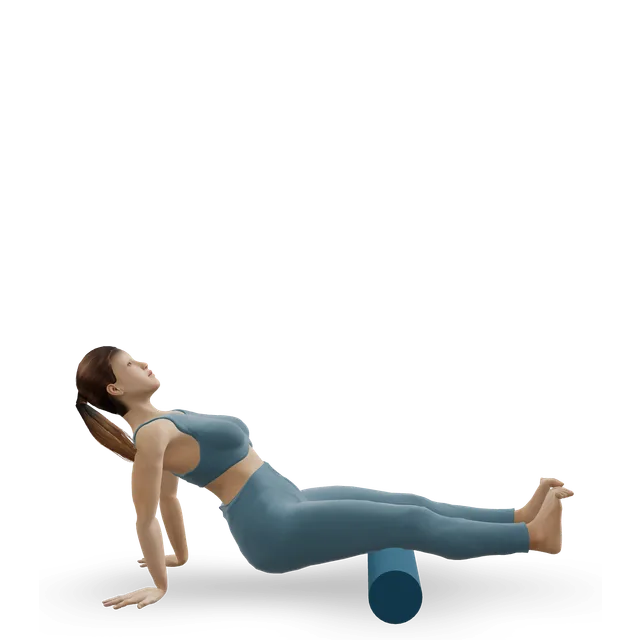
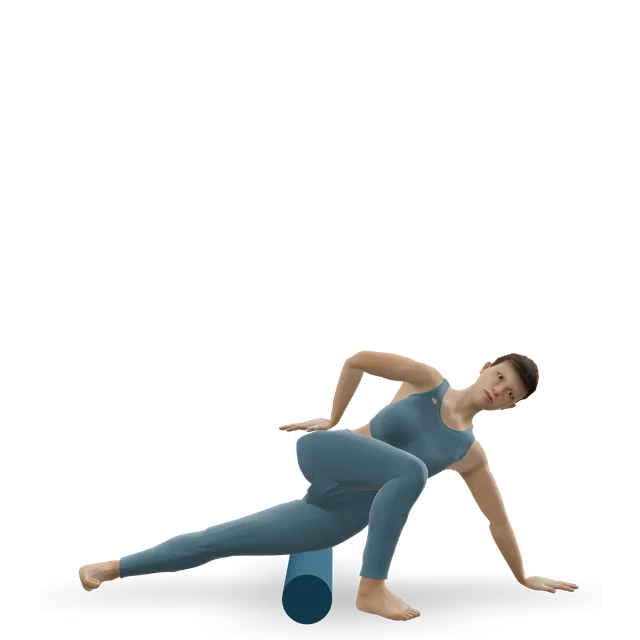
Fascia release for the knees: rolling for knee pain, scars and stiffness after surgery, and when knee pain needs checking
Fascia release for the knee really means working on the muscles around it: rolling the front of the thigh, the calf and, gently, the outer thigh, never the kneecap or the back of the knee. Rolling the thigh lets the knee bend more easily for 10 to 30 minutes, but on its own it hasn't been shown to treat knee pain.
The honest headline: hip and thigh strength work is what helps knee pain, and the National Institute for Health and Care Excellence (NICE) says hands-on treatment for knee arthritis belongs alongside exercise, not instead of it. After a knee replacement the scar tightens over the first weeks, so bend early, start scar massage once the wound has healed and your team agrees, and tell your team early if the knee isn't bending.
This guide covers what the trials found, a 15-minute routine, the iliotibial (IT) band, recovery after surgery, and the knee problems that need checking first.
Release around the knee means rolling the thigh, the calf and, gently, the outer thigh, kept off the kneecap and the back of the knee. The IT band, for example, is anchored to the thigh bone and can't be rolled loose.
On its own, rolling isn't a treatment for knee pain
A review of 6 trials found only one kneecap pain trial where adding rolling to exercise eased pain, and an expert consensus calls hands-on soft tissue techniques for kneecap pain uncertain.
NICE says to offer exercise to everyone with osteoarthritis and to consider hands-on treatment only alongside it. For kneecap pain, experts recommend hip and knee exercise together, and hip strengthening runs through the treatments that work for runners' outer knee pain.
After a knee replacement: bend early, then massage the scar
Stiffness without a clear cause follows about 4 in 100 knee replacements. One NHS trust warns that scar tissue tightens over the first 6 weeks, and starts scar massage at 2 to 3 weeks once the wound has healed. Tell your team early if bending lags.
In 30 people, a week of daily thigh rolling added to physiotherapy eased pain on stretching but didn't improve bend, strength or walking. Lymphatic massage isn't needed routinely after a replacement.
The knee is a hinge wrapped in a capsule and ligaments, with the kneecap held in the tendon of the quadriceps. The thigh's deep fascia and the IT band reach down to the knee. At the outer knee the IT band is fixed to the end of the thigh bone by fibrous strands, over a layer of fat rich in nerves, and dissection found no fluid-filled sac (bursa) there. So releasing the knee means working on the thigh, the outer thigh and the calf, not the joint.
The common long-term causes are kneecap pain (patellofemoral pain) and arthritis, and outer knee pain in runners usually comes from the IT band area. Our knee pain guides cover the causes and how to tell them apart.
Why rolling the thigh changes the knee for a while
Rolling the quads lets the knee bend further for 10 to 30 minutes, with no loss of thigh strength. After a knee replacement, 3 minutes of rolling the healthy thigh briefly eased pain and stiffness in the operated knee too, a pattern that points to the nervous system rather than any change in the operated tissue.
Rolling for knee pain: not shown on its ownMixed evidence
A 2024 review of 6 randomised trials of rolling for muscle and joint pain couldn't pool the results. Only two found that adding rolling to exercise eased pain, one in kneecap pain and one in neck pain, and the authors concluded the evidence doesn't back rolling for pain.
An international consensus of 41 experts recommends exercise, especially hip and knee exercises together, combined treatments and foot orthoses for kneecap pain. Kneecap or knee mobilisation on its own isn't recommended, and hands-on soft tissue techniques remain uncertain.
NICE says to offer therapeutic exercise to everyone with osteoarthritis, and to consider manual therapy, such as manipulation, mobilisation or soft tissue techniques, only for hip or knee osteoarthritis and only alongside exercise, because there isn't enough evidence for it on its own. It says not to offer acupuncture or dry needling.
Massage for knee arthritis: a little, for a whileEmerging evidence
In 222 adults with knee arthritis, 8 weekly hour-long whole-body massages improved symptom scores by about 8 points on a 100-point scale more than light touch at 8 weeks. Carrying on with massage every 2 weeks kept the gain but added nothing over usual care later.
Reviews of hands-on therapy for arthritis: low qualityMixed evidence
A review of 25 studies (2,376 people) reported large effects on pain, but the evidence was low quality and the results varied enormously between studies. In 12 studies, myofascial release helped as an add-on to exercise but didn't consistently beat other hands-on techniques, and its own contribution was unclear.
In 30 people, a session of rolling or stretching didn't change the IT band's stiffness, and hip range rose by under 1 degree. In 34 people, the range gain from rolling the outer thigh was gone by 10 minutes. The band is anchored to the thigh bone, and changes on MRI scans in runners with outer knee pain sat in the fat beneath it.
Hip strength for runners' outer knee painEmerging evidence
In a review of 13 studies (201 runners, 5 randomised trials), hip strengthening ran through the approaches that worked, with pain falling over 2 to 8 weeks. In a pilot trial of 34 runners, 6 weeks of hip and knee strength training beat deep friction massage, stretching and soft tissue work.
We found no trial of fascia release on its own for knee pain, and none that compared rolling with a fake roll. The rolling trials measured minutes, mostly in young men without knee pain, and reviews of hands-on therapy after knee replacement are small and inconsistent.
A knee routine for everyday knee pain: roll, stretch, then strengthen
Rolling the thigh and calf follows their move pages, about 90 seconds per muscle (from Hughes & Ramer 2019); the quad stretch is its move page's dose, which it calls our editorial starting point. NICE says hands-on treatments for knee arthritis should only be used alongside exercise, and kneecap pain is treated with hip and knee exercise (Collins 2018). The strength doses are our editorial starting point, and the pain rule is the one our knee pain guide uses. No trial has tested this sequence.
Roll the front of each thigh, from below the hip to just above the knee, about 90 seconds each leg. Keep off the kneecap.
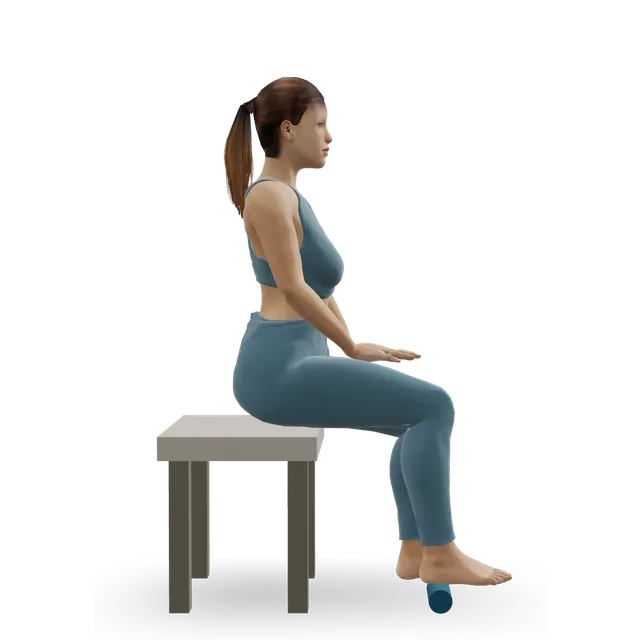
Roll each calf, from below the knee to above the ankle, about 90 seconds each leg. Keep off the back of the knee.
The outer thigh is optional: roll it gently, if at all, and skip it if the bony point of your hip is sore. Rolling it doesn't change the IT band.
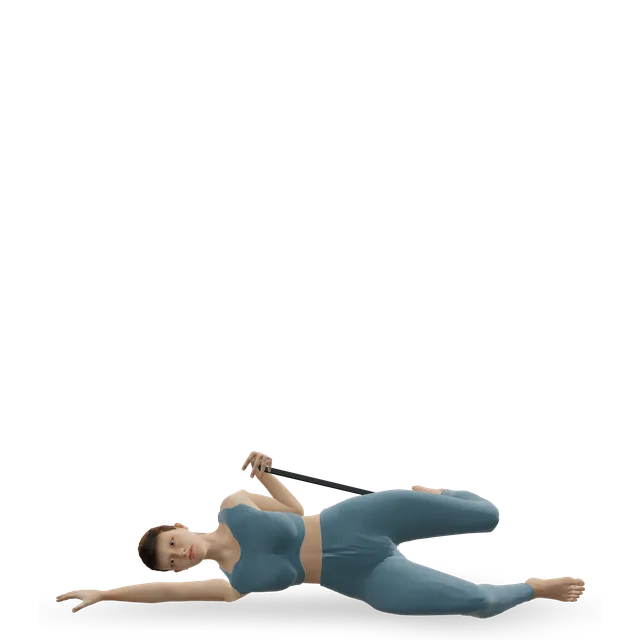
Stretch the front of the thigh: the side-lying quad stretch, 20 to 30 seconds, 2 to 4 times each side.
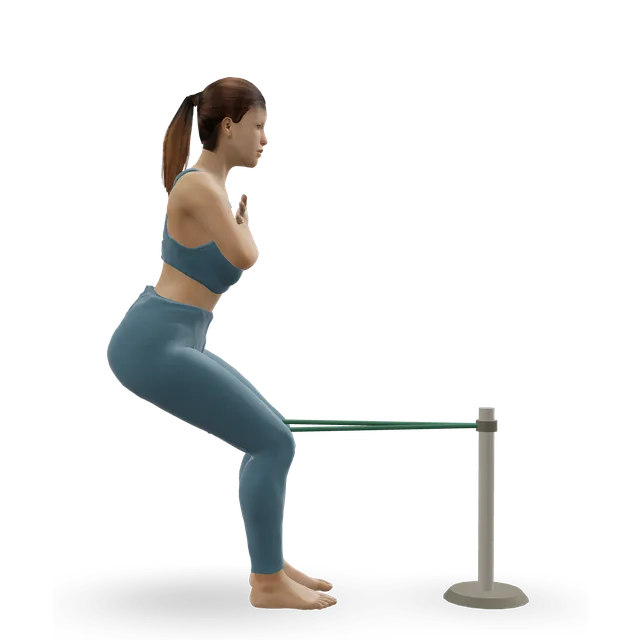
Then do the part that treats knee pain: sit to stands from a chair, step-ups and a wall sit, with clamshells or side-lying leg raises for the hip. The knee release routine below gives sets and reps.
Rate your knee pain from 0 to 10 during and after: 0 to 2 counts as safe and up to 5 as acceptable, and by the next morning the knee should be back to its usual level.
Stop and get checked if the knee locks, gives way, swells quickly or gets hot.
Loading the 3D figure…
Drag to turn
Gets into position, then repeats the movement. Technical checks passed; qualified exercise review is pending.
Each dose names its trial or leaflet, or is our editorial starting point. Your surgical team's plan comes first.
Follow your team's plan first
Your surgical team's exercises come first, and our knee replacement guide has the stages. The NHS says a nurse usually takes out stitches or clips after about 10 days, you'll have a follow-up appointment about 6 weeks after the operation, and you shouldn't sleep with a pillow under your knee.
Stiffness after surgery caused by scar tissue that wasn't there before, once other causes such as implant position and infection are ruled out, is called arthrofibrosis. Experts grade it by how far the knee bends: mild at 90 to 100 degrees, moderate at 70 to 89. Stiffness without a clear cause follows about 3.6 to 4.0% of knee replacements, and about 2.6 to 3.6% need a manipulation under anaesthetic, which gains more when it is done earlier, within about 6 to 12 weeks. Specialists now describe arthrofibrosis as a biological scarring process and urge spotting it early.
One NHS trust tells patients that "the scar tissue will tighten up in the first 6 weeks and it is very important to stretch early", and that "after 3 months it becomes very difficult to improve flexibility". Tell your physiotherapist or surgical team if the knee isn't bending to about 90 degrees by around 6 weeks, the threshold our knee replacement guide uses.
Once the clips are out or the wound has healed, usually at 2 to 3 weeks, and your team agrees: massage the scar with your thumb in small circles along it, changing direction often, 10 to 15 circles in each area, then move about an inch along, as one NHS trust's leaflet describes. A cream or lotion is your choice and may make it more comfortable. A review of 25 studies (1,515 people) found every study reported a benefit to the scar, but they used 45 different measures and 13 mixed in other treatments, so the evidence is weak.
In 30 people in their second and third weeks after surgery, a physiotherapist checked the wound first, then patients used a roller stick on the front, inner and outer thigh for 60 seconds per area, 3 times, twice a day for 6 days. Pain on stretching fell more than with physiotherapy alone, but bend, thigh strength, walking speed and balance didn't differ. In 20 people in the first week, 3 minutes of rolling the healthy thigh briefly eased pain and stiffness in the operated knee.
Only roll with your team's agreement, and never over the wound or the scar.
Manual lymphatic drainage after a knee replacement didn't improve swelling, bend or pain across 7 trials (285 people), and the authors didn't recommend it. A review of 8 trials (463 people) found no consistent gain in range, though it may be a comfort for people who struggle with exercise. Our lymphatic drainage guide covers it.
In an expert consensus of 37 researchers, open wounds and broken bones were reasons not to roll, and inflammation, a clot or a bone infection were at least reasons for caution.
Keep the pressure light, or ask your doctor first, if you take blood thinners, which make bruising more likely, or have a nerve condition that leaves the skin numb: the NHS lists these among the reasons hands-on treatments may not be safe. With very fragile bones, ask before kneeling or lying on a hard roller (our suggestion): the NHS notes that with osteoporosis even a cough or sneeze can break a rib.
Same day: after a knee injury, or a lump behind the knee
You hurt your knee and cannot take 4 steps, or you are 55 or over and have injured it: get it checked the same day for a broken bone.
Get advice from NHS 111 now: after a twist, your knee won't go fully straight, or something blocks the last part of straightening, even if you can still walk on it. A torn piece of meniscus caught in the joint can do this, and it needs checking promptly.
Sudden worse pain and swelling around a lump at the back of the knee (a possible clot or a burst Baker's cyst): get it checked the same day.
Same day: urgent GP appointment or NHS 111
Throbbing pain in one leg (rarely both), usually the calf or thigh; swelling in one leg (rarely both); red, blue or darkened skin around the painful area, which may be harder to see on brown or black skin; or swollen veins. This can be a deep vein thrombosis (DVT). It is more likely after surgery, a hospital stay, 3 or more days in bed, a journey of over 4 hours, pregnancy or a recent birth, cancer, a previous clot, or contraception or hormone replacement therapy (HRT) that contains oestrogen.
A high temperature, or feeling hot, cold or shivery, or redness, tenderness, swelling or pain in the knee that is not getting better or is getting worse: ask for an urgent GP appointment or get help from NHS 111. These can be signs of an infection.
Oozing or pus from the wound: ask for an urgent GP appointment or get help from NHS 111. If you feel unwell or feverish and the wound looks infected, go to A&E.
The knee is not bending to about 90°, or not getting straight, by around 6 weeks, or it was moving well and is getting stiffer: tell your physiotherapist or surgical team now rather than waiting for a routine appointment. Stiffness is easier to treat early. (The 6-week check is our threshold, built from NHS trust leaflets.)
See a GP
Knee pain that doesn't improve within a few weeks. In many areas you may be able to get physiotherapy from NHS community services without a GP referral.
"Rolling the IT band fixes knee pain"Mixed evidence
Rolling didn't change the band's stiffness and the range gain lasted minutes. Outer knee pain likely comes from fat squeezed under the band, and hip strength runs through the treatments that work. Our IT band guide explains why.
"Tight fascia around the knee causes knee pain, and releasing it cures it"Mixed evidence
We found no trial of fascia release as a stand-alone treatment for knee pain. One small trial found rolling helped when added to exercise for kneecap pain, and experts call soft tissue techniques uncertain and recommend exercise.
Massage eased symptoms over 8 weeks in one trial, and the gain didn't build with more sessions. NICE says hands-on treatment should only be used alongside exercise.
"You need to break up scar tissue after a knee replacement"Mixed evidence
Hands and tools can't deform dense scar or fascia much. Stiffness after surgery is treated with early exercise and, when needed, a manipulation by the surgical team, and scar massage studies are low quality. Gentle scar massage is fine once the wound has healed; breaking anything up isn't the aim.
Every rolling move page says to keep off the back of the knee, where the main artery and nerve to the lower leg run, and there's nothing there to release. A painful lump or swelling behind the knee needs checking, not rolling.
Not on the joint itself. Release around the knee means rolling the front of the thigh, the calf and, gently, the outer thigh, keeping off the kneecap and the back of the knee.
Does foam rolling help knee pain?
It can make the knee bend more easily for a few minutes, but rolling alone hasn't been shown to treat knee pain. Strength work for the hips and thighs is what helps, and rolling can be a warm-up before it.
Should I roll my quads for knee pain?
If it feels good, yes, for about 90 seconds a leg and off the kneecap. In small trials it raised knee bend for 10 to 30 minutes without weakening the thigh, so follow it with strength work.
Will rolling my IT band fix outer knee pain?
Unlikely. Rolling didn't change the band, the gains lasted minutes, and the pain likely comes from fat squeezed under the band. Hip strengthening and adjusting your running have more support; our IT band syndrome guide has the plan.
Does massage help knee arthritis?
A little, for a while: weekly hour-long massages eased symptoms over 8 weeks in a trial of 222 people. NICE says hands-on treatments should only be used alongside exercise.
How do I massage scar tissue after a knee replacement?
Once the clips are out or the wound has healed, usually at 2 to 3 weeks, and your team agrees, make small circles with your thumb along the scar, 10 to 15 in each spot, then move along. Studies of scar massage are weak, and it isn't shown to break down scar tissue, but many people find it makes the scar more comfortable.
Can I foam roll after a knee replacement?
Only when your team agrees, and never over the wound. In a trial, a week of gentle thigh rolling eased pain on stretching but didn't improve bend or strength, so the exercises still come first.
My knee replacement is stiff. Is it scar tissue?
It can be. Stiffness without another clear cause, often from scar tissue (arthrofibrosis), follows about 4 in 100 knee replacements. Tell your team early if your knee isn't bending to about 90 degrees by around 6 weeks; earlier treatment works better.
Does lymphatic drainage help after a knee replacement?
Reviews of 7 and 8 trials found no consistent effect on swelling, bend or pain, so it isn't needed routinely. Some people find it comfortable, which is fine if your team agrees.
Should I roll behind my knee?
No. Keep off the back of the knee, where the main artery and nerve run. A painful, swollen calf or a lump behind the knee needs checking, not rolling.
When does knee pain need checking?
Get advice from NHS 111 now if your knee is hot and swollen with a fever, locks or gives way, or you can't put weight on it. After surgery, a hot, red or leaking wound or a swollen, painful calf needs help the same day.
Movement education, not medical advice. Stop for sharp or increasing pain, numbness or tingling, and get individual advice if you are pregnant, after an injury or surgery, or managing a health condition. Health disclaimer.