Fascia release for the thighs: rolling and stretching the quads and inner thighs, the cellulite claims, and when to get checked
Thigh release usually means rolling the fronts and insides of your thighs on a foam roller, then stretching. It can make your hips and knees bend more easily for 10 to 30 minutes, about as much as stretching does, but it doesn't release the fascia lata, the tough sheet that wraps the thigh: in a trial, rolling left thigh stiffness unchanged. The change is mostly in how much stretch your nervous system allows.
The honest headline: range that lasts comes from weeks of stretching and strength work, and the inner thighs are best protected by strengthening them. Rolling won't smooth cellulite or slim your legs.
This guide shows how to roll and stretch the thighs, what the trials found, a 10-minute routine, and the thigh pain that needs checking first, such as a swollen, throbbing leg or a sudden pop with bruising.
Two minutes of rolling the front of the thigh raised knee bend by about 10 degrees in 11 men, still 8 degrees at 10 minutes, with no loss of strength. In other small trials the gains faded over 10 to 20 minutes or lasted 30. Across 26 trials, one session of rolling did about as well as stretching.
In a modelling study, the thigh's deep fascia would need forces far outside the normal range to compress by 1%. In 16 people, rolling the front of the thigh left its measured stiffness unchanged, and the deepest layer of the fascia slid less afterwards, not more.
Rolling programmes improved the quads' range, more when they ran for longer than 4 weeks. Over 4 weeks or less, stretching did better, and strength training through a full range matched stretching.
Rolling the inner thigh has little research: in 54 people, rolling then stretching improved hip range, though a therapist's mobilisation stretch did more. One inner thigh strength exercise, the Copenhagen adduction, cut groin problems by 41% in 652 footballers.
Cellulite affects 80 to 90% of women, no treatment has clear evidence of working well, and machine massage made no measurable difference in 52 women. Training one arm for 12 weeks didn't take more fat off it, so rolling won't slim your thighs.
The quadriceps, four muscles at the front, straighten the knee, and one of them, the rectus femoris, also bends the hip. The adductors fill the inner thigh, the hamstrings run down the back (our hamstrings guide covers them), and the tensor fasciae latae sits at the front of the hip. Our muscle guides cover the anatomy.
The fascia lata
The deep fascia that wraps the whole thigh. On ultrasound in 22 people it averaged about 1.88 mm thick, with a slippery layer rich in hyaluronan (a gel-like molecule that helps layers glide) between it and the muscle. It is usually two fibrous layers whose fibres cross at about 75 to 80 degrees. On the outside of the thigh it thickens into the iliotibial (IT) band, which is anchored to the thigh bone near the knee.
The superficial fascia, a thin fibrous layer in the fat under the skin, is full of nerves. In samples from the thigh and abdomen, about a third were autonomic nerves, the involuntary nerves that run blood vessels and sweat glands.
Probably not in the way the word suggests. Samples of fascia lata contained almost none of the cells that let some fascia contract slowly (myofibroblasts): a median of 0% in 11 samples, against 1.52% in lower back fascia. What feels like tight thighs is usually a strong pull early in a stretch, which mostly reflects how much stretch your nervous system tolerates.
Modelling suggests forces far outside the normal range would be needed to compress or shear the fascia lata by 1%. In 16 people, rolling the front of the thigh left stiffness unchanged and changed the point where the stretch was first felt; the deepest layer of the fascia lata moved less afterwards, which the authors said needs more research. In 14 men, tissue hardness fell for about 10 minutes.
Reviewers conclude the effects run through receptors in the skin and fascia, pain processing and muscle tone, so 'self-myofascial release' is a misleading name. A living review of 62 reviews of hands-on therapy found moderate-quality support for changes in the nervous system and blood flow, while the evidence for changes in the tissue itself was of critically low quality.
One session: a short-term gain, about the same as stretchingStrong evidence
Across 26 trials, one session of rolling gave a large short-term gain in range against no exercise, and no difference from stretching. How long or how fast people rolled, and vibration, made no clear difference.
The quads: 10 to 30 minutes of easier bendingEmerging evidence
Two 1-minute bouts raised knee bend by 10 degrees at 2 minutes and 8 degrees at 10 minutes in 11 active men, with no change in force. In 25 trained men, 60 or 120 seconds raised hip bend by about 19 degrees straight away, 13 at 10 minutes and 6 at 20, and 120 seconds did more than 60. In 14 men, knee bend gains lasted at least 30 minutes.
Not every trial agrees: in 23 people, rolling gave only about 2 degrees more hip extension and didn't change knee bend in a controlled test, and in 16 people the gains were about 2 to 3%.
In 16 people, rolling the quads at about 4, 6 or 8 out of 10 for discomfort gave the same range, without harming strength or jumping. In a review of 22 studies, about 90 seconds per muscle was the least that eased soreness, and 10 of 17 studies found a short-term gain in range.
Over weeks: rolling, stretching and strength all build rangeStrong evidence
Rolling programmes improved range (11 studies, 290 people), with gains in the quads and hamstrings but not the calves, and programmes longer than 4 weeks did better. Across 85 studies, stretching beat rolling over 4 weeks or less. In 11 trials (452 people), strength training through a full range improved range as much as stretching.
The inner thighs: little researchEmerging evidence
In 54 people with tight inner thighs, one session of rolling then stretching improved how far the leg moved out to the side, but a therapist's mobilisation-with-movement stretch did more. In 46 young footballers with stiff hips, 20 minutes of rolling or stretching twice a day for 6 weeks both restored much of the lost range.
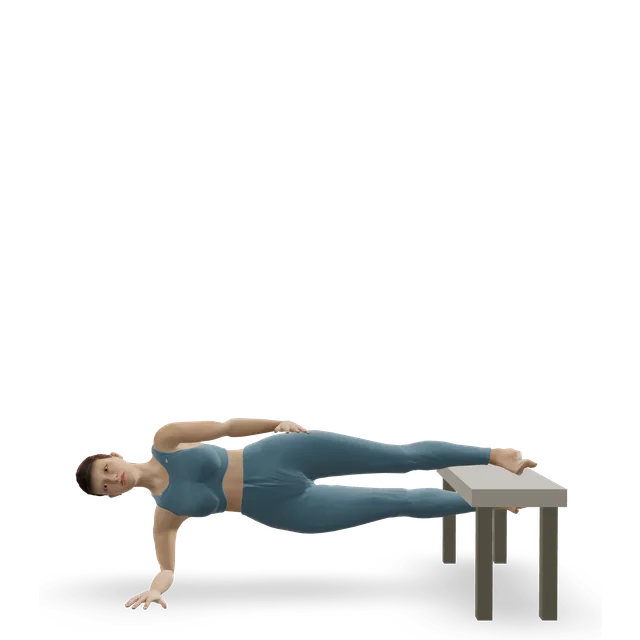
In 652 semi-professional footballers from 35 teams, adding one exercise, the Copenhagen adduction (a side plank with the top leg supported, moving the bottom leg up and down), 3 times a week in pre-season and once a week in season, cut groin problems by 41%: 13.5% of players against 21.3%.
In 8 men, 20 minutes of rolling straight after heavy squats, and again over the next 2 days, eased thigh tenderness by a moderate to large amount and helped sprint and jump recovery.
Most thigh trials tested a few dozen young, fit men over minutes to weeks. None compared rolling with a fake roll, and none tested rolling for a thigh injury or long-term thigh pain.
Thigh release in about 10 minutes: roll, stretch, strengthen
Steps 2 and 3 follow the quad and inner thigh rolling move pages, which give about 90 seconds for each muscle (from Hughes & Ramer 2019). The quad stretch is its move page's dose, which it calls our editorial starting point, and the 12 rocks are the frog rock move page's dose. The strength doses are our editorial starting point; the groin injury trial used its exercise 3 times a week in pre-season and once a week in season (Harøy 2019). No trial has tested this sequence.
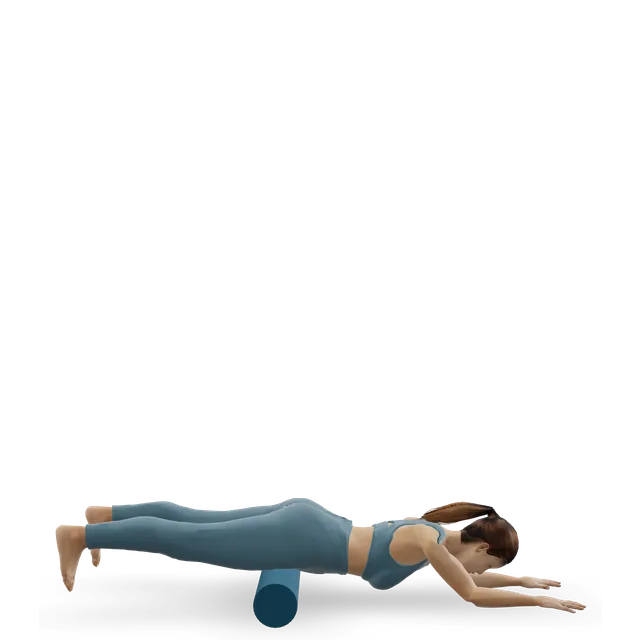
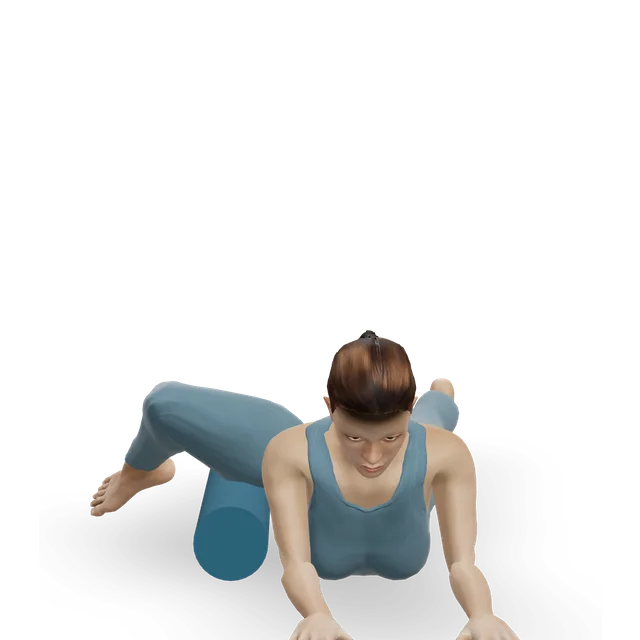
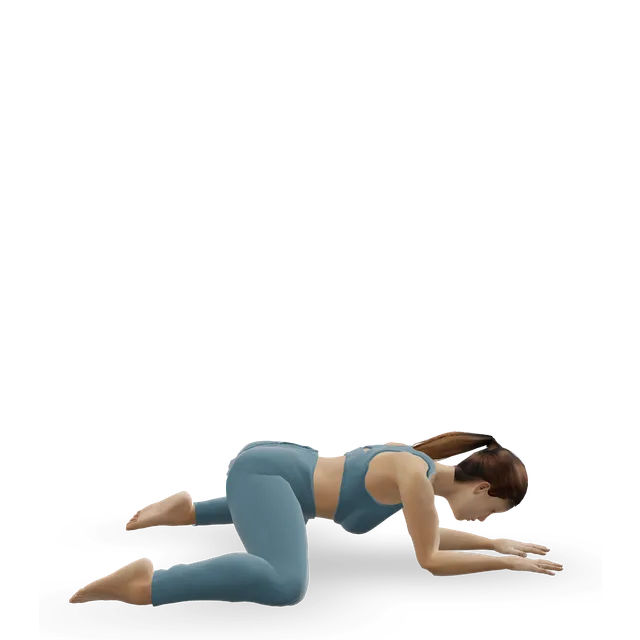
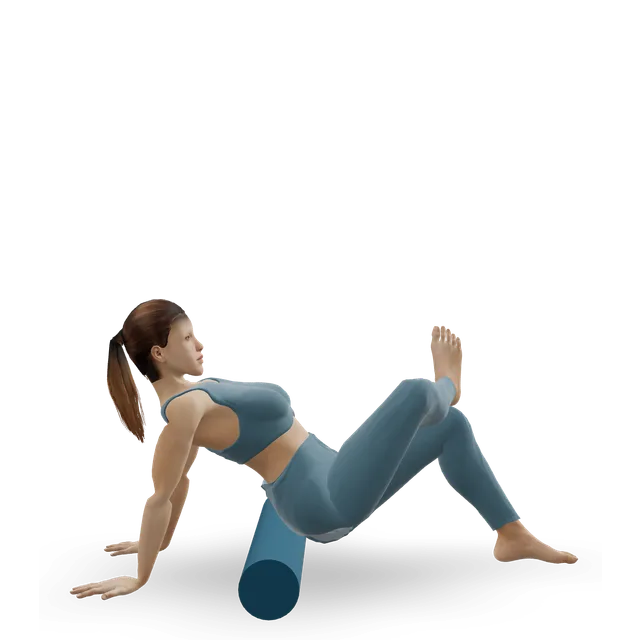
Lie face down propped on your forearms, elbows under your shoulders, with a foam roller under the fronts of your thighs. Brace your trunk so your back doesn't sag.
Use your arms to move your body so the roller travels slowly from just below your hips to just above your knees and back. For more pressure, roll one leg at a time, and keep off the kneecap. Give each leg about 90 seconds, for example 2 or 3 slow rounds of 30 to 45 seconds.
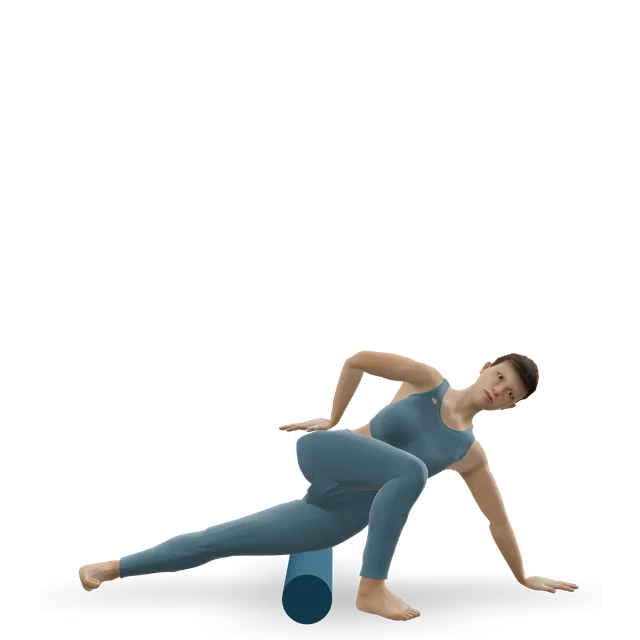
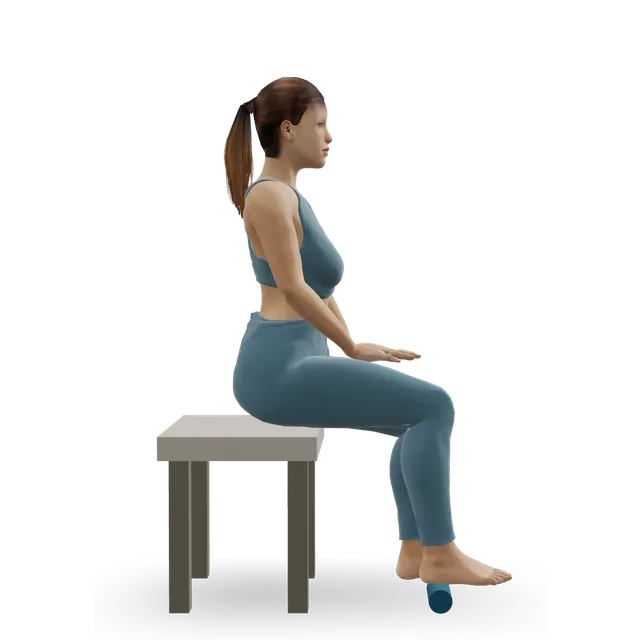
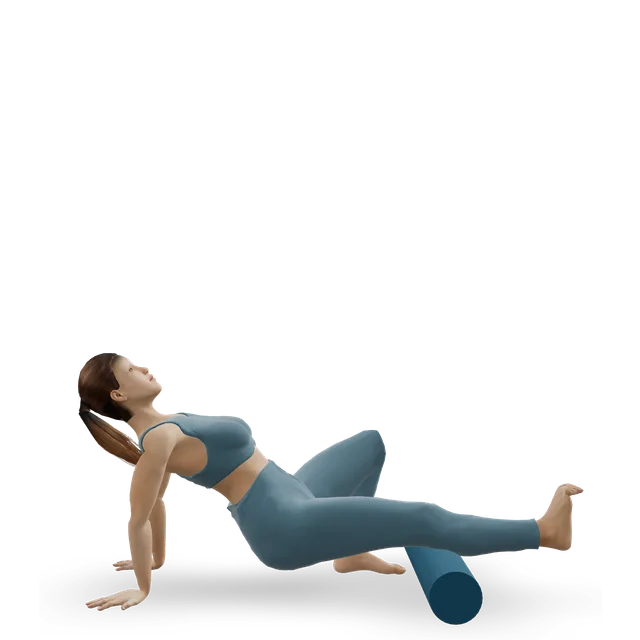
Inner thigh: turn one leg out with the knee bent and rest the inner thigh on the roller about halfway between the knee and the groin. Shift sideways so the roller travels towards the knee and back, about 90 seconds each leg. Never roll hard into the groin crease.
Use a pressure you can breathe through. If a tender spot eases, pause on it for a few slow breaths.
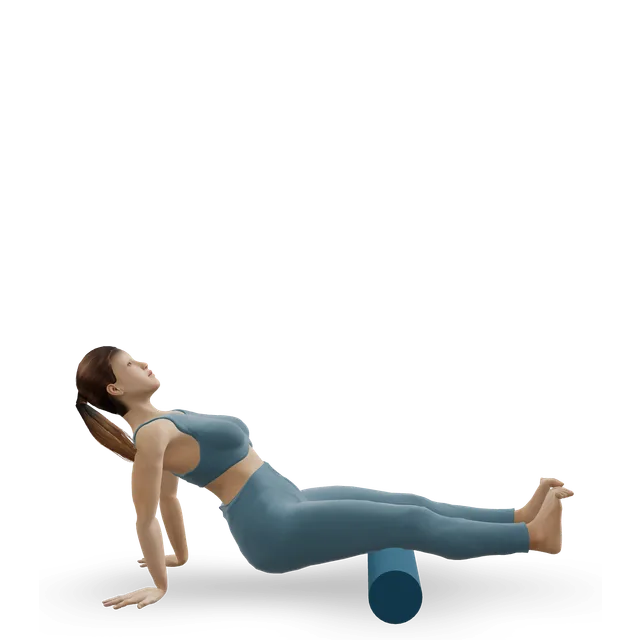
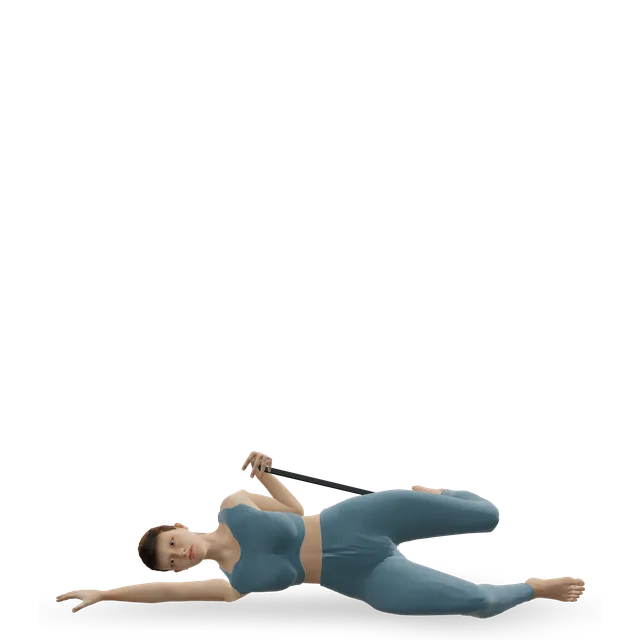
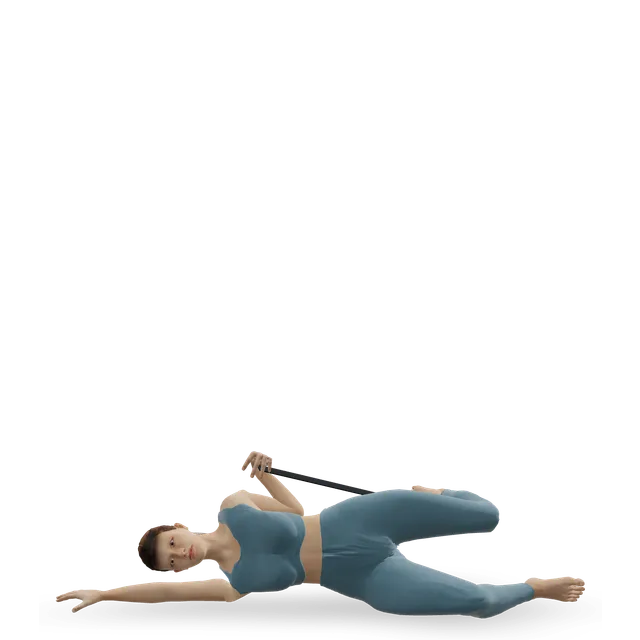
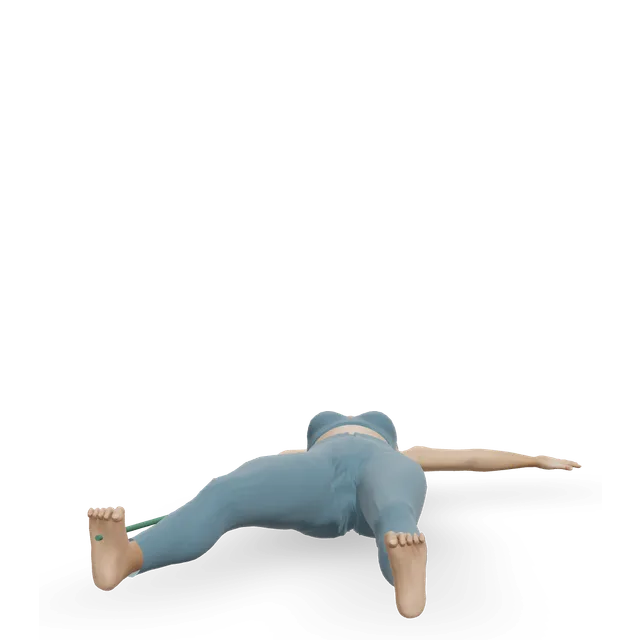
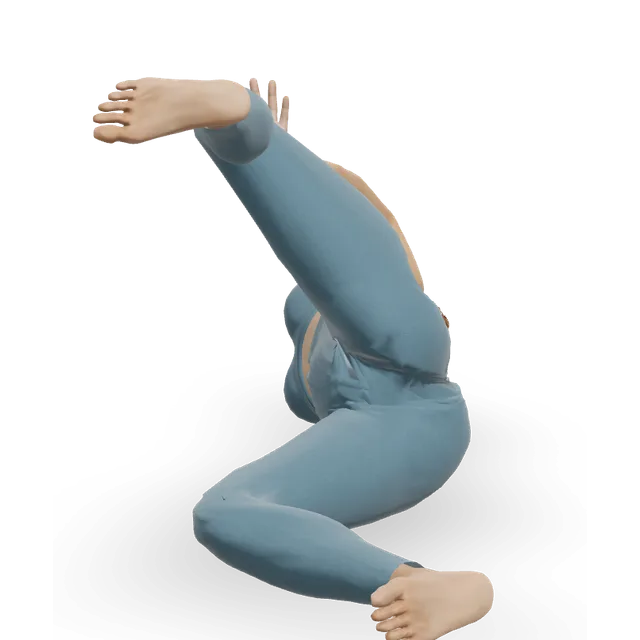
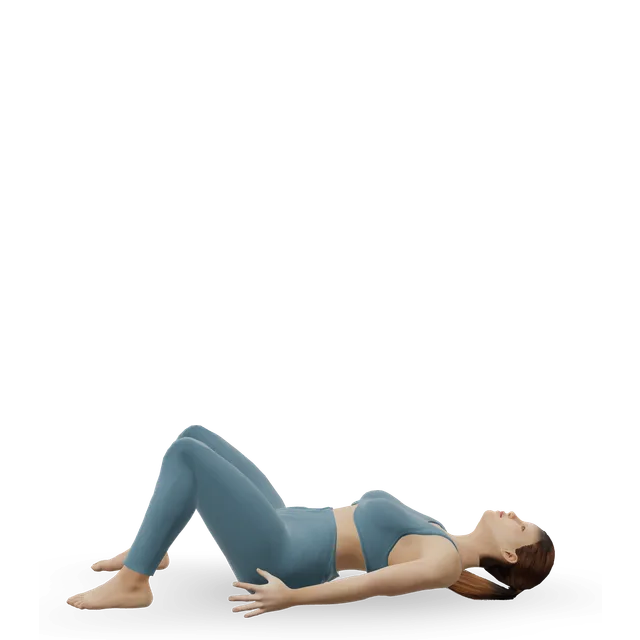
Stretch straight away while the extra range lasts: the side-lying quad stretch, 20 to 30 seconds, 2 to 4 times each side, then 12 slow frog rocks for the inner thighs.
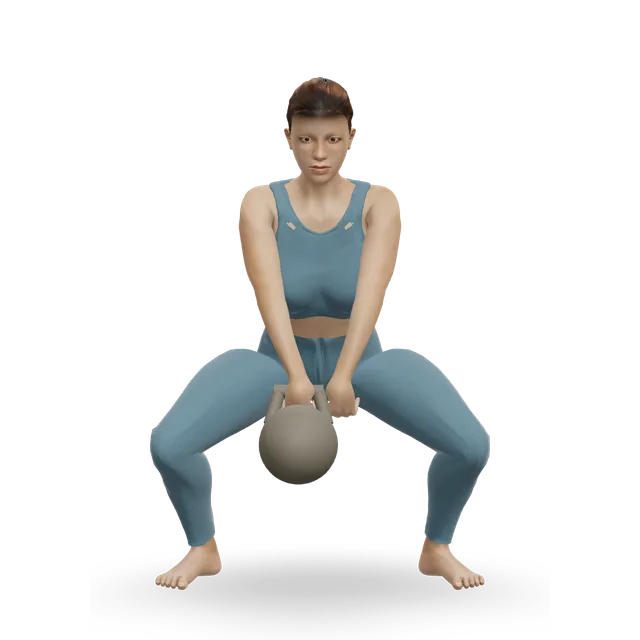
Strengthen: 2 sets of 10 sit to stands from a chair, and 2 sets of 10 lying ball squeezes between the knees, each held for 3 to 5 seconds. If you play sport, build up to the Copenhagen plank 2 or 3 times a week.
Skip the roller on bruises, varicose veins and a fresh strain, and never roll a leg that is swollen, warm, red or darkened, or throbbing.
Loading the 3D figure…
Drag to turn
Gets into position, then repeats the movement. Technical checks passed; qualified exercise review is pending.
Each dose names its trial or move page, or is our editorial starting point. Doses are starting points, not prescriptions.
Foam roller
About 90 seconds per muscle, the quad rolling move page's dose, at a pressure you can breathe through: harder rolling added nothing in a quad trial. Our foam rolling guide has the full technique.
About 90 seconds each side, the inner thigh rolling move page's dose, then stretch: rolling followed by stretching improved hip range in a trial. Keep the roller about halfway between the knee and the groin, and don't press a ball deep into the inner thigh near the groin, where the main blood vessels and nerve run.
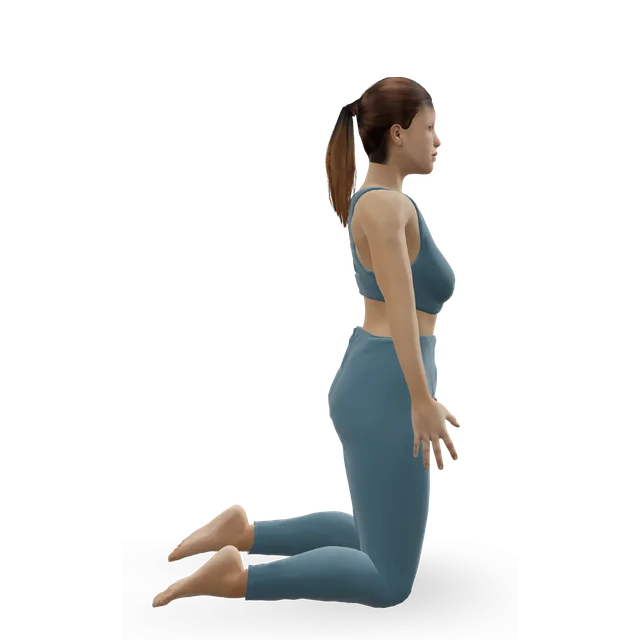
The side-lying quad stretch, 20 to 30 seconds, 2 to 4 times each side, is its move page's dose, which it calls our editorial starting point. The half-kneeling hip flexor stretch reaches the rectus femoris, which also crosses the hip. For the inner thighs, 12 slow frog rocks are the move page's dose, or use the lying strap stretch for 20 to 30 seconds, 2 to 4 times, its move page's dose.
Strengthen
Our editorial starting point: 2 sets of 10 sit to stands or goblet squats and 2 sets of 10 ball squeezes, 2 or 3 times a week. For sport, the Copenhagen adduction cut groin problems in footballers when done 3 times a week in pre-season and once a week in season. Strength work through a full range builds range as well as stretching does.
Our editorial starting point: stretch or roll 2 or 3 times a week for more than 4 weeks. Rolling programmes did better when they lasted longer than 4 weeks, and stretching programmes did better over shorter spans.
Before, a minute or two of rolling is fine in a warm-up: it didn't weaken the thigh, though it gave no more range than other warm-ups. After hard leg training, rolling may ease soreness over the next 2 days; the trial used 20 minutes, and about 90 seconds per muscle is our editorial starting point.
Cellulite and slimmer legs: what fascia release can't do
What cellulite is
The dimpled look of skin over the thighs, buttocks and hips, seen in 80 to 90% of women after puberty. It is very common, and its causes are many and not fully understood. Our thigh fat guide explains the fibrous bands under the skin.
Of 67 studies of cellulite treatments, 19 were randomised and placebo-controlled, and none showed clear evidence of working well. A 2025 review of 24 randomised trials (2,084 people) found no treatment definitively established, though shock wave therapy, radiofrequency and injections looked promising. A 2023 review put it plainly: "There is no effective treatment for cellulite."
In 52 women, 12 weeks of twice-weekly machine massage (Endermologie) made no measurable difference to thigh size, fat depth or photographs, though by the women's own assessment 10 of 35 treated legs looked better. A trial of three kinds of massage reported thinner fat measurements in every group, but had no untreated group to compare with.
We found no independent trial of fascia blasting or fascia release for cellulite. Our fascia blasting verdict covers the tools and the evidence behind them.
Slimmer legsEmerging evidence
In 104 people who trained one arm for 12 weeks, MRI scans showed no extra fat loss in the trained arm. We found no trial of rolling for fat loss, and before-and-after photos change with posture, lighting and swelling. Our thigh fat guide covers overall fat loss.
In an expert consensus of 37 researchers, open wounds and broken bones were reasons not to roll, and inflammation, a clot, a bone infection or bone forming in a muscle after an injury (myositis ossificans) were at least reasons for caution.
Keep the pressure light, or ask your doctor first, if you take blood thinners, which make bruising more likely, or have a nerve condition that leaves the skin numb: the NHS lists these among the reasons hands-on treatments may not be safe. Skip massage guns on the inner thigh if you take blood thinners (our suggestion). With very fragile bones, ask before kneeling or lying on a hard roller (our suggestion): the NHS notes that with osteoporosis even a cough or sneeze can break a rib.
Clots are more likely in pregnancy and for 6 weeks after giving birth, so never roll or massage a swollen or painful leg. In later pregnancy, avoid lying flat on your back for more than a few minutes.
Call 999 or go to A&E: after a heavy knock or a fall
Call 999 or go to A&E: you heard a crack when you were injured, the thigh has changed shape or the leg points at an odd angle, the leg is numb or tingling, or the skin has changed colour or is cold to touch. You may have broken a bone. Don't drive yourself.
Call 999 or go to A&E: sudden, severe pain in a thigh muscle
Sudden, severe pain in a thigh muscle, which may be worse when you stretch it (for example bending the knee), with swelling, numbness, weakness or pins and needles, or tightness or difficulty moving the leg. This can be acute compartment syndrome, which needs surgery as soon as possible. In the thigh it usually follows a heavy knock, a crush or a broken bone. Do not drive yourself to A&E. Our quad strain guide gives the same warning.
Same day: urgent GP appointment or NHS 111
Throbbing pain in one leg (rarely both), usually the calf or thigh; swelling in one leg (rarely both); red, blue or darkened skin around the painful area, which may be harder to see on brown or black skin; or swollen veins. This can be a deep vein thrombosis (DVT). It is more likely after surgery, a hospital stay, 3 or more days in bed, a journey of over 4 hours, pregnancy or a recent birth, cancer, a previous clot, or contraception or hormone replacement therapy (HRT) that contains oestrogen.
Same day (NHS 111): the thigh is very painful or the pain is getting worse, there's a lot of swelling or bruising or it's getting worse, you can't put any weight on the leg or walk more than a few steps, it feels very stiff, or you have a very high temperature or feel hot, cold or shivery.
Same day: a pop just above the kneecap, then you can't straighten your knee or lift the straight leg, or there's a dent above the kneecap. This can be a quadriceps tendon tear, which almost always needs surgery and does better if it's repaired soon. Our quad strain guide covers both.
A hard, painful lump in the thigh that stays or grows weeks after a knock: bone can form in a bruised muscle (myositis ossificans).
Burning, tingling or numbness on the outer thigh: a trapped nerve, which our meralgia paresthetica guide covers, not tight fascia.
A lump in the groin, or groin pain with coughing or straining (a possible hernia).
A build-up of fat in both legs that is out of proportion with the rest of your body, which may be lipoedema: our thigh fat guide covers it.
Thigh pain that isn't improving after a few weeks of looking after it yourself.
Myths
"Rolling breaks up adhesions and knots in the thigh fascia"Mixed evidence
The fascia lata would need forces far outside the normal range to deform by 1%, and rolling didn't change thigh stiffness in a trial. Reviewers call 'self-myofascial release' a misleading name: the effect runs mostly through the nervous system.
"Fascia release, blasting or rolling gets rid of cellulite"Mixed evidence
Cellulite affects 80 to 90% of women, no treatment had clear evidence across 67 studies, and machine massage made no measurable difference in 52 women. We found no independent trial of fascia blasting; our verdict covers the tools.
Nothing shows that rolling removes fat: training one arm for 12 weeks didn't take more fat off it on MRI scans. Swelling, posture and lighting change before-and-after photos.
"Tight thighs mean short muscles or stuck fascia"Mixed evidence
Short-term flexibility gains come mostly from how much stretch you tolerate, and the fascia lata has almost none of the cells that let fascia contract.
A bruise is bleeding under the skin and means the pressure was too high. Experts list inflammation and bone forming in a bruised muscle among the reasons for caution with rolling.
"Roll a pulled thigh muscle to heal it"Mixed evidence
The NHS advises avoiding heat, alcohol and massage for the first couple of days after a strain. Our quad strain and groin strain guides have the recovery plans.
Roll the front and inside of each thigh for about 90 seconds at a pressure you can breathe through, then stretch while the extra range lasts. The looser feeling fades within about 10 to 30 minutes, so for lasting change stretch and strengthen 2 or 3 times a week for more than 4 weeks.
Does foam rolling release the fascia in your thighs?
No. The thigh's deep fascia, the fascia lata, would need forces far beyond a roller's to change shape, and rolling didn't change thigh stiffness in a trial. It changes how far you're comfortable stretching, through the nervous system.
How long should I roll my quads?
About 90 seconds per leg, for example 2 or 3 slow rounds. In one trial, 2 minutes raised knee bend by about 10 degrees, and in another 120 seconds did a little more than 60.
How do I release my inner thighs?
Rest the inner thigh on a roller about halfway between the knee and the groin and shift slowly towards the knee and back, then stretch with frog rocks or a strap stretch. Never roll hard into the groin crease. For inner thighs that keep straining, strength work such as the Copenhagen plank has the best evidence.
Does fascia release help cellulite?
Not that any independent trial shows. Cellulite affects 80 to 90% of women, no treatment has clear evidence, and machine massage made no measurable difference in a trial. Our fascia blasting verdict covers the tools.
Can fascia release slim my legs?
No. Rolling doesn't burn fat, and even training one arm for 12 weeks didn't take more fat off it. Before-and-after photos change with posture, lighting and fluid.
Should I roll my IT band?
Gently if it feels good, and skip it if the bony point of your hip is sore. It won't lengthen or release the band; our IT band guide explains why.
Should thigh rolling hurt?
No more than a pressure you can breathe through. Moderate pressure gave the same range as hard pressure in a trial, and bruising means it was too hard.
Is it better to stretch or roll tight thighs?
For a few minutes they do about the same. Over a month or less stretching did better, and strength training through a full range matches stretching for range, so doing both and strengthening is a good plan.
Does rolling help sore thighs after leg day?
A little: in a small trial, rolling after heavy squats eased thigh tenderness over the next 2 days. About 90 seconds per muscle is a fair place to start.
When should I see a doctor about thigh pain?
Get help the same day for a swollen, throbbing or darkened leg, which can be a clot, or for a sudden pop with a lot of swelling or bruising. Sudden severe thigh pain with numbness or weakness after a heavy knock needs 999.
Movement education, not medical advice. Stop for sharp or increasing pain, numbness or tingling, and get individual advice if you are pregnant, after an injury or surgery, or managing a health condition. Health disclaimer.