Rolling buys a few minutes of range
Across 26 trials, foam rolling gave a short-term gain in range of movement about the same as stretching. At the hip, the extra range had gone within 10 to 20 minutes.
Fascia guide
Hip release usually means rolling or leaning on a ball on your buttocks, the front of your thighs or the outer hip, then stretching. It can make your hips move more freely for a few minutes, about as much as stretching does, but it doesn't release or lengthen fascia: the change is in how far your nervous system lets you move.
The honest headline: rolling is a fair warm-up or comfort tool, but range that lasts comes from stretching and strength work done regularly for more than 4 weeks, and hip pain is treated with exercise, with hands-on work only alongside it.
This guide shows where to roll and where not to (the middle of the buttock, the groin and belly, and a sore outer hip), how to use the few minutes of extra range, what trials found for tight hips, hip arthritis and outer hip pain, a routine to follow, and when hip pain needs a doctor.
Across 26 trials, foam rolling gave a short-term gain in range of movement about the same as stretching. At the hip, the extra range had gone within 10 to 20 minutes.
Neither rolling nor stretching changed the stiffness of the IT band (the iliotibial band down the outside of the thigh) in a trial, dense fascia needs far more force than a roller applies to change shape, and the effect runs mainly through the nervous system.
Rolling programmes improved range more when they lasted over 4 weeks, stretching programmes did at least as well, and strength training through a full range improved range as much as stretching in 11 trials.
For hip osteoarthritis, NICE (the National Institute for Health and Care Excellence) says to consider hands-on therapy only alongside exercise. For outer hip pain, education and exercise beat a steroid injection in a trial of 204 people.
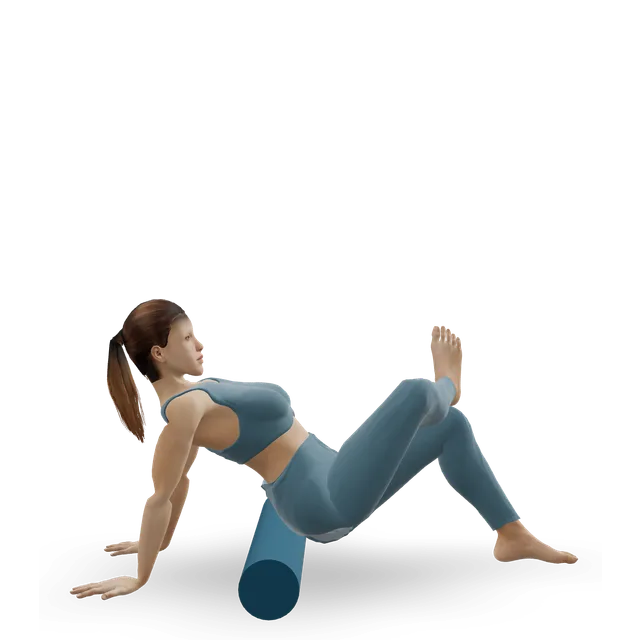
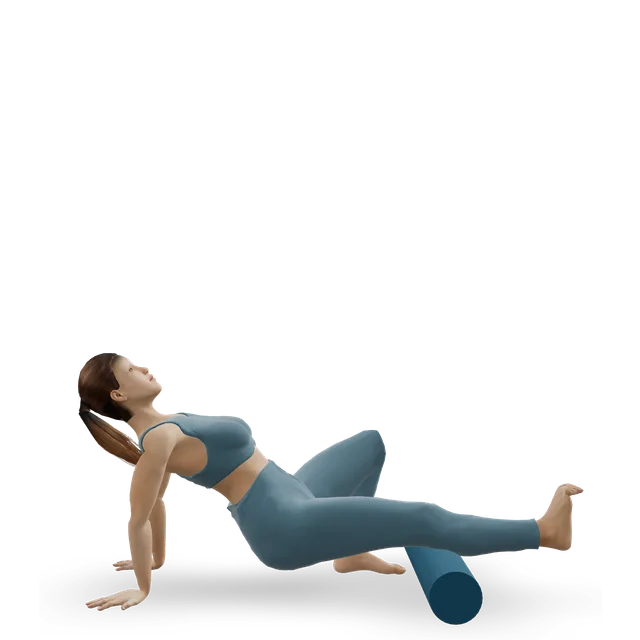
Roll the outer part of the buttock and the front of the thigh slowly. With a ball, keep it moving and off the middle of the buttock, where the sciatic nerve runs: one case report describes a nerve injury there. Keep balls out of the groin and belly, and skip rolling a sore outer hip.
Source 12
We found no study showing that emotions are stored in the hips, and body-based trauma therapies have only preliminary evidence. Feeling emotional during slow stretching is common and normal.
The buttocks (the gluteal muscles, with the piriformis deep under them); the hip flexors at the front of the hip (the iliopsoas, and the rectus femoris of the thigh); the outer hip, where the buttock muscles' tendons attach to the bony point at the side of the hip, under the IT band; and the inner thigh. Our muscle guides cover each one.
Hips can feel tight without the muscles being short. Our psoas and hip flexor pain guides explain why a tight feeling at the front of the hip hasn't been shown to cause back pain, and why strength work matters as much as stretching.
Rolling improves range for a short time, mainly by changing how much stretch you can tolerate and how sensitive the area is. It doesn't lengthen or release fascia: the IT band's stiffness didn't change with rolling or stretching, and rolling the buttock muscles improved hip range more than rolling the IT band itself, which suggests the muscle, not the band, is what responds. Dense fascia such as the sheet down the outside of the thigh needs forces far beyond a roller to change shape.
The sciatic nerve runs through the middle of the buttock. In one case report, a woman injured it after self-massage there with a massage ball. A case report shows this can happen, not how often.
Source 12
Osteoarthritis of the hip joint, where exercise is the main treatment; a painful tendon at the outer hip, where education and exercise work; pain that comes from the back, such as sciatica; and the causes in the warning signs below, such as a broken hip, a joint infection, and in children, hip problems that may only show as a limp or knee pain.
A meta-analysis of 26 high-quality trials found foam rolling gave a large short-term gain in range against no exercise, the same as stretching. Vibrating rollers added nothing, and how long or how fast people rolled made no clear difference.
Source 1
In 34 people, rolling the outer thigh 3 times for 20 seconds improved hip range straight away and at 3 minutes, but not at 10 minutes. In 25 trained men, rolling the front of the thigh for 60 or 120 seconds raised hip bending by about 19 degrees and hip extension by about 9, gains that had faded within 10 to 20 minutes; 120 seconds did more than 60.
In 27 people, rolling the buttock muscles improved the hip's inward range by 14.8%, while rolling the IT band itself changed it by 2%. In 23 people, 2 minutes of rolling the front of the thigh changed hip extension by less than 2 degrees.
In 11 studies (290 people, average age 24), rolling programmes improved range moderately, more when they lasted over 4 weeks. Rolling 5 times in a week improved a lunge stretch, and the gain had gone after a week off. Across 85 studies, stretching programmes and rolling programmes both improved range, with stretching better in programmes of 4 weeks or less, and in 11 trials (452 people) strength training improved range as much as stretching.
In 30 people, neither rolling nor stretching changed the IT band's stiffness on ultrasound. Our IT band guide explains why it barely stretches.
Source 4
NICE recommends exercise and weight management first, and says to consider hands-on therapy only alongside exercise. In 35 people with mild to moderate hip osteoarthritis, 4 weeks of daily home rolling or vibration eased pain when walking more than exercise alone, with no other differences. A retrospective study found more people reached a meaningful drop in pain with rolling, but that kind of study can't show cause.
In 204 people with a painful tendon at the outer hip, 14 sessions of education and exercise over 8 weeks helped 77%, against 58% after a steroid injection and 29% with wait and see, and stayed better at a year. Our outer hip pain guide has the plan, and advises skipping outer-thigh rolling while the bony point is sore.
Source 11
In a pilot trial of 16 people with IT band syndrome, adding myofascial release to hip strengthening eased pain a little more at 2 weeks. For back pain, hands-on release of the psoas added to physiotherapy didn't ease pain more in 40 people, and release of the diaphragm and iliopsoas eased pain at rest by about 2 points out of 10 more than a fake release in 42 people, measured at the end of treatment. Our psoas guide covers deep release.
In 26 active adults, a half-kneeling stretch with the pelvis tucked under lowered the hip flexors' resistance to stretch, while the usual lunge stretch barely changed it. The trial used 2 holds of 30 seconds.
Source 26
Steps and dose from the move's page; pausing for a few breaths is our editorial suggestion. Keep a ball off the middle of the buttock, where a sciatic nerve injury followed ball self-massage in one case report (Cho 2019). The extra range from rolling fades within 10 to 20 minutes (D'Amico 2021, Monteiro 2019), so stretch and strengthen straight after.
Loading the 3D figure…
The movement on the figure: Glute and piriformis foam rolling
Each dose names its trial or move page, or is our editorial starting point. Doses are starting points, not prescriptions.
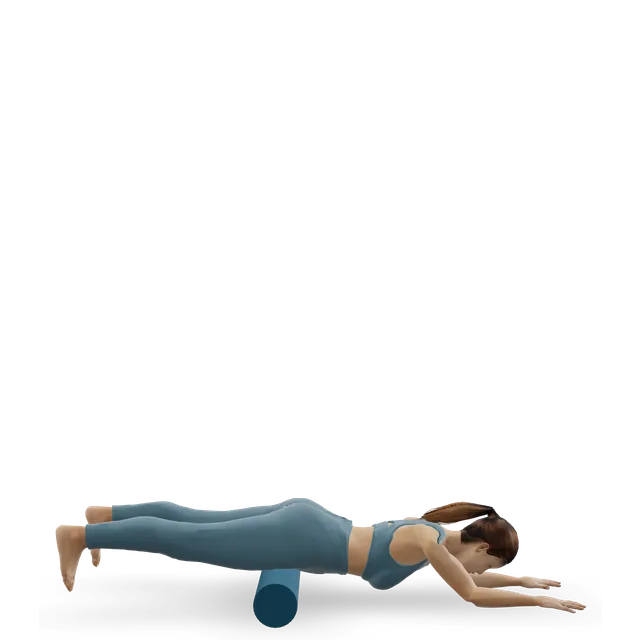
Roll the front of the thigh for about 90 seconds a side, the move page's dose, staying off the kneecap and short of the crease at the top of the thigh. If you like pressure at the front of the hip, roll your thighs, not your belly, as our psoas guide puts it.
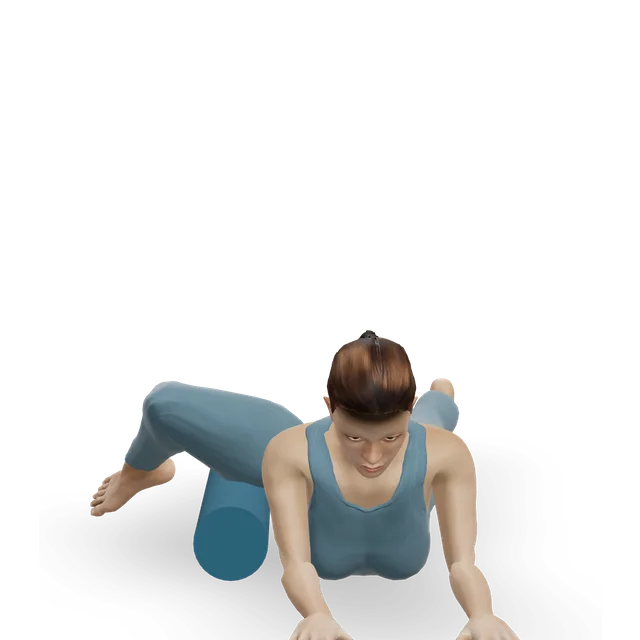
Rest the inner thigh on the roller about halfway between the knee and the groin, for about 90 seconds a side, the move page's dose, and never roll hard into the groin crease.
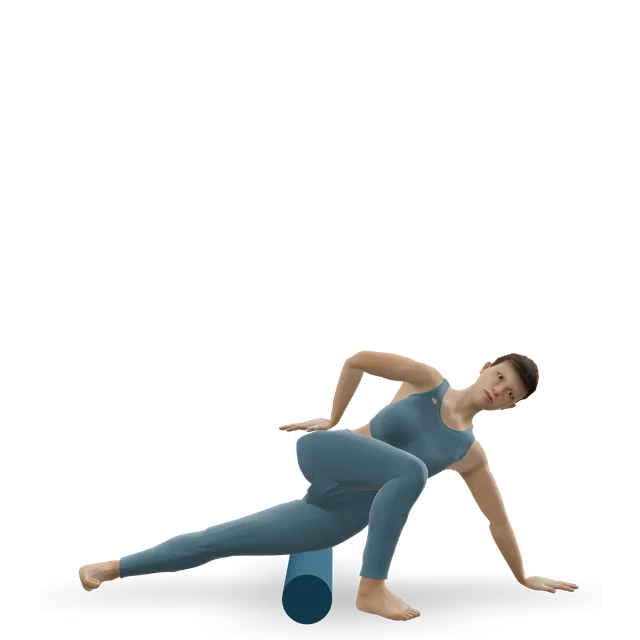
Roll the outer thigh gently, if at all, and skip it if the bony point at the side of your hip is sore: that's usually a tendon problem, and education and exercise treat it. Rolling won't lengthen the IT band.
The extra range from rolling fades within 10 to 20 minutes, so stretch and strengthen straight after. For the front of the hip, the tucked half-kneeling stretch: 2 holds of 30 seconds each side, the dose from its trial.
Rolling programmes did better over more than 4 weeks, and strength work through a full range improves range as much as stretching. Two or 3 sessions a week is our editorial starting point; the hip release routine below puts it together.
About 90 seconds per muscle, each move page's dose; roll the outer thigh gently, if at all, and skip it when the outer hip is sore.
Use them straight after rolling; skip the figure-four stretches if the outside of your hip is sore.
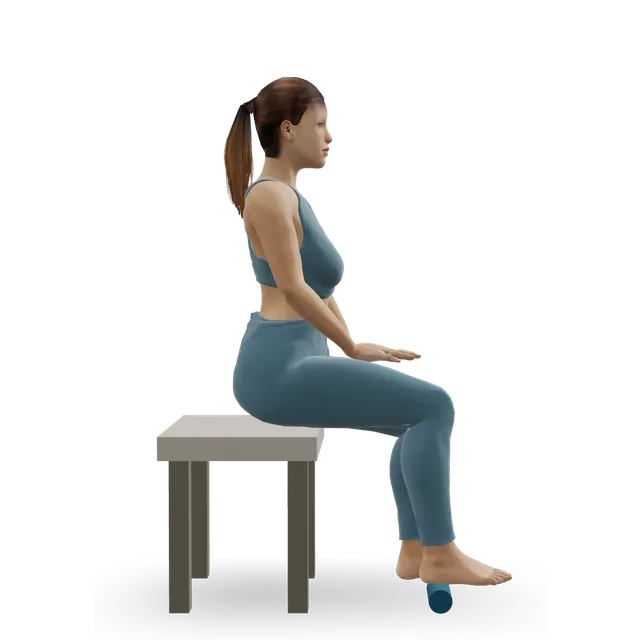
 3D demoHalf-kneeling hip flexor stretchBeginner · No equipment
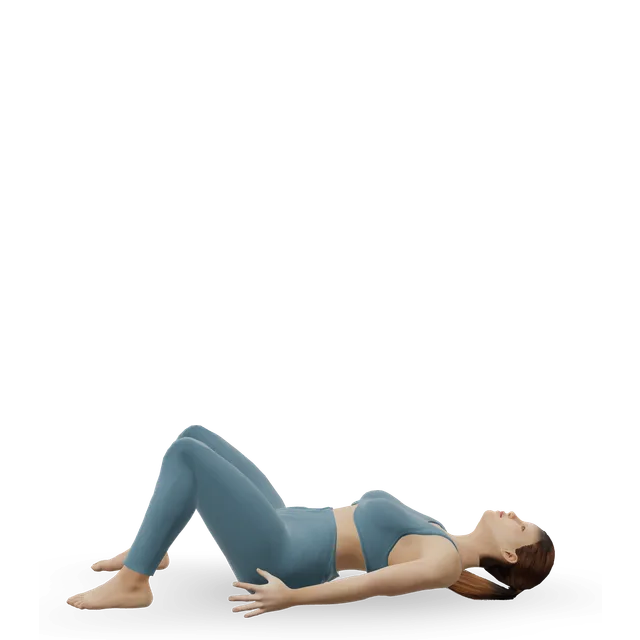 3D demoLying figure-four stretch (ankle on the knee)Beginner · No equipment
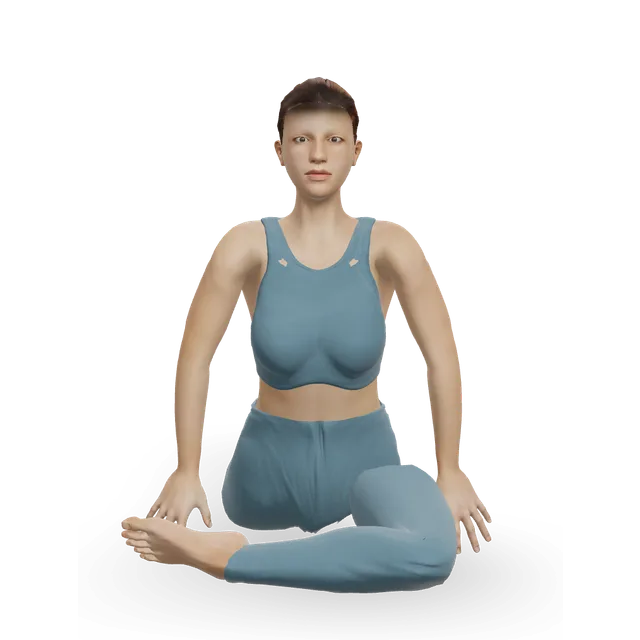
 3D demoReclined figure four (eye of the needle, Sucirandhrasana)Beginner · No equipment
 3D demo90/90 switchIntermediate · No equipment
 3D demoHip windshield wipersBeginner · No equipment
Strength through a full range keeps the range you gain; with outer hip pain, use the outer hip pain guide's plan instead of the side-lying moves.
The hip release routine rolls the buttocks and thighs, stretches while the extra range lasts, then strengthens. The legs routine rolls and stretches from feet to hips, and the hip flexor routine pairs a stretch with strength work.
Stiff hips: a few minutes of rolling the buttocks and thighs, two stretches while the extra range lasts, then the strength work that keeps it. About 15 minutes.
15 minBeginner7 movesA foam rollerRoll then stretch each part of the leg, feet to hips, and finish with springy calf bounces. About 20 minutes.
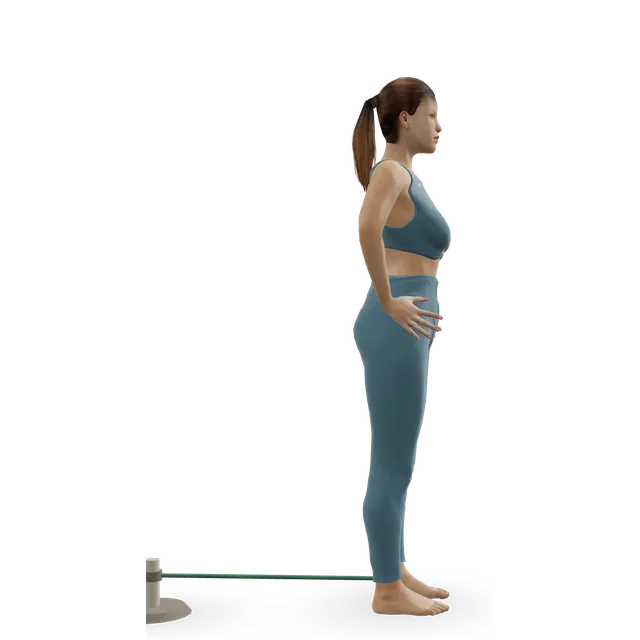
20 minBeginner14 movesA massage ball, A foam rollerHips that feel tight: a tucked hip flexor stretch, then band knee drives, leg raises, dead bugs, bridges and lunges. Strength through range loosens hips too.
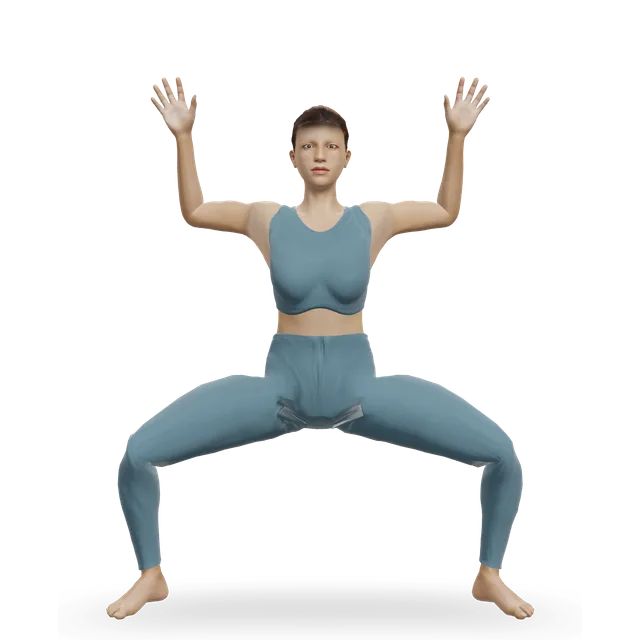
15 minBeginner8 movesA band, An anchor pointA 15-minute hip opener: 90/90 switches, windshield wipers, CARs, Cossack squats, frog and pigeon.
15 minIntermediate8 movesA wallA hip-opening yoga sequence: low lunge, lizard, goddess, pigeon, bound angle and happy baby.
20 minBeginner7 movesNo equipmentIn an expert consensus of 37 researchers, open wounds and broken bones were reasons not to roll, and inflammation, a clot, a bone infection or bone forming in a muscle after an injury were reasons for caution.
Source 29
Keep the pressure light if you take blood thinners, which make bruising more likely, and ask first if you have osteoporosis or a nerve condition such as peripheral neuropathy: the NHS lists these among the reasons hands-on treatments may not be safe.
In pregnancy, don't press on your bump, and after the first trimester keep time lying flat on your back short. After a hip replacement, follow your surgical team's limits before deep bends and crossed-leg stretches, and before rolling near the scar.
Source 33
Source 17
We found no study showing that emotions are stored in the hips. Body-based trauma therapies have only preliminary evidence of mixed quality: a review of somatic experiencing found 16 studies, and a review of trauma releasing exercises found 22 studies whose methods weren't consistently rigorous. Feeling emotional during slow stretching and breathing is common and normal; that's your nervous system responding in the moment, not a stored memory leaving the tissue. Our psoas guide checks the same claim about the psoas.
The IT band's stiffness didn't change with rolling or stretching, rolling it barely changed hip range while rolling the buttock muscles did, and dense fascia doesn't change shape at these forces.
Hands-on psoas release added little to physiotherapy for back pain in two small trials. Our psoas and hip flexor pain guides explain why tight isn't the same as short, and why strength work matters.
Outer hip pain is usually a tendon problem, and education and exercise beat a steroid injection for it. Our outer hip pain guide advises skipping outer-thigh rolling while the bony point is sore.
Source 11
We found no trial of fascia release for body shape. Two reviews of Chinese massage (tuina) trials, all run in China and added to diet, exercise or medicine, found waists 3.6 to 6.2 cm smaller than without massage, but none of the trials was blinded and the certainty was low to very low. Our fascia blasting verdict covers the cellulite claims.
Roll the outer buttocks and the front of your thighs slowly, about 90 seconds each, then stretch and strengthen straight away. The extra range from rolling fades within 10 to 20 minutes, and regular stretching or strength work makes it last.
No. Rolling or stretching didn't change the IT band's stiffness in a trial, and dense fascia needs far more force than a roller to change shape. Rolling changes how far you can move for a while, through the nervous system.
Yes, on the outer part of the buttock, keeping it moving. Don't park it deep in the middle of the buttock, where the sciatic nerve runs (one case report describes a nerve injury there), and stop if tingling spreads down the leg.
Not by pressing into your belly or groin. Roll the front of your thighs, then do a half-kneeling stretch with your tailbone tucked under, 2 holds of 30 seconds, which lowered the hip flexors' resistance to stretch in a trial, and strengthen. Our psoas guide covers deep release.
Not if the bony point on the outside of your hip is sore: that's usually a tendon problem, and education and exercise beat a steroid injection for it. Rolling the IT band barely changed hip range in a trial, while rolling the buttock muscles did more.
Rolling helps for minutes. Lasting change takes weeks: rolling programmes longer than 4 weeks improved range more than shorter ones, and stretching worked over shorter programmes too. Two or 3 sessions a week is a sensible start.
We found no study showing that emotions are stored in the hips. Feeling emotional during slow hip stretches and breathing is common and normal, but body-based trauma release methods have only preliminary evidence.
Both work for range: strength training through a full range improved flexibility as much as stretching in 11 trials. Strength also helps hip pain, where exercise is the main treatment.
One small trial of 35 people found daily home rolling eased pain when walking over 4 weeks. NICE says to consider hands-on treatment for hip osteoarthritis only alongside exercise.
A roller suits the thighs and buttocks; a ball gives more focused pressure on the buttock but must keep moving. No trial has compared them at the hip, and vibrating rollers added nothing in a large review.
Call 999 if you can't stand or put weight on the leg after a fall. Get urgent help for a hot, swollen hip or a fever, a child with a limp or sudden hip, thigh or knee pain, or numbness around your genitals or bottom.
Not that any trial shows. Reviews of Chinese massage added to diet and exercise found slightly smaller waists, but the trials weren't blinded, the certainty is low to very low, and none tested fascia release. Our fascia blasting verdict covers the cellulite claims.
Movement education, not medical advice. Stop for sharp or increasing pain, numbness or tingling, and get individual advice if you are pregnant, after an injury or surgery, or managing a health condition. Health disclaimer.