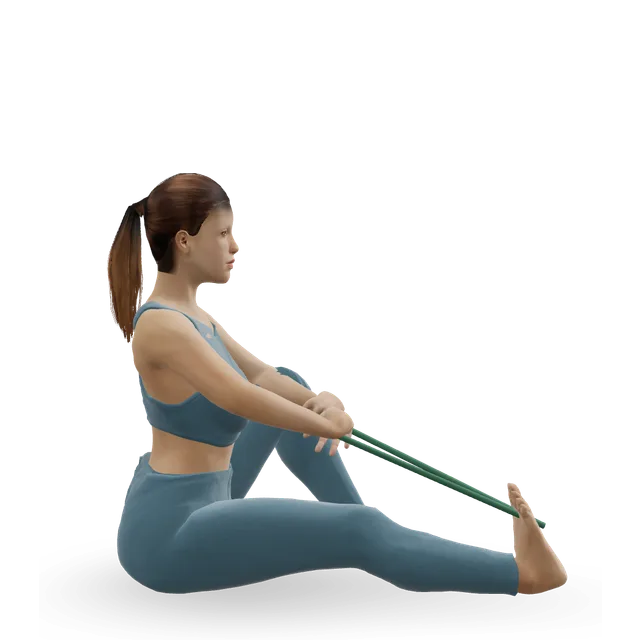
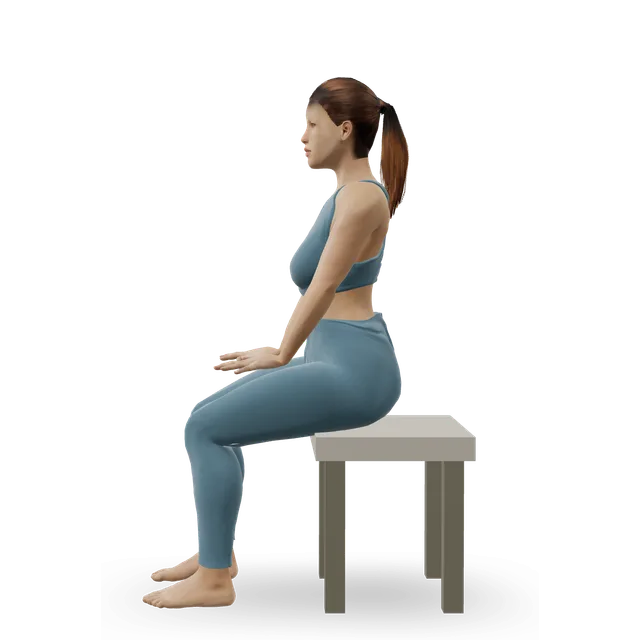
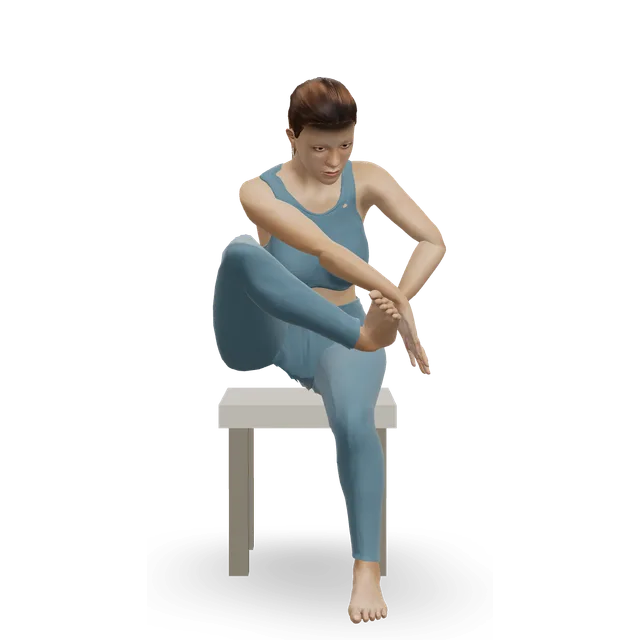
Rolling buys a few minutes
On the calf, one 30-second roll did nothing, 3 rounds of 30 seconds raised ankle bend, and the gain was gone within 30 minutes. Across 26 trials, rolling gave about the same short-term range as stretching.
Fascia guide
Calf release usually means rolling your calves on a foam roller, a massage stick, a ball or a massage gun, then stretching them. It can make your ankles bend more freely for a few minutes, about as much as stretching does, but it doesn't release or lengthen fascia: the change is mostly in how far your nervous system lets you move.
The honest headline: over weeks, the calf rolling trials disagree, while regular stretching and calf strength work both build lasting range. And a calf that is swollen, warm or throbbing isn't a rolling job: it can be a clot.
This guide shows how to check your ankle bend, roll and stretch both calf muscles and use the extra range, what trials found for tight calves, soreness and night cramps, where not to press, and when calf pain needs a doctor.
On the calf, one 30-second roll did nothing, 3 rounds of 30 seconds raised ankle bend, and the gain was gone within 30 minutes. Across 26 trials, rolling gave about the same short-term range as stretching.
Calf rolling raised ankle range without changing the calf muscle's measured stiffness. Dense fascia needs far more force than a roller applies to change shape, though softer layers may shift a little, and the effect runs mostly through the nervous system.
A 2022 review found that calf rolling programmes didn't improve ankle bend, from just 3 measures, but two later trials did find gains: after 2 weeks of rolling 6 days a week, and after 5 weeks of rolling added to stretching.
Calf stretching adds about 2 to 3 degrees of ankle bend, stretching programmes did better than rolling programmes over 4 weeks or less, and strength training through a full range improves range as much as stretching.
Rolling eased soreness after exercise a little, mostly from the next day. A massage gun straight after hard calf exercise made soreness slightly worse for a few hours. For night cramps, calf stretching on its own made little or no difference.
It can be a clot, which needs an urgent check. In 141 people scanned for a suspected calf tear, about 1 in 10 had a clot instead.
The gastrocnemius, with two heads, crosses the knee; the soleus beneath it doesn't; both join the Achilles tendon, with the small plantaris. A straight-knee stretch works the gastrocnemius more and a bent-knee stretch the soleus: in a trial of calf scraping and stretching, the clearest gains showed with the knee bent. Our muscle guides cover the anatomy.
Source 16
Limited ankle bend, tightness after running or long standing, soreness after unfamiliar exercise, or night cramps. A tight, painful calf can also be a tear, a clot, an Achilles problem, narrowed arteries or exertional compartment syndrome (pressure building in the muscle during exercise): our calf pain guides cover those.
Rolling for 90 seconds or more raised ankle range without changing the calf's measured stiffness, and in another trial range and pain thresholds changed while tissue hardness didn't, which the researchers put down to a change in how pain is felt. That fits the evidence that rolling works mainly through the nervous system.
In 50 people with tender spots (latent trigger points) in the outer calf, 90 seconds of still pressure on a roller made the spot a little less tender, but neither it nor slow rolling did better than a fake laser treatment. Our trigger points guide explains what knots are and aren't.
Source 18
A meta-analysis of 26 trials found a large short-term gain in range against no exercise, the same as stretching, and 20 studies found single bouts of stretching and of rolling equal at every check up to 20 minutes. On the calf, 3 rounds of 30 seconds raised ankle bend a little, 10 rounds a little more, and both were back to baseline at 30 minutes. A roller stick raised ankle range by about 4% in 14 people, close to stretching's 5%, and the calf was no weaker afterwards.
One 30-second roll did nothing on the calf, while 3 rounds of 30 seconds did. In a review of 22 studies, about 90 seconds per muscle looked like the minimum for easing soreness.
In 11 studies (290 people), rolling programmes improved range moderately overall, but the calf results, just 3 measures, showed no gain, in a search that ended in September 2021. Since then, 42 people who rolled their calves 3 times for 60 seconds, 6 days a week for 2 weeks, gained ankle range that was still there a week later, though the gain was slightly smaller than the test can reliably detect and the study wasn't blinded. In 51 young adults, adding rolling to 5 weeks of stretching beat stretching alone for ankle bend, clearly on the left ankle, and for jumping.
Across 85 studies, stretching programmes improved range more than rolling programmes when they lasted 4 weeks or less.
In 5 trials, calf stretching increased ankle bend by about 2 to 3 degrees, a small gain whose importance in daily life is unclear.
Source 8
In 11 trials (452 people), strength training through a full range improved range of movement as much as stretching.
Source 10
One 5-minute session of compression release by a therapist beat scraping and no treatment for standing ankle bend in 44 people with stiff ankles. Scraping did no better than calf stretching in 60 people, and in 13 people one session of scraping, rolling or stretching all raised ankle range. Four minutes of active release technique lowered calf stiffness for 5 minutes but didn't change ankle range in 24 people.
Five minutes of a massage gun raised ankle range by 5.4 degrees in 16 men, and 2 minutes raised it in 15 men. But across 12 trials, guns didn't clearly ease soreness after hard exercise (very low certainty), though jump height recovered a little better (low certainty), and in 65 adults, 5 minutes straight after hard calf exercise made soreness slightly worse for up to 4 hours.
Across 16 trials (515 people), rolling after exercise eased soreness slightly straight away and more at 24 to 72 hours. In 8 men, 20 minutes of rolling after heavy squats eased thigh tenderness over the next 2 days. In 11 runners, vibrating rollers, plain rollers and stretching did about the same.
A Cochrane review found that calf and hamstring stretching before bed may ease how bad night cramps are (3 trials, 201 people, low certainty), while calf stretching alone made little or no difference. In 80 adults over 55, nightly calf and hamstring stretches for 6 weeks cut cramps by about 1.2 a night. The NHS says regular calf stretching may help but may not stop cramps completely; our leg cramps guide has the routine.
Almost all these trials were in young, healthy, active people, measured over minutes to weeks. None tested rolling for calf pain from a condition, and none compared calf rolling with a fake roll.
The roll dose is the calf rolling move page's, and the 10 rocks are the knee-to-wall move page's dose. The straight-knee holds come from a 5-week trial (Patti 2025); the soleus holds, the calf raises and the check are our editorial starting points. Several calf trials measured ankle bend with this knee-to-wall test (Warneke 2024, Seever 2022, Rowlett 2019). No trial has tested this sequence.
Loading the 3D figure…
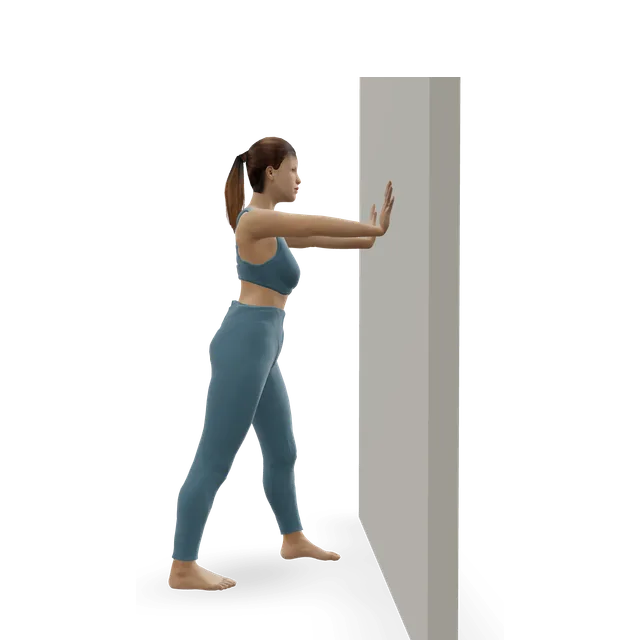
The movement on the figure: Knee-to-wall ankle rock
Each dose names its trial or move page, or is our editorial starting point. Doses are starting points, not prescriptions.
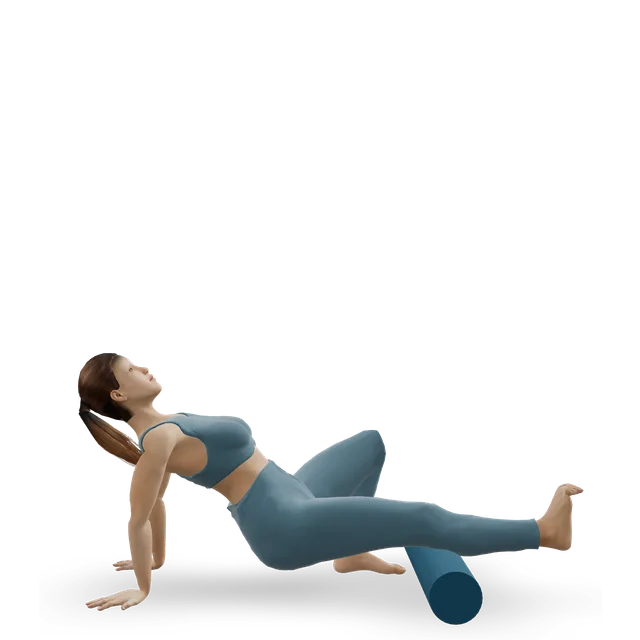
About 90 seconds per calf, the move page's dose, at a pressure you can breathe through: in a thigh trial, pressures of about 4, 6 and 8 out of 10 gave the same gain. Our foam rolling guide has the full technique.
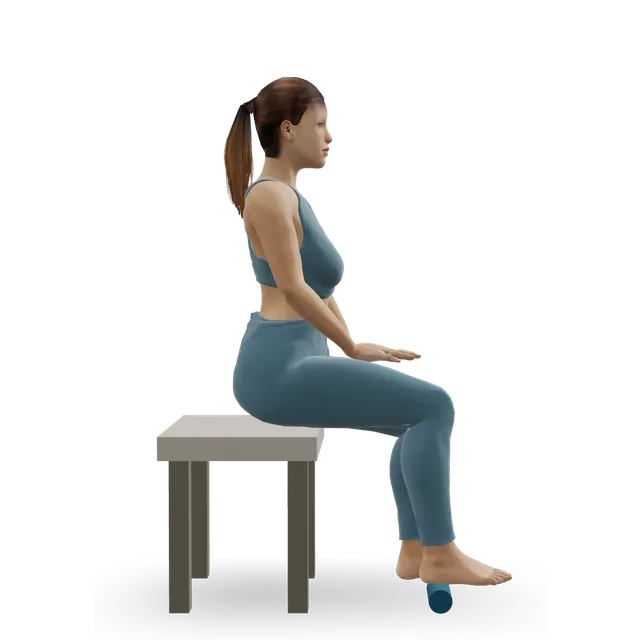
A roller stick for 3 rounds of 30 seconds raised ankle range about as much as stretching. For a ball, sit with it under the calf and cross the other leg on top, as our massage balls guide suggests.
Source 20
Our massage gun guide's starting point is 30 seconds to 2 minutes per muscle on a low setting; trials that raised ankle range used 2 to 5 minutes. Skip it straight after hard calf work, when it made soreness slightly worse.
3 holds of 30 seconds of a straight-knee wall stretch, the stretching dose in a 5-week trial, then a bent-knee stretch for the soleus. Our fascia stretching guide suggests holds of 30 to 60 seconds on most days.
Our editorial starting point: stretch on most days, and roll and strengthen 2 or 3 times a week, for more than 4 weeks. Rolling programmes did better when they lasted over 4 weeks, the 5-week trial used 4 days a week, and strength work through a full range improves range as much as stretching.
Keep off the back of the knee, the Achilles tendon, varicose veins and bruises. After a calf strain, the NHS says to avoid heat, alcohol and massage for the first couple of days, and with varicose veins it advises trying not to injure your legs.
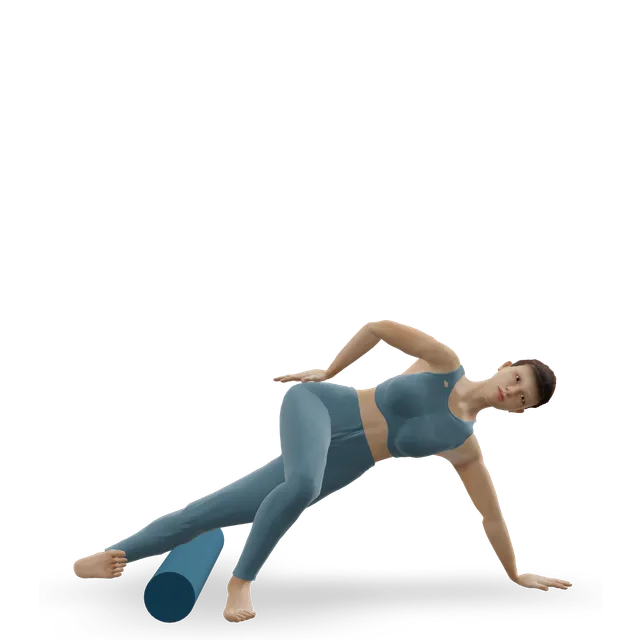
About 90 seconds each for the calf and the outer shin, their move pages' dose, and never on a swollen, red or throbbing calf.
Use them straight after rolling: a straight-knee and a bent-knee stretch each time.
Strength through the full range keeps the ankle range you gain; build up from slow raises.
 3D demoSlow calf raiseBeginner · A wall
 3D demoSeated bent-knee calf raise (soleus raise)Beginner · A bench or box
 3D demoSingle-leg calf raise from a stepIntermediate · A step + A wall
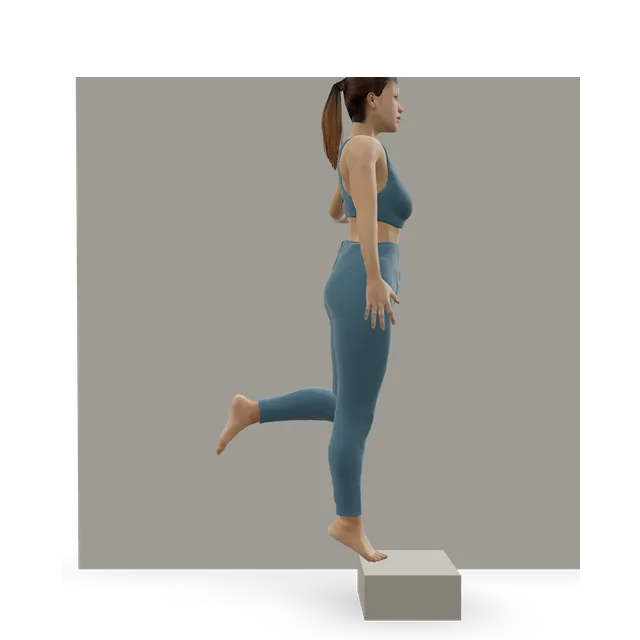 3D demoEccentric heel dropIntermediate · A step
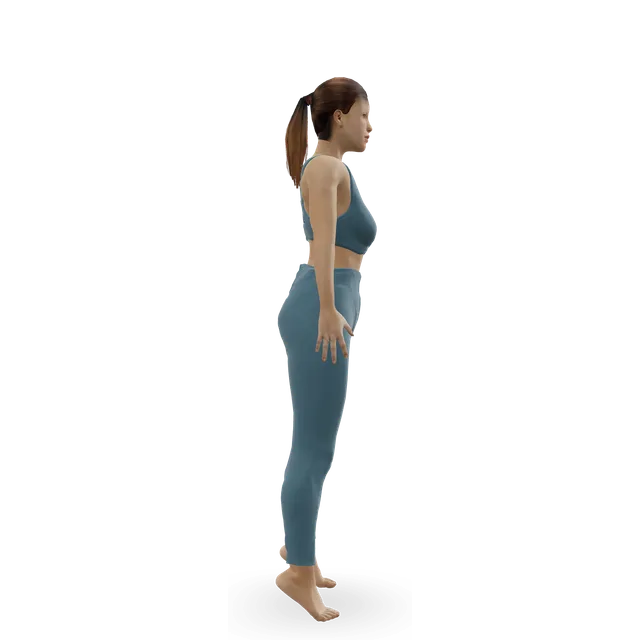 3D demoIsometric calf raise holdBeginner · A wall
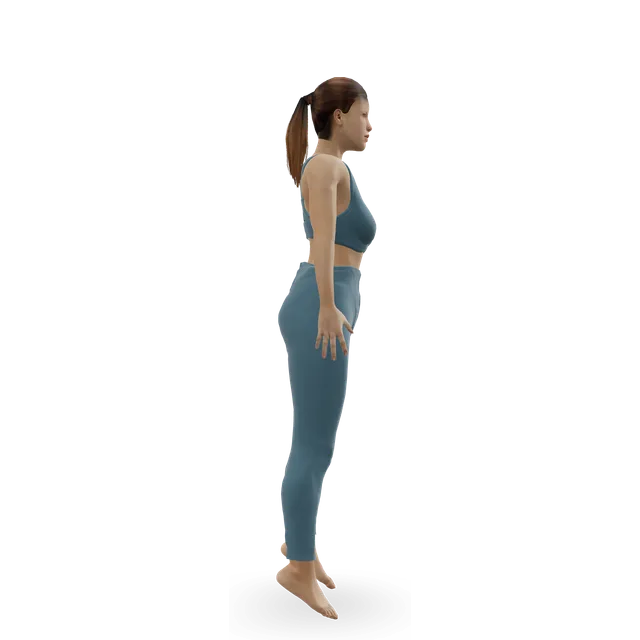 3D demoCalf springsBeginner · No equipment
The legs routine rolls and stretches from the feet up, starting with the calves; the calf workout and the springy starter build calf strength.
Roll then stretch each part of the leg, feet to hips, and finish with springy calf bounces. About 20 minutes.
20 minBeginner14 movesA massage ball, A foam rollerA 25-minute calf workout with a step and a dumbbell: single-leg raises for the big calf muscle, then seated raises for the soleus, with gym swaps for each move.
25 minIntermediate7 movesA wall, A stepSeven stretches for after a run: calves, soleus, quads, hip flexors, hamstrings and glutes.
10 minBeginner7 movesA wallA 15-minute calf pump routine for varicose veins and heavy, swollen legs: ankle pumps, calf raises, a brisk walk, calf stretches and legs up to finish.
15 minBeginner10 movesA bench or box, A wallPlantar fascia and calf stretches, a gentle foot roll and the towel heel raise: the exercises the 2023 heel pain guideline supports.
8 minBeginner7 movesA bench or box, A massage ballA beginner's springy session: calf strength first, then heel drops, calf springs and gentle bounces, building towards skipping and pogo hops.
20 minBeginner11 movesA wall, A stepIn an expert consensus of 37 researchers, open wounds and broken bones were reasons not to roll, and inflammation, a clot, a bone infection or bone forming in a muscle after an injury were at least reasons for caution.
Source 35
Keep the pressure light, or ask your doctor first, if you take blood thinners, which make bruising more likely, or have a nerve condition such as peripheral neuropathy that leaves the skin numb: the NHS lists these among the reasons hands-on treatments may not be safe.
Clots are more likely in pregnancy and for 6 weeks after giving birth, so never roll or massage a swollen or painful calf: in a case report, a pregnant woman collapsed with a clot in her lungs shortly after a leg massage. In later pregnancy, avoid lying flat on your back for more than a few minutes. Gentle rolling in other positions hasn't been tested.
Calf or leg pain or swelling with breathlessness or chest pain. It could be a clot that has reached the lungs. Do not drive yourself to A&E.
Source 14
Throbbing pain in one leg (rarely both), usually the calf or thigh; swelling in one leg (rarely both); red, blue or darkened skin around the painful area, which may be harder to see on brown or black skin; or swollen veins. This can be a deep vein thrombosis (DVT). It is more likely after surgery, a hospital stay, 3 or more days in bed, a journey of over 4 hours, pregnancy or a recent birth, cancer, a previous clot, or contraception or hormone replacement therapy (HRT) containing oestrogen.
Source 14
A sudden, sharp pain at the back of the lower leg, often described as feeling like being hit on the back of the heel, then trouble walking, putting your full weight on the leg or standing on tiptoe, can be an Achilles tendon rupture: get it checked the same day. After any calf injury, get help from NHS 111 if it's very painful or you can't put weight on it or walk more than a few steps, and call 999 or go to A&E if the injured area is numb, tingling or has pins and needles, or the skin has turned blue or grey or feels cold. Our Achilles rupture and calf pain guides cover what happens next.
Cramps that disturb your sleep, come with numbness or swelling, or last longer than 10 minutes. Calf pain that isn't improving after a few weeks, or that comes on when you walk and eases with rest, needs checking too: our calf pain when walking guide explains why.
Source 31
The calf's measured stiffness didn't change after rolling, while ankle range did. Dense fascia needs far more force than a roller gives, and the effect is mostly in the nervous system.
In a thigh trial, rolling pressures of about 4, 6 and 8 out of 10 gave the same range. Use a pressure you can breathe through.
Source 32
The evidence points both ways and misses the point: in a forearm study, hands-on massage slowed blood flow and lactate removal, while in 60 men, blood lactate 30 minutes after a minute of hard squats was lower with rolling than with rest. Neither shows 'toxins' leaving, and UK advertising rules require evidence for such claims.
Across 12 trials, massage guns didn't clearly ease soreness, on very low certainty evidence, and 5 minutes straight after hard calf exercise made soreness slightly worse for a few hours.
Calf stretching on its own made little or no difference in trials. Calf and hamstring stretching before bed eased how bad cramps were a little, on low certainty evidence.
Calf release surgery usually means a gastrocnemius recession, an operation that lengthens part of the calf's tendon, studied for stubborn heel pain in 5 trials of 150 patients. It isn't fascia release; our plantar fasciitis guide covers heel pain.
Source 45
Roll each calf for about 90 seconds, then do a straight-knee and a bent-knee wall stretch while the extra range lasts, and finish with calf raises. The extra range fades within about 10 to 30 minutes, so lasting change comes from regular stretching and strength work for more than 4 weeks.
No. Calf rolling raised ankle range without changing the calf's measured stiffness, and dense fascia would need far more force than a roller gives. The change is mostly in your nervous system.
About 90 seconds per leg: in a trial, one 30-second roll did nothing, while 3 rounds of 30 seconds raised ankle range. Harder rolling didn't add anything.
For a few minutes of range they do about the same. Over weeks, stretching has the stronger evidence and the calf rolling trials are mixed, so stretching is the one not to skip; doing both is fine.
Either. Before, it loosens you up for a few minutes, and a roller stick on the calf didn't weaken it in a trial, but keep it brief before jumping or sprinting, as our foam rolling guide advises. After, it may ease soreness from the next day.
Yes, briefly: our massage gun guide's starting point is 30 seconds to 2 minutes per muscle on a low setting, and trials that raised ankle range used 2 to 5 minutes. Skip it on a swollen or painful calf, over varicose veins, on a fresh strain, and straight after hard calf work.
Knots are tender spots, not lumps to break up, and in one trial pressing a calf knot on a roller did no better than a fake treatment. A tender calf that lasts for weeks, or gets worse, needs checking: our calf pain guide explains the causes.
Calf stretching is part of the usual plan for heel pain, and our plantar fasciitis guide covers it. Calf release surgery for heel pain is an operation, a gastrocnemius recession, used only for stubborn cases.
No. A swollen, warm, red or darkened, throbbing calf can be a blood clot, which needs an urgent GP appointment or a call to 111 the same day, and 999 if you're short of breath or have chest pain. About 1 in 10 people scanned for a suspected calf tear had a clot instead.
Calf stretching on its own made little or no difference in trials. Calf and hamstring stretches before bed eased how bad cramps were a little; our leg cramps guide has the bedtime routine.
No. A sudden snap, pop or feeling of being hit at the back of the calf or heel needs checking the same day: it can be an Achilles rupture or a calf tear. Avoid massage for the first couple of days after a strain.
Movement education, not medical advice. Stop for sharp or increasing pain, numbness or tingling, and get individual advice if you are pregnant, after an injury or surgery, or managing a health condition. Health disclaimer.