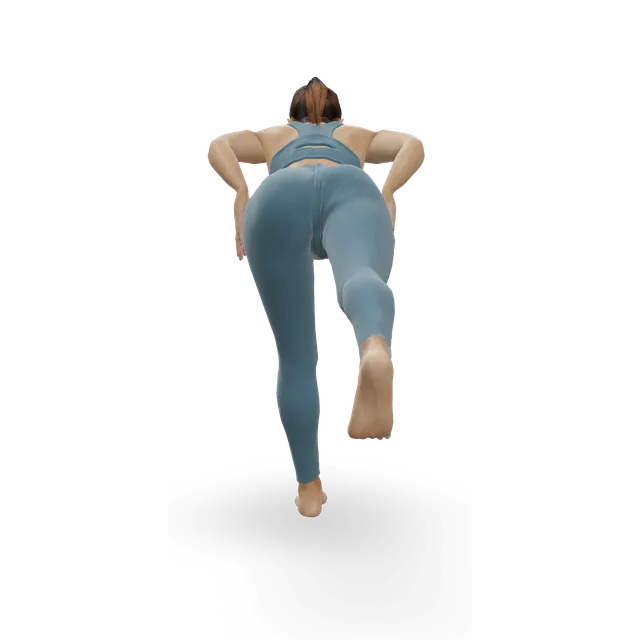
Yoga guide

Yoga for patellar tendinopathy (jumper's knee): loading the tendon, poses to change, kneeling and deep bends, and a class

No trial has tested yoga for patellar tendinopathy, which most people call patellar tendonitis or jumper's knee. What helps is loading the tendon in stages (holds first, then slow strength, then springy jumping, then sport) while keeping tendon pain at 3 out of 10 or less, and patience: it usually takes months. Yoga fits around that plan, as a way to stay active with the tendon in mind.

This guide covers what loads the patellar tendon in yoga, kneeling and deep knee bends, the poses to change, the pain rule, what the evidence shows, the warning signs, and a free 25-minute class with the plan's first-stage hold built in. Our jumper's knee guide has the full plan and its stages. If you felt a sudden pop below the kneecap and can't straighten your knee, go straight to the warning signs.

The short version

No trial has tested yoga for jumper's knee

Our searches found none, published or registered. The nearest are a study of yoga videos in 24 teenagers with front-of-knee pain, only one of whom had this tendon problem, and a weak trial of Baduanjin, a Chinese qigong routine. Yoga can keep you moving and strong while the tendon settles; it isn't the treatment.

Sources 1, 2, 3

Loading the tendon in stages is the treatment

Holds first, then slow strength, then springy jumping, then sport: our jumper's knee guide has the plan. In the largest trial, 76 athletes did better at 24 weeks with that staged plan than with painful decline squats. A Dutch guideline puts exercise first for at least 12 weeks, though a 2025 Cochrane review found only 7 small trials, all of low or very low certainty.

Sources 4, 5, 6

Keep tendon pain at 3 out of 10 or less

That's the ceiling the largest trial used for its loading, and our jumper's knee guide applies it to the rest of your activity, yoga included. The tendon should settle back to its usual level by the next morning, as the pain-monitoring approach and NHS leaflets advise.

Sources 4, 7, 8

Shallow standing poses can stay; jumping and deep bends wait

In one study of 20 older adults, chair pose and the back leg of a crescent lunge loaded the thigh muscles about as much as the peak of ordinary walking. In healthy adults, a two-leg squat to 60 degrees was among the lowest-loading rehab exercises, and single-leg decline squats, hops and jumps the highest.

Sources 9, 10

Kneeling: pad it or swap it

In small studies of healthy people, kneeling pressure landed mostly on the patellar tendon and the bump below it rather than on the kneecap. No study has tested kneeling in people with the condition, so a folded blanket or a standing version is our suggestion.

Sources 11, 12, 13

Think in months, and keep moving

Every trial cut back jumping and painful activity while loading the tendon, and an NHS leaflet says "It is important not to rest completely." In elite athletes who had it, symptoms had lasted 32 months on average; five years after the largest trial, 76% felt recovered.

Sources 4, 14, 15, 16

Patellar tendinopathy, and what yoga asks of the tendon

Pain below the kneecap

Pain at the bottom of the kneecap, where the patellar tendon starts, that rises with the load on the front of the thigh: jumping, landing, squatting and stairs. Patellar tendinopathy is the modern name; patellar tendinitis, tendonitis and jumper's knee mean the same thing, and the NHS describes it as pain between your kneecap and shin, often from repetitive running or jumping. A scan isn't always needed.

Sources 17, 18, 19, 20

Stiff after sitting

Many people notice pain when sitting for a long time with the knee bent, or stiffness of the tendon first thing in the morning or after a long drive.

Sources 21, 14

What else it could be

Pain at the top of the kneecap, worst in deep knee bends, is quadriceps tendinopathy, in the tendon above the kneecap. In children and young teenagers, pain at the bottom of the kneecap is usually Sinding-Larsen-Johansson disease, which mostly affects active 9 to 17-year-olds, and a sore bump below the knee is usually Osgood-Schlatter disease: our pain guides cover both. Pain around or behind the kneecap is usually kneecap pain (runner's knee).

Sources 22, 23

Who gets it

Across 28 studies, about 18% of athletes had it, against 0.1% of the general population: about 1 in 4 volleyball players, 1 in 5 basketball players and 6% of footballers. In elite Norwegian athletes 14% had it, and in Dutch non-elite athletes 8.5%.

Sources 24, 15, 25

What raises the risk

How much you jump and play: in young elite volleyball players, each extra hour of training and each extra set played a week raised the odds, and the total number of jumps may matter more than training hours. A review found no strong or moderate evidence for any other single risk factor.

Sources 26, 27, 28

How long it lasts

Longer than most people expect: on average 32 months in elite athletes and 19 months in non-elite athletes who had it. Fifteen years on, 9 of 17 former athletes had given up their sport because of it. Five years after the largest trial, 76% felt recovered, but almost a quarter didn't. People living with tendon pain often describe it as frustrating and isolating, which is understandable when improvement is this slow.

Sources 15, 25, 29, 16, 30

What yoga asks of the patellar tendon

Low: lying and side-lying poses, sitting with the knees straight or a little bent, and standing with soft knees. Moderate: held standing poses with a bent knee (chair, warrior I and II, goddess, crescent lunge), balances on one leg and slow sun salutations stepping back. High or awkward: jump-backs and jump-throughs, hops, deep loaded squats such as garland, deep single-leg bends and long deep holds in chair pose, and pressure on the tendon when kneeling. This is our reading of the studies on this page; no study has measured a yoga pose in people with the condition.

What the evidence says

No trial has tested yoga for patellar tendinopathy. Loading the tendon carries the evidence, and even that is low certainty.

No yoga trialStrong evidence

Our searches of PubMed, Europe PMC and ClinicalTrials.gov in November 2026 found no trial of yoga for patellar tendinopathy: none of the 70 registered trials for the condition uses yoga.

Source 1

The nearest studies are weakMixed evidence

Eight weeks of yoga videos in 24 teenagers with front-of-knee pain had no comparison group, and only one of them had patellar tendinitis. A trial adding Baduanjin to shockwave treatment in 67 people is in a journal outside the main medical index and reports little detail. Two yoga trials in athletes measured fitness tests or mixed sports injuries, not this tendon.

Sources 2, 3, 31, 32

Staged loading beat painful decline squatsEmerging evidence

In the largest trial, 76 athletes did either staged loading (daily holds, then slow heavy lifting, then jumping, then sport, moving on when a single-leg squat hurt 3 out of 10 or less) or painful decline squats. At 24 weeks, the staged group's knee scores had improved by 28 points on a 0 to 100 scale, against 18. Return to sport (43% against 27%) wasn't clearly different, fewer than half of either group stuck to the programme, and no serious side effects occurred.

Source 4

No loading type clearly winsEmerging evidence

Two 2026 meta-analyses found no exercise better than heavy slow resistance, at low certainty; an earlier one that favoured slow-lowering exercise rested on studies at high risk of bias. Heavy loads did no better than moderate ones in 44 adults, one exercise day a week did as well as three in 52 people, and blood flow restriction training matched heavy slow resistance in 36 men.

Sources 33, 34, 35, 36, 37, 38

Holds ease pain for some peopleMixed evidence

In 6 volleyball players, one session of holds cut squat pain from 7 out of 10 to almost nothing. Later studies were less clear: holds gave more relief straight away than lifting in 20 in-season athletes, but both eased pain about equally over a season in 29, pain fell by under 1 point either way in 21 people, and a review of 10 trials found holds no better than lifting. They're easy to fit in, which is one reason the plan starts with them.

Sources 39, 40, 41, 42, 43

Exercise first, at low certaintyStrong evidence

A Dutch guideline advises exercise as the first choice for at least 12 weeks, with heavy slow resistance preferred and no injections. The 2025 Cochrane review found 7 trials of 211 athletes, all at very low or low certainty, and none measured side effects. A UK military consensus also puts exercise first.

Sources 5, 6, 44

In season, painful squats didn't helpEmerging evidence

Elite volleyball players who kept training and competing did painful decline squats twice a day for 12 weeks, with no effect on knee function. Cutting back jumping is part of every plan that has helped (our reading).

Source 45

Stretching hasn't been shown to treat itMixed evidence

Tighter thigh muscles went with developing it in one study of 138 students. The only trial adding stretching to squats wasn't properly randomised. The UK military consensus found no evidence for stretches as treatment, the Dutch guideline doesn't include them, and one NHS leaflet says stretching the tendon can aggravate the pain.

Sources 46, 47, 44, 5, 14

Relative rest, not complete restEmerging evidence

No trial has tested complete rest. NHS leaflets say cut back what makes it worse but stay active: "Load is needed to aid recovery but overload may worsen your pain." In Achilles tendinopathy, carrying on running and jumping within a pain-monitoring approach did no harm in a trial of 38 people.

Sources 48, 8, 49, 50

Steroid injectionsStrong evidence

In a trial of 39 men, a steroid injection had good short-term but poor long-term effects. The Dutch guideline advises against injections, and the UK military consensus links injections into the tendon with a risk of it tearing.

Sources 51, 5, 44

Yoga and knees in generalEmerging evidence

In knee osteoarthritis, a different and older group, yoga eased pain and improved function at low certainty, and did as well as strengthening exercise in a trial of 117 people. In a German survey, yoga injuries were linked with headstands, shoulder stands and handstands and with practising alone, and no published report links yoga with causing patellar tendinopathy.

Sources 52, 53, 54, 55, 56

What loads the tendon in yoga

Lab studies, mostly in healthy people; no study has measured a yoga pose in people with patellar tendinopathy.

Which exercises load the tendon mostEmerging evidence

In 20 healthy adults, 35 rehab exercises were ranked by the load on the patellar tendon. Walking was lowest; step-ups, step-downs and a two-leg squat to 60 degrees were in the lowest tier; lunges and full squats were in the middle; and single-leg decline squats, hops and jumps were the highest. A 60-degree squat loaded the tendon about half as much as a full squat. The authors advise caution in applying this to people with the condition.

Source 10

Chair pose and other standing posesEmerging evidence

In one study of 20 older adults after 32 weeks of yoga, chair pose and the back leg of a crescent lunge loaded the front of the thigh the most of the standing poses tested, about as much as the peak of normal walking, with only 33% to 49% of walking's muscle activity. In 11 yoga instructors, chair pose used the front thigh muscle most and tree pose loaded the legs little. So a shallow chair pose is a gentle hold, not a hard one (our reading); the knee load figure rests on that one study of 20 older adults.

Sources 9, 57, 58

Deep knee bends shift the loadEmerging evidence

Past about 60 degrees of knee bend, the force behind the kneecap rose faster than the force in the patellar tendon, and the tendon above the kneecap took a bigger share. A squat review suggests keeping rehab squats between straight and about 50 degrees for many knee problems. These are small lab studies, not studies of yoga or of people with the condition.

Sources 59, 60, 22, 61

The front knee in lungesEmerging evidence

In 25 healthy adults, letting the front knee travel in front of the toes in a lunge raised the load and stress on the patellar tendon. In warrior poses and lunges, keep the front knee over your ankle and the bend less than a right angle (our suggestion, from this study).

Source 62

JumpingEmerging evidence

Hops and jumps load the tendon most, which is why the plan brings jumping back last. In yoga, that means stepping back and forward in sun salutations rather than jumping (our suggestion).

Sources 10, 4

Hips, thighs and landingEmerging evidence

People with patellar tendinopathy tend to have weaker thigh muscles, and in one study of 60 male athletes, hip strength was about 20% lower. Landing with the trunk leaning further forward lowered tendon force in elite jumping athletes. These are links, not proof that hip work treats it, and every landing study in one review was at high risk of bias. Hip and balance poses fit well alongside the plan (our reading).

Sources 63, 64, 65, 66

Kneeling and deep knee bends

Kneeling presses on the tendon

In 10 people, most kneeling pressure went through the patellar tendon and the bony bump below it rather than the kneecap. In 14 healthy people, the lower patellar tendon took the most pressure when kneeling, with or without kneepads. No study has measured kneeling in people with patellar tendinopathy.

Sources 11, 12, 13

Pad it, shorten it or swap it

Our suggestion: a folded blanket under your knees, short spells of kneeling, and standing versions where you can, such as warrior I instead of a low lunge with the back knee down, or your hands on a chair seat instead of all fours.

Full knee bends under your weight

Hero pose, reclining hero, full child's pose, garland (a deep squat), half frog and lotus take the knee to the end of its bend under your body weight. Leave them out or prop them high while the tendon is sore. One NHS leaflet suggests avoiding squats deeper than 90 degrees while it's painful.

Sources 59, 14

Sitting to meditate

Sitting for a long time with the knees fully bent, kneeling or on your heels, can bring on the ache. Sit on a chair or a high cushion instead (our suggestion).

Source 21

The pain rule

The 3 out of 10 ceiling and the progress test are the largest trial's. The next-morning check comes from the pain-monitoring approach and NHS leaflets, not from that trial.

Our jumper's knee guide's rule

The largest patellar tendon trial kept exercise pain at 3 out of 10 or less, a lower ceiling than for joint pain. Keep the rest of your activity within the same limit, and expect the tendon to settle back to its usual level by the next morning.

The progress test from that trial: do one single-leg squat and rate the tendon pain. Move to the next stage when it is 3 or less and you have done at least a week at the current stage.

Sources 4, 7, 8

What to cut back while it settles

For about 4 weeks, cut down the activities that cause considerable tendon pain, jumping volume especially. Keep the rest of your activity within 3 out of 10.

Source 4

Other ceilings

Trials and leaflets differ a little. The TEREX trial, of one against three exercise days a week, allowed up to 5 out of 10 during exercise if it settled within 3 to 4 hours; the pain-monitoring approach allows up to 5, back to your usual level by the next morning; NHS Lanarkshire says keep it under 3 and settled within 24 hours; and the UK military consensus advises lifting work at under 3. Our guides use 3 out of 10, the lower ceiling.

Sources 37, 7, 8, 44

In a class

Rate the tendon during the class and again the next morning. If it's sorer the next morning, cut back the standing and loaded work first rather than the whole class, pad or swap kneeling poses, keep standing bends shallow, and step rather than jump (our suggestion, as our Pilates for patellar tendinopathy guide does for Pilates).

Yoga around the loading plan, week by week

Our jumper's knee guide's first stage, from the largest trial (Breda 2021). The trial used machine holds at about 70% effort; the wall sit and Spanish squat are untested home substitutes, as that guide says. The breathing step is the wall sit's own caution, and the weekly rhythm is our suggestion, as in our Pilates for patellar tendinopathy class.

  1. For about 4 weeks, cut down jumping and anything that makes the tendon hurt more than 3 out of 10. Swimming and cycling can keep you fit meanwhile.
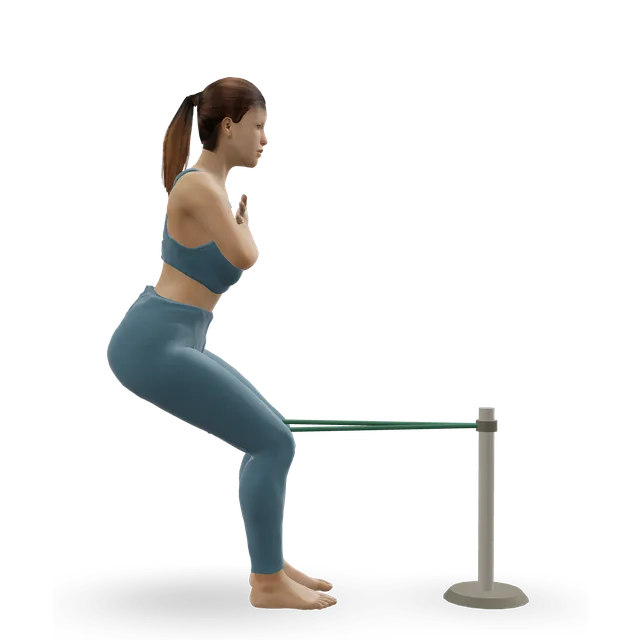
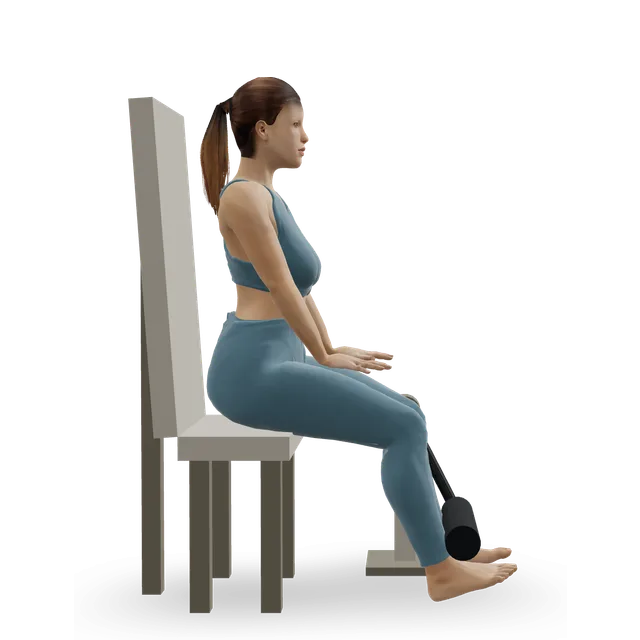
  2. Every day, do the plan's first-stage hold: a wall sit, a Spanish squat with a heavy band, or a leg extension machine. Do 5 holds of 30 to 45 seconds with your knees bent about 60 degrees, at a hard-but-OK effort, resting 1 to 2 minutes between holds.
  3. Breathe normally through each hold, counting out loud if it helps, and never strain against a held breath.
  4. Two or three times a week, do the class on this page, which has the holds built in, or add them to your usual yoga with the changes on this page.
  5. Rate the tendon during each session and the next morning: keep it at 3 out of 10 or less, and back to its usual level by the morning.
  6. After at least a week, do one single-leg squat and rate the tendon. At 3 or less, move on to the slow strength stage in our jumper's knee guide.
  7. Bring back jump-backs, hops and long kneeling last, when the plan's jumping stage allows.

See the movement on the 3D figure: Wall sit

The loading plan's first stage

Once a day, within the pain rule. Wall sit: 5 holds of 30 to 45 seconds, knees bent about 60 degrees, the home option without a band; leg extension, if you have a gym: 5 holds of 30 to 45 seconds with about 2 minutes' rest; glute bridge and slow calf raise: 3 sets of 12 (our jumper's knee guide, stage 1). Spanish squat with a heavy band: "4 to 5 holds of 30 to 45 seconds at a hard-but-OK effort, with 1 to 2 minutes' rest, once a day in the isometric stage" (the move page's dose).

Standing poses with shallow knee bends

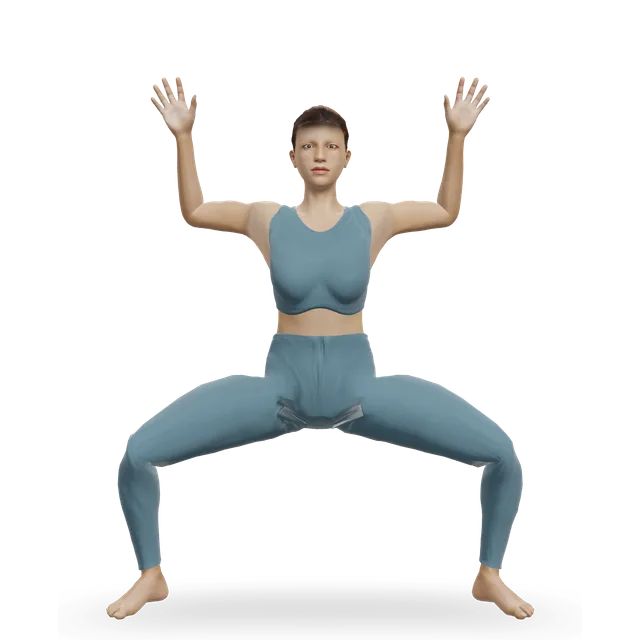
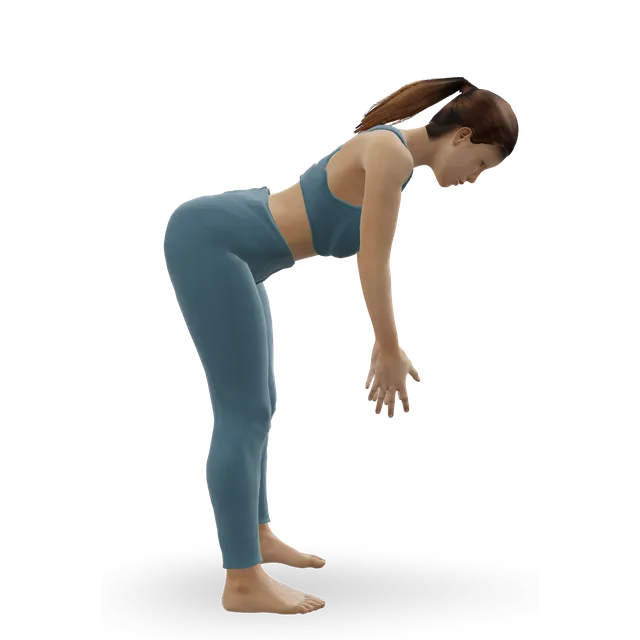
Keep every bend shallow and the front knee over your ankle. Mountain pose: "Stand for 5 to 10 slow breaths, 2 or 3 times" (the move page's dose), knees soft. Chair pose: 2 holds of 3 to 5 breaths, a shallow bend, hands on your thighs (our yoga for Achilles tendinopathy class). Warrior II and warrior I: 3 breaths each side, a short stance; goddess: 2 holds of 3 breaths, bending only a little (our yoga for knee pain class). Hip hinge fold: "5 slow folds, 3 breaths at the bottom" (the move page's dose), knees soft.

Balance on one leg

Keep the standing knee soft, not deeply bent. Tree pose: 2 holds of 20 to 30 seconds each side, fingertips on a wall, the lifted foot at your ankle; single-leg stand: 2 holds of 30 seconds each leg (our yoga for Achilles tendinopathy class). Hip airplane, holding a counter: "2 sets of 5 slow turns each leg" (the move page's dose).

Hips and the back of the body

Side-lying leg raise, heel leading: 8 each side; clamshell: 10 each side (our Pilates for patellar tendinopathy class). Locust: 3 holds of 3 breaths with a folded blanket under your hips; straight leg raise: 10 each side (our yoga for knee pain class). Move the blanket under your thighs if your kneecaps press on the floor.

Gentle stretches and rest

Optional, and only as far as is comfortable: these aren't treatment. Hamstring stretch with a strap: 2 holds of 30 seconds each leg; reclining twist with a cushion between your knees: 45 seconds each side (our yoga for knee pain class). Reclined figure four: 45 seconds each side (our yoga for Achilles tendinopathy class). Corpse pose: "Lie still for at least 5 minutes, up to 10, usually at the end of a session" (the move page's dose), a cushion under your knees.

Poses to change or leave out while it's sore

Our suggestions, from the loading and kneeling studies. Bring them back as the plan moves on and the tendon stays within the pain rule.

Kneeling poses

Low lunge with the back knee down, camel, table and all fours: pad your knees with a folded blanket or use a standing version, such as warrior I for a low lunge. The low lunge's own caution: "Pad the back kneecap if pressure on the floor is uncomfortable."

Sources 11, 12

Full knee bends under your weight

Hero, reclining hero, full child's pose, garland, half frog and lotus: leave them out or prop them high. Hero pose's caution: "Your body weight takes the knees to the end of their bend, and if your hips can't turn in far enough, the knees twist to make up the difference". Child's pose: "The knees are deeply bent, so pad behind them or skip it with a knee injury."

Sources 59, 14

Deep or long standing bends

Deep or long chair pose, deep lunges with the front knee past your toes, and pulsing in high lunge: keep them shallow and short.

Sources 10, 62

Jumping

Jump-backs and jump-throughs in sun salutations, hops and skipping: step instead. Jumping comes back in the plan's jumping stage.

Sources 10, 4

Hard thigh stretches

Pulling your heel hard to your bottom, in a deep standing thigh stretch or half frog: keep it gentle or leave it out. One NHS leaflet: "You should avoid stretching the tendon as this can aggravate the pain."

Source 14

Classes

Our 25-minute tendon-friendly yoga class has the plan's first-stage hold built in: do the hold block every day and the whole class 2 or 3 times a week. The Pilates class has the same hold. The yoga for knee pain class has shallow bends and no kneeling but no tendon hold, so add the wall sit. The volleyball and basketball classes are for the return to sport, once the plan reaches its later stages, and chair yoga suits a sore day.

Tendon-friendly yoga for jumper's knee: a 25-minute class with the loading plan's holds built in, shallow knee bends, no kneeling and no jumping

A 25-minute yoga class for jumper's knee: the loading plan's first-stage hold, standing poses with shallow bends, balance, hip work and rest, with no kneeling.

25 minBeginner14 movesWall

Tendon-friendly Pilates for jumper's knee: a 25-minute class with the loading plan's holds built in, shallow knee bends and no jumping

A 25-minute Pilates class for jumper's knee: the loading plan's first-stage hold, hip, trunk and calf work, no kneeling, shallow knee bends and no jumping.

25 minBeginner13 movesWall

Tendon strengthening workout: holds, heavy slow calf and leg work, then springs

A 35-minute editorial session for healthy tendons: calf and Spanish squat holds, heavy slow leg and calf lifts, then springs once the heavy work is easy.

35 minIntermediate13 movesWall, band

Knee strengthening workout: from first steps to full range

A 25-minute session for knees that don't currently hurt: thigh and hamstring strength, single-leg control, then an optional full-range block with knees over toes.

25 minBeginner14 movesBench or box, wall

Yoga for knee pain: a 25-minute knee-friendly sequence

A 25-minute knee-friendly yoga practice with no kneeling and no deep bends: shallow standing poses, hip and thigh strength on the floor, and supported stretches.

25 minBeginner15 movesFirm cushion

Off-court yoga for volleyball players: a 25-minute class for ankles, one-leg balance, landing shapes and the hitting shoulder

A 25-minute off-court yoga class for volleyball players: ankle bend, one-leg balance, landing shapes, the hitting shoulder and the upper back, then rest.

25 minBeginner16 movesWall

Off-court yoga for basketball players: a 25-minute class for ankles, one-leg balance, landing shapes and hips

A 25-minute off-court yoga class for basketball players: ankle and calf mobility, one-leg balance, landing shapes, side planks, hips and a slow-breathing finish.

25 minBeginner16 movesWall

Seated chair yoga: 15 minutes, no standing

A 15-minute chair yoga routine done entirely sitting: slow breathing, neck, shoulder and wrist stretches, seated twists and side bends, and a calm finish.

15 minBeginner16 movesBench or box

When to get help

These are the warning signs from our jumper's knee and knee pain guides, word for word. This is general information, not a diagnosis. A&E means accident and emergency; in the US, call 911 for 999.

A sudden pop below the kneecap

A sudden pop at the front of the knee, after which you cannot straighten the knee or lift the straight leg. This can be a torn patellar tendon: see our torn kneecap tendons guide.

Same day: a pop or tearing feeling at the front of the knee after a fall, stumble, jump or landing, then you can't straighten the knee or lift the straight leg off the bed, there's a dent above or below the kneecap, or the kneecap sits higher or lower than on the other side. Go to A&E or an urgent treatment centre, or get help from NHS 111. A torn quadriceps or patellar tendon does best when it's repaired soon.

Sources 67, 20

A child or teenager

A child or teenager: after a jump, landing or fall, a pop or sudden severe pain below the kneecap, and the knee will not straighten or take weight. Get it checked the same day: the bony bump below the kneecap can break away instead of the tendon tearing, or a sleeve of bone and cartilage can pull off the lower kneecap.

Sources 67, 68

Get urgent medical help if

  • Leg pain or swelling with breathlessness or chest pain: call 999 or go to A&E, and do not drive yourself. It can be a blood clot that has reached the lungs.
  • Call 999 or go to A&E: back or leg symptoms with numbness around the genitals or bottom, new trouble controlling your bladder or bowels, or severe or worsening weakness or numbness in both legs.
  • Get advice from NHS 111 now: a hot, red or swollen knee with sudden severe pain, a very high temperature, or feeling hot, cold or shivery. This can be a joint infection.
  • Get advice from NHS 111 now: you cannot move the knee or put any weight on it, or it is very painful, badly swollen or has changed shape.
  • You hurt your knee and cannot take 4 steps, or you are 55 or over and have injured it: get it checked the same day for a broken bone.
  • Same day (urgent GP appointment or NHS 111): throbbing pain in one leg (rarely both), usually the calf or thigh; swelling in one leg (rarely both); red, blue or darkened skin; or swollen veins; or sudden worse pain and swelling around a lump at the back of the knee (a possible clot or a burst Baker's cyst).
  • Get advice from NHS 111 now: the knee locks, gives way or clicks painfully. Painless clicking is normal.
  • Get advice from NHS 111 now: after a twist, your knee won't go fully straight, or something blocks the last part of straightening, even if you can still walk on it. A torn piece of meniscus caught in the joint can do this, and it needs checking promptly.

Source 20

See a GP or physiotherapist if

NHS Lanarkshire suggests seeing a physiotherapist if your symptoms haven't improved within 6 to 12 weeks of following its advice.

  • Knee pain that has not improved within a few weeks of looking after it at home. Many areas offer NHS physiotherapy without a GP referral.
  • Numbness, tingling or weakness that travels down the leg from the back. That points to a nerve (sciatica) rather than the knee.

Sources 20, 8

During yoga

Sharp, catching or giving-way pain, or new swelling, is a reason to stop and get it checked. Come out of a pose at once if your foot or lower leg goes numb or tingles in a kneeling or cross-legged pose, or if you feel a sharp pain inside the knee when twisting or rising from a deep bend (our suggestion, from case reports and injury studies).

A joint pain that is sharp, gets worse during a session, lingers into the next day or changes how you move is a reason to use an easier version, and to see a GP or physiotherapist if it keeps happening (the rule in our plans). Muscle soreness for a day or two after something new is normal. In a hot class, stop if you feel dizzy, sick or unwell; our hot yoga guide lists the signs of heat illness.

You can say no to any hands-on adjustment, and a teacher registered with Yoga Alliance must get your explicit consent each time.

Sources 56, 69, 70, 71

Chest pain or fainting while exercising: call 999

Call 999 if:

  • You get sudden pain or discomfort in your chest that doesn't go away; it can feel like squeezing or pressure, burning or indigestion.
  • The pain spreads to your left or right arm, or your neck, jaw, stomach or back.
  • You have chest pain and feel sweaty, sick, light-headed or short of breath.
  • Someone faints while exercising, can't be woken within 1 minute, or has chest pain or a pounding, fluttering or irregular heartbeat.

Sources 72, 73, 74

Unusual breathlessness

Call 999 or go to A&E (accident and emergency) straight away for severe difficulty breathing (gasping, choking or not able to get words out), a chest that feels tight or heavy, pain that spreads to your arms, back, neck and jaw, lips or skin turning very pale, blue or grey, or sudden confusion. If you're more short of breath than usual, or your heart is racing, fluttering or skipping beats, contact NHS 111.

Source 75

Head-down poses, bones and pregnancy

With glaucoma, or high blood pressure that isn't under control, skip headstands, shoulder stands and long head-down holds. With osteoporosis, swap deep forward folds for a flat-back hinge from the hips, and twist smoothly. In pregnancy, our yoga in pregnancy guide covers the changes. NCCIH advises beginners to avoid headstands, shoulder stands, the lotus position and forceful breathing.

Sources 76, 70

Before you start

The NHS advises getting advice from a healthcare professional first if you have a health problem, an injury or symptoms, or have recently had a heart attack or an operation.

Myths

"Rest a sore tendon until it stops hurting"Strong evidence

No trial has tested complete rest as a treatment. The plans that helped cut back jumping and painful activity while loading the tendon, and NHS leaflets say to stay active. Symptoms often last months to years, so waiting for the pain to go before you load it can be a long wait.

Sources 4, 14, 8, 15

"Stretching fixes jumper's knee"Strong evidence

The only trial for it wasn't properly randomised, a UK military consensus found no evidence for stretches as treatment, the Dutch guideline leaves them out, and one NHS leaflet says stretching the tendon can aggravate it.

Sources 47, 44, 5, 14

"Yoga cures patellar tendonitis"Strong evidence

No trial has tested yoga for it. Loading the tendon in stages is the treatment; yoga is the session around it.

Source 1

"Squats are bad for jumper's knee"Mixed evidence

Slow, heavy squats and leg presses within the pain rule are part of the treatment (heavy slow resistance). What needs cutting back early on is deep, fast or jumping load.

Sources 51, 10

"Never kneel with jumper's knee"Emerging evidence

Kneeling presses on the tendon, so pad it or swap it while it's sore, but no study shows kneeling harms the tendon.

Sources 11, 13

"Holding chair pose for minutes will strengthen the tendon"Emerging evidence

A shallow chair pose loaded the knee about as much as walking at its peak in one study. The trial's holds were much harder, at about 70% of maximum effort, and no yoga hold has been tested as treatment.

Sources 9, 4

"An injection will get me back to class faster"Strong evidence

A steroid injection helped in the short term but not in the long term in one trial, and the Dutch guideline and the UK military consensus advise against injections near the tendon.

Sources 51, 5, 44

"Yoga is only for flexible people"

The class on this page asks for no flexibility: holds, standing poses at a wall, lying hip work and rest (our reading).

Questions people ask

Is yoga good for patellar tendonitis?

It hasn't been tested: no trial of yoga for patellar tendonitis exists. What treats it is loading the tendon in stages. Yoga is a good way to stay active around that plan, with the plan's first-stage hold built in and the poses that strain the tendon changed.

Can I do yoga with patellar tendonitis?

Yes, with changes. Keep tendon pain at 3 out of 10 or less and settled by the next morning, keep standing knee bends shallow, pad or swap kneeling poses, and step rather than jump. Our jumper's knee guide has the full loading plan.

Which yoga poses should I avoid with patellar tendonitis?

For now, jump-backs and hops, deep squats, deep single-leg bends, long deep holds in chair pose, and long kneeling or full knee bends such as hero pose and full child's pose. Bring them back as the loading plan progresses and the tendon stays within the pain rule.

Is yoga bad for patellar tendonitis?

Not if you change a few poses. No published report links yoga with causing it. Jumping and deep loaded bends are the parts that load the tendon most, so those are the ones to change.

Is kneeling in yoga bad for jumper's knee?

Kneeling presses on the patellar tendon, so it can hurt. Pad it with a folded blanket, keep it short, or use a standing version. No study shows kneeling damages the tendon.

Is chair pose good for patellar tendinopathy?

A shallow chair pose is a gentle hold for the front of the thigh, loading the knee about as much as walking at its peak in one study, and it's fine within the pain rule. It isn't a substitute for the plan's harder holds, such as a wall sit or a Spanish squat.

Do yoga stretches help jumper's knee?

Stretching hasn't been shown to treat it. Gentle, comfortable stretches are fine, but don't pull hard into deep knee bends: the loading is what helps.

Should I rest jumper's knee completely?

No. Cut down jumping and anything that hurts a lot for about 4 weeks, and keep loading the tendon within the pain rule. Swimming and cycling keep you fit meanwhile.

How long does patellar tendinopathy take to get better?

Usually months. The trials ran 12 to 24 weeks, an NHS leaflet says a programme can take more than 3 months, and symptoms can last longer in athletes who keep jumping. Five years after the largest trial, about three in four people felt recovered.

Can yoga cause patellar tendonitis?

No study links them. Lots of jump-backs, deep loaded squats and long kneeling could aggravate a sore tendon (our reading), so change those while it settles.

Is hot yoga OK with jumper's knee?

The heat doesn't change the tendon; jumping, deep bends and kneeling are what matter. Long, deep standing holds in a hot class can push you past the pain rule, so keep them shallow (our suggestion).

When should I see a doctor about pain below my kneecap?

Get help the same day for a sudden pop with a knee you can't straighten, and advice from NHS 111 now for a hot, swollen knee with a high temperature or a knee that locks or gives way. See a GP or physiotherapist if it hasn't improved within a few weeks of looking after it.

Sources

  1. Our searches · PubMed, Europe PMC and ClinicalTrials.gov for yoga and patellar tendinopathy, jumper's knee or tendinitis (2 November 2026): no trial found
  2. Price 2025 · Yoga videos for front-of-knee pain in 24 adolescents (single-group study, J Pediatr Soc North Am; read in full)
  3. Zhao 2022 · Baduanjin (a qigong routine) added to shockwave for patellar tendinopathy in 67 people (randomised trial, Chinese Journal of Tissue Engineering Research; not in MEDLINE)
  4. Breda 2021 · Staged tendon loading against eccentric decline squats in 76 athletes (randomised trial, Br J Sports Med; read in full)
  5. Ophey 2025 · Dutch multidisciplinary guideline on front-of-knee pain, including patellar tendinopathy (guideline, Knee Surg Sports Traumatol Arthrosc; read in full)
  6. Lopes 2025 · Exercise for patellar tendinopathy: 7 trials, 211 athletes (Cochrane review; abstract)
  7. Sprague 2021 · Pain-guided activity during heavy slow resistance for patellar tendinopathy in 15 people (pilot randomised trial, Pilot Feasibility Stud; read in full)
  8. NHS Lanarkshire and NHS Forth Valley · Patellar tendinopathy (physiotherapy self-help pages)
  9. Wang 2013 · Joint loads in 7 standing yoga poses in 20 older adults: the Yoga Empowers Seniors Study (lab study, BMC Complement Altern Med; read in full)
  10. Scattone Silva 2024 · Patellar tendon loading in 35 rehab exercises in 20 healthy adults (lab study, Med Sci Sports Exerc; read in full)
  11. Porter 2010 · Where kneeling pressure lands on the knee, and the effect of kneepads (lab study, Appl Ergon)
  12. Thwaites 2022 · Knee loading patterns while kneeling in 14 healthy people (lab study, Knee)
  13. Our searches · PubMed and Europe PMC for kneeling and patellar tendinopathy (2 November 2026): no study of kneeling in people with the condition
  14. Royal United Hospitals Bath NHS Foundation Trust · Patellar tendinopathy (jumper's knee) advice leaflet (May 2021)
  15. Lian 2005 · Jumper's knee in 613 Norwegian elite athletes (cross-sectional study, Am J Sports Med)
  16. Deng 2025 · Five years after physiotherapy for patellar tendinopathy: 58 athletes (follow-up of a randomised trial, Am J Sports Med; read in full)
  17. Malliaras 2015 · Patellar tendinopathy: clinical diagnosis, load management and advice (clinical review, J Orthop Sports Phys Ther)
  18. Scott 2020 · ICON 2019 international consensus on tendinopathy terms (consensus statement, Br J Sports Med; read in full)
  19. NHS Ayrshire and Arran · Patellar tendinopathy (MSK patient portal)
  20. NHS · Knee pain (last reviewed December 2023)
  21. Leeds Community Healthcare NHS Trust · Patella tendinopathy
  22. Sprague 2019 · Telling quadriceps and patellar tendinopathy apart (viewpoint, J Orthop Sports Phys Ther; read in full)
  23. Wilczyński 2024 · Sinding-Larsen-Johansson disease (scoping review, PeerJ; read in full)
  24. Nutarelli 2023 · How common patellar tendinopathy is: 28 studies, 28,171 people (systematic review and meta-analysis, Orthop J Sports Med; read in full)
  25. Zwerver 2011 · Jumper's knee in 891 non-elite athletes (cross-sectional survey, Am J Sports Med)
  26. Visnes 2013 · Training volume and jumper's knee in 141 young elite volleyball players (cohort study, Scand J Med Sci Sports)
  27. Bahr 2014 · Jump counts in young elite volleyball players: 11,943 jumps (observational study, Br J Sports Med)
  28. van der Worp 2011 · Risk factors for patellar tendinopathy (systematic review, Br J Sports Med)
  29. Kettunen 2002 · Jumper's knee 15 years on in male athletes (cohort study, Am J Sports Med)
  30. Hopes 2026 · Living with lower limb tendinopathy: 13 studies, 153 people (qualitative evidence synthesis, J Orthop Sports Phys Ther)
  31. Erkan Özalp 2025 · Yoga added to training in 26 volleyball players (randomised trial of fitness tests, J Sports Med Phys Fitness)
  32. Rai 2022 · Physiotherapy with or without yoga after sports injuries in 212 people (randomised trial, J Family Med Prim Care; read in full)
  33. Liu 2026 · Exercise for patellar tendinopathy: 17 trials (systematic review and network meta-analysis, BMC Sports Sci Med Rehabil; read in full)
  34. Bruna-Mejias 2026 · Loading strategies for patellar tendinopathy (systematic review and meta-analysis, J Funct Morphol Kinesiol; read in full)
  35. Challoumas 2021 · Treatments for patellar tendinopathy: 37 trials (network meta-analysis, BMJ Open Sport Exerc Med; read in full)
  36. Agergaard 2021 · Heavy against moderate loads in 44 adults (randomised trial, Am J Sports Med)
  37. Agergaard 2026 · One against three exercise days a week in 52 people: the TEREX trial (randomised trial, Scand J Med Sci Sports; read in full)
  38. Hjortshoej 2025 · Blood flow restriction against heavy slow resistance in 36 men (randomised trial, Scand J Med Sci Sports)
  39. Rio 2015 · One session of isometric holds in 6 volleyball players (randomised crossover study, Br J Sports Med)
  40. Rio 2017 · Holds against lifting in season in 20 jumping athletes (randomised trial, Clin J Sport Med)
  41. van Ark 2016 · Hold and lifting programmes in season in 29 athletes (randomised trial, J Sci Med Sport)
  42. Holden 2020 · Holds against lifting for tendon pain in 21 people (randomised crossover trial, J Sci Med Sport)
  43. Clifford 2020 · Isometric exercise across tendinopathies: 10 trials (systematic review and meta-analysis, BMJ Open Sport Exerc Med; read in full)
  44. Judd 2026 · UK Defence Rehabilitation consensus on Achilles and patellar tendinopathy (Delphi consensus, BMJ Mil Health; read in full)
  45. Visnes 2005 · Decline squats in season in 29 elite volleyball players (randomised trial, Clin J Sport Med)
  46. Witvrouw 2001 · Risk factors for patellar tendinitis in 138 students over 2 years (cohort study, Am J Sports Med)
  47. Stasinopoulos 2012 · Eccentric training with or without static stretching in 43 people (controlled trial without random allocation, Clin Rehabil)
  48. NHS Borders · Patellar tendinopathy: a guide for patients (reviewed November 2024)
  49. King's College Hospital NHS Foundation Trust · Patellar tendinopathy (past its review date: published March 2021, review due March 2024)
  50. Silbernagel 2007 · Carrying on running and jumping with a pain-monitoring model in 38 people with Achilles tendinopathy (randomised trial, Am J Sports Med)
  51. Kongsgaard 2009 · Steroid injection, decline squats or heavy slow resistance in 39 men (randomised trial, Scand J Med Sci Sports)
  52. Zhou 2026 · Yoga for knee osteoarthritis: 14 studies, 1,183 people (three-level meta-analysis, J Back Musculoskelet Rehabil)
  53. Abafita 2025 · Yoga or strengthening exercise for knee osteoarthritis in 117 people (randomised trial, JAMA Netw Open)
  54. Swain 2016 · Yoga-related injuries treated in US emergency departments, 2001 to 2014 (national injury database study, Orthop J Sports Med; read in full)
  55. Cramer 2019 · Adverse effects of yoga in 1,702 German practitioners (cross-sectional survey, BMC Complement Altern Med; read in full)
  56. Cramer 2013 · Adverse events associated with yoga: 76 published cases (systematic review of case reports, PLoS One; read in full)
  57. Liu 2021 · Leg loads in chair, tree and warrior poses in 11 yoga instructors (lab study, Int J Environ Res Public Health)
  58. Yu 2012 · Tree pose and one-leg balance variations in older adults (lab study, Evid Based Complement Alternat Med)
  59. Zwerver 2007 · Knee forces in the single-leg decline squat in 5 healthy people (lab study, Br J Sports Med)
  60. Kobayashi 2013 · The knee's extensor mechanism in deep flexion (imaging study, J Biomech Eng)
  61. Escamilla 2001 · Knee forces in the squat (review, Med Sci Sports Exerc)
  62. Zellmer 2019 · Patellar tendon stress with the knee in front of or behind the toes in a lunge, 25 healthy adults (modelling study, J Sport Health Sci)
  63. Obst 2024 · Leg strength in patellar tendinopathy: 23 studies (systematic review and meta-analysis, J Athl Train)
  64. Zhang 2018 · Hip strength in 60 male athletes with and without patellar tendinopathy (cross-sectional study, Eur J Appl Physiol)
  65. Scattone Silva 2017 · Trunk lean on landing and patellar tendon force in 21 elite athletes (lab study, Med Sci Sports Exerc)
  66. Tayfur 2022 · Landing patterns and patellar tendinopathy: 16 studies (systematic review and meta-analysis, Sports Med; read in full)
  67. AAOS OrthoInfo · Patellar tendon tear
  68. Yellin 2024 · Patellar sleeve injuries in 90 children and teenagers (case series, J Child Orthop)
  69. Cramer 2018 · Injuries and other adverse events with yoga: 9 observational studies (systematic review, J Sci Med Sport)
  70. NCCIH 2023 · Yoga: effectiveness and safety (US National Center for Complementary and Integrative Health)
  71. Yoga Alliance · Code of conduct: consent before hands-on adjustments
  72. NHS · Chest pain (past its review date: reviewed August 2023, review due August 2026)
  73. NHS · Heart attack (last reviewed March 2026)
  74. NHS · Fainting (last reviewed August 2026)
  75. NHS · Shortness of breath (last reviewed January 2024)
  76. Jasien 2015 · Eye pressure in four common yoga positions: 10 people with glaucoma and 10 without (lab study, PLoS One)

Exercise education, not a personal prescription, and clinical review of these guides is pending. If you are pregnant, have a health condition such as glaucoma, high blood pressure or osteoporosis, or have had recent surgery, check with a doctor, midwife or physiotherapist before starting, and stop for sharp or increasing pain. Health disclaimer.