No trial of Pilates in skiers
We found no study of Pilates in skiers or snowboarders.
Source 1
Pilates guide
Skiing asks your thighs to hold a bent-knee stance, your trunk to stay steady over moving legs and each leg to balance alone, often after months off the snow. Pilates trains the trunk, hips and single-leg balance. We found no trial of Pilates in skiers, though, and no fitness programme has been shown to prevent recreational ski injuries, so it belongs alongside leg strength, landing practice and the knee-safety tips on our skiing page.
This guide covers where skiers get hurt (knees first, then thumbs and shoulders), what pre-season training can and can't do, the core exercises for skiing and what the research on them shows, balance, how to fit Pilates into the 6 to 8 weeks before a trip, snowboarders, and a 25-minute pre-season class.
We found no study of Pilates in skiers or snowboarders.
Source 1
The knee accounts for about 27% to 41% of ski injuries, with the ACL (anterior cruciate ligament) the commonest serious one; the thumb and shoulder come next. Snowboarders hurt their wrists, shoulders and ankles more.
A review of 30 papers found no fitness-based advice for preventing recreational ski injuries, and ski safety researchers found "no convincing evidence" that conditioning prevents them. Fitter skiers do get in more runs with less fatigue.
In young racers, stronger trunks went with fewer ACL tears, and two programmes that included trunk exercises went with fewer injuries than in earlier years. Neither was randomised, and neither can say what the trunk exercises themselves did.
Recreational skiers with poorer balance and agility scores were injured more over a season, a neuromuscular warm-up improved junior skiers' balance, and Pilates improved balance in young women.
Knee programmes in other sports work best with strength, landing practice and trunk and hip control together. Pilates covers the trunk and hip part; our ski fitness workout covers the legs and landings, and the knee-safety tips on our skiing page cut serious knee sprains among trained ski staff.
Your thighs hold and absorb your weight in a flexed stance through runs of a minute or two, again and again, while you edge, turn, absorb bumps and recover your balance. Our skiing page covers the physiology.
Across studies, the knee was the commonest site (27% to 41% of injuries), the arm about 14% (mainly the thumb and shoulder) and the head and neck 13%. Over 18 Vermont seasons, the ACL was 17% of skiing injuries. Pooled across studies of amateurs, alpine skiing averaged about 4 injuries per 1,000 days on the slopes, though the studies varied hugely. Falls are the main cause.
Across 27 studies: being female, taking risks, lower skill, older age, worn boot soles, binding settings that don't release, fresh, grippy or icy snow, and poor physical fitness. These are associations.
Source 15
Trunk endurance against moving limbs, back endurance, side and inner hip strength and control, single-leg balance and upper-back rotation, on a mat or a reformer. It counts as muscle-strengthening activity. It doesn't offer the heavy leg strength, landing practice or interval fitness on our ski fitness workout.
Our search found no study of Pilates in skiers or snowboarders. Pages promising fewer knee injuries from Pilates aren't backed by ski trials.
Source 1
A review of 30 papers found 80 prevention recommendations for recreational skiers and snowboarders, on equipment, education, behaviour, experience and other people, and none on fitness or training. Vermont's ski safety researchers wrote that "there is no convincing evidence that conditioning of any type can reduce the risk of alpine skiing injuries", and that well-prepared skiers "will probably get in more runs with less fatigue".
In 370 racers aged 14 to 19 tested yearly over 10 years, core strength measures predicted ACL tears, looking back at the data. Swedish ski high schools that added a programme of core stability and neuromuscular control, aiming to be equally good on both legs, had 3.9% ACL injuries against 8.1% in earlier years. In 71 Swiss under-16 racers, a weekly programme of Nordics, bridging, single-leg squats, planks and dead bugs went with about a third fewer injuries than in 58 racers the year before. Neither programme was randomised, and neither separates the trunk exercises from the rest.
In 117 recreational skiers followed over a season, poorer agility and reaching-balance scores went with injury. In 24 elite junior skiers, an 8-week neuromuscular warm-up improved balance but not jumping. Novices who practised on a balance board in ski boots skied a slalom test better. In 47 young women, 8 weeks of mat Pilates improved standing balance.
In young female athletes, knee injury prevention programmes cut ACL tears from about 1 in 54 to 1 in 111, and worked best with strengthening, trunk and hip control and landing practice. These were mostly team sports, not skiing.
Two common ways are falling backwards with the hips below the knees, and landing a jump on the tails. Ski staff who learned to spot and respond to those situations had 62% fewer serious knee sprains, in a study that wasn't randomised. Our skiing page has the tips.
Source 14
Pilates covers the trunk and hip part: side kicks, clams, bridges and single-leg balance train the control that keeps your knee in line (our reading). The legs and landings are on our ski fitness workout. After an ACL injury or reconstruction, your physiotherapist's plan comes first.
The two youth ski programmes with injury data used dynamic planks, dead bugs, bridges and core stability work on both legs, alongside hamstring and single-leg exercises. Elite racers have strong trunk flexors and extensors. Treat core work as part of getting ready, not protection on its own.
A 2025 consensus from the International Ski and Snowboard Federation (FIS) says that activating "the muscles around the core, hip and knee", landings and single-leg stability are key in a competitive warm-up, and that body weight is often enough for core work. It's expert agreement, not a tested programme.
Source 19
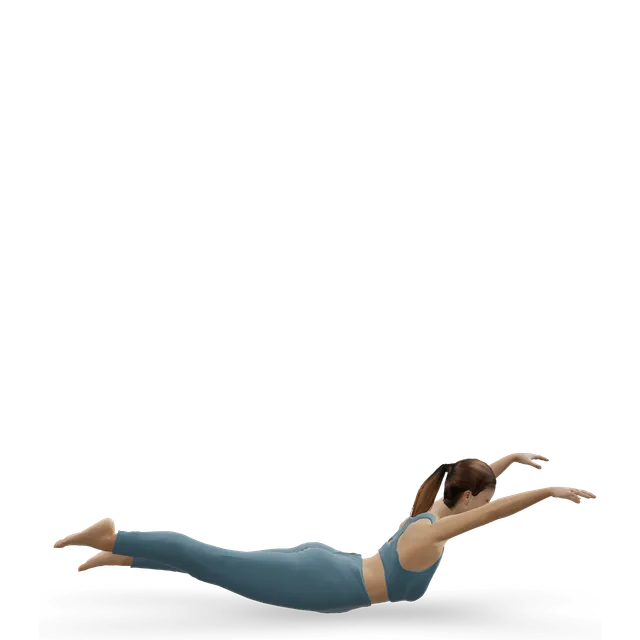
Dead bugs, forearm and side planks, the hundred and swimming for the trunk, and bridges for the back of the hips; our 25-minute class puts them with hip and balance work.
Our editorial plan, matching our skiing page:
Source 5
Snowsport England's Get Fit to Ski video series has three parts: body and core strength, leg strength, and active recovery, to be done regularly before a trip. That's advice, not a tested programme.
Source 16
Snowboarders had more wrist, shoulder, ankle and collarbone injuries and fewer knee ligament injuries than skiers over 18 Vermont seasons. The same trunk, hip and balance work applies; wear wrist guards, as our skiing page explains, and do weight-on-the-hands moves on your forearms if your wrists are sore.
Source 3
2 sets of 8 dead bugs each side and 2 side planks of 20 to 30 seconds are from our ski fitness workout, 2 sets of 6 bird dogs each side with 5-second holds from our mobility routine for cyclists, and two forearm plank holds of 20 to 30 seconds our editorial starting point; the hundred's 50 beats and 2 to 3 sets of 20 to 30 seconds of swimming are the move pages' doses.
3 to 5 shoulder bridge kicks, 8 to 10 side kicks and 10 to 12 inner thigh lifts each side are the move pages' doses; 10 clams each side is our editorial starting point, and 3 wall sits of 30 to 60 seconds and 10 band walk steps each way are from our ski fitness workout.
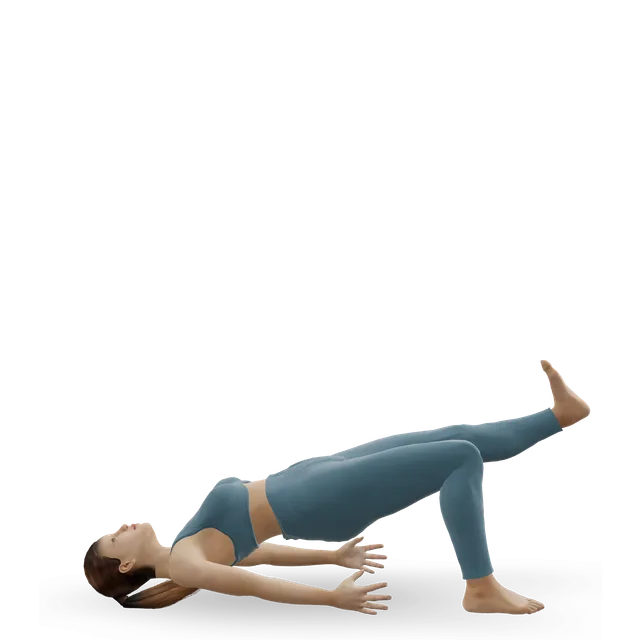 3D demoShoulder bridge (Pilates)Intermediate · No equipment
 3D demoSide kick (Pilates side kick series)Beginner · No equipment
 3D demoClamshellBeginner · No equipment
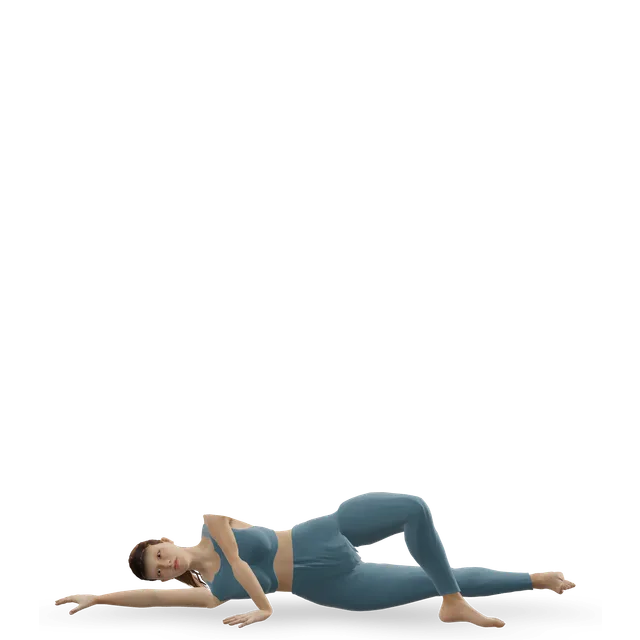 3D demoSide-lying inner thigh lift (Pilates side kick series)Beginner · No equipment
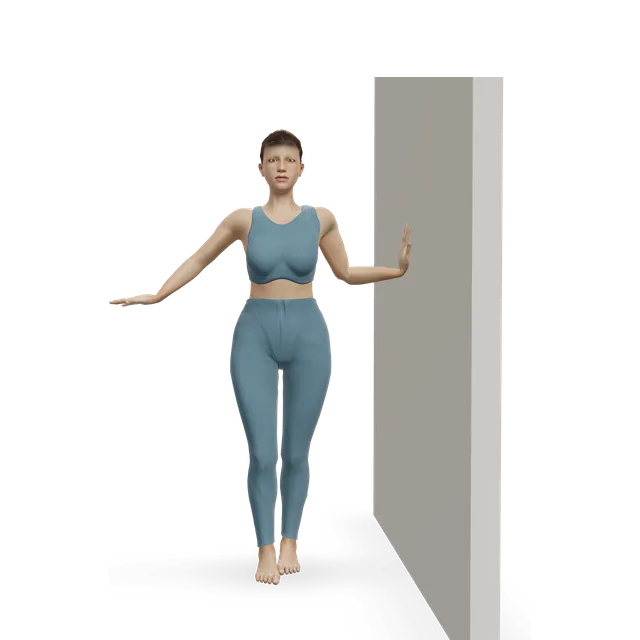
 3D demoWall sitBeginner · A wall
 3D demoLateral band walkBeginner · A band
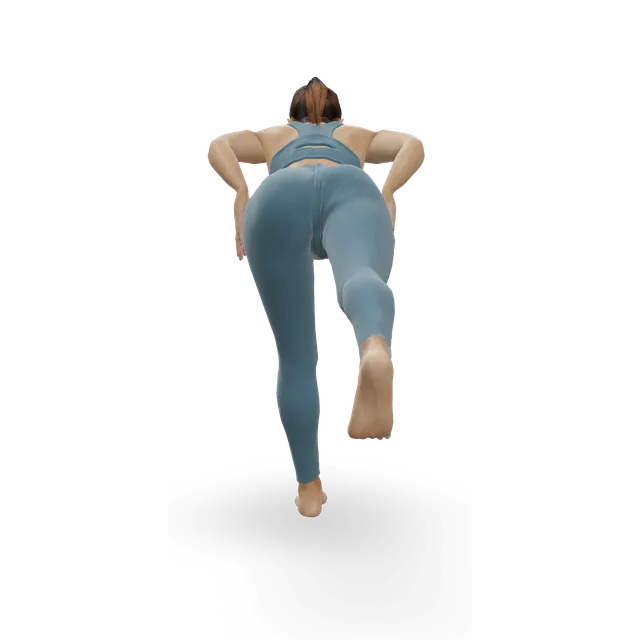
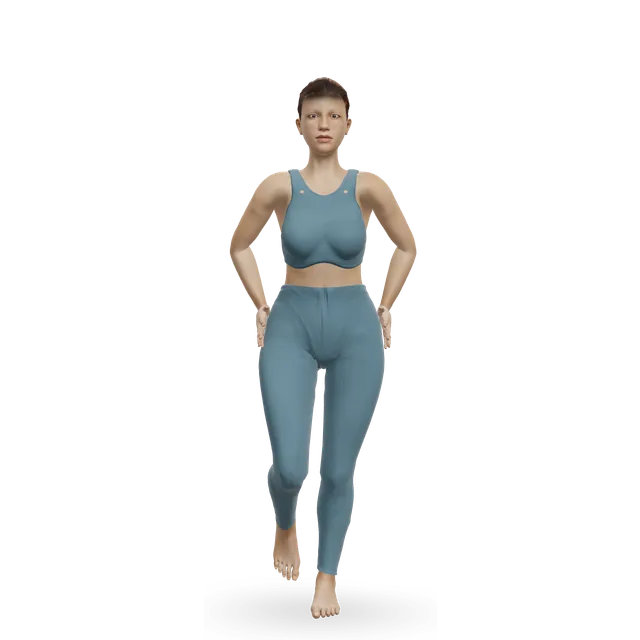
2 single-leg stands of 30 seconds each leg are from our ski fitness workout; 2 sets of 5 hip airplanes and 3 rounds of 5 reaches each way on each leg are the move pages' doses.
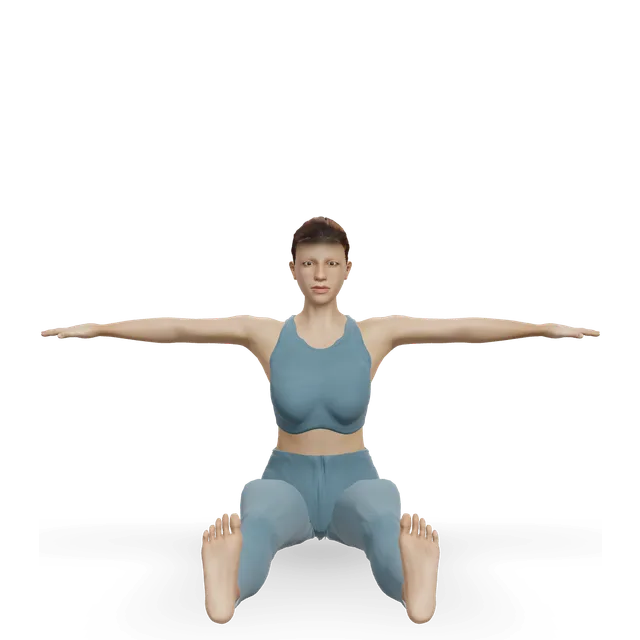
6 thoracic rotations and 3 to 4 spine twists each side are the move pages' doses.
Leave out the kneeling side kick and deep or twisting knee moves until your physiotherapist allows; do the side kick lying down instead.
Do the knee hover, leg pull front and side bend on your forearms or skip them, and keep weight off that hand.
With osteoporosis, use a flat-back hinge and head-down versions instead of the roll-up and rolling moves. With glaucoma, keep wall sits short with normal breathing, and leave out the roll-over, jack knife and control balance unless your eye team agrees (the move pages' cautions).
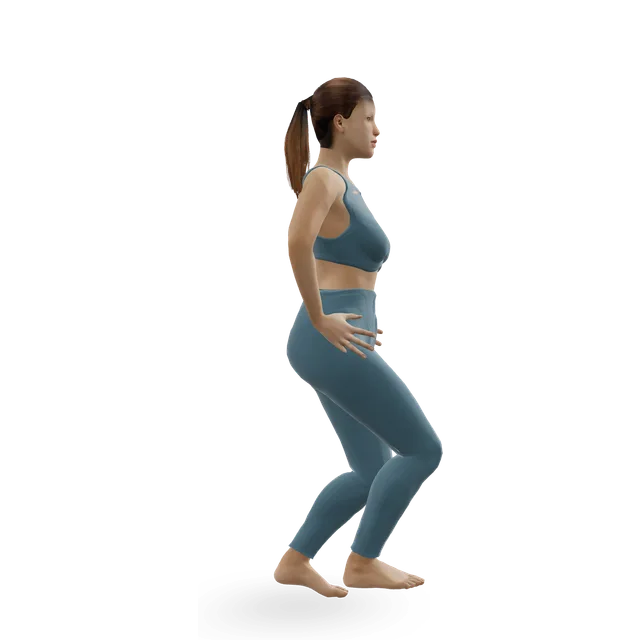
They aren't Pilates moves: do them in the ski fitness workout, where they're dosed.
Do the 25-minute Pilates class once or twice a week in the 6 to 8 weeks before your trip, alongside the ski fitness workout. The ski warm-up is for the top of the slope; the knee control, leg and balance classes add more of the same work.
A 25-minute Pilates class for skiers: trunk endurance, hips and thighs, wall sits and single-leg balance, for the 6 to 8 weeks before your trip.
25 minBeginner17 movesA wall, A bandA 40-minute pre-season workout for skiers and snowboarders: squats, split squats, single-leg hinges, side-to-side strength, landings and balance.
40 minIntermediate17 movesA wall, A dumbbellA 7-minute warm-up for the top of the slope with your boots on: a march, arm and hip circles, leg swings, trunk turns and wrist circles, then your stance.
7 minBeginner10 movesA wallA 20-minute warm-up that trains your knees to track over your toes: side-hip strength, squats and lunges with alignment practice, balance and quiet landings.
20 minBeginner10 movesA wall, A bandA 25-minute Pilates class for your legs: reformer footwork without the machine, leg circles, the side kick series, inner-thigh squeezes and stretches.
25 minBeginner15 movesA wall, Other / check instructionsA 25-minute Pilates class for steadier balance: standing balance and leg strength at a kitchen counter, then mat work for your trunk and hips.
25 minBeginner17 movesA wall, A bench or boxAny of these fits the weeks before a trip; swap one session a week for the ski fitness workout and add the Pilates class on another day.
Two full-body strength sessions a week: the minimum that meets health guidelines, with every set, rep and rest, and an 8-week progression.
2 training days45 minBeginner3 days a weekA 3-day strength plan for men over 40 with power and bone work, two cardio days and mobility, built on research on ageing muscle.
3 training days45 minBeginner3 days a weekA weekly plan for women over 50: strength, bone-loading and balance on 3 days plus walking, built on UK osteoporosis consensus advice.
3 training days45 minBeginnerGo to A&E (accident and emergency) if you've injured your knee and it has changed shape, it becomes very swollen very quickly, you felt a pop or snap, you can see bone sticking out, or it's bleeding heavily. Don't drive yourself: ask someone to take you, or call 999 if the pain means you can't move your leg to get there.
Source 24
Get advice from NHS 111 now: you cannot move the knee or put any weight on it, or it is very painful, badly swollen or has changed shape, or it locks, gives way or clicks painfully. A pop, quick swelling and a knee that gives way point to an ACL injury: our ACL injury guide says what to do.
If you hurt your knee and can't take 4 steps, or you're 55 or over and have injured it, get it checked the same day for a broken bone. A knee that has settled after a twisting injury with a pop still needs assessing soon, as our ACL injury guide says.
Source 25
Same day (NHS 111, an urgent treatment centre or an urgent GP appointment): a thumb injury that is very painful, swollen and bruised, stiff or difficult to move. Within days: pain and swelling at the base of the thumb on the index-finger side after it was bent back, especially with a weak pinch or a loose feeling; ask for a hand clinic, as our skier's thumb guide explains.
Call 999 or go to A&E if you heard a crack, the joint has changed shape or points at an odd angle, it's numb or tingling, or the skin has turned blue or grey or is cold. Get help from NHS 111 or an urgent treatment centre if you can't put any weight on it or walk more than a few steps.
Source 26
Call 999 if someone has hit their head and has been knocked out and hasn't woken up, can't stay awake or keep their eyes open, has a fit, has fallen from a height of more than 1 metre or 5 stairs, has problems with their vision or hearing, has clear fluid coming from their ears or nose, has new numbness or weakness, has problems with walking, balance, understanding, speaking or writing, hit their head at high speed, or their behaviour has changed. Get help from NHS 111 if they're being sick, feel dizzy or take medicine that thins the blood. If you're told to go to A&E (accident and emergency), don't drive yourself there if you have hit your head.
With a suspected concussion, if in doubt, sit them out. The UK's grassroots guidelines say no sport for at least 24 hours, get checked by a healthcare professional or NHS 111 within 24 hours, follow a staged return, and no competition before day 21; if symptoms last beyond 28 days, stay out of sport and see a doctor. Pilates waits too: gentle breathing and mobility fit the early, light-activity stages, and trunk and strength work come later (our reading). Our concussion guide has the stages.
Call 999 if:
Our skiing page has the advice on heart conditions, altitude sickness, hypothermia and frostbite, including taking the first day of a trip easy.
Call 999 or go to A&E (accident and emergency) straight away for severe difficulty breathing (gasping, choking or not able to get words out), a chest that feels tight or heavy, pain that spreads to your arms, back, neck and jaw, lips or skin turning very pale, blue or grey, or sudden confusion. If you're more short of breath than usual, or your heart is racing, fluttering or skipping beats, contact NHS 111.
Source 31
The NHS advises getting advice from a healthcare professional first if you have a health problem, an injury or symptoms, or have recently had a heart attack or an operation.
Source 32
No fitness programme has been shown to prevent recreational ski injuries. Knee-safety tips, well-set bindings and boots, and choosing your conditions matter too.
In young racers, trunk strength went with fewer ACL tears, and both ski programmes with injury data included trunk exercises; knee programmes in other sports work best with trunk and hip control too. None of this separates the trunk work's own effect.
At the 1994 Winter Olympics, 42% of the women and 10% of the men in alpine racing had torn an ACL despite being very fit. Fitness helps you ski more runs with less fatigue.
Source 5
No ski study used one; the trunk exercises in the youth programmes were floor planks, bridges and dead bugs. The reformer adds springs; the mat does the same jobs.
It's a good way to train the trunk, hips and single-leg balance that skiing uses. No trial has tested Pilates in skiers, and getting fit hasn't been shown to prevent ski injuries, but fitter skiers get more runs with less fatigue.
Not on its own, as far as anyone knows. No fitness programme has been shown to prevent recreational ski injuries; the only ski programmes with injury data were in young racers, included trunk exercises among others, and were compared with earlier years. Helmets, well-set bindings and the knee-safety tips on our skiing page matter too.
We suggest 6 to 8 weeks before, once or twice a week, alongside our ski fitness workout 2 or 3 times a week and one interval session. No trial has tested the timing, so treat it as a starting point.
Dead bugs, planks, the hundred and swimming for the trunk; shoulder bridges, side kicks, clams and inner thigh lifts for the hips; a wall sit for the ski stance; and single-leg stands and hip airplanes for balance. Our 25-minute class puts them together.
The youth racing programmes used planks, dead bugs, bridges and core stability work on both legs, and stronger trunks went with fewer ACL tears in young racers. Those are associations and non-randomised results, so treat core work as part of getting ready, not protection on its own.
It can be: the reformer's springs add resistance to leg and hip work. No study has tested it in skiers, and the ski programmes with injury data used floor exercises.
Knee programmes in other sports work best when they combine strength, landing practice and trunk and hip control. Pilates covers the trunk and hip part; the legs and landings are on our ski fitness workout, and how you fall matters too.
The same trunk, hip and balance work applies. Snowboarders hurt their wrists, shoulders and ankles more than their knees, so wear wrist guards and do weight-on-the-hands moves on your forearms if your wrists are sore.
Usually, as part of your rehab, but your physiotherapist's plan comes first. Leave out kneeling and deep or twisting knee moves until you're cleared.
Neither has been tested in skiers. Pilates suits trunk control and single-leg work, and yoga suits range and recovery after a day on the slopes. Neither replaces leg strength training.
Go to A&E for a knee injury with a pop or snap, or a knee that changes shape or swells very fast. Get advice from NHS 111 if you can't put weight on it or it locks or gives way, and call 999 for a head injury with any warning sign, or chest pain.
Exercise education, not a personal prescription, and clinical review of these guides is pending. If you are pregnant, have a health condition or have had recent surgery, check with a doctor, midwife or physiotherapist before starting, and stop for sharp or increasing pain. Health disclaimer.