Sports training
Strength workout for windsurfers, kitesurfers and wing foilers: landings, legs, pulling, grip and trunk
Most injuries in these sports are to the feet, ankles and knees, from jumps, landings and falls, and knee ligament injuries cost the most time. Riding means holding a stance against the pull of the sail, kite or wing, and Olympic windsurfers pump the sail at more than three-quarters of their aerobic capacity. This session works on landings, legs, pulling, grip and the trunk. No exercise programme has been tested on injuries in these sports, so the landing and strength work is borrowed from other sports; lessons, safety kit and knowing when to stop matter more. You need a pull-up bar, a cable or band anchored at chest height, a dumbbell or kettlebell, a bench, a box about 30 cm high, a 45-degree back-extension bench and a light band.
Warm-up
- Indoor rowing (rowing machine)3 to 5 min easyBeginner · Quads, Glutes, Back · 3D demoOr easy cyclingHarder: Stair climbing
- Intermediate · Shoulders, Back · 3D demoA light bandEasier: Prone Y-T-W raisesHarder: Tuck back lever
- Thoracic rotation6 each sideBeginner · 3D demoSlowEasier: Side-lying open bookHarder: World's greatest stretch
- Intermediate · Abs, Shoulders, Hamstrings · 3D demoWalk your hands out and backEasier: Forearm plankHarder: Plank walk-up




Landings, while you're fresh
Rest Walk back between sets
- Snapdown to athletic landing2 × 5, hold each landing 2 sBeginner · Quads, Glutes, Hamstrings · 3D demoDrop fast, land quietlyHarder: Box drop landing
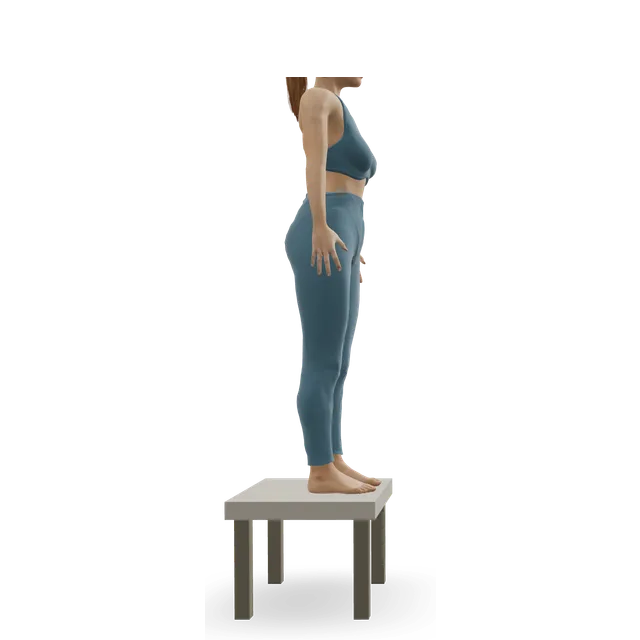
- Box drop landing3 × 5Intermediate · Quads, Glutes, Hamstrings · 3D demoStep off a box about 30 cm high, land on both feet and holdEasier: Snapdown to athletic landingHarder: Depth jump
- Single-leg hop and stick2 × 5 each legIntermediate · Quads, Glutes, Calves · 3D demoStick the landing with your knee over your middle toesEasier: Standing broad jump with stuck landingHarder: Alternate-leg bounding


Legs and riding stance
Rest 2 min between sets
- Dumbbell goblet squat3 × 6 to 8Intermediate · Quads, Glutes, Abs · 3D demoSit down between your heelsEasier: Bodyweight squatHarder: Barbell front squat
- Rear-foot-elevated split squat (Bulgarian split squat)3 × 6 to 8 each legIntermediate · Quads, Glutes, Hamstrings · 3D demoFront knee over the middle toesEasier: Reverse lungeHarder: Split squat jump
- Wall sit3 × 30 to 45 sBeginner · Quads, Glutes · 3D demoYour riding stance against a wall; breathe throughoutEasier: Straight-leg raiseHarder: Spanish squat (band squat hold)



Pulling and grip
Rest 2 to 3 min between sets
- Pull-up4 × 3 to 5Advanced · Back, Biceps, Forearms · 3D demoCan't do 3? Use band-assisted pull-upsEasier: Assisted pull-up (machine)Harder: Weighted pull-up
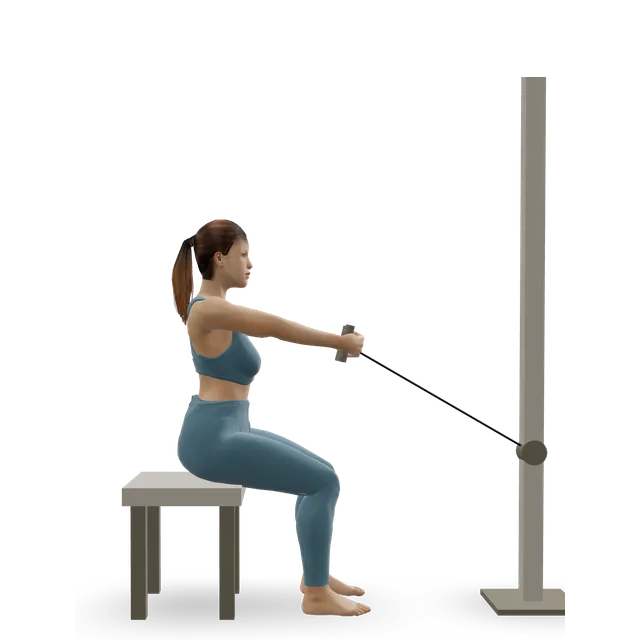
- Seated cable row3 to 4 × 5 to 6, at about 80% of your maximumBeginner · Back, Biceps, Shoulders · 3D demoPull smoothly, like sheeting inHarder: Supported single-arm dumbbell row
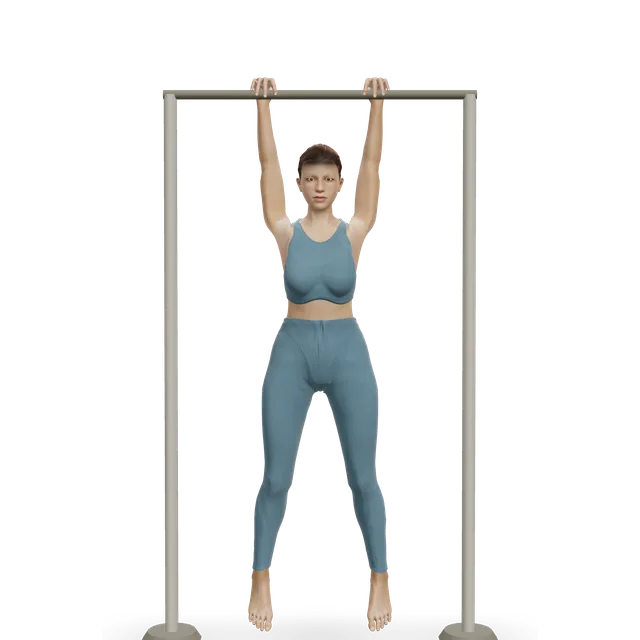
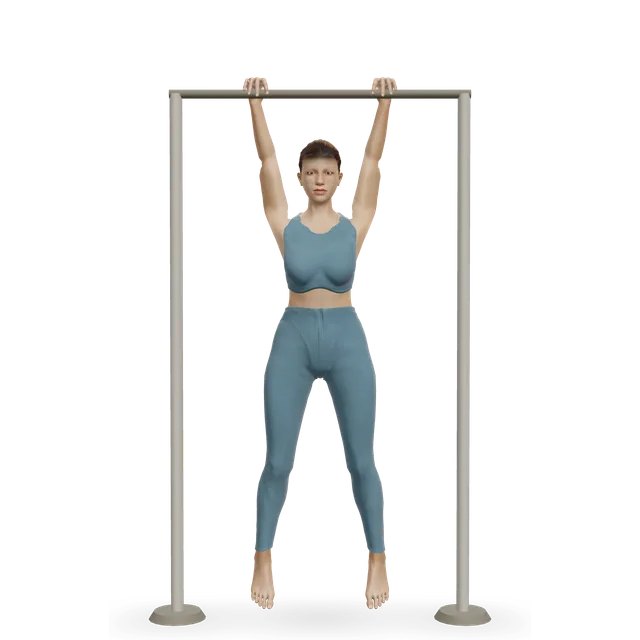
- Bar hang3 × 10 to 20 sIntermediate · Forearms, Back, Shoulders · 3D demoFeet ready to take your weightEasier: Exercise ball pyramid drapeHarder: One-arm dead hang
Trunk
- Half-kneeling Pallof press10 each sideBeginner · Abs, Glutes, Shoulders · 3D demoPress out and don't let the band turn youHarder: Pallof press
- Side plank2 × 20 to 40 s each sideIntermediate · Abs, Hip abductors, Shoulders · 3D demoHips highEasier: Knee side plankHarder: Side plank with leg lift
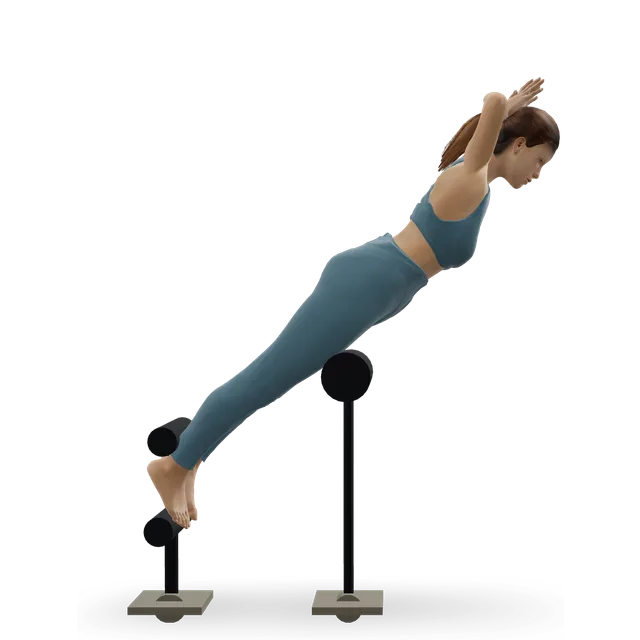
- Back extension on a 45-degree bench2 × 8 to 12Intermediate · Back, Glutes, Hamstrings · 3D demoFinish straight, not archedEasier: Ball back extensionHarder: Horizontal back extension (hyperextension, Roman chair)


Shoulder care
- Standing band external rotation2 × 12 to 15 each armBeginner · Shoulders, Back · 3D demoElbow at your side; slow on the way backEasier: Stick-assisted external rotation (lying)Harder: Side-lying external rotation
- Prone Y-T-W raises2 × 10 of the T and the YBeginner · Back, Shoulders, Neck · 3D demoThumbs up; about 5 seconds each wayEasier: Wall angelHarder: Bent-over reverse fly


Tips
- Twice a week, away from big days on the water (our suggestion).
- Windsurfers: pumping makes Olympic windsurfing an endurance sport, so add intervals on a rowing machine or bike on another day, such as our cardio intervals or Norwegian 4x4 workouts (our suggestion).
- Kitesurfers: landing loads were highest in aggressive freestyle jumps and failed kite loops, so build jump height on the water with an instructor, not in the gym.
- Wing foilers: most injuries came from riding errors when tired, so take a break before you're tired.
- Lessons first: beginners had far more major kitesurfing injuries than experienced riders, and most people can ride after a 3-day course at an approved school.
- Low back pain after pumping or long sessions in the harness is common: see our back pain guide. A knee that gives way or swells after a landing: see our ACL guide.
The doses are suggested starting points, not a prescription. Choose a range you can control and stop for sharp or increasing pain, numbness or tingling. Get individual advice after an injury or surgery, or if you are pregnant or managing a health condition.
Guides that recommend it
Find more moves like these
More sports training

Injury prevention exercises for runners
Foot, calf, balance and hop exercises taken from the running trials with positive results, in a 25-minute home routine for 3 or 4 days a week.
25 minBeginner11 movesOther / check instructions, A bench or box



Plyometrics for runners
A 20-minute hop and bound session for runners: ankle bounces to pogo hops, one-leg hops and bounding, building foot contacts slowly over 10 weeks.
20 minIntermediate8 movesCardio machine



Strength workout for cyclists (gym)
A 50-minute gym session for cyclists: heavy squats, one-leg presses, hip flexion and calf raises as in the cycling trials, plus jumps for bone.
50 minIntermediate13 movesCardio machine, A barbellQuestions people ask
How long does the strength workout for windsurfers, kitesurfers and wing foilers: landings, legs, pulling, grip and trunk take?
About 50 minutes, including any warm-up and cool-down listed. Shorten it by doing fewer rounds; lengthen it by adding one.
What equipment do I need?
You need: Cardio machine, A band, A step, A dumbbell, A bench or box, A wall, Pull-up bar, A cable machine, An anchor point. Each move links to its guide, where you can find an alternative if you are missing something.
Is it suitable for me?
It is written at intermediate level. 14 of its 18 moves have an easier option listed beside them; use them freely.
How do I make it easier or harder?
Use the easier or harder option listed under each move, change the number of rounds, or adjust the rest. Progress one change at a time.