Fascia release for the ribs: the rib cage, the diaphragm and breathing, rolling the ribs, rib flare, and when rib pain needs checking
Fascia release for the ribs usually means rolling the back and side of the rib cage, breathing into the lower ribs, or a therapist's "diaphragm release" under the lower ribs. It can make the rib cage feel freer for a while. It doesn't change lung function, put a rib back in place or fix rib flare.
The honest headline: chest and rib pain come first, because the heart, lungs and clots must be ruled out before anyone treats the ribs.
This guide explains how the ribs move when you breathe, what diaphragm release did in small trials, a 15-minute rib cage routine, who shouldn't press on the ribs, and the rib pain that needs help today.
Pain from the chest wall causes about a quarter to a half of chest pain in general practice, but pain you can press on doesn't rule out the heart: heart disease is present in 3% to 6% of adults with chest pain and a tender chest wall.
In one trial of 20 people with chronic obstructive pulmonary disease (COPD), 6 sessions over 2 weeks improved diaphragm movement and walking more than a fake treatment, and in healthy women one session widened chest movement straight afterwards. Nobody measured whether it lasts, and manual therapy didn't change lung function in reviews of COPD trials.
We found no trial of rib or upper back rolling against a fake or no treatment. Seven minutes of trunk rolling raised trunk range about as much as stretching, as rolling does elsewhere.
It is mostly the shape of the rib cage, sometimes with a chest wall deformity, and can occur on its own. We found no study linking it to fascia, or showing that release pulls the ribs in.
With osteoporosis, a cough or sneeze can break a rib, and rib stress fractures happen in rowers and golfers. Rib pain that builds with training needs a GP, not rolling.
This page is for a stiff rib cage, not for chest or rib pain. Never treat chest pain yourself. A&E means accident and emergency.
Call 999
Call 999: sudden pain or discomfort in your chest that does not go away (it can feel like squeezing or pressure, burning or indigestion); pain that spreads to your left or right arm, or your neck, jaw, shoulder, stomach or back; or chest pain and you feel sweaty, sick, light-headed or short of breath. It could be a heart attack. Don't drive yourself to A&E.
Call 999: chest pain with difficulty breathing, your heart beating fast, or coughing up blood. This could be a blood clot in the lungs (pulmonary embolism).
Call 999 or go to A&E if breathing suddenly becomes difficult, if pain in your chest or upper back comes on suddenly with breathlessness or a very fast heartbeat, or if someone passes out. These are the NHS's signs of a blood clot in the lungs (a pulmonary embolism) or another serious condition. Don't drive yourself.
Call 999: sudden chest or back pain that can feel like something being torn inside, with shortness of breath and problems walking, seeing or speaking.
Call 999: sudden chest pain or discomfort, or chest pain with feeling sweaty, sick, light-headed or breathless. A collapsed lung (pneumothorax) causes a sudden, sharp, stabbing pain in the chest or shoulder that gets worse when you breathe in, with breathlessness; it is more common in people aged 15 to 34, people who smoke, and tall, thin people.
Call 999 for any of these signs even if your chest is sore to press: pain you can press on can still come from the heart or a clot (our suggestion, from the studies in this guide). Heart disease is present in 3% to 6% of adults with chest pain and a tender chest wall.
Call 999 or go to A&E: a rib injury caused by a serious accident, such as a car accident. Don't drive yourself: ask someone to drive you or call 999.
Call 999 or go to A&E: with a broken or bruised rib, shortness of breath or chest pain that is getting worse, or coughing up blood. A broken rib may have damaged your lung.
Call 999 or go to A&E: with a broken or bruised rib, pain in your tummy or shoulder. A broken rib can damage the liver or spleen.
The diaphragm is the main muscle for breathing in: as it contracts, its dome moves down. The muscles between the ribs (the intercostals), including those beside the breastbone, and the scalene muscles in the neck lift and widen the rib cage, and the tummy muscles and inner intercostals pull it down when you breathe out hard. Our diaphragm and intercostals guides cover the muscles.
The chest, back and side muscles that sit on the ribs, such as the pecs, serratus anterior, the lats and the muscles between the shoulder blades, have their own fascia. There is no separate "rib fascia" that tightens and holds the ribs. We found no study measuring fascia stiffness around the ribs, or linking it to pain or breathing.
Chest wall pain
Pain from the muscles, joints and cartilage of the chest wall is the commonest cause of chest pain in general practice: 46.6% of 1,212 people in one German study, and 24.5% to 49.8% across studies, against 1.5% to 3.6% for an acute heart problem. More than half still had some chest pain at 6 months. Costochondritis is inflammation where the ribs join the breastbone.
Pain at the lower front edge of the ribs when reaching, coughing or leaning, from loose cartilage of ribs 8 to 10 catching soft tissue and nerves. Our rib pain guide covers it.
With osteoporosis, a cough or sneeze can cause a broken rib. Rib stress fractures affect 8.1% to 16.4% of elite rowers, and in a series of 19 golfers they mostly affected beginners, two of whom were first told they had a back strain. Of 54 people with rib fractures from coughing, 85% had a cough lasting 3 weeks or more, and 65% of those scanned had low bone density. A past rib fracture predicts more fractures, and in older men about half of rib fractures followed a fall from standing height or less.
Rolling briefly dampens spinal reflexes, more with harder pressure and even with fake rolling, and they return to normal straight afterwards. Rolling one calf raised pain thresholds in the other calf too, which points to the nervous system. Dense fascia doesn't change shape at these forces.
A therapist's hands hook under the cartilage of the lower ribs and follow the diaphragm as you breathe, typically for 2 sets of 10 deep breaths. It is a clinic technique: we found no trial of doing it on yourself.
In 20 people over 60 with stable COPD, 6 sessions of manual diaphragm release over 2 weeks improved diaphragm movement by 18 mm, the 6-minute walk by 22 m and the amount of air they could breathe in by 330 ml, more than a fake treatment. That is one small trial over 2 weeks, which we read as a summary (abstract), and nothing was measured afterwards. A crossover trial in 20 people found a diaphragm stretch and diaphragm release similar straight afterwards, with no fake treatment, and a review of diaphragm techniques in obstructive lung disease found only 2 studies and called the evidence preliminary.
One session in 75 healthy women widened chest movement by 0.49 to 1.44 cm and improved a forward-reach flexibility test against a placebo, straight after; breathing muscle strength didn't change. A review of 9 studies found immediate gains in diaphragm movement and rib cage expansion and called for studies of longer-term effects. In 24 people with low back pain, who all also had electrical nerve stimulation (TENS), 3 sessions eased pain more than a sham at 1 week, but chest expansion didn't change.
Across 6 trials of manual therapy in COPD, no effect on lung function was found, and results for exercise capacity conflicted. Adding manual therapy to rehabilitation improved walking a little, on low-quality evidence, with no change in lung function.
Pulmonary rehabilitation and breathing exercisesStrong evidence
Pulmonary rehabilitation, a course of exercise and education, improved breathlessness and added about 44 m to the 6-minute walk across 65 trials, and the National Institute for Health and Care Excellence (NICE) recommends it for COPD. Breathing exercises on their own had no consistent effect on breathlessness or quality of life. Our COPD guide covers both.
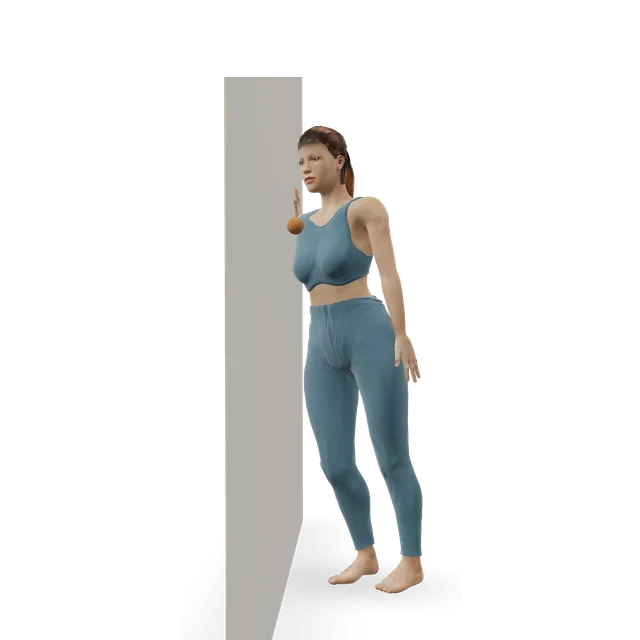
Don't push a ball or your fingers under your ribs: our stomach guide keeps rollers, balls and guns off the tummy, and nothing shows self-release works. Crocodile and lateral breathing let the lower ribs widen without pressure.
What the evidence says about rolling and costochondritis
Rolling and opening the rib cageEmerging evidence
We found no trial of rib or upper back rolling against a fake or no treatment. In 25 people, 7 minutes of trunk rolling or of stretching raised trunk bending and turning range by similar amounts straight after, with no untreated group. Six weeks of upper back exercises including roller extension improved rotation, but not the curve of the upper back, in 42 footballers. Rolling elsewhere gives a few minutes of extra range.
Clinical trials of treatment are lacking. A case series of 8 patients treated with manual therapy and exercise reported less pain, which is the weakest kind of evidence.
Nothing has tested rib rolling against a fake treatment, the diaphragm release trials are small and short, and we found no study of fascia stiffness around the ribs. We read most studies' summaries (abstracts), not their full texts.
Rib cage release in about 15 minutes: breathe, roll, open, side-bend
The doses are the move pages': the rolling doses come from a review of rolling studies (Hughes & Ramer 2019), the crocodile breathing page gives 5 minutes as its editorial starting point, and the others are the pages' own starting points. This sequence makes the rib cage feel freer for a while; it doesn't change rib position, rib flare or lung function. No trial has tested this sequence.
Check first: chest pain, sudden breathlessness, a recent fall or rib injury, osteoporosis, a sore spot beside the breastbone, or rib pain that builds with training are not for rolling. See the warning signs.
Crocodile breathing: lie face down, forehead on your hands, and breathe through your nose so your lower ribs widen into the floor and out to the sides, about 4 seconds in and 6 out, for 2 to 5 minutes.
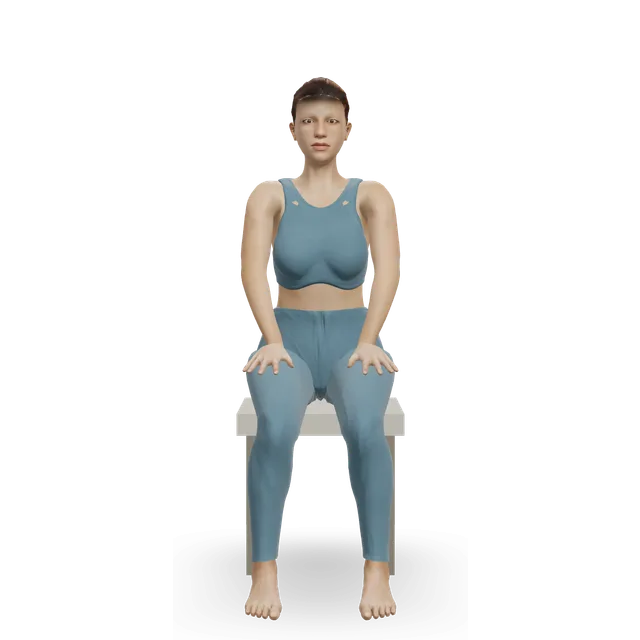
Lateral breathing: hands on the sides of your lower ribs, breathe in so the ribs widen into your hands, 5 to 8 breaths.
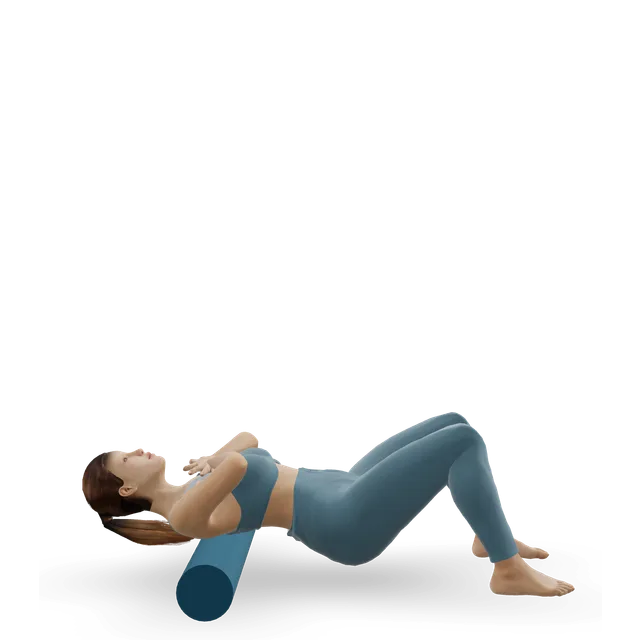
Back of the ribs: lie back on a foam roller across the upper back, arms crossed on your chest, and roll slowly from below the shoulder blades to the bottom of the rib cage, about 90 seconds. Keep it off the neck and the low back.
Upper back extension: with the roller still, let your upper back drape over it for 5 to 8 slow breaths at each of 3 or 4 spots.
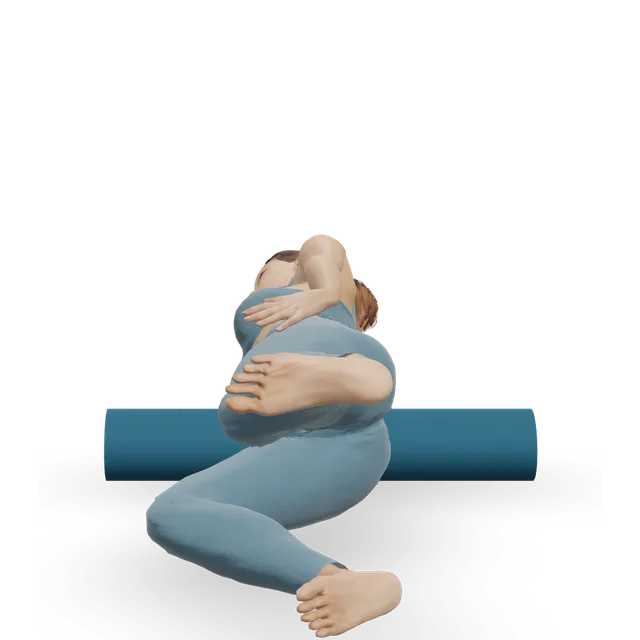
Side of the ribs: lie on your side with the roller under the side of your chest, just below the armpit, bottom arm overhead, and ease down the side of the ribs, about 90 seconds a side. Keep out of the armpit, and stop if tingling runs down your arm.
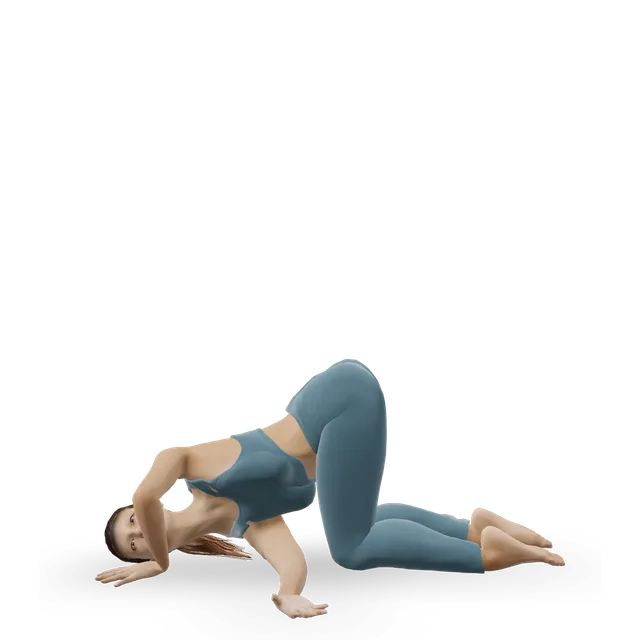
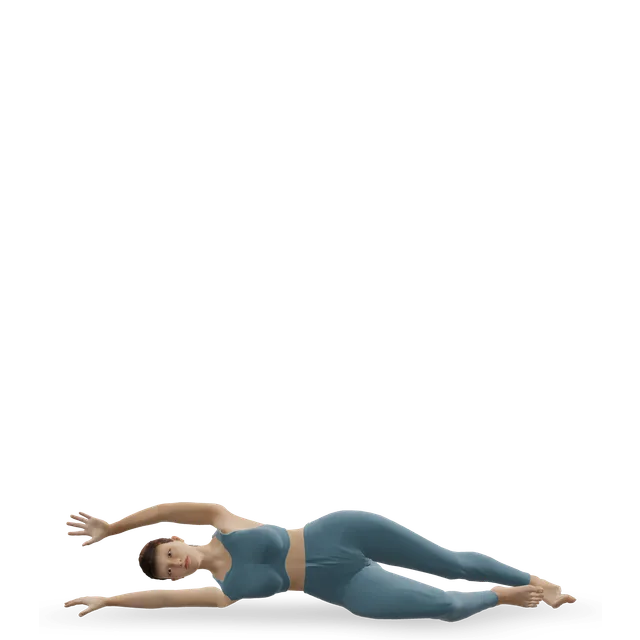
Open book: 8 to 10 slow openings each side, pausing 2 seconds at the end.
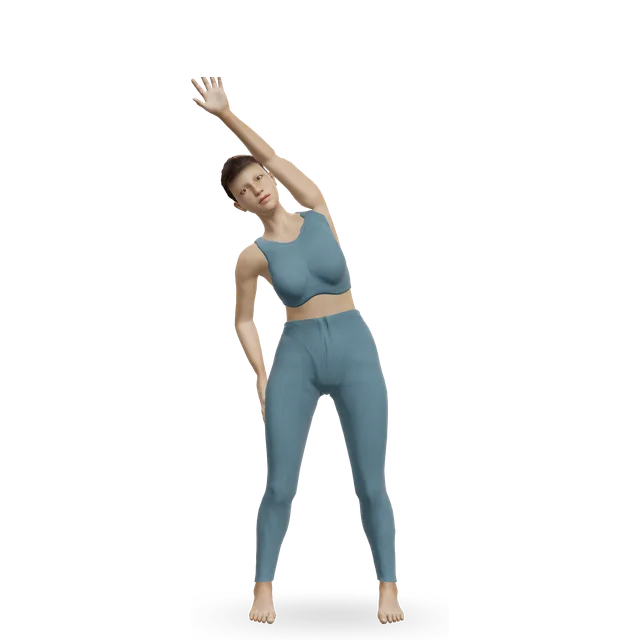
Side bend: the overhead side bend, 3 slow bends each side, breathing out into each.
Loading the 3D figure…
Drag to turn
Gets into position, then repeats the movement. Technical checks passed; qualified exercise review is pending.
Each dose names its source or is our editorial starting point. Doses are starting points, not prescriptions.
Breathing into the lower ribs
Crocodile breathing for 5 minutes, about 4 seconds in and 6 out, is its move page's editorial starting point. Lateral breathing, 5 to 8 breaths, is its move page's suggested starting point, and the breath reach, 5 breaths breathing out for longer than in, is its move page's dose.
Breathless with COPD
Pursed-lip breathing, 5 to 10 breaths sitting once or twice a day to learn it and then whenever you're breathless, is its move page's editorial dose. For COPD, pulmonary rehabilitation is the treatment with the evidence.
About 90 seconds for the back of the ribs and for each side, the move pages' dose from a review of rolling studies, at a pressure you can breathe through: harder pressure added nothing in a trial.
The open book, 8 to 10 each side with a 2-second pause; thread the needle, held for 30 to 60 seconds (5 to 10 breaths) each side, 2 rounds; the side-lying floor stretch, 20 to 30 seconds, 2 to 4 times each side; and the mermaid, 3 each direction each side. These are their move pages' editorial starting points.
Routines and breathing practices
There's no rib cage routine of its own. The fascia release for the back routine rolls the upper back and lats and includes the open book, and our breath pages teach slow breathing that widens the lower ribs.
Rib flare
What it is
In medicine, flaring lower ribs appear with chest wall deformities such as a sunken or pigeon chest, and can also appear on their own with no other abnormality.
We found no study linking rib flare to fascia, or showing that release or exercise pulls the ribs in. Our rib flare guide found no study linking it to weak abs and no trial showing breathing exercises move the ribs. Rolling and breathing can make the rib cage feel freer, but they don't change its shape. The rib flare guide also covers when ribs that stick out on one side need a check for scoliosis.
Safety: where not to press, and who should ask first
Where not to press
A rib you've hurt, or one that is tender after a fall or a coughing fit.
The joints beside the breastbone if you have costochondritis: pressing keeps them irritated.
Deep under the front of the lower ribs or into the belly: no self diaphragm release with a ball.
The armpit, over breast implants, a pacemaker or a port, and near recent chest surgery: follow your team's timings.
Thin bones
With osteoporosis, ask before rolling the upper back or ribs: the NHS notes that a cough or sneeze can sometimes break a rib. UK experts advise avoiding positions that round the spine a lot. In a case series of 3 rib fractures after spinal manipulation, the patients were aged 57 to 77 and two had thinning bones.
Keep the pressure light, or ask your doctor first, if you take blood thinners, which make bruising more likely, or have a nerve condition such as peripheral neuropathy: the NHS lists these among the reasons hands-on treatments may not be safe.
In an expert consensus of 37 researchers, open wounds and broken bones were reasons not to roll, and inflammation, a clot, a bone infection or bone forming in a muscle after an injury were at least reasons for caution.
Soreness for a day or two is common. Bruising means the pressure was too hard. Dry needling near the chest, upper back, shoulders or neck can rarely collapse a lung; our dry needling guide covers it.
When rib pain needs a doctor
The 999 signs for chest pain are near the top of this page.
Same day: urgent GP appointment or NHS 111
Same day (urgent GP appointment or NHS 111): with a broken or bruised rib, you're coughing up yellow or green mucus, or you have a very high temperature or feel hot, cold or shivery. You may have a chest infection that needs antibiotics.
Ask for an urgent GP appointment or get help from NHS 111: you have sharp chest pain that comes and goes, or only happens when breathing or coughing; sharp chest pain that has not got better after a few days; you've coughed up a few small spots, flecks or streaks of blood, or noticed blood in your phlegm; or you're feeling short of breath regularly. It can be pleurisy or a chest infection.
Get help from NHS 111 if you think you have costochondritis. Chest pain needs checking to rule out other, more serious conditions, and costochondritis is diagnosed only once the heart and lungs have been considered.
Get help from NHS 111: pain or tightness in your chest, neck, shoulders, jaw or arms that comes and goes, often brought on by exercise, stress, emotion or cold and easing after a few minutes' rest. It can be angina, a sign of a heart problem. If you've been diagnosed with angina, get help from NHS 111 too if it feels worse than before, is happening more often, lasts longer or happens when you're resting.
Get urgent medical help: you're pregnant or have given birth in the last few weeks and have symptoms of pre-eclampsia, such as pain below the ribs, a severe headache that does not go away with simple painkillers, vision problems such as blurred vision or seeing flashing lights, sudden swelling of the face, hands or feet, heartburn that does not go away with heartburn medicines, being sick, or feeling very unwell. If you're pregnant, call your maternity unit if you have the number; if you've recently given birth or cannot call your maternity unit, call 111.
See a GP
A rib broke from a cough, a sneeze or a minor bump: ask your GP about your bone health.
Rib pain with no injury that builds up with rowing, golf or other training: see a GP. It may be a rib stress fracture.
"Releasing your diaphragm fixes your breathing"Mixed evidence
Diaphragm release improved diaphragm movement over 2 weeks in one trial of 20 people, but manual therapy doesn't change lung function in COPD, and pulmonary rehabilitation is the treatment.
"Tight fascia causes rib flare, and release pulls the ribs in"Mixed evidence
Rib flare is the shape of the rib cage, with or without a chest wall deformity. We found no study linking it to fascia or showing that release changes it.
"A rib is out of place, and rolling pops it back"Mixed evidence
A slipping rib is loose cartilage at ribs 8 to 10, assessed by a clinician, often with ultrasound. Pressure on the ribs can break them in people with thin bones.
"Costochondritis is tight fascia you can massage out"Mixed evidence
It is inflammation where the ribs join the breastbone, no treatment has been tested in a trial, and pressing on the joints keeps them irritated. Our costochondritis guide covers what helps.
You can roll and stretch the muscles on the back and side of the rib cage, which eases how they feel for a while, mostly through the nervous system. Nothing shows it changes the fascia or the ribs themselves.
What is diaphragm release, and does it work?
A therapist hooks their hands under your lower ribs and follows your breathing. In one small COPD trial it improved diaphragm movement and walking over 2 weeks, but manual therapy doesn't change lung function.
How do I release my diaphragm at home?
Breathe: crocodile and lateral breathing let the lower ribs widen. Don't push a ball or your fingers under your ribs; for lung disease, pulmonary rehabilitation is the treatment with the evidence.
Is it safe to foam roll your ribs?
On the back and side of the rib cage, gently, for most people. Don't roll over a rib you've hurt or with costochondritis, and ask first if you have osteoporosis, because a cough or sneeze can break a rib in thin bones.
Why does my rib cage feel tight?
Often from stiff upper back and side muscles, shallow breathing or a cough. Tightness with chest pain, breathlessness or a fever isn't a fascia problem: check the warning signs on this page.
Can fascia release fix rib flare?
No. Rib flare is the shape of the rib cage, sometimes with a chest wall deformity, and we found no study linking it to fascia. Our rib flare guide found no evidence that exercise moves the ribs.
Can massage help costochondritis?
We found no trial: no treatment for costochondritis has been tested in one. Pressing on the sore joints beside the breastbone keeps them irritated, and chest pain needs checking first.
What are the best rib cage mobility exercises?
Lateral breathing, rolling the upper back, the open book, thread the needle and side bends. They make the rib cage feel freer for a while; no trial has tested them for rib mobility.
Can a massage gun be used on the ribs?
We found no trial. Keep a gun off the bony edges of the ribs, the breastbone, the front of the chest and any rib you've hurt.
When is rib pain an emergency?
Call 999 for chest pain that feels tight or spreads to your arms, neck or jaw, sudden breathlessness, coughing up blood, or sharp pain on breathing in with breathlessness. After a serious accident, or with a broken rib and worsening breathlessness, call 999 or go to A&E.
Movement education, not medical advice. Stop for sharp or increasing pain, numbness or tingling, and get individual advice if you are pregnant, after an injury or surgery, or managing a health condition. Health disclaimer.