Yoga guide

Yoga for your shoulders: tight shoulders and the neck, the upper back, strength and mobility, poses to change, and a class

Yoga is a good way to keep your shoulders moving and build some strength: back lifts like locust work the muscles between your shoulder blades, plank and downward dog put weight through your arms, and reaching poses take your arms overhead and behind. In older adults, yoga improved arm strength and reach behind the back about as much as a stretching and strengthening programme, and for tight, sore necks it worked about as well as stretching. Tight shoulders have been measured as stiffer, not shorter, and strengthening eased them in trials, so strength matters as much as stretching.

This guide covers what tight shoulders are, the neck and upper back, strength and mobility, how to build up to plank and downward dog, the poses to change, what the evidence shows, and a free 25-minute class with every move shown in 3D. If your shoulder hurts, start with our yoga for shoulder pain guide; if you have chest pain with arm or shoulder pain, go straight to the warning signs.

The short version

For shoulders that feel tight, stiff or weak, not painful ones

If your shoulder hurts, our yoga for shoulder pain guide comes first. The NHS says to keep using a sore shoulder, but "do not make up your own strenuous exercises or use heavy gym equipment", and gradually strengthening the rotator cuff and shoulder-blade muscles is the mainstay for most shoulder pain.

Sources 1, 2, 3

Four things a strong, easy-moving shoulder needs

A working rotator cuff, shoulder blades that steady and turn, weight on your hands built up in steps, and reach overhead and behind. Yoga can train all four: in a lab study, locust with the arms reaching forward worked the muscles between and below the shoulder blades hardest of 15 poses.

Sources 4, 5

Tight shoulders are stiffer, not shown to be short

In office workers with neck pain, the tops of the shoulders were measurably stiffer. In trials, strengthening eased desk neck and shoulder aches, stretching helped too, and yoga worked about as well as stretching.

Sources 6, 7, 8, 9, 10

Small trials, consistent results

In older adults, yoga improved arm strength and reach behind the back about as much as a stretching and strengthening programme, and it eased long-lasting neck pain in small trials, short term. A 2024 review found only limited evidence for shoulder movement itself.

Sources 11, 12, 13, 14

Build weight on your hands in steps

Plank, chaturanga and both dogs put up to about your body weight through your arms. Start at a wall, then with your hands raised, then on your knees. We found no study that measured the load on the shoulder in chaturanga or downward dog.

Sources 15, 16, 17

Know the warning signs

Shoulder or arm pain with chest pain is a 999 call. New weakness lifting the arm after a fall, or neck pain with pins and needles in an arm, needs help the same day (see below).

Sources 18, 1, 19

What a strong, easy-moving shoulder needs

A big ball on a small socket

The shoulder is a big ball on a small socket, held by the rotator cuff and carried on a shoulder blade that slides and turns on the ribs. Reaching overhead also needs the upper back to straighten. Our shoulder joint page has the anatomy.

Range falls with ageEmerging evidence

In 2,404 Australian adults without shoulder problems, lifting the arm forward fell by about 43 degrees in men and 41 in women from the youngest to the oldest age groups, and turning the arm out fell too, especially in women.

Source 20

Strength falls tooEmerging evidence

Shoulder strength fell with age in every direction measured, in 120 adults aged 20 to 78 and in 256 healthy shoulders.

Sources 21, 22

How yoga loads the shoulder

Sun salutations, warrior I and high lunge take the arms overhead; plank, the dogs, chaturanga and side plank put weight on the hands; binds such as cow face and eagle take the arm to the end of its turn; and headstand, shoulder stand and plough put weight on the head and neck. US health advice is that beginners avoid headstands and shoulder stands, and this page doesn't need them.

Sources 15, 23

Which poses work which musclesEmerging evidence

In 20 women with yoga experience, locust with the arms forward worked the middle and lower trapezius (the muscles between and below the shoulder blades) hardest of 15 static poses, while warrior II, dancer and reverse tabletop worked them little. In plank variations, taking more weight onto the arms meant more shoulder muscle work. Outside yoga, face-down raises with the arm overhead and turning the arm out lying on your side suit the same muscles. These lab studies measured muscle activity in healthy people, not changes over time.

Sources 4, 5, 24, 25

The shoulder bladeEmerging evidence

A shoulder blade that moves unusually is common in shoulder injuries, but a 2013 consensus says its exact role in causing them "is not clearly defined". In 419 athletes without symptoms, it went with a higher chance of shoulder pain later (35% against 25%).

Sources 26, 27

Tight shoulders and the neck

Stiffer, not shown to be shortEmerging evidence

Female office workers with neck pain had 11% stiffer upper trapezius muscles (the tops of the shoulders) than colleagues without pain, and in 88 office workers stiffness went with more neck disability. Neither study shows the muscle is short or which came first. Six months of yoga went with less trapezius stiffness in 81 healthy women, in a study that wasn't randomised.

Sources 6, 7, 28

Strengthening eased desk achesEmerging evidence

In 48 women with neck and shoulder muscle pain in mostly computer jobs, 10 weeks of specific neck and shoulder strength training cut their worst pain by about 79%, while cycling gave only a small, short-lived drop. Reviews of office workers find strengthening helps, at low certainty.

Sources 8, 9

Stretching helps tooEmerging evidence

In 96 office workers with long-term neck pain, neck and shoulder stretching twice a day, 5 days a week for 4 weeks, eased pain by 1.4 points out of 10 more than ergonomic advice alone.

Source 29

Yoga at work: about as good as stretchingEmerging evidence

In 150 office workers with mild to moderate neck or shoulder pain, a 30-minute hatha class once a week for 4 weeks, with practice at home, was "tentatively found to be non-inferior to stretching exercise". Muscle aches and tension were the commonest side effects. In 80 office workers, yoga, a Thai exercise programme and stretching helped equally.

Sources 10, 30

Yoga for long-lasting neck painEmerging evidence

In 3 trials (188 people), yoga eased neck pain and disability more than usual care in the short term, and a review of 10 trials (686 people) drew "a very cautious conclusion" that it eases pain and improves neck movement. The trials are small, mostly from one German group and not blinded. In one, people who kept practising did best a year on. Our yoga for neck pain guide has the detail.

Sources 14, 31, 32, 33, 34

No single best exercise for the neckMixed evidence

Across 40 trials, yoga, Pilates, tai chi and qigong as a group did about as well as strengthening and neck control exercises, at very low certainty; the authors concluded "There is not one superior type of physical exercise for people with chronic non-specific neck pain." Yoga is a reasonable choice, not the best one.

Sources 35, 36, 37

Posture is a weak causeEmerging evidence

People with and without shoulder pain have similar upper-back rounding, though the arm lifts further while you sit tall. Across 23 trials, strengthening improved upper-back and neck posture and stretching didn't. Our yoga for rounded shoulders guide covers posture.

Sources 38, 39

What the evidence says

Most trials are small, short and unblinded, and few were about shoulders alone. We say where the evidence is thin.

Strength and reach in older adultsEmerging evidence

In 118 sedentary adults averaging 62, 8 weeks of hatha yoga improved arm curls and the back scratch test (reaching one hand down behind your neck and the other up your back) as much as a stretching and strengthening programme. In 39 adults over 60, Thai yoga improved reach behind the back by 2 cm and arm curls against a control group.

Sources 11, 40

A review of 12 studies in older adultsMixed evidence

Yoga raised upper-limb strength (an effect size of 0.65 across 5 studies, with results that varied a lot). For upper-body flexibility, the abstract calls the effect not significant, but the review's own table gives a small effect (0.25) whose range stays above zero. It's a single-author review, so treat both numbers with care.

Source 12

Push-ups in middle ageEmerging evidence

In 173 adults about 52 in Hong Kong, 12 weekly hatha classes with practice at home improved the push-up test against a waiting list, in a trial that wasn't randomised. A small study of 10 young adults with no comparison group found arm strength gains of 19% to 31%.

Sources 41, 42

Gentle, once-weekly yoga may not be enoughEmerging evidence

In 42 sedentary young women, once-weekly yoga based on sun salutations didn't raise shoulder strength over 8 weeks, while stabilisation training did. Strength comes from poses hard enough to tire you, made harder over the weeks.

Source 43

Shoulder range: limited evidenceMixed evidence

A 2024 review of 8 studies found only limited evidence that yoga improves shoulder movement. Pooled Thai yoga trials found shoulder extension 1.5 degrees better at 8 weeks, a tiny change; a year of hatha yoga improved whole-body flexibility more than calisthenics in 66 older adults, in a study that doesn't describe random allocation; and sauna yoga didn't change shoulder flexibility in 23 older adults.

Sources 13, 44, 45, 46

Stretching and strength both improve rangeEmerging evidence

Upper-body stretching raised shoulder range 33% more than control in 48 women about 75. Across 11 trials, strength training improved range of movement as much as stretching, and across 55 studies, resistance training with a load improved it, though not with body weight alone. So the strong poses and a band count toward mobility too.

Sources 47, 48, 49

After breast cancer surgeryEmerging evidence

In 444 women, 12 weeks of yoga improved shoulder turning and one reach-behind-the-back test more than an exercise DVD, at every check to 12 months. Start only with your breast team's go-ahead; our yoga for breast cancer guide covers it.

Source 50

Strengthening is what helps a painful shoulderStrong evidence

In 102 people with long-standing impingement pain, specific rotator cuff and shoulder-blade exercises worked better than general exercise and fewer chose surgery. In 708 adults with rotator cuff disorders, up to 6 physiotherapy sessions of progressive exercise did no better than one session of good advice with a home programme. Our yoga for shoulder pain guide owns this.

Sources 2, 3

What we couldn't findStrong evidence

Our searches found no study that measured the load on the shoulder in chaturanga or downward dog. Two lab studies measured shoulder muscle activity in yoga poses: 15 static poses in 20 women (we could read only the summary, which doesn't list them all) and wheel and forearm stand in 24 young women.

Sources 17, 4, 51

Weight on your hands: plank, downward dog and chaturanga

How much goes through your armsEmerging evidence

In 20 adults, plank, chaturanga, both dogs and dolphin put a peak of 0.71 to 1.08 times body weight through the two arms together, and side plank about two-thirds of body weight through one arm. The authors note "the upper extremities are not designed to absorb weight as are the lower extremities."

Source 15

Raise your hands or drop your knees to make it lighterEmerging evidence

In 23 adults, push-ups with the hands raised or from the knees put less force through the hands than standard push-ups, and push-ups with the feet raised put more. More weight on the arms in plank variations also meant more shoulder muscle work.

Sources 16, 5

An order to follow

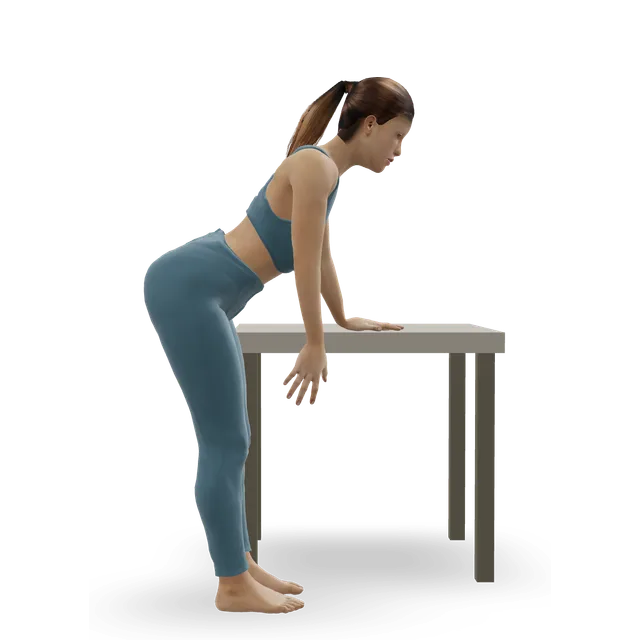
Our editorial order, the same as our yoga for shoulder pain guide's: wall push-ups, then hands on a table or chair seat, then knees down on the floor, then a full plank and downward dog, then chaturanga. Move on when the step before feels easy. We found no study of the load on the shoulder in these poses, so this order is expert opinion built from the push-up studies.

Source 17

Chaturanga and flowing classes

Lower with your knees down at first and only until your shoulders are level with your elbows, as our yoga for arms class teaches. In flowing classes, sun salutations take your arms overhead and back down in every round, so do fewer rounds and step back rather than jumping (our suggestion).

Building up to plank and downward dog

Our editorial order, following our yoga for shoulder pain guide and the push-up studies; the doses come from our yoga for shoulder pain class (wall push-ups, the knee plank) and our yoga for arms class (the rest). Stop if you feel a pinch at the front or top of the shoulder, and go back a step.

  1. Wall push-ups: hands on the wall at chest height, body in one line, 2 sets of 10.
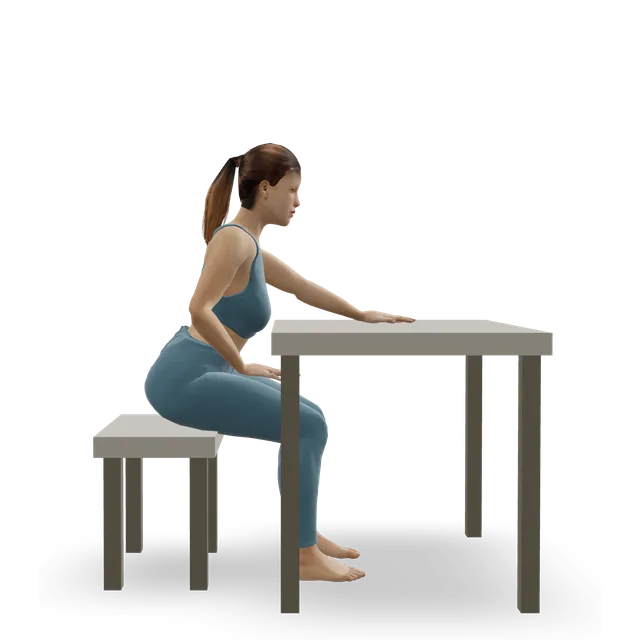
  2. Hands on a table or the seat of a sturdy chair: 2 sets of 8 to 12 push-ups.
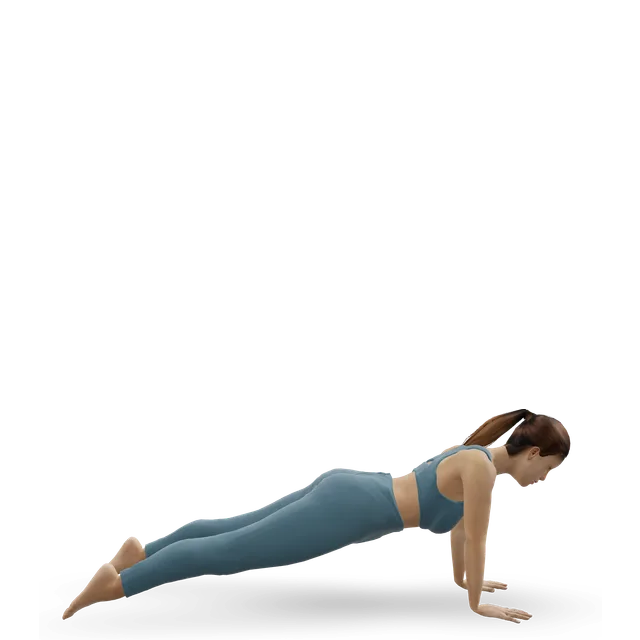
  3. On the floor with your knees down: forearm plank on your knees, shoulders over your elbows, 3 holds of 10 to 20 seconds.
  4. A full plank from your hands: shoulders over wrists, 3 holds of 15 to 30 seconds; fists or forearms if your wrists hurt.
  5. Downward dog with your knees bent generously: 3 holds of 5 breaths, pressing the floor away.
  6. When those feel easy, chaturanga: 3 to 5 slow lowers with your knees down, only until your shoulders are level with your elbows.

See the movement on the 3D figure: Straight-arm plank (high plank)

How much, and how often

Two or three times a week

The NHS asks adults to do strengthening activities that work all the major muscle groups, including the shoulders and arms, on at least 2 days a week. The trials used one to three classes a week for 4 to 12 weeks. Our editorial starting point: the strengthening poses 2 or 3 times a week, with gentle range work on other days if you like, for 8 to 12 weeks before you judge it.

Sources 52, 11, 10

Make it harder over the weeks

Longer holds, a firmer band, the next step on the ladder, then planks and chaturanga from your toes (our editorial starting point). For bigger strength gains, add pressing and rowing with weights; our guide to strengthening your shoulders has a plan.

Source 49

Move first

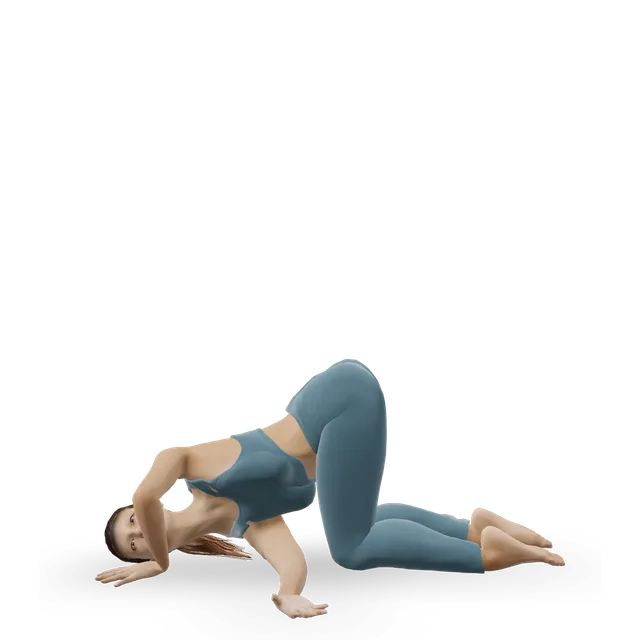
Breath reach: "5 breaths, exhale longer than inhale" (the move page's dose), arms only as high as is comfortable. Shoulder rolls: "10 to 15 slow circles each way" (from the move page's dose). Cat-cow: "8 waves, slower than feels natural" (the move page's dose), fists if your wrists complain. Thread the needle: "Hold 30 to 60 seconds, about 5 to 10 slow breaths, each side, 2 rounds" (from the move page's dose), easing off if it presses into the shoulder you're lying on. Thoracic rotation: "6 rotations per side, moving with the breath" (the move page's dose). Open book: "8 to 10 slow openings each side, pausing 2 seconds at the end" (from the move page's dose), top arm low if your shoulder feels loose or pinches.

The upper back and shoulder blades

Locust: 2 holds of 5 breaths, arms reaching forward a little off the floor (our yoga for swimmers class), or arms by your sides first. Sphinx: 2 holds of 20 to 30 seconds, skipping it if arching hurts your back (our yoga for swimmers class). Low cobra: 5 lifts, held 3 to 5 seconds, lifting with your back, not your arms (our yoga for posture class). Y-T-W raises: 1 round of 8 of each letter; wall angels: 8 slow slides, a small range is fine (our yoga for swimmers class).

The rotator cuff and upper back, with a band

Standing band external rotation: 2 sets of 10 to 15, light band, elbow at your side (our yoga for shoulder pain class). Band row: "3 sets of 10 to 15, stopping 2 to 3 reps short of failure, with 60 to 90 seconds' rest" (from the move page's dose), or 2 sets of 10 to 15 as in our yoga for arms class. Band pull-apart: 15 reps, a light band (our upper back routine). Check the band and anchor first, never a door handle.

Weight on your hands, in steps

Wall push-up: 2 sets of 10 (our yoga for shoulder pain class). Incline push-up: 2 sets of 8 to 12, hands on a table or chair seat (our yoga for arms class). Push-up plus on a bench or at a wall: 2 to 3 sets of 10 (our editorial starting point, as on our yoga for rounded shoulders guide). Knee plank: 3 holds of 10 to 20 seconds (our yoga for shoulder pain class). High plank: 3 holds of 15 to 30 seconds; downward dog: 3 holds of 5 breaths, knees bent (our yoga for arms class). Knee side plank: 2 holds of 15 to 20 seconds each side (our yoga for swimmers class), then side plank: 2 holds of 15 to 30 seconds each side (our yoga for arms class). Chaturanga last: 3 to 5 slow lowers, knees down at first (our yoga for arms class).

Reach and open

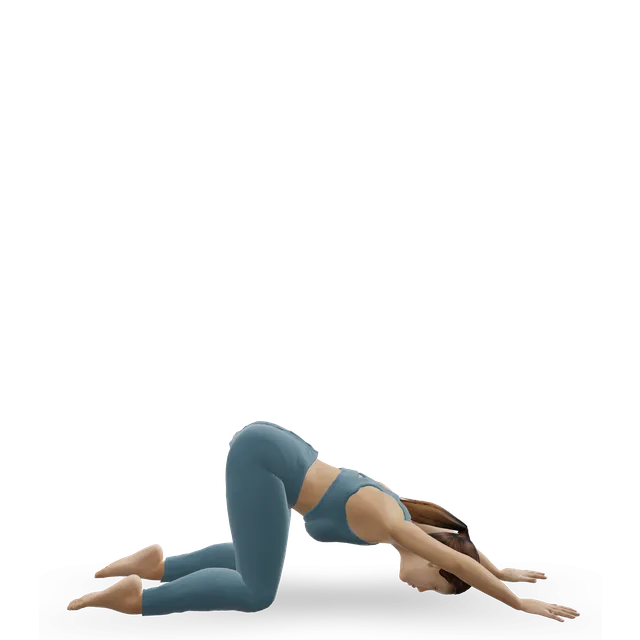
For comfort and range; stretching alone doesn't change posture. Warrior II: 5 breaths each side, arms at shoulder height, shoulders down (our yoga for arms class). Extended puppy pose: 3 to 5 slow breaths, walking your hands back if your lower back sags; it's head-down, so keep it short with glaucoma (our editorial starting point, as on our yoga for rounded shoulders guide). Overhead triceps stretch: "Hold 15 to 30 seconds, 2 to 4 times each side" (from the move page's dose), moving the elbow, not your head. Doorway chest opener: 3 holds of 30 seconds each side, elbow at shoulder height, starting low after a past dislocation (our editorial starting point, as on our yoga for rounded shoulders guide).

The neck and the tops of the shoulders

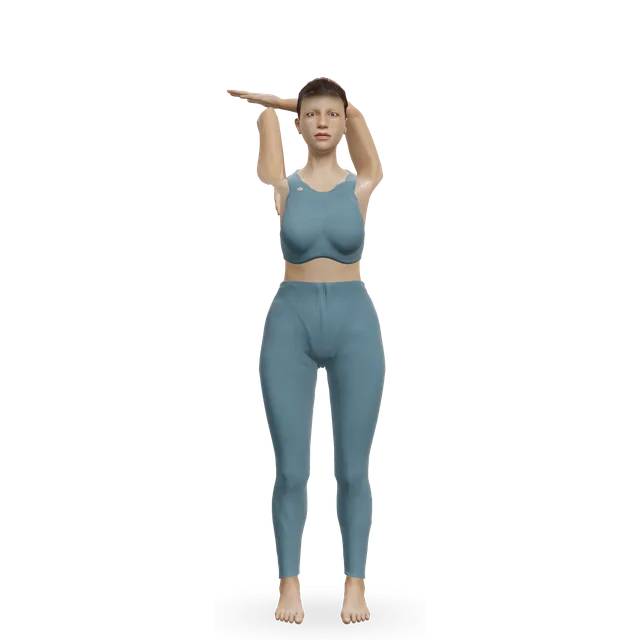
Chin tuck: 5 holds of 5 seconds, sliding your chin straight back (our yoga for neck pain class). Upper trap release: "2 slow holds of 30 seconds per side" (the move page's dose); let the weight of your head do the stretch, and don't pull with your hand (our yoga for neck pain class). Neck movements: "3 slow circles each way, once or twice a day" (from the move page's dose); with a sore neck, separate nods, tilts and turns instead, as the page says, and stop if they make you dizzy.

Breathe and rest

Slow breathing: 2 minutes, in for about 4 and out for about 6, no holds (our yoga for swimmers class). Child's pose: 1 minute, arms long in front or by your sides (our yoga for arms class). Corpse pose: 2 to 3 minutes (our editorial starting point; our yoga for swimmers class uses 3).

Poses to change or leave out

Weight on the head and neck

Headstand, shoulder stand and plough put weight on the head and neck, aren't needed for shoulder strength or range, and carry glaucoma, blood pressure and bone cautions. Headstand is the pose most often blamed in published case reports of harm. This page leaves them out (our suggestion).

Sources 53, 23

Upside down on the arms

Forearm stand and handstand load the shoulders overhead while upside down; our how-to guides cover them as skills. They aren't part of this page's plan (our suggestion).

Binds and wraps

Cow face, eagle arms and humble warrior take the arm to the end of its turn: hold a strap or your elbows, and leave the bind out while a shoulder is sore, as their move pages say.

Dolphin, wheel and upward plank

Clear dolphin with a clinician first if you have impingement or a recent rotator cuff problem, as its move page says. Skip wheel and upward plank if the front of your shoulder hurts (our yoga for arms class).

A shoulder that slips, or after a dislocation

Keep your arm in front of you, avoid taking it out to the side and turning it back, and stop if it feels about to slip, as our yoga for shoulder pain guide advises.

Very flexible shoulders

Keep stretches mild and in the middle of your range, and favour the strengthening moves: the NHS says not to overextend your joints just because you can.

Source 54

A sore shoulder you're strengthening

During shoulder strengthening, pain up to about 5 out of 10 is acceptable, and a little is expected. By your next session it should be back to where it was before. If it isn't, use a lighter band or weight or a smaller range next time, not nothing.

Source 2

Heart conditions

The plank moves' pages say: "With heart disease, keep breathing and ask your cardiac team before long holds; with heart failure, avoid planks." After heart surgery through the breastbone, follow your surgeon's advice before pushing or lifting with your arms.

Wrists, eyes, bones and pregnancy

Fists or forearms in plank and the dogs if your wrists complain. With glaucoma or high blood pressure that isn't under control, keep downward dog brief or use the wall version. With osteoporosis, the class has no deep rounding. Later in pregnancy, swap the face-down lifts for all-fours moves such as bird dog.

Is yoga safe for your shoulders?

About as safe as other exerciseEmerging evidence

In 94 trials, yoga was as safe as usual care or other exercise. In surveys of practitioners, about 2% had a serious problem, and most injuries were sprains and strains.

Sources 55, 56

But shoulders do get hurtEmerging evidence

Tears of the supraspinatus (a rotator cuff tendon) and the shoulder's cartilage rim were among the yoga injuries seen on scans in 38 patients, and 6 of 89 people treated for yoga injuries at one clinic had rotator cuff injuries. These series show it can happen, not how often.

Sources 57, 58

More care from 65Emerging evidence

In the US, emergency visits for yoga injuries were 57.9 per 100,000 practitioners at 65 and over, against 11.9 at 18 to 44. US health advice is that older adults may need to be particularly cautious and that beginners should learn with a qualified teacher.

Sources 59, 23

After a shoulder replacementEmerging evidence

In a small series, all 15 yoga practitioners were back to yoga within a year of a shoulder replacement. Follow your surgeon's limits and build up weight on the arm gradually.

Source 60

Classes to follow

Our 25-minute shoulders class covers the shoulder blades, the rotator cuff, weight on your hands in steps and reach overhead; no trial has tested the class itself. If your shoulder hurts, use the shoulder pain class instead. The arms, swimmers and posture classes go further on one part, and the neck and desk routines suit a working day.

Yoga for your shoulders: a 25-minute class for the shoulder blades, the rotator cuff, weight on your hands in steps and reach overhead

A 25-minute yoga class for your shoulders: shoulder-blade lifts, band work for the rotator cuff, plank and downward dog built up in steps, and reach overhead.

25 minBeginner17 movesWall, band

Yoga for shoulder pain: a 20-minute sequence that builds up weight on the arms

A 20-minute yoga sequence for shoulder pain: gentle movement, standing poses with the arms low, shoulder strength, and weight on the arms built up from the wall.

20 minBeginner16 movesBench or box, wall

Yoga for arms: a 20-minute arm and shoulder class with a band row

Twenty minutes of yoga for your arms and shoulders: a wrist warm-up, a stepped build-up to plank and slow lowering, side plank, a band row and stretches.

20 minBeginner15 movesBench or box, band

Yoga for swimmers: a 25-minute dryland class for the upper back, shoulder blades and hips

A 25-minute dryland yoga class for swimmers: upper-back turns, shoulder-blade and trunk holds, hips for kicking and slow breathing, safe for loose shoulders.

25 minBeginner16 movesWall

Yoga for posture: a 25-minute back-strengthening practice

Twenty-five minutes of back-strengthening yoga for posture: arm and leg reaches, face-down back lifts and standing poses with the arms raised.

25 minBeginner15 movesNo equipment

Yoga for neck pain: a 20-minute gentle sequence

Twenty minutes of slow breathing, small neck movements, poses that keep your head supported or level, and upper-back strength, with nothing that loads the neck.

20 minBeginner14 movesStep

10-minute desk yoga routine: seated and standing

Ten minutes of yoga at your desk, no mat needed: slow breathing, neck, shoulder, wrist and spine moves in your chair, then standing poses with a hand on the desk.

10 minBeginner13 movesBench or box, wall

Neck and shoulder strength routine

Deep neck holds and shoulder-blade strength in under 20 minutes: one of the best-supported kinds of exercise for a stiff, sore neck.

18 minBeginner11 movesBand, anchor point
Show all 11 workoutsShow fewer workouts

Warning signs

Stiffness that eases as you move is usually nothing to worry about. These are the warning signs from our shoulder pain, neck pain and yoga guides, word for word. This is general information, not a diagnosis. A&E means accident and emergency; in the US, call 911 for 999.

Call 999

  • Call 999: shoulder or arm pain with chest pain that feels tight or squeezing, or chest pain that spreads to your arms, neck or jaw, especially with shortness of breath, sweating or feeling sick. It could be a heart attack.
  • Call 999: you suddenly can't fully lift both arms and keep them there, because of weakness or numbness in one arm, especially if one side of your face droops or you slur your words or sound confused. It could be a stroke. Call even if the signs have stopped.
  • Call 999 or go to A&E: after a fall or injury, your shoulder looks out of place or has changed shape, you cannot move your arm, or your shoulder is painful, bruised or swollen. Do not drive yourself, and do not try to put it back in yourself.
  • Call 999 or go to A&E: new problems walking, loss of bladder or bowel control, or a sudden loss of coordination, such as difficulty doing up buttons. These can be signs of pressure on the spinal cord.

Sources 18, 61, 62, 1, 19

Get help from NHS 111

Get help from NHS 111: pain or tightness in your chest, neck, shoulders, jaw or arms that comes and goes, often brought on by exercise, stress, emotion or cold and easing after a few minutes' rest. It can be angina, a sign of a heart problem. If you've been diagnosed with angina, get help from NHS 111 too if it feels worse than before, is happening more often, lasts longer or happens when you're resting.

Source 61

New weakness lifting the arm, or a hot, swollen shoulder: the same day

  • Same day (GP or NHS 111): sudden weakness lifting the arm after an injury or fall. A rotator cuff tear caused by an injury needs urgent referral to a shoulder specialist. After a dislocation in anyone over 40, the rotator cuff should be checked: about 40% have a tear.
  • Same day (GP or NHS 111): sudden or very bad shoulder pain; you cannot move your arm; the arm or shoulder is badly swollen or has changed shape; pins and needles that do not go away; no feeling in the arm; the arm is hot or cold to the touch; pain that started after an injury such as a fall; or severe pain in both shoulders.
  • Same day (GP or NHS 111): the shoulder or arm is hot, swollen or red, or you have a high temperature (although not everyone has one) or feel unwell. A joint infection needs same-day care.

Source 1

Neck pain with numbness or pins and needles in an arm: the same day

  • Same day (urgent GP appointment or NHS 111): severe neck pain that starts suddenly or gets worse quickly; heaviness or weakness in the arms or legs; pins and needles in an arm along with neck or arm pain; or pain between the shoulder blades.
  • Same day: clumsiness in your hands, or numbness, pins and needles or weakness in one or both arms, that is getting worse; problems with balance or walking since the neck pain started; or neck pain with a severe headache.
  • Arm weakness or numbness that keeps getting worse, severe pain that painkillers and rest do not touch, or an unexplained fever.

Source 19

See a GP or physiotherapist

  • Pain that is getting worse or has not improved after 2 weeks of looking after it yourself, or it is very hard to move your arm. In many areas you can refer yourself to physiotherapy.
  • Your shoulder has partly or fully come out of joint, or you worry it might.
  • Pins and needles or a cold arm alongside neck pain, or a new loss of strength or feeling in the arm that you cannot explain (a possible nerve problem).
  • Neck pain or stiffness that has not eased after a few weeks, or after 8 weeks of looking after it yourself; painkillers are not helping; or you are worried. In many areas you can refer yourself to NHS physiotherapy.
  • No improvement after 6 weeks of exercise, or arm symptoms still there beyond 6 to 12 weeks.
  • See a GP if you have pain and stiffness for more than a week, especially if you're over 50, it's in both shoulders (often the neck and hips too) and the stiffness lasts longer than 45 minutes in the morning. It can be polymyalgia rheumatica.

Sources 1, 19, 63

Neck circles

Stop if neck circles bring on dizziness, light-headedness or tingling into an arm. Make the movement smaller, with separate turns and nods, and see a GP if it keeps happening. Our neck pain guide has more.

Chest pain or fainting while exercising: call 999

Call 999 if:

  • You get sudden pain or discomfort in your chest that doesn't go away; it can feel like squeezing or pressure, burning or indigestion.
  • The pain spreads to your left or right arm, or your neck, jaw, stomach or back.
  • You have chest pain and feel sweaty, sick, light-headed or short of breath.
  • Someone faints while exercising, can't be woken within 1 minute, or has chest pain or a pounding, fluttering or irregular heartbeat.

Sources 61, 18, 64

Unusual breathlessness

Call 999 or go to A&E (accident and emergency) straight away for severe difficulty breathing (gasping, choking or not able to get words out), a chest that feels tight or heavy, pain that spreads to your arms, back, neck and jaw, lips or skin turning very pale, blue or grey, or sudden confusion. If you're more short of breath than usual, or your heart is racing, fluttering or skipping beats, contact NHS 111.

Source 65

During yoga

A joint pain that is sharp, gets worse during a session, lingers into the next day or changes how you move is a reason to use an easier version, and to see a GP or physiotherapist if it keeps happening (the rule in our plans). Muscle soreness for a day or two after something new is normal. In a hot class, stop if you feel dizzy, sick or unwell; our hot yoga guide lists the signs of heat illness.

You can say no to any hands-on adjustment, and a teacher registered with Yoga Alliance must get your explicit consent each time.

Sources 66, 56, 23, 67

Head-down poses, bones and pregnancy

With glaucoma, or high blood pressure that isn't under control, skip headstands, shoulder stands and long head-down holds. With osteoporosis, swap deep forward folds for a flat-back hinge from the hips, and twist smoothly. In pregnancy, our yoga in pregnancy guide covers the changes. NCCIH advises beginners to avoid headstands, shoulder stands, the lotus position and forceful breathing.

Sources 68, 23

Before you start

The NHS advises getting advice from a healthcare professional first if you have a health problem, an injury or symptoms, or have recently had a heart attack or an operation.

Myths

"Tight shoulders only need stretching"Emerging evidence

The tops of the shoulders are measurably stiffer in people with neck pain, not shown to be short. Specific strengthening cut office workers' worst trapezius pain by about 79% in one trial, and reviews favour it. Stretching helps too, so do both.

Sources 6, 8, 9, 29

"Yoga is too gentle to strengthen your shoulders"Emerging evidence

In older adults, yoga raised upper-limb strength and arm curls as much as stretching and strengthening, and hatha classes raised push-ups in middle-aged adults. But once-weekly gentle flows didn't raise shoulder strength in young women: it depends on the poses and on making them harder over time.

Sources 12, 11, 41, 43

"Flexibility comes only from stretching"Emerging evidence

Strength training improved range of movement as much as stretching across 11 trials, and resistance training with a load raised it across 55 studies.

Sources 48, 49

"Open your chest and your shoulders will go back"Emerging evidence

Stretching programmes didn't change posture across 23 trials; strengthening did. Our yoga for rounded shoulders guide has the detail.

Source 39

"Bad posture causes tight or painful shoulders"Emerging evidence

Upper-back rounding doesn't differ between people with and without shoulder pain.

Source 38

"Chaturanga and downward dog wreck your shoulders"Mixed evidence

We found no study that measured the load on the shoulder in either. They put up to about body weight through your arms, so build up in steps from the wall. Serious yoga injuries are uncommon.

Sources 17, 15, 16, 56

"Headstand and shoulder stand are good for your shoulders"Emerging evidence

They load the head and neck, aren't needed for shoulder strength or range, and headstand is the pose most often blamed in published case reports of harm. US health advice is that beginners avoid them.

Sources 53, 23

"Yoga is the best exercise for neck and shoulder tension"Mixed evidence

Across 40 trials no single type of exercise was best: yoga, strengthening and neck control exercises did about as well as each other, at very low certainty.

Sources 35, 37

Questions people ask

Is yoga good for your shoulders?

Yes, as a way to keep them moving and build some strength. In older adults, yoga improved arm strength and reach behind the back about as much as a stretching and strengthening programme. Strength work with a band or weights adds more.

What yoga poses help tight shoulders?

Back lifts such as locust with the arms reaching forward, which worked the muscles between and below the shoulder blades hardest of 15 poses in a lab study, plus thread the needle, the upper trap release and wall angels for range. Tight shoulders have been measured as stiffer, not shorter, so pair the stretches with strengthening.

Does yoga help a stiff neck and shoulders?

For long-lasting neck pain, yoga eased pain and disability more than usual care in small trials, in the short term, and in office workers it worked about as well as stretching. Neck pain that spreads into an arm with pins and needles or weakness needs checking the same day.

Can yoga make my shoulders stronger?

It can, especially if you're new to exercise: plank, downward dog, side plank and slow lowering put up to about your body weight through your arms. Gentle once-weekly flows may not be enough, so make the poses harder over the weeks or add a band.

How do I build up to downward dog and plank?

Start at a wall, then with your hands on a table, then on your knees, then the full pose: raising your hands or dropping your knees cuts the force through your arms. Move on when each step feels easy.

Is chaturanga bad for your shoulders?

We found no study that measured the load on the shoulder in chaturanga. Lower with your knees down at first, only until your shoulders are level with your elbows, and leave it out while a shoulder is sore.

Should I stretch or strengthen tight shoulders?

Both. Specific strengthening cut office workers' neck and shoulder pain by about 79% in one trial, stretching twice a day eased neck pain in another, and strength training improves range of movement about as much as stretching.

How often should I do yoga for my shoulders?

Two or three times a week for the strengthening poses, as in the trials, with gentle range work on other days if you like. Give it 8 to 12 weeks before you judge it.

Is shoulder stand good for the shoulders?

It mainly loads the neck and upper back and isn't needed for shoulder strength or range, and US health advice is that beginners avoid it. Skip it with glaucoma, high blood pressure that isn't under control or osteoporosis.

My shoulder hurts in yoga. What should I do?

Use an easier version, and see a GP or physiotherapist if it keeps happening. Most shoulder pain settles, and the NHS says to keep using the arm. Our yoga for shoulder pain guide has the plan, and chest pain with arm pain is a 999 call.

Do shoulders get stiffer with age?

Yes: in 2,404 adults without shoulder problems, lifting the arm forward fell by about 40 degrees from the youngest to the oldest groups, and strength falls too. Training helps at any age: upper-body stretching raised shoulder range by a third in women about 75.

Can yoga fix rounded shoulders?

No yoga trial has tested it. Across 23 trials, strengthening changed upper-back posture and stretching didn't, so favour the back lifts. Our yoga for rounded shoulders guide has the detail.


Sources

  1. NHS · Shoulder pain (past its review date: reviewed May 2023, review due May 2026)
  2. Holmgren 2012 · Specific shoulder exercises against general exercise in 102 people with long-standing impingement pain (randomised trial, BMJ; read in full)
  3. Hopewell 2021 · Progressive exercise against one session of advice for rotator cuff disorders in 708 adults: the GRASP trial (randomised trial, Lancet)
  4. Chopp-Hurley 2018 · Shoulder-blade muscle activity in 15 static yoga poses in 20 women (lab study, J Orthop Sports Phys Ther)
  5. Can 2024 · Shoulder muscle activity in 10 plank variations in 21 men (lab study, J Strength Cond Res)
  6. Kocur 2019 · Upper trapezius stiffness in 16 female office workers with neck pain and 16 without (cross-sectional study, PM R)
  7. Leong 2026 · Upper trapezius stiffness and neck disability in 88 office workers (cross-sectional study, Physiother Theory Pract)
  8. Andersen 2008 · Specific neck and shoulder strength training against cycling in 48 women with trapezius pain (randomised trial, Arthritis Rheum)
  9. Jones 2024 · Exercise for office workers with chronic neck pain: 8 trials (systematic review and meta-analysis, Appl Ergon)
  10. Kuptniratsaikul 2023 · Hatha yoga against stretching in 150 office workers with neck or shoulder pain (randomised non-inferiority trial, Complement Ther Med)
  11. Gothe 2016 · Hatha yoga against stretching and strengthening in 118 sedentary adults about 62 (randomised trial, J Gerontol A Biol Sci Med Sci)
  12. Shin 2021 · Yoga and fitness in older adults: 12 studies (meta-analysis, Int J Environ Res Public Health; read in full)
  13. Rathore 2024 · Yoga and spine and shoulder mobility: 8 studies (systematic review, J Bodyw Mov Ther)
  14. Cramer 2017 · Yoga for chronic neck pain: 3 trials, 188 people (systematic review and meta-analysis, Clin Rehabil)
  15. Wilcox 2012 · Forces through the hands and feet in 28 hatha yoga poses in 20 adults (lab study, Int J Exerc Sci; read in full)
  16. Ebben 2011 · Forces through the hands in push-up variations in 23 adults (lab study, J Strength Cond Res)
  17. Our searches · PubMed for studies of chaturanga or downward dog, and for yoga studies of the load on the shoulder or shoulder muscle activity (2 November 2026): none measured the load on the shoulder in either pose
  18. NHS · Heart attack (last reviewed March 2026)
  19. NHS · Neck pain (past its review date: reviewed April 2023, review due April 2026)
  20. Gill 2020 · Shoulder range of movement by age in 2,404 adults (population study, BMC Musculoskelet Disord; read in full)
  21. Hughes 1999 · Shoulder strength and age in 120 adults (cross-sectional study, Am J Sports Med)
  22. Pike 2022 · Shoulder range and strength by age in 256 healthy shoulders (cross-sectional study, JSES Int)
  23. NCCIH 2023 · Yoga: effectiveness and safety (US National Center for Complementary and Integrative Health)
  24. Ekstrom 2003 · Trapezius and serratus anterior activity in 10 exercises in 30 adults (lab study, J Orthop Sports Phys Ther)
  25. Cools 2007 · Shoulder-blade muscle balance in 12 exercises in 45 adults (lab study, Am J Sports Med)
  26. Kibler 2013 · The shoulder blade in shoulder injury: the Scapular Summit (consensus statement, Br J Sports Med)
  27. Hickey 2018 · Shoulder-blade movement and later shoulder pain in 419 athletes: 5 studies (systematic review and meta-analysis, Br J Sports Med)
  28. Liu 2025 · Trapezius and hamstring stiffness over 6 months of yoga in 81 women (controlled study, not randomised, Front Physiol; read in full)
  29. Tunwattanapong 2016 · Neck and shoulder stretching for 96 office workers with neck pain (randomised trial, Clin Rehabil)
  30. Thanasilungkoon 2023 · Ruesi Dadton, yoga and stretching for neck and shoulder pain in 80 office workers (randomised trial, Int J Exerc Sci; read in full)
  31. Li 2019 · Yoga for chronic neck pain: 10 trials, 686 people (systematic review and meta-analysis, Medicine)
  32. Michalsen 2012 · Iyengar yoga against self-care exercise for chronic neck pain in 77 adults (pilot randomised trial, J Pain)
  33. Cramer 2013 · Iyengar yoga against home exercise for chronic neck pain in 51 adults (randomised trial, Clin J Pain)
  34. Cramer 2013 · Yoga for chronic neck pain: 12-month follow-up of 51 adults (follow-up of a randomised trial, Pain Med)
  35. de Zoete 2020 · Types of exercise for chronic neck pain: 40 trials (network meta-analysis, Br J Sports Med)
  36. Mueller 2023 · Exercise for chronic neck pain: 68 trials (systematic review and meta-analysis, J Orthop Sports Phys Ther)
  37. Rasmussen-Barr 2023 · Types of exercise for chronic neck pain: 25 reviews (review of systematic reviews, BMC Musculoskelet Disord)
  38. Barrett 2016 · Upper-back posture and shoulder pain: 10 studies (systematic review, Man Ther)
  39. Warneke 2024 · Stretching or strengthening and posture: 23 studies, 969 people (systematic review and meta-analysis, Sports Med Open; read in full)
  40. Noradechanunt 2017 · Thai yoga or tai chi in 39 sedentary adults over 60 (randomised trial, J Sci Med Sport)
  41. Lau 2015 · Twelve weeks of hatha yoga in 173 adults in Hong Kong (controlled trial, not randomised, Evid Based Complement Alternat Med; read in full)
  42. Tran 2001 · Eight weeks of hatha yoga in 10 young adults (study with no comparison group, Prev Cardiol)
  43. Özalp 2026 · Yoga or stabilisation training in 42 sedentary young women (randomised trial, Eur J Appl Physiol)
  44. Kongkaew 2018 · Thai yoga and fitness: 7 trials (meta-analysis, J Altern Complement Med)
  45. Farinatti 2014 · One year of hatha yoga or calisthenics and flexibility in 66 older adults (controlled study, Int J Yoga Therap)
  46. Bucht 2019 · Sauna yoga against yoga at room temperature in 23 older adults (pilot randomised trial, Int J Environ Res Public Health)
  47. Webber 2022 · Upper-body stretching and neck, shoulder and trunk range in 48 women about 75 (randomised trial, Can J Aging)
  48. Afonso 2021 · Strength training against stretching for range of motion: 11 trials (systematic review and meta-analysis, Healthcare)
  49. Alizadeh 2023 · Resistance training and range of motion: 55 studies (systematic review and meta-analysis, Sports Med)
  50. Lam 2025 · Yoga and shoulder movement after breast cancer surgery in 444 women (randomised trial, Sports Med Open; read in full)
  51. Sheikhzadeh 2026 · Shoulder muscle activity in wheel and forearm stand: 24 women from a yoga club (lab study, PeerJ; read in full)
  52. NHS · Physical activity guidelines for adults aged 19 to 64 (last reviewed May 2024)
  53. Sharma 2026 · Harms reported after yoga: 84 cases (systematic review of case reports, J Integr Med)
  54. NHS · Joint hypermobility syndrome (past its review date: reviewed August 2023, review due August 2026)
  55. Cramer 2015 · The safety of yoga: 94 trials, 8,430 people (systematic review and meta-analysis, Am J Epidemiol)
  56. Cramer 2018 · Injuries and other adverse events with yoga: 9 observational studies (systematic review, J Sci Med Sport)
  57. Le Corroller 2012 · Yoga injuries on scans in 38 patients (case series, AJR Am J Roentgenol)
  58. Lee 2019 · Injuries from yoga in 89 patients at one clinic (case series, Mayo Clin Proc)
  59. Swain 2016 · Yoga injuries in US emergency departments, 2001 to 2014 (surveillance study, Orthop J Sports Med; read in full)
  60. Hoffman 2025 · Return to yoga after a shoulder replacement in 15 people (case series, JSES Int)
  61. NHS · Chest pain (past its review date: reviewed August 2023, review due August 2026)
  62. NHS · Stroke: symptoms (last reviewed September 2024)
  63. NHS · Polymyalgia rheumatica (past its review date: reviewed April 2023, review due April 2026)
  64. NHS · Fainting (last reviewed August 2026)
  65. NHS · Shortness of breath (last reviewed January 2024)
  66. Cramer 2013 · Adverse events associated with yoga: 76 published cases (systematic review of case reports, PLoS One; read in full)
  67. Yoga Alliance · Code of conduct: consent before hands-on adjustments
  68. Jasien 2015 · Eye pressure in four common yoga positions: 10 people with glaucoma and 10 without (lab study, PLoS One)

Exercise education, not a personal prescription, and clinical review of these guides is pending. If you are pregnant, have a health condition such as glaucoma, high blood pressure or osteoporosis, or have had recent surgery, check with a doctor, midwife or physiotherapist before starting, and stop for sharp or increasing pain. Health disclaimer.