Shoulder pain after yoga: chaturanga, downward dog, binds and arm balances, and what to change

Shoulder pain after yoga is usually the rotator cuff meeting more weight-bearing or overhead work than it's used to: chaturanga, plank and downward dog put up to about your body weight through your arms, and a flow class repeats them many times. It's usually an ache at the front or outside of the shoulder, often after a jump in vinyasas or a stronger class. Yoga is safe for most people, and serious shoulder injury from it is uncommon: knees down in chaturanga, fewer vinyasas, leaving out binds and arm balances for a while and a word with your teacher usually let you keep practising.

This guide starts with the signs that need help, from a 999 call for shoulder or arm pain with chest pain or breathlessness, or accident and emergency (A&E) after a fall with a shoulder that looks out of place, to a same-day check through the National Health Service's 111 line (NHS 111) or a general practitioner (GP) for sudden weakness lifting the arm or a hot, swollen shoulder. It then maps the causes by where it hurts and which poses bring it on, explains what the load studies and the rotator cuff trials show, covers your hands, elbows and vinyasas and what to tell your teacher, and gives a three-stage plan with a 3D demo of every move, back to chaturanga.

When to get help first

Exercise is for pain that has been checked or is clearly mild and settling.

Get urgent medical help if

  • Call 999 or go to A&E: after a fall or injury, your shoulder looks out of place or has changed shape, you cannot move your arm, or your shoulder is painful, bruised or swollen. Do not drive yourself, and do not try to put it back in yourself.
  • Call 999 or go to A&E after an injury (don't drive yourself) if the arm, wrist or hand is numb, tingling or has pins and needles; a bone is sticking out or a bad cut is bleeding heavily; or the arm or wrist has changed colour or shape, or is at an odd angle.
  • Call 999: after a fall, you may have hurt your head, neck, back or hip, or you cannot get up.
  • Call 999: chest pain that feels tight or like squeezing on your chest; chest pain that's spreading to your arms, neck or jaw; severe difficulty breathing (you're gasping, choking or not able to get words out); lips or skin that are pale, blue or grey (on brown or black skin this may be easier to see on the palms of the hands); or someone who has passed out and is not responding normally. It could be a heart attack. Don't drive yourself to A&E.
  • Call 999: shoulder or arm pain with chest pain that feels tight or squeezing, or chest pain that spreads to your arms, neck or jaw, especially with shortness of breath, sweating or feeling sick. It could be a heart attack.
  • Get help from NHS 111: pain or tightness in your chest, neck, shoulders, jaw or arms that comes and goes, often brought on by exercise, stress, emotion or cold and easing after a few minutes' rest. It can be angina, a sign of a heart problem. If you've been diagnosed with angina, get help from NHS 111 too if it feels worse than before, is happening more often, lasts longer or happens when you're resting.
  • Call 999: you suddenly can't fully lift both arms and keep them there, because of weakness or numbness in one arm, especially if one side of your face droops or you slur your words or sound confused. It could be a stroke. Call even if the signs have stopped.
  • Call 999 or go to A&E: if you are or could be pregnant, shoulder tip pain (where the shoulder ends and the arm begins) with sudden severe tummy pain, dizziness or fainting. It can mean bleeding from an ectopic pregnancy.
  • Same day (GP or NHS 111): the shoulder or arm is hot, swollen or red, or you have a high temperature (although not everyone has one) or feel unwell. A joint infection needs same-day care.
  • Same day (GP or NHS 111): sudden or very bad shoulder pain; you cannot move your arm; the arm or shoulder is badly swollen or has changed shape; pins and needles that do not go away; no feeling in the arm; the arm is hot or cold to the touch; pain that started after an injury such as a fall; or severe pain in both shoulders.
  • Same day (GP or NHS 111): sudden weakness lifting the arm after an injury or fall. A rotator cuff tear caused by an injury needs urgent referral to a shoulder specialist. After a dislocation in anyone over 40, the rotator cuff should be checked: about 40% have a tear.
  • Contact a GP immediately, go to 111.nhs.uk or call NHS 111: a new or frequent headache that usually comes on suddenly (your scalp may also feel sore or tender), pain in the jaw muscles or tongue when eating or talking, or problems with your sight, such as double vision or loss of vision in 1 or both eyes. With pain and stiffness around the shoulders, these can be signs of temporal arteritis (giant cell arteritis), which up to 1 in 5 people with polymyalgia rheumatica develop. If you suddenly can't see from 1 or both eyes, call 999 or go to A&E.
  • Same day (urgent GP appointment or NHS 111): severe neck pain that starts suddenly or gets worse quickly; heaviness or weakness in the arms or legs; pins and needles in an arm along with neck or arm pain; or pain between the shoulder blades.
  • Same day: clumsiness in your hands, or numbness, pins and needles or weakness in one or both arms, that is getting worse; problems with balance or walking since the neck pain started; or neck pain with a severe headache.
  • Same day (call NHS 111, or go to A&E if you feel very unwell): after a big or unusual session, such as hundreds of pull-ups, push-ups, dips or curls, a challenge or a new class, muscle pain, swelling or weakness far worse than the session explains, and dark pee (red, brown, tea or cola coloured), sometimes starting hours or days later. Dark pee isn't always there, so muscles far sorer, more swollen or weaker than the session explains still need the same-day check. It can be rhabdomyolysis, a breakdown of muscle that can harm the kidneys.

See a doctor or physiotherapist if

  • Pain that is getting worse or has not improved after 2 weeks of looking after it yourself, or it is very hard to move your arm. In many areas you can refer yourself to physiotherapy.
  • A past history of cancer, an unexplained lump or swelling, weight loss, or pain that is constant and does not ease when you change position.
  • You smoke or used to, and have shoulder pain with a cough that will not go away, breathlessness or weight loss. See a GP if you've had a cough for longer than 3 weeks; if you've coughed up blood, ask for an urgent GP appointment or get help from NHS 111.
  • Your shoulder has partly or fully come out of joint, or you worry it might.
  • Pins and needles or a cold arm alongside neck pain, or a new loss of strength or feeling in the arm that you cannot explain (a possible nerve problem).
  • See a GP if you have pain and stiffness for more than a week, especially if you're over 50, it's in both shoulders (often the neck and hips too) and the stiffness lasts longer than 45 minutes in the morning. It can be polymyalgia rheumatica.
  • Strength getting worse, or the shoulder not clearly better by 12 weeks of exercise: ask for a specialist opinion.
  • Not improving after a good 3 months of exercise, or the arm is clearly weak: ask for a specialist opinion.
  • A shoulder blade that suddenly sticks out, or new weakness lifting, pushing or carrying: see a GP. Nerve tests may be needed to find which nerve is affected and how badly.
  • You think you or your child has joint hypermobility syndrome: joints that keep dislocating, ongoing joint or muscle pain and stiffness, frequent sprains, tiredness even after rest, poor balance or coordination, thin stretchy skin, or bladder or bowel problems.

Where does it hurt?

Location narrows the likely causes; it does not diagnose.

The front or outside of the shoulder and upper arm, an ache in chaturanga, plank or downward dog or with your arms overhead, often with a painful arc lifting the arm

Usually the rotator cuff (rotator cuff related shoulder pain, often called impingement), the commonest cause.

Read: Shoulder impingement (rotator cuff pain) →

The front of the shoulder when chaturanga dips below elbow height, or in binds, reverse prayer or the cow face arms

Usually the rotator cuff or the biceps tendon at the front (our reading).

Read: Front of shoulder pain →

One spot on top at the end of the collarbone, worse in eagle arms or binds that cross the arm over

Usually the acromioclavicular (AC) joint.

Read: AC joint injury and pain →

An ache along or between the shoulder blades after a flowing class or arm balances

Usually the muscles that hold the shoulder blade working hard (our reading). Rest days and the shoulder-blade exercises on this page usually help.

Read: Neck and shoulder pain →

A shoulder blade that suddenly sticks out, or new weakness pushing

Possibly a nerve to the shoulder-blade muscles: see a GP, as the warning signs say.

Read: Winged scapula →

The tops of the shoulders into the neck after chaturanga and plank, with your shoulders up by your ears

The upper trapezius taking over (our reading). Our neck guide covers it.

Read: Neck pain after yoga →

A clunk, a feeling of slipping or a dead arm in binds, wheel or arm balances, often in someone very flexible

A loose shoulder (instability). A structured strength and control programme comes first.

Read: Shoulder dislocation and instability →

Deep clicking or catching with your arm overhead

Possibly the labrum, the rim of cartilage around the socket.

Read: SLAP tear →

Weakness lifting or turning the arm, especially after a fall from an arm balance or headstand, or from your 60s

A possible rotator cuff tear. Sudden weakness after a fall needs a same-day check.

Read: Rotator cuff tear →

Stiff in every direction and bad at night, usually between 45 and 60

Usually frozen shoulder.

Read: Frozen shoulder →

A deep ache, stiffness and grinding, usually over 60

Usually shoulder arthritis.

Read: Shoulder arthritis →

Pain, tingling or numbness down the arm, with neck pain

A nerve from the neck.

Read: Pinched nerve in the neck →
Show all 17 areasShow fewer areas

A weak wrist or a numb patch on the hand after repeated arm balances

Very rarely a squeezed nerve in the upper arm, known from one case in a woman with an inherited nerve condition: see a GP.

Shoulder or arm pain with chest pain, tightness or breathlessness

The heart, not the shoulder: call 999.

After a fall onto your arm or shoulder from an arm balance or headstand

A possible dislocation or break: check the warning signs first.

Read: Broken shoulder →

A dull ache in the shoulders and arms a day or two after a stronger class

Usually muscle soreness, gone within about a week.

Read: Shoulder pain after a workout →

The wrist, not the shoulder, in downward dog and plank

The wrist taking weight bent back.

Read: Wrist pain from yoga →

Understand it

Yoga is safe for most people, and serious shoulder injury is uncommonStrong evidence

In trials, yoga was about as safe as usual care and other exercise, and across 9 observational studies most problems were mild and short-lived. A German survey of 1,702 practitioners found 0.60 acute injuries per 1,000 hours of practice, which its authors judged "as safe or safer when compared to other exercise types", with hand-, shoulder- and headstands the practices most often linked with acute problems.

No study gives a rate of shoulder injury in yoga. In a year-long study of 354 practitioners, 10.7% had new pain caused by yoga, and the university's summary of the study says most of it was in the shoulder, elbow, wrist and hand, possibly from downward dog and similar poses (the paper's abstract, which we read, doesn't give the split). In US emergency department data from 2004 to 2023, the shoulder was 9.0% of yoga injuries (from the study's abstract); an earlier study counted the shoulder inside the trunk, so it gives no shoulder figure.

Sources 1, 2, 3, 4, 5, 6, 7

What yoga asks of the shoulderEmerging evidence

Yoga takes the arms overhead and down again in every sun salutation (in a motion study of 10 practitioners, the elbow bent to about 116 degrees in the eight-limb pose, close to the bottom of chaturanga), puts weight on the hands in plank, chaturanga, the dogs, side plank and arm balances, takes the arms behind the back in binds and across the body in eagle and cow face, and loads the shoulders at full overhead reach in wheel, forearm stand and headstand.

In a force-plate study of 20 adults, plank, chaturanga, downward and upward dog and dolphin put a peak of 0.71 to 1.08 times body weight through the two hands, crow 1.05, and side plank 0.67 through one arm. The authors note that "the upper extremities are not designed to absorb weight as are the lower extremities". Some poses work the shoulder-blade muscles well: in 15 static poses, locust with the arms forward gave the highest trapezius activity.

Sources 8, 9, 10, 11

Who gets it, and what it usually isEmerging evidence

People who step up the number of vinyasas, move to a faster or stronger class, or start arm balances and inversions (our reading of the load studies). People from mid-life, when rotator cuff changes become common anyway: from 9.7% at 20 and under to 62% at 80 and over, many without pain. Very flexible people, whose shoulders can slip: the NHS lists "Shoulder instability, sometimes because of hypermobility". And people whose shoulder was already sore, who notice aches after a class more often.

In a specialist clinic's 89 yoga injuries, 6 (6.7%) were rotator cuff injuries, and imaged yoga injuries at a large centre included tears of a rotator cuff tendon and of the shoulder's labrum. Teachers and clinicians link shoulder injuries with downward dog and plank variations, including chaturanga and side plank, which is belief rather than a measured rate. Most shoulder pain in class is rotator cuff related shoulder pain, an umbrella for impingement, tendon pain and cuff tears.

Sources 12, 13, 14, 15, 16, 17, 18

Rare but serious: the heart, a fall and a squeezed nerveEmerging evidence

Shoulder or arm pain with chest pain, breathlessness, sweating or feeling sick can be the heart, not the shoulder: the NHS heart attack page says to call 999. A fall from an arm balance or a headstand can dislocate or break the shoulder. And one case describes a weak wrist after a woman with an inherited nerve condition tried crow pose again and again for a month, from a nerve squeezed in the upper arm; she recovered almost completely over three months. These are rare: they show what the warning signs are for, not a risk.

Sources 19, 20

When a scan mattersStrong evidence

Most shoulder pain is diagnosed from the story and an examination: a review of 26 guidelines found that magnetic resonance imaging (MRI) is usually not recommended for early shoulder pain, and rotator cuff changes on scans become common with age, many without pain.

A scan or X-ray matters after a fall with a shoulder that looks out of place or an arm you can't lift, for sudden weakness after an injury, when an acute tear can need early surgical review, and when exercise hasn't helped after about 3 months.

Sources 21, 15

How it usually goesStrong evidence

The NHS says "You usually need to do these things for 2 weeks before shoulder pain starts to ease" and "It can take 6 months or longer to recover from shoulder pain." NHS inform says new pain or a flare-up "should begin to settle within 6 weeks".

In the GRASP trial of 708 people with rotator cuff disorders, both progressive exercise and one session of best practice advice with a home programme improved a lot over a year, with no difference between them. No one can promise a date.

Sources 16, 22, 23
What helps, and how strong the evidence is

Knees down in chaturanga, and fewer vinyasas, while it hurtsEmerging evidence

No study has measured shoulder load in chaturanga or downward dog. In push-up studies, push-ups with the hands raised or from the knees put less force through the hands than standard push-ups, and in plank variations, more weight on the arms meant more shoulder and shoulder-blade muscle work. So lowering with your knees down, going only halfway, or leaving chaturanga out for now lowers the load, and fewer rounds lower how often you take it (our reading of studies of push-ups and planks, not yoga).

Sources 24, 25, 9

Hands and elbows: our suggestion, untestedMixed evidence

Hands about shoulder-width with the fingers spread, elbows tracking back along the ribs rather than flaring out, and the shoulders kept at or above elbow height are our suggestion, following the chaturanga move page. No study has tested which elbow position is safer for the shoulder; in push-ups, narrow hands made the chest and triceps work harder than wide ones, which is muscle work, not shoulder load.

Source 26

Strengthening is the treatment with the evidenceStrong evidence

Experts agree that rotator cuff related shoulder pain is brought on by load and overhead activity, and that graduated exercise works about as well as surgery for it. In the Holmgren trial of 102 people with long-standing shoulder pain, 12 weeks of specific rotator cuff and shoulder-blade exercise gave success in 69% against 24% with general exercise, and fewer chose surgery (20% against 63%).

In GRASP (708 people), up to six physiotherapy sessions of progressive exercise did no better than one advice session with a home programme over a year, so a sensible home programme done consistently is the core. Across 22 trials, programmes ran 2 to 7 times a week, 1 to 3 sets of 4 to 30 repetitions, for 4 to 16 weeks, with no single best recipe.

Sources 18, 27, 28, 23, 29

Binds, arm balances, inversions and wheel come back lastEmerging evidence

Crow puts about body weight through the arms, and wheel and forearm stand load the shoulders at full overhead reach. The move pages already say to leave the cow face arms out while a shoulder is sore, that the eagle arm wrap can pinch an irritated rotator cuff, and to skip wheel with shoulder impingement. Bringing them back last, one at a time, is our suggestion.

Sources 9, 10

A loose shoulder needs control, not more stretchEmerging evidence

For a loose shoulder (multidirectional instability), exercise comes first, on very low-quality evidence, and in a 41-person trial a programme that started with shoulder-blade control and then built strength did better than another exercise programme. The hypermobility charity suggests yoga focused on strengthening and control rather than increasing flexibility.

Sources 30, 31, 32

Keep using the armStrong evidence

The NHS says "do not completely stop using your shoulder", and guidelines recommend paracetamol, anti-inflammatory painkillers and exercise-based rehabilitation for shoulder pain disorders. So the question is which poses to change, not whether to stop.

Sources 16, 21

After a shoulder replacementEmerging evidence

In 15 people whose main sport was yoga, 9 were back to it 6 months after a shoulder replacement and all 15 by 12 months. Your surgical team's plan comes first.

Source 33

How much pain is OK while you exercise?

Up to 5 out of 10, back to normal by your next session; a clunk or chest pain is differentEmerging evidence

During shoulder strengthening, pain up to about 5 out of 10 is acceptable, and a little is expected. By your next session it should be back to where it was before. If it isn't, use a lighter band or weight or a smaller range next time, not nothing.

This is how the Holmgren trial set each person's load: pain was not allowed above 5 out of 10 during the exercises, and any increase had to settle back to the starting level before the next session; otherwise the load came down. If pain climbs week on week, or a warning sign appears, stop and get it checked.

Arm symptoms are the exception. If an exercise sends pain, tingling or numbness further down your arm, or the extra symptoms last more than an hour afterwards, make the movement smaller or leave it out. (A hospital leaflet on nerve glides allows a short-lived rise in symptoms but not one lasting over an hour; the rest of this rule is this site's suggestion.)

Frozen shoulder is the exception. Keep stretches to mild discomfort, especially in the painful early stage: a frozen shoulder guideline says the exercises should be done without significant pain, and in a study, gentle exercise within the pain-free range did better than intensive stretching through pain.

After a dislocation, stop if you get the feeling the shoulder is about to slip out.

Stop for sharp pain, a feeling that the shoulder is slipping, pins and needles or numbness down the arm, or pain that is still worse by your next session after strengthening.

For yoga (our suggestion, built on the same rule): judge each class by your shoulder during the weight-bearing and overhead poses, that evening and by your next session. Choose the version (knees down or up, halfway or full chaturanga, the wall or the floor for downward dog) and the number of vinyasas where your shoulder stays at 5 out of 10 or less and is back to its usual level by your next session. If it isn't, go back one step, not to nothing. A clunk, a feeling of slipping, a dead arm, pins and needles or numbness down the arm, sudden weakness, and chest pain or breathlessness aren't pain-rule questions: see the warning signs.

Sources 28, 34

The exercise plan: 3 stages

Start at the first stage. Each move opens a full guide with a 3D demo.

Stage 1

Settle: keep the arm moving, weight off your hands

About the first 1 to 2 weeks: keep the shoulder moving and give the rotator cuff and shoulder blades light work, with little weight on your arms. With a warning sign, get checked first; with a diagnosed tear, a dislocation, frozen shoulder, arthritis or a shoulder replacement, that guide's or your team's plan comes first.

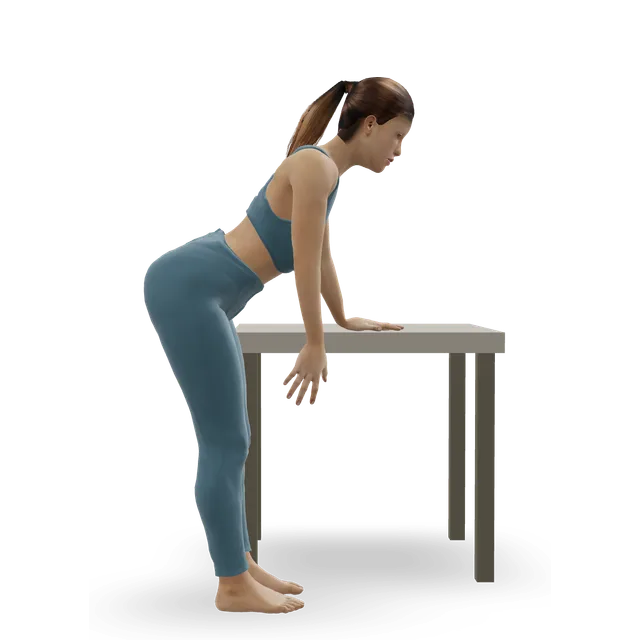
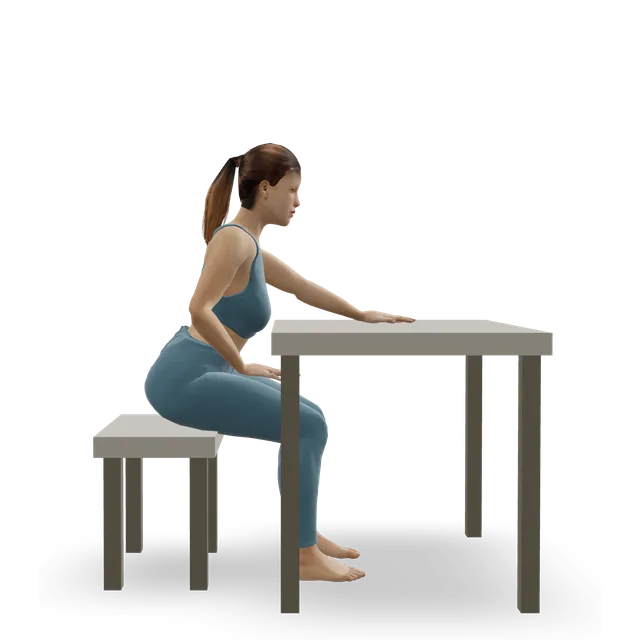
Table slide (seated forward reach) demonstrated on the 3D figure3D demoTable slide (seated forward reach)Beginner · A bench or box

10 slow repetitions, 1 to 3 times a day · The move page's dose (an editorial starting point). Slide only as far as is comfortable

Easier: Pendulum exercise (Codman's pendulum) · Harder: Overhead lat stretch at a bench (elbows on the bench)

Pendulum exercise (Codman's pendulum) demonstrated on the 3D figure3D demoPendulum exercise (Codman's pendulum)Beginner · A bench or box

About 1 minute (10 small circles each way), 2 to 3 times a day · The move page's dose (an editorial starting point). Useful when your shoulder is very sore

Harder: Table slide (seated forward reach)

Standing band external rotation demonstrated on the 3D figure3D demoStanding band external rotationBeginner · A band + An anchor point

3 sets of 15, light band, elbow at your side, slow return, once or twice a day · The Holmgren trial's sets and reps, as our plank shoulder guide uses them

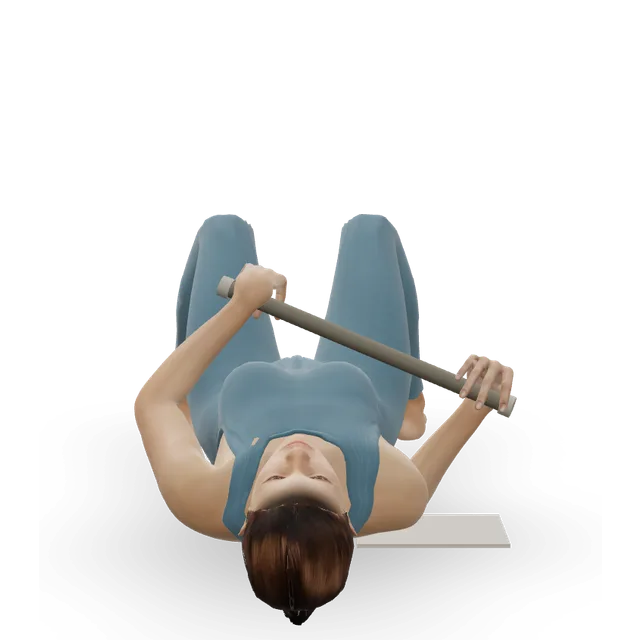
Easier: Stick-assisted external rotation (lying) · Harder: Side-lying external rotation

Band row demonstrated on the 3D figure3D demoBand rowBeginner · A band + An anchor point

3 sets of 10 to 15, stopping 2 to 3 reps short of failure · The move page's dose (an editorial starting point). Shoulders down, away from your ears

Harder: Supported single-arm dumbbell row

Wall push-up demonstrated on the 3D figure3D demoWall push-upBeginner · A wall

2 sets of 10, small range · As in our yoga for shoulder pain workout (editorial). Step closer to the wall if it hurts

Harder: Push-up

Cat-cow demonstrated on the 3D figure3D demoCat-cowBeginner · No equipment

8 waves, slower than feels natural · The move page's dose. Weight spread through your hands, fists if your wrists complain

Harder: Half lord of the fishes (Ardha Matsyendrasana)

Move on when: The stage 1 moves pass the pain rule, and your shoulder is back to its usual level by the next session, for a week (editorial).

Follow along: a timer, a cue and the next move, one step at a time.
Stage 2

Build: cuff and shoulder-blade strength, and weight back through the arms a lever at a time

About weeks 2 to 6, 3 sessions a week: the strength your rotator cuff and shoulder blades need for weight-bearing poses, with your arms taking more of your weight step by step.

Incline push-up demonstrated on the 3D figure3D demoIncline push-upBeginner · A bench or box

2 to 3 sets of 8 to 12, hands on a bench or worktop · As in our plank shoulder guide (our push-up guides' editorial dose). Hands raised take weight off them

Easier: Wall push-up · Harder: Push-up

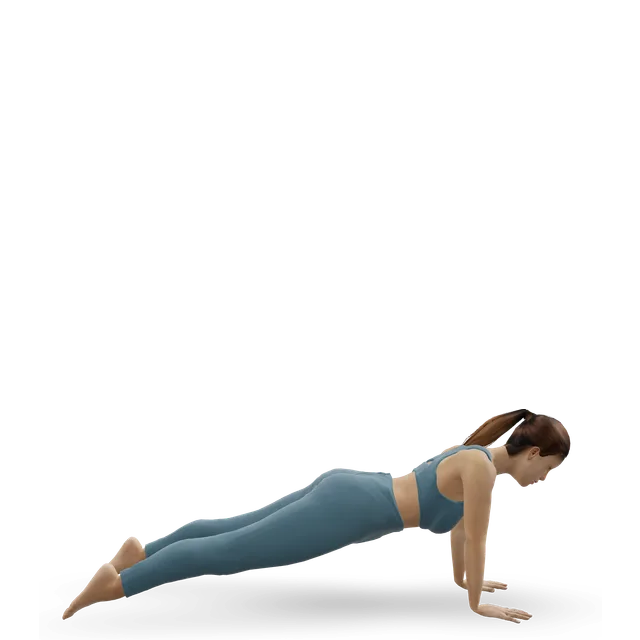
Knee plank demonstrated on the 3D figure3D demoKnee plankBeginner · No equipment

3 holds of 10 to 20 s · As in our yoga for shoulder pain workout (editorial). On forearms and knees, shoulders over elbows

Harder: Forearm plank

Scapular push-up (push-up plus) demonstrated on the 3D figure3D demoScapular push-up (push-up plus)Beginner · No equipment

3 sets of 10, on the knees or the floor · As in our winged scapula guide (editorial). The push-up plus works the serratus hardest

Easier: Dumbbell shoulder-blade punch · Harder: Push-up

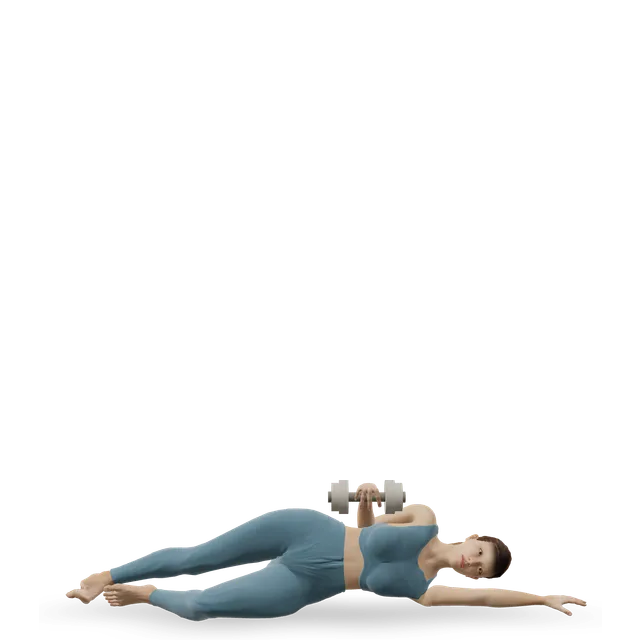
Side-lying external rotation demonstrated on the 3D figure3D demoSide-lying external rotationBeginner · A dumbbell

3 sets of 15, once a day, lowering over about 3 s · The Holmgren trial's sets and reps, as our plank shoulder guide uses them

Easier: Standing band external rotation · Harder: Cuban rotation

Prone Y-T-W raises demonstrated on the 3D figure3D demoProne Y-T-W raisesBeginner · No equipment

2 sets of 8 of each letter, light or no weight · As in our plank shoulder guide (editorial): the lower and middle trapezius

Easier: Wall angel · Harder: Bent-over reverse fly

Locust pose (Salabhasana) demonstrated on the 3D figure3D demoLocust pose (Salabhasana)Beginner · No equipment

3 holds of 3 to 5 breaths · As in our yoga for shoulder pain workout (editorial). Arms by your sides; arms forward only when that's pain-free

Easier: Seated upper-back lift (sit tall, shoulders back) · Harder: One-legged bow (half locust)

Move on when: Three knee plank holds and the incline push-ups pass the pain rule with no clunk, and your shoulder is back to its usual level by the next session, for a week (editorial, as in our plank shoulder guide).

Follow along: a timer, a cue and the next move, one step at a time.
Stage 3

Back to downward dog, chaturanga and your flow

From about week 4 to 8, often later: the weight-bearing poses back in the order our plank shoulder guide uses, then the full class. No study has tested a return to yoga after shoulder pain, so the order is our suggestion.

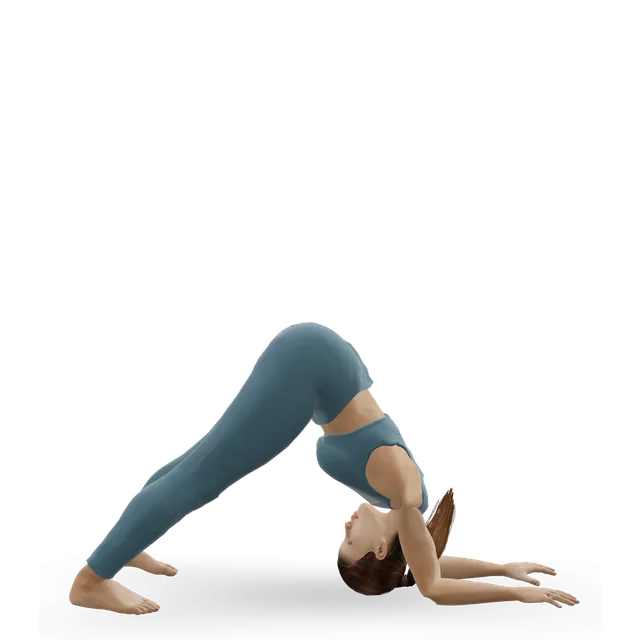
Dolphin pose (Ardha Pincha Mayurasana) demonstrated on the 3D figure3D demoDolphin pose (Ardha Pincha Mayurasana)Intermediate · No equipment

3 holds of 5 breaths · As in our wrist pain from yoga guide (editorial). On your forearms, before downward dog

Easier: Downward-facing dog (Adho Mukha Svanasana) · Harder: Forearm stand (Pincha Mayurasana)

Downward-facing dog (Adho Mukha Svanasana) demonstrated on the 3D figure3D demoDownward-facing dog (Adho Mukha Svanasana)Beginner · No equipment

3 holds of 5 breaths · As in our wrist pain from yoga guide (editorial). Knees bent, built up from a wall and a chair seat

Easier: Extended puppy pose (Uttana Shishosana) · Harder: Half handstand at the wall (Ardha Adho Mukha Vrksasana)

Straight-arm plank (high plank) demonstrated on the 3D figure3D demoStraight-arm plank (high plank)Intermediate · No equipment

3 holds of 15 to 30 seconds · The move page's dose (a suggested starting point). Hands on a bench first if your shoulder complains, as the move page says

Easier: Knee hover (Pilates tabletop hover) · Harder: Leg pull front (Pilates leg pull down)

Low cobra (Bhujangasana) demonstrated on the 3D figure3D demoLow cobra (Bhujangasana)Beginner · No equipment

3 holds of 3 to 5 breaths · As in our back pain after yoga guide (editorial). Instead of upward dog for now

Easier: Sphinx pose (Salamba Bhujangasana) · Harder: Cobra pose (Bhujangasana)

Four-limbed staff pose (Chaturanga Dandasana) demonstrated on the 3D figure3D demoFour-limbed staff pose (Chaturanga Dandasana)Advanced · No equipment

A few with knees down first, then 3 to 5 full ones in a class · As in our wrist pain from yoga guide (editorial). Keep the hover high, shoulders no lower than your elbows, as the move page says

Easier: Push-up · Harder: Pseudo planche push-up

Side plank demonstrated on the 3D figure3D demoSide plankIntermediate · No equipment

3 holds of 20 to 30 s each side, on the forearm · As in our plank shoulder guide (editorial). The move page says stop if the supporting shoulder hurts

Easier: Knee side plank · Harder: Side plank with leg lift

Move on when: A class with these poses passes the pain rule for 2 weeks. Then add vinyasas a few at a time, and bring back binds, arm balances, inversions and wheel one at a time, last. Keep the cuff and shoulder-blade work twice a week. If it flares, go back a stage for a few days, not to nothing (editorial).

Follow along: a timer, a cue and the next move, one step at a time.

What to change for now

Your yoga for now (written steps)

Our 3D figure shows the moves, not your hand position, the number of vinyasas, a strap or what you tell your teacher. These steps come from push-up and plank lab studies, rotator cuff trials, hypermobility advice, the NHS, our yoga for shoulder pain page and the move pages; where a step is our suggestion, it says so. None has been tested in a trial against shoulder pain from yoga.

  • 1. A warning sign first: chest pain or breathlessness with shoulder or arm pain, a fall with a shoulder that looks out of place or an arm you can't move, sudden weakness lifting the arm, or a hot, swollen shoulder with a temperature.
  • 2. Tell your teacher before class which shoulder hurts and what you'll change (the US orthopaedic surgeons' advice). For example: "My right shoulder has been sore after flow classes. I'll lower with my knees down, skip the binds and arm balances, and do fewer vinyasas; could you suggest options?" (our suggestion).
  • 3. Chaturanga: knees down, halfway, or leave it out; shoulders no lower than your elbows; hands about shoulder-width and elbows tracking back (our suggestion, following the move page and our yoga for shoulder pain page).
  • 4. Vinyasas: fewer rounds, step back rather than jump, and swap some for knees-chest-chin or child's pose (our suggestion; the sun salutation move page says shoulders quietly accumulate load over many rounds).
  • 5. Upward dog: a low cobra or sphinx instead, as the upward dog move page says for a recent shoulder injury.
  • 6. Downward dog: knees bent, or hands on a wall or chair seat at first, as our yoga for shoulder pain page's steps say.
  • 7. Binds, reverse prayer and the eagle and cow face arms: leave them out, or use a strap and stop well short of the end, as those move pages say.
  • 8. Arm balances, headstand, forearm stand, handstand and wheel: leave them out until stage 3 is comfortable, with bridge instead of wheel, as the wheel move page says.
  • 9. Don't lie on the sore shoulder in thread the needle or side-lying poses (the thread the needle move page).
  • 10. Very flexible: middle of your range, strength and control, and no hanging at the end of a stretch (the hypermobility charity).
  • 11. Between classes, keep using your arm for everyday tasks, as the NHS says; lie on the other side or your back with a pillow under the sore arm (editorial, as in our shoulder movement guides).

Sources 35, 24, 9, 10, 32, 16

Positions to swap, and why

Habit or positionWhy it mattersInstead
Full chaturanga on every vinyasaEach round puts up to about your body weight through your arms.Knees down, as in a knee push-up.Try: Knee push-up
Jumping back and lots of roundsThe move page says shoulders and wrists quietly accumulate load over many rounds.Fewer rounds, stepping back, with knee planks for strength.Try: Knee plank
Upward dog with a sore shoulderThe move page says a recent shoulder injury means choose cobra instead.A low cobra.Try: Low cobra (Bhujangasana)
Full downward dog straight awayWeight through your arms while they're overhead, which an irritated cuff may not cope with yet.Dolphin, or a wall version.Try: Dolphin pose (Ardha Pincha Mayurasana)
Binds and the cow face armsThe bind takes both shoulders to the end of their turn, the cow face move page says.Leave the arms out; band rotations instead.Try: Standing band external rotation
Crow and other arm balancesYour hands take about your body weight, and the move page says go carefully after a shoulder problem.A knee plank.Try: Knee plank
Wheel and forearm standThey load the shoulder at full overhead reach, and the move page says skip wheel with impingement.A supported bridge.Try: Supported bridge pose (Setu Bandha Sarvangasana)
Resting your arm completelyThe NHS says do not completely stop using your shoulder.Gentle movement, such as table slides.Try: Table slide (seated forward reach)

Routines to follow

More moves for this area

Questions people ask

Why do my shoulders hurt after yoga?

Usually the rotator cuff meeting more weight-bearing or overhead work than it's used to, in chaturanga, plank, downward dog and sun salutations. A jump in vinyasas or a stronger class often comes first. Cut the rounds, lower with your knees down and use the plan on this page.

Is chaturanga bad for your shoulders?

Not in itself, but each one puts up to about your body weight through your arms, and no study has measured the shoulder's load in it. While your shoulder hurts, lower with your knees down, go only halfway or leave it out, and keep your shoulders no lower than your elbows.

How should I hold my elbows in chaturanga?

Most teachers cue the elbows back along the ribs with the hands about shoulder-width, but no study has tested which elbow position is safer for the shoulder, so this is our suggestion. Keep the hover high and drop your knees when you tire, as the move page says.

Why does downward dog hurt my shoulder?

It puts part of your weight through your arms while they're overhead, which an irritated rotator cuff may not cope with yet. Bend your knees, put your hands on a wall or chair seat, or use dolphin on your forearms, and build back up in steps.

Why do I get shoulder blade pain after yoga?

Usually the muscles that hold the shoulder blade working hard through planks, chaturanga and arm balances (our reading). It eases with rest days and builds with the shoulder-blade exercises in the plan. A shoulder blade that suddenly sticks out, or pain with chest symptoms, needs checking.

Why does the front of my shoulder hurt in yoga?

Often chaturanga dipping below elbow height, or binds and reverse prayer taking the shoulder to the end of its turn (our reading). Keep chaturanga high or on your knees and leave out binds for now. Deep clicking or catching needs checking.

Can yoga cause a rotator cuff injury?

It can play a part: rotator cuff injuries were 6 of 89 yoga injuries in one specialist clinic. But cuff changes are common with age and often painless, and strengthening is the treatment.

Should I stop yoga if my shoulder hurts?

Usually not: change the poses and keep using the arm, as the NHS advises. Stop and get checked for chest pain, a shoulder that looks out of place, sudden weakness or a hot, swollen shoulder.

How long does shoulder pain from yoga last?

The NHS says it usually takes about 2 weeks to start easing and can take 6 months or longer to recover. Keep the strengthening going, since rotator cuff pain often needs weeks to months of exercise. No one can promise a date.

When should I see a doctor?

Call 999 for shoulder or arm pain with chest pain or breathlessness, and call 999 or go to A&E after a fall if your shoulder looks out of place or you can't move your arm. Get help the same day for sudden weakness lifting the arm after a fall, or a hot, swollen shoulder with a temperature, and see a GP if it isn't better after 2 weeks. In the US, call 911 where this page says 999.

Related exercise guides

Other pain guides

Sources

  1. Cramer 2015 · The safety of yoga: 94 randomised trials, 8,430 people (systematic review and meta-analysis, Am J Epidemiol)
  2. Cramer 2018 · Injuries and other adverse events with yoga: 9 observational studies (systematic review, J Sci Med Sport)
  3. Cramer 2019 · Adverse effects of yoga in 1,702 German practitioners (national cross-sectional survey, BMC Complement Altern Med)
  4. Campo 2018 · Pain caused by recreational yoga over a year: 354 studio practitioners (prospective cohort study, J Bodyw Mov Ther)
  5. University of Sydney 2017 · Yoga more risky for causing musculoskeletal pain than you might think (the university's news release on the Campo study)
  6. Watson 2025 · Yoga injuries in US emergency departments, 2004 to 2023, and the hip from age 45 (epidemiological study, J Am Acad Orthop Surg 33(15):837-844; read as an abstract)
  7. Swain 2016 · Yoga-related injuries in US emergency departments, 2001 to 2014 (Orthop J Sports Med)
  8. Mullerpatan 2019 · Joint movement in sun salutations: 10 trained practitioners (motion capture study, Int J Yoga)
  9. Wilcox 2012 · Forces through the hands and feet in 28 hatha yoga postures: 20 adults (lab study, Int J Exerc Sci)
  10. Sheikhzadeh 2026 · Shoulder muscle activity in wheel and forearm stand: 24 women from a yoga club (lab study, PeerJ)
  11. Chopp-Hurley 2018 · Shoulder-blade muscle activity in 15 static yoga postures: 20 women (lab study, J Orthop Sports Phys Ther)
  12. Lee 2019 · Soft tissue and bone injuries attributed to yoga in 89 people (case series, Mayo Clin Proc)
  13. Le Corroller 2012 · Scans of yoga injuries in 38 patients (imaging study, AJR Am J Roentgenol)
  14. Fishman 2009 · The poses yoga teachers and clinicians link with injuries: 1,336 respondents (survey, Int J Yoga Therap)
  15. Teunis 2014 · Rotator cuff changes become more common with age (systematic review and pooled analysis, J Shoulder Elbow Surg)
  16. NHS · Shoulder pain (past its review date: reviewed May 2023, review due May 2026)
  17. Matsushita 2015 · Adverse events after yoga classes: 2,508 class-goers in Japan (survey, BioPsychoSocial Med)
  18. Lewis 2016 · Rotator cuff related shoulder pain: assessment, management and uncertainties (masterclass, Man Ther)
  19. NHS · Heart attack
  20. Isik 2024 · Wrist drop after repeated crow pose in a woman with an inherited nerve condition (case report, Turk J Phys Med Rehabil)
  21. Lowry 2024 · Clinical practice guidelines for shoulder disorders: 26 guidelines (systematic review, Arch Phys Med Rehabil)
  22. NHS inform · Shoulder problems
  23. Hopewell 2021 · Progressive exercise or one advice session, with or without an injection, for rotator cuff disorders: 708 people (the GRASP randomised trial, Lancet)
  24. Ebben 2011 · Forces through the hands in six push-up variations: 23 adults (lab study, J Strength Cond Res)
  25. Can 2024 · Shoulder muscle activity in 10 plank variations: 21 healthy men (lab study, J Strength Cond Res)
  26. Cogley 2005 · Hand position and chest and triceps activity in push-ups: 40 adults (lab study, J Strength Cond Res)
  27. Requejo-Salinas 2022 · How physiotherapists recognise rotator cuff related shoulder pain: 15 experts (Delphi consensus, Braz J Phys Ther)
  28. Holmgren 2012 · Specific exercise and the need for surgery in shoulder impingement: 102 people (randomised trial, BMJ)
  29. Dubé 2024 · Exercise programmes for rotator cuff related shoulder pain in 22 trials (scoping review, J Orthop Sports Phys Ther)
  30. Warby 2016 · Exercise or surgery for a loose shoulder (multidirectional instability): 4 studies (systematic review, Br J Sports Med)
  31. Warby 2018 · Two exercise programmes for a loose shoulder (multidirectional instability): 41 people (randomised trial, Am J Sports Med)
  32. Hypermobility Syndromes Association · Pain management, by a physiotherapist (reviewed June 2021)
  33. Hoffman 2025 · Return to yoga after shoulder replacement: 15 patients (retrospective series, JSES Int)
  34. NHS inform · Exercises for shoulder muscle and joint problems
  35. American Academy of Orthopaedic Surgeons, OrthoInfo · Yoga injury prevention

Exercise education, not a diagnosis or treatment plan. It is written from the guidelines and studies listed above; review by a clinician is pending. If your pain follows an injury, is severe, is getting worse, or comes with any warning sign listed on this page, get it assessed. Health disclaimer.