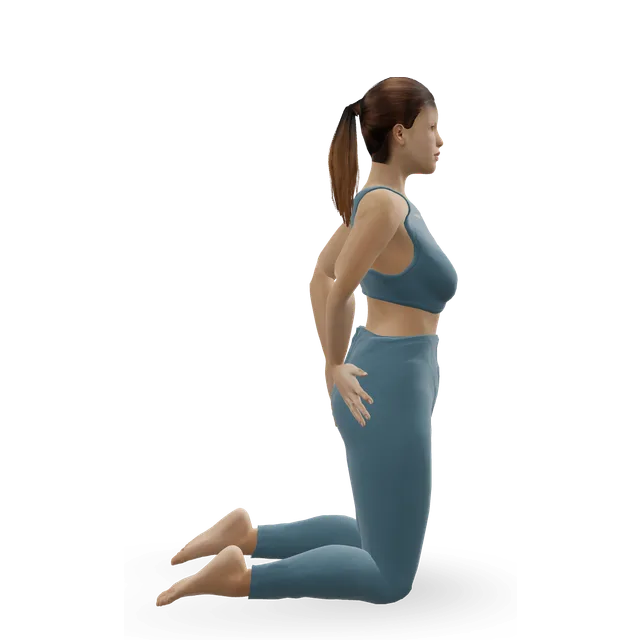
Lower back pain after yoga: backbends, forward folds and twists, what to change and a plan back

Lower back pain after yoga is usually ordinary back pain or muscle soreness that settles within a few weeks. The poses most often blamed are the deep ones: big backbends, straight-legged forward folds and twists forced past their comfortable range. Yoga is safe for most people and helps back pain a little, and in trials about 4 in 100 people had a flare, mostly mild. Two groups need extra care: a teenager whose back hurts more when arching, which can be a stress fracture, and an older adult with thin bones, who should avoid deep rounding.

This guide starts with the signs that need a 999 call or accident and emergency (A&E), such as numbness around your genitals or bottom, and those that need a general practitioner (GP) or the National Health Service's 111 line (NHS 111) the same day, such as back pain with a fever. It then maps the causes by where it hurts and who you are, explains what to change in backbends, folds and twists, in hot and power classes and with bendy joints, how to talk to your teacher, and gives a four-stage plan with a 3D demo of every move, back to your usual practice.

When to get help first

Exercise is for pain that has been checked or is clearly mild and settling.

Get urgent medical help if

  • Call 999 or go to A&E: loss of feeling or numbness around the genitals or bottom, new trouble peeing or controlling your bladder or bowels, changes in genital sensation during sex or problems with erections or orgasm, or pain, tingling, weakness or numbness in both legs. These are signs of cauda equina syndrome, which needs treating in hospital urgently. Don't drive yourself.
  • Call 999 or go to A&E: leg pain with numbness around the genitals or bottom, new trouble starting or controlling peeing, not knowing when you need to poo or losing control of it, sciatica in both legs, or weakness or numbness in both legs that is severe or getting worse. These can be signs of cauda equina syndrome, which needs treating in hospital as soon as possible.
  • Call 999 or go to A&E: back pain with chest pain, or back pain that started after a serious accident, such as a car crash.
  • Call 999: after a fall, you may have hurt your head, neck, back or hip, or you cannot get up.
  • Same day (NHS 111): back pain after a new, significant injury in the last 7 days, such as a fall from a height (off a box, a bar or rings) or a direct blow to the back.
  • Call 999: sudden, severe pain in the tummy or back, which can come with breathlessness, pale or grey skin, or collapse. It can be a burst abdominal aortic aneurysm, most common in men aged 65 or over and in people who smoke or used to smoke.
  • Same day (GP or NHS 111): back pain and you feel hot, cold, shivery or generally unwell, or severe pain that starts suddenly or is getting worse quickly.
  • Ask for an urgent GP appointment or get help from NHS 111 if you think you may have a kidney infection (often pain in your lower back or side, with burning or stinging when you pee or needing to pee more often) and you have a very high temperature or feel hot, cold or shivery, a temperature below 36C, pain in the lower tummy or in the back just under the ribs, blood in your pee, you feel or are sick, you haven't had a pee all day, or you're pregnant. Call 999 or go to A&E if you're confused, drowsy or have difficulty speaking.
  • Same day: leg weakness that is getting worse; new leg pain with a history of cancer, HIV, TB or inflammatory arthritis; or leg pain with a fever, feeling unwell, loss of appetite, unexplained weight loss or night sweats.
  • Same day: leg weakness that is getting worse.
  • Same day (urgent GP appointment or NHS 111): new difficulty lifting the front of your foot or toes (foot drop), or a foot that slaps down or catches as you walk, especially if it is getting worse. Weakness in both legs, or with numbness around the genitals or bottom or bladder or bowel changes, is the 999 emergency above.
  • Same day: you have or have had cancer, and new back pain that is severe and doesn't let up, is getting steadily worse, is worse at night and disturbs your sleep, is worse when you cough, sneeze or strain, or comes with tenderness over the spine. Contact your cancer team or GP urgently. With cancer, new weakness, difficulty walking, numbness or bladder or bowel problems are an emergency.
  • Stop, and don't restart that day, for signs of heat exhaustion such as tiredness, dizziness, a headache, feeling sick, heavy sweating, pale and clammy skin or cramps. Call 999 for signs of heatstroke, such as still being unwell after 30 minutes of resting somewhere cool, being cooled and drinking fluids, a very high temperature, hot skin that isn't sweating, confusion, a seizure or loss of consciousness. Get help from NHS 111 if you're struggling to treat heat exhaustion.
  • Call 999: chest pain that feels tight or like squeezing on your chest; chest pain that's spreading to your arms, neck or jaw; severe difficulty breathing (you're gasping, choking or not able to get words out); lips or skin that are pale, blue or grey (on brown or black skin this may be easier to see on the palms of the hands); or someone who has passed out and is not responding normally. It could be a heart attack. Don't drive yourself to A&E.
  • Someone who faints while exercising, or who has fainted and can't be woken within a minute, has chest pain or a pounding, fluttering or irregular heartbeat, or hasn't fully recovered.

See a doctor or physiotherapist if

  • Back pain that hasn't improved after a few weeks of looking after it at home, stops you doing day-to-day activities, worries you, or you're struggling to cope.
  • Pain, tingling or numbness spreading below the knee that isn't settling after a few weeks, is getting worse or stops your normal activities: see a GP.
  • Pain that is not improving after a few weeks, is getting worse, or is stopping your normal activities.
  • A teenager whose back pain is worse arching back and has lasted more than a couple of weeks: get it checked by a GP or sports physiotherapist. It can be a stress fracture of the spine (spondylolysis).
  • A teenager in a sport that arches or twists the back, such as gymnastics, dance, diving, volleyball, tennis, cricket fast bowling, baseball pitching, weightlifting, football or rugby, with back pain that lasts more than a couple of weeks, is worse arching back or stops them training: get it checked by a GP or sports physiotherapist. It can be a stress fracture in the spine.
  • Sudden new back pain after a minor fall, lift, cough or sneeze, from 50 or past the menopause, or if you take long-term steroid tablets; or height loss, a curved spine or a change in posture: see a GP. It can be a spinal fracture.
  • Buttock or leg pain, heaviness or tingling that comes on when you stand or walk and only eases when you sit or bend forward, or the distance you can walk keeps shrinking: see a GP or physiotherapist (possible spinal stenosis). Leg weakness that is getting worse, or numbness around your genitals or bottom, is urgent (above).
  • Pain that doesn't improve with rest or is worse at night, or pain that is worse when you sneeze, cough or poo.
  • Unexplained weight loss, or a lump, swelling or change in the shape of your back.
  • Pain at the top of the back, between the shoulders, rather than in the lower back.
  • Back pain that started before 45 and has lasted more than 3 months, especially if it started before 35, wakes you in the second half of the night, comes with buttock pain, gets better with movement or within 48 hours of anti-inflammatory painkillers, or you have or have had arthritis, pain where a tendon attaches to bone (enthesitis) or psoriasis, or a parent, brother, sister or child with spondyloarthritis. These can point to inflammatory back pain (axial spondyloarthritis, such as ankylosing spondylitis). The National Institute for Health and Care Excellence (NICE) asks GPs to refer people with 4 or more of these 9 features to a rheumatologist, and to do a blood test for the HLA-B27 gene marker if exactly 3 are present, referring if it is positive.
  • Back pain and stiffness that persists in a teenager or young adult. Ankylosing spondylitis tends to start at that age and can affect the whole spine.
  • You think you or your child has joint hypermobility syndrome: joints that keep dislocating, ongoing joint or muscle pain and stiffness, frequent sprains, tiredness even after rest, poor balance or coordination, thin stretchy skin, or bladder or bowel problems.

Where does it hurt?

Location narrows the likely causes; it does not diagnose.

Across the low back or to one side, sore the day after a new, longer or harder class, with no leg symptoms

Ordinary back pain or muscle soreness, the commonest cause. It usually settles within weeks.

Read: Back spasm and pulled back muscle →

A dull ache across both sides the next day that fades within a week

Muscle soreness after an unusual session. Our workout guide covers soreness against a strain.

Read: Back pain after a workout →

A pinch low in the back at the top of a backbend (cobra, upward dog, camel or wheel), on one or both sides, often from mid-life

Often labelled facet joint pain. No test can confirm it, and it's managed like other back pain. Our guide to back pain bending backwards covers it.

Read: Back pain bending backwards →

A teenager or young adult who does a lot of backbends (yoga, dance, gymnastics), with back pain worse arching that lasts more than a couple of weeks

Possibly a stress fracture of the spine (spondylolysis): get it checked, as the warning signs say.

Read: Spondylolisthesis →

Worse folding forward or sitting slumped, with pain, tingling or numbness down a leg below the knee

Usually a disc pressing on a nerve (sciatica).

Read: Sciatica →

Worse folding forward, sitting and coughing, mainly in the back, sometimes with a scan that mentions a disc

Disc-type pain.

Read: Herniated or bulging disc →

A pull deep in the buttock at the sit bone in forward folds with straight legs, worse sitting

Possibly the hamstring tendon where it attaches, rather than the back.

Read: High hamstring tendinopathy →

Low on one side, by the dimple at the back of the pelvis, after twists, wide-legged poses, pigeon or one-legged balances

Possibly the sacroiliac (SI) joint, a common source of back pain that is hard to pin down.

Read: SI joint pain →

A sharp catch on one side during or after a twist

Usually ordinary back pain. Our twisting guide covers it.

Read: Back pain when twisting →

Sudden back pain during or after a forward fold, a twist or a fall, from 50, past the menopause, with thin bones or on long-term steroid tablets

A possible spinal compression fracture: see a GP, as the warning signs say.

Read: Spinal compression fracture →

Bendy joints, the back aching after deep stretching, joints that slip or sprain often

Possibly symptomatic hypermobility: strength and control rather than more stretch, and a GP if the hypermobility warning sign fits.

Stiff for more than half an hour in the morning, easing with movement, starting before 45 and lasting more than 3 months

Possibly inflammatory back pain.

Read: Back pain in the morning →
Show all 17 areasShow fewer areas

Understand it

Yoga is safe for most people, and it helps back pain a littleStrong evidence

In a Cochrane review of 21 trials (2,223 people with back pain lasting 3 months or more), yoga improved back pain and everyday function a little more than not exercising, and about as much as other back exercise. In 1,702 German practitioners, injuries ran at about 0.6 per 1,000 hours of practice, which the authors judged as safe as, or safer than, other exercise. The US National Center for Complementary and Integrative Health (NCCIH) calls yoga generally safe for healthy people when done properly with a qualified instructor, and says serious injuries are rare. Fewer than 1 in 100 US adults who had ever done yoga stopped because of a side effect, most often back pain.

Sources 1, 2, 3, 4

A short rise in back pain is the commonest side effectEmerging evidence

In the back pain trials, about 43 in 1,000 people had a side effect with yoga over 6 to 12 months, mainly more back pain, against 9 in 1,000 who didn't exercise (low certainty), and about as many as with other back exercise (84 against 91 in 1,000). In one trial, side effects were mostly mild joint and back pain that settled on its own, in 9 of 127 people doing yoga and 14 of 129 having physical therapy; in another, 13 of 87 yoga and 13 of 75 stretching class attendees had a mild or moderate flare, mostly more back pain, and one yoga attendee had a slipped disc; in the UK trial, 12 of 156 people doing yoga reported side effects, mostly more pain, against 2 of 157 with usual care. The earlier version of the Cochrane review found yoga wasn't linked with serious side effects.

These were beginners' classes for people who already had back pain, so they show how often a flare happens when people start, not how often yoga causes new back pain. In vigorous Ashtanga practitioners, the low back was one of the three commonest injury sites, with the hamstring and the knee.

Sources 1, 5, 6, 7, 8, 9

Which poses, and what they ask of the backEmerging evidence

At a US clinic, of 89 people whose injuries were put down to yoga, the poses most often blamed involved bending the spine forward or arching it back to its extremes. Most had overuse muscle pain (74.2%); others had a flare of pain from existing joint wear (51.7%) or facet joint arthritis (38.2%), and 14.6% had a spinal compression fracture, which the authors link with thin bones. It was a clinic's series with no count of how many people did yoga safely. In the German survey, forward and backward bends were linked with 23.8% of acute problems; in an Australian survey, forward bends with 4.8% of injuries and backbends with 3.1%; and teachers and clinicians in a survey of 1,336 linked lower back injuries with forward bends, twists and backbends.

No lab study has measured the load on the lower back in yoga poses: a study of older adults holding yoga poses measured the ankle, knee and hip only. In our reading, the deep, held, repeated or forced versions are where backs complain: wheel, camel and bow; seated and standing folds with straight legs, especially when tight hamstrings leave the lower back to do the bending; and twists levered deeper with the arms. Very rarely, a very hard class strains the back muscles badly: one case report describes swollen back muscles and muscle breakdown after power yoga in a 36-year-old man, who recovered fully.

Sources 10, 2, 11, 12, 13, 14

Telling the causes apartEmerging evidence

A GP or physiotherapist asks which poses and movements bring it on, where it hurts and whether anything spreads down a leg, and checks how you bend in each direction. The NHS says it's not always obvious what causes back pain, and it often gets better on its own. Many backs have a sore direction and an easy one: pain on arching that eases bending forward, or the reverse. Leg symptoms below the knee point to a nerve. Pain at the sit bone in a forward fold is often the hamstring tendon, not the back. One-sided pain by the dimple of the pelvis may be the SI joint, a source in 15% to 30% of long-lasting back pain without leg symptoms in one review, though no single test can pin it down.

In a teenager, pain on arching is typical of a stress fracture of the spine: of 733 children and teenagers with back pain who had a magnetic resonance imaging (MRI) scan, 94.2% of those with a fresh stress fracture had pain arching back. But no examination test can confirm it: two reviews found the one-legged backbend test isn't reliable enough to rule it in or out.

Sources 15, 16, 17, 18, 19

When a scan or test mattersStrong evidence

For most back pain, the National Institute for Health and Care Excellence (NICE) says not to offer imaging routinely outside specialist settings. A young person with lasting pain on arching is the exception: a stress fracture can't be diagnosed by examination alone and needs a scan. A review of imaging in children takes two plain X-rays as the best first test and uses MRI for early diagnosis, and MRI picks up early stress injuries without radiation (moderate evidence). In an older adult with sudden back pain and thin bones, an X-ray looks for a compression fracture. Leg weakness, numbness or bladder or bowel changes need urgent assessment, as the warning signs say.

Sources 20, 21, 22, 23

How it usually goesEmerging evidence

The NHS says back pain usually improves within a few weeks, though it can last longer or come back. The flares in yoga trials were mostly mild and settled on their own, and people in those trials still ended up with better backs on average. In the German survey, 76.9% of acute yoga problems recovered fully.

A stress fracture of the spine is much commoner in young athletes who arch and twist a lot (found in 41.7% of athletes with back pain across 9 studies, against about 6% of adults), and it usually heals well without surgery: athletes returned to sport after about 3 to 4 months on average across one review, and about 9 in 10 got back to sport in a meta-analysis (another group: athletes in arching sports; we found no published yoga cases). No one can promise a date.

Sources 15, 5, 7, 2, 24, 21, 25, 26

What helps, and how strong the evidence is

Keep moving, and keep practising with changesStrong evidence

The NHS says to stay active and carry on with your daily activities, and not to stay in bed for long periods, and NICE suggests a group exercise programme, which can include mind-body exercise such as yoga. The yoga trials used gentle beginners' programmes with props and still had flares in a few people, so the question is usually which poses to change, not whether to stop.

Sources 15, 20, 1

Change the deep poses for a while: a clinic series and our readingEmerging evidence

No trial has tested a change to yoga for back pain caused by yoga. The clinic series' authors advise care with positions of extreme spinal bending and arching. Our suggestion from that: smaller backbends for now (sphinx, a small cobra or a bridge instead of wheel, camel, bow and deep upward dog); bent knees and a fold from the hips in forward folds, with a strap or blocks; gentle twists from the upper back without levering deeper with the arms; and headstands, shoulder stands and plough left out while it's sore, since inversions were the practices most often blamed in the German survey.

The Ehlers-Danlos Society's physiotherapy advice says that when the hamstrings are tight and the lower back is more flexible, the lower back should be steadied before the hamstrings are gently stretched, which fits forward folds for anyone. People who mainly did power yoga reported the most injuries in the German survey (1.50 per 1,000 hours against 0.60 for all yoga, from 71 people with a wide margin of error), so a slower class for a few weeks is our suggestion.

Sources 10, 27, 2

Tell your teacher, and learn with oneEmerging evidence

The American Academy of Orthopaedic Surgeons (AAOS) advises discussing any illness or injury with the instructor before class so they can suggest changes, knowing your limits and not trying positions beyond your experience or comfort level. In the German survey, people who had only ever practised on their own, without a teacher, reported more acute problems (adjusted odds ratio 1.75).

Sources 28, 2

Thin bones: avoid deep rounding, keep doing yogaEmerging evidence

In older adults with low bone density, case series describe spinal compression fractures after yoga forward bends and loaded spinal flexion (9 people in one series, 3 in another), and the clinic series' authors advise people with osteopenia or osteoporosis to avoid extreme spinal flexion. These events are rare: a UK review found flexion activities such as certain yoga moves and sit-ups linked with more spinal fractures but rare ones, said people with low bone density can exercise safely, and noted that experienced teachers can offer modified versions of all yoga poses. Trials of yoga in people at risk of fractures reported no related side effects, on very low certainty evidence, and in an uncontrolled study 741 people, mostly with low bone density, practised poses chosen to avoid forward flexion for over 90,000 hours with no fractures reported. (Another group: older adults with low bone density.)

Sources 29, 30, 10, 31, 32, 33

Bendy backs: strength and control, not more stretchStrong evidence

Being bendy is common and isn't a problem on its own: in 5,072 adults, hypermobility wasn't linked with long-lasting low back pain. Flexibility-based activities attract hypermobile people: 72% of 85 elite dancers met the cut-off (another group), against about 1 in 8 university students; no study has measured it in yoga practitioners. When bendy joints hurt, the NHS says the main treatment is improving muscle strength and fitness so your joints are better protected, and not to overextend your joints just because you can, and the Hypermobility Syndromes Association suggests yoga focused on strength and control rather than more flexibility. Stopping at a position rather than at the feeling of a stretch is our suggestion.

Sources 34, 35, 36, 37, 38

A young person who bends back: rest from arching and rehabilitationEmerging evidence

Most young athletes with a stress fracture of the spine return to sport after rest from arching and rehabilitation: 98% of 201 adolescent athletes in one series, after about 3 to 4 months on average in a review (another group). Our spondylolisthesis guide has the plan, and the physiotherapist decides when backbends come back.

Sources 39, 24, 21

Hot yoga: the heat, not the back, is the main extra riskEmerging evidence

A review of 43 studies found a single hot yoga session raises core temperature and heart rate compared with unheated yoga, but not the effort. The American Council on Exercise's write-up of a study it sponsored reports average peak core temperatures of about 39.6°C in men and 38.9°C in women during a 90-minute class at 40.6°C, in 20 regular practitioners. In a survey of 157 hot yoga practitioners, just over half had had a problem in a class, most often dizziness, light-headedness or nausea. The review advises leaving the heat at once for dizziness, a headache or nausea, and warns against drinking very large amounts, since low blood sodium has followed it in case reports. No study has measured back injuries in hot classes; skipping hot classes, or going easier in them, while your back is sore is our suggestion.

Sources 40, 41, 42, 43

The SI joint: common, hard to pin down, and yoga can be part of treatmentEmerging evidence

The SI joint is a source in about 15% to 30% of long-lasting back pain without leg symptoms, and no single test identifies it. No study links SI joint pain to yoga, and an international consensus guideline lists yoga among the first treatments to try for it. Keeping wide-legged and one-sided poses smaller while it hurts is our suggestion.

Sources 16, 44

How much pain is OK while you exercise?

Up to about 5 out of 10, settled within an hour or so and no worse the next morning; never down a legEmerging evidence

Some discomfort during exercise is fine, and it does not mean you are doing damage: the WHO counts "hurt does not necessarily mean harm" among the messages people with back pain need. Aim for pain you would call mild to moderate, no more than about 5 out of 10. It should settle within an hour or so, and your back should be no worse the next morning. If it is worse, do less next time (fewer reps, a smaller range, a lighter load), not nothing.

Leg symptoms are the exception: stop or shrink any movement that sends pain, pins and needles or numbness further down your leg. If leg symptoms move back towards your spine, that is a good sign, even if your back aches a little more for a while.

If pain climbs day after day, or you notice any warning sign, stop and get it checked. The 5 out of 10 figure matches this site's other pain guides and has not been tested in a back pain trial; in trials of long-lasting muscle and joint pain, exercise that allowed some pain did no harm.

For yoga (our suggestion, built on the same rule): judge each class by the lower back during the poses, that evening and the next morning. A pose that takes the back above about 5 out of 10 gets its smaller version for now, and a class that leaves the back worse the next morning means a gentler class next time, not no class. Two further exceptions: a young person with a suspected or diagnosed stress fracture keeps the back pain-free and follows the physiotherapist, as our spondylolisthesis guide says; and in a hot room, dizziness, a headache or feeling sick means leave the heat, whatever the back feels like.

Source 15

The exercise plan: 4 stages

Start at the first stage. Each move opens a full guide with a 3D demo.

Stage 1

Settle: keep moving, take out the deep poses

About the first 2 weeks: walking and daily activities, easy movement in the comfortable direction, and a gentle class with the deep backbends, folds and twists left out. With a diagnosed condition (a stress fracture or slip, sciatica, a compression fracture, spinal stenosis), that guide's or your clinician's plan comes first; with a warning sign, get checked first.

Treadmill walking demonstrated on the 3D figure3D demoTreadmill walkingBeginner · Cardio machine

5 to 10 min, several times a day · As in our back pain guide (editorial); walking outdoors or around the house counts

Harder: Treadmill jogging

Double knee-to-chest stretch demonstrated on the 3D figure3D demoDouble knee-to-chest stretchBeginner · No equipment

Hold 20 to 30 seconds, 2 to 4 times · The move page's dose (an editorial starting point). Keep it only if bending forward eases your pain

Easier: Single knee-to-chest stretch · Harder: Overhead lat stretch at a bench (elbows on the bench)

Child's Pose (Balasana) demonstrated on the 3D figure3D demoChild's Pose (Balasana)Beginner · No equipment

Hold 1 to 3 minutes, breathing into the back ribs · The move page's dose. Knees wide and a cushion under the chest if that's more comfortable; with thin bones, keep the back long, as the move page says

Harder: Extended puppy pose (Uttana Shishosana)

Cat-cow demonstrated on the 3D figure3D demoCat-cowBeginner · No equipment

8 waves, slower than feels natural · The move page's dose. Keep both halves small for now

Harder: Half lord of the fishes (Ardha Matsyendrasana)

Hip windshield wipers demonstrated on the 3D figure3D demoHip windshield wipersBeginner · No equipment

10 slow passes side to side, 2 rounds · The move page's dose (an editorial starting point)

Easier: Supine heel slide · Harder: 90/90 switch

Pelvic tilt into bridge demonstrated on the 3D figure3D demoPelvic tilt into bridgeBeginner · No equipment

2 to 3 repetitions at a time, building to 2 sets of 8, 2 to 3 times a day · As in our back pain bending backwards guide (NHS inform's back exercise dose)

Harder: Glute bridge

Move on when: You can walk for 15 to 20 minutes, a gentle class leaves the back no worse the next morning, and standing upright is comfortable (editorial, as in our back pain guide).

Follow along: a timer, a cue and the next move, one step at a time.
Stage 2

Build the trunk and hips with the back still

About weeks 2 to 6, 2 or 3 sessions a week: strength around the lower back without bending it to the end of its range, using the moves our back pain guides use.

Dead bug demonstrated on the 3D figure3D demoDead bugBeginner · No equipment

2 sets of 6 to 8 each side, lower back still · As in our back pain guide (editorial)

Easier: Dead bug heel taps · Harder: Forearm plank

Bird dog demonstrated on the 3D figure3D demoBird dogBeginner · No equipment

2 to 3 sets of 6 to 8 each side, 3 to 5 s holds, back level · As in our back pain and spondylolisthesis guides (editorial). Fists if the wrists ache, as the move page says

Easier: Bird dog, one limb at a time · Harder: Bear crawl

Glute bridge demonstrated on the 3D figure3D demoGlute bridgeBeginner · No equipment

2 to 3 sets of 10, lifting only to a straight line from shoulders to knees · As in our spondylolisthesis guide (editorial)

Easier: Pelvic tilt into bridge · Harder: Single-leg glute bridge

Knee side plank demonstrated on the 3D figure3D demoKnee side plankBeginner · No equipment

3 holds of 15 to 20 s each side · As in our back pain guide (editorial)

Harder: Side plank

Hip-hinge practice demonstrated on the 3D figure3D demoHip-hinge practiceBeginner · No equipment

2 to 3 sets of 10 · As in our back pain guide (editorial). The way into a forward fold from the hips, with a long back

Harder: Kettlebell deadlift

Supine hamstring stretch with a strap demonstrated on the 3D figure3D demoSupine hamstring stretch with a strapBeginner · No equipment

2 to 3 holds of 20 to 30 s each leg · Editorial. The other knee bent and the back flat, so the hamstring stretches without rounding the back; ease off for tingling down the leg, as the move page says

Easier: Leg-up hamstring stretch · Harder: Contract-relax hamstring stretch (PNF)

Move on when: Every set feels controlled, a hip hinge to a bent-knee fold is comfortable, and the back is no worse the next morning (editorial).

Follow along: a timer, a cue and the next move, one step at a time.
Stage 3

Bring bending, arching and turning back, a little at a time

About weeks 4 to 8, 2 or 3 sessions a week: each direction back in small ranges, the way our bending backwards and twisting guides bring them back.

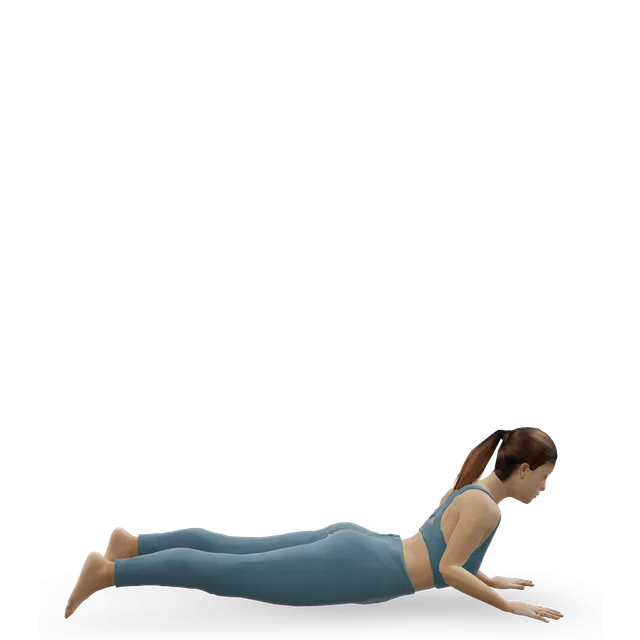
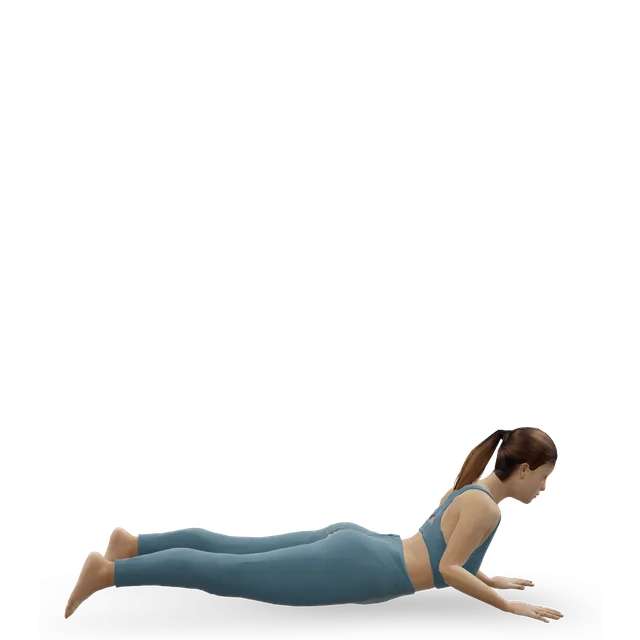
Sphinx pose (Salamba Bhujangasana) demonstrated on the 3D figure3D demoSphinx pose (Salamba Bhujangasana)Beginner · No equipment

Hold about 30 seconds, 3 to 4 times a week · As in our back pain bending backwards guide (an NHS trust leaflet's forearm press-up dose). Skip it if arching sends symptoms down a leg, as the move page says

Harder: Cobra pose (Bhujangasana)

Low cobra (Bhujangasana) demonstrated on the 3D figure3D demoLow cobra (Bhujangasana)Beginner · No equipment

3 holds of 3 to 5 breaths · As in our back pain bending backwards guide (editorial)

Easier: Sphinx pose (Salamba Bhujangasana) · Harder: Cobra pose (Bhujangasana)

Locust pose (Salabhasana) demonstrated on the 3D figure3D demoLocust pose (Salabhasana)Beginner · No equipment

3 holds of 3 to 5 breaths · As in our back pain guide (editorial). Lower the chest and legs if the back pinches

Easier: Seated upper-back lift (sit tall, shoulders back) · Harder: One-legged bow (half locust)

Hip hinge fold demonstrated on the 3D figure3D demoHip hinge foldBeginner · No equipment

5 slow folds, 3 breaths at the bottom · The move page's dose. Knees bent as much as you need, back long

Harder: Seated forward fold (Paschimottanasana)

Supine spinal twist (Supta Matsyendrasana) demonstrated on the 3D figure3D demoSupine spinal twist (Supta Matsyendrasana)Beginner · No equipment

3 to 5 slow breaths each side · Editorial. A cushion under the knee keeps the range modest, as the move page says

Harder: Seated twist, bottom leg straight

Thoracic rotation demonstrated on the 3D figure3D demoThoracic rotationBeginner · No equipment

6 rotations per side, moving with the breath · The move page's dose. Turning from the upper back rather than the lower

Easier: Side-lying open book · Harder: World's greatest stretch

Move on when: The stage 3 moves pass the pain rule for a week, and a class with small backbends, bent-knee folds and gentle twists leaves the back no worse the next morning (editorial).

Follow along: a timer, a cue and the next move, one step at a time.
Stage 4

Back to your usual practice

From about week 6, often later, then for good: the deeper poses your practice includes, one at a time, by the written steps below, with two strength sessions a week kept. No study has tested a return to yoga after back pain; the order is our suggestion, built on the ladder of backbends in our bending backwards guide and the clinic series pointing to extreme poses.

Sun salutation A (Surya Namaskar A) demonstrated on the 3D figure3D demoSun salutation A (Surya Namaskar A)Intermediate · No equipment

2 or 3 slow rounds, then a round or two more each week · Editorial. Knees bent in the folds; the move page says move slowly through the folds with low back trouble

Easier: Downward-facing dog (Adho Mukha Svanasana) · Harder: Sun salutation B (Surya Namaskar B)

Cobra pose (Bhujangasana) demonstrated on the 3D figure3D demoCobra pose (Bhujangasana)Intermediate · No equipment

3 holds of 3 to 5 breaths · As in our back pain bending backwards guide (editorial)

Easier: Sphinx pose (Salamba Bhujangasana) · Harder: Upward-facing dog (Urdhva Mukha Svanasana)

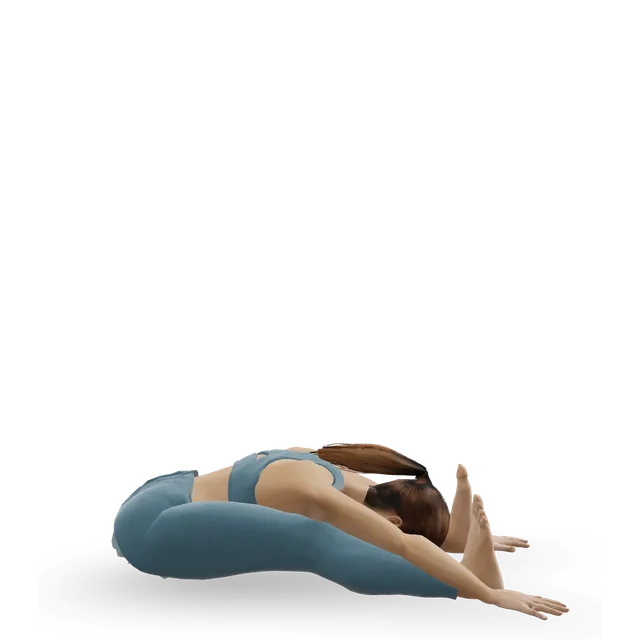
Seated forward fold (Paschimottanasana) demonstrated on the 3D figure3D demoSeated forward fold (Paschimottanasana)Intermediate · No equipment

3 holds of 5 breaths · Editorial. On a folded blanket, knees bent, folding from the hips; with thin bones, fold with a long back or leave it out, as the move page says

Easier: Head-to-knee pose (Janu Sirsasana) · Harder: Standing splits (Urdhva Prasarita Eka Padasana)

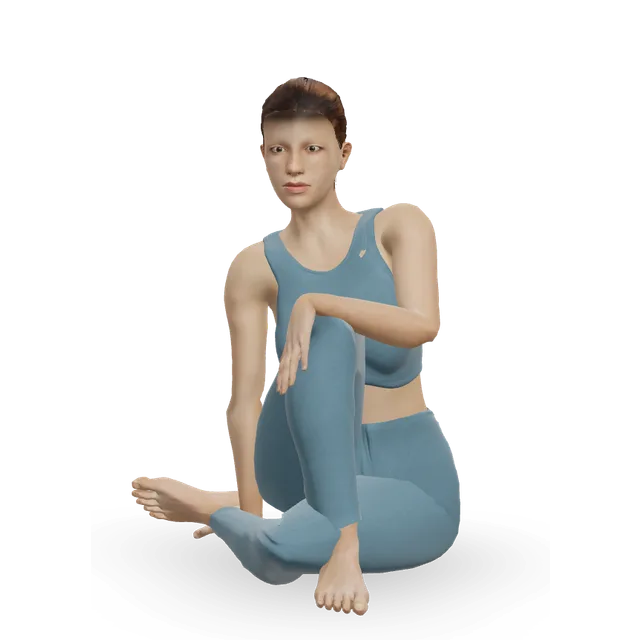
Half lord of the fishes (Ardha Matsyendrasana) demonstrated on the 3D figure3D demoHalf lord of the fishes (Ardha Matsyendrasana)Intermediate · No equipment

3 to 5 breaths each side · Editorial. Sitting tall, without levering deeper with the arm; ease off for a sharp pinch, as the move page says

Easier: Seated twist, bottom leg straight · Harder: Revolved triangle pose (Parivrtta Trikonasana)

Side plank demonstrated on the 3D figure3D demoSide plankIntermediate · No equipment

3 holds of 20 to 30 s each side · As in our back pain guide (editorial)

Easier: Knee side plank · Harder: Side plank with leg lift

Camel pose (Ustrasana) demonstrated on the 3D figure3D demoCamel pose (Ustrasana)Intermediate · No equipment

2 or 3 holds of 3 to 5 breaths · As in our back pain bending backwards guide (editorial), hands on your lower back first. Wheel comes after camel, if your practice includes it

Easier: Cobra pose (Bhujangasana) · Harder: Wheel pose (Urdhva Dhanurasana)

Move on when: Each deeper pose has passed the pain rule for a week before the next comes back; then longer holds, hot or power classes and inversions, one at a time. If it flares, go back a stage for a few days, not to bed, then build again (editorial).

Follow along: a timer, a cue and the next move, one step at a time.

What to change for now

Your yoga for now (written steps)

Our 3D figure shows the moves, not how deep you go, your props, your class or what you tell your teacher. These steps come from the NHS, the AAOS, a clinic series, the hypermobility bodies, a hot yoga review and a national survey; where a step is our suggestion, it says so. None has been tested in a trial against back pain from yoga.

  • 1. A warning sign first: numbness around your genitals or bottom, bladder or bowel changes, weakness or numbness in a leg, a fall from a headstand, or a teenager whose back hurts arching for more than a couple of weeks.
  • 2. Tell your teacher before class what hurts and which poses you'll change, as the AAOS suggests. For example: "My lower back has been sore since last week. I'll keep the backbends small and bend my knees in forward folds; could you suggest options for the deeper poses?" If you'd rather not have hands-on adjustments while your back is sore, say so (our suggestion).
  • 3. Backbends: sphinx, a small cobra or a bridge instead of wheel, camel, bow and deep upward dog, and come out when the lower back pinches rather than works (our suggestion, from the clinic series and the move pages).
  • 4. Forward folds: knees bent, fold from the hips with a long back, a strap for the hamstrings, blocks under the hands, and no long holds at the end of the range (our suggestion; with thin bones, the move pages' and the bone review's advice).
  • 5. Twists: gentle, from the upper back, only as far as is comfortable, without levering deeper with the arms or a hand on the knee; twist lying down if seated twists pinch (our suggestion and the twist move pages).
  • 6. Leave out headstands, shoulder stands and plough while the back is sore; inversions were the practices most often blamed in one survey.
  • 7. Choose the class: a slower, gentler class with props for a few weeks, with hot and power classes later (our suggestion).
  • 8. A bendy back: stop at a position, not a feeling, and steady the lower back before stretching the hamstrings, as the Ehlers-Danlos Society and the Hypermobility Syndromes Association suggest.
  • 9. Hot classes: skip them while the back is sore, or rest more in them; drink before and after, not huge amounts, and leave the heat at once if you feel dizzy, get a headache or feel sick, as the hot yoga review advises.
  • 10. Thin bones: no deep or repeated rounding; fold from the hips, twist smoothly or lying down, and ask a teacher for the modified poses.
  • 11. Between classes: keep walking and doing your daily activities, as the NHS advises.
  • 12. Getting back to a full class: bring back one deeper pose at a time, a few breaths each, with the poses that rest the back between them (our suggestion).

Sources 28, 10, 31, 27, 38, 2, 40, 15

A teenager who bends back

A teenager in yoga, dance or gymnastics with back pain on arching that lasts more than a couple of weeks should stop the arching training and get checked by a GP or sports physiotherapist. A stress fracture of the spine is common in young athletes who arch a lot, and it usually heals well with rest from arching and rehabilitation; our spondylolisthesis guide covers it.

Sources 25, 21

Positions to swap, and why

Habit or positionWhy it mattersInstead
Wheel, camel or bow while it's soreExtreme arching was among the poses most often blamed at a US clinic.Sphinx, then a small cobra.Try: Sphinx pose (Salamba Bhujangasana)
Straight-legged forward folds held at the end of the rangeExtreme forward bending was the other; the lower back rounds when the hamstrings are tight.Bent knees, folding from the hips.Try: Hip hinge fold
Levering deeper into a twist with the armIt forces the end of the range; the move page says ease off for a sharp pinch.A gentle lying twist.Try: Supine spinal twist (Supta Matsyendrasana)
Headstand, shoulder stand or ploughInversions were the practices most often blamed for acute problems in one survey.Leave them out for now; a supported bridge instead.Try: Supported bridge pose (Setu Bandha Sarvangasana)
Arching through leg symptomsSpreading leg symptoms mean a nerve is irritated.Bending-forward moves that ease it.Try: Double knee-to-chest stretch
Deep rounding with thin bonesCase series describe rare compression fractures after deep forward bending.The hip hinge with a long back.Try: Hip-hinge practice
Stretching further because you canWith hypermobility, control matters more than range.Strength with the back still.Try: Bird dog
A teenager training backbends through lasting painIt can be a stress fracture of the spine.Stop arching and get it checked.
Pushing on through dizziness in a hot roomThat is heat illness, not back pain.Leave the heat, cool down and drink.
Stopping all movement until it stops hurtingThe NHS says stay active and don't stay in bed for long periods.Short walks and a gentle class.Try: Treadmill walking

Routines to follow

More moves for this area

Questions people ask

Why does my lower back hurt after yoga?

Usually it's ordinary back pain or muscle soreness after poses your back isn't used to, especially deep backbends, straight-legged forward folds or forced twists. It usually improves within a few weeks. Pain down a leg, or a warning sign, needs checking.

Is it normal for my back to hurt after yoga?

A mild ache the next day after a new or harder class is common and settles within days. In back pain trials, a flare of back pain was the commonest side effect, about 4 in 100 people, and mostly mild. Pain that builds class after class, or lasts more than a few weeks, is worth checking.

Which yoga poses are bad for the lower back?

None is bad for everyone, but the deep ones are where backs complain: extreme backbends and forward bends were most often blamed at a US clinic, and twists levered deeper with the arms can pinch. Swap them for smaller versions while it's sore.

Why does my back hurt after backbends?

Arching closes up the back of the spine and loads the small facet joints, so a pinch at the top of wheel or camel is common, especially from mid-life. Use sphinx and a small cobra for now. A teenager whose back hurts arching for more than a couple of weeks needs checking for a stress fracture.

Why does my lower back hurt in forward folds?

With tight hamstrings, the lower back often does the bending. Bend your knees, fold from the hips with a long back and use a strap or blocks. Pain or tingling down a leg in a fold points to a nerve.

Are yoga twists bad for your back?

Gentle twists are fine for most backs. Forcing the end of the range with your arms is where they pinch, so turn from the upper back and stop at a comfortable range. With thin bones, twist smoothly or lying down.

Why does my back hurt after hot yoga?

Usually for the same reasons as any class, and warm muscles can make deep poses feel easier than your back can take. The heat also raises your core temperature, so dizziness, a headache or feeling sick means leave the heat at once.

I'm very flexible. Is that why my back hurts?

Being bendy isn't linked with back pain on its own, but bendy people can go further than their back can control. The NHS advice for hypermobility is strength and fitness, and not overextending your joints just because you can.

Should I stop yoga?

Usually not: change the poses, choose a gentler class for a few weeks and keep walking. Stop and get checked for leg numbness or weakness, bladder or bowel changes, or any warning sign.

What should I tell my yoga teacher?

Before class, say what hurts and which poses you'll change, so they can suggest options. Ask for options for the deep backbends, folds and twists.

My teenager's back hurts after yoga or dance. Should I worry?

Most back pain in teenagers is minor, but pain that is worse arching back and lasts more than a couple of weeks can be a stress fracture of the spine, so see a GP or sports physiotherapist. It usually heals well with rest from arching and rehabilitation.

When should I see a doctor?

Call 999 or go to A&E for numbness around your genitals or bottom, new bladder or bowel problems, or weakness or numbness in both legs. Get a same-day check for back pain with a fever or feeling unwell, or new leg weakness, and see a GP or physiotherapist if it isn't improving after a few weeks. In the US, call 911 where this page says 999.

Related exercise guides

Other pain guides

Sources

  1. Wieland 2022 · Yoga for chronic non-specific low back pain: 21 trials, 2,223 people (Cochrane review)
  2. Cramer 2019 · Adverse effects of yoga in 1,702 German practitioners (national cross-sectional survey, BMC Complement Altern Med)
  3. NCCIH · Yoga: effectiveness and safety (US National Center for Complementary and Integrative Health, updated August 2023)
  4. Holton 2014 · Side effects that led people to stop yoga: 2,230 US adults who had done yoga (national survey analysis, Int J Yoga)
  5. Saper 2017 · Yoga, physical therapy or education for chronic low back pain: 320 adults (randomised noninferiority trial, Ann Intern Med)
  6. Sherman 2011 · Yoga, stretching or a self-care book for chronic low back pain: 228 adults (randomised trial, Arch Intern Med)
  7. Tilbrook 2011 · Yoga for chronic or recurring low back pain in the UK: 313 adults (randomised trial, Ann Intern Med)
  8. Mikkonen 2008 · Injuries in 110 Ashtanga vinyasa yoga practitioners (survey, Int J Yoga Therap)
  9. Wieland 2017 · Yoga treatment for chronic non-specific low back pain: the earlier version, replaced by the 2022 update (Cochrane review)
  10. Lee 2019 · Soft tissue and bone injuries attributed to yoga: 89 patients at a US clinic (case series, Mayo Clin Proc)
  11. Penman 2012 · Yoga in Australia: 2,567 practitioners (national survey, Int J Yoga)
  12. Fishman 2009 · The poses yoga teachers and clinicians link with injuries: 1,336 respondents (survey, Int J Yoga Therap)
  13. Salem 2013 · Joint loads in 21 hatha yoga poses: 20 older adults (laboratory study, Evid Based Complement Alternat Med)
  14. Kanna 2025 · Swollen back muscles and muscle breakdown after power yoga (case report, Eur Spine J)
  15. NHS · Back pain
  16. Cohen 2013 · Sacroiliac joint pain: how common it is, diagnosis and treatment (review, Expert Rev Neurother)
  17. Wilkes 2026 · Examination findings in 733 children and teenagers with back pain who had MRI (registry cohort, Orthop J Sports Med)
  18. Grødahl 2016 · History and examination for spondylolysis in athletes with back pain: 8 studies (systematic review, Man Ther)
  19. Alqarni 2015 · Clinical tests for spondylolysis and spondylolisthesis: 4 studies (systematic review, Phys Ther Sport)
  20. NICE NG59 · Low back pain and sciatica in over 16s: assessment and management (recommendations)
  21. Goetzinger 2020 · Spondylolysis in young athletes, managed without surgery (review, J Sports Med)
  22. Tofte 2017 · Imaging spondylolysis in children: 13 studies (systematic review, Spine)
  23. Esh 2020 · MRI for spine stress injuries in athletes with back pain: 4 studies (systematic review, BMJ Open Sport Exerc Med)
  24. Panteliadis 2016 · Return to sport after spondylolysis with and without surgery: 25 publications (review, Global Spine J)
  25. Li 2023 · Spondylolysis in athletes with low back pain: 9 studies, 835 athletes (meta-analysis, Medicine)
  26. Tawfik 2020 · Pars defects (spine stress fractures) in athletes: 114 studies (review, Global Spine J)
  27. The Ehlers-Danlos Society · Physical therapy
  28. AAOS OrthoInfo · Yoga injury prevention
  29. Sfeir 2018 · Spinal compression fractures associated with yoga: 9 people (case series, Eur J Phys Rehabil Med)
  30. Sinaki 2013 · Yoga forward bends and spinal compression fractures with low bone density: 3 people (case series, Pain Pract)
  31. Kunutsor 2018 · Adverse events with exercise in osteoporosis and osteopenia (systematic review, J Frailty Sarcopenia Falls)
  32. Kim 2022 · Yoga in people at risk of fractures: 9 studies (systematic review, Appl Physiol Nutr Metab)
  33. Lu 2016 · A 12-minute daily yoga routine in 741 volunteers, mostly with low bone density (uncontrolled study, Top Geriatr Rehabil)
  34. Goode 2019 · Joint hypermobility, low back pain and spine arthritis in 5,072 adults (cross-sectional study, BMC Musculoskelet Disord)
  35. Chan 2018 · Hypermobility in 85 elite Australian dancers (observational study, Phys Ther Sport)
  36. Reuter 2019 · Hypermobility and pain in 654 US university students (survey, PeerJ)
  37. NHS · Joint hypermobility syndrome (past its review date: reviewed August 2023, review due August 2026)
  38. Hypermobility Syndromes Association · Pain management, by a physiotherapist (reviewed June 2021)
  39. Choi 2022 · Spondylolysis in 201 adolescent athletes treated without surgery (case series, Spine J)
  40. Willmott 2025 · Hot yoga: the body's responses and adaptations, 43 studies (systematic review, Sports Med Open)
  41. American Council on Exercise · What effect does Bikram yoga have on core body temps? (the council's 2016 write-up of Quandt and colleagues' study of 20 practitioners)
  42. Mace 2016 · Benefits and problems reported by 157 hot yoga practitioners (survey, Int J Yoga Therap)
  43. Reynolds 2012 · Low blood sodium and a seizure after drinking 3.5 litres following a hot yoga class (case report, BMJ Case Rep)
  44. McCormick 2025 · Sacroiliac joint complex pain (international consensus guideline, Pain Med)

Exercise education, not a diagnosis or treatment plan. It is written from the guidelines and studies listed above; review by a clinician is pending. If your pain follows an injury, is severe, is getting worse, or comes with any warning sign listed on this page, get it assessed. Health disclaimer.