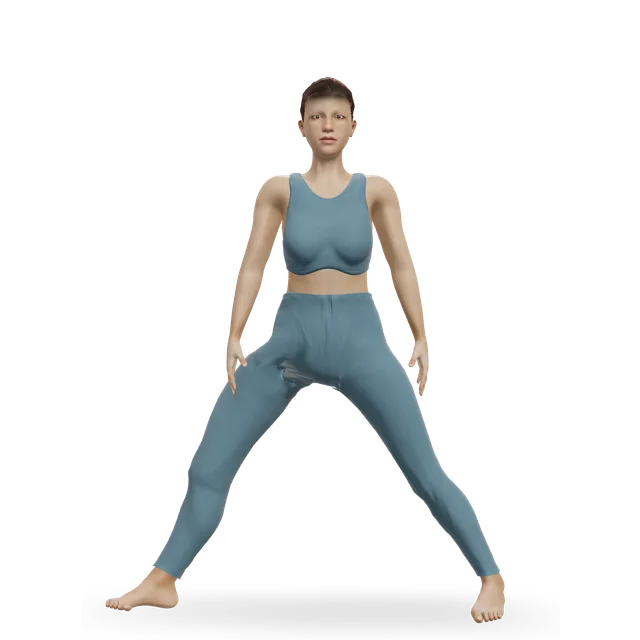
Neck pain after yoga: headstand, shoulder stand, plough, backbends and twists, and what to change

Neck pain after yoga usually comes from a pose that puts weight on your neck, like headstand, shoulder stand or plough, or one that holds it at the end of its range, like dropping your head back in a backbend or turning it hard in a twist. It's usually an ache at the back of the neck or across the tops of the shoulders that eases within days once those poses are left out. Yoga is safe for most people, and serious neck injury from it is rare: leaving out the inversions, keeping your neck long, turning your head gently and a word with your teacher usually let you keep practising.

This guide starts with the signs that need help, from a 999 call for a sudden, extremely painful headache, a drooping face or slurred speech, or neck pain after a fall from an inversion, to a same-day check through the National Health Service's 111 line (NHS 111) or a general practitioner (GP) for arm numbness or weakness that is getting worse or a headache brought on by exercise. It then maps the causes by where it hurts and which poses bring it on, explains what the surveys and the headstand study show, covers hot classes and what to tell your teacher, and gives a three-stage plan with a 3D demo of every move, back to your usual class.

When to get help first

Exercise is for pain that has been checked or is clearly mild and settling.

Get urgent medical help if

  • Call 999 or go to A&E after a neck injury if the person is unresponsive, has severe neck pain or cannot move their head, has fallen from a height such as 5 or more stairs, or is drunk or has taken recreational drugs. Do not drive yourself. Being 65 or over, a dangerous fall or crash (from more than 1 metre or 5 stairs, diving, a high-speed or rollover crash, being thrown from a vehicle, a bicycle collision or an accident on a motorised recreational vehicle), or tingling in the arms or legs after an injury puts you at high risk of a broken neck: get checked.
  • Call 999 or go to A&E: a stiff neck and you can't look at bright lights; a very painful headache; a very high or very low temperature, feeling hot or cold to the touch, or shivering; confusion, slurred speech or not making sense; a rash that does not fade when you press a glass on it; or a first seizure (fit). These can be signs of meningitis. Call too for any other symptoms you're worried might be meningitis.
  • Call 999 or go to A&E: a headache that came on suddenly and is extremely painful; numbness or weakness in the face or body; a drooping face, or being unable to lift both arms and keep them up; difficulty speaking, swallowing, balancing, walking or remembering; double vision or loss of vision; drowsiness or confusion. A torn neck artery often starts with headache and neck pain, sometimes with dizziness or tingling, so head or neck pain unlike any you have had before needs checking.
  • Call 999, even if it passes: sudden weakness or numbness in one arm, with a drooping face or slurred speech. These are signs of a stroke.
  • If you think you had signs of a stroke that passed (a mini stroke) and didn't get advice at the time, make an urgent appointment with a GP.
  • Call 999 or go to A&E: new problems walking, loss of bladder or bowel control, or a sudden loss of coordination, such as difficulty doing up buttons. These can be signs of pressure on the spinal cord.
  • Call 999: chest pain that spreads to your arm, neck or jaw, especially with breathlessness, sweating or feeling sick. It could be a heart attack.
  • Get help from NHS 111: pain or tightness in your chest, neck, shoulders, jaw or arms that comes and goes, often brought on by exercise, stress, emotion or cold and easing after a few minutes' rest. It can be angina, a sign of a heart problem. If you've been diagnosed with angina, get help from NHS 111 too if it feels worse than before, is happening more often, lasts longer or happens when you're resting.
  • Same day (urgent GP appointment or NHS 111): severe neck pain that starts suddenly or gets worse quickly; heaviness or weakness in the arms or legs; pins and needles in an arm along with neck or arm pain; or pain between the shoulder blades.
  • Same day: clumsiness in your hands, or numbness, pins and needles or weakness in one or both arms, that is getting worse; problems with balance or walking since the neck pain started; or neck pain with a severe headache.
  • Same day (NHS 111) after a neck injury, if any of these are new or getting much worse: severe neck pain; numbness or weakness in the arms or legs; clumsy hands (dropping things, or struggling with handwriting, buttons or zips); changes in bladder or bowel control; changed feeling around the bottom or genitals, or sexual problems such as recently being unable to have an orgasm or an erection; or feeling generally unwell. The same applies if you have a history of spinal problems, such as osteoporosis or rheumatoid arthritis.
  • Arm weakness or numbness that keeps getting worse, severe pain that painkillers and rest do not touch, or an unexplained fever.
  • Same day (urgent GP appointment or NHS 111): a headache with vision or eye problems, a headache triggered or made worse by coughing, sneezing, bending down or exercising, or a headache with vomiting.
  • Call 999: a sudden headache that is extremely painful and doesn't go away, during or after a heavy lift or at any other time, or weakness or numbness in one arm or down one side of the body. A bleed on the brain may be more likely when lifting something heavy.
  • Stop, and don't restart that day, for signs of heat exhaustion such as tiredness, dizziness, a headache, feeling sick, heavy sweating, pale and clammy skin or cramps. Call 999 for signs of heatstroke, such as still being unwell after 30 minutes of resting somewhere cool, being cooled and drinking fluids, a very high temperature, hot skin that isn't sweating, confusion, a seizure or loss of consciousness. Get help from NHS 111 if you're struggling to treat heat exhaustion.
  • Someone who faints while exercising, or who has fainted and can't be woken within a minute, has chest pain or a pounding, fluttering or irregular heartbeat, or hasn't fully recovered.

See a doctor or physiotherapist if

  • Neck pain or stiffness that has not eased after a few weeks, or after 8 weeks of looking after it yourself; painkillers are not helping; or you are worried. In many areas you can refer yourself to NHS physiotherapy.
  • Neck pain with feeling generally unwell, or that started while you were ill with another condition such as rheumatoid arthritis or cancer; or neck pain with blurred vision, ringing in the ears or dizziness.
  • Severe pain that is constant or disturbs your sleep, a fever or unexplained weight loss, or a history of cancer, inflammatory arthritis, tuberculosis (TB), a weakened immune system, neck surgery or a violent injury. Serious causes are very rare, but these need checking.
  • See a GP if you have pain and stiffness for more than a week, especially if you're over 50, it's in both shoulders (often the neck and hips too) and the stiffness lasts longer than 45 minutes in the morning. It can be polymyalgia rheumatica.
  • Swollen glands in your neck that are getting bigger or haven't gone down within 1 week, feel hard or don't move, or come with night sweats or a very high temperature: see a GP.
  • No improvement after 6 weeks of exercise, or arm symptoms still there beyond 6 to 12 weeks.
  • Nerve symptoms and trouble with daily life more than 3 months after an injury: a guideline advises referral for medical investigation.
  • Pins and needles or a cold arm alongside neck pain, or a new loss of strength or feeling in the arm that you cannot explain (a possible nerve problem).
  • Soreness that isn't better after a week, keeps coming back after normal sessions, or is in one spot: see a GP or physiotherapist (our suggestion).
  • A painful, tender swelling at the front of your neck with a sore throat or a flu-like illness, sometimes with a racing heart or shakiness: see a GP. It can be an inflamed thyroid, which usually settles but needs checking (our suggestion).
  • A lump in your neck, a hoarse voice that isn't getting better, difficulty swallowing that isn't getting better, or pain in the front of your neck or a feeling of something pressing on it: see a GP.

Where does it hurt?

Location narrows the likely causes; it does not diagnose.

The back of the neck or the base of the skull, or across the tops of the shoulders, after headstand, shoulder stand or plough

The neck taking weight at the end of its range (our reading: headstand is the only one of these poses whose neck load has been measured). It usually eases within days once you leave these poses out.

The front of the neck, a dull ache a day or two after a new or harder class

Usually muscle soreness, which fades within about a week. Our workout guide covers soreness against a strain.

Read: Neck pain after a workout →

A pinch at the back of the neck when you look up in cobra, upward dog, camel, wheel or fish

The neck held arched at the end of its range; keeping the neck long and the eyes forward usually helps (our reading). Dizziness, blurred vision or a sudden headache in one of these poses means come out at once.

A sudden catch on one side during a twist or as you turn your head, then stiff to turn

Usually a strain or ordinary neck pain, which eases with gentle movement over a few weeks.

Read: Stiff neck and wry neck →

An ache at the front of the neck in boat pose or other core work

The neck muscles holding your head up, as in sit-ups. Our sit-ups guide covers the chin, the breath and swaps.

Read: Neck pain in sit-ups →

The tops of the shoulders and the neck after chaturanga, plank or downward dog, with your shoulders up by your ears

The upper trapezius taking over (our reading). Pushing the floor away and the knees down for a while usually help.

Read: Neck and shoulder pain →

Pain at the top of the back or between the shoulder blades after shoulder stand or plough

The upper back taking weight. New, severe pain between the shoulder blades needs an urgent GP appointment or NHS 111, as the warning signs say.

Read: Upper back pain →

A stiff, achy neck from mid-life that inversions and backbends flare

Possibly neck arthritis, which the NHS calls a normal part of ageing that many people have without symptoms.

Read: Neck arthritis →

Pain, pins and needles, numbness or weakness down one arm

Possibly a pinched nerve. Weakness or numbness that is getting worse, or clumsy hands, needs help the same day.

Read: Pinched nerve in the neck →

A headache that comes on with the class, or after a hot class

Often an exercise headache, or heat and fluid loss in a hot room. The first headache brought on by exercise needs an urgent GP appointment or NHS 111, and a sudden, extremely painful headache needs 999.

Read: Neck pain after a workout →

A one-sided headache brought on by neck movement or holding a position

Possibly a headache coming from the neck.

Read: Headaches from the neck →

A pressing or tight headache on both sides, like a band

Usually a tension headache.

Read: Tension headaches →
Show all 15 areasShow fewer areas

Dizziness, blurred vision or a sudden headache with your head tipped back or turned hard

Very rarely, less blood reaching the back of the brain. Come out of the pose and sit down; a drooping face, slurred speech, double vision or weakness down one side is a 999 call.

A sore throat, a lump, swollen glands or a tender swelling at the front of the neck

The throat, the glands or the thyroid, not the neck muscles. See the warning signs.

Read: Side neck pain →

After a fall from headstand, shoulder stand or an arm balance

A possible neck injury: check the warning signs first.

Read: Whiplash →

Understand it

Yoga is safe for most people, and serious neck injury is rareStrong evidence

In 94 trials (8,430 people) that reported side effects, yoga was about as safe as usual care and other exercise. Across 9 observational studies (9,129 practitioners), 4.6% had a side effect in the past year, most of them mild and short-lived, and serious ones affected 1.9%; in an online survey of 2,620 practitioners, 4% had had a severe injury over their years of practice. In a self-selected Australian survey, 78.7% of 2,353 practitioners had never been injured in yoga, and new injuries under supervision in the past year were 2.4%; a German survey found 0.60 acute injuries per 1,000 hours of practice.

US emergency departments saw about 17 yoga injuries a year per 100,000 people who practised in 2014, and about 58 per 100,000 at 65 and over. That study counts the neck inside the head, so it gives no neck figure, and no study gives a rate for neck injury in yoga. Neck pain is common anyway: 30% to 50% of adults have some in a year, so many people bring a sore neck to class.

Sources 1, 2, 3, 4, 5, 6, 7

What yoga asks of the neckEmerging evidence

Most of a class is kind to the neck. Four groups of poses load it more: weight on the head or neck (headstand, shoulder stand and plough); looking up (cobra, upward dog, camel, wheel and fish); turning the head hard (twists, and triangle or revolved poses when you look up); and holding the head up against gravity (boat pose, core work, side planks). Chaturanga, plank and downward dog load the shoulders, and the neck can tighten when the shoulders shrug. Sorting neck pain by these groups is our reading: headstand is the only one whose neck load has been measured.

In a lab study of 45 experienced practitioners, the head carried up to 40% to 48% of body weight at peak moments in headstand, and going up with straight legs together lowered the load. When the neck does get hurt, the poses named most often are the inversions: in the Australian survey, headstands were linked with 7.4% and shoulder stands with 6.3% of reported injuries; in the German survey, hand-, shoulder- and headstands were linked with 29.4% of acute problems, and chronic neck pain was among the long-term ones; and in published case reports headstand is the pose named most often (10 of 76 cases, and 15 of 84 in a 2026 review). Teachers and clinicians in a survey of 1,336 linked neck injuries with headstand and shoulder stand, which is belief rather than a measured rate.

Sources 8, 5, 6, 9, 10, 11

Who gets itEmerging evidence

Beginners who try inversions before the shoulders and arms can take the weight: the US health agency advises beginners to avoid headstands, shoulder stands, the lotus position and forceful breathing. Anyone stepping up to a harder, faster or hot class. Older adults, who have higher emergency department rates for yoga injuries. People whose neck was already sore, or who have neck arthritis, which the NHS calls "a normal part of ageing" that many people have without symptoms. And people with existing joint or muscle problems, who notice aches after a class more often, in a Japanese survey of 2,508 class-goers.

Sources 12, 4, 13, 14

Rare but serious: neck arteries, the spinal cord and spinal fluidEmerging evidence

A torn neck artery (cervical artery dissection) is rare from any cause. In a Minnesota population study, it affected about 2.6 people per 100,000 a year, head or neck pain was the commonest symptom, and 92% had a good outcome; a later study in the same county found a higher rate, which its authors put down mainly to more scans being done. Many follow an everyday movement or a minor strain: in 966 people with a tear, 40.5% had some neck injury in the month before, 88% of it mild. Among 190 published cases linked with 45 sports, yoga accounted for 4, alongside running, golf, scuba diving and weight lifting. These are figures for all causes and for published cases, not a rate for yoga.

The yoga reports are single cases: a young man in 1977 after turning his head hard in a shoulder stand, whose doctors called yoga a rare cause of this kind of stroke; a 34-year-old woman after unusual neck postures; and a 63-year-old man with neck arthritis who lost his balance in a pose and had two torn neck arteries and pressure on his spinal cord. A 2026 case describes a woman with an underlying artery condition who had blurred vision and dizziness when tipping her head back in upward dog and camel, with less blood reaching the back of the brain on a scan, rather than a tear.

The warning signs of a tear are most often a headache or neck pain, a drooping eyelid and a small pupil on one side, or a pulsing sound in the ear, as well as stroke signs, and older adults may have no pain at all. Two other rare events are on record: a spinal fluid leak with a sudden one-sided headache and neck pain straight after an intense yoga class, and spinal cord damage linked with a daily headstand in one woman. These are single cases among millions of practitioners: they show what the warning signs are for, not a risk.

Sources 15, 16, 17, 18, 19, 9, 20, 21, 22, 23, 24, 25, 26

When a scan mattersStrong evidence

Ordinary neck pain is recognised from the story and an examination. NHS inform says neck problems "are rarely caused by any serious disease or damage", and scans mislead when used alone: 87.6% of 1,211 people without symptoms had bulging discs on magnetic resonance imaging (MRI), including 73.3% of men and 78.0% of women in their 20s.

A scan matters for the warning signs, after a fall from an inversion or an arm balance, and for arm weakness or numbness that isn't settling. Stroke and artery signs are an emergency, and the hospital decides on tests.

Sources 27, 28

How it usually goesStrong evidence

A neck that aches after inversions or backbends usually settles within days once those poses are left out. For a strain or ordinary neck pain, the NHS says "Most neck pain only lasts a few weeks", and NHS inform says "You should see the biggest change in your symptoms within the first couple of weeks" and "Most problems should have improved within 8 weeks."

Neck pain often comes back: between half and three quarters of people report it again 1 to 5 years later, and psychological health and coping were the strongest predictors. A pinched nerve takes longer: most improvement comes within 4 to 6 months, and about 83% recover fully over 2 to 3 years, in a review of 8 studies. In a population study of 561 people, exertion or an injury came before it in only 14.8%. No one can promise a date.

Sources 29, 27, 30, 31, 32

What helps, and how strong the evidence is

Keep the neck movingStrong evidence

The NHS says don't wear a neck collar, because "it's better to keep your neck moving", and suggests paracetamol or ibuprofen, heat or cold packs and a low, firm pillow. NHS inform's neck exercises start with small turns, tilts and nods within comfort. So the question is usually which poses to change, not whether to stop.

Sources 29, 33

No weight on the head or neck for nowEmerging evidence

The head takes up to 40% to 48% of body weight in headstand, the inversions top the lists of poses linked with injuries, and the US health agency advises beginners to avoid headstands and shoulder stands. The move pages for headstand, shoulder stand and plough already say to leave them out with any neck problem. Legs up the wall gives a restful upside-down feel with the head and neck flat (our suggestion).

If headstand comes back later, learning it with a teacher and going up with straight legs together lowered and slowed the load in the lab. With glaucoma, ask your eye team about head-down poses first: eye pressure rose within a minute in four head-down poses in a study of 20 adults, and settled within 2 minutes of sitting up.

Sources 8, 12, 5, 34

Backbends and twists: neck long, head levelEmerging evidence

No study has measured the neck in cobra, upward dog, camel, wheel or fish. Keeping the neck long with the eyes forward or down, choosing sphinx or a low cobra for now, and turning from the ribs rather than the neck in twists are our suggestion, as our yoga for neck pain page says. The rare reports of strokes and of less blood reaching the back of the brain involved the head tipped back or turned hard, which is why dizziness or blurred vision in these poses means come out at once.

Sources 22, 9

Strength and endurance for the neck and shoulders help neck pain that lastsStrong evidence

A Cochrane review of 27 trials (2,485 people) found moderate-quality evidence that strength training for the neck, shoulder blades and arms reduces long-lasting neck pain by a moderate to large amount straight after treatment. So the plan builds endurance for the neck and shoulder blades before the harder poses come back.

Source 35

Gentle, adapted yoga helps long-lasting neck painMixed evidence

Yoga is itself a treatment for long-lasting neck pain. In a review of 3 trials (188 people), yoga eased pain and disability in the short term against usual care, with no serious side effects in the 2 trials that reported them; a review of 10 trials (686 people) reached a very cautious conclusion that it helps; in a pilot trial of 77 people, 9 weekly Iyengar classes eased pain more than self-care exercise and both were well tolerated; and modified, supervised classes for 56 people were safe and helped as much as Pilates.

In the 51-person Iyengar trial, minor side effects (passing limb pain, migraine, dizziness after practice) affected 3 people doing yoga and 2 doing home exercise, and none were serious. The trial classes were gentle and adapted, so the aim after a flare is a gentler practice built back up, not stopping yoga.

Sources 36, 37, 38, 39, 40

Hot classesEmerging evidence

The US health agency says hot yoga has special risks related to overheating and dehydration. A headache after a hot class can be heat and fluid loss rather than the neck. Drinking, taking breaks and choosing a room at ordinary temperature while your neck settles are our suggestion.

Source 12

Tell the teacherEmerging evidence

The US orthopaedic surgeons' body advises discussing any injury with your yoga teacher before class so they can suggest changes, and the NHS's exercise video advice is to get advice first if you have an injury or symptoms and to stop if you feel any pain or become unwell. Telling the teacher is how they can help.

Sources 41, 42

How much pain is OK while you exercise?

Up to about 5 out of 10, no worse the next morning; arm symptoms and dizziness are differentEmerging evidence

NHS inform's neck exercise advice: rate your pain from 0 to 10. During exercise, 0 to 3 is minimal and 4 to 5 is acceptable; 6 or more is too much. If it goes higher, do fewer repetitions, move more slowly or rest longer between movements.

Exercise should not make your neck worse overall. Soreness from a new exercise should ease quickly, and your neck should be no worse the next morning. Stop any exercise that makes your symptoms worse or causes new pain.

Arm symptoms are the exception. If an exercise sends pain, tingling or numbness further down your arm, or the extra symptoms last more than an hour afterwards, make the movement smaller or leave it out. (A hospital leaflet on nerve glides allows a short-lived rise in symptoms but not one lasting over an hour; the rest of this rule is this site's suggestion.)

Stop and get checked for dizziness, double vision, slurred speech, trouble swallowing or any of the warning signs above.

For yoga (our suggestion, built on the same rule): judge each class by your neck during the poses, that evening and the next morning. A working ache in the neck and upper back in strength poses is fine up to about 5 out of 10 if it eases within minutes. A pinch at the back of the neck in a backbend or a twist means a smaller range with your head level, not pushing on. If your neck is worse the next morning, do fewer of the poses that load it next class, not none. Arm symptoms, dizziness, blurred vision, a headache brought on by the class and any warning sign aren't pain-rule questions: stop and get them checked.

Source 33

The exercise plan: 3 stages

Start at the first stage. Each move opens a full guide with a 3D demo.

Stage 1

Settle: yoga with your head level and supported

About days 0 to 7, or until your neck no longer aches with daily life: keep moving and keep practising without weight on your head or your head tipped back. With a warning sign, get checked first; with arm symptoms, a diagnosed pinched nerve, neck arthritis a doctor is following, whiplash or neck surgery, that guide's or your team's plan comes first.

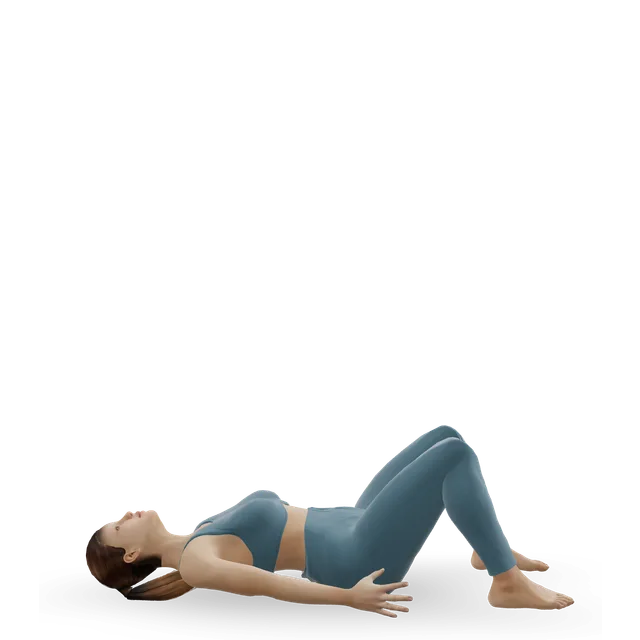
Lying chin tuck demonstrated on the 3D figure3D demoLying chin tuckBeginner · No equipment

5 holds of up to 10 s · As in our yoga for neck pain workout (editorial): a small nod, your head resting

Harder: Chin tuck

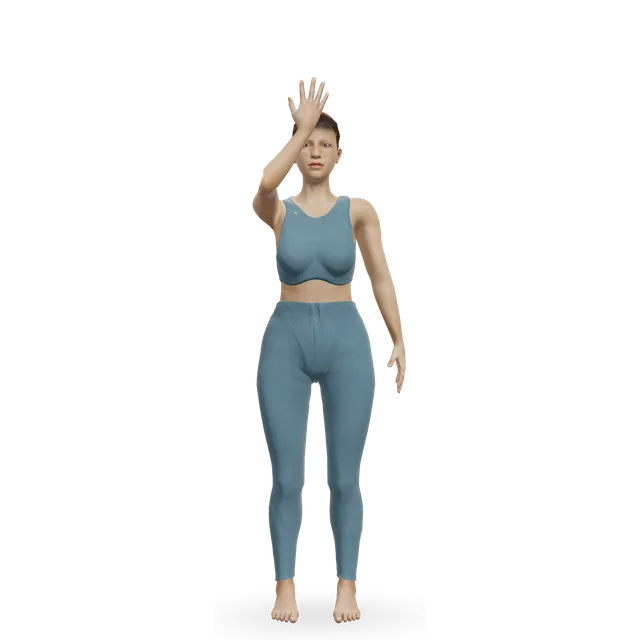
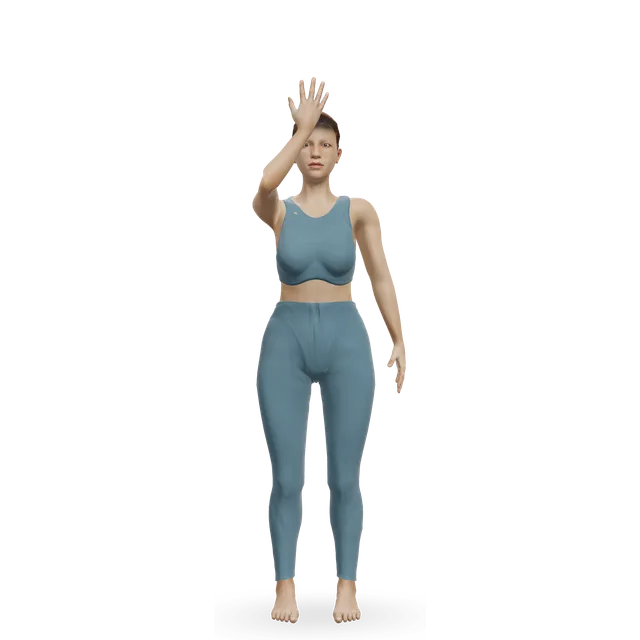
Neck CARs (controlled articular rotations) demonstrated on the 3D figure3D demoNeck CARs (controlled articular rotations)Beginner · No equipment

Separate nods, tilts and turns, each held for 5 seconds, 5 times · Adapted from the move page's dose (its sore-neck version, from an NHS leaflet). Full circles once those are comfortable

Cat-cow demonstrated on the 3D figure3D demoCat-cowBeginner · No equipment

8 waves, slower than feels natural · The move page's dose. Keep your head in line with your spine, chin not lifted high

Harder: Half lord of the fishes (Ardha Matsyendrasana)

Child's Pose (Balasana) demonstrated on the 3D figure3D demoChild's Pose (Balasana)Beginner · No equipment

Hold 1 to 3 minutes, breathing into the back ribs · The move page's dose. Forehead on a block or your stacked fists so your neck stays level

Harder: Extended puppy pose (Uttana Shishosana)

Thoracic rotation demonstrated on the 3D figure3D demoThoracic rotationBeginner · No equipment

6 rotations per side, moving with the breath · The move page's dose. Turn from your ribs, not your neck

Easier: Side-lying open book · Harder: World's greatest stretch

Shoulder rolls demonstrated on the 3D figure3D demoShoulder rollsBeginner · No equipment

10 slow circles each way · As in our yoga for neck pain workout (editorial)

Harder: Shoulder CARs (controlled articular rotations)

Move on when: Nodding, tilting and turning are within the pain rule, and a gentle class with no inversions leaves your neck no worse the next morning (adapted from NHS inform).

Follow along: a timer, a cue and the next move, one step at a time.
Stage 2

Build neck and shoulder-blade endurance

About weeks 1 to 4, 2 or 3 sessions a week: endurance for the neck muscles and the shoulder blades, and strength for holding your head up in face-down and core poses.

Chin tuck with head lift demonstrated on the 3D figure3D demoChin tuck with head liftIntermediate · No equipment

3 to 5 holds of 5 s, building to 10 holds of 10 s · As in our neck pain guide (editorial). Head lifts were the endurance exercise in a 12-month neck pain trial

Easier: Chin tuck

Isometric neck press, front and back demonstrated on the 3D figure3D demoIsometric neck press, front and backBeginner · No equipment

Build to a 10-second press, 3 times in each direction, for 3 rounds · The move page's dose (an NHS trust leaflet's). Start with light pressure

Easier: Chin tuck · Harder: Chin tuck with head lift

Isometric neck press, sides demonstrated on the 3D figure3D demoIsometric neck press, sidesBeginner · No equipment

Build to a 10-second press, 3 times in each direction, for 3 rounds · The move page's dose (the same NHS trust leaflet's)

Easier: Chin tuck · Harder: Chin tuck with head lift

Locust pose (Salabhasana) demonstrated on the 3D figure3D demoLocust pose (Salabhasana)Beginner · No equipment

3 holds of 3 breaths · As in our yoga for neck pain workout (editorial). Arms by your sides, eyes on the floor so the back of your neck stays long

Easier: Seated upper-back lift (sit tall, shoulders back) · Harder: One-legged bow (half locust)

Prone Y-T-W raises demonstrated on the 3D figure3D demoProne Y-T-W raisesBeginner · No equipment

2 sets of 8 of each letter, light or no weight · As in our plank shoulder guide (editorial). Forehead on a towel

Easier: Wall angel · Harder: Bent-over reverse fly

Band row demonstrated on the 3D figure3D demoBand rowBeginner · A band + An anchor point

3 sets of 10 to 15, stopping 2 to 3 reps short of failure · The move page's dose (an editorial starting point). Shoulders down, away from your ears

Harder: Supported single-arm dumbbell row

Move on when: Ten head-lift holds of 10 seconds and locust pass the pain rule, with your neck no worse the next morning, for a week (editorial, as in our sit-ups neck guide).

Follow along: a timer, a cue and the next move, one step at a time.
Stage 3

Back to backbends, twists, standing poses and your usual class

From about week 2 to 6, often later: the poses back one group at a time, the inversions last or not at all. No study has tested a return to yoga after neck pain, so the order is our suggestion.

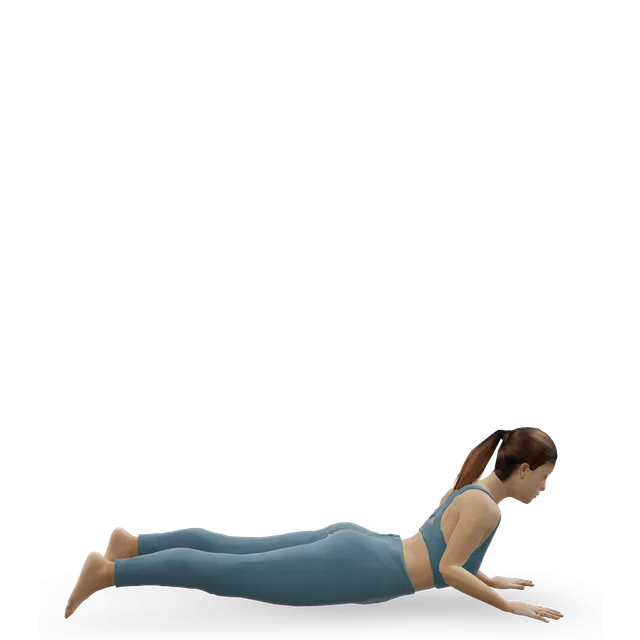
Sphinx pose (Salamba Bhujangasana) demonstrated on the 3D figure3D demoSphinx pose (Salamba Bhujangasana)Beginner · No equipment

2 holds of 3 to 5 breaths · As in our wrist pain from yoga guide (editorial). Eyes forward or down

Harder: Cobra pose (Bhujangasana)

Low cobra (Bhujangasana) demonstrated on the 3D figure3D demoLow cobra (Bhujangasana)Beginner · No equipment

3 holds of 3 to 5 breaths · As in our back pain after yoga guide (editorial). Neck long, no dropping your head back

Easier: Sphinx pose (Salamba Bhujangasana) · Harder: Cobra pose (Bhujangasana)

Triangle pose (Utthita Trikonasana) demonstrated on the 3D figure3D demoTriangle pose (Utthita Trikonasana)Intermediate · A step

3 breaths each side · As in our yoga for neck pain workout (editorial). Look down or straight ahead, not up

Easier: Wide-legged standing forward fold (Prasarita Padottanasana) · Harder: Half moon pose (Ardha Chandrasana)

Warrior II (Virabhadrasana II) demonstrated on the 3D figure3D demoWarrior II (Virabhadrasana II)Intermediate · No equipment

3 breaths each side · As in our yoga for neck pain workout (editorial). Lower your arms if your neck complains

Easier: Chair pose (Utkatasana) · Harder: Extended side angle (Utthita Parsvakonasana)

Supine spinal twist (Supta Matsyendrasana) demonstrated on the 3D figure3D demoSupine spinal twist (Supta Matsyendrasana)Beginner · No equipment

5 to 10 slow breaths each side · Editorial. Turn your head only as far as is comfortable, or keep it level

Harder: Seated twist, bottom leg straight

Chin tuck with head lift demonstrated on the 3D figure3D demoChin tuck with head liftIntermediate · No equipment

10 holds of 10 s, twice a week · Editorial, as in our sit-ups neck guide: neck pain often comes back, so keep the neck's endurance work

Easier: Chin tuck

Move on when: A full class without inversions passes the pain rule for 2 weeks. Then, if you want them, bring back the deeper backbends one at a time, and only after that think about shoulder stand or headstand, learned with a teacher, legs together and never kicking up, if nothing on this page or the move pages rules them out. Legs up the wall is a fine permanent swap. If it flares, go back a stage for a few days, not to nothing (editorial).

Follow along: a timer, a cue and the next move, one step at a time.

What to change for now

Your yoga for now (written steps)

Our 3D figure shows the moves, not a block under your head, the wall or what you tell your teacher. These steps come from a headstand lab study, the US health agency and orthopaedic surgeons, the NHS, our yoga for neck pain page and the move pages; where a step is our suggestion, it says so. None has been tested in a trial against neck pain from yoga.

  • 1. A warning sign first: after a fall from an inversion or an arm balance, or with dizziness, double vision, slurred speech, a drooping face, a sudden severe headache, or arm numbness, tingling or weakness, stop and get it checked.
  • 2. Tell your teacher before class what hurts and what you'll change, so they can offer options (the US orthopaedic surgeons' advice). For example: "My neck has been sore since last week's class. I'll skip headstand and shoulder stand and do legs up the wall, and keep my head level in the backbends; could you suggest other options?" (our suggestion).
  • 3. No headstand, shoulder stand or plough while it hurts; legs up the wall or a supported bridge instead (our suggestion; the move pages say not with any neck problem).
  • 4. Backbends: neck long and eyes forward or down; sphinx or a low cobra rather than full cobra, upward dog, camel, wheel or fish for now (our suggestion, as our yoga for neck pain page says).
  • 5. Twists and standing poses: turn from your ribs; in triangle, extended side angle and revolved poses, look down or straight ahead rather than up (our suggestion).
  • 6. A block or folded blanket under your forehead in child's pose and under your head lying down (our suggestion).
  • 7. Shoulders away from your ears in chaturanga, plank and downward dog, with your knees down while your neck and shoulders are sore (our suggestion; our shoulder pain after yoga guide covers the arm work).
  • 8. A gentler, slower class at ordinary room temperature, with fewer vinyasas, while it settles (the US health agency notes hot yoga's risks).
  • 9. If headstand comes back, learn it with a teacher, go up with straight legs together and never kick up (the headstand lab study and the move page).
  • 10. Between classes, keep your neck moving, use a low, firm pillow, and don't drive or cycle if you can't turn your head, as the NHS says.

Sources 41, 12, 8, 29, 42

Dizziness or blurred vision in a pose

If a pose that tips your head back or turns it hard brings on dizziness, blurred vision or a sudden headache, come out slowly and sit down. If it doesn't settle within a few minutes, treat it as one of the urgent signs above, and don't repeat that pose (our suggestion, from case reports).

Sources 22, 9

Positions to swap, and why

Habit or positionWhy it mattersInstead
Headstand while your neck hurtsYour head takes up to 40% to 48% of your body weight, and the move page says not with neck problems.Legs up the wall.Try: Legs up the wall (Viparita Karani)
Shoulder stand and plough while your neck hurtsYour body weight rests on a bent neck, and the move pages say avoid them with any neck problem.A supported bridge.Try: Supported bridge pose (Setu Bandha Sarvangasana)
Dropping your head back in cobra or upward dogThe back of the neck is held arched; the move pages flag dizziness and blurred vision with the head back.Sphinx, eyes forward.Try: Sphinx pose (Salamba Bhujangasana)
Fish pose with your head on the floorThe move page says skip it with a neck injury, and your head should never bear weight.A low cobra.Try: Low cobra (Bhujangasana)
Looking up in triangle and other standing posesTurning and arching the neck together (our reading).Look down or straight ahead, as in warrior II.Try: Warrior II (Virabhadrasana II)
Shoulders shrugged in chaturanga and plankThe tops of the shoulders take over (our reading).Knees down, shoulders down, in a knee plank.Try: Knee plank
Keeping your neck still, or a collarThe NHS says it's better to keep your neck moving.Gentle nods, tilts and turns.Try: Neck CARs (controlled articular rotations)
Carrying on through a headache, dizziness or blurred vision in a poseThese need the warning signs checked, not the pain rule.Come out of the pose and sit down.

Routines to follow

More moves for this area

Questions people ask

Why does my neck hurt after yoga?

Usually a pose that put weight on your neck or held it at the end of its range, such as headstand, shoulder stand, plough or looking up in a backbend. A shrugged-shoulder habit in chaturanga and downward dog can add to it. Leave those poses out for a while and use the plan on this page.

Are headstands bad for your neck?

They load it heavily: in a lab study the head carried up to 40% to 48% of body weight at peak moments. Headstand is the pose most often named in reports of yoga injuries, so leave it out while your neck hurts, and if it comes back, learn it with a teacher, legs together and never kicking up.

Why does my neck hurt after shoulder stand or plough?

Your body weight rests on a bent neck at the end of its range, and the move pages already say to avoid both with any neck problem. Legs up the wall or a supported bridge give a similar rest. With glaucoma, ask your eye team first: eye pressure rises within a minute in head-down poses.

Why does my neck hurt in cobra or upward dog?

Usually because your head drops back, holding the back of your neck arched (our reading). Keep your neck long with your eyes forward or down, or use sphinx for a while. Dizziness, blurred vision or a sudden headache in a backbend means come out at once.

Can yoga cause a stroke?

Very rarely: a few case reports, mostly decades old, describe strokes after headstand, shoulder stand with the head turned hard and bridge pose. Torn neck arteries from any cause affect about 2.6 people per 100,000 a year and most people recover well, and yoga was the setting in only 4 of 190 published cases linked with sport. Call 999 for a sudden severe headache, a drooping face, slurred speech, double vision or weakness down one side.

Why does my neck hurt after hot yoga?

Often the same poses as in any class, sometimes with a headache from heat and fluid loss in a hot room. Drink, take breaks and choose a room at ordinary temperature while your neck settles. Stop and cool down for dizziness, a headache or feeling sick, and call 999 for signs of heatstroke.

Should I stop yoga if my neck hurts?

Usually not: change the poses, keep your neck moving and keep practising gently. Gentle, adapted yoga eases long-lasting neck pain in trials. Stop and get checked for arm symptoms, a headache brought on by exercise or any warning sign.

What should I tell my yoga teacher?

Say which part of your neck hurts, which poses bring it on and what you plan to skip, before class starts. The US orthopaedic surgeons' body advises discussing any injury with the teacher so they can suggest changes.

How long does neck pain from yoga last?

Most neck pain lasts a few weeks, and NHS inform expects most problems to improve within 8 weeks. It often comes back, so keep some neck and shoulder-blade work in your week. No one can promise a date.

Do I need a scan?

Usually not: most people without neck pain have disc bulges on an MRI scan, and neck problems are rarely caused by serious disease. A scan matters with warning signs, after a fall from an inversion, or with arm symptoms that aren't settling.

When should I see a doctor?

Call 999 for a sudden, extremely painful headache, weakness or numbness down one side, a drooping face, slurred speech, double vision, or severe neck pain or tingling in your arms or legs after a fall. Get help the same day for arm numbness, pins and needles or weakness that is getting worse, or a headache brought on by exercise, and see a GP if the pain hasn't eased after a few weeks. In the US, call 911 where this page says 999.

Related exercise guides

Other pain guides

Sources

  1. Cramer 2015 · The safety of yoga: 94 randomised trials, 8,430 people (systematic review and meta-analysis, Am J Epidemiol)
  2. Cramer 2018 · Injuries and other adverse events with yoga: 9 observational studies (systematic review, J Sci Med Sport)
  3. Wiese 2019 · Injuries in yoga practice: an online survey of 2,620 practitioners (J Bodyw Mov Ther)
  4. Swain 2016 · Yoga-related injuries in US emergency departments, 2001 to 2014 (Orthop J Sports Med)
  5. Penman 2012 · Yoga in Australia: a national survey of 2,567 practitioners (survey, Int J Yoga)
  6. Cramer 2019 · Adverse effects of yoga in 1,702 German practitioners (national cross-sectional survey, BMC Complement Altern Med)
  7. Hogg-Johnson 2008 · The burden of neck pain in the general population (best evidence synthesis, Spine)
  8. Hector 2015 · Headstand technique and the load on the head and neck: 45 experienced practitioners (lab study, J Bodyw Mov Ther)
  9. Cramer 2013 · Adverse events associated with yoga: 76 published cases (systematic review of case reports, PLoS One)
  10. Sharma 2026 · Yoga and its risks: 84 adverse events in case reports and case series (systematic review, J Integr Med)
  11. Fishman 2009 · The poses yoga teachers and clinicians link with injuries: 1,336 respondents (survey, Int J Yoga Therap)
  12. National Center for Complementary and Integrative Health (US) · Yoga: effectiveness and safety
  13. NHS · Cervical spondylosis (past its review date: reviewed August 2023, review due August 2026)
  14. Matsushita 2015 · Adverse events after yoga classes: 2,508 class-goers in Japan (survey, BioPsychoSocial Med)
  15. Lee 2006 · How often neck arteries tear, and how people do: a Minnesota population (population study, Neurology)
  16. Griffin 2024 · Neck artery tears in a Minnesota population, 2002 to 2020: 123 people (population study, Stroke)
  17. Engelter 2013 · Minor neck injury and other triggers before a torn neck artery in 966 people (case-control study, Neurology)
  18. Schlemm 2017 · Torn neck arteries after sport: 190 published cases (review of case reports, Eur Stroke J)
  19. Hanus 1977 · A blocked vertebral artery after neck movements in yoga (case report, Arch Neurol)
  20. Fong 1993 · A blocked basilar artery after unusual neck postures in yoga (case report, Clin Exp Neurol)
  21. Nayar 2022 · Torn neck arteries and spinal cord pressure after a yoga session in a 63-year-old man with neck arthritis (case report, Spinal Cord Ser Cases)
  22. Shenouda 2026 · Dizziness and blurred vision with the head tipped back in yoga, in a woman with an underlying artery condition (case report, Case Rep Ophthalmol)
  23. Engelter 2021 · Neck and brain artery tears: symptoms, causes and treatment (narrative review, Ther Adv Neurol Disord)
  24. Traenka 2017 · Neck artery tears from age 60: often painless, with few triggers (pooled cohort, Neurology)
  25. Antypas 2024 · A spinal fluid leak with a headache after an intense yoga class (case report, Cureus)
  26. Holton 2014 · Side effects that led people to stop yoga: 2,230 US adults who had done yoga (national survey analysis, Int J Yoga)
  27. NHS inform · Neck problems
  28. Nakashima 2015 · Neck MRI findings in 1,211 people without symptoms (cross-sectional study, Spine)
  29. NHS · Neck pain (past its review date: reviewed April 2023, review due April 2026)
  30. Carroll 2008 · The course of neck pain in the general population (best evidence synthesis, Spine)
  31. Wong 2014 · The course of a pinched nerve from a neck disc: 8 studies (systematic review, Spine J)
  32. Radhakrishnan 1994 · A pinched nerve in the neck in 561 people in Rochester, Minnesota (population study, Brain)
  33. NHS inform · Exercises for neck muscle and joint problems
  34. Jasien 2015 · Eye pressure in four head-down yoga poses: 20 adults with and without glaucoma (lab study, PLoS One)
  35. Gross 2015 · Exercises for mechanical neck disorders: 27 trials (Cochrane review)
  36. Cramer 2017 · Yoga for chronic neck pain: 3 trials, 188 people (systematic review and meta-analysis, Clin Rehabil)
  37. Li 2019 · Yoga for chronic non-specific neck pain: 10 trials, 686 people (systematic review and meta-analysis, Medicine)
  38. Michalsen 2012 · Iyengar yoga for chronic neck pain: 77 adults (pilot randomised trial, J Pain)
  39. Dunleavy 2016 · Pilates and yoga classes for chronic neck pain in 56 people (quasi-randomised trial, Physiotherapy)
  40. Crow 2015 · Iyengar yoga for back and neck pain: 6 trials, 570 people (systematic review, Int J Yoga)
  41. American Academy of Orthopaedic Surgeons, OrthoInfo · Yoga injury prevention
  42. NHS · Vinyasa flow yoga video, with the exercise video safety information

Exercise education, not a diagnosis or treatment plan. It is written from the guidelines and studies listed above; review by a clinician is pending. If your pain follows an injury, is severe, is getting worse, or comes with any warning sign listed on this page, get it assessed. Health disclaimer.