Neck pain from Pilates: the hundred, curl-ups, rolling moves and the reformer, and what to change

Neck pain from Pilates usually comes from the muscles at the front of your neck holding your head up in moves like the hundred, the chest lift and the leg stretches, especially when you're new to them. It's usually an ache or burn during the head-up moves, or a sore neck the next day, and it eases when you rest your head. Moves that roll your weight towards your neck, like the roll-over and jack knife, load it differently and are best left out while it hurts. Pilates is safe for most people, and serious neck injury from it is rare: resting your head, a folded towel behind it, fewer head-up reps and a word with your instructor usually sort it.

This guide starts with the signs that need help, from a 999 call for a sudden, extremely painful headache or neck pain after a fall from the reformer, to a same-day check through the National Health Service's 111 line (NHS 111) or a general practitioner (GP) for arm numbness or weakness that is getting worse or a headache brought on by exercise. It then maps the causes by where it hurts, explains what the small studies show about your chin, breath and hands, covers rolling moves, the reformer and headaches, and gives a three-stage plan with a 3D demo of every move, back to the hundred.

When to get help first

Exercise is for pain that has been checked or is clearly mild and settling.

Get urgent medical help if

  • Call 999 or go to A&E after a neck injury if the person is unresponsive, has severe neck pain or cannot move their head, has fallen from a height such as 5 or more stairs, or is drunk or has taken recreational drugs. Do not drive yourself. Being 65 or over, a dangerous fall or crash (from more than 1 metre or 5 stairs, diving, a high-speed or rollover crash, being thrown from a vehicle, a bicycle collision or an accident on a motorised recreational vehicle), or tingling in the arms or legs after an injury puts you at high risk of a broken neck: get checked.
  • Call 999 or go to A&E: a stiff neck and you can't look at bright lights; a very painful headache; a very high or very low temperature, feeling hot or cold to the touch, or shivering; confusion, slurred speech or not making sense; a rash that does not fade when you press a glass on it; or a first seizure (fit). These can be signs of meningitis. Call too for any other symptoms you're worried might be meningitis.
  • Call 999 or go to A&E: a headache that came on suddenly and is extremely painful; numbness or weakness in the face or body; a drooping face, or being unable to lift both arms and keep them up; difficulty speaking, swallowing, balancing, walking or remembering; double vision or loss of vision; drowsiness or confusion. A torn neck artery often starts with headache and neck pain, sometimes with dizziness or tingling, so head or neck pain unlike any you have had before needs checking.
  • Call 999 or go to A&E: new problems walking, loss of bladder or bowel control, or a sudden loss of coordination, such as difficulty doing up buttons. These can be signs of pressure on the spinal cord.
  • Call 999: chest pain that spreads to your arm, neck or jaw, especially with breathlessness, sweating or feeling sick. It could be a heart attack.
  • Get help from NHS 111: pain or tightness in your chest, neck, shoulders, jaw or arms that comes and goes, often brought on by exercise, stress, emotion or cold and easing after a few minutes' rest. It can be angina, a sign of a heart problem. If you've been diagnosed with angina, get help from NHS 111 too if it feels worse than before, is happening more often, lasts longer or happens when you're resting.
  • Same day (urgent GP appointment or NHS 111): severe neck pain that starts suddenly or gets worse quickly; heaviness or weakness in the arms or legs; pins and needles in an arm along with neck or arm pain; or pain between the shoulder blades.
  • Same day: clumsiness in your hands, or numbness, pins and needles or weakness in one or both arms, that is getting worse; problems with balance or walking since the neck pain started; or neck pain with a severe headache.
  • Same day (NHS 111) after a neck injury, if any of these are new or getting much worse: severe neck pain; numbness or weakness in the arms or legs; clumsy hands (dropping things, or struggling with handwriting, buttons or zips); changes in bladder or bowel control; changed feeling around the bottom or genitals, or sexual problems such as recently being unable to have an orgasm or an erection; or feeling generally unwell. The same applies if you have a history of spinal problems, such as osteoporosis or rheumatoid arthritis.
  • Arm weakness or numbness that keeps getting worse, severe pain that painkillers and rest do not touch, or an unexplained fever.
  • Same day (urgent GP appointment or NHS 111): a headache with vision or eye problems, a headache triggered or made worse by coughing, sneezing, bending down or exercising, or a headache with vomiting.
  • Call 999: a sudden headache that is extremely painful and doesn't go away, during or after a heavy lift or at any other time, or weakness or numbness in one arm or down one side of the body. A bleed on the brain may be more likely when lifting something heavy.
  • If you think you had signs of a stroke that passed (a mini stroke) and didn't get advice at the time, make an urgent appointment with a GP.

See a doctor or physiotherapist if

  • Neck pain or stiffness that has not eased after a few weeks, or after 8 weeks of looking after it yourself; painkillers are not helping; or you are worried. In many areas you can refer yourself to NHS physiotherapy.
  • Neck pain with feeling generally unwell, or that started while you were ill with another condition such as rheumatoid arthritis or cancer; or neck pain with blurred vision, ringing in the ears or dizziness.
  • Severe pain that is constant or disturbs your sleep, a fever or unexplained weight loss, or a history of cancer, inflammatory arthritis, tuberculosis (TB), a weakened immune system, neck surgery or a violent injury. Serious causes are very rare, but these need checking.
  • See a GP if you have pain and stiffness for more than a week, especially if you're over 50, it's in both shoulders (often the neck and hips too) and the stiffness lasts longer than 45 minutes in the morning. It can be polymyalgia rheumatica.
  • Swollen glands in your neck that are getting bigger or haven't gone down within 1 week, feel hard or don't move, or come with night sweats or a very high temperature: see a GP.
  • No improvement after 6 weeks of exercise, or arm symptoms still there beyond 6 to 12 weeks.
  • Nerve symptoms and trouble with daily life more than 3 months after an injury: a guideline advises referral for medical investigation.
  • Pins and needles or a cold arm alongside neck pain, or a new loss of strength or feeling in the arm that you cannot explain (a possible nerve problem).
  • Soreness that isn't better after a week, keeps coming back after normal sessions, or is in one spot: see a GP or physiotherapist (our suggestion).
  • A painful, tender swelling at the front of your neck with a sore throat or a flu-like illness, sometimes with a racing heart or shakiness: see a GP. It can be an inflamed thyroid, which usually settles but needs checking (our suggestion).
  • A lump in your neck, a hoarse voice that isn't getting better, difficulty swallowing that isn't getting better, or pain in the front of your neck or a feeling of something pressing on it: see a GP.

Where does it hurt?

Location narrows the likely causes; it does not diagnose.

The front and sides of the neck, both sides, an ache or burn while your head is up in the hundred, the chest lift or the leg stretches

The neck muscles working hard to hold your head up. It eases within minutes of resting your head, and the changes on this page lower their work.

The front of the neck, a dull ache a day or two after a new or harder class

Usually muscle soreness, which fades within about a week. Our workout guide covers soreness against a strain.

Read: Neck pain after a workout →

The back of the neck or the base of the skull, with your hands behind your head in the neck pull or a curl

Usually pulling on your head. Rest your fingertips lightly or cross your arms instead.

The back of the neck or across the tops of the shoulders after swan, swimming, side kicks propped on a hand, or arm work in the reformer's straps

Usually holding your head up, or the shoulders creeping up to your ears (our reading). A smaller lift, eyes on the mat and lighter springs usually help.

Read: Neck and shoulder pain →

A sudden catch or sharp pain on one side during a move, then stiff to turn

Usually a strain or ordinary neck pain, which eases with gentle movement over a few weeks.

Read: Stiff neck and wry neck →

The top of the back or between the shoulder blades after the roll-over or jack knife

The upper back and neck taking weight. New, severe pain between the shoulder blades needs an urgent GP appointment, as the warning signs say.

Read: Upper back pain →

A stiff, achy neck from mid-life that head-up work flares

Possibly neck arthritis, which the NHS calls a normal part of ageing that many people have without symptoms.

Read: Neck arthritis →

Pain, pins and needles, numbness or weakness down one arm

Possibly a pinched nerve. Weakness or numbness that is getting worse, or clumsy hands, needs help the same day.

Read: Pinched nerve in the neck →

A headache that comes on with the class

Often an exercise headache, but the first one needs an urgent GP appointment or NHS 111; a sudden, extremely painful headache needs 999.

Read: Neck pain after a workout →

A one-sided headache brought on by neck movement or holding a position

Possibly a headache coming from the neck.

Read: Headaches from the neck →

A pressing or tight headache on both sides, like a band

Usually a tension headache.

Read: Tension headaches →

A pop in the neck during a move, then a headache that eases when you lie down

Very rarely a spinal fluid leak, known from one published case after a reformer class. Stop, and get advice the same day (our suggestion, from that case report).

Show all 15 areasShow fewer areas

Understand it

Pilates is safe for most people, but the harm data are thinEmerging evidence

No country collects injury statistics for Pilates, so nobody can give a reliable injury rate. An Australian association of Pilates instructors says the usual problems are muscle strain, flares of existing conditions and occasional falls from equipment. In a study of 56 people with long-lasting neck pain, modified Pilates and yoga classes had no linked side effects, and in 54 women with long-lasting back or neck pain, reformer classes had none. But a review of 8 Pilates trials for neck pain (439 people) found the trials didn't report harms, so calling harm rare rests on thin evidence.

Neck pain is common anyway: 30% to 50% of adults have some in a year, so many people bring a sore neck to class. In a survey of 166 Brazilian Pilates instructors, about 62% reported neck pain, linked with work stress rather than teaching moves (instructors, not clients).

Sources 1, 2, 3, 4, 5, 6

What Pilates asks of the neckEmerging evidence

Many mat moves are done lying on your back with your head and shoulders lifted and held: the chest lift, the hundred (100 beats with the head up in the classical form), the single-leg and double-leg stretches, the straight-leg stretches and the criss-cross, and the roll-up, teaser and neck pull on the way up. The head weighs about 5 kilograms, and a Pilates teacher-training text says a head that drifts away from the line of the spine works the neck harder. A teacher's article calls neck strain extremely common, especially when you're getting started, and says it happens mostly in moves where you lift your head for a long time, like the hundred or the single-leg stretch.

In a lab curl-up, the long strap muscle at the front of the neck (the sternocleidomastoid) worked at about a third of its maximum in 13 healthy men. Pilates head lifts haven't been measured, so applying that to the hundred is our reading.

Other moves load the neck differently. The rolling moves (rolling like a ball, the seal, the open-leg rocker) keep the head tucked as you roll, and the overhead moves (the roll-over, jack knife, control balance, boomerang, crab, high scissors and high bicycle) carry weight towards the upper back and neck. Swan, swimming and the double-leg kick hold the head up face down, and the side kicks are often done with the head propped on a hand. On the reformer, lying work is done with the head on a headrest, while the short spine and overhead work roll weight towards the neck (our reading of the moves; no study has measured neck load on the reformer).

Sources 7, 8, 9

Where it hurts, and what it often isEmerging evidence

The front and sides of the neck during head-up moves, easing when you rest your head: the neck muscles holding the head up. A dull ache the next day: soreness after a new or harder class. The back of the neck after the neck pull: often pulling on the head. A sudden catch on one side: a strain or ordinary neck pain, which NHS inform says usually settles within weeks.

A neck that was already sore can flare. In small lab studies, people with long-lasting neck pain used the deep neck muscles less and the big front ones more in a gentle nod test, and their deep neck muscles tired sooner (10 people against 10 in one study), which may be why long head-up holds feel hard. Neck arthritis is "a normal part of ageing and many people do not have any symptoms", the NHS says.

Pain, tingling or numbness down one arm points to a nerve, a headache brought on by the class needs checking, and a lump, swollen glands or a sore throat point to something other than the class.

Sources 8, 10, 11, 12, 13

Rare but serious: a spinal fluid leak, an artery and inversionsEmerging evidence

One published case describes a 42-year-old woman who felt a pop in her neck during a reformer move and "developed a headache after one hour, which improved when lying flat". Scans weeks later showed a spinal fluid leak, and she recovered without an operation. One yoga case describes damage to two neck arteries and the spinal cord in a 63-year-old man whose neck was already narrowed by arthritis. These are single cases: they show what the warning signs are for, not a risk.

Inversions put weight through the head and neck. In a lab study of the yoga headstand, the head took 40% to 48% of body weight, and in published yoga case reports, most headstand and shoulder stand problems were eye problems, so people with glaucoma should ask first (yoga, not Pilates). The NHS asks for an urgent GP appointment or NHS 111 for a headache triggered or made worse by exercising. Our neck pain after yoga guide covers headstand, shoulder stand and plough.

Sources 14, 15, 16, 17, 18

When a scan mattersStrong evidence

Ordinary neck pain is recognised from the story and an examination. NHS inform says neck problems "are rarely caused by any serious disease or damage", and scans mislead when used alone: 87.6% of 1,211 people without symptoms had bulging discs on magnetic resonance imaging (MRI), including 73.3% of men and 78.0% of women in their 20s.

A scan matters for the warning signs, after a fall or accident, and for arm weakness or numbness that isn't settling. A headache after a class that eases lying down needs a doctor, who decides on tests.

Sources 10, 19, 20

How it usually goesStrong evidence

The neck working hard during a set eases as soon as you rest your head. For a strain or ordinary neck pain, the NHS says "Most neck pain only lasts a few weeks", and NHS inform says "You should see the biggest change in your symptoms within the first couple of weeks" and "Most problems should have improved within 8 weeks."

Neck pain often comes back: between half and three quarters of people report it again 1 to 5 years later, and coping and mood were the strongest predictors. A pinched nerve takes longer: most improvement comes within 4 to 6 months, and about 83% recover fully over 2 to 3 years, in a review of 8 studies. In a population study of 561 people, exertion or an injury came before it in only 14.8%. No one can promise a date.

Sources 20, 10, 21, 22, 23

What helps, and how strong the evidence is

Keep the neck movingStrong evidence

The NHS says don't wear a neck collar, because "it's better to keep your neck moving", and suggests paracetamol or ibuprofen, heat or cold packs and a low, firm pillow. NHS inform's neck exercises start with small turns, tilts and nods within comfort. So the question is usually which Pilates moves to change, not whether to stop.

Sources 20, 24

Rest or support your head, and curl from the chestEmerging evidence

A teacher's tip is to put your head down when you feel strain and lift it back up when it feels better, and to put folded towels or a firm pillow right behind your head, not under your neck. You still work your abs.

In two small lab studies of healthy young adults, which didn't measure pain, small changes lowered the front neck muscles' work. A light touch of one hand on the jaw, to stop the chin poking forward, cut it from 32.2% to 22.1% of its maximum while the stomach muscles worked harder (13 healthy men doing curl-ups); breathing out slowly as you curl lowered it too (12 adults). Applying these to the hundred and the leg stretches is our reading. A review of 87 muscle studies lists "do not pull with the hands behind the head" among its safety rules, which is a rule, not a measured effect.

Sources 8, 9, 25, 26

Leave out the moves that roll weight towards your neck, for nowEmerging evidence

The Royal Osteoporosis Society's Pilates sheet says the roll-over "places a lot of pressure on your upper spine and neck", and a Pilates teaching platform advises avoiding the jack knife, boomerang and crab with neck or spine injuries, and not rolling past your shoulder blades in the roll-over. No lab study has measured these moves; the nearest is the yoga headstand study. So leaving out the roll-over, jack knife, control balance, boomerang, crab and seal while your neck hurts is a cautious swap, not a tested treatment.

Sources 27, 28, 17

Strength and endurance for the neck and shoulders help neck pain that lastsStrong evidence

A Cochrane review of 27 trials (2,485 people) found moderate-quality evidence that strengthening and endurance exercise for the neck, shoulder blades and shoulders reduces long-lasting neck pain, while stretching alone may not help. Gentle nod training for the deep neck muscles improves how they work together more than their strength, so it comes first in the plan, with harder neck work added later.

Sources 29, 30

Pilates helps long-lasting neck pain about as much as other exerciseMixed evidence

In 8 trials (439 people), Pilates eased long-lasting neck pain by about 1.5 points out of 10 against no exercise or minimal care (very low certainty), but other exercise eased it by about half a point more straight after treatment. An earlier review of 5 trials (224 people) found Pilates no better than other treatments at 3 months (low certainty), and a network meta-analysis of 40 trials found no single best type of exercise. In a 56-person trial, Pilates, yoga and simple neck exercises helped equally.

The trial classes were adapted: in one, mat and equipment Pilates twice a week for 12 weeks used 6 to 12 repetitions, respecting each person's fatigue and pain (64 people), and in another, 6 weeks of clinical Pilates improved deep neck muscle endurance against posture education (50 people). So the aim is to keep doing Pilates, adapted.

Sources 4, 31, 32, 33, 34, 35

The reformer: no trial against the matEmerging evidence

No trial has compared mat and reformer Pilates for neck pain. Reformer classes twice a week for 6 weeks helped back and neck pain against no exercise in 54 women, with no side effects linked to the classes, and the one reported serious neck event after a class happened on a reformer. Keeping your head on the headrest, lighter springs for arm work and skipping overhead and upside-down work while your neck hurts are our suggestion.

Sources 3, 14

A weak core isn't shown to cause neck pain in PilatesMixed evidence

No study shows that weak stomach muscles cause neck pain in Pilates. Everyone's neck works hard to lift the head; in the lab, what lowered the neck's share was the chin, the breath and the hands. How neck pain went over time depended more on coping and mood than on anything physical.

Sources 9, 25, 21

How much pain is OK while you exercise?

Up to about 5 out of 10, no worse the next morning; arm symptoms and headaches are differentEmerging evidence

NHS inform's neck exercise advice: rate your pain from 0 to 10. During exercise, 0 to 3 is minimal and 4 to 5 is acceptable; 6 or more is too much. If it goes higher, do fewer repetitions, move more slowly or rest longer between movements.

Exercise should not make your neck worse overall. Soreness from a new exercise should ease quickly, and your neck should be no worse the next morning. Stop any exercise that makes your symptoms worse or causes new pain.

Arm symptoms are the exception. If an exercise sends pain, tingling or numbness further down your arm, or the extra symptoms last more than an hour afterwards, make the movement smaller or leave it out. (A hospital leaflet on nerve glides allows a short-lived rise in symptoms but not one lasting over an hour; the rest of this rule is this site's suggestion.)

Stop and get checked for dizziness, double vision, slurred speech, trouble swallowing or any of the warning signs above.

For Pilates (our suggestion, built on the same rule): judge each class by your neck during the head-up moves, that evening and the next morning. The neck working while your head is up is expected. Choose the head position (down, on towels or up), the number of beats or reps and the leg position where it stays at 5 out of 10 or less and eases within minutes of resting your head. If your neck is worse the next morning, do fewer head-up reps next class, not none. Arm symptoms, a headache brought on by the class, a pop followed by a headache, and any warning sign aren't pain-rule questions: stop and get them checked.

Source 24

The exercise plan: 3 stages

Start at the first stage. Each move opens a full guide with a 3D demo.

Stage 1

Settle: Pilates with your head down

About days 0 to 7, or until your neck no longer aches with daily life: keep moving, and keep your trunk working without asking your neck to lift your head. With a warning sign, get checked first; with arm symptoms, a diagnosed pinched nerve, neck arthritis a doctor is following, whiplash or neck surgery, that guide's or your team's plan comes first.

Lateral breathing (Pilates breathing) demonstrated on the 3D figure3D demoLateral breathing (Pilates breathing)Beginner · No equipment

5 to 8 breaths at the start of every session · The move page's dose (a suggested starting point). Head resting on a folded towel

Harder: Roll-up (Pilates)

Lying chin tuck demonstrated on the 3D figure3D demoLying chin tuckBeginner · No equipment

5 gentle holds of up to 10 s · As in our Pilates for neck pain workout (editorial): a small nod, your head resting

Harder: Chin tuck

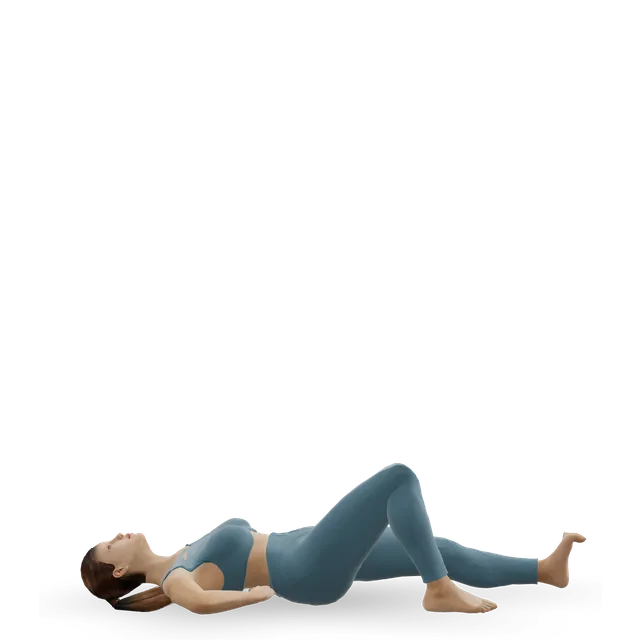
Knee fold demonstrated on the 3D figure3D demoKnee foldBeginner · No equipment

2 sets of 5 to 10 each side, every other day · The move page's dose (a UK pelvic health physiotherapy booklet's). Head down, pelvis level

Easier: Supine heel slide · Harder: Dead bug heel taps

Dead bug heel taps demonstrated on the 3D figure3D demoDead bug heel tapsBeginner · No equipment

5 each side · As in our Pilates for neck pain workout (editorial). Head down

Easier: Bent-knee fall-out · Harder: Forearm plank

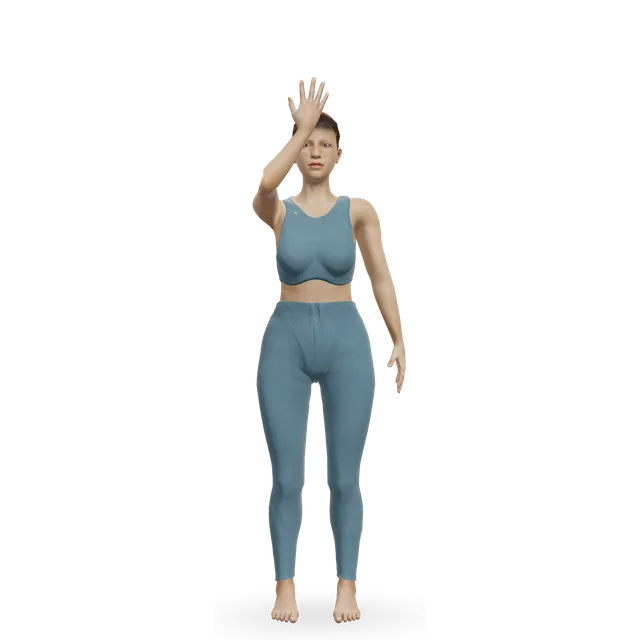
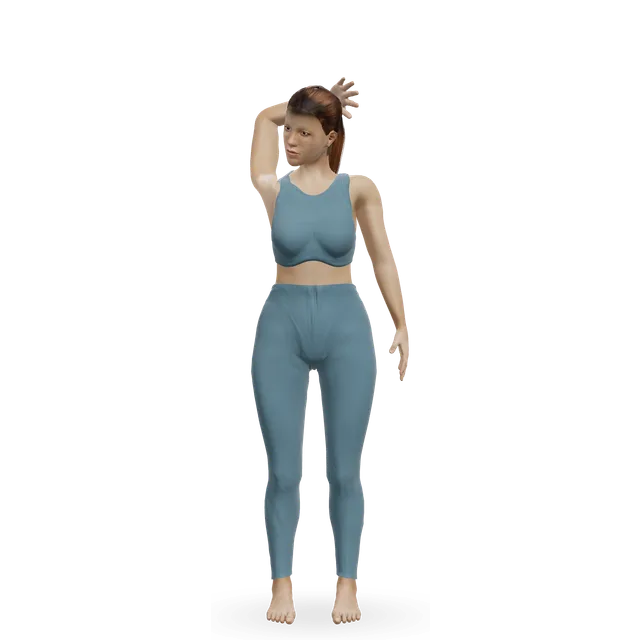
Neck CARs (controlled articular rotations) demonstrated on the 3D figure3D demoNeck CARs (controlled articular rotations)Beginner · No equipment

Separate nods, tilts and turns, each held for 5 seconds, 5 times · Adapted from the move page's dose (its sore-neck version, from an NHS leaflet). Full circles once those are comfortable

Thoracic rotation demonstrated on the 3D figure3D demoThoracic rotationBeginner · No equipment

6 rotations per side, moving with the breath · The move page's dose. Turn from your ribs, not your neck

Easier: Side-lying open book · Harder: World's greatest stretch

Move on when: Nodding, tilting and turning are within the pain rule, and a head-down class leaves your neck no worse the next morning (adapted from NHS inform).

Follow along: a timer, a cue and the next move, one step at a time.
Stage 2

Build neck and shoulder-blade endurance, and a supported curl

About weeks 1 to 4, 2 or 3 sessions a week: endurance for the neck muscles and the shoulder blades, and a small curl-up with your head rested between reps.

Chin tuck with head lift demonstrated on the 3D figure3D demoChin tuck with head liftIntermediate · No equipment

3 to 5 holds of 5 s, building to 10 holds of 10 s · As in our neck pain guide (editorial). Head lifts were the endurance exercise in a 12-month neck pain trial

Easier: Chin tuck

Isometric neck press, front and back demonstrated on the 3D figure3D demoIsometric neck press, front and backBeginner · No equipment

Build to a 10-second press, 3 times in each direction, for 3 rounds · The move page's dose (an NHS trust leaflet's). Start with light pressure

Easier: Chin tuck · Harder: Chin tuck with head lift

Chest lift (Pilates curl-up) demonstrated on the 3D figure3D demoChest lift (Pilates curl-up)Beginner · No equipment

8 to 10 reps · The move page's dose (a suggested starting point). Rest your head between reps, as the move page says, and touch your jaw lightly with one hand if your chin pokes forward (our reading of a curl-up study in healthy men)

Harder: Single-leg stretch (Pilates one leg stretch)

Prone Y-T-W raises demonstrated on the 3D figure3D demoProne Y-T-W raisesBeginner · No equipment

5 of each shape · As in our Pilates for neck pain workout (editorial). Forehead on a towel

Easier: Wall angel · Harder: Bent-over reverse fly

Swan (Pilates swan dive) demonstrated on the 3D figure3D demoSwan (Pilates swan dive)Intermediate · No equipment

5 small lifts · As in our Pilates for neck pain workout (editorial). Look at the mat, neck long

Easier: Mermaid (Pilates seated side bend) · Harder: Double-leg kick (Pilates double kick)

Band row demonstrated on the 3D figure3D demoBand rowBeginner · A band + An anchor point

3 sets of 10 to 15, stopping 2 to 3 reps short of failure · The move page's dose (an editorial starting point). Shoulders down, away from your ears

Harder: Supported single-arm dumbbell row

Move on when: Ten head-lift holds of 10 seconds and the chest lift pass the pain rule, with your neck no worse the next morning, for a week (editorial, as in our sit-ups neck guide).

Follow along: a timer, a cue and the next move, one step at a time.
Stage 3

Back to head-up work and your usual class

From about week 2 to 6, often later: the head-up moves back one at a time, then the class. No study has tested a return to Pilates after neck pain, so the order is our suggestion.

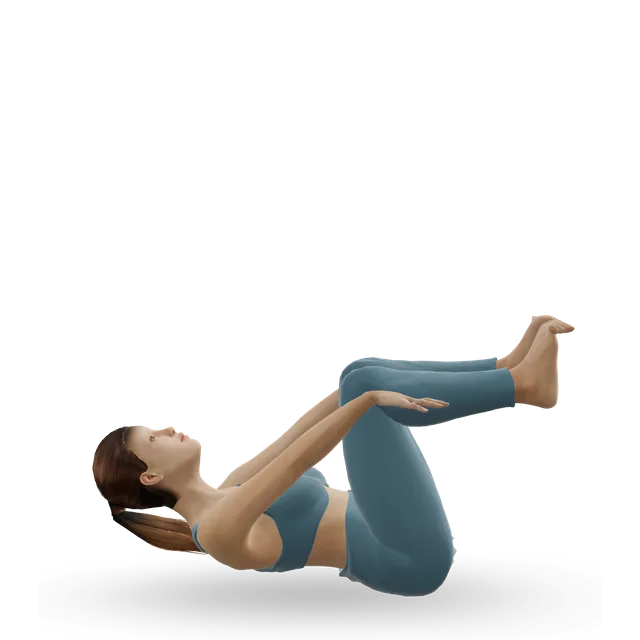
Hundred (Pilates) demonstrated on the 3D figure3D demoHundred (Pilates)Intermediate · No equipment

50 beats to start, building to 100 (the classical count) · The move page's dose (a suggested starting point). Start with your head down, or the first 20 beats up and the rest down

Easier: Wall hundred (wall Pilates) · Harder: Boomerang (Pilates)

Single-leg stretch (Pilates one leg stretch) demonstrated on the 3D figure3D demoSingle-leg stretch (Pilates one leg stretch)Intermediate · No equipment

6 to 10 each side · The move page's dose (a suggested starting point). Rest your head when your neck tires, as the move page says

Easier: Chest lift (Pilates curl-up) · Harder: Single straight-leg stretch (Pilates scissors)

Double-leg stretch (Pilates) demonstrated on the 3D figure3D demoDouble-leg stretch (Pilates)Intermediate · No equipment

6 to 10 reps · The move page's dose (a suggested starting point). The same rule for your head

Easier: Chest lift (Pilates curl-up) · Harder: Single straight-leg stretch (Pilates scissors)

Roll-up (Pilates) demonstrated on the 3D figure3D demoRoll-up (Pilates)Intermediate · No equipment

3 to 5 slow reps (the classical sequence uses 3) · The move page's dose (a suggested starting point). Curl from your chest, without momentum

Easier: Half roll back (Pilates C-curve roll back) · Harder: Neck pull (Pilates)

Wall angel demonstrated on the 3D figure3D demoWall angelBeginner · A wall

6 to 8 slow slides · As in our Pilates for neck pain workout (editorial)

Easier: Table slide (seated forward reach) · Harder: Prone Y-T-W raises

Chin tuck with head lift demonstrated on the 3D figure3D demoChin tuck with head liftIntermediate · No equipment

10 holds of 10 s, twice a week · Editorial, as in our sit-ups neck guide: neck pain often comes back, so keep the neck's endurance work

Easier: Chin tuck

Move on when: A full class with the head-up moves passes the pain rule for 2 weeks. Then bring back the rolling moves, and only then the roll-over family, one at a time, if your class uses them and nothing on this page or the move pages rules them out. If it flares, go back a stage for a few days, not to nothing (editorial).

Follow along: a timer, a cue and the next move, one step at a time.

What to change for now

Your Pilates for now (written steps)

Our 3D figure shows the moves, not a towel under your head, the headrest, the springs or what you tell your instructor. These steps come from teaching sources, small lab studies, the NHS, the Royal Osteoporosis Society and the move pages; where a step is our suggestion, it says so. None has been tested in a trial against neck pain from Pilates.

  • 1. A warning sign first: after a fall from the reformer or a jump board, a roll-over that went wrong, a pop followed by a headache, or arm numbness, tingling or weakness, stop and get it checked.
  • 2. Tell your instructor before class what hurts and what you'll change, so they can offer head-down and supported options (our suggestion; the NHS's exercise video advice is to get advice first if you have an injury or symptoms). For example: "My neck has been sore after the last few classes. I'll keep my head down in the hundred and skip the roll-over; could you show me other options?"
  • 3. Head down when your neck tires, up again when it settles, and folded towels or a firm pillow behind your head, not under your neck (a teacher's advice).
  • 4. Curl from your chest, chin slightly in but not pressed to your chest, one hand lightly on your jaw if your chin pokes forward, and breathe out as you curl (our reading of two small lab studies of curl-ups).
  • 5. Never pull on your head: in the neck pull and criss-cross, hands light behind your head or arms crossed on your chest (a review's safety rule).
  • 6. Fewer head-up beats and reps for a week or two, with your knees in tabletop or your legs higher (our suggestion, built on the move pages).
  • 7. Leave out the roll-over, jack knife, control balance, boomerang, crab, seal and the advanced corkscrew while your neck hurts, and for good with osteoporosis, glaucoma, rheumatoid arthritis in the neck or a neck problem a clinician is following, as the move pages say.
  • 8. On the reformer (our suggestion): head on the headrest in lying work, skip the short spine and overhead and upside-down work, lighter springs or fewer reps for arm work in the straps, shoulders down away from your ears, and step on and off the carriage only when it's still.
  • 9. In swan, swimming and the double-leg kick, look at the mat, keep your neck long and lift less (a teaching platform's cues).
  • 10. In side-lying work, rest your head on your lower arm rather than propping it on your hand (our suggestion).
  • 11. Between classes, keep your neck moving for short spells every hour, use a low, firm pillow, and don't drive or cycle if you can't turn your head, as the NHS says.

Sources 8, 9, 25, 26, 27, 28, 36, 20

A pop in your neck

If you feel a pop or a sudden sharp pain in your neck during a move, stop. If a new headache follows, especially one that eases when you lie down, get advice the same day, and call 999 for any of the urgent headache or brain signs above (our suggestion, from a case report). Don't go back to rolling or upside-down moves until it's been checked.

Source 14

Positions to swap, and why

Habit or positionWhy it mattersInstead
Holding your head up through the whole hundredYour neck muscles hold your head through every beat, and neck strain is most common in long head-up moves.Head down for some or all of it, or head-down heel taps.Try: Dead bug heel taps
Lacing your hands behind your head and pullingA review's safety rule is not to pull with your hands behind your head.Arms crossed or fingertips light, in the chest lift.Try: Chest lift (Pilates curl-up)
The roll-over, jack knife and control balance while your neck hurtsThey put weight over the upper spine and neck.A shoulder bridge, with your weight on your shoulder blades.Try: Shoulder bridge (Pilates)
Rolling like a ball or the seal with your head thrown backYour head can roll onto your neck; the move pages say skip it with a neck problem.The half roll back.Try: Half roll back (Pilates C-curve roll back)
Swan with your head cranked backThe back of the neck holds the head up.A smaller lift with your eyes on the mat, or Y-T-W raises.Try: Prone Y-T-W raises
Shrugged shoulders in arm work in the strapsThe tops of the shoulders take over (our reading).Lighter springs and shoulders down, or band rows.Try: Band row
Keeping your neck still, or a collarThe NHS says it's better to keep your neck moving.Gentle movement every hour.Try: Neck CARs (controlled articular rotations)
Carrying on through a headache that came on with the classThe NHS asks for an urgent GP appointment or NHS 111.Stop and get it checked.

Routines to follow

More moves for this area

Questions people ask

Why does my neck hurt when I do Pilates?

Usually because your neck holds your head up through head-up moves like the hundred and the single-leg stretch, especially when you're new to them. Pulling on your head, a chin that pokes forward and holding your breath add to it. Rest your head when your neck tires and build up.

Why does the front of my neck hurt after Pilates?

The muscles at the front of your neck lift and hold your head in every curl, working at about a third of their maximum in a lab study of curl-ups. An even ache that eases within a few days is normal soreness. A lump, swollen glands, a sore throat or a tender swelling at the front of the neck point elsewhere and need checking.

How do I stop neck pain in the Pilates hundred?

Do it with your head down, or on folded towels, and lift it for only part of the count until your neck stops complaining. Keep your chin from poking forward and breathe out as you curl. Bent knees in a tabletop make it easier too.

Should I keep my head down in Pilates?

Yes, whenever your neck tires: you still work your abs, and you can lift your head again when it settles. As your neck's endurance builds with the plan on this page, you can hold it up for longer.

Is neck pain in Pilates a sign of a weak core?

Not necessarily: everyone's neck works hard to lift the head, and no study shows a weak core causes it. In lab studies, your chin position, your breath and not pulling on your head changed how hard the neck worked.

Which Pilates exercises should I avoid with a sore neck?

For now, leave out the moves that roll weight towards your neck: the roll-over, jack knife, control balance, boomerang, crab and seal. Head-up moves are fine with your head supported or down. Never pull on your head in the neck pull or criss-cross.

Why does my neck hurt after reformer Pilates?

Usually the same reasons as on the mat: head-up work, shrugged shoulders in arm work in the straps, or rolling moves like the short spine. Keep your head on the headrest, use lighter springs for arm work and skip overhead work for a while. A fall from the carriage with neck pain needs checking.

I have a headache after Pilates. Should I worry?

Most headaches after exercise are harmless, but the NHS asks for an urgent GP appointment or NHS 111 for a headache triggered or made worse by exercising. A sudden, extremely painful headache needs 999. A headache that starts after a class and eases when you lie down is very rare but needs a doctor the same day.

Should I stop Pilates if my neck hurts?

Usually not: change the moves, keep your head down for a while and keep your neck moving. Pilates helps long-lasting neck pain about as much as other exercise. Stop and get checked for arm symptoms, a headache brought on by exercise or any warning sign.

How long does neck pain from Pilates last?

Most neck pain lasts a few weeks, and NHS inform expects most problems to improve within 8 weeks. Neck pain often comes back, so keep some neck and shoulder-blade work in your week. No one can promise a date.

Do I need a scan?

Usually not: most people without neck pain have disc bulges on an MRI scan, and neck problems are rarely caused by serious disease. A scan matters with warning signs, after a fall or with arm symptoms that aren't settling.

When should I see a doctor?

Call 999 for a sudden, extremely painful headache, weakness or numbness down one side, a stiff neck with a fever or a rash, or severe neck pain or tingling in your arms or legs after a fall. Get help the same day for arm numbness, pins and needles or weakness that is getting worse, or a headache brought on by exercise, and see a GP if the pain hasn't eased after a few weeks. In the US, call 911 where this page says 999.

Related exercise guides

Other pain guides

Sources

  1. Pilates Association Australia 2026 · How safe is Pilates? (professional association article; Australia collects no Pilates injury data)
  2. Dunleavy 2016 · Pilates and yoga classes for chronic neck pain in 56 people (quasi-randomised trial, Physiotherapy)
  3. Şahan 2025 · Reformer Pilates in 54 women with long-lasting back or neck pain (randomised trial, BMC Psychol)
  4. Lazoura 2025 · Pilates for chronic neck pain: 8 trials, 439 people (systematic review and meta-analysis, BMC Musculoskelet Disord)
  5. Hogg-Johnson 2008 · The burden of neck pain in the general population (best evidence synthesis, Spine)
  6. Silva-Filho 2018 · Musculoskeletal pain in 166 Pilates instructors (cross-sectional survey, Rev Bras Med Trab)
  7. Isacowitz · Placement of the head in Pilates (excerpt from Pilates, 3rd edition, Human Kinetics)
  8. Pilatesology 2023 · What to do if you have neck pain in Pilates (teacher's article)
  9. Lee 2016 · Keeping the chin from poking forward in curl-ups: neck and stomach muscle activity in 13 healthy men (laboratory study, J Phys Ther Sci)
  10. NHS inform · Neck problems
  11. NHS · Cervical spondylosis (past its review date: reviewed August 2023, review due August 2026)
  12. Jull 2008 · The craniocervical flexion test of the deep neck flexors (narrative review, J Manipulative Physiol Ther)
  13. Falla 2004 · Deep neck flexor activity in 10 people with neck pain and 10 without (laboratory study, Spine)
  14. Davis 2014 · A spinal fluid leak after a reformer Pilates class (case report, J Med Case Rep)
  15. Nayar 2022 · Neck artery tears and spinal cord injury after yoga in a man with neck arthritis (case report, Spinal Cord Ser Cases)
  16. Cramer 2013 · Adverse events with yoga: 76 published cases (systematic review of case reports, PLoS One)
  17. Hector 2015 · Headstand technique and the load on the head and neck: 45 yoga practitioners (laboratory study, J Bodyw Mov Ther)
  18. NHS · Headaches
  19. Nakashima 2015 · Neck MRI findings in 1,211 people without symptoms (cross-sectional study, Spine)
  20. NHS · Neck pain (past its review date: reviewed April 2023, review due April 2026)
  21. Carroll 2008 · The course of neck pain in the general population (best evidence synthesis, Spine)
  22. Wong 2014 · The course of a pinched nerve from a neck disc: 8 studies (systematic review, Spine J)
  23. Radhakrishnan 1994 · A pinched nerve in the neck in 561 people in Rochester, Minnesota (population study, Brain)
  24. NHS inform · Exercises for neck muscle and joint problems
  25. Yoon 2014 · Breathing out slowly during curl-ups and neck muscle activity: 12 healthy adults (laboratory study, J Electromyogr Kinesiol)
  26. Monfort-Pañego 2009 · Muscle activity in abdominal exercises: 87 studies (literature synthesis, J Manipulative Physiol Ther)
  27. Royal Osteoporosis Society · Pilates exercises: modifications with osteoporosis (fact sheet, February 2019)
  28. Pilates Anytime · The 34 Pilates mat exercises: the classical order and precautions (teaching platform)
  29. Gross 2015 · Exercises for mechanical neck disorders: 27 trials (Cochrane review)
  30. Blomgren 2018 · Deep neck flexor training for chronic neck pain: 12 trials (systematic review, BMC Musculoskelet Disord)
  31. Martini 2022 · Pilates for neck pain: 5 trials, 224 people (systematic review and meta-analysis, J Bodyw Mov Ther)
  32. de Zoete 2020 · Exercise types for chronic neck pain compared: 40 trials (network meta-analysis, Br J Sports Med)
  33. Uluğ 2018 · Pilates, yoga or isometric exercise in 56 people with chronic neck pain (randomised trial, J Rehabil Med)
  34. Cazotti 2018 · Pilates for chronic neck pain in 64 adults (randomised trial, Arch Phys Med Rehabil)
  35. Sahiner Picak 2023 · Clinical Pilates or posture education in 50 adults with neck pain (randomised trial, Ir J Med Sci)
  36. NHS · Pilates video for beginners, with the exercise video safety information

Exercise education, not a diagnosis or treatment plan. It is written from the guidelines and studies listed above; review by a clinician is pending. If your pain follows an injury, is severe, is getting worse, or comes with any warning sign listed on this page, get it assessed. Health disclaimer.