Yoga is safe for most people, and serious hip injury is rareStrong evidence
In trials, yoga was about as safe as usual care and other exercise, and across 9 observational studies most problems were mild and short-lived. No study gives a rate of hip injury in yoga. In a Japanese survey of 2,508 people at yoga classes, 4.9% had some joint pain after a class, mostly mild, and people with existing muscle and joint problems were about twice as likely to have one.
In an Australian survey, lotus and half lotus were linked with 5.3% of reported injuries, and in an Ashtanga survey the hamstring was among the three commonest injury sites. In US emergency department data from 2004 to 2023, the hip made up a larger share of yoga injuries from age 45 (from the study's abstract). In a specialist clinic's 89 patients with yoga injuries, one had outer hip pain, and scans of yoga injuries at a large centre included tears of the hip's labrum. Hip pain is common anyway: outer hip pain affects 15.0% of women and 6.6% of men aged 50 to 79 on one side.
Sources 1, 2, 3, 4, 5, 6, 7, 8, 9
What yoga asks of the hipEmerging evidence
In a motion lab, 20 regular practitioners took their hips to the extremes in many of 11 common poses: "Poses such as downward dog, forward fold, seated twist, and pigeon stressed the hip in flexion", and "Eagle and seated twist put the hip in higher adduction, while half moon, eagle, and triangle produced more hip internal rotation". Another team, citing that study, notes more than 30 degrees of stretch back in crescent lunge and 109 degrees of bend in pigeon.
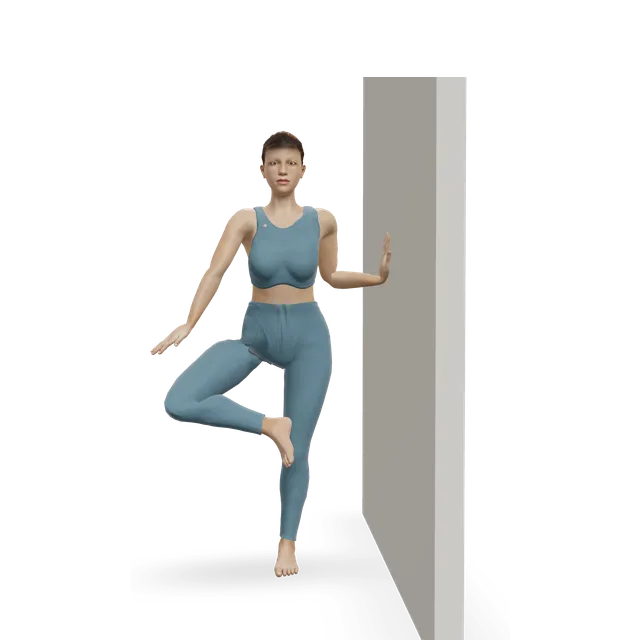
Muscle loads vary too: in older adults after a yoga course, crescent lunge put the highest demand on the hip flexors, tree on the side hip muscles and warrior II on the inner thigh; in yoga teachers, the wide stances of warriors I and II lengthened the lever at the hip; and half moon and warrior III worked the buttock muscles hardest of five poses in young adults. In our reading, four kinds of pose matter most for a sore hip: deep bending, alone or with the leg turned in or drawn across; deep stretching back in the back leg; crossing the leg over the body; and wide legs.
Sources 10, 11, 12, 13, 14
Who gets itEmerging evidence
People who push deep openers and long holds, including in yin and hot classes (our reading). Younger active adults with a hip shape that pinches in deep bending (impingement): 90% of the yoga practitioners in one surgical series were women. Women from mid-life, for outer hip pain. Very flexible people, whose hips can move too far, although the evidence is mixed and comes from ballet dancers: a review of dancers links hypermobility with hip instability, but in one company hypermobile dancers had no more hip pain over 5 years. People with existing joint problems, who notice joint pain after a class more often. And people with hip replacements, for whom some end-range poses are a dislocation risk even years later, in a few case reports.
Sources 15, 9, 16, 17, 3, 18, 19
Rare but serious: infection, a nerve and a replaced hipEmerging evidence
A hot, swollen hip with a high temperature can be a joint infection, which needs same-day care; the NHS says a high temperature is usually present, although not everyone has one. One case describes severe sciatic nerve damage and a foot that dropped in a man who habitually sat in a modified lotus position (the report doesn't say it was in yoga). And a few case reports describe replaced hips dislocating in yoga poses years after surgery. These are rare: they show what the warning signs are for, not a risk.
Sources 20, 21, 18, 19
When a scan mattersStrong evidence
The story and an examination usually sort these out; the NHS says "Do not try to diagnose the cause of the pain yourself". A scan is not a diagnosis on its own: hip impingement needs "appropriate symptoms, positive clinical signs and imaging findings", and labral tears showed on MRI in 51% of 196 hips of professional ballet dancers and sports people, with no link to pain or function.
Imaging matters after a fall, for catching or locking that persists, for groin pain that hasn't settled after 6 weeks with a normal X-ray, and before any surgery.
Sources 22, 23, 24
How it usually goesStrong evidence
A hip flexor ache or a strain settles over days to weeks. NHS inform says new hip problems or flare-ups "should begin to settle within 6 weeks". Outer hip pain is slower: in 164 people in Dutch general practice, at least 36% still had it after a year and 29% after 5 years, but with the LEAP programme 51 of 65 rated themselves a success at a year.
For impingement and labral pain, about half (54%, moderate certainty) respond to treatment without surgery. Sitting-bone tendon pain is often long-standing, and there are no trials of its rehabilitation. No one can promise a date.
Sources 25, 26, 27, 28, 29