Yoga flows
Yoga after a hip replacement: a 25-minute chair, counter and bed class with no deep bends, crossing or twisting
A 25-minute yoga class for the months after a hip replacement, once your surgical team agrees and within any precautions you still have. It starts on a firm, high chair with arms, stands you up holding a counter for strength and balance, works the hip muscles lying on a bed or mat, and ends with a rest. Every move stays inside the precautions common to both main approaches: no bending the hip past a right angle, no crossing the legs, no turning the leg in or out, no taking the leg behind you and no pivoting. It adds to the exercises your physiotherapist gives you; it doesn't replace them. No trial has tested yoga after a hip replacement, so the structure is our editorial choice, built from NHS and American Academy of Orthopaedic Surgeons advice and our hip replacement guide.
Seated, on a firm, high chair with arms (about 6 minutes)
- Beginner · 3D demoKnees a little lower than your hips, feet flat and hip-width apart. In for about 4, out for about 6Easier: Breath reachHarder: Crocodile breathing (prone diaphragmatic breathing)
- Breath reach5 breathsBeginner · 3D demoYour arms rise as you breathe in and lower as you breathe outHarder: Slow breathing (6 breaths a minute)
- Seated upper-back lift (sit tall, shoulders back)3 to 5 holds of 3 to 5 secondsBeginner · Back, Shoulders, Neck · 3D demoSit tall without leaning forward; draw your shoulder blades backEasier: Elbows backHarder: Prone Y-T-W raises
- Ankle circles10 slow circles each way with each footBeginner · Calves, Shins · 3D demoLift the foot a little and circle only the ankleHarder: Ankle CARs (controlled articular rotations)
- Seated knee extension (chair)10 each legBeginner · Quads · 3D demoStraighten the knee for a slow count of 3, lower for 5Easier: Quad set (static quads)Harder: Leg extension





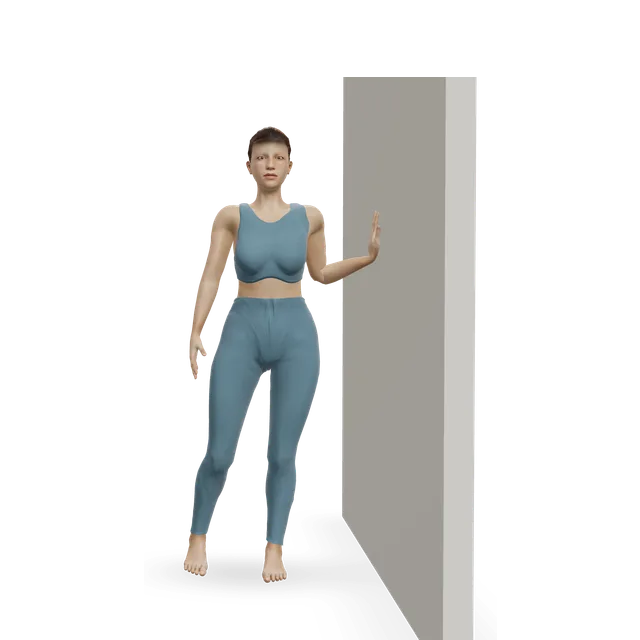
Standing, holding a counter (about 10 minutes)
- Mountain pose (Tadasana)5 breathsBeginner · Calves, Back, Abs · 3D demoFeet hip-width apart, toes forward, weight evenHarder: Tree pose (Vrksasana)
- Standing march10 each sideBeginner · Hip flexors, Abs, Glutes · 3D demoHold 2 to 3 seconds at the top, knee no higher than your hipEasier: Seated marchHarder: Standing band hip flexion
- Beginner · Hip abductors, Glutes, Abs · 3D demoToes facing forward, trunk upright; lift only as far as your hips stay levelHarder: Lateral band walk, band at the feet
- Chair pose (Utkatasana)3 holds of 10 to 15 secondsBeginner · Quads, Glutes, Shoulders · 3D demoBend your knees only a little, hips staying higher than your kneesHarder: Revolved chair pose (Parivrtta Utkatasana)
- Sit to stand from a chair2 sets of 8Beginner · Quads, Glutes, Hamstrings · 3D demoA firm, high chair with arms, its back against the wall; use your hands at firstEasier: Sit to stand, pushing on the thighsHarder: Bodyweight squat
- Single-leg stand2 holds of 20 to 30 seconds each sideBeginner · Hip abductors, Calves, Glutes · 3D demoFingertips on the counter, operated leg too; turn round with small steps, not a pivotEasier: Tandem stance and heel-to-toe walkHarder: Single-leg reach matrix
- Side-stepping (sideways walking)10 steps each way, next to a counterBeginner · Hip abductors, Glutes, Adductors · 3D demoSmall steps along the counter, toes forwardHarder: Lateral band walk
- Beginner · Calves · 3D demoHands on the counter; rise and lower slowlyEasier: Seated bent-knee calf raise (soleus raise)Harder: Standing dumbbell calf raise







Lying, on a bed or mat (about 6 minutes)
- Supine heel slide10 each sideBeginner · Hip flexors, Hamstrings, Quads · 3D demoSlide the heel only as far as stays well short of a right angle at the hipHarder: Hip windshield wipers
- Supine isometric hip abduction (belt press)3 to 5 holds of 5 to 10 secondsBeginner · Hip abductors, Glutes, Abs · 3D demoA belt just above the knees; press out gently at a light effort, hips stillHarder: Lateral band walk
- Glute bridge8 slow liftsBeginner · Glutes, Hamstrings, Abs · 3D demoFeet hip-width apart; lift to a straight line and hold for a slow count of 5Easier: Pelvic tilt into bridgeHarder: Single-leg glute bridge

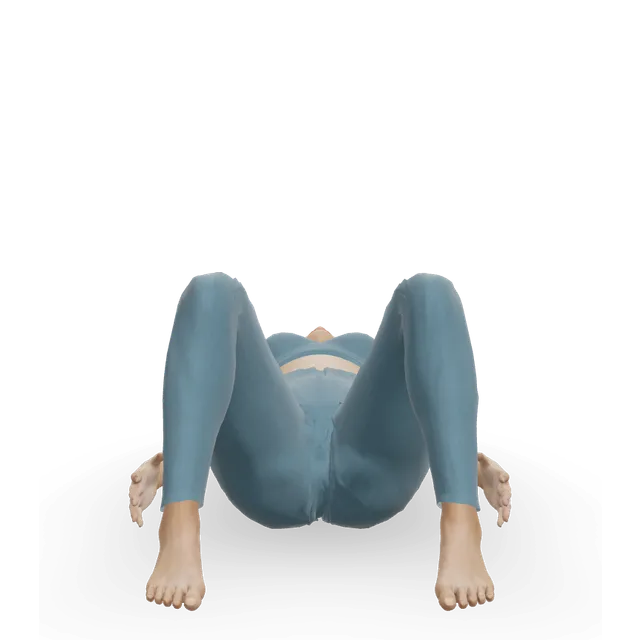

Rest (about 3 minutes)
- Beginner · 3D demoOn your back with your legs hip-width apart, or on your side with a pillow between your knees if your team allows side-lying

Tips
- Start only when your surgical team agrees, and keep doing the exercises your physiotherapist gave you every day; this class is extra, not a replacement.
- Every move here stays inside the usual precautions, but yours come first: if your team has given you a lower bending limit or other restrictions, follow them.
- A moderate ache that settles quickly is fine; severe pain that takes hours to settle is not. Stop a move for a sharp pain in the groin or hip, a clunk, or a feeling that the hip is giving way.
- Turn with small steps, never a pivot on the operated leg, and get onto and off the bed or floor the way your physiotherapist showed you; use the bed if the floor is hard to reach.
- From about 3 months, with your team's agreement, progress one change at a time: longer one-leg holds, then warrior II with a short stance, tree pose with your heel at your ankle and warrior III with your hands on a chair. After a front approach, wait for tree pose until turning the hip out is allowed.
- Signs of a dislocated hip: severe hip pain, a leg that looks shorter or is turned unusually far in or out, a new bulge at the side of the hip, unusual hip movement or a change in its shape, or walking that is suddenly difficult or painful. Don't walk on it; go to A&E straight away.
- Pain and swelling in your hip or leg with breathlessness or chest pain: call 999 or go to A&E, and do not drive yourself. It can be a blood clot that has reached the lungs.
The doses are suggested starting points, not a prescription. Choose a range you can control and stop for sharp or increasing pain, numbness or tingling. Get individual advice after an injury or surgery, or if you are pregnant or managing a health condition.
Guides that recommend it
Find more moves like these
More yoga flows

Beginner yoga flow
A 20-minute beginner yoga sequence: mountain, chair, warrior II, triangle, tree, down dog, cobra and child's pose.
20 minBeginner11 movesA step

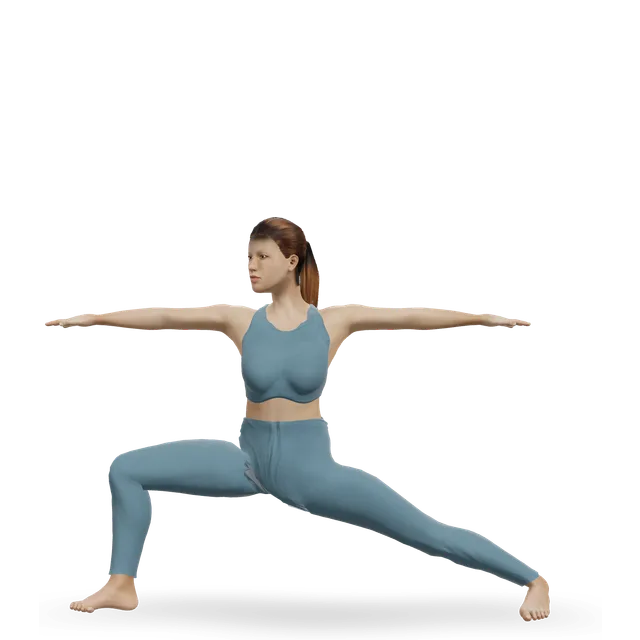
Sun salutation flow
A 20-minute flow built on sun salutations A and B, with warrior poses and a short cool-down.
20 minIntermediate8 movesNo equipment


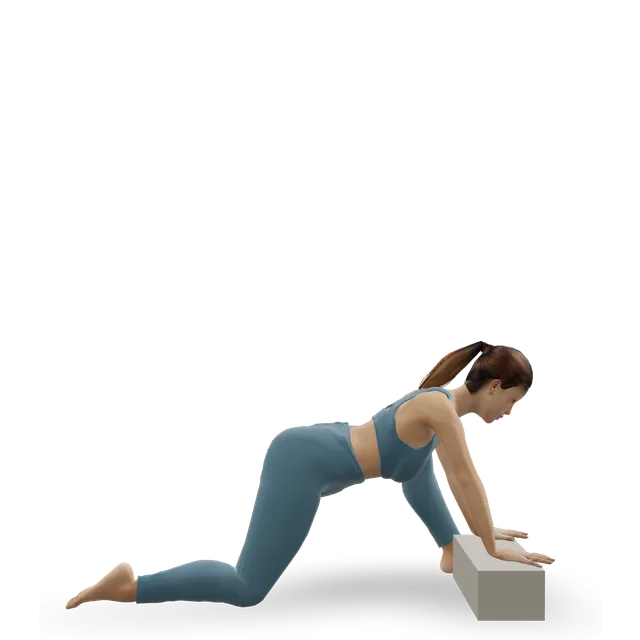
Yoga for tight hips
A hip-opening yoga sequence: low lunge, lizard, goddess, pigeon, bound angle and happy baby.
25 minBeginner10 movesA wallQuestions people ask
How long does the yoga after a hip replacement: a 25-minute chair, counter and bed class with no deep bends, crossing or twisting take?
About 25 minutes, including any warm-up and cool-down listed. Shorten it by doing fewer rounds; lengthen it by adding one.
What equipment do I need?
You need: A bench or box, Something with weight, A wall, A band. Each move links to its guide, where you can find an alternative if you are missing something.
Is it suitable for beginners?
It is written for beginners. 8 of its 17 moves have an easier option listed beside them if you need one.
How do I make it easier or harder?
Use the easier or harder option listed under each move, change the number of rounds, or adjust the rest. Progress one change at a time.