Pain guide · Shoulder pain

Shoulder pain when doing planks: the front and top of the shoulder, the shoulder blade, side planks

Shoulder pain when you plank usually comes from a shoulder that is already a little sore meeting a big, steady load: in push-up position your hands carry about two thirds of your weight, and in a side plank the bottom shoulder tires as fast as your trunk. Where it hurts is the best clue: an ache at the front or outside of the shoulder is usually the rotator cuff, one finger on top at the end of the collarbone points to the joint there (the acromioclavicular or AC joint), an ache along the shoulder blade or a blade that lifts off the ribs to the muscles that hold it, and pain or tingling down the arm to a nerve in the neck. No study has counted how often each is the cause, and planks aren't shown to be bad for shoulders: researchers suggest them for shoulder rehab. Knees down or hands on a bench, elbows under the shoulders, shorter holds and knee side planks usually help.

This guide starts with the signs that need help, from a 999 call for chest pain that feels tight or spreads to your arm, neck or jaw, and accident and emergency (A&E) for a shoulder that looks out of place, to a same-day check through the National Health Service's 111 line (NHS 111) or a general practitioner (GP) for sudden weakness, a hot, swollen shoulder or numbness down the arm, and a GP for a shoulder blade that suddenly sticks out. It then maps the causes by where it hurts, explains what the muscle studies show about high, forearm and side planks, shows how to change your plank today, and gives a three-stage plan with a 3D demo of every move, from dead bugs and wall push-ups back to full planks and side planks.

When to get help first

Exercise is for pain that has been checked or is clearly mild and settling.

Get urgent medical help if

  • Call 999 or go to A&E: after a fall or injury, your shoulder looks out of place or has changed shape, you cannot move your arm, or your shoulder is painful, bruised or swollen. Do not drive yourself, and do not try to put it back in yourself.
  • Call 999: shoulder or arm pain with chest pain that feels tight or squeezing, or chest pain that spreads to your arms, neck or jaw, especially with shortness of breath, sweating or feeling sick. It could be a heart attack.
  • Get help from NHS 111: pain or tightness in your chest, neck, shoulders, jaw or arms that comes and goes, often brought on by exercise, stress, emotion or cold and easing after a few minutes' rest. It can be angina, a sign of a heart problem. If you've been diagnosed with angina, get help from NHS 111 too if it feels worse than before, is happening more often, lasts longer or happens when you're resting.
  • Call 999 or go to A&E if breathing suddenly becomes difficult, if pain in your chest or upper back comes on suddenly with breathlessness or a very fast heartbeat, or if someone passes out. Do not drive yourself. It can be a blood clot that has reached the lungs.
  • Call 999: you suddenly can't fully lift both arms and keep them there, because of weakness or numbness in one arm, especially if one side of your face droops or you slur your words or sound confused. It could be a stroke. Call even if the signs have stopped.
  • Same day (GP or NHS 111): sudden weakness lifting the arm after an injury or fall. A rotator cuff tear caused by an injury needs urgent referral to a shoulder specialist. After a dislocation in anyone over 40, the rotator cuff should be checked: about 40% have a tear.
  • Same day (GP or NHS 111): sudden or very bad shoulder pain; you cannot move your arm; the arm or shoulder is badly swollen or has changed shape; pins and needles that do not go away; no feeling in the arm; the arm is hot or cold to the touch; pain that started after an injury such as a fall; or severe pain in both shoulders.
  • Same day (GP or NHS 111): the shoulder or arm is hot, swollen or red, or you have a high temperature (although not everyone has one) or feel unwell. A joint infection needs same-day care.
  • Same day (urgent GP appointment or NHS 111): severe neck pain that starts suddenly or gets worse quickly; heaviness or weakness in the arms or legs; pins and needles in an arm along with neck or arm pain; or pain between the shoulder blades.
  • Same day: clumsiness in your hands, or numbness, pins and needles or weakness in one or both arms, that is getting worse; problems with balance or walking since the neck pain started; or neck pain with a severe headache.
  • Call 999 or go to A&E: new problems walking, loss of bladder or bowel control, or a sudden loss of coordination, such as difficulty doing up buttons. These can be signs of pressure on the spinal cord.
  • Arm weakness or numbness that keeps getting worse, severe pain that painkillers and rest do not touch, or an unexplained fever.
  • Ask for an urgent GP appointment or get help from NHS 111 the same day if the skin over the swelling is painful, hot and swollen. Redness can be harder to see on brown or black skin. The bursa may be infected and need antibiotics, especially if there's a cut, graze or insect bite over it.
  • Same day (call NHS 111, or go to A&E if you feel very unwell): after a big or unusual session, such as hundreds of pull-ups, push-ups, dips or curls, a challenge or a new class, muscle pain, swelling or weakness far worse than the session explains, and dark pee (red, brown, tea or cola coloured), sometimes starting hours or days later. Dark pee isn't always there, so muscles far sorer, more swollen or weaker than the session explains still need the same-day check. It can be rhabdomyolysis, a breakdown of muscle that can harm the kidneys.

See a doctor or physiotherapist if

  • Pain that is getting worse or has not improved after 2 weeks of looking after it yourself, or it is very hard to move your arm. In many areas you can refer yourself to physiotherapy.
  • Your shoulder has partly or fully come out of joint, or you worry it might.
  • Pins and needles or a cold arm alongside neck pain, or a new loss of strength or feeling in the arm that you cannot explain (a possible nerve problem).
  • No improvement after 6 weeks of exercise, or arm symptoms still there beyond 6 to 12 weeks.
  • A shoulder blade that suddenly sticks out, or new weakness lifting, pushing or carrying: see a GP. Nerve tests may be needed to find which nerve is affected and how badly.
  • Pain on top of the shoulder at the end of the collarbone that isn't settling after a few weeks of changed pressing: ask about weightlifter's shoulder (distal clavicle osteolysis), which often needs an MRI (magnetic resonance imaging) scan to confirm.
  • Not improving after a good 3 months of exercise, or the arm is clearly weak: ask for a specialist opinion.
  • A past history of cancer, an unexplained lump or swelling, weight loss, or pain that is constant and does not ease when you change position.
  • See a GP if you have pain and stiffness for more than a week, especially if you're over 50, it's in both shoulders (often the neck and hips too) and the stiffness lasts longer than 45 minutes in the morning. It can be polymyalgia rheumatica.

Where does it hurt?

Location narrows the likely causes; it does not diagnose.

The front or outside of the shoulder and upper arm, an ache through the hold, worse lifting the arm out or overhead

Usually rotator cuff related pain, often called impingement, the commonest cause of shoulder pain in our reading. A shorter lever and rotator cuff work usually help.

Read: Shoulder impingement (rotator cuff pain) →
A tender spot in the groove at the front of the shoulder

Often the long head of the biceps tendon, usually alongside the rotator cuff. Our front of shoulder guide maps the front.

Read: Front of shoulder pain →
On top, one finger on the end of the collarbone, worse in high planks and reaching across your body

The joint at the end of the collarbone (the AC joint), including weightlifter's shoulder in people who also press heavy and often.

Read: AC joint injury and pain →
Along the inner edge of the shoulder blade, or the blade lifting off the ribs as you hold or lower

Usually a change in how the blade moves, which is common; rarely a nerve palsy, which brings new weakness. A blade that suddenly sticks out needs a GP.

Read: Winged scapula →
Under or around the shoulder blade, an ache that builds through the hold

Often the muscles that hold the blade, or a nerve from the neck.

Read: Pain under the shoulder blade →
The bottom shoulder in a side plank

Usually the deltoid and rotator cuff working hard: the shoulder tires as fast as the trunk. Drop to your knees or use your top hand for support.

Read: Shoulder impingement (rotator cuff pain) →
Deep in the joint with a clunk, a dead arm or a feeling it will slip, especially after a dislocation or with very flexible joints

Possibly a loose (unstable) shoulder. Stop short of the slipping feeling.

Read: Shoulder dislocation and instability →
Deep at the back of the shoulder, sometimes with a clunk

Possibly the back of the joint; push-ups and planks can bring on a shoulder that slips backwards.

Read: Back of shoulder pain →
Sudden weakness lifting or turning the arm after a fall or a jerk

Possibly a rotator cuff tear: get a same-day check, as the warning signs say.

Read: Rotator cuff tear →
From the neck down the arm, with pins and needles, numbness or weakness

A nerve in the neck, even if your neck doesn't hurt.

Read: Pinched nerve in the neck →
Across the top of the shoulders and up into the neck, from shrugging or craning your head

The upper trapezius working hard, or your neck. Our push-ups and planks neck guide covers it.

Read: Neck pain in push-ups →
A dull ache in the shoulders and chest a day or two after a new plank challenge or class

Muscle soreness, which fades within days.

Read: Shoulder pain after a workout →
The point of the elbow on a hard floor, in a forearm plank

Often a sore, swollen bursa from pressure: pad the floor.

Read: Elbow bursitis →
The wrists, in a high plank

Not the shoulder: our plank wrist guide covers forearm planks, fists, handles and a plan.

Read: Wrist pain in planks →
Mainly in push-ups rather than still holds

Our push-up shoulder guide covers hand width, elbows and depth.

Read: Shoulder pain in push-ups →
Chest pain, breathlessness or feeling faint during the hold

Not a shoulder problem: see the warning signs.

Understand it

What a plank asks of the shoulder, and what no study has countedEmerging evidence

In a plank you hang your trunk between your feet and your arms, so the shoulders hold up a big share of your weight while staying still. In 8 men, the hands took 66.4% of body weight at the start of a normal push-up, which is the high plank position, and 52.9% from the knees. In 18 students, shoulder muscle activity rose with each step of more weight through the arms, staying at only 2% to 10% of maximum on all fours, and the infraspinatus, one of the rotator cuff muscles, worked hardest. The serratus anterior, which holds the shoulder blade against the ribs, works hardest in the push-up plus (30 people; a review of 30 studies agrees).

Older studies don't help much: the classic serratus study gave no plank figures, early-rehab shoulder blade exercises worked the serratus and lower trapezius at 15% to 30% of maximum, and the best-known study of trunk muscles in planks measured no shoulder muscle except the latissimus dorsi. No study has counted shoulder pain from planks. One case report describes a shoulder blade that stuck out after planks done badly (a long thoracic nerve palsy), with the nerve recovering about a month after stopping them. So this map is built from what each condition does, muscle studies in healthy people and NHS pages (our reading).

Sources 1, 2, 3, 4, 5, 6, 7, 8

High, forearm and side planksEmerging evidence

In 21 healthy men doing 10 plank variations, the high (straight-arm) plank worked the lower trapezius and triceps harder than the forearm plank, and taking away a point of support (a hand or a foot) raised shoulder and shoulder blade muscle work. A high plank with a toe touch markedly raised upper trapezius work, while the side plank, bird dog and shoulder taps kept it below the serratus and lower trapezius. The authors suggest plank variations may be used in shoulder rehabilitation. Nobody has compared the two planks for shoulder pain, so which hurts less differs from person to person (our reading).

In a side plank the bottom shoulder works hard: in 24 active women, the deltoids tired as fast as the side trunk muscles, and both predicted how long they held. Researchers say there is no data on the load on the supporting shoulder in a standard side bridge. The only shoulder force figures come from a straight-arm side plank with a twist in 10 people, where forces approached half of body weight; no one has measured a forearm side plank.

Sources 9, 10, 11, 12

Where it hurts sorts the causesEmerging evidence

The NHS lists pain that's often worse while using the arm under tendonitis, bursitis and impingement, pain on top where the collarbone meets the shoulder, and tingling, numbness, weakness or clicking under an unstable shoulder, sometimes with very flexible joints. In shoulders that slip backwards, push-ups are a known trigger.

A change in how the shoulder blade moves (dyskinesis) is present in a high proportion of shoulder injuries, a consensus says, but its role is unclear; in 419 symptom-free athletes it went with more shoulder pain later (35% against 25%). A true nerve palsy that makes the blade stick out is rare (15 in 7,000 patients in one nerve-testing laboratory, 1 in 38,500 in another clinic), weight training is among its reported causes, and it is often first mistaken for a rotator cuff or instability problem. The NHS says see a GP for pins and needles or a cold arm with neck pain.

Sources 13, 14, 15, 16, 17, 18, 19

Chest pain comes firstStrong evidence

A plank raises your heart rate and blood pressure. The NHS says most chest pain is not a sign of anything serious, and describes a chest strain as pain that starts after a chest injury or chest exercise and eases when you rest the muscle. It says call 999 for chest pain that feels tight or like squeezing, or that spreads to your arms, neck or jaw. If you're unsure which it is, the warning signs come first.

Sources 20, 21

What a scan or test shows, and when it mattersEmerging evidence

Not at first, for an ache without warning signs: the NHS says a health professional examines the shoulder first and might send you for tests such as an X-ray. A shoulder that came out of place usually has an X-ray in hospital. A shoulder blade that suddenly sticks out with new weakness needs a GP, and nerve tests may be needed to find which nerve is affected; scans of the shoulder joint can mislead in winging, which is often first put down to other problems.

Sources 13, 22, 16, 17

How it usually goesEmerging evidence

No study follows shoulder pain from planks. The NHS says self-care usually needs about 2 weeks before shoulder pain starts to ease, that it can take 6 months or longer to recover, and suggests shoulder exercises for 6 to 8 weeks to stop pain returning. After a dislocation, recovery usually takes 6 to 12 weeks, and up to 16 weeks or longer for some sports. Most serratus palsies recover within 24 months, though after surgery-related palsy 25 of 26 people still had symptoms years later. In shoulders that slip without an injury, scores of about 80% of a normal shoulder are seen around 12 weeks into a structured programme. No one can promise a date.

Sources 13, 22, 16, 23, 18

What helps, and how strong the evidence is

Exercise is the treatment for the commonest causeStrong evidence

Exercise eased pain and improved function in the short term in rotator cuff related pain (16 trials, 1,162 people). Progressive resisted exercise improved pain by about 15 points out of 100 against placebo or nothing (low certainty), and exercise that didn't progress by about 4. In the GRASP trial of 708 people, a progressive programme was no better than one best-practice advice session with a physiotherapist over 12 months. Shoulder-blade-focused programmes helped disability more at under 6 weeks but not by 3 months. UK specialist guidance says that if physiotherapy helps in the first 6 weeks, a further 6 weeks is justified. None of these trials tested planks.

Sources 24, 25, 26, 27, 28

Planks aren't shown to harm shoulders, and are used in rehabEmerging evidence

Researchers who measured shoulder muscles in 10 plank variations suggest them for shoulder rehabilitation, progressing by elbow position and points of support. A review says closed-chain exercises, with the hands fixed and the body moving, are felt to create little shear stress across injured or healing joints, an expert view rather than a measured one. Against that, there is one case report of a nerve palsy blamed on planks done badly. So the honest claim is that planks aren't shown to harm shoulders, not that they are proven safe.

Sources 9, 31, 8

Knees down or hands on a bench takes weight off the shouldersEmerging evidence

From the knees, the hands carried 52.9% of body weight against 66.4% in the full position (8 men), and shoulder muscle activity falls as less weight goes through the arms (18 students). Lifting a hand or foot raises shoulder work (21 men). These are lab studies in people without pain, so the shorter lever is a sensible first step, not a tested treatment.

Sources 1, 2, 9

Push the floor away: a coaching cueEmerging evidence

The push-up plus, an extra push at the top that spreads the shoulder blades around the ribs, drew up to 123% of a maximal serratus anterior contraction with the least upper trapezius in 30 people, healthy and with mild shoulder problems; the wall version drew more upper trapezius for its serratus work. Pushing the floor away in a plank uses the same action, so it is a reasonable coaching cue, but it comes from push-up muscle studies in healthy people and hasn't been tested in planks or in pain.

Sources 3, 4

A shoulder that slips: a structured programme firstEmerging evidence

In 41 people whose shoulders slipped in more than one direction, the Watson programme (bands and weights for the shoulder blade and rotator cuff) did better than another programme at 12 and 24 weeks. It uses no planks, and lists push-ups among the triggers of slipping backwards. A review of 10 studies found no single best programme for shoulders that slip without an injury. So with a loose shoulder, planks come back late and stop short of any slipping feeling.

Sources 29, 18, 30

How much pain is OK while you exercise?

Up to 5 out of 10, back to normal by your next session, and nothing spreading down the armEmerging evidence

This guide uses the shoulder hub's rule, as our other shoulder movement guides do, with the neck hub's arm-symptom exception. During shoulder strengthening, pain up to about 5 out of 10 is acceptable, and a little is expected. By your next session it should be back to where it was before. If it isn't, use a lighter band or weight or a smaller range next time, not nothing. This is how the Holmgren trial set each person's load: pain was not allowed above 5 out of 10 during the exercises, and any increase had to settle back to the starting level before the next session; otherwise the load came down. If pain climbs week on week, or a warning sign appears, stop and get it checked.

Arm symptoms are the exception. If an exercise sends pain, tingling or numbness further down your arm, or the extra symptoms last more than an hour afterwards, make the movement smaller or leave it out. (A hospital leaflet on nerve glides allows a short-lived rise in symptoms but not one lasting over an hour; the rest of this rule is this site's suggestion.)

NHS inform's exercise pages, such as its back exercises, use the same bands (0 to 3 minimal, 4 to 5 acceptable, 6 to 10 excessive) and want pain no worse the morning after.

For planks (our suggestion, built on the same rule): judge each hold by the shoulder, not the core. Choose the version (knees or toes, a bench or the floor, forearms or hands, knee side plank or full) and the hold length where the end of each hold stays at 5 out of 10 or less in the shoulder and it's back to normal by your next session, and end the hold when the ache starts to build, whatever the clock says. The shoulder tires with the trunk in a side plank, so shorter holds come first. If it isn't back to normal, go back one step, not to nothing. A clunk, a feeling of slipping, a dead arm, a shoulder blade that suddenly sticks out, pins and needles or numbness down the arm, and chest pain or breathlessness aren't pain-rule questions: see the warning signs.

Sources 32, 10

The exercise plan: 3 stages

Start at the first stage. Each move opens a full guide with a 3D demo.

Stage 1

Keep the core training, take weight off the shoulder

About the first 2 weeks: core work with the arms free or lightly loaded, and the rotator cuff and shoulder blade muscles working. With a diagnosed condition (a rotator cuff tear, a dislocation or loose shoulder, a nerve palsy with winging, AC joint pain, a trapped nerve in the neck) or after surgery, that guide's plan or your team's comes first.

Dead bug demonstrated on the 3D figure3D demoDead bugBeginner · No equipment

2 sets of 6 to 8 each side · As in our back pain guide (editorial): core work with no weight through the arms

Easier: Dead bug heel taps · Harder: Forearm plank

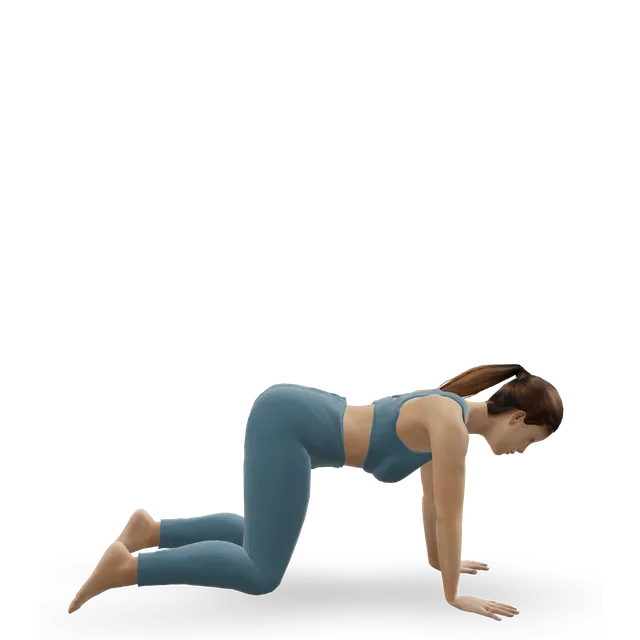
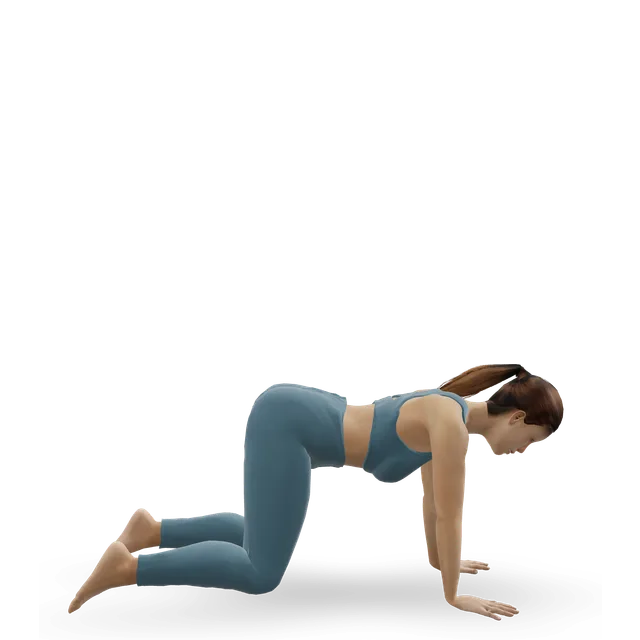
Bird dog, one limb at a time demonstrated on the 3D figure3D demoBird dog, one limb at a timeBeginner · No equipment

2 to 3 sets of 6 to 8 each side, 3 to 5 s holds; lift a leg only if lifting an arm hurts · As in our back pain guide (editorial). All fours is light shoulder work, and the bird dog kept the upper trapezius low in a lab study

Easier: Side-lying tummy draw-in · Harder: Bird dog

Knee side plank demonstrated on the 3D figure3D demoKnee side plankBeginner · No equipment

3 holds of 15 to 20 s each side, on the forearm, top hand on the floor for support if the bottom shoulder complains · As in our back pain guide (editorial); the support is the side plank move page's advice

Harder: Side plank

Wall push-up demonstrated on the 3D figure3D demoWall push-upBeginner · A wall

2 sets of 10, small range, finishing each with a gentle extra push that spreads the shoulder blades · As in our shoulder pain guide (editorial)

Harder: Push-up

Standing band external rotation demonstrated on the 3D figure3D demoStanding band external rotationBeginner · A band + An anchor point

3 sets of 15, light band, elbow at your side, slow return, once or twice a day · The Holmgren trial's sets and reps, as our chest fly and dips guides use them

Easier: Stick-assisted external rotation (lying) · Harder: Side-lying external rotation

Band row demonstrated on the 3D figure3D demoBand rowBeginner · A band + An anchor point

3 sets of 10 to 15, stopping 2 to 3 reps short of failure, with 60 to 90 s rest · The move page's dose (an editorial starting point)

Harder: Supported single-arm dumbbell row

Move on when: Wall push-ups and knee side planks pass the pain rule, and your shoulder is back to its usual level by the next session, for a week (editorial).

Follow along: a timer, a cue and the next move, one step at a time.
Stage 2

Weight back through the shoulder, a lever at a time

About weeks 2 to 6, 2 or 3 sessions a week: the plank position back on the knees or an incline, the push-up plus on the knees and then the floor, and stronger rotator cuff and shoulder blade muscles.

Incline push-up demonstrated on the 3D figure3D demoIncline push-upBeginner · A bench or box

2 to 3 sets of 8 to 12, hands on a bench or worktop, with a 20 to 30 s high plank hold at the top before each set · Our plank wrist guide's dose; the hold is editorial. Hands raised take weight off them

Easier: Wall push-up · Harder: Push-up

Knee hover (Pilates tabletop hover) demonstrated on the 3D figure3D demoKnee hover (Pilates tabletop hover)Beginner · No equipment

3 holds of 15 to 30 s, pushing the floor away · The move page's dose (a suggested starting point)

Harder: Straight-arm plank (high plank)

Knee plank demonstrated on the 3D figure3D demoKnee plankBeginner · No equipment

3 holds of 20 to 30 s, on forearms or hands, whichever passes the pain rule · As in our shoulder dislocation guide (editorial)

Harder: Forearm plank

Scapular push-up (push-up plus) demonstrated on the 3D figure3D demoScapular push-up (push-up plus)Beginner · No equipment

3 sets of 10, on your knees, then the floor · As in our winged scapula guide (editorial). The push-up plus works the serratus hardest

Easier: Dumbbell shoulder-blade punch · Harder: Push-up

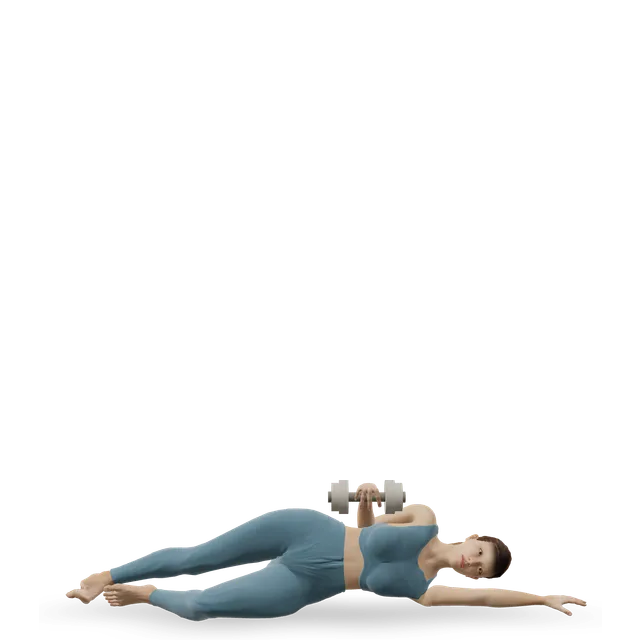
Side-lying external rotation demonstrated on the 3D figure3D demoSide-lying external rotationBeginner · A dumbbell

3 sets of 15, once a day, lowering over about 3 s · The Holmgren trial's sets and reps, as our dips guide uses them

Easier: Standing band external rotation · Harder: Cuban rotation

Prone Y-T-W raises demonstrated on the 3D figure3D demoProne Y-T-W raisesBeginner · No equipment

2 sets of 8 of each letter, light or no weight · Editorial: the lower and middle trapezius

Easier: Wall angel · Harder: Bent-over reverse fly

Move on when: 3 knee plank holds of 30 s and the incline push-ups pass the pain rule with no clunk, and your shoulder blade stays flat on the ribs, for a week (editorial; our plank challenge workout steps up to the toes from 30 s knee holds).

Follow along: a timer, a cue and the next move, one step at a time.
Stage 3

Back to full planks, side planks and moving planks

From about week 6, often later: forearm, high and side planks back, then moving planks and your classes, one change at a time by the written steps below. No study has tested a return to planks after shoulder pain, so the order is editorial.

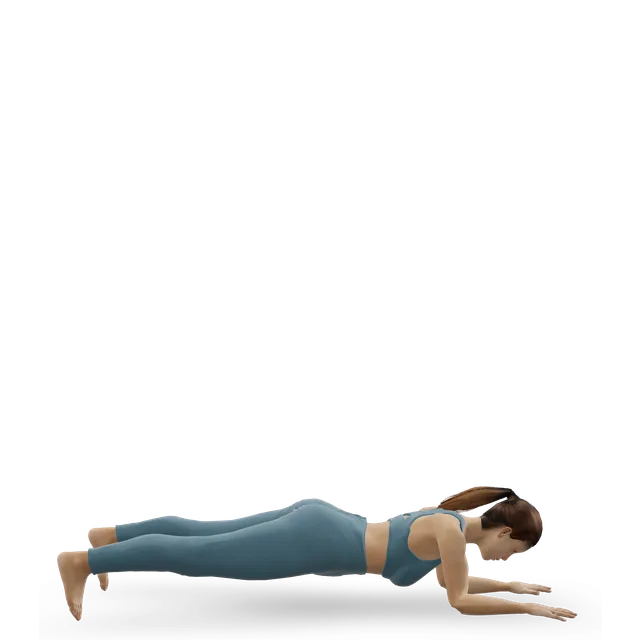
Forearm plank demonstrated on the 3D figure3D demoForearm plankIntermediate · No equipment

3 holds of 20 to 45 s, ending each when your hips sink or the shoulder ache builds · Our plank guide's and plank challenge workout's dose (editorial)

Easier: Stomach vacuum (drawing-in) · Harder: Plank walk-up

Straight-arm plank (high plank) demonstrated on the 3D figure3D demoStraight-arm plank (high plank)Intermediate · No equipment

3 holds of 15 to 30 s · The move page's dose (a suggested starting point). A bench under your hands first if the shoulder complains, as the move page says

Easier: Knee hover (Pilates tabletop hover) · Harder: Leg pull front (Pilates leg pull down)

Side plank demonstrated on the 3D figure3D demoSide plankIntermediate · No equipment

3 holds of 20 to 30 s each side, on the forearm, elbow under the shoulder · As in our back pain guide (editorial). The move page says stop if the supporting shoulder hurts

Easier: Knee side plank · Harder: Side plank with leg lift

Plank walk-up demonstrated on the 3D figure3D demoPlank walk-upAdvanced · No equipment

3 sets of 6 to 10, swapping the leading arm · Our plank challenge workout's dose (editorial)

Easier: Forearm plank · Harder: V-sit

Bear crawl demonstrated on the 3D figure3D demoBear crawlIntermediate · No equipment

4 crawls of 8 to 10 m, forwards and back, resting as needed · The move page's dose (an editorial starting point). The move page says try fists or raised hands with a painful shoulder, or leave it out

Easier: Knee hover (Pilates tabletop hover) · Harder: Spider crawl (low push-up knee drive)

Push-up demonstrated on the 3D figure3D demoPush-upIntermediate · No equipment

3 sets of 8 to 12 · As in our shoulder pain guide (editorial)

Easier: Wall push-up · Harder: Close-grip push-up (close triceps position)

Move on when: Your usual plank sessions pass the pain rule for 2 weeks: then add one change at a time. If a session flares it, go back a stage for a few days, not to nothing (editorial).

Follow along: a timer, a cue and the next move, one step at a time.

What to change for now

Your plank for now (written steps)

Our 3D figure can't show where your hands, elbows and gaze go, or how hard you push. These steps come from lab studies in people without pain, the move pages, our plank guides and the NHS; where a step is our suggestion, it says so. No trial has tested a change to the plank for shoulder pain.

  • 1. Lever: knees down, or hands on a bench or worktop, until a plank on your toes passes the pain rule. From the knees the hands carried less weight in a lab study, and the straight-arm plank move page suggests a forearm plank or a bench with shoulder pain.
  • 2. Hands and elbows: directly under your shoulders. Elbows forward of the shoulders (a long-lever plank) is a harder version for later (our suggestion).
  • 3. Push the floor away: a gentle push that spreads your shoulder blades around your ribs, without shrugging up to your ears. This is a coaching cue from push-up muscle studies in healthy people, untested in planks or in pain.
  • 4. Forearm or high: try both and keep the one that passes the pain rule (our suggestion; they work the shoulder muscles differently).
  • 5. Gaze: head in line with your back, eyes on the floor just ahead of your hands, not craning up (our plank guide).
  • 6. Side planks: from the knees, or with your top hand on the floor for support, the bottom elbow right under the shoulder (the side plank move page). The shoulder tires as fast as the trunk, so keep holds short.
  • 7. Moving planks: leave out shoulder taps, toe touches, plank jacks and walk-ups for now; lifting a hand or a foot raises shoulder work (a lab study).
  • 8. Everyday use: keep using the arm. The NHS says don't stop using your shoulder completely, don't do things that seem to make it worse, and don't make up your own strenuous exercises or use heavy gym equipment while it hurts.

Sources 1, 9, 3, 10, 13

Back to classes, yoga and daily life (written steps)

No study has tested how planks come back after shoulder pain, so these steps are our suggestion unless a source is named.

  • 1. Classes and circuits: forearm planks and knee side planks at first; shoulder taps, plank jacks, mountain climbers and burpees come back after stage 3, one at a time.
  • 2. Yoga and Pilates: dolphin pose before downward dog; chaturanga, a side plank on your hand and arm balances last, the order our plank wrist guide uses.
  • 3. Daily life: carry shopping close to your body, and push up from the floor or bed with both hands or on your forearm while it's sore. The NHS says keep using your shoulder.
  • 4. Sleep: lie on the other side with a pillow under the sore arm, or on your back (editorial, as in our shoulder movement guides).
  • 5. Climbing, swimming and throwing: after full planks pass the pain rule, the pulls, strokes and throws that don't hurt first; our swimming and throwing guides cover them.
  • 6. With heart failure, the move pages say avoid planks; with heart disease, keep breathing and ask your cardiac team before long holds.

Source 13

Positions to swap, and why

Habit or positionWhy it mattersInstead
Full planks on your toes while the shoulder hurtsYour hands carry about two thirds of your weight, and the move page suggests a forearm plank or a bench with shoulder pain.Knees down or hands on a bench.Try: Knee hover (Pilates tabletop hover)
Sinking between your shoulder blades, or shrugging up to your earsPushing the floor away uses the serratus; shrugging loads the upper trapezius (lab studies of push-ups and planks).Push the floor away, gently.Try: Scapular push-up (push-up plus)
Full side planks on a sore bottom shoulderThe shoulder tires as fast as the trunk, and the move page says stop if it hurts.Knee side plank, top hand on the floor.Try: Knee side plank
Shoulder taps, toe touches and plank jacks early onLifting a hand or foot raises shoulder work, and a toe touch markedly raised upper trapezius work in a lab study.Still planks first.Try: Forearm plank
Long holds, plank challenges and daily maximumsThe ache builds with time under load, and long holds train holding on.Shorter holds, repeated.Try: Knee plank
Holding on through a clunk or a feeling of slippingIt points to a loose shoulder, which needs a different plan.Stop; rotator cuff and shoulder blade work first.Try: Standing band external rotation
Ignoring a shoulder blade that suddenly sticks outIt can be a nerve palsy, which needs a GP and sometimes nerve tests.See a GP; core work with the arms free meanwhile.Try: Dead bug
Forearm planks on a hard floorPressure on the point of the elbow can inflame the bursa there.A folded mat under the elbows.
Bear crawls and walk-ups on a sore shoulderEach step puts your weight through one arm, and the move page says leave it out with a painful shoulder or use raised hands.Still knee planks first.Try: Knee plank
Resting the arm completelyThe NHS says this can stop the shoulder getting better.The stage 1 moves.Try: Band row
Pushing on through pain or tingling down the armA nerve in the neck needs a different plan.Stop, and keep to moves that don't send it down the arm.Try: Dead bug

Routines to follow

More moves for this area

Questions people ask

Why does my shoulder hurt when I plank?

Your shoulders hold up a big share of your weight in a plank, about two thirds through the hands in push-up position, so a sore rotator cuff, AC joint or shoulder blade muscle shows up. Where it hurts is the best clue. Drop to your knees or put your hands on a bench while it settles.

Should my shoulders hurt during planks?

Your shoulders work hard and can feel tired or burn, especially in a side plank. Sharp pain, pain that lasts into the next session, a clunk, or pain or tingling down the arm isn't normal: change the plank and check the warning signs.

Can planks cause shoulder pain?

They can bring out a shoulder that is already sore, and one case report describes a shoulder blade that stuck out after planks done badly and recovered after stopping them. No study has counted plank shoulder pain, and researchers suggest planks for shoulder rehab.

Forearm or high plank for a sore shoulder?

Try both: the high plank works the lower trapezius and triceps more, and the move page suggests a forearm plank or a bench with shoulder pain. Keep the one that passes the pain rule.

Why does my shoulder hurt in a side plank?

The bottom shoulder holds your upper body up, and its deltoid tires as fast as your trunk muscles. Do it from your knees, put your top hand on the floor, or stop if it hurts, as the move page says.

What can I do instead of planks with a shoulder injury?

Dead bugs, bird dogs and knee side planks with your top hand down keep your core training with little weight through the arms. Bring planks back on your knees or a bench, then the floor.

Are planks good for shoulder pain?

They can be part of rehab once they pass the pain rule, but they aren't a treatment on their own. Rotator cuff and shoulder blade exercise is the treatment for the commonest cause.

My shoulder blade sticks out when I plank. Is that a problem?

Often it's a change in how the blade moves, which is common, and pushing the floor away and the push-up plus train the serratus that holds it. A blade that suddenly sticks out with new weakness needs a GP.

Can I plank with a rotator cuff injury?

Usually yes, on your knees or a bench at first and within the pain rule. Sudden weakness after an injury needs a same-day check, and a tear has its own guide.

Do I need a scan?

Not at first: the NHS says a health professional examines your shoulder first and might arrange an X-ray. A shoulder that came out of place, or a blade that suddenly sticks out with weakness, needs checking promptly.

How long will it take?

The NHS says shoulder pain usually needs about 2 weeks of self-care to start easing and can take 6 months or longer to recover. No one can promise a date.

When should I see a doctor?

Call 999 for chest pain that feels tight or spreads to your arms, neck or jaw, or if breathing suddenly becomes difficult; go to A&E for a shoulder that looks out of place. Get a same-day check for sudden weakness, numbness or pins and needles that don't go away, or a hot, swollen shoulder, and see a GP or physiotherapist if it's no better after 2 weeks. In the US, call 911 where this page says 999.

Related exercise guides

Other pain guides

Sources

  1. Gouvali 2005 · Hand forces and muscle activity in push-up variants, 8 men (force plate study, J Strength Cond Res)
  2. Uhl 2003 · Shoulder muscle activity with more weight through the arms, 18 students (EMG study, J Orthop Sports Phys Ther)
  3. Ludewig 2004 · Serratus anterior and upper trapezius activity in push-up plus variations, 30 people (EMG study, Am J Sports Med)
  4. Kowalski 2022 · Shoulder muscle activity in push-up variations: 30 studies (scoping review, Shoulder Elbow)
  5. Ekstrom 2003 · Exercises for the trapezius and serratus anterior, 30 adults (EMG study, J Orthop Sports Phys Ther)
  6. Kibler 2008 · Shoulder blade exercises for early rehabilitation, 39 people (EMG study, Am J Sports Med)
  7. Escamilla 2016 · Muscle activity in planks, side planks and other floor exercises, 18 adults (EMG study, Sports Health)
  8. Güzel 2023 · Scapular winging after prone plank exercise (case report, Int J Neurosci)
  9. Can 2024 · Shoulder and shoulder blade muscle activity in high and forearm plank variations, 21 men (EMG study, J Strength Cond Res)
  10. Juan-Recio 2022 · Shoulder and trunk fatigue in the side bridge test, 24 women (EMG study, Biology)
  11. Tuff 2020 · The side bridge on the arm and side-lying on an incline, 8 men (lab study, Int J Sports Phys Ther)
  12. Olds 2021 · Shoulder forces in a straight-arm side plank with rotation, 10 people (lab study, Int J Sports Phys Ther)
  13. NHS · Shoulder pain (past its review date: reviewed May 2023, review due May 2026)
  14. Kibler 2013 · Scapular dyskinesis in shoulder injury (consensus statement, Br J Sports Med)
  15. Hickey 2018 · Scapular dyskinesis and future shoulder pain: 5 cohorts, 419 athletes (systematic review and meta-analysis, Br J Sports Med)
  16. Martin 2008 · Scapular winging: causes, diagnosis and treatment (narrative review, Curr Rev Musculoskelet Med)
  17. Srikumaran 2014 · Scapular winging mistaken for other shoulder problems: 9 series (review, J Bone Joint Surg Am)
  18. Watson 2022 · Non-surgical management of multidirectional shoulder instability (clinical review, J Clin Med)
  19. NHS · Neck pain (past its review date: reviewed April 2023, review due April 2026)
  20. NHS · Chest pain (past its review date: reviewed August 2023, review due August 2026)
  21. NHS · Heart attack
  22. NHS · Dislocated shoulder
  23. Kauppila 1996 · Long-term outcome of serratus anterior palsy after surgery, 26 people (case series, Chest)
  24. Hanratty 2012 · Exercise for subacromial impingement: 16 trials, 1,162 people (systematic review and meta-analysis, Semin Arthritis Rheum)
  25. Naunton 2020 · Progressive against non-progressive exercise for rotator cuff related pain: 7 trials (systematic review and meta-analysis, Clin Rehabil)
  26. Hopewell 2021 · Progressive exercise against one advice session for rotator cuff disorders, 708 people (GRASP, RCT, Lancet)
  27. Bury 2016 · Shoulder-blade-focused approaches for rotator cuff related pain (systematic review and meta-analysis, Man Ther)
  28. Kulkarni 2015 · Subacromial shoulder pain (BESS/BOA patient care pathway, Shoulder Elbow)
  29. Warby 2018 · Two exercise programmes for shoulders that slip in more than one direction, 41 people (RCT, Am J Sports Med)
  30. Griffin 2023 · Physiotherapy programmes for shoulders that slip without an injury: 10 studies, 491 people (systematic review, Shoulder Elbow)
  31. Kibler 2001 · Closed-chain rehabilitation for the arms and legs (review, J Am Acad Orthop Surg)
  32. NHS inform · Exercises for back pain

Exercise education, not a diagnosis or treatment plan. It is written from the guidelines and studies listed above; review by a clinician is pending. If your pain follows an injury, is severe, is getting worse, or comes with any warning sign listed on this page, get it assessed. Health disclaimer.