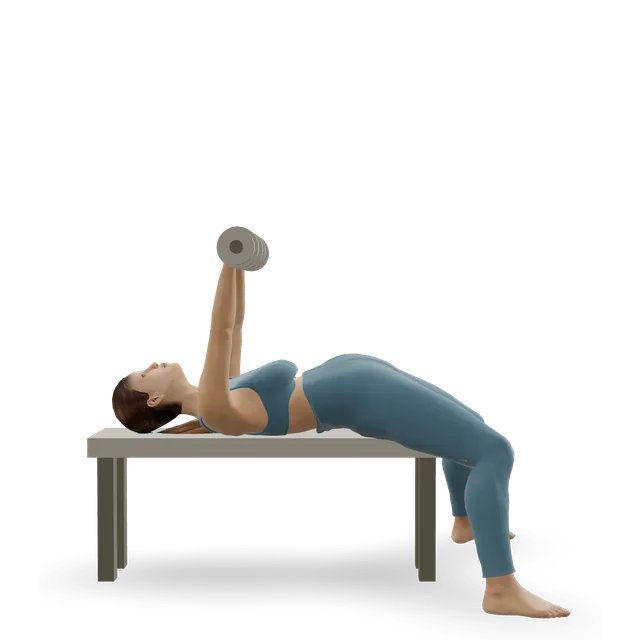
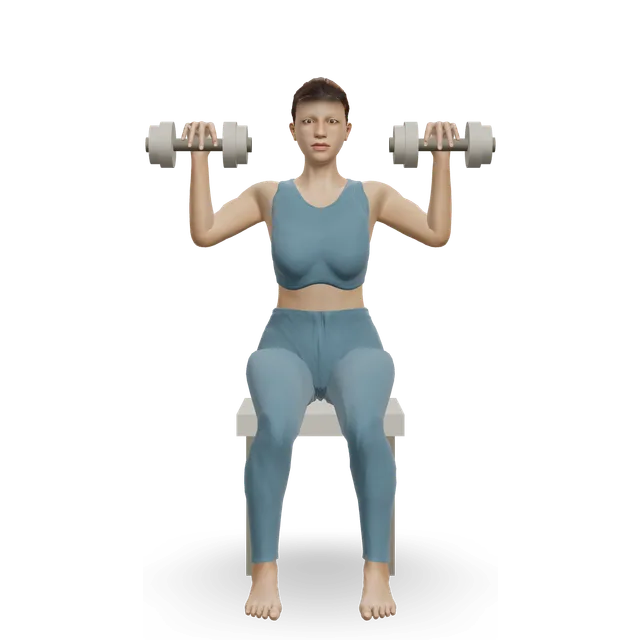
Pain guide · Shoulder pain

Back of shoulder pain: the rotator cuff, the joint, the neck, a trapped nerve and how to build back

Pain at the back of the shoulder can come from the rotator cuff, the shoulder joint, the neck, the muscles around the shoulder blade or, rarely, a trapped nerve. No study we found has counted how often each is the cause. It isn't always a rotator cuff tear: wear-related tears are common and often painless, and pain from the neck is often felt here.

Call 999 for chest pain that spreads to your arm, neck, jaw or back, or comes with breathlessness, sweating or feeling sick: it can be a heart attack, even if your shoulder is sore to touch. After a fall, an arm that's out of place or that you can't move needs accident and emergency (A&E), and a hot, swollen shoulder with a fever needs a general practitioner (GP) or the National Health Service's 111 line (NHS 111) the same day. This guide helps you tell the causes apart by where it hurts and what sets it off, including throwing, pressing and sleep, and gives a staged plan with 3D demos built on the exercise trials, back to lifting and throwing.

When to get help first

Exercise is for pain that has been checked or is clearly mild and settling.

Get urgent medical help if

  • Call 999: chest pain that feels tight or like squeezing on your chest; chest pain that's spreading to your arms, neck or jaw; severe difficulty breathing (you're gasping, choking or not able to get words out); lips or skin that are pale, blue or grey (on brown or black skin this may be easier to see on the palms of the hands); or someone who has passed out and is not responding normally. It could be a heart attack. Don't drive yourself to A&E.
  • Call 999: sudden pain or discomfort in your chest that does not go away (it can feel like squeezing or pressure inside your chest, burning or indigestion); pain that spreads to your left or right arm, or your neck, jaw, stomach or back; or chest pain and you feel sweaty, sick, light-headed or short of breath. You could be having a heart attack.
  • Call 999 or go to A&E if breathing suddenly becomes difficult, if pain in your chest or upper back comes on suddenly with breathlessness or a very fast heartbeat, or if someone passes out. These are the NHS's signs of a blood clot in the lungs (a pulmonary embolism) or another serious condition. Don't drive yourself.
  • Call 999 or go to A&E: after a fall or injury, your shoulder looks out of place or has changed shape, or you cannot move your arm. Do not drive yourself, and do not try to put it back in yourself.
  • Call 999: you suddenly can't fully lift both arms and keep them there, because of weakness or numbness in one arm, especially if one side of your face droops or you slur your words or sound confused. It could be a stroke. Call even if the signs have stopped.
  • Call 999 or go to A&E immediately if you're coughing up more than just a few spots or streaks of blood, or you're coughing up blood and finding it hard to breathe, have a very fast heartbeat or have pain in your chest or upper back. It could be a blood clot in the lungs.
  • Ask for an urgent GP appointment or get help from NHS 111 if you cough up blood. Call 999 or go to A&E if you're struggling to breathe (choking, gasping and unable to speak), or if you have a cough or have coughed up blood and also have pain in your chest or upper back.
  • Same day (GP or NHS 111): the shoulder or arm is hot, swollen or red, or you have a high temperature or feel unwell. A joint infection needs same-day care.
  • Same day (GP or NHS 111): sudden or very bad shoulder pain; you cannot move your arm; the arm or shoulder is badly swollen or has changed shape; pins and needles that do not go away; no feeling in the arm; the arm is hot or cold to the touch; pain that started after an injury such as a fall; or severe pain in both shoulders.
  • Same day (GP or NHS 111): sudden weakness lifting the arm after an injury or fall. A rotator cuff tear caused by an injury needs urgent referral to a shoulder specialist. After a dislocation in anyone over 40, the rotator cuff should be checked: about 40% have a tear.
  • Contact your GP practice urgently (or NHS 111 if it's closed): clumsiness in your hands, or numbness, pins and needles or weakness in one or both arms that is getting worse.
  • Ask for an urgent GP appointment or get help from NHS 111: sharp chest pain that comes and goes, or only happens when you breathe or cough (it can spread to your shoulders and back), sharp chest pain that hasn't got better after a few days, or being short of breath regularly.
  • Same day (GP or NHS 111): you are over 50 and have new pain and stiffness in both shoulders (often the hips too), especially with morning stiffness lasting more than 45 minutes. This can be polymyalgia rheumatica. With a new headache, jaw pain when chewing or problems with your vision, contact a GP immediately. If you suddenly can't see from 1 or both eyes, call 999 or go to A&E.

See a doctor or physiotherapist if

  • Pain that is getting worse or has not improved after 2 weeks of looking after it yourself, or it is very hard to move your arm. In many areas you can refer yourself to physiotherapy.
  • A past history of cancer, an unexplained lump or swelling, weight loss, or pain that is constant and does not ease when you change position.
  • Shoulder or chest pain with a cough that has lasted 3 weeks or more, breathlessness, weight loss or loss of appetite, especially if you smoke or used to: see a GP.
  • Your shoulder has partly or fully come out of joint, or you worry it might.
  • Pins and needles or a cold arm alongside neck pain, or a new loss of strength or feeling in the arm that you cannot explain (a possible nerve problem).
  • An ache over the back of the shoulder blade with weakness lifting your arm or turning it outwards, or the muscle over the blade looking thinner: see a GP or physiotherapist. The nerve to those muscles can be squeezed, and it does better when it's found early (our suggestion).
  • After a hit in sport, burning pain or weakness in the arm that lasts more than a few days: get it checked.
  • A burning, tingling or painful patch of skin on one side of your back or chest, with or without a rash: get advice from a pharmacist or NHS 111 as soon as possible. Shingles can cause pain a few days before the rash appears, and rarely without one. Try to see a pharmacist within 3 days of the rash appearing.
  • Pain that wakes you most nights for more than a few weeks despite changing how you sleep, or that is just as bad whatever position you lie in: our suggestion is to see a GP or physiotherapist. In many areas you can refer yourself.

Where does it hurt?

Location narrows the likely causes; it does not diagnose.

The back and outside of the shoulder into the upper arm, worse lifting the arm out or overhead, reaching behind your back or lying on it

Usually the rotator cuff (subacromial pain), the commonest shoulder problem.

Read: Shoulder impingement (rotator cuff pain) →
The same, with weakness lifting or turning the arm out, especially after a fall

Possibly a rotator cuff tear: sudden weakness after a fall needs checking the same day.

Read: Rotator cuff tear →
A deep ache at the back and side, with grinding and stiffness, usually over 60

Often arthritis of the shoulder joint, which is felt in the side or back of the shoulder.

Read: Shoulder arthritis →
A deep ache all round and stiffness in every direction, worse at night

Possibly frozen shoulder.

Read: Frozen shoulder →
Deep at the back of the joint in a thrower or overhead athlete, during the wind-up or after release

Often the cuff pinched inside the joint (internal impingement), with a tight back of the shoulder: this guide covers it.

Deep pain with clicking or catching in an overhead athlete

Possibly a tear of the joint's rim (labrum).

Read: SLAP tear →
Deep, vague pain at the back with push-ups or the bench press, or a feeling of the shoulder slipping backwards

Possibly posterior instability, the joint slipping backwards.

Read: Shoulder dislocation and instability →
Over the shoulder blade and the back of the shoulder, with neck pain, pins and needles or pain below the elbow

Often a trapped nerve in the neck.

Read: Pinched nerve in the neck →
Neck pain and stiffness spreading to the top and back of the shoulder

Our neck pain guide covers it.

Read: Neck pain →
Sore muscles across the back of the shoulder and shoulder blade, on both sides, a day or two after new or harder training

Delayed onset muscle soreness, which settles over a few days.

Around or under the shoulder blade

Our pain under the shoulder blade guide maps it.

Read: Pain under the shoulder blade →
An ache over the back of the shoulder blade with weakness turning the arm out, or the muscle there looking thinner

Possibly a squeezed nerve to the back cuff muscles (the suprascapular nerve): see a GP or physiotherapist.

A shoulder blade that sticks out

Our winged scapula guide covers it.

Read: Winged scapula →
Burning from the shoulder down to the hand after a hit in sport

A stinger, a stretched or squeezed nerve.

Read: Stingers and burners →
Pain at the back of the shoulder at night, or when you lie on it

Our shoulder pain at night guide covers how to sleep.

Read: Shoulder pain at night →
Pain at the back of the shoulder when you bench press

Our bench press guide covers the changes to grip, range and load.

Read: Shoulder pain when benching →
Shoulder pain when you swim

Our swimming guide covers it.

Read: Shoulder pain when swimming →
Shoulder or arm pain with chest pain, breathlessness, sweating or feeling sick

Call 999, as the warning signs say.

Sharp pain when you breathe in or cough, which can spread to the shoulders and back

Possibly pleurisy: an urgent GP appointment or NHS 111. Sudden breathlessness is a 999 call.

The front of the shoulder instead

Our front of shoulder pain guide maps it.

Read: Front of shoulder pain →

Understand it

Where it hurts is a clue, not a diagnosisEmerging evidence

No study we found has counted the causes of pain felt at the back of the shoulder, so this list is pieced together from pain maps, the American Academy of Orthopaedic Surgeons (AAOS) and studies of trapped neck nerves. In pain maps from 94 people, rotator cuff pain sat mostly at the front of the shoulder, spreading down the arm. When the maps were tested in 194 new patients, the place the pain was felt predicted the diagnosis only 45% to 50% of the time.

The AAOS says arthritis of the main shoulder joint is felt in the side or back of the shoulder. A trapped nerve in the neck commonly sends pain to the shoulder blade and the back of the shoulder: in 25 people, the C5 nerve root sent pain above the shoulder blade and C6 from there to the back of the deltoid. NHS inform says neck problems can be felt in the shoulder even without neck pain.

Sources 1, 2, 3, 4, 5

The rotator cuff and the jointEmerging evidence

Subacromial (rotator cuff) pain is the commonest shoulder problem, NHS inform says: pain at the top and outside of the shoulder and in the upper arm, worse lifting the arm above shoulder height or reaching behind your back, and hard to lie on. The cuff muscles at the back, the infraspinatus and teres minor, take high loads when a throwing arm slows down, the AAOS explains.

Most wear-related cuff tears are relatively painless, the AAOS says; tears that hurt cause pain at rest and at night and weakness lifting or turning the arm, and a sudden tear after a fall causes intense pain, a snap and immediate weakness. Arthritis of the joint brings a deep ache, grinding, stiffness and night pain, usually over 60. Frozen shoulder causes pain and stiffness in every direction, worse at night, lasting months to years.

Sources 6, 7, 8, 9, 3, 10

Throwers, pressing and the back of the jointEmerging evidence

In throwers and other overhead athletes, the cuff tendons at the back can be pinched inside the joint during the wind-up (internal impingement), often with a tight back of the shoulder and looseness at the front; the back of the shoulder also takes the load of slowing the arm after release. Tenderness along the back of the joint and lost inward rotation are typical.

The joint can also slip backwards (posterior instability). Reviews say this often causes vague, deep pain without a clear injury, and contact athletes describe pain with push-ups and the bench press. A full backward dislocation is rare, about 1.1 per 100,000 people a year: in one series, 67% followed an injury and most of the rest a seizure, and 17.7% dislocated again within a year.

Sources 8, 11, 12, 13, 14, 15

The neckEmerging evidence

In a review of 86 studies of trapped neck nerves, 72% of the reports described pain over the shoulder blade, which can come weeks before any arm pain. Painful small joints in the neck also send pain over the top of the shoulder and the shoulder blade, in overlapping patterns. Arthritis UK says tingling in the hand or arm with shoulder pain probably comes from the neck.

Clues that it's the neck, from a consensus of 22 physiotherapists: symptoms below the shoulder, past or present neck pain, symptoms that change when you move your neck, and pins and needles or burning. The NHS says neck arthritis (cervical spondylosis) needs an urgent GP appointment with pins and needles in an arm, pain between the shoulder blades, or heaviness or weakness in the arms.

Sources 16, 17, 18, 19, 20, 21

The muscles around the shoulder bladeEmerging evidence

Altered shoulder blade movement (dyskinesis) raised the risk of future shoulder pain by 43% in 419 athletes without symptoms (35% against 25%), and a consensus calls it common in shoulder problems, though its exact role isn't known.

Soreness across the back of the shoulder a day or two after new or harder training, such as rows or reverse flies, is delayed onset muscle soreness: a review found that exercise eases it for a while, stretching and cold don't, and it settles by itself. "Knots" or trigger points can't be found reliably: across 9 studies, examiners often disagreed.

Sources 22, 23, 24, 25

Trapped nerves: uncommon, but worth knowingEmerging evidence

The suprascapular nerve supplies the cuff muscles over the back of the shoulder blade. A review estimates its problems at 1% to 2% of shoulder pain, mostly in people under 40 who play overhead sports or who have a massive cuff tear, and says they're often missed. In volleyball, the wasting is often painless: 12 of 96 top players had it, with about a fifth less outward-turning strength, and among 82 professionals, 9% of men and 12% of women had wasting with weakness but no pain.

Quadrilateral space syndrome, a squeezed nerve and artery in a gap behind the armpit, is rare and a diagnosis of exclusion: vague pain and pins and needles over the outer shoulder and arm, worse with the arm up and turned out, mostly in young overhead athletes. After a hit in contact sport, a burning pain from the shoulder to the hand (a stinger) usually settles within seconds to minutes; weakness lasting more than several days needs checking.

Sources 26, 27, 28, 29, 30, 31, 32

Causes that aren't the shoulderStrong evidence

The heart: chest pain that spreads to the arm, neck, jaw or back, especially with breathlessness, sweating or feeling sick, is a 999 call. The NHS heart attack page names the arms, neck and jaw; its chest pain and angina pages add the back, and the British Heart Foundation names the upper back for women. The lungs: a clot in the lung, and pleurisy, which causes sharp chest pain on breathing in that can spread to the shoulders and back.

Lung cancer can cause chest or shoulder pain, the NHS says, alongside a cough that won't go away, breathlessness or weight loss. A rare tumour at the top of the lung (a Pancoast tumour) causes severe, constant shoulder and arm pain down the inner arm, a droopy eyelid and weak hand muscles. The list of reasons for an urgent chest X-ray from the National Institute for Health and Care Excellence (NICE) doesn't include shoulder pain on its own.

Shingles can start as a burning or tingling patch on one side before the rash; polymyalgia rheumatica causes pain and stiffness in both shoulders over 50; and a hot, swollen shoulder with a fever can be an infection. The AAOS calls tumours, infection and nerve problems much less common causes of shoulder pain.

Sources 33, 34, 35, 36, 37, 38, 39, 40, 41, 42, 43, 44, 45

Tests and scansEmerging evidence

Most shoulder pain is diagnosed from the story and an examination. A GP may arrange an X-ray to check the cause, and after a suspected dislocation you'll usually have one. Ultrasound or magnetic resonance imaging (MRI) helps when a cuff tear or a labral injury would change treatment, but scans often show cuff changes that aren't causing pain.

Nerve tests and MRI confirm a suprascapular nerve problem, while there's no reliable scan for quadrilateral space syndrome. Arthritis UK says a chest X-ray may be recommended for unexplained shoulder pain lasting more than 3 weeks in a smoker over 40. Chest pain needs an electrocardiogram (ECG) and blood tests in hospital, not a shoulder scan.

Sources 46, 47, 9, 26, 30, 19, 33

How it usually goesEmerging evidence

NHS inform says most shoulder problems start to improve within about 6 weeks, and the NHS says some take 6 months or longer; frozen shoulder takes months to years, and most neck problems improve within 8 weeks. In the GRASP trial, people with rotator cuff pain improved over 12 months whether they had one advice session or more physiotherapy. With the movement-related suprascapular nerve problem, over 80% got pain relief without surgery, and volleyball players with painless wasting mostly kept playing. No one can promise a timescale.

Sources 5, 47, 10, 48, 49, 26, 50, 15
What helps, and how strong the evidence is

Exercise is the main treatment for rotator cuff painEmerging evidence

In a trial of 102 people on a waiting list for shoulder surgery, with symptoms for more than 6 months, a programme of specific cuff and shoulder blade exercises worked for 69% against 24% with general exercise, and 20% against 63% still chose surgery afterwards. Across trials, exercise beat no exercise and specific exercise beat general exercise, on very low-quality evidence. These trials were of rotator cuff pain in general, not pain at the back of the shoulder in particular, so the evidence is borrowed.

Sources 51, 52

One good advice session can be as good as more physiotherapyStrong evidence

In the GRASP trial of 708 adults with rotator cuff pain at 20 NHS trusts, one best-practice advice session with a home exercise programme did as well over 12 months as up to 6 sessions of progressive physiotherapy. A steroid injection improved pain at 8 weeks, but not at 6 or 12 months.

Sources 49, 53

The exercises that work the back of the shoulderEmerging evidence

In a study of muscle activity in 10 healthy people, turning the arm outwards while lying on your side worked the infraspinatus (62% of its maximum) and teres minor (67%) hardest of seven outward rotation exercises, and a face-down arm raise to the side with the thumb up worked the back of the deltoid hardest (88%). NHS inform's shoulder exercises include the side-lying lift with a tin of beans. Muscle activity shows which exercise loads a muscle, not that it eases pain.

Sources 54, 55

A tight back of the shoulder: stretch it if it's tight and sore; the injury link is mixedMixed evidence

In 54 people without shoulder pain who had lost inward rotation, a cross-body stretch (5 holds of 30 seconds once a day for 4 weeks) gained 20 degrees against 5.9 in controls, while the sleeper stretch's gain wasn't significant. In 22 people with internal impingement, 7 weeks of stretching and mobilising the back of the shoulder went with symptom relief, though that was a case series with no comparison group. A 2025 review of 9 studies (360 people) found stretching and mobilising improved pain and range, with inconsistent differences between techniques.

Whether lost inward rotation causes injury is mixed: in 17 studies of 2,195 overhead athletes the link wasn't significant, and in 122 professional pitchers a large loss nearly doubled injuries without reaching significance, while a loss of total rotation was linked to injury. So the stretch is for a back of the shoulder that is tight and sore, not for everyone.

Sources 56, 57, 58, 59, 60

Throwers and overhead athletesEmerging evidence

In 660 elite handball players, a warm-up programme done 3 times a week (inward rotation range, outward rotation strength, shoulder blade strength and trunk work) lowered the odds of shoulder problems by 28% (17% against 23% had them); in 329 players, the expected risk factors didn't predict injury. For internal impingement, a review starts with a spell off throwing (4 to 6 weeks at the second stage), physiotherapy for range and shoulder blade control, and throwing mechanics; the AAOS adds ice and anti-inflammatory painkillers.

Sources 61, 62, 11, 8

Trapped nerves: most start without surgeryEmerging evidence

The suprascapular nerve review starts with avoiding overhead activity for a while, flexibility work and strengthening of the shoulder blade muscles and deltoid, unless a cyst is pressing on the nerve; long symptoms, wasting, a cyst or a massive cuff tear favour earlier surgery. Of 38 volleyball players with infraspinatus wasting, followed for about 5 years, most kept playing after outward rotation strengthening, with the wasting unchanged. Quadrilateral space syndrome gets at least 6 months of non-surgical care before surgery is considered. For the neck, NHS inform suggests moving it gently for short periods every hour.

Sources 26, 50, 30, 48

How much pain is OK while you exercise?

Up to about 5 out of 10, back to its starting level by your next session; arm symptoms set the limit; chest symptoms are never a pain-rule questionEmerging evidence

This guide uses our shoulder pain guide's rule. During shoulder strengthening, pain up to about 5 out of 10 is acceptable, and a little is expected. By your next session it should be back to where it was before; if it isn't, use a lighter band or weight or a smaller range next time, not nothing. That is how the Holmgren trial set each person's load. NHS inform's shoulder exercises use the same limit: 0 to 3 is minimal, 4 to 5 acceptable and 6 to 10 too much, and pain should be no worse the morning after.

With pain from the neck, let arm symptoms set the limit: stop a movement that sends pins and needles, numbness or pain further down the arm, and see the warning signs if arm weakness or clumsiness is getting worse. With frozen shoulder, keep stretches to mild discomfort in the painful early stage. If the shoulder feels as if it's about to slip, stop.

Chest pain, breathlessness, sweating, a new weak arm or a drooping face are never pain-rule questions: see the warning signs.

Sources 51, 55, 10, 48

The exercise plan: 3 stages

Start at the first stage. Each move opens a full guide with a 3D demo.

Stage 1

Settle: keep it moving and calm the back of the shoulder

About the first 1 to 2 weeks. Keep using the arm for everyday tasks, sleep with pillows (the written steps below), and do these moves little and often. With chest, breathing or worsening arm symptoms, get checked first.

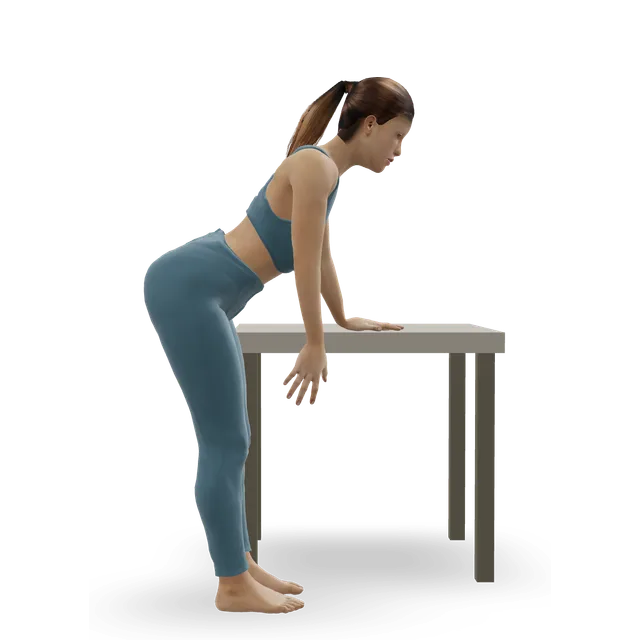
Pendulum exercise (Codman's pendulum) demonstrated on the 3D figure3D demoPendulum exercise (Codman's pendulum)Beginner · A bench or box

About 1 minute (10 small circles each way), 2 to 3 times a day · The move page's dose, an editorial starting point; NHS inform's pendulum swings

Harder: Table slide (seated forward reach)

Table slide (seated forward reach) demonstrated on the 3D figure3D demoTable slide (seated forward reach)Beginner · A bench or box

10 slow reps, 1 to 3 times a day · The move page's dose, an editorial starting point

Easier: Pendulum exercise (Codman's pendulum) · Harder: Overhead lat stretch at a bench (elbows on the bench)

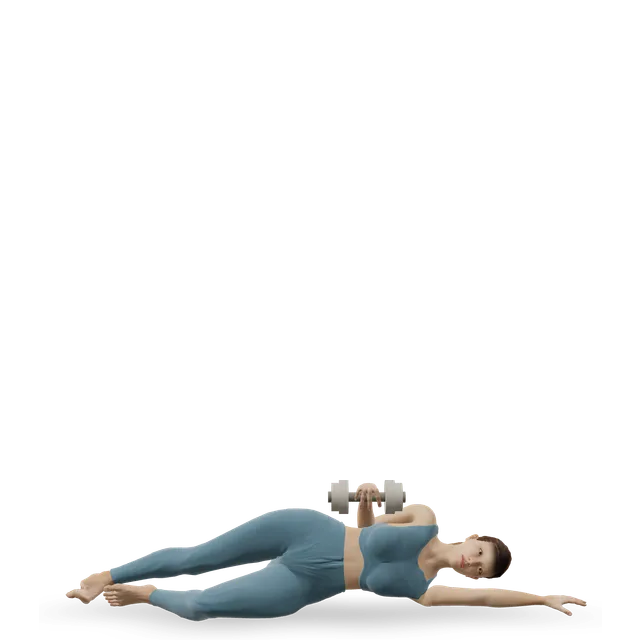
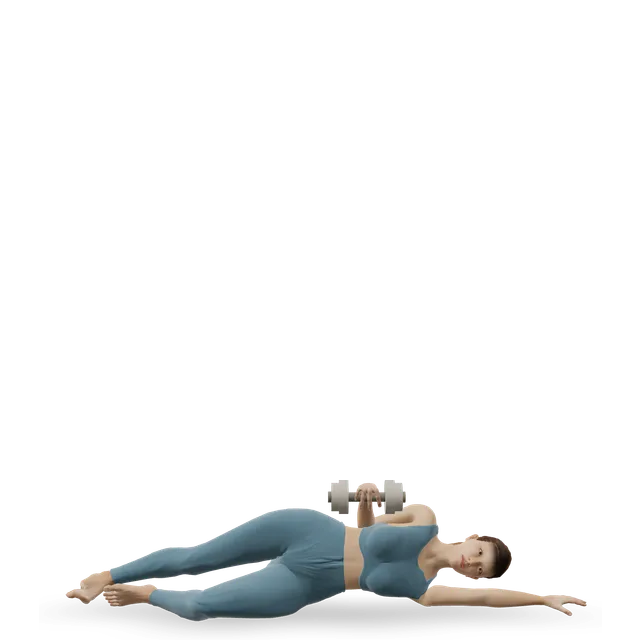
Side-lying external rotation demonstrated on the 3D figure3D demoSide-lying external rotationBeginner · A dumbbell

Lying on your good side, elbow tucked in, with no weight at first and then a tin of beans: 2 to 3 reps at a time through the day, then sets of 8, up to 2 sets of 15 · NHS inform's side-lying lift and pacing; it worked the back cuff hardest in a study of muscle activity

Easier: Standing band external rotation · Harder: Cuban rotation

Thoracic rotation demonstrated on the 3D figure3D demoThoracic rotationBeginner · No equipment

6 rotations each side, moving with the breath · The move page's dose; as in our shoulder blade guide

Easier: Side-lying open book · Harder: World's greatest stretch

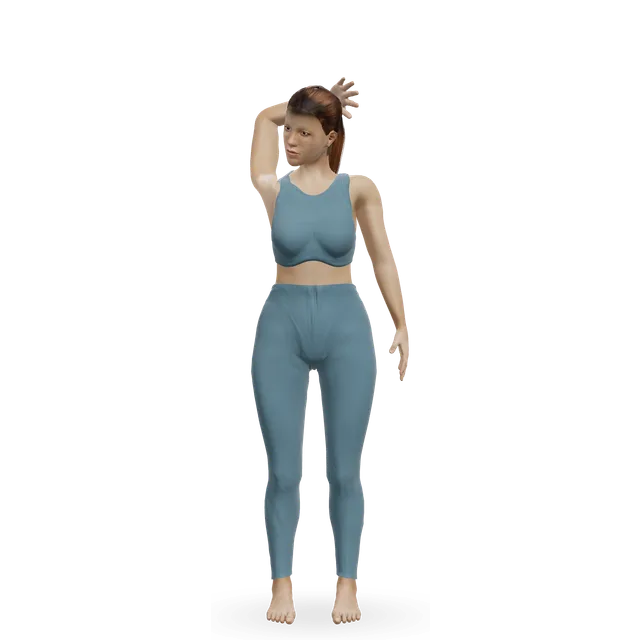
Cross-body shoulder stretch demonstrated on the 3D figure3D demoCross-body shoulder stretchBeginner · No equipment

Only if the back of the shoulder feels tight and turning the arm in is limited: 5 holds of 30 s, once a day · The McClure trial's dose, in people without shoulder pain. Skip it if the joint at the end of the collarbone (the acromioclavicular or AC joint) is sore, as the move page says

Harder: Sleeper stretch

Move on when: Pain at rest is settling, you're sleeping better, and lifting the arm to shoulder height feels comfortable (our suggestion).

Follow along: a timer, a cue and the next move, one step at a time.
Stage 2

Build: the back of the cuff and the shoulder blade

About weeks 2 to 8: the specific cuff and shoulder blade strengthening that beat general exercise in the Holmgren trial. 3 or 4 days a week, within the pain rule.

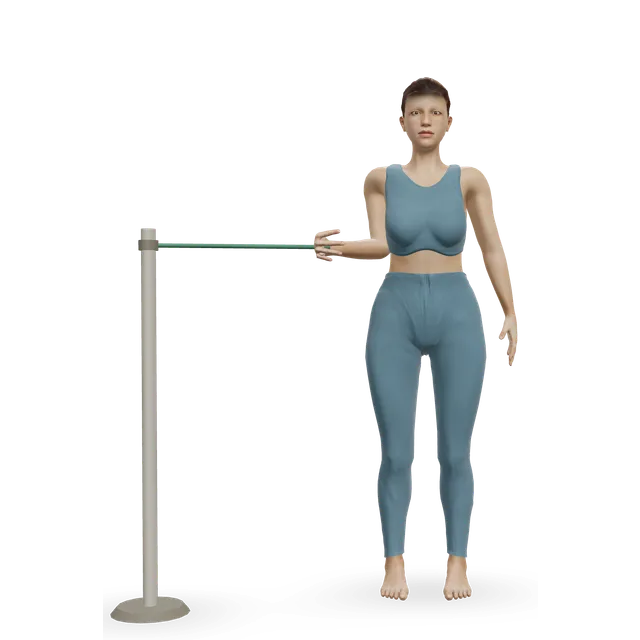
Standing band external rotation demonstrated on the 3D figure3D demoStanding band external rotationBeginner · A band + An anchor point

2 to 3 sets of 15 with a light band, elbow at your side, letting it back slowly · As in our front of shoulder guide, where 3 sets of 15 is the Holmgren trial's dose

Easier: Stick-assisted external rotation (lying) · Harder: Side-lying external rotation

Side-lying dumbbell external rotation (on a bench) demonstrated on the 3D figure3D demoSide-lying dumbbell external rotation (on a bench)Beginner · A dumbbell + A bench or box

8 to 15 reps, working up to 3 sets, with a light dumbbell once the movement is easy without one · The move page's dose, from NHS Ayrshire & Arran

Easier: Standing band external rotation · Harder: Incline reverse fly with external rotation

Band row demonstrated on the 3D figure3D demoBand rowBeginner · A band + An anchor point

3 sets of 10 to 15 · The move page's dose, an editorial starting point

Harder: Supported single-arm dumbbell row

Prone Y-T-W raises demonstrated on the 3D figure3D demoProne Y-T-W raisesBeginner · No equipment

2 to 3 rounds of 8 · As in our front of shoulder guide

Easier: Wall angel · Harder: Bent-over reverse fly

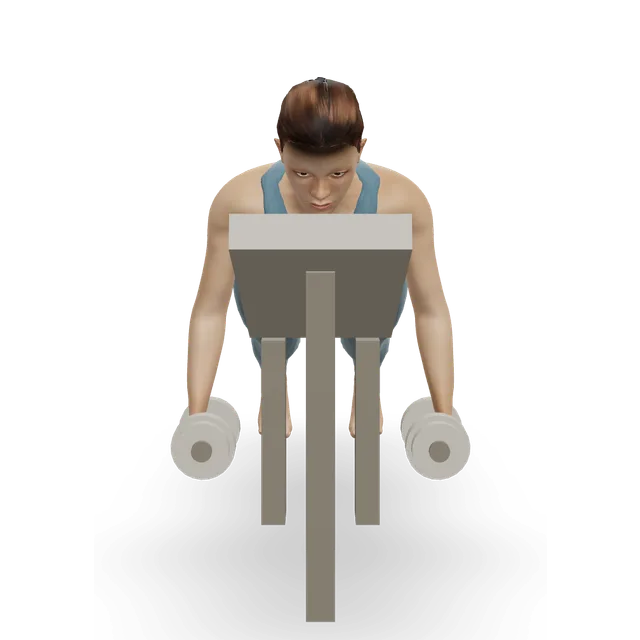
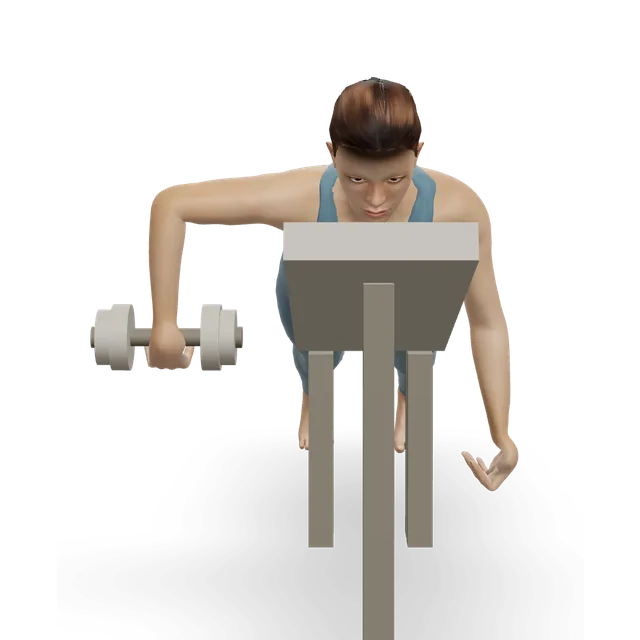
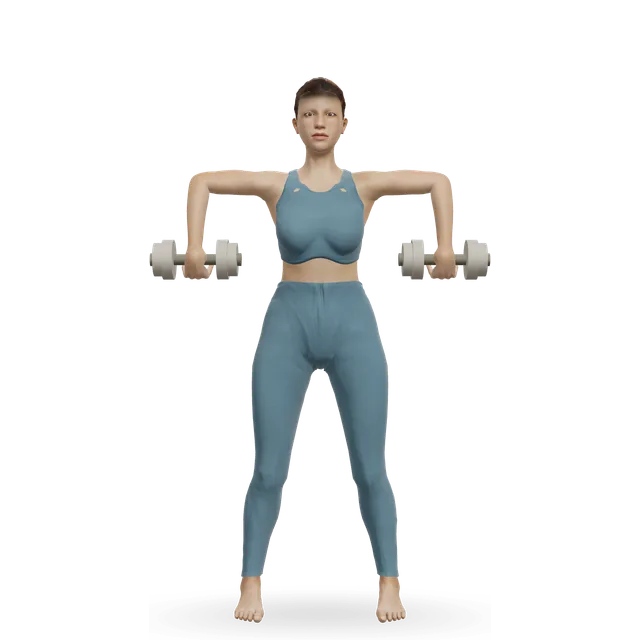
Low-incline reverse fly demonstrated on the 3D figure3D demoLow-incline reverse flyBeginner · A dumbbell + A bench or box

2 to 3 sets of 10 to 15, thumbs up, stopping with 2 or 3 reps in reserve · The move page's dose, an editorial starting point; a face-down raise with the thumb up worked the back of the deltoid hardest in a study of muscle activity

Easier: Prone Y-T-W raises · Harder: Bent-over reverse fly

Scapular push-up (push-up plus) demonstrated on the 3D figure3D demoScapular push-up (push-up plus)Beginner · No equipment

3 sets of 10, on a wall or bench first · As in our front of shoulder guide

Easier: Dumbbell shoulder-blade punch · Harder: Push-up

Move on when: The strengthening stays within the pain rule and is back to its starting level by the next session, and everyday reaching is comfortable (our suggestion).

Follow along: a timer, a cue and the next move, one step at a time.
Stage 3

Strengthen and return: pulling, pressing, throwing and overhead

Strength with the arm raised, then the activity that hurt, brought back by the written steps below. Keep 2 strength sessions a week.

Prone dumbbell external rotation demonstrated on the 3D figure3D demoProne dumbbell external rotationIntermediate · A dumbbell + A bench or box

3 sets of 8 to 15 with a light dumbbell · The move page's dose, NHS Ayrshire & Arran's rotation with the arm at 90 degrees; start only when rotation with the elbow at your side is pain-free, as the page says

Easier: Side-lying dumbbell external rotation (on a bench) · Harder: Barbell rear-delt row

Cuban rotation demonstrated on the 3D figure3D demoCuban rotationIntermediate · A dumbbell + A band

2 to 3 sets of 10 to 12, light · Editorial (the move page gives no dose); for throwers and overhead athletes

Easier: Side-lying external rotation · Harder: Cuban press

Face pull demonstrated on the 3D figure3D demoFace pullIntermediate · A band

3 sets of 12 to 15 · As in our upper back pain guide

Easier: Prone Y-T-W raises · Harder: Tuck back lever

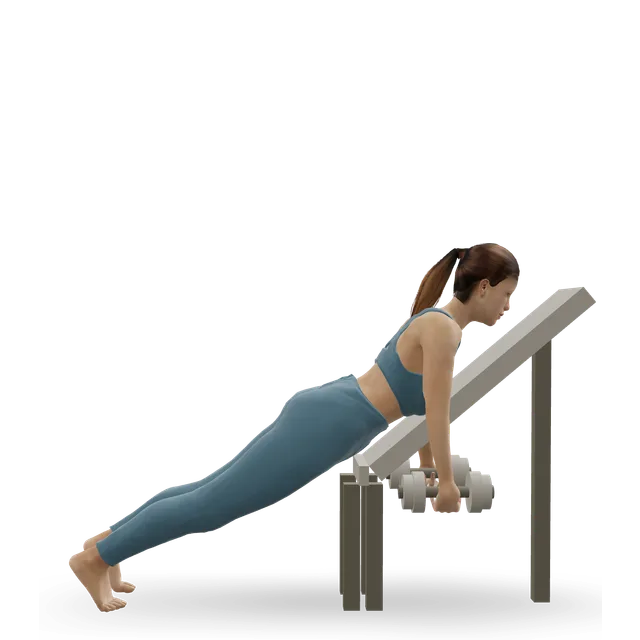
Incline push-up demonstrated on the 3D figure3D demoIncline push-upBeginner · A bench or box

3 sets of 8 to 12, then floor push-ups · As in our front of shoulder guide; with a shoulder that slips backwards, keep the range short and stop at any feeling of slipping

Easier: Wall push-up · Harder: Push-up

Move on when: Our suggestion: pressing, pulling, throwing and overhead work stay within the pain rule, with no extra pain the next morning. If it flares, drop back a stage for a week rather than stopping.

Follow along: a timer, a cue and the next move, one step at a time.

What to change for now

Keep it moving, with pain relief (written steps)

Our 3D figure can't show these changes. They come from the NHS and NHS inform.

  • 1. Don't stop using the shoulder completely, but avoid the movements that make it worse, and don't make up strenuous exercises or use heavy gym equipment for now (the NHS).
  • 2. In the first 48 hours, move it gently for 10 to 20 seconds every hour you're awake, then use it more (NHS inform).
  • 3. Use heat or cold: frozen peas wrapped in a towel for up to 20 minutes up to 3 times a day, or a hot water bottle for up to 20 minutes 2 or 3 times a day (the NHS).
  • 4. Paracetamol or ibuprofen can help, and sitting upright with a cushion behind your lower back, with the arm resting on a cushion in your lap, eases the load (the NHS).
  • 5. Give it 2 weeks of looking after it yourself; see a GP if it isn't improving, and in many areas you can refer yourself to physiotherapy (the NHS).

Sources 47, 5

How to sleep (written steps)

No trial has tested a sleeping position for back of shoulder pain, so these come from Arthritis UK, with our suggestions marked.

  • 1. Lie on your good side, with a pillow under your neck, a folded pillow supporting the painful arm in front of you, and a pillow behind your back (Arthritis UK).
  • 2. On your back, put 1 or 2 pillows under the painful arm (Arthritis UK).
  • 3. Avoid lying on the sore side for now: the AAOS says cuff pain is often worse lying on that shoulder.
  • 4. If pain wakes you most nights for weeks whatever position you lie in, see a GP or physiotherapist (our suggestion, as the warning signs say).

Sources 19, 9

Throwing, pressing and overhead work come back (written steps)

No trial has tested exactly how to bring these back, so the steps are our suggestion, except where a source is named.

  • 1. Throwing: a spell off throwing first (4 to 6 weeks at the second stage of internal impingement, in a review), then short, easy throws, building distance and effort over weeks, with attention to your mechanics (the review and the AAOS).
  • 2. Pressing: bring push-ups and the bench press back with a shorter range and a lighter load, building over weeks; contact athletes with a shoulder that slips backwards describe pain with both (a review). Our bench press guide covers grip and range.
  • 3. Warm up with rotation range, outward rotation strength and shoulder blade work 3 times a week: a programme like this lowered shoulder problems in elite handball players.
  • 4. Heavy overhead lifting comes back last, once the stage 3 moves are comfortable.

Sources 11, 8, 13, 61

Positions to swap, and why

Habit or positionWhy it mattersInstead
Not using the arm at allThe NHS says don't stop using the shoulder completely.Pendulums, table slides and everyday use within comfort.Try: Pendulum exercise (Codman's pendulum)
Heavy bench pressing, dips or push-ups through pain at the backPain with pressing can come from the joint slipping backwards; cutting the load and range for now is our suggestion.Incline push-ups with a shorter range, then build back.Try: Incline push-up
Throwing through pain, or full-effort throws after a breakInternal impingement settles with a spell off throwing and physiotherapy, a review says.Rest from throwing, then a graded return.
Sleeping on the painful sideCuff pain is often worse lying on that shoulder, the AAOS says.Your good side with a pillow supporting the arm, or your back with pillows under it.
Forcing the sleeper stretch, or doing it with a painful or unstable shoulderIt's easy to overdo, its gain wasn't significant in a trial, and its page says skip it with a painful or unstable shoulder.A gentle cross-body stretch.Try: Cross-body shoulder stretch
Pressing overhead early onCuff pain is worse with the arm above shoulder height, NHS inform says.Raises to shoulder height with the thumb up, and rows.Try: Band row
Heavy gym kit or made-up strenuous exercisesThe NHS's shoulder pain advice is to avoid both for now.The staged plan.Try: Table slide (seated forward reach)
Hard massage to find and press out "knots"Examiners can't find trigger points reliably.Movement and strengthening.Try: Band row

Routines to follow

More moves for this area

Questions people ask

What causes pain at the back of the shoulder?

The rotator cuff, the shoulder joint (arthritis, frozen shoulder or a joint that slips backwards), the neck, the muscles around the shoulder blade and, rarely, a trapped nerve. No study we found counts how often each is the cause; where it hurts, what sets it off and other symptoms point to which.

Is pain in the back of my shoulder a rotator cuff tear?

Not necessarily. Most wear-related cuff tears are painless, and pain at the back often comes from the neck or the joint. Sudden weakness lifting the arm after a fall is the pattern that suggests a tear, and needs checking the same day.

Can back of shoulder pain come from my neck?

Yes. A trapped nerve in the neck commonly sends pain over the shoulder blade and the back of the shoulder, sometimes before any arm pain and sometimes without neck pain. Pins and needles, pain below the elbow, or pain that changes when you move your neck point to the neck.

Could pain in the back of my left shoulder be my heart?

Rarely, but it matters. Call 999 for chest pain that feels tight or squeezing, or spreads to the arms, neck, jaw or back, or comes with breathlessness, sweating or feeling sick.

Why does the back of my shoulder hurt when I breathe in?

Sharp pain on breathing in that can spread to the shoulders and back may be pleurisy, and needs an urgent GP appointment or NHS 111. Sudden breathlessness with chest or upper back pain is a 999 call.

Why does the back of my shoulder hurt when I lift my arm?

Usually the rotator cuff, which hurts most from shoulder height upwards and when reaching behind your back. Arthritis and frozen shoulder hurt with stiffness in every direction.

Why does the back of my shoulder hurt after bench pressing or push-ups?

An ache in the muscles on both sides a day or two after new or harder training is delayed onset muscle soreness, and it settles. A deep pain with pressing, or a feeling that the joint slips backwards, can be posterior instability: shorten the range, lighten the load, and get it checked if it keeps happening.

Why does the back of my shoulder hurt when I throw?

In throwers, the cuff tendons at the back can be pinched inside the joint during the wind-up, often with a tight back of the shoulder. A spell off throwing, physiotherapy for range and shoulder blade control, and a graded return come first.

How should I sleep with pain at the back of my shoulder?

Try lying on your good side with a folded pillow supporting the painful arm in front of you, or on your back with 1 or 2 pillows under the arm. Avoid lying on the sore side for now.

What exercises help?

Turning the arm outwards against light resistance, rows and face-down arm raises work the back of the shoulder, and a cross-body stretch helps if the back of the shoulder is tight. Specific exercises like these beat general exercise in a trial, and one good advice session with a home programme did as well as more physiotherapy in another.

Do I need a scan?

Usually not at first. X-rays help after a fall or to look for arthritis, scans often show cuff changes that aren't causing pain, and nerve tests are for wasting or weakness of the muscles over the shoulder blade.

When should I worry about pain at the back of my shoulder?

Call 999 for chest pain or sudden breathlessness, and go to A&E after a fall if your arm is out of place or you can't move it. Get help the same day for a hot, swollen shoulder with a fever, or arm weakness or numbness that is getting worse. See a GP for a cough lasting 3 weeks or more or weight loss, and urgently if you cough up blood.

Related exercise guides

Other pain guides

Sources

  1. Bayam 2011 · Where pain is felt in common shoulder problems: 94 people (pain-mapping study, Am J Orthop)
  2. Bayam 2017 · How accurate shoulder pain maps are: 194 new patients (diagnostic study, Pain Med)
  3. AAOS OrthoInfo · Arthritis of the shoulder
  4. Mizutamari 2010 · Shoulder blade pain and the trapped nerve root in 25 people with neck nerve pain (case series, J Orthop Surg)
  5. NHS inform · Shoulder problems
  6. NHS inform · Subacromial pain syndrome
  7. NHS · Shoulder impingement syndrome
  8. AAOS OrthoInfo · Shoulder injuries in the throwing athlete
  9. AAOS OrthoInfo · Rotator cuff tears
  10. NHS · Frozen shoulder
  11. Corpus 2016 · Internal impingement in overhead athletes: assessment and treatment (review, World J Orthop)
  12. Drakos 2009 · Internal impingement of the shoulder in overhead athletes (review, J Bone Joint Surg Am)
  13. DeFoor 2025 · Posterior shoulder instability in contact athletes (review, Ann Jt)
  14. Doehrmann and Frush · Posterior shoulder instability (StatPearls review)
  15. Robinson 2011 · Backward (posterior) shoulder dislocations: 120 in 112 people (cohort, J Bone Joint Surg Am)
  16. Carmichael 2025 · Shoulder blade pain with a trapped neck nerve: 86 studies (scoping review, N Am Spine Soc J)
  17. Dwyer 1990 · Pain maps from the neck's small joints in 5 volunteers (experimental study, Spine)
  18. Cooper 2007 · Pain maps from painful neck joints in patients (Pain Med)
  19. Arthritis UK · Shoulder pain
  20. Requejo-Salinas 2025 · Neck or shoulder? Consensus on screening the spine in shoulder pain (Delphi study, Physical Therapy)
  21. NHS · Cervical spondylosis (past its review date: reviewed August 2023, review due August 2026)
  22. Hickey 2018 · Altered shoulder blade movement and future shoulder pain: 5 studies, 419 athletes (systematic review and meta-analysis, Br J Sports Med)
  23. Kibler 2013 · The shoulder blade in shoulder injuries: the 2013 Scapular Summit (consensus statement, Br J Sports Med)
  24. Cheung 2003 · Delayed onset muscle soreness: treatments and performance (review, Sports Med)
  25. Lucas 2009 · How reliably examiners find trigger points: 9 studies (systematic review, Clin J Pain)
  26. Bozzi 2020 · Suprascapular neuropathy around the shoulder (review, J Clin Med)
  27. Ferretti 1987 · Painless wasting of the infraspinatus in top volleyball players: 96 players (cross-sectional study, J Bone Joint Surg Am)
  28. Mazza 2021 · Suprascapular nerve problems in 82 professional volleyball players (cross-sectional study, Phys Sportsmed)
  29. Hangge 2018 · Quadrilateral space syndrome: diagnosis and management (review, J Clin Med)
  30. Flynn 2018 · Quadrilateral space syndrome (review, J Shoulder Elbow Surg)
  31. Porcellini 2025 · Quadrilateral space syndrome behind unexplained back of shoulder pain: 4 cases (case series, J Orthop Traumatol)
  32. AAOS OrthoInfo · Burners and stingers
  33. NHS · Heart attack
  34. NHS · Chest pain (past its review date: reviewed August 2023, review due August 2026)
  35. NHS · Angina
  36. British Heart Foundation · Signs and symptoms of heart attacks in women
  37. NHS · Pulmonary embolism
  38. NHS · Pleurisy
  39. NHS · Symptoms of lung cancer
  40. Panagopoulos 2014 · Pancoast tumours: features and assessment before surgery (review, J Thorac Dis)
  41. National Institute for Health and Care Excellence (NICE) · Suspected cancer: recognition and referral (NG12, guideline)
  42. NHS · Shingles
  43. NHS · Polymyalgia rheumatica (past its review date: reviewed April 2023, review due April 2026)
  44. NHS · Septic arthritis
  45. AAOS OrthoInfo · Shoulder pain and common shoulder problems
  46. NHS · Dislocated shoulder
  47. NHS · Shoulder pain (past its review date: reviewed May 2023, review due May 2026)
  48. NHS inform · Neck problems
  49. Hopewell 2021 · Progressive exercise vs best practice advice, with or without steroid injection, for rotator cuff disorders: GRASP (RCT, Lancet)
  50. Ferretti 1998 · Volleyball players with infraspinatus wasting followed for about 5 years: 38 players (cohort, Am J Sports Med)
  51. Holmgren 2012 · Specific exercise and the need for surgery in subacromial impingement (RCT, BMJ)
  52. Steuri 2017 · Exercise, manual therapy and medical treatment for shoulder impingement (meta-analysis of RCTs, BJSM)
  53. Hopewell 2021 · The GRASP trial's full report: exercise and steroid injections for rotator cuff disorders in 708 adults (RCT report, Health Technol Assess)
  54. Reinold 2004 · Rotator cuff and deltoid activity in seven external rotation exercises (EMG, JOSPT)
  55. NHS inform · Exercises for shoulder problems (including how to tell if you're exercising at the right level)
  56. McClure 2007 · Cross-body vs sleeper stretch for posterior shoulder tightness (RCT in people without shoulder pain, JOSPT)
  57. Tyler 2010 · Treating a tight back of the shoulder in 22 people with internal impingement (case series, Am J Sports Med)
  58. Minhaj 2025 · Treatments for lost inward shoulder rotation: 9 studies, 360 people (systematic review, Arch Phys Med Rehabil)
  59. Keller 2018 · Lost inward rotation and injury in overhead athletes: 17 studies, 2,195 athletes (systematic review and meta-analysis, Sports Health)
  60. Wilk 2011 · Lost inward rotation, total rotation and injury in 122 professional pitchers (cohort, Am J Sports Med)
  61. Andersson 2017 · A shoulder injury prevention programme in 660 elite handball players (cluster RCT, Br J Sports Med)
  62. Andersson 2018 · Risk factors for shoulder injuries in 329 elite handball players (cohort, Br J Sports Med)
  63. NHS · Stroke: symptoms
  64. NHS · Vision loss
  65. Brownson 2015 · BESS/BOA patient care pathway: traumatic anterior shoulder instability (Shoulder & Elbow)
  66. NHS · Neck pain and stiff neck (past its review date: reviewed April 2023, review due April 2026)

Exercise education, not a diagnosis or treatment plan. It is written from the guidelines and studies listed above; review by a clinician is pending. If your pain follows an injury, is severe, is getting worse, or comes with any warning sign listed on this page, get it assessed. Health disclaimer.