Pain guide · Shoulder pain

Winged scapula: why a shoulder blade sticks out, the nerve causes to rule out, and exercises that help

A shoulder blade (scapula) that sticks out from your back is called winging. Most often it's a change in how the blade moves (scapular dyskinesis), which is common even in shoulders that don't hurt. Less often it's true weakness of the serratus anterior or trapezius muscle after a nerve injury, which brings clear weakness lifting, pushing or carrying.

The two need different handling. Dyskinesis responds to shoulder-blade exercise within a full shoulder programme; a nerve palsy needs a diagnosis, protection and patience, because nerves can take up to 2 years to recover, and some never fully do. This guide helps you tell them apart, says when to see a GP, and gives a staged plan with 3D demos.

When to get help first

Exercise is for pain that has been checked or is clearly mild and settling.

Get urgent medical help if

  • Call 999: sudden weakness or numbness in one arm, especially with a drooping face or slurred speech. It could be a stroke.
  • Call 999: sudden shortness of breath with a tight or heavy chest, or pain spreading to your arms, back, neck and jaw, or severe difficulty breathing (gasping, choking or not able to get words out). If you're more short of breath than usual, contact NHS 111. Neuralgic amyotrophy can affect the nerve to the main breathing muscle.
  • Same day (GP or NHS 111): sudden or very bad shoulder pain; you cannot move your arm; the arm or shoulder is badly swollen or has changed shape; pins and needles that do not go away; no feeling in the arm; the arm is hot or cold to the touch; pain that started after an injury such as a fall; or severe pain in both shoulders.
  • Same day (GP or NHS 111): sudden weakness lifting the arm after an injury or fall. A rotator cuff tear caused by an injury needs urgent referral to a shoulder specialist.

See a doctor or physiotherapist if

  • A shoulder blade that suddenly sticks out, or new weakness lifting, pushing or carrying: see a GP. Nerve tests may be needed to find which nerve is affected and how badly.
  • Severe shoulder or neck pain, often at night and needing strong painkillers, followed days or weeks later by weakness or winging: see a GP promptly and mention neuralgic amyotrophy, as early treatment may help. Breathlessness that gets worse when you lie down is a reason to see a GP too.
  • Winging after an operation in your neck (including a lymph node biopsy) or armpit, or after a mastectomy: tell your surgical team or GP.
  • A child or teenager with uneven shoulders, one shoulder or hip sticking out, or ribs sticking out on one side: see a GP. It can be scoliosis, which is unlikely to be serious but is worth checking.
  • A past history of cancer, an unexplained lump or swelling, weight loss, or pain that is constant and does not ease when you change position.
  • Pins and needles or a cold arm alongside neck pain, or a new loss of strength or feeling in the arm that you cannot explain (a possible nerve problem).

Understand it

Two different problems share the nameStrong evidence

The shoulder blade glides over the back of the ribs, held there and moved by the serratus anterior, the trapezius, the rhomboids and other muscles. Winging means it lifts away from the chest wall. There are three patterns to tell apart:

  • The inner edge sticks out (medial winging): usually a weak serratus anterior after an injury to the long thoracic nerve. It's worse lifting the arms forwards or pushing against a wall, and the blade sits closer to the spine.
  • The outer part swings out (lateral winging): usually a weak trapezius after an injury to the spinal accessory nerve. The shoulder droops, the neckline looks uneven, and it's worse lifting the arm out to the side. Rhomboid weakness, and tears of these muscles away from the blade, are less common causes.
  • Scapular dyskinesis: the blade moves or rests differently, with no nerve damage. It's far more common, and a 2013 expert consensus called it a possible impairment of shoulder function, not a diagnosis.

Sources 1, 2, 3

Dyskinesis is common, and often harmlessStrong evidence

In a review of 12 studies (1,401 athletes), 61% of overhead athletes and 33% of other athletes had dyskinesis. In 142 college overhead athletes, blades that looked dyskinetic did move differently on 3D testing, but dyskinesis wasn't linked with shoulder symptoms.

It does raise the risk of future pain a little. Across 5 studies of 419 athletes without pain, 35% of those with dyskinesis developed shoulder pain over 9 to 24 months, against 25% of those without. Programmes to prevent shoulder injuries in overhead sport have little evidence behind them so far.

Sources 4, 5, 6, 7

What causes a nerve palsy

The long thoracic nerve is long and exposed. Injuries include a blow, a sudden pull down on the shoulder, repeated or unusual effort (hedge-cutting, digging, washing a car, or propping your head on your hands while lying down), a viral illness, crutches, surgery in the armpit (such as lymph node removal or a mastectomy) and neuralgic amyotrophy. The spinal accessory nerve is most often injured in neck operations, including a lymph node biopsy, and by blows, heavy lifting or a pull on the arm.

Heavy rucksacks can do it too: in the Dutch military, backpack palsy affected about 28 in every 100,000 people a year, and about 90 in 100,000 of those under 25. Muscle conditions such as facioscapulohumeral muscular dystrophy are a less common cause.

Sources 1, 8

Neuralgic amyotrophy (Parsonage-Turner syndrome)Emerging evidence

An inflammatory nerve disorder of the shoulder girdle. In 246 people, it started with severe, continuous pain lasting about 4 weeks on average (longer in men), followed by weakness; the long thoracic or suprascapular nerves were involved in 71%. About a quarter of those with the non-inherited form had another attack over about 6 years, and about two-thirds of those followed for 3 years or more still had pain and weakness. In about 8 in 100, the nerve to the diaphragm, the main breathing muscle, is affected, causing breathlessness, especially lying flat.

How common it seems depends on who's looking. In Dutch general practice, when GPs were trained to spot it, about 1 in 1,000 people a year had it. In a US health system's records it was about 1.8 in 100,000 a year, the median wait from symptoms to diagnosis was 51 days, and most people saw at least one other clinician first. It's probably under-recognised.

Sources 9, 10, 11, 12

How it's recognised

Winging shows from behind, more clearly when you push on a wall or lift the arm, and a nerve palsy also brings weakness lifting, pushing or carrying. Nerve tests (electromyography and nerve conduction studies) show which nerve is involved and how badly. X-rays rarely make the diagnosis but can rule out bony causes, such as a badly healed fracture or a bony growth on the shoulder blade. Rotator cuff tears, instability and scoliosis can look similar.

In a growing child, the NHS lists one shoulder or hip sticking out, uneven shoulders and ribs sticking out on one side among the signs of scoliosis, which usually starts between 10 and 15.

Sources 1, 13

How long nerves take to recoverMixed evidence

Most serratus anterior palsies recover within about 2 years in one review, but across studies the winging went away by itself in 21% to 78%. In that review, an isolated serratus palsy usually recovered its function within 1 to 24 months, though mild loss of endurance and painless winging could remain, palsies after an injury did worse, and about 1 in 4 persisted. Trapezius palsies recover less often.

In 106 people followed for about 4 years, good recovery was the rule, palsies after an injury did worse, and nerve tests didn't predict who would recover. A 2023 review of 6 studies concluded that many people managed without surgery keep some complaints.

Sources 1, 14, 15

What helps, and how strong the evidence is

Dyskinesis: shoulder-blade exercise within a full programmeMixed evidence

A 2013 expert consensus concluded that rehab to restore shoulder-blade position and movement can be effective within a fuller shoulder programme. Most trials are in people with rotator cuff related shoulder pain. Scapula-focused approaches beat general ones for disability up to 6 weeks but not at 3 months, and the early difference in pain was too small to matter (4 trials, 190 people). A 2024 meta-analysis of 8 trials found scapular exercise improved function more than other approaches, with no clear effect on pain; programmes lasting 6 weeks or more, with up to 30 repetitions of each exercise a session, did better. Another found about 1 point less pain out of 10 than conventional physiotherapy.

Whether exercise changes how the blade sits or moves is unclear: 20 studies gave conflicting results. Judge progress by pain, strength and function, not by the mirror.

Sources 3, 16, 17, 18, 19

Choosing the exercises: what muscle recordings showEmerging evidence

Studies recording muscle activity (electromyography) in healthy people guide the choices. Side-lying external rotation, side-lying forward lifts, and face-down raises with the thumbs turned out favoured the middle and lower trapezius over the upper (45 people). The face-down overhead raise worked the lower trapezius most and shrugs the upper trapezius most, and the serratus anterior was most active raising the arms in line with the shoulder blade above about 120 degrees (30 people). Below shoulder height, the push-up plus and a hugging movement worked the serratus most (20 people).

None of these studies tested whether the exercises fix winging or pain.

Sources 20, 21, 22

A nerve palsy: protect it, keep it moving, and give it timeEmerging evidence

For a serratus anterior palsy, a review advises 6 to 24 months of non-surgical care to allow recovery: avoid overhead use and activities that cause pain; keep the range with exercises lying on your back, where your body weight holds the blade flat; take care not to stretch the weak muscle, which may slow recovery; and strengthen all the shoulder-girdle muscles as the serratus recovers. A brace can help but is poorly tolerated.

For a trapezius palsy, non-surgical care often fails, and nerve repair or a tendon transfer is considered after about a year without recovery. When a serratus palsy doesn't recover, a tendon transfer helps: in a 2023 review, forward lift improved by about 47 degrees on average and pain by about 3 points out of 10.

Sources 1, 15

Neuralgic amyotrophy: steroids early, from cohort studiesMixed evidence

Steroids may help if started early, from cohort studies; there are no randomised trials. A German review found only 6 controlled cohort studies of treatment and advises steroids as early as possible, and another review stresses early recognition. Untreated, about a quarter of people were still unable to work at 3 years, in one review's summary.

Sources 9, 23

Neuralgic amyotrophy: a specific rehab programme helped in a trialEmerging evidence

Lasting problems come mainly from reduced endurance of the affected muscles and changed movement patterns. In a trial of 47 people at least 8 weeks after onset, a specialist consultation plus 8 sessions of physiotherapy and occupational therapy (retraining shoulder-blade movement, and managing pain and fatigue) improved shoulder function more than usual care: 59% against 33% improved by a meaningful amount. It was one trial, and not blinded.

Sources 24, 9

How much pain is OK while you exercise?

Pain-free for a nerve palsy; the 5 out of 10 rule for dyskinesisEmerging evidence

With a nerve palsy or neuralgic amyotrophy, this guide's rule is editorial: keep the exercises pain-free, and stop before fatigue makes the blade wing more or the arm shake. It builds on a review's advice to avoid activities that cause pain and not to stretch the weak muscle, and on the rehab that worked in neuralgic amyotrophy, which taught people to manage pain and fatigue. Short, frequent sessions suit a recovering nerve better than long ones.

With scapular dyskinesis, use a rule borrowed from rotator cuff pain (Holmgren's trial): pain up to about 5 out of 10 during the exercises is acceptable, and by your next session it should be back to where it was before. If it isn't, use a lighter band or weight or a smaller range next time, not nothing.

Sources 1, 9, 24, 25

The exercise plan: 3 stages

Start at the first stage. Each move opens a full guide with a 3D demo.

Stage 1

Protect and keep moving (a nerve palsy, or a very sore start)

For weeks or months while a nerve recovers; with dyskinesis and no weakness, start at stage 2. Keep the range lying down, where your body weight holds the blade flat; avoid heavy overhead work and painful activities; and don't stretch the weak muscle. Short, frequent sessions. Add the lying overhead reach with a stick (written steps below). Doses are editorial.

Move on when: Strength is starting to return, so the blade wings less as you lift the arm to shoulder height, as your clinician confirms.

Follow along: a timer, a cue and the next move, one step at a time.
Stage 2

Control: get the blade moving with the arm

The starting point for scapular dyskinesis; for a palsy, once strength returns. The exercise choices come from studies of muscle activity in healthy people. Doses are editorial.

Wall push-up demonstrated on the 3D figure3D demoWall push-upBeginner · A wall

2 to 3 sets of 10, pushing the shoulder blades apart at the top · The push-up plus, on a wall

Harder: Push-up

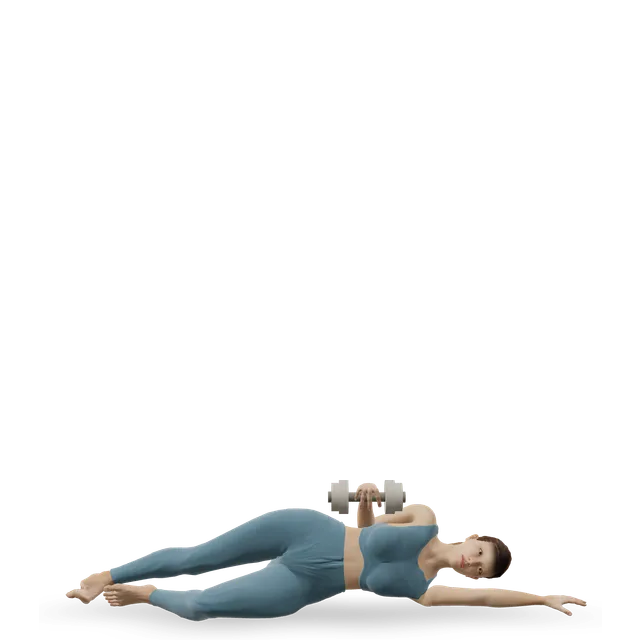
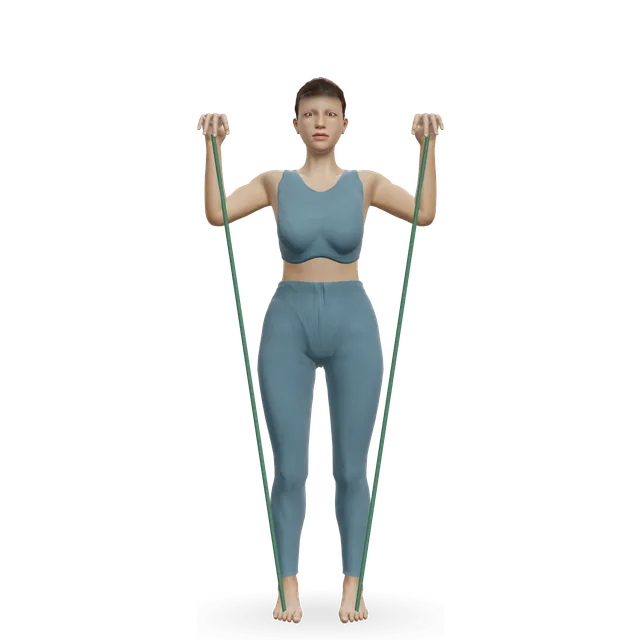
Side-lying external rotation demonstrated on the 3D figure3D demoSide-lying external rotationBeginner · A dumbbell

3 sets of 10 to 15 · Favoured the middle and lower trapezius in a muscle-activity study

Easier: Standing band external rotation · Harder: Cuban rotation

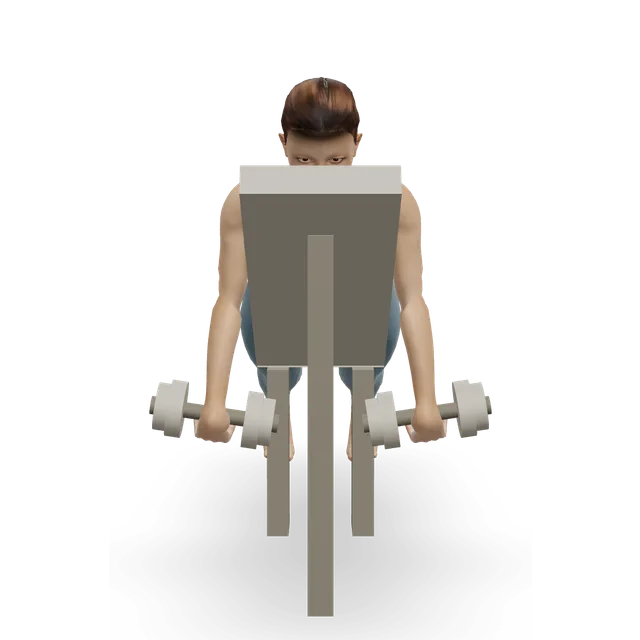
Prone Y-T-W raises demonstrated on the 3D figure3D demoProne Y-T-W raisesBeginner · No equipment

2 rounds of 8 · The face-down overhead raise worked the lower trapezius most

Easier: Wall angel · Harder: Bent-over reverse fly

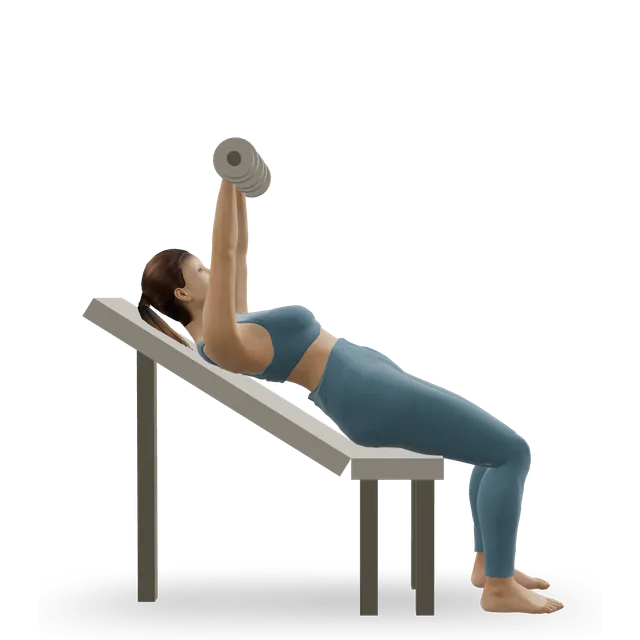
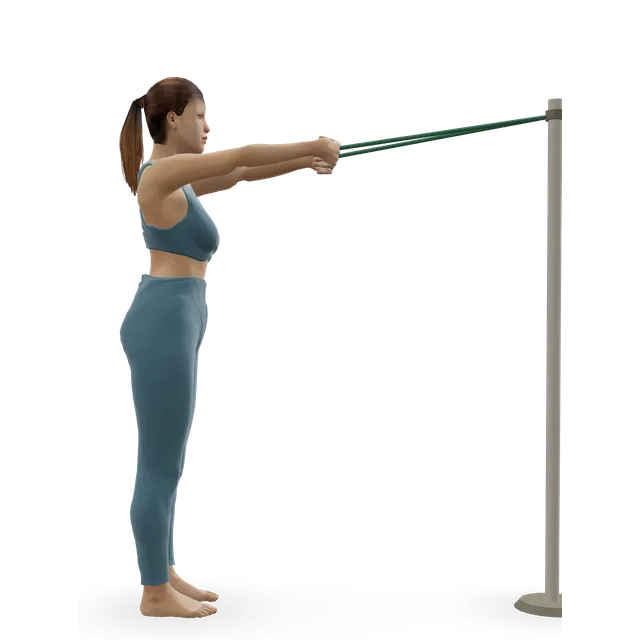
Scaption raise demonstrated on the 3D figure3D demoScaption raiseBeginner · A dumbbell

2 to 3 sets of 10, light, to shoulder height, then higher as control allows · Raises above about 120 degrees worked the serratus hardest

Easier: Band lateral raise · Harder: Smith machine upright row

Move on when: The blade stays flatter through the movement, and sets pass the pain or fatigue rule.

Follow along: a timer, a cue and the next move, one step at a time.
Stage 3

Strengthen: whole-shoulder strength and endurance

For at least 6 weeks, keeping each exercise to 30 reps or fewer a session: the features linked with better results in a 2024 meta-analysis. Build sport and work tasks back gradually. Doses are editorial unless marked.

Move on when: Pushing, lifting and carrying feel strong and steady. Keep two shoulder-blade sessions a week for the long term.

Follow along: a timer, a cue and the next move, one step at a time.

What to change for now

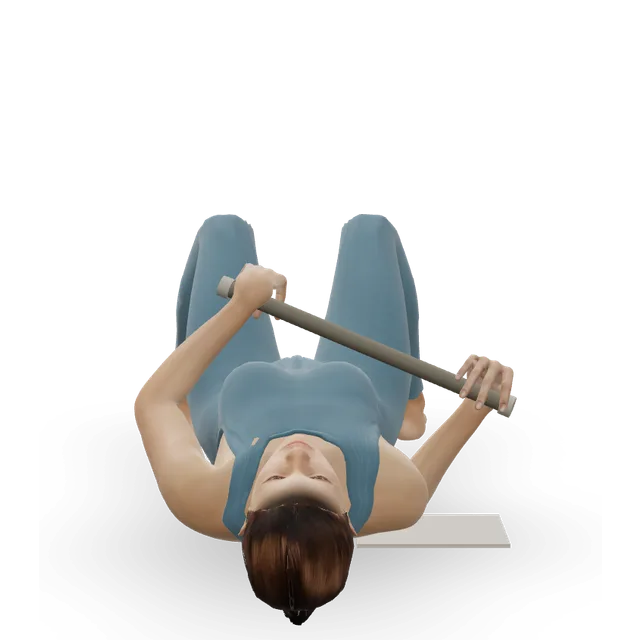
Lying overhead reach with a stick: written steps

This keeps your overhead range while a nerve recovers, lying down so your body weight holds the shoulder blade flat, as a review advises. The steps follow an NHS trust leaflet's overhead stretch.

  • 1. Lie on your back with your knees bent, holding a stick or a rolled towel in both hands across your hips.
  • 2. Using the good arm to do the work, lift both arms up and back over your head as far as is comfortable.
  • 3. Feel a stretch in the shoulder, not pain, and hold for 20 to 30 seconds.
  • 4. Bring the arms back down slowly. Repeat 2 to 3 times.

Sources 26, 1

Day to day while a nerve recovers

Keep loads close to you and below shoulder height, and rest before the arm tires. Carry a lighter rucksack with padded straps and a hip belt (our suggestion), and avoid lying for long with your arms above your head. If your work is heavy or overhead, ask your GP or physiotherapist about a phased return.

Sources 1, 8

Positions to swap, and why

Habit or positionWhy it mattersInstead
Heavy overhead lifting, overhead carries and hanging from a bar while a nerve recoversA review advises avoiding overhead use with a serratus palsy, and not stretching the weak muscle.Work below shoulder height, and carry loads at your side.Try: Farmer's carry
Stretching the weak muscle while a nerve recoversThe same review warns it may slow recovery.Range work lying on your back.Try: Stick-assisted external rotation (lying)
A heavy rucksack, especially with thin strapsPressure and stretch from a backpack can injure the nerves.A lighter load, padded straps and a hip belt (our suggestion).
Lying for long with your arms above your head, or propping your head on your handsBoth are listed among the causes of long thoracic nerve palsy.Arms by your sides, and your head on a pillow.
Push-ups to fatigue while the blade still wingsThey rehearse the faulty movement under load (editorial).A wall push-up with a plus, then an incline.Try: Wall push-up
Shrugs as the main shoulder-blade exerciseThey work the upper trapezius most, while the aim is the middle and lower trapezius and the serratus anterior.Face-down Y-T-W raises and side-lying external rotation.Try: Prone Y-T-W raises
Expecting exercise to change how the blade looksIts effect on blade position is unproven, though it helps pain and function.Judge progress by strength, function and pain.

Routines to follow

More moves for this area

Questions people ask

What causes a winged shoulder blade?

True winging usually comes from a weak serratus anterior (long thoracic nerve) or trapezius (spinal accessory nerve) after an injury, an operation, a viral illness or neuralgic amyotrophy. Much more often, a shoulder blade that sticks out is scapular dyskinesis, a change in how it moves, with no nerve damage.

Is a winged scapula serious?

Dyskinesis is common in athletes and often causes no symptoms. True winging with weakness needs a GP, and sudden arm weakness with a drooping face or slurred speech needs 999.

How do I know if it's a nerve problem?

A nerve palsy brings clear weakness: trouble lifting the arm, pushing or carrying, with winging that shows when you push on a wall or lift the arm. Nerve tests (electromyography) confirm it and show how badly the nerve is affected.

Can exercise fix it?

For dyskinesis, shoulder-blade exercise within a full shoulder programme improves function a little more than general exercise, though it may not change how the blade looks. For a nerve palsy, exercise keeps the shoulder moving and strong while the nerve recovers, but there's no evidence it speeds the nerve up.

What are the best exercises?

In studies recording muscle activity, side-lying external rotation and face-down raises favoured the middle and lower trapezius, and the push-up plus, a hugging movement and arm raises above about 120 degrees worked the serratus most. The plan on this page builds from those.

How long does long thoracic nerve palsy take to recover?

Most recover within about 2 years in one review, but across studies the winging went away by itself in 21% to 78% of people. Palsies after an injury recover less well, and many people keep some complaints.

What is Parsonage-Turner syndrome?

Another name for neuralgic amyotrophy: severe shoulder pain, lasting about 4 weeks on average, followed by weakness of muscles such as the serratus anterior. It's commoner than once thought (about 1 in 1,000 people a year in Dutch general practice), recovery is often incomplete, and a specific rehab programme helped in a trial.

My child's shoulder blades stick out. Is that normal?

One shoulder or hip sticking out, uneven shoulders or ribs sticking out on one side can be signs of scoliosis, which usually starts between 10 and 15. It's unlikely to be serious, but see a GP to check.

What should I avoid?

While a nerve recovers: heavy overhead lifting, hanging from a bar, heavy rucksacks and stretching the weak muscle. With dyskinesis, avoid push-ups to fatigue while the blade still wings, and build up through wall and incline push-ups.

Will I need surgery?

Rarely. If a nerve palsy hasn't recovered after about 6 to 24 months (about a year for the trapezius), a tendon transfer can improve lifting and pain.

Is scapular dyskinesis the same as winging?

No. Dyskinesis is a change in how the blade moves, and it's common even without pain. Winging from a nerve palsy means a muscle is too weak to hold the blade against the ribs.

Related exercise guides

Other pain guides

Sources

  1. Martin 2008 · Scapular winging: anatomy, diagnosis and treatment (review, Curr Rev Musculoskelet Med)
  2. Didesch 2019 · Anatomy, causes and management of scapular winging (review, J Hand Surg Am)
  3. Kibler 2013 · Scapular dyskinesis in shoulder injury: the Scapular Summit consensus statement (BJSM)
  4. Burn 2016 · How common scapular dyskinesis is in overhead and other athletes (systematic review, OJSM)
  5. Tate 2009 · Scapular dyskinesis seen by eye and on 3D motion testing in 142 athletes (validity study, J Athl Train)
  6. Hickey 2018 · Scapular dyskinesis and the risk of future shoulder pain in athletes (meta-analysis, BJSM)
  7. Asker 2018 · Risk factors for, and prevention of, shoulder injuries in overhead sports (systematic review, BJSM)
  8. van der Dussen 2025 · Backpack palsy and neuralgic amyotrophy in the Dutch military (cohort, BMJ Neurol Open)
  9. IJspeert 2021 · Neuralgic amyotrophy (review, Curr Opin Neurol)
  10. van Alfen 2006 · Neuralgic amyotrophy in 246 people (case series, Brain)
  11. van Alfen 2015 · How common neuralgic amyotrophy is in primary care (prospective cohort, PLoS One)
  12. Wallace 2026 · Neuralgic amyotrophy in a US health system: incidence and delays (cohort, Hand Surg Rehabil)
  13. NHS · Scoliosis
  14. Friedenberg 2002 · Natural history of long thoracic and spinal accessory nerve injuries (cohort of 106, Muscle Nerve)
  15. Geurkink 2023 · Non-surgical care and tendon transfer for winging from a nerve injury (systematic review, JSES)
  16. Bury 2016 · Scapula-focused approaches for rotator cuff related shoulder pain (meta-analysis, Man Ther)
  17. Melo 2024 · Scapular exercises for shoulder pain (meta-analysis of 8 trials, JSES Rev Rep Tech)
  18. Zhong 2024 · Scapular stabilisation exercise for subacromial pain (meta-analysis of 8 RCTs, Front Neurol)
  19. Nodehi Moghadam 2020 · Does exercise change scapular position and motion in dyskinesis? (systematic review, JSES)
  20. Cools 2007 · Which exercises favour the middle and lower trapezius (EMG study of 45 people, AJSM)
  21. Ekstrom 2003 · Trapezius and serratus anterior activity in common exercises (EMG study of 30 people, JOSPT)
  22. Decker 1999 · Serratus anterior activity in rehabilitation exercises (EMG study of 20 people, AJSM)
  23. Holle 2024 · Neuralgic amyotrophy (review, Dtsch Arztebl Int)
  24. Janssen 2023 · Outpatient rehabilitation for neuralgic amyotrophy with scapular dyskinesia (RCT of 47, J Neurol Neurosurg Psychiatry)
  25. Holmgren 2012 · Specific exercise and the need for surgery in subacromial impingement (RCT, BMJ)
  26. Calderdale and Huddersfield NHS · Ultrasound-guided barbotage (patient leaflet)
  27. NHS · Symptoms of a stroke
  28. NHS · Shortness of breath
  29. NHS · Shoulder pain

Exercise education, not a diagnosis or treatment plan. It is written from the guidelines and studies listed above; review by a clinician is pending. If your pain follows an injury, is severe, is getting worse, or comes with any warning sign listed on this page, get it assessed. Health disclaimer.