What a burpee asks of the back, and what no study has measuredEmerging evidence
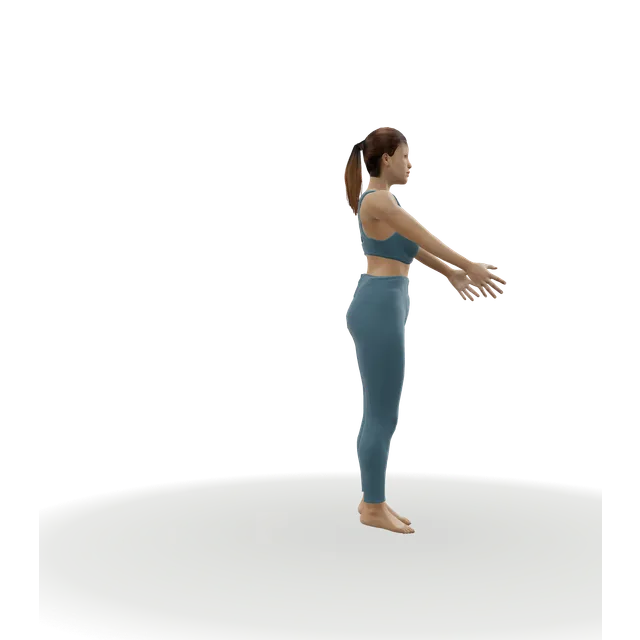
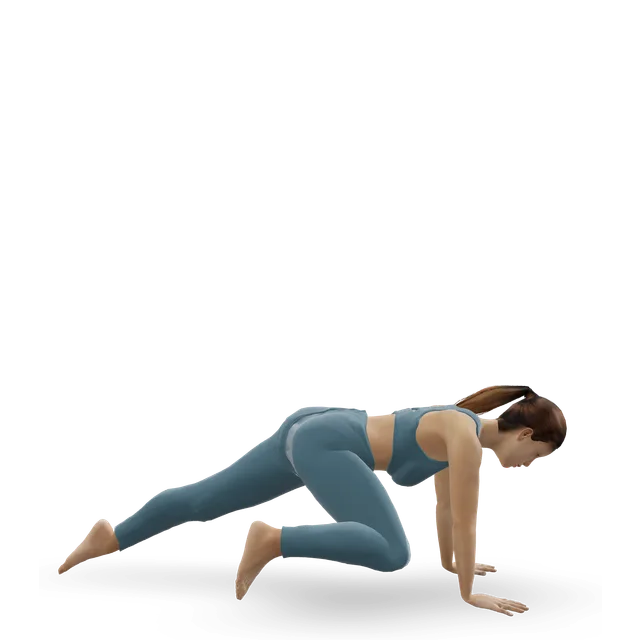
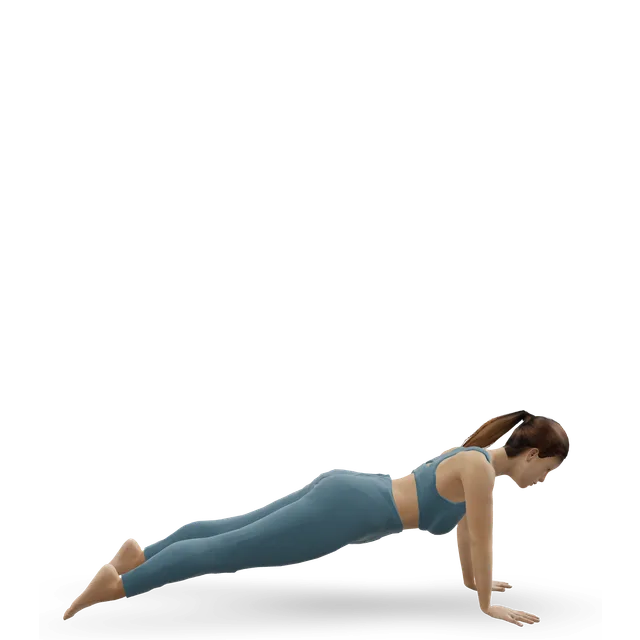
A burpee is a squat to the floor, a jump or step back to a straight plank (often with a push-up), a jump back in, and a stand or jump with the arms overhead. It is one of the hardest bodyweight moves: in 10 adults, burpees gave the highest heart rate, lactate and effort of seven bodyweight exercises, and the plank the lowest. No study has measured the load on the lower back, back muscle activity or back injuries in burpees or squat thrusts.
The nearest evidence comes from parts of the move. Our plank back guide sets out how the hips sink and the lower back arches as the trunk tires in a hold; in a burpee you land into that plank, often tired, many times a minute (our reading). In models of over 600 sports tasks, jumping and landing gave estimated compression of more than ten times body weight at the bottom of the lower back, and in 8 people, 50 drop jumps shortened the spine measurably. In 13 people, exercises that arched the back actively produced the highest spinal joint forces of the back exercises tested. The burpee move page sums it up: a sagging trunk in the push-up and a rounded back on the way up load the spine, and the jump adds impact when you are most tired.
Sources 1, 2, 3, 4
How common it is, and who gets itEmerging evidence
In 100 adults (82% women) in 6-week trainer-led strength-endurance classes, 18 were injured, at 9.0 injuries per 1,000 training hours; knees (7) and backs (6) were the commonest, and burpees and squats were the commonest movements behind the injuries. Across high-intensity functional training (28 studies, 11,089 people), 36% reported an injury, at 4.3 per 1,000 hours overall (9.9 in prospective studies), with the shoulder and the back or spine each about a quarter of injuries. In CrossFit (25 studies, 12,079 people), the shoulder (26%), spine (24%) and knee (18%) were the commonest sites, and risk factors included a previous injury, competing and a lack of coach supervision; all 26 studies in another review were at high risk of bias.
One survey of 386 CrossFit athletes didn't count burpees separately: most of its low back injuries came from powerlifting moves, and injury rates fell with more trainer involvement. In 3,049 participants, back injuries were 36% of injuries, and people training fewer than 3 days a week and in their first year were injured more; longer participation was protective across 3 cohorts, competitors were injured more often than non-competitors (40% against 19% in 191 people), and in an online survey of 132, 73.5% had been injured. A review of 3 cohorts concluded injury is more common where supervision isn't always available. People who do CrossFit report less low back pain than sedentary people (41% against 69%), a snapshot that can't show cause. So burpee back pain is most likely in newcomers, after a break, in big or timed sets and without coaching (our reading).
Sources 5, 6, 7, 8, 9, 10, 11, 12, 13, 14, 15
Where and when it hurts sorts the causesEmerging evidence
The NHS says back pain is very common, usually improves within a few weeks, and that a common cause is a pulled muscle (a strain); very rarely, it can be a sign of a broken bone, cancer or an infection. Sciatica usually hurts in your bottom and the back of one leg, and the back pain with it is not usually as bad as the leg pain.
In young athletes, back pain is more often a stress fracture of the spine (spondylolysis) than in adults: 47 of 100 adolescent athletes with back pain in one clinic had one, against 5 of 100 adults; 30% of 1,025 non-elite adolescent athletes in another; and 41.7% across 9 studies (835 athletes). In 733 young people scanned, 94.2% of those with an acute spondylolysis had pain arching backwards.
Sources 16, 17, 18, 19, 20, 21
Muscle breakdown and the heart: rare, and the reason for the warning signsEmerging evidence
Muscle breakdown (exertional rhabdomyolysis) is rare: at one centre it was 11 of 523 CrossFit injuries (2.1%), over half in beginners, and 90.9% had dark urine. Across 25 studies (772 people), running caused most cases and weightlifting about 15%, and after indoor spinning classes, 7.2% of 97 people had kidney injury. It needs a same-day check, as the warning signs say.
A burpee set is hard exercise, and the NHS says call 999 for chest pain that feels tight or like squeezing or spreads to your arms, neck or jaw, or if someone has passed out and is not responding normally.
Sources 22, 23, 24, 34
What a scan shows, and when it mattersStrong evidence
The National Institute for Health and Care Excellence (NICE) says don't routinely offer imaging for low back pain outside specialist care, and in specialist care only if the result is likely to change management. Scans do matter for the warning signs, for a young athlete with back pain arching backwards that lasts more than a couple of weeks, and for suspected muscle breakdown, which is checked with blood and urine tests in hospital.
Sources 25, 21
How it usually goesEmerging evidence
No study follows back pain from burpees. The NHS says back pain usually improves within a few weeks but can sometimes last longer or keep coming back, and sciatica usually gets better in a few weeks to a few months. Young athletes with spondylolysis mostly do well without surgery: 92.2% returned to play after non-surgical care (11 studies), and 92% at an average of about 4.6 months (14 studies, 592 athletes); in a trial of 64, starting physiotherapy straight away brought them back 38 days sooner with fewer recurrences over a year (3% against 29%). At the serious end, among 523 CrossFit injuries at one hospital, 20.9% were spinal, mostly in the lower back, and 6.7% of those had surgery. No one can promise a date.
Sources 16, 17, 27, 28, 29, 26