How to do a burpee: good form, easier and harder versions, and how many to do
A burpee is a squat, a jump back to a plank, a jump back in and a jump up with your arms overhead. It is one of the hardest bodyweight conditioning moves: in one study, all-out burpee efforts reached about 85% of peak heart rate. Stepping instead of jumping makes it much easier.
Short interval circuits have raised fitness in small trials, but in those trials burpees were one exercise among several, and burpee-only programmes did less. So treat burpees as one good way to do hard intervals, not a magic one.
This guide covers good form, common mistakes, easier and harder versions and the standards used in tests, CrossFit and HYROX; how many to do; the 3-minute burpee test norms; how to look after your knees, back, wrists and pelvic floor; and the interval workouts that use burpees.
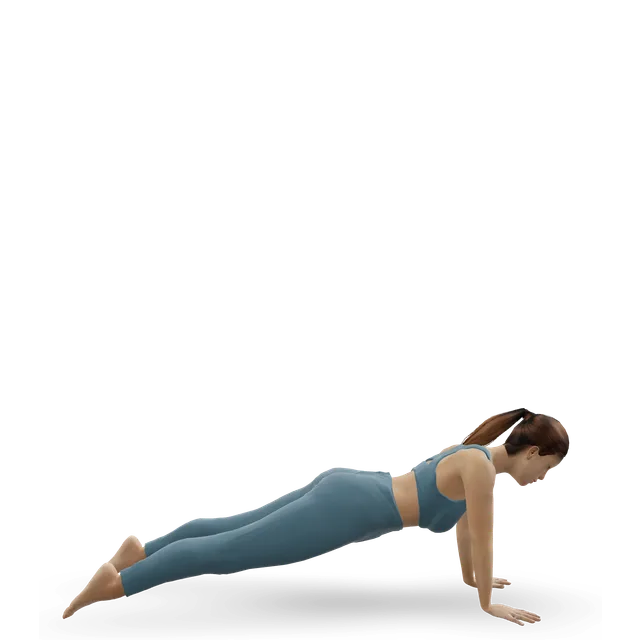
Squat and put your hands down, jump or step your feet back to a straight plank, bring them back in, then stand or jump up with your arms overhead, landing softly. The National Academy of Sports Medicine (NASM) version adds a push-up in the plank.
In 11 trained students, four 30-second all-out burpee efforts averaged about 78% of peak oxygen uptake, a measure of aerobic fitness, and 85% of peak heart rate: a little below all-out sprint cycling.
Short whole-body interval circuits raised aerobic fitness in small trials, about as much as running intervals, but burpees were one exercise among several in them. Burpee-only programmes did less: they kept fitness steady in trained cadets, and a very short one improved jumping rather than aerobic fitness.
NASM calls the full burpee an advanced exercise and suggests beginners step back instead of jumping, or leave out the push-up. Add the jumps once the steps are steady.
Treat hard burpees like any HIIT (high-intensity interval training): once or twice a week for most people, as our HIIT guide says, building up from a few short efforts. Very large, sudden amounts of exercise like this can cause serious muscle breakdown.
Look after your knees, back, wrists and pelvic floor
In group strength-endurance classes, burpees and squats were the commonest movements behind injuries, mostly knees and backs, and burpees made 10% of women CrossFit competitors leak. Land softly, keep the plank braced, and use a no-jump or hands-raised version while anything is sore.
In the 3-minute burpee test you squat with your hands down, kick back to a straight-arm plank, come back to the squat and stand up: no push-up and no jump.
Your chest touches the floor; you may step or jump your feet back and in and use a knee on the way up; then you jump forward with both feet taking off and landing together, with your hands no more than 30 cm in front of your toes when you go down again. The station is 80 metres long.
Some coaches call the version without the jump a squat thrust, and others use the names the other way round (our editorial note).
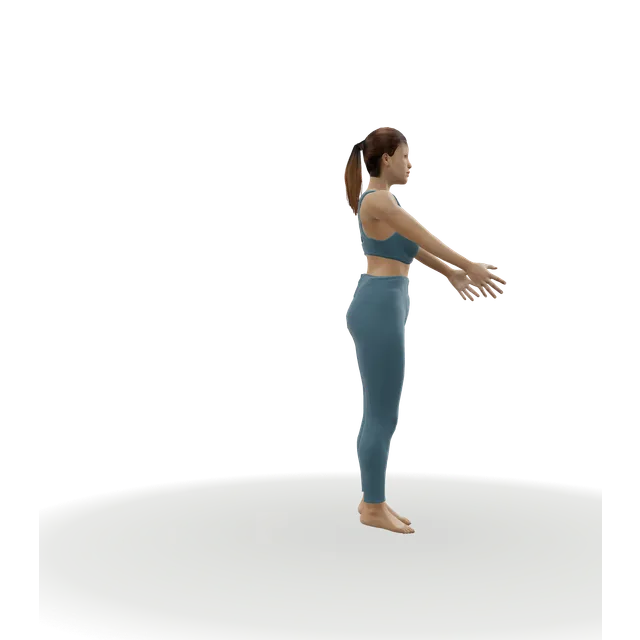
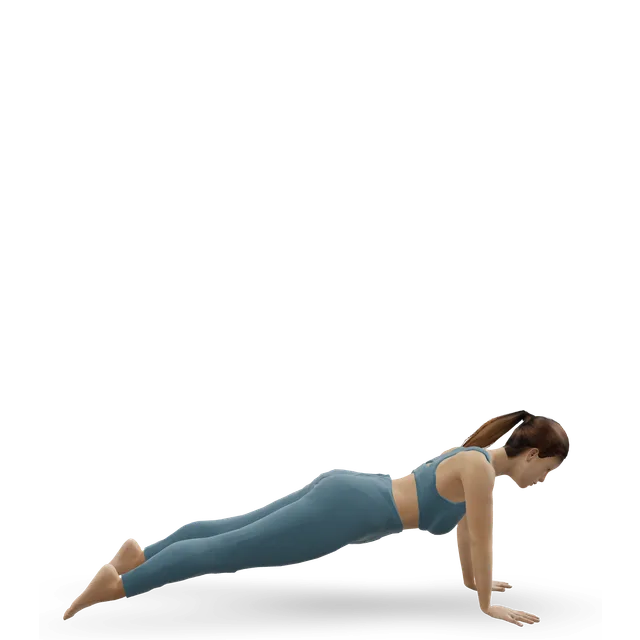
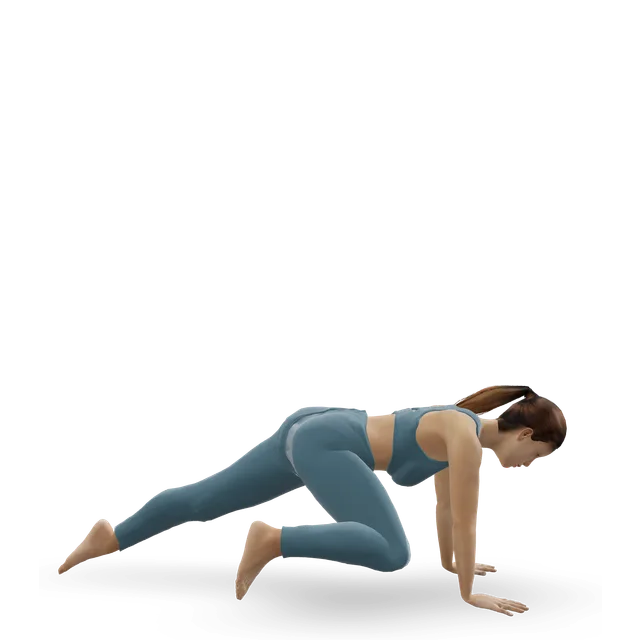
How to do a burpee
From our burpee page and NASM's squat thrust burpee guide, which adds a push-up in the plank. Breathing out as you jump back or stand up is our suggestion.
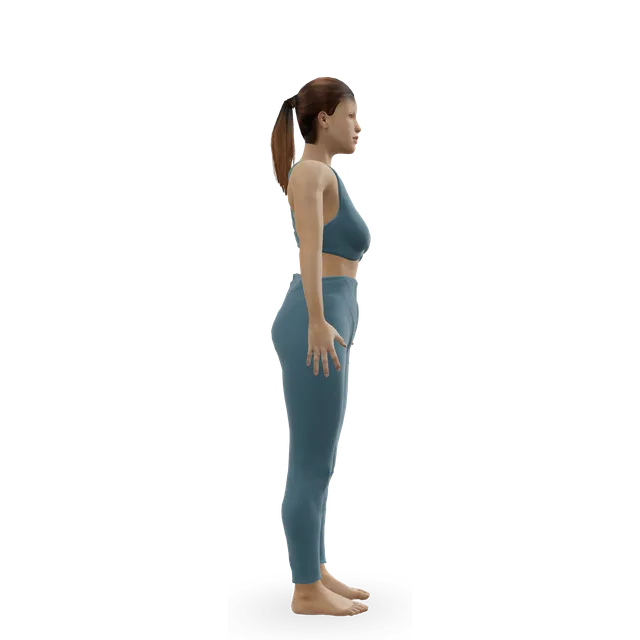
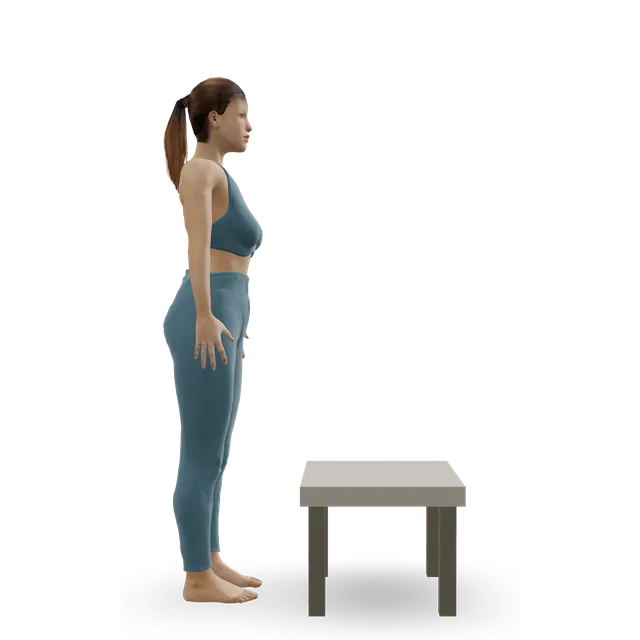
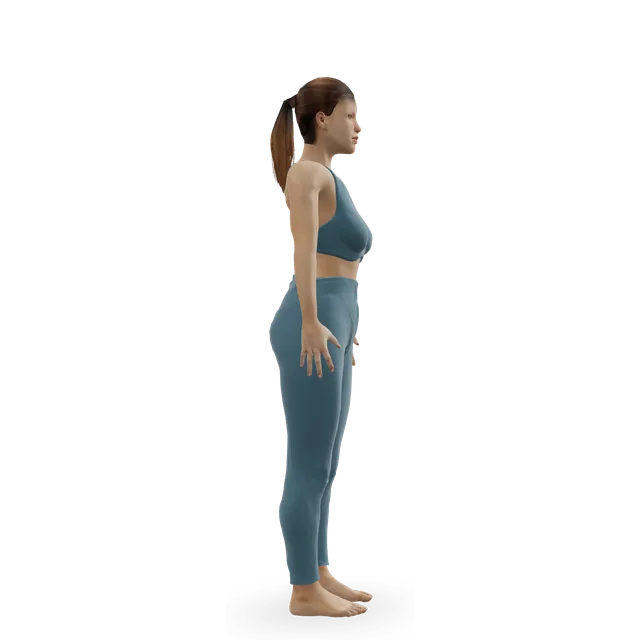
Stand with your feet about hip-width apart, on a non-slip floor with space around you.
Squat down and put your hands on the floor just outside your feet.
Jump or step your feet back to a straight plank, with your back flat and your hips level.
Jump or step your feet back in under your hips.
Stand up and jump with your arms overhead, or stand without the jump.
Land softly with bent knees, and reset before the next rep.
Loading the 3D figure…
Drag to turn
Gets into position, then repeats the movement. Technical checks passed; qualified exercise review is pending.
Practise the parts, then step-back burpees with your hands on a bench or the floor, before adding the jumps; the step jack and sit-to-stand are no-jump swaps.
NASM lists poor shock absorption as an injury risk, and knees were the most often injured area in group classes. Land softly with bent knees, and drop the jump when you're tired.
Leaking is common in jumping exercise. Squeeze your pelvic floor just before you jump, use the no-jump version for now, and see our pelvic floor guide.
It raises your blood pressure during the effort. Breathe out as you jump back or stand up (our suggestion).
What the evidence says
Close to all-out sprinting for intensityEmerging evidence
In 11 trained students doing four 30-second all-out efforts with 4 minutes' recovery, burpees averaged 77.6% of peak oxygen uptake and 84.6% of peak heart rate, against 80.4% and 86.8% for sprint cycling. The difference wasn't statistically significant, but it was about half a standard deviation, a small to medium gap.
They cost more energy than other bodyweight movesEmerging evidence
In 12 active men doing 30 seconds all-out and 30 seconds' rest, burpees used more energy than jumping jacks, mountain climbers or squat jumps: about 15 calories a minute while working. In 10 adults, burpees gave the highest heart rate and lactate of seven bodyweight exercises, and in 10 trained men, sets of 10 burpees with 2-minute rests used more oxygen than squats or deadlifts at 75% of the most they could lift once. The Compendium of Physical Activities rates vigorous interval training with burpees at 11 METs (metabolic equivalents: multiples of your resting energy use).
Circuits that included burpees raised fitnessEmerging evidence
In 22 young women, 4 weeks of 8 bursts of 20 seconds, using burpees, jumping jacks, mountain climbers or squat thrusts, raised peak oxygen uptake by about 8%, as much as treadmill training (7%), and improved muscular endurance. In 15 young adults, functional intervals including burpees raised it by about 11%, against 13% for running intervals. In 19 inactive adults, an 11-minute routine of burpees, high knees and jumps for 6 weeks raised it compared with no training. In all three, burpees were one exercise among several, and the trials were small.
In 26 Army cadets, 4 weeks of all-out burpee intervals three times a week kept aerobic fitness, anaerobic fitness and fitness test scores steady but didn't improve them, compared with about an hour of usual training. In 43 active adults, a very short burpee programme of ten 4-second efforts improved jumping, while sprint intervals improved running.
In 18 young adults, short burpee intervals felt better than sprint intervals or a 6-minute continuous run, and they enjoyed and preferred them more than the run.
In 100 adults in 6-week group strength-endurance classes, there were 9 injuries per 1,000 training hours, mostly knees and backs, and burpees and squats were the commonest movements behind them. US emergency visits linked to HIIT-style exercises rose as HIIT grew popular, but with no count of how many people took part, the risk per session is unknown.
In 452 women CrossFit competitors, 10% leaked during burpees, fewer than with skipping (39%), double-unders (37%) or box jumps (19%). In 10 women, burpees weren't among the four CrossFit exercises with the highest pressure inside the abdomen.
In 8 donated wrists, a push-up position with the wrist bent back raised pressure in part of the wrist joint, compared with a straight-wrist knuckle position.
Once or twice a week for most people, up to three, as our HIIT guide says. Trials used bursts of 20 seconds with 10 seconds' rest, repeated 8 times, or 4 to 7 all-out 30-second efforts with 4 minutes' recovery. Our HIIT workout at home uses 40 seconds on and 20 seconds off.
Our editorial starting point: 4 to 6 efforts of 20 to 30 seconds at a pace you can keep clean, with longer rests, adding an effort a week. Use the step-back version until the full burpee is steady.
As practice
NASM suggests 3 to 5 sets of 5 to 10 with full rest between sets, and stopping while your form holds.
A few easy sets most days is fine once you've built up (our suggestion), but no trial has tested daily burpee challenges, and burpee-only intervals three times a week didn't improve fitness in trained cadets. Very large, sudden amounts have caused serious muscle breakdown: one man needed surgery on both arms after 18 hours of burpees following a long work shift.
Vigorous intervals with burpees are rated at 11 METs, which by our rough arithmetic is about 13 calories a minute of actual burpees for a 70 kg person. One lab study measured about 15 calories a minute during all-out 30-second efforts. Our calories burned calculator does the sum for your weight and time.
Do as many test burpees as you can in 3 minutes: squat with your hands down, kick back to a straight-arm plank, come back to the squat and stand up. Count only full reps.
From 9,833 students aged 18 to 25 in Poland, Great Britain, Hungary and Serbia. We found no norms for other ages, so use your own first score as your baseline.
Men: 56.7 on average, with most scoring 47 to 66.
Women: 48.8 on average, with most scoring 37 to 60.
In 127 young men, scores tracked a running fitness test closely. A paced version, 48 burpees for men or 39 for women in 3 minutes with your heart rate checked at the end, was reliable in 40 athletes and moderately good at tracking changes in aerobic fitness.
It is an all-out effort: heart rate averaged about 182 beats a minute in female students. If you have heart, metabolic or kidney disease, or symptoms when you're active, check with your GP first, as our HIIT guide advises. Retest every 4 to 8 weeks at most (our suggestion).
Land softly with bent knees, squat only as deep as is comfortable, and use the step-back version while your knees are sore. Our knee pain guides have more.
If you leak or feel heaviness, squeeze your pelvic floor just before each jump (the knack), use the no-jump version for now, and train your pelvic floor, as our pelvic floor guide sets out, then build the impact back up.
Don't start burpees in pregnancy: the NHS advises against starting a new vigorous activity. If you already do them, drop the jump when it causes leaking, heaviness or pelvic pain.
The HIIT workout at home uses burpees in timed intervals; the low-impact cardio workout is the no-jump alternative, and the full-body bodyweight workout trains the parts.
Use the step-back version with your hands on a bench, or our HIIT guide's no-jump swaps, and practise getting up and down from the floor with the sit-to-stand and floor transfers in our older adults guide.
Heart, metabolic or kidney disease
Check with your GP before hard intervals, as our HIIT guide advises.
Osteoporosis
Follow our osteoporosis guide on impact and falls, and use sit-to-stands in place of the floor half if getting down is hard (our suggestion).
Warning signs
Call 999 (911 in the US): chest pain
Sudden chest pain or discomfort that doesn't go away, pain spreading to your arm, neck, jaw, stomach or back, or chest pain with sweating, feeling sick, light-headedness or breathlessness.
Get medical advice the same day: dark urine after a hard session
Contact NHS 111 (in the US, urgent care) for dark, red or cola-coloured urine, passing less urine, or weak, painful or swollen muscles after a very hard session: possible signs of rhabdomyolysis. Severe pain, swelling, tingling or weakness in a muscle group after extreme exercise needs urgent care.
A knee you can't move or put weight on, that is badly swollen or has changed shape, or that locks or gives way. A wrist with severe pain, a snap or popping noise when it happened, one you can't move or hold things with, or one that has changed shape or colour.
No exercise burns fat from one place; whole-body activity and eating less do, as our exercise for weight loss guide sets out. Burpees are a hard, whole-body exercise, about 11 METs, like other vigorous intervals.
"Burpees on their own are as good as sprint training"Mixed evidence
They come close to sprinting for intensity. Circuits that included burpees raised fitness about as much as running intervals, but burpee-only programmes kept fitness steady or improved jumping rather than running fitness.
They were a common cause of injury in group classes, mostly knees and backs, but that doesn't make them bad for healthy knees. Land softly, and use the no-jump version when anything is sore.
Squat and put your hands down, jump or step your feet back to a straight plank, bring them back in, then stand or jump up with your arms overhead and land softly. Keep your back flat in the plank and your knees soft on landing.
Do you have to do a push-up in a burpee?
No. The 3-minute test burpee has no push-up or jump, NASM's version adds one push-up, and CrossFit and HYROX ask for your chest to touch the floor. Leave the push-up out while you learn.
How many burpees should I do?
Treat hard burpees as interval training: start with 4 to 6 efforts of 20 to 30 seconds with longer rests, once or twice a week, and build up. For practice, NASM suggests 3 to 5 sets of 5 to 10 with full rest.
Is it good to do burpees every day?
No trial has tested daily burpees. Burpee-only intervals three times a week kept fitness steady but didn't improve it in trained cadets, and very large, sudden amounts have caused serious muscle breakdown. A few easy sets most days is fine once you've built up, with hard sessions once or twice a week.
How many calories do burpees burn?
Hard burpee intervals are rated at about 11 METs, which by our rough arithmetic is about 13 calories a minute of actual burpees for a 70 kg person. One lab study measured about 15 calories a minute during all-out efforts. Our calories burned calculator works it out for your weight.
Are burpees bad for your knees?
Not for most people, but the jump and landing load the knees: in group strength-endurance classes, knees and backs were most often injured and burpees were a common cause. Land softly, use the step-back version, and see our knee pain guides if they hurt.
Can I do burpees with back pain?
Try the step-back version with your hands on a bench, and keep the plank braced, because sagging hips load the lower back. If it hurts, follow our back pain guide, and call 999 for back pain with numbness in both legs or new bladder or bowel problems.
Burpees hurt my wrists. What can I do?
Put your hands on dumbbells or push-up handles to keep your wrists straighter, or on a bench. A bent-back wrist raised pressure in part of the joint in a lab study. Our wrist pain with push-ups guide has more.
Are burpees OK for the pelvic floor?
They made 10% of women CrossFit competitors leak, fewer than skipping or box jumps. Squeeze your pelvic floor just before you jump, use the no-jump version for now, and see our pelvic floor guide.
What's a good score on the 3-minute burpee test?
For 18 to 25-year-olds, the average was about 57 for men and 49 for women, with most men scoring 47 to 66 and most women 37 to 60. We found no norms for other ages, so compare yourself with your own first score.
How do you do a HYROX burpee broad jump?
Chest to the floor, step or jump your feet back in, then jump forward with both feet taking off and landing together, with your hands no more than 30 cm in front of your toes when you go down. The station is 80 metres, so the number of burpees depends on how far you jump.
Can I do burpees while pregnant?
Don't start them in pregnancy: the NHS advises against starting a new vigorous activity. If you already do them, drop the jump and stop if you notice leaking, heaviness or pelvic pain.
Exercise education, not a personal prescription, and clinical review of these guides is pending. Check with a GP before starting hard training if you have a heart condition, chest pain, dizziness or breathlessness when active, and stop for sharp or increasing pain. Health disclaimer.