Yoga guide

Yoga for shoulder impingement: arms overhead and weight on your hands, the rotator cuff, the poses to change, and what the evidence shows

Shoulder impingement means pain on the outside of the shoulder and upper arm, worse lifting the arm out to the side or overhead, often at night; it's also called subacromial pain or rotator cuff related shoulder pain. The old explanation, a tendon pinched under the bone, is doubtful: shaving the bone to make room did no better than a placebo operation in two trials. Exercise is the first treatment, and the exercise that helps strengthens the rotator cuff and the muscles around the shoulder blade, gradually.

No trial has tested yoga for impingement, but yoga can supply much of that exercise if it's adapted: arms kept low at first, weight on the hands built up from a wall to the floor, and arms brought back overhead in front of you rather than in a wide sweep.

This guide covers what impingement is, how to raise your arms in yoga, building up to downward dog and plank, the poses to change, what the evidence shows and the classes to follow. Shoulder or arm pain with chest pain or breathlessness can be a heart attack: call 999.

The short version

A name for a kind of pain, not proof of a pinch

A Dutch guideline says the pinching explanation isn't enough to account for the problem, and renamed it subacromial pain syndrome; others call it rotator cuff related shoulder pain. The NHS still describes a tendon that swells and rubs against tissue or bone.

Sources 1, 2, 3

Making room with surgery did no better than a placebo operation

In CSAW (313 people) and FIMPACT (210 people, followed for 10 years), shaving the bone did no better than a placebo operation, and a guideline panel recommends strongly against it.

Sources 4, 5, 6

The right exercise kept people off the surgery list

In 102 people already waiting for surgery, rotator cuff and shoulder-blade strengthening, with pain allowed up to 5 out of 10, meant 20% chose surgery against 63% with general exercises, and the gap held at 10 years.

Sources 7, 8

A home programme does most of the work

In GRASP (708 people), one physiotherapy session and a self-guided home programme did as well as up to six sessions of progressive exercise over a year.

Source 9

No yoga trial in impingement

We found no trial of yoga in people diagnosed with impingement; the nearest is a weak 45-person trial in young overhead athletes with rotator cuff tendon pain.

Sources 10, 11

Change, don't stop

The NHS advises not stopping moving your shoulder completely, but not carrying on with activities that involve repeatedly lifting your arm above your head while it hurts; the 2026 Dutch guideline update advises moving within your comfort zone and building load gradually. In yoga: fewer sun salutations, arms forward rather than in wide sweeps, weight on the hands built up from a wall, and chaturanga last.

Sources 3, 12

What shoulder impingement is

The pain

The NHS lists "pain at the top and the outside of your shoulder", "shoulder pain that's worse when you lift your arm, especially when you lift it above your head" and "weakness in your arm". The Dutch guideline describes shoulder pain around the bony point at the top of the shoulder (the acromion), not caused by an injury, often worse during or after lifting the arm.

Sources 3, 1

The namesEmerging evidence

Impingement, subacromial pain, rotator cuff tendinopathy or tendinitis, subacromial bursitis and rotator cuff related shoulder pain all describe much the same picture, and a review says these labels relate more to a guess about the cause than to proof of it. The US orthopaedic surgeons' patient page still describes the bone rubbing on the tendon and surgery to make more room; the placebo-controlled trials don't support that model.

Sources 13, 2, 14

Scans of shoulders that don't hurtEmerging evidence

Changes under the shoulder's roof are common in shoulders without pain, often as common as in painful ones, and full-thickness rotator cuff tears showed on ultrasound in 11% to 17% of painless shoulders in two population samples.

Sources 15, 16

How it usually goes

The NHS says it usually gets better in a few weeks or months, though in one study quoted in a review, 54% still had symptoms after 3 years. In the Holmgren trial's 10-year follow-up, rotator cuff tears on scans rose from 28% to 55% whether or not people had surgery.

Sources 3, 13, 8

What the evidence says

No trial has tested yoga for impingement, so this section gives the surgery and exercise trials, the nearest yoga studies and the injury surveys.

Surgery to make room: no better than placeboStrong evidence

In CSAW (313 people at 32 UK hospitals, who had already tried exercise and at least one injection), shaving the bone gave no extra benefit at 6 months over a keyhole look inside the joint alone; both operations were slightly better than no treatment, but not by an amount that matters. In FIMPACT (210 people), shaving the bone gave no benefit over a placebo operation or exercise therapy over 10 years. A Cochrane review rates this as high certainty, and a BMJ review adds that the surgery probably carries a small risk of serious harm.

Sources 4, 17, 18, 5, 19, 20

What guidelines sayStrong evidence

A BMJ guideline panel says this surgery should not be offered, though there is uncertainty about which alternative is best, and the Dutch guideline has recommended strongly against it since 2021. Both put exercise first.

Sources 6, 12, 1

Specific exercise kept people off the surgery listEmerging evidence

In the Holmgren trial (102 people on a surgical waiting list), two lowering exercises for the rotator cuff, three for the shoulder-blade muscles and a stretch for the back of the shoulder, 3 sets of 15 twice a day for 8 weeks with pain allowed up to 5 out of 10, meant 20% chose surgery against 63% with general movement exercises. The gap held at a year (24% against 63%) and at 10 years (35% against 65%). It was a single-centre trial.

Sources 7, 21, 8

Exercise is the first treatment, with modest effectsEmerging evidence

Reviews find exercise better than no exercise, and specific exercise better than general exercise, on very low quality evidence. A review of 16 reviews makes a strong recommendation for exercise as the first treatment, and in a network of 99 trials (6,764 people), only exercise held up once trials at high risk of bias were removed. The best type, dose and length are still uncertain.

Sources 22, 23, 24, 25

One session plus a home programmeStrong evidence

In GRASP (708 people at 20 NHS trusts), one session with a physiotherapist plus a supported home exercise programme did as well over a year as up to six sessions of progressive exercise, and a steroid injection gave no long-term benefit. Both groups exercised, so this shows that more supervision didn't add benefit, not that exercise doesn't work.

Source 9

No yoga trial in impingementStrong evidence

Our searches of PubMed and Europe PMC found no trial of yoga in people diagnosed with shoulder impingement or subacromial pain.

Source 10

The nearest yoga studiesMixed evidence

In 45 young overhead athletes with rotator cuff tendon pain, shoulder-blade exercises plus yoga poses (including downward dog, upward dog and a modified plank) improved most, but there was no usual-care group, results were only at 8 weeks, and some range changes are hard to believe. In 72 people with frozen shoulder, standing yoga poses added nothing to usual care over a month, and a review calls the evidence on yoga and shoulder mobility limited.

Sources 11, 26, 27

Shoulder injuries in yogaMixed evidence

Shoulders made up 9.0% of yoga injuries seen in US emergency departments over 20 years, and rotator cuff injuries were 6 of 89 yoga injuries at one US clinic. In a survey of 1,702 German practitioners, hand, shoulder and head stands were the practices most linked to sudden problems, and practising alone without supervision raised the risk. In randomised trials, yoga was about as safe as usual care and other exercise.

Sources 28, 29, 30, 31

The 5 out of 10 rule

How much pain is OK

During shoulder strengthening, pain up to about 5 out of 10 is acceptable, and a little is expected. By your next session it should be back to where it was before. If it isn't, use a smaller range or less load next time, not nothing. This is how the Holmgren trial of 102 people set each person's load, and our shoulder guides use the same rule.

Stop for sharp pain, a feeling that the shoulder is slipping, pins and needles or numbness down the arm, or pain that is still worse by your next session after strengthening.

Source 7

Change, don't stop

The NHS advice for impingement: "do not stop moving your shoulder completely", but "do not carry on with activities that caused your shoulder pain or involve repeatedly lifting your arm above your head (such as swimming or playing tennis)". Repeated sun salutations are the yoga version of repeated overhead lifting (our reading).

The 2026 Dutch guideline update advises moving within your comfort zone, avoiding activities that are too long, heavy or frequent, and building up the shoulder's load gradually.

Sources 3, 12

Gentle range and arms-low standing poses

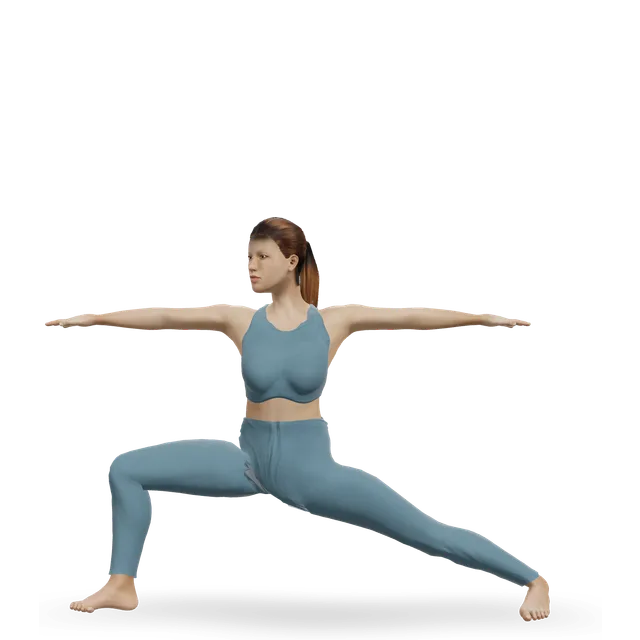
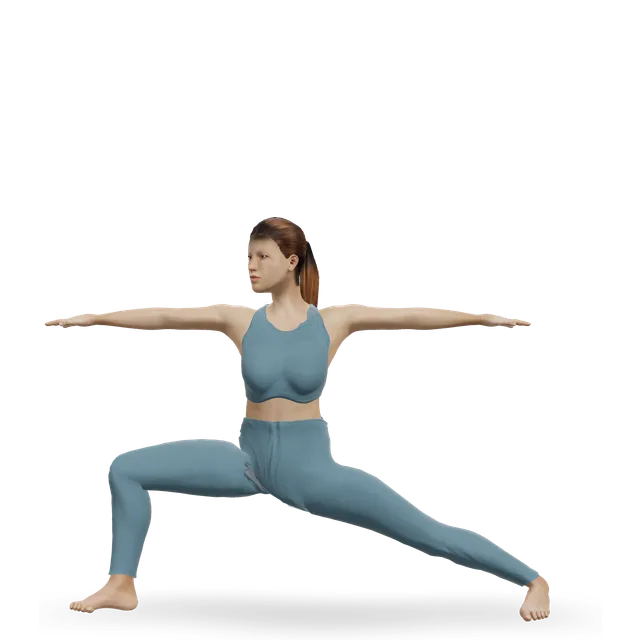
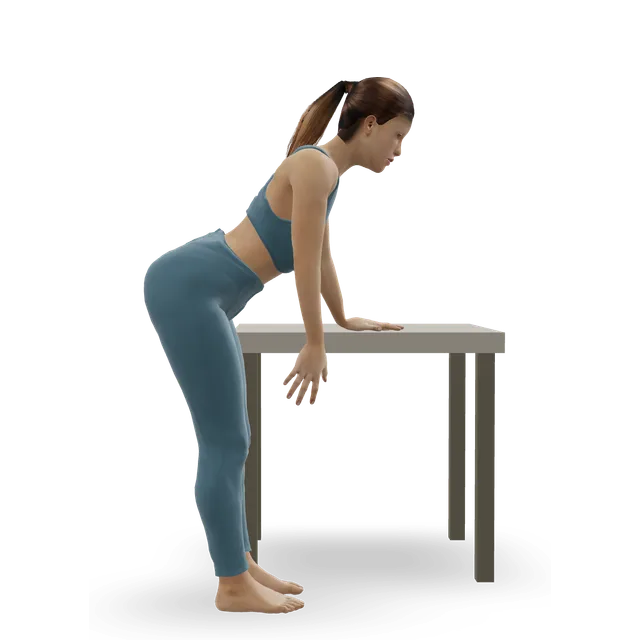
From the first block of our yoga for shoulder pain class unless marked. Pendulum: about 1 minute (10 small circles each way), 2 to 3 times a day (the move page's dose). Table slide: 10 slow reps, sliding only as far as is comfortable (adapted from the move page's dose). Shoulder rolls: 10 slow circles each way, small if it's sore (adapted from the move page's dose). Thoracic rotation: 6 rotations per side, moving with the breath (the move page's dose). Slow breathing: 2 minutes sitting tall, shoulders soft. Mountain pose: 5 breaths, palms turned forward. Chair pose: 3 holds of 15 seconds, arms forward at shoulder height or hands on your thighs. Warrior II: 3 breaths each side, hands on your hips if holding the arms out hurts.

Rotator cuff and shoulder-blade strength

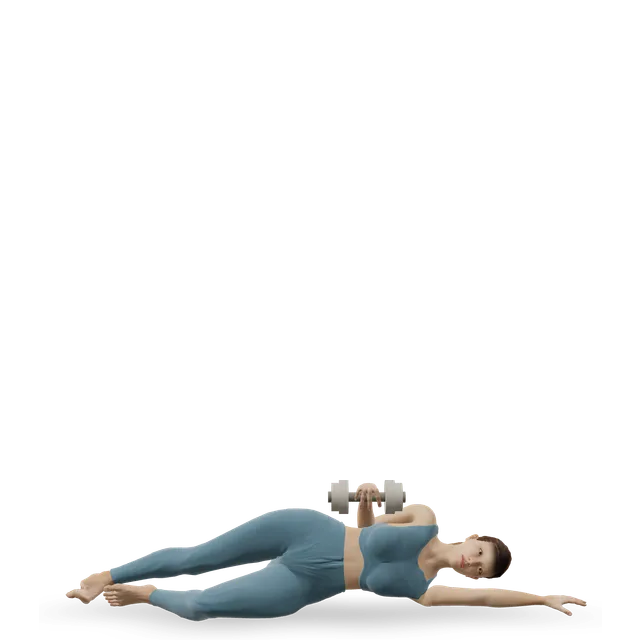
The exercise that kept people off the surgery list. Doses from our shoulder impingement guide's stages, which follow the Holmgren trial, unless marked. Band turn-out: 2 sets of 10 to 15, light band, elbow at your side (our yoga for shoulder pain class), building to 3 sets of 15. Side-lying turn-out: 3 sets of 15, once a day, lowering over 3 seconds. Scaption (raising the arms forward and a little out): 3 sets of 15, thumbs up, to shoulder height, lowering over 3 seconds. Face-down Y-T-W raises: 2 to 3 rounds of 8. Locust: 3 holds of 3 to 5 breaths, arms by your sides, arms forward only when that's pain-free (our yoga for shoulder pain class). Band row: 2 to 3 sets of 15 (adapted from the move page's dose). Scapular push-up: 3 sets of 10 to 15, on a wall or bench first, once the band work is comfortable (our suggestion on timing). Cross-body stretch: 3 holds of 30 to 60 seconds, only if there's no pinch at the front.

Weight on your hands, step by step

What's been measuredEmerging evidence

In 20 adults, plank, chaturanga, downward and upward dog and dolphin put a peak of 0.71 to 1.08 times body weight through the two hands together, and side plank 0.67 times body weight through one arm. No study has measured the load on the shoulder joint itself, or the space under the shoulder's roof, in these poses.

Sources 32, 33

Raised hands and dropped knees mean lessEmerging evidence

In 23 adults, push-ups with the hands raised or from the knees put less force through the hands than standard push-ups. More weight on the arms in plank variations meant more shoulder and shoulder-blade muscle work: useful once your shoulder can take it. In 15 static yoga poses, the shoulder-blade muscles worked at 3% to 57% of their maximum, and locust with the arms forward worked the lower trapezius hardest.

Sources 34, 35, 36

The push-up plusMixed evidence

Pushing the shoulder blades apart at the top of a push-up works the muscle that holds them to the ribs, but in a bone-pin study the wall version put the shoulder blade in a position the authors link with impingement, and they advise caution early in rehabilitation. Add it after the band work is comfortable (our suggestion).

Source 37

An order to follow

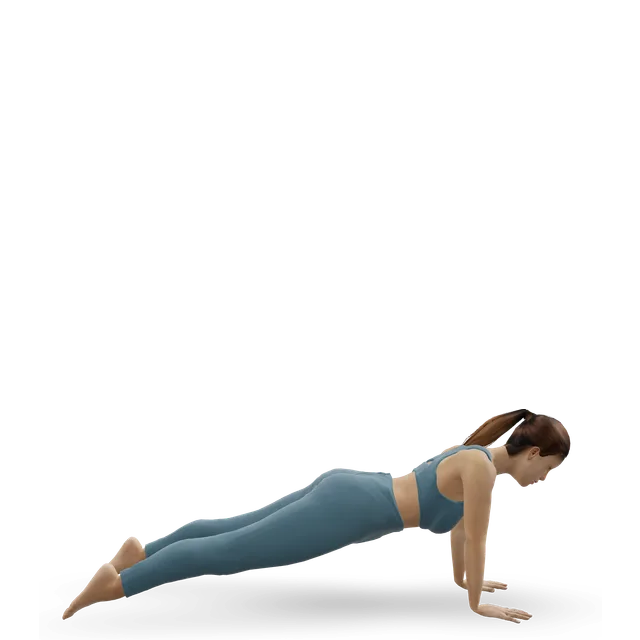
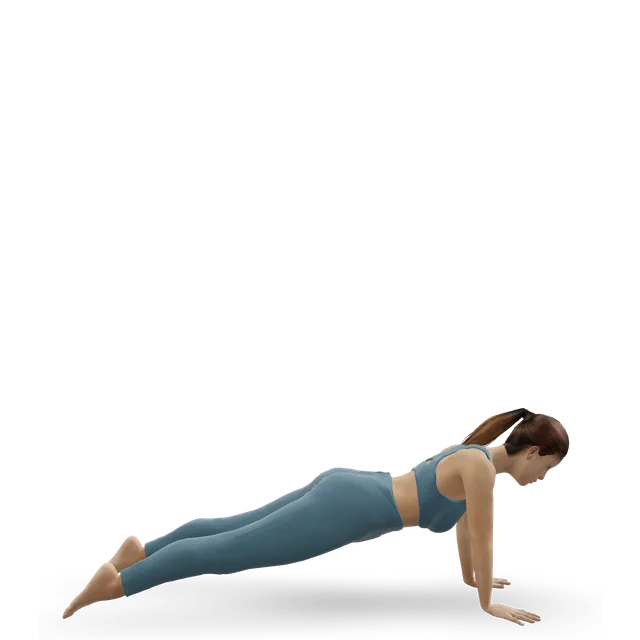
Our editorial order, the same as in our shoulder pain and rotator cuff guides: wall push-ups, then hands on a table or chair seat, then knees down on the floor (cat-cow, a knee plank), then a full plank and downward dog, with chaturanga last. Move on when the step before is easy and pain stays within the 5 out of 10 rule.

Chaturanga and flowing classes

While your shoulder hurts, lower with your knees down, go only halfway, or leave chaturanga out, keeping your shoulders above your elbows. Sun salutations take the shoulders from fully overhead and back down in every round, and the muscles worked harder moving between poses than holding them, so do fewer rounds and move slowly.

Sources 38, 39

Building up weight on your hands

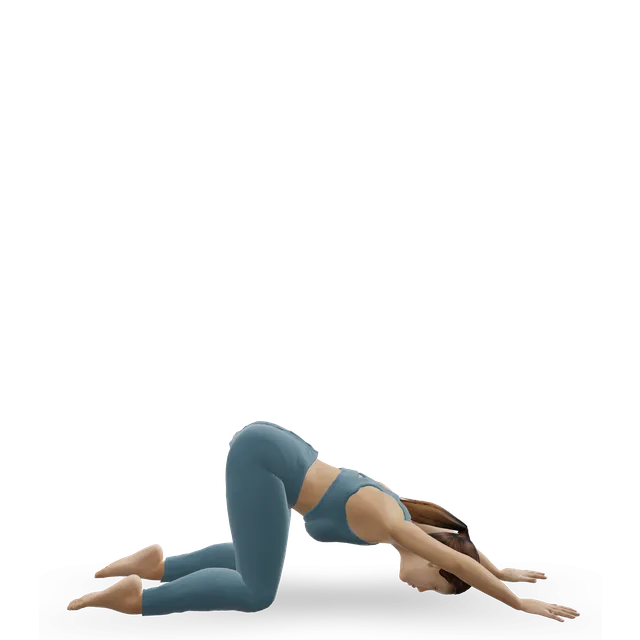
Wall push-up: 2 sets of 10, small range (our yoga for shoulder pain class). Cat-cow: 8 waves, slower than feels natural (the move page's dose), weight spread through the hands. Bird dog: 5 each side, reaching a leg only if reaching the arm hurts (the class). Knee plank: 3 holds of 10 to 20 seconds, on forearms and knees, shoulders over elbows (the class). High plank: holds of 10 to 20 seconds, building towards 3 holds of 15 to 30 seconds (adapted from the move page's dose), or hands on a bench. Downward dog: built up in the steps below, holds of 10 to 20 seconds, hands shoulder-width or a little wider, elbows soft (our suggestion). Chaturanga: last, knees down, halfway, or left out.

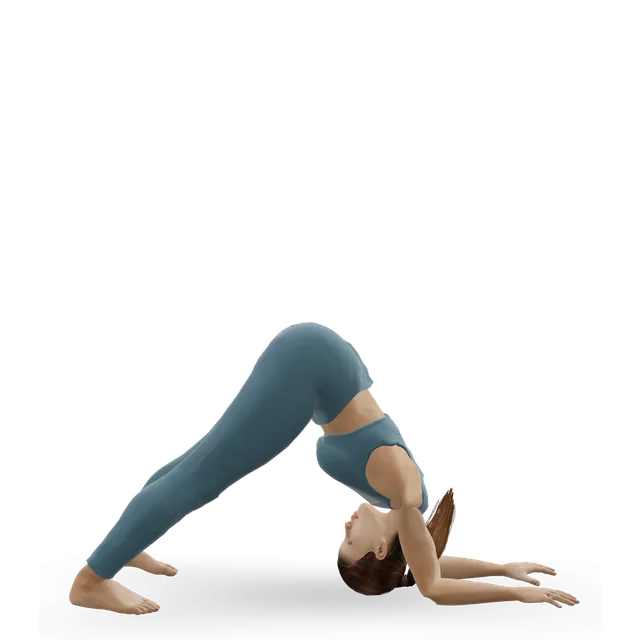
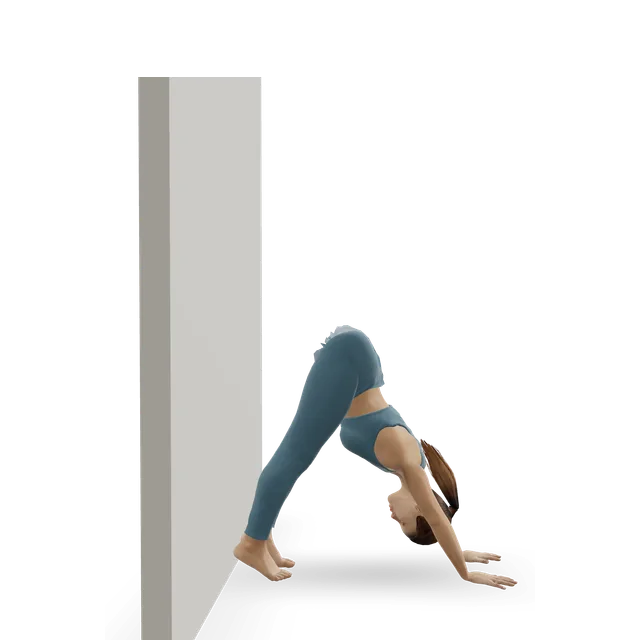
Building up to downward dog

The same steps as our yoga for shoulder pain guide: our editorial progression, built from the push-up studies (less force with the hands raised) and the hand-force study; no study has measured shoulder load in downward dog. With glaucoma or high blood pressure, keep your head higher, with your hands on a wall or chair.

  1. Start at a wall: hands on the wall at shoulder height, walk your feet back and hinge at the hips until your arms and back make one line. Hold for 3 to 5 breaths.
  2. When that's easy, do the same with your hands on a chair seat or a table, knees soft.
  3. Then on the floor: from all fours, tuck your toes and lift your knees a little, keeping them bent. Lower your knees after 2 or 3 breaths.
  4. When that's easy, lift your hips up and back into the full pose, bending your knees generously so your back stays long.
  5. Spread your fingers and press the floor away, and let your head hang between your arms with your neck soft.
  6. Stop if you feel a pinch or sharp pain at the front or top of the shoulder, and go back a step.

See the movement on the 3D figure: Downward-facing dog (Adho Mukha Svanasana)

Arms overhead, brought back gradually

Where the gap is narrowestMixed evidence

In healthy shoulders, the gap under the shoulder's roof was narrowest at about 90 degrees, around shoulder height, not fully overhead, and higher up the narrowest point moved away from the rotator cuff tendon. With the arm at 90 degrees holding a weight, turning the arm out gave more space than keeping it neutral. These were all healthy people, with the arm not bearing weight.

Sources 40, 41, 42

How to bring your arms back up

Raise your arms in front of you rather than out to the side, shoulder-width apart, thumbs up or palms facing each other, and only as high as stays comfortable. Don't interlace your fingers and force your elbows straight, and let your shoulder blades move up and around with your arms rather than pinning them down.

This is our suggestion, from imaging of healthy shoulders; no study has tested these cues in people with impingement. Pain through the middle of the range on the way up is a reason to stay lower for now.

In a class

Our sun salutation page says to substitute knees-chest-chin and cobra freely. Take fewer rounds, raise the arms in front rather than in a wide sweep, and keep the top hand on your hip in side bends such as reverse warrior and extended side angle while it hurts (our suggestion).

Poses for bringing the arms back overhead

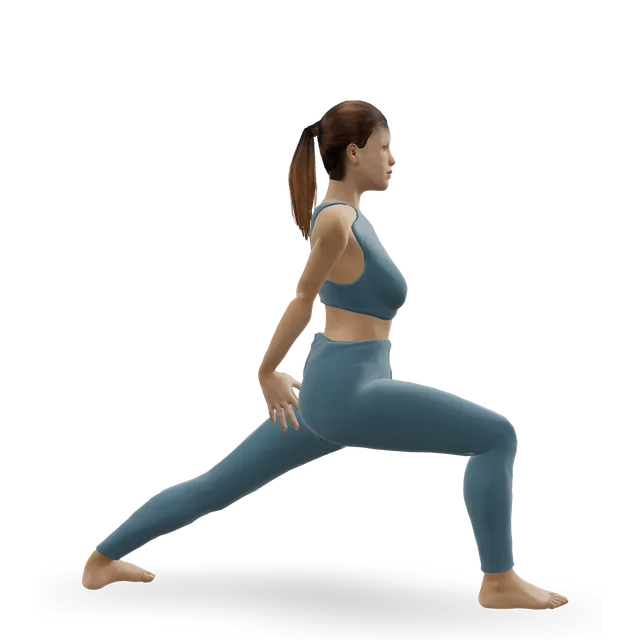
Arm positions are our suggestion. Breath reach: 5 breaths, exhale longer than inhale (the move page's dose), raising the arms in front of you, thumbs up, only as high as stays pain-free. High lunge and warrior I: hands on your hips first, then arms forward and up, shoulder-width apart. Sun salutation: fewer rounds, arms up in front, knees down for the lowering.

Poses to change or leave out while it hurts

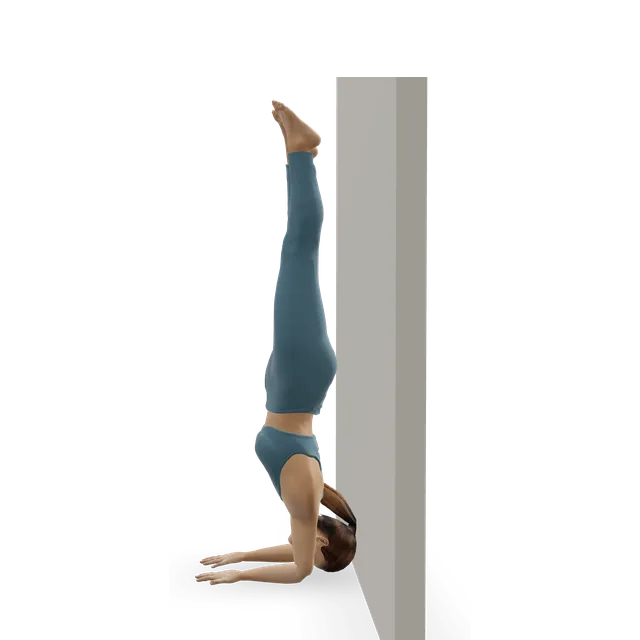
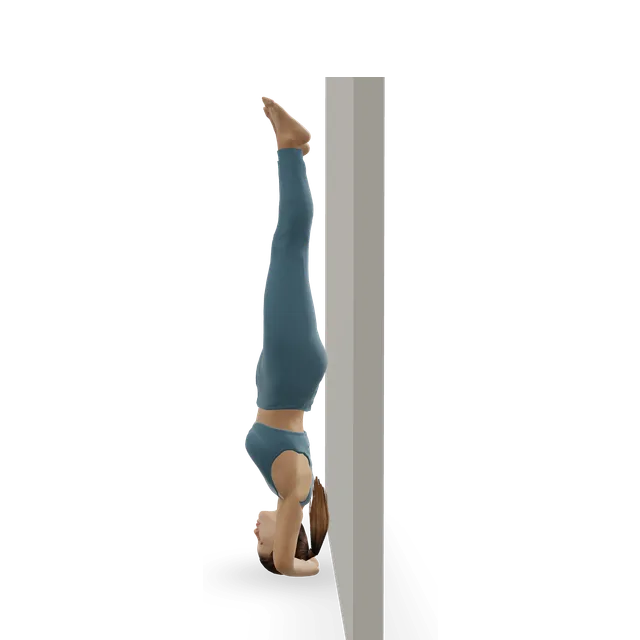
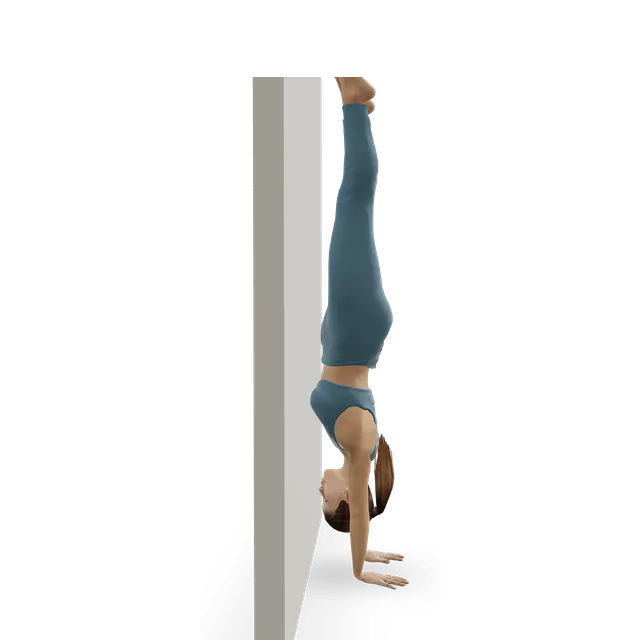
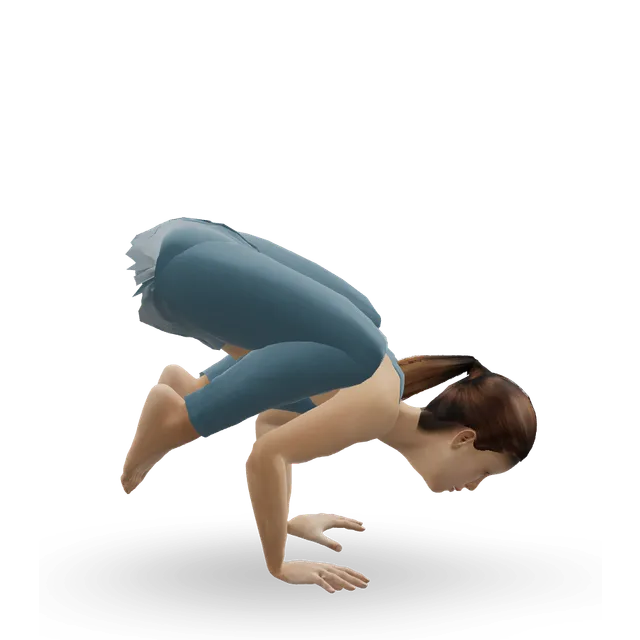
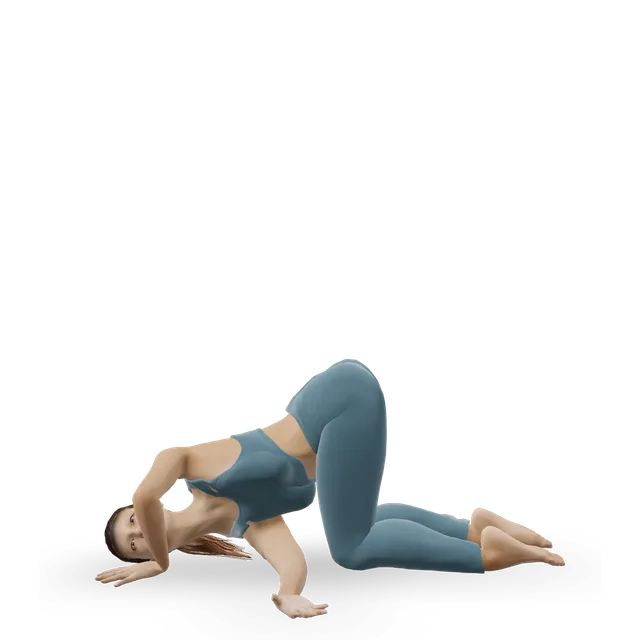
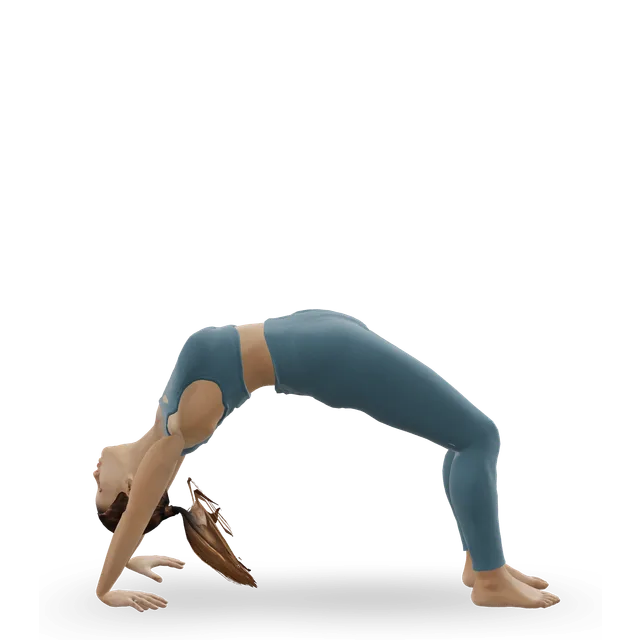
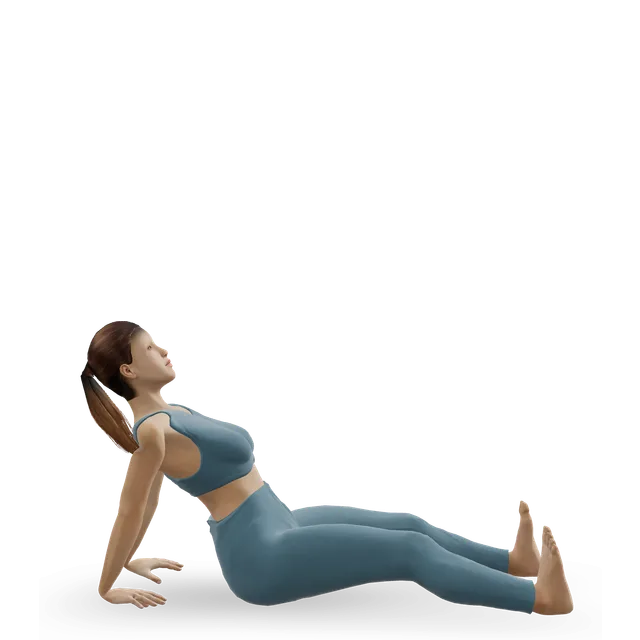
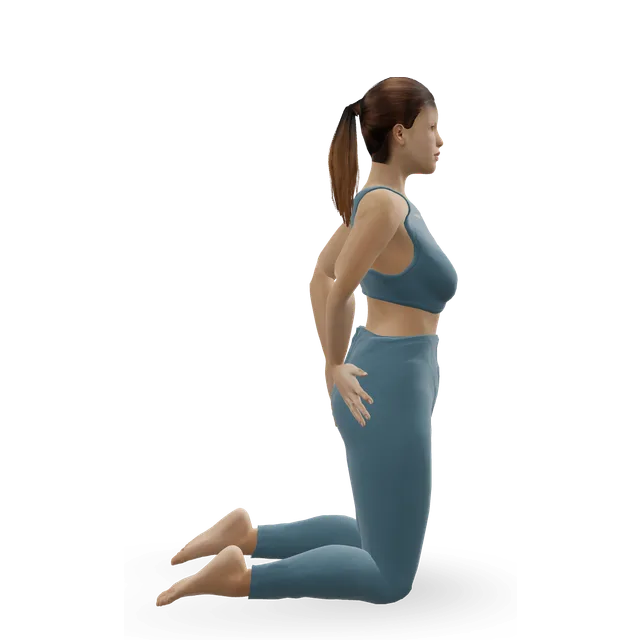
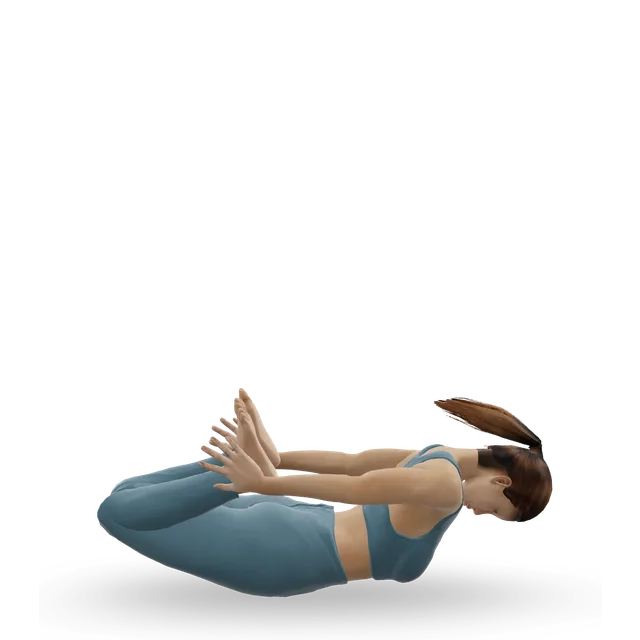
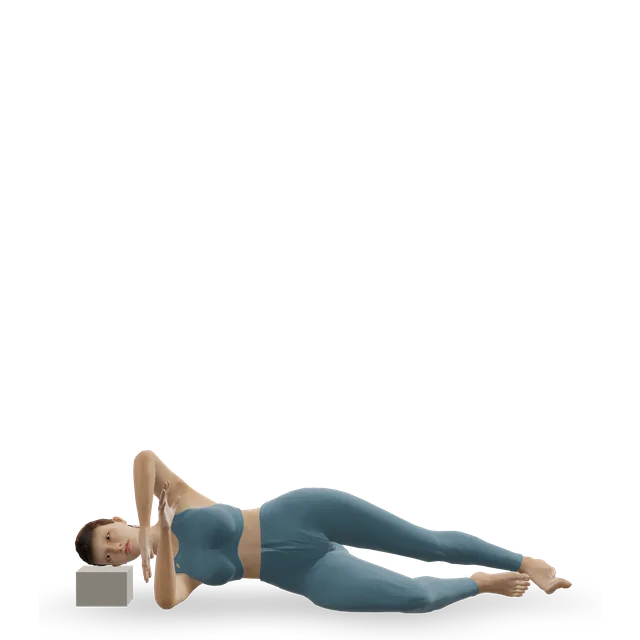
Most can come back as strength returns. Full chaturanga and repeated vinyasas: knees down, halfway, or skip. Upward-facing dog: its page says a recent shoulder injury means choose cobra instead, so use a low cobra. Dolphin: its page says shoulder impingement should be cleared with a clinician before you load overhead like this; the same goes for forearm stand, headstand, handstands and crow. Extended puppy: its page says skip it with a current shoulder injury. Binds such as humble warrior, and cow face and eagle arms, can aggravate a sore shoulder. Side plank: from the knees first. Sleeper stretch: its page says pressing through a pinch at the front of the shoulder can aggravate impingement. Thread the needle: ease off if it presses painfully into the shoulder you're lying on. Wheel, upward plank, camel and bow load the arm behind or overhead: later, if at all. Side bends with the top arm over the ear, such as reverse warrior and extended side angle: keep the top hand on your hip (our suggestion).

Classes to follow

Our yoga for shoulder pain class was built for this: pain-free range, arms-low standing poses, band turn-outs, a knee plank and locust, building up weight on the arms; three times a week is our editorial starting point. The shoulder mobility and stability routine has the band rotator cuff and shoulder-blade work. Once overhead work is comfortable, the Pilates for shoulder pain class and our yoga for swimmers class, a dryland class for the shoulder blades, add more.

Yoga for shoulder pain: a 20-minute sequence that builds up weight on the arms

A 20-minute yoga sequence for shoulder pain: gentle movement, standing poses with the arms low, shoulder strength, and weight on the arms built up from the wall.

20 minBeginner16 movesA bench or box, A wall

Shoulder mobility and rotator cuff routine (with a band)

A 25-minute band routine for healthy shoulders: move the shoulder and upper back through their range, then strengthen the rotator cuff and shoulder blades.

25 minBeginner12 movesA wall, A band

Upper back mobility routine

A 12-minute routine for a stiff upper back and rounded shoulders: chin tucks, wall angels, Y-T-W raises and open books.

12 minBeginner8 movesA foam roller, A wall

Seated chair yoga: 15 minutes, no standing

A 15-minute chair yoga routine done entirely sitting: slow breathing, neck, shoulder and wrist stretches, seated twists and side bends, and a calm finish.

15 minBeginner16 movesA bench or box

Step-by-step Pilates for a sore shoulder: a 20-minute class

A 20-minute Pilates class for a sore shoulder: gentle range first, then shoulder-blade and rotator cuff strength, then light weight on the arms, in steps.

20 minBeginner15 movesA bench or box, Other / check instructions

Yoga for swimmers: a 25-minute dryland class for the upper back, shoulder blades and hips

A 25-minute dryland yoga class for swimmers: upper-back turns, shoulder-blade and trunk holds, hips for kicking and slow breathing, safe for loose shoulders.

25 minBeginner16 movesA wall

Warning signs: when to get help

These are the warning signs from our shoulder pain, shoulder impingement and rotator cuff guides, word for word. This is general information, not a diagnosis. A&E means accident and emergency; in the US, call 911 for 999.

Call 999 or go to A&E

  • Call 999: shoulder or arm pain with chest pain that feels tight or squeezing, or chest pain that spreads to your arms, neck or jaw, especially with shortness of breath, sweating or feeling sick. It could be a heart attack.
  • Call 999 or go to A&E: after a fall or injury, your shoulder looks out of place or has changed shape, you cannot move your arm, or your shoulder is painful, bruised or swollen. Do not drive yourself, and do not try to put it back in yourself.
  • Call 999: you suddenly can't fully lift both arms and keep them there, because of weakness or numbness in one arm, especially if one side of your face droops or you slur your words or sound confused. It could be a stroke. Call even if the signs have stopped.

Sources 43, 44

Get help from NHS 111

Get help from NHS 111: pain or tightness in your chest, neck, shoulders, jaw or arms that comes and goes, often brought on by exercise, stress, emotion or cold and easing after a few minutes' rest. It can be angina, a sign of a heart problem. If you've been diagnosed with angina, get help from NHS 111 too if it feels worse than before, is happening more often, lasts longer or happens when you're resting.

Source 43

Get help the same day

  • Same day (GP or NHS 111): sudden weakness lifting the arm after an injury or fall. A rotator cuff tear caused by an injury needs urgent referral to a shoulder specialist. After a dislocation in anyone over 40, the rotator cuff should be checked: about 40% have a tear.
  • Same day (GP or NHS 111): the shoulder or arm is hot, swollen or red, or you have a high temperature (although not everyone has one) or feel unwell. A joint infection needs same-day care.
  • Same day (GP or NHS 111): sudden or very bad shoulder pain; you cannot move your arm; the arm or shoulder is badly swollen or has changed shape; pins and needles that do not go away; no feeling in the arm; the arm is hot or cold to the touch; pain that started after an injury such as a fall; or severe pain in both shoulders.

Sources 43, 45

See a GP or physiotherapist soon

  • Pain that is getting worse or has not improved after 2 weeks of looking after it yourself, or it is very hard to move your arm. In many areas you can refer yourself to physiotherapy.
  • Not improving after a good 3 months of exercise, or the arm is clearly weak: ask for a specialist opinion.
  • Pins and needles or a cold arm alongside neck pain, or a new loss of strength or feeling in the arm that you cannot explain (a possible nerve problem).
  • A past history of cancer, an unexplained lump or swelling, weight loss, or pain that is constant and does not ease when you change position.
  • See a GP if you have pain and stiffness for more than a week, especially if you're over 50, it's in both shoulders (often the neck and hips too) and the stiffness lasts longer than 45 minutes in the morning. It can be polymyalgia rheumatica.

Sources 43, 3, 46

During yoga

Stop and get checked if you get a sharp pain with a sudden loss of strength: a small tear can get bigger.

Stop for sharp pain, a feeling that the shoulder is slipping, pins and needles or numbness down the arm, or pain that is still worse by your next session after strengthening.

Stop an exercise, or shrink its range, if you get the feeling the shoulder is about to slip out (editorial).

A joint pain that is sharp, gets worse during a session, lingers into the next day or changes how you move is a reason to use an easier version, and to see a GP or physiotherapist if it keeps happening (the rule in our plans). Muscle soreness for a day or two after something new is normal. In a hot class, stop if you feel dizzy, sick or unwell; our hot yoga guide lists the signs of heat illness.

Source 7

Head-down poses

With glaucoma, or high blood pressure that isn't under control, skip headstands, shoulder stands and long head-down holds. With osteoporosis, swap deep forward folds for a flat-back hinge from the hips, and twist smoothly. In pregnancy, our yoga in pregnancy guide covers the changes. NCCIH advises beginners to avoid headstands, shoulder stands, the lotus position and forceful breathing.

Source 47

Chest pain or fainting: call 999

Call 999 if:

  • You get sudden pain or discomfort in your chest that doesn't go away; it can feel like squeezing or pressure, burning or indigestion.
  • The pain spreads to your left or right arm, or your neck, jaw, stomach or back.
  • You have chest pain and feel sweaty, sick, light-headed or short of breath.
  • Someone faints while exercising, can't be woken within 1 minute, or has chest pain or a pounding, fluttering or irregular heartbeat.

Sources 48, 49

Unusual breathlessness

Call 999 or go to A&E (accident and emergency) straight away for severe difficulty breathing (gasping, choking or not able to get words out), a chest that feels tight or heavy, pain that spreads to your arms, back, neck and jaw, lips or skin turning very pale, blue or grey, or sudden confusion. If you're more short of breath than usual, or your heart is racing, fluttering or skipping beats, contact NHS 111.

Source 50

Before you start

The NHS advises getting advice from a healthcare professional first if you have a health problem, an injury or symptoms, or have recently had a heart attack or an operation.

You can say no to any hands-on adjustment, and a teacher registered with Yoga Alliance must get your explicit consent each time.

Myths

"Impingement means bone rubbing on the tendon, so you need more space"Strong evidence

A guideline says the pinching explanation isn't enough to account for the problem, and taking bone away did no better than a placebo operation, up to 10 years later.

Sources 1, 4, 5, 19

"Never raise your arms overhead again"Emerging evidence

In healthy shoulders, the gap under the shoulder's roof is narrowest around shoulder height, not fully overhead, and loading the shoulder gradually is the treatment. Arms come back overhead as strength returns, raised in front and within comfort.

Sources 40, 41, 7, 12

"Rest your shoulder until it stops hurting"Strong evidence

The NHS says not to stop moving your shoulder completely, and the programme that kept people off the surgery list allowed pain up to 5 out of 10.

Sources 3, 7

"Downward dog heals impingement"Strong evidence

No yoga trial in impingement exists, and downward dog puts a lot of weight on the hands with the arms overhead, which a sore shoulder may need to build up to.

Sources 10, 32

"An injection or more physiotherapy sessions is what fixes it"Strong evidence

In GRASP, one session plus a home programme did as well as up to six sessions, and the steroid injection's benefit didn't last.

Source 9

"Pull your shoulders down when your arms go up"Mixed evidence

No trial has tested this cue. Raising the arm normally needs the shoulder blade to turn upward with it, and in a lab study turning the arm out gave more space at shoulder height. Let your shoulder blades move with your arms rather than pinning them down (our suggestion).

Sources 42, 40

Questions people ask

Is yoga good for shoulder impingement?

It can be, if it includes gradual strength work for the rotator cuff and shoulder blades and builds up weight on the hands slowly. Yoga hasn't been tested for impingement itself; the evidence is for specific strengthening exercise.

Can I do yoga with shoulder impingement?

Usually yes, with changes: arms low at first, fewer sun salutations, knees down in plank and chaturanga, and pain kept to about 5 out of 10 and back to where it was by your next session. Tell the teacher, and say no to hands-on adjustments that push your arms further.

Which yoga poses should I avoid with shoulder impingement?

While it hurts: full chaturanga and repeated vinyasas, upward dog (use a low cobra), dolphin, headstand, forearm stand and handstand, binds such as humble warrior and cow face arms, and the sleeper stretch. Most can come back as strength returns.

What are the best yoga poses for shoulder impingement?

No pose is proven best. Try locust with your arms by your sides, then forward; cat-cow and a knee plank; wall push-ups; warrior II with your hands on your hips; and band turn-outs with your elbow at your side. In a lab study, locust with the arms forward worked the lower shoulder-blade muscles hardest of 15 poses.

Is downward dog bad for shoulder impingement?

Not necessarily, but it puts a lot of your weight on your hands with your arms overhead. Build up from hands on a wall, then a chair, then knees bent on the floor, and stop for a sharp pinch at the front or top of the shoulder.

Is chaturanga bad for shoulder impingement?

No study has measured its load on the shoulder, but the hands carry up to about body weight at its peak. Lower with your knees down, go only halfway, or leave it out until wall and knee push-ups are easy, and keep your shoulders above your elbows.

How should I raise my arms in yoga with impingement?

Lift them in front of you, shoulder-width apart, thumbs up or palms facing, rather than sweeping them out to the side; don't interlace your fingers and force the elbows straight; and go only as high as is comfortable. That's our suggestion, from imaging of healthy shoulders, where turning the arm out gave more space at shoulder height.

Is yin yoga good for shoulder impingement?

Long passive holds with the arms overhead or bound don't build rotator cuff strength and can aggravate a sore shoulder. Add strength work, and keep any holds short of a pinch (our suggestion).

Can yoga cause shoulder impingement?

It hasn't been shown to cause it, but shoulders make up about 1 in 11 yoga injuries seen in US emergency departments, and hand, shoulder and head stands are the practices most linked to problems. Build load gradually, especially in fast flows.

Do I need surgery for shoulder impingement?

Usually not: surgery to make more room did no better than a placebo operation in two trials, and a guideline panel recommends strongly against it. If you're not improving after a good 3 months of exercise, or the arm is clearly weak, ask for a specialist opinion.

How long does shoulder impingement take to get better?

The NHS says it usually gets better in a few weeks or months, though some people have symptoms for longer. The exercise programme in the main trial ran for 8 weeks, and its benefit on avoiding surgery lasted 10 years.

When should I see a doctor about shoulder pain?

Call 999 for shoulder or arm pain with chest pain, especially with breathlessness, sweating or feeling sick. Get help the same day for sudden weakness lifting the arm after an injury or fall, or a hot, swollen shoulder with a high temperature. See a GP or physiotherapist if it's getting worse or hasn't improved after 2 weeks of looking after it yourself.

Sources

  1. Diercks 2014 · Diagnosis and treatment of subacromial pain syndrome (Dutch Orthopaedic Association guideline, Acta Orthop; read in full)
  2. Lewis 2025 · The case for the name rotator cuff related shoulder pain (editorial, JOSPT)
  3. NHS · Shoulder impingement
  4. Beard 2018 · Subacromial decompression against a sham arthroscopy and no treatment: CSAW, 313 people (placebo-controlled trial, Lancet)
  5. Kanto 2025 · FIMPACT at 10 years (placebo-controlled trial follow-up, BMJ; read in full)
  6. Vandvik 2019 · Subacromial decompression surgery for adults with shoulder pain (BMJ Rapid Recommendation guideline)
  7. Holmgren 2012 · A specific exercise strategy and the need for surgery: 102 people on a surgical waiting list (randomised trial, BMJ; read in full)
  8. Petersson 2025 · The Holmgren trial at 10 years (randomised trial follow-up, J Shoulder Elbow Surg)
  9. Hopewell 2021 · Progressive exercise against best practice advice, with or without an injection: GRASP, 708 people (randomised trial, Lancet; read in full)
  10. PubMed and Europe PMC · Searches for yoga trials in shoulder impingement: 14 PubMed records, the only trial in athletes with rotator cuff tendon pain (31 October 2026)
  11. Chawla 2024 · Physio-yogic exercise for rotator cuff tendon pain in 45 overhead athletes (randomised trial, J Lifestyle Med; read in full)
  12. Lambers Heerspink 2026 · Update of the Dutch guideline on subacromial pain syndrome: prevention, diagnosis and non-surgical treatment (guideline, Acta Orthop; read in full)
  13. Lewis 2009 · Rotator cuff tendinopathy or subacromial impingement: time for a new assessment? (review, BJSM)
  14. AAOS OrthoInfo · Shoulder impingement/rotator cuff tendinitis (patient page; read in full)
  15. Ibounig 2025 · Collarbone joint and subacromial changes on imaging in shoulders without pain (systematic review, J Orthop Surg Res)
  16. Sanders 2025 · Rotator cuff changes on imaging in shoulders without pain (systematic review, JOSPT)
  17. Paavola 2018 · Subacromial decompression against diagnostic arthroscopy: FIMPACT, 210 people (placebo-controlled trial, BMJ)
  18. Paavola 2021 · FIMPACT at 5 years (placebo-controlled trial follow-up, BJSM)
  19. Karjalainen 2019 · Subacromial decompression surgery for rotator cuff disease: 8 trials, 1,062 people (Cochrane review)
  20. Lähdeoja 2020 · Subacromial decompression surgery for shoulder pain (systematic review and meta-analysis, BJSM)
  21. Hallgren 2014 · The Holmgren trial at 1 year (randomised trial follow-up, BJSM)
  22. Steuri 2017 · Exercise, manual therapy and medical care for shoulder impingement (systematic review and meta-analysis, BJSM)
  23. Pieters 2020 · Physical therapy for subacromial shoulder pain: an update of 16 reviews (review of reviews, JOSPT)
  24. Babatunde 2021 · Treatments for subacromial shoulder conditions: 99 trials, 6,764 people (network meta-analysis, Ther Adv Musculoskelet Dis)
  25. Powell 2024 · Is exercise the right treatment for rotator cuff related shoulder pain? (critical review, Musculoskeletal Care)
  26. Jain 2020 · Standing yoga poses added to usual care for frozen shoulder: 72 people (randomised trial, J Ayurveda Integr Med)
  27. Rathore 2024 · Yoga and spine and shoulder mobility (systematic review, J Bodyw Mov Ther)
  28. Watson 2025 · Yoga injuries in US emergency departments over 20 years (epidemiological study, J Am Acad Orthop Surg)
  29. Cramer 2019 · Adverse effects of yoga: 1,702 practitioners (national survey, BMC Complement Altern Med; read in full)
  30. Lee 2019 · Soft tissue and bone injuries attributed to yoga: 89 patients (case series, Mayo Clin Proc)
  31. Cramer 2015 · The safety of yoga in randomised trials (systematic review and meta-analysis, Am J Epidemiol)
  32. Wilcox 2012 · Forces through the hands and feet in 28 hatha yoga poses: 20 adults (lab study, Int J Exerc Sci; read in full)
  33. PubMed and Europe PMC · Searches for measurements of shoulder load in chaturanga, plank or downward dog: none found (31 October 2026)
  34. Ebben 2011 · Forces through the hands in push-up variations: 23 adults (lab study, J Strength Cond Res)
  35. Can 2024 · Shoulder muscle activity in plank variations with more or less weight on the arms (lab study, J Strength Cond Res)
  36. Chopp-Hurley 2018 · Shoulder-blade muscle activity in 15 static yoga poses (lab study, JOSPT)
  37. Lunden 2010 · Shoulder movement in the wall push-up plus (bone-pin motion study, J Shoulder Elbow Surg)
  38. Mullerpatan 2019 · Joint movement in sun salutations (motion capture study, Int J Yoga)
  39. Mullerpatan 2020 · Muscle activity in sun salutations (muscle study, Int J Yoga)
  40. Giphart 2012 · The gap under the shoulder's roof as the arm rises: 8 healthy men (fluoroscopy study, J Shoulder Elbow Surg)
  41. Graichen 1999 · Subacromial space width as the arm lifts and turns: 12 volunteers (MRI study, Surg Radiol Anat)
  42. Longo 2017 · The subacromial space in three arm positions, with and without a weight, in healthy people (ultrasound study, Phys Ther Sport)
  43. NHS · Shoulder pain (past its review date: reviewed May 2023, review due May 2026)
  44. NHS · Heart attack
  45. NHS · Septic arthritis
  46. NHS inform · Shoulder problems
  47. NCCIH · Yoga: effectiveness and safety (National Center for Complementary and Integrative Health, updated August 2023; read in full)
  48. NHS · Chest pain (past its review date: reviewed August 2023, review due August 2026)
  49. NHS · Fainting
  50. NHS · Shortness of breath

Exercise education, not a personal prescription, and clinical review of these guides is pending. If you are pregnant, have a health condition such as glaucoma, high blood pressure or osteoporosis, or have had recent surgery, check with a doctor, midwife or physiotherapist before starting, and stop for sharp or increasing pain. Health disclaimer.